What Conservative Government? – Part 4, Iain Duncan Smith Resignation

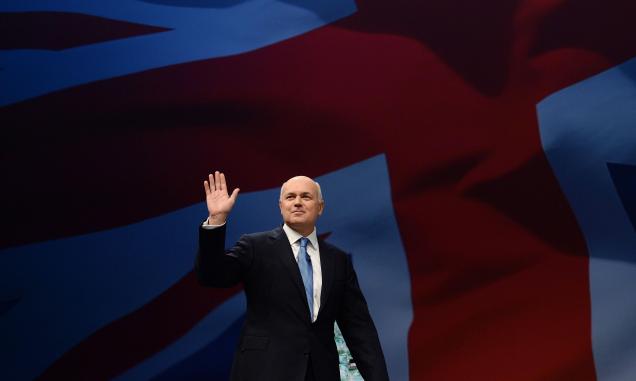
Iain Duncan Smith - IDS - Resignation

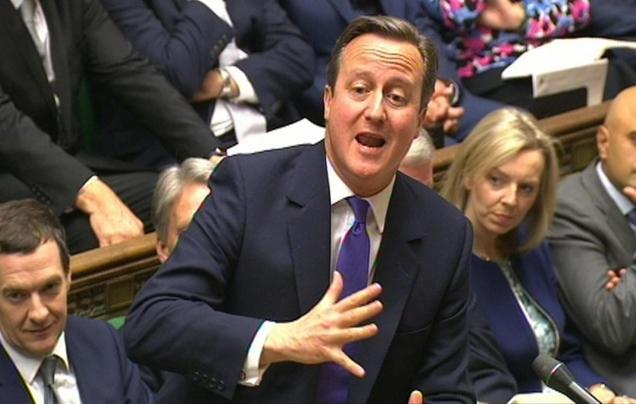
How many more ideologically principled, Thatcher-style conservatives can David Cameron’s centrist political machine afford to alienate?

There is a telling line in James Kirkup’s excellent, fair assessment of the full context behind Iain Duncan Smith’s resignation:

The Prime Minister has already done things that will underpin his eventual legacy: winning the Scottish independence referendum and the general election.

Kirkup probably meant this as praise, but in reality it is the most damning indictment of the current conservative government imaginable – far worse than anything that Iain Duncan Smith said in his resignation letter.

Because it is quite true – some of the greatest accomplishments of David Cameron and his core team of loyalists since 2010 are avoiding having the country disintegrate on their watch, and managing to win a second general election against a historically weak Labour leader pursuing a transparently flawed strategy. If the bar for success in British government has truly been set so low then we are in real trouble.

But David Cameron is not a visionary leader. He came to power in 2010 promising to get Britain through difficult economic times, and was re-elected in 2015 promising to be a reasonably competent Comptroller of Public Services. And to be fair to the man, he never really promised to be a great statesman or a formidable world leader.

Being a doggedly centrist technocrat is all well and good, but eventually people quite rightly start to ask what your government is for, besides acquiring the reins of power and then keeping hold of them for as long as possible. David Cameron’s best answer – the main headline from the Conservative Party’s 2015 general election manifesto – was that we should vote Tory because they have a “plan for every stage of your life“.

Nobody within the Conservative Party seemed to care that this sounded alarmingly socialist and suggestive of the Nanny State – people craved security above freedom, it was believed, and so that’s what would be promised and delivered. More of the status quo, whether the status quo worked well or not.

In other words, as this blog has long been saying and my Conservatives for Liberty colleague Paul Nizinskyj has now eloquently written, David Cameron’s role model is far more the steady pair of hands in tough times rather than the visionary, bloody minded reformer – more Ted Heath than Margaret Thatcher.

I won’t lie: my first reaction on hearing the news that Iain Duncan Smith – who together with Michael Gove is one of the few Conservative heavyweights left with any discernible core conviction – had finally snapped and told George Osborne exactly what to do to himself was “great – anything to make the smug little cretin sweat”.

Because George Osborne is David Cameron with less charisma. And since David Cameron has almost no charisma of his own, that puts George Osborne well into negative territory. Given the fact that his blunders (the Omnishambles Budget, tax credits, PIPs) have done as much to colour the political landscape as his “victories”, I also find his reputation as a master political strategist to be hugely overinflated.

If running to the political centre by jettisoning core conservative principle by adopting left-of-Labour policies like a £9 minimum wage counts as political genius then sure – anybody who can successfully cross-dress as a politician from a different party to pick off some extra votes is a master strategist. But it makes George Osborne a lousy conservative.

Not everything in Osborne’s budget was wrong. Should the thresholds for tax brackets move upwards with inflation? Ideally yes, they should do so every year to neutralise the effect of fiscal drag. But to package measures such as this with reductions in the Personal Independence Payments to hundreds of thousands of disabled people is frankly idiotic.

In some ways, this is emblematic of the ridiculous nature of the Budget spectacle, a choreographed event which encourages the Chancellor of the Exchequer to play god with other minister’s departments, either stealing their flagship ideas (as with academies) or otherwise presenting them out of context. But it also speaks to this government’s utter failure to enact a bold, coherent and unapologetically conservative agenda.

Janet Daley sums it up perfectly:

Mr Osborne’s reputation as a tactical political genius has gone south too. Maybe that’s been the problem all along: his understanding of politics was all about tactics – about messaging and grids, presentational gloss and re-branding – and had nothing to do with fundamental, irreconcilable principle. I am prepared to guess that he quite literally does not understand politicians who are prepared to risk everything for an idea, a conviction: a personal moral mission.

He thinks that they are bloody-minded and naive, with no comprehension of the modern science of winning elections. But that, it seems, is not what the people believe: they are beginning to think that their leaders should stand for something, should have a fundamental sense of what they are in politics for. It’s what they call “authenticity”, and it could turn out to be more of a winner than all the clever marketing techniques in the world. Imagine that.

I understood what Michael Gove was trying to accomplish at Education. And I get what Iain Duncan Smith was wrestling with at the Department for Work and Pensions, and admire his semi-successful efforts to get people into work, and to make that work pay more than dependency on the state. Unlike many others who write sanctimoniously but ignorantly about the issue, I have witnessed the welfare state up close, and seen exactly what our “compassionate” system is capable of doing to people when the dead-eyed state machine is responsible for their lives.

I get all of that. But I have no idea what David Cameron is trying to accomplish as prime minister, or what George Osborne thinks he is doing at the Treasury. Because it certainly isn’t paying down Britain’s debts, as they both like to claim. Nor is it guarding Britain’s sovereignty and place in the world – Cameron has gutted Defence, and is in the process of tricking the British people into voting to remain in what he falsely claims to be a “reformed” European Union.

Neither Cameron or Osborne are motivated by the desire to roll back the state and make the British people more free – their heavy-handed government is all for ever-greater restrictions on both ancient and recent hard-won civil liberties, and is seemingly anxious to sacrifice what freedom we have left upon the altar of “national security”.

There is almost nothing about shrinking the state and expanding personal liberty in this government. But there are lots of policies – cutting state spending on the poorest and weakest in society while continuing to lavish stage largesse on wealthy older people (through non-means tested benefits and the lack of a housing supply policy to benefit the young) – which play right into Labour’s hands, making the Tories (and those who support them) look like nothing more than selfish, grubby opportunists, lining the pockets of the already wealthy while others suffer.

In short, I don’t know what this Conservative government is for, besides trying to stay in power and preventing Labour from stealing it. And apart from the work he was doing in his own department, I suspect that Iain Duncan Smith didn’t know either, no matter how much obligatory praise he heaped on Cameron in his resignation letter.

So I cannot do anything but endorse Iain Duncan Smith’s decision to quit. The final straw was no doubt Downing Street’s insistence that Duncan Smith come out all guns blazing in defence of the welfare cuts in the Budget, while simultaneously planning to walk back the proposals themselves – making IDS look like the crazed ideologue and Cameron / Osborne as the calm voices of reason. Who would want to stick around to be treated in that way?

And if Iain Duncan Smith’s resignation destabilises the government – so what? We currently have a nominally conservative prime minister who is busily enacting Tony Blair’s fourth term of office. We effectively already have a Labour prime minister – or a New Labour one, at least.

Maybe an improbable defeat to Jeremy Corbyn’s Labour Party – or a good scare, at least – is the shock the Tories need to dig deep and find a real conservative leader.


Postscript: Iain Duncan Smith’s full resignation letter – which this blog believes was far too generous and courteous – is shown below.

I am incredibly proud of the welfare reforms that the government has delivered over the last five years. Those reforms have helped to generate record rates of employment and in particular a substantial reduction in workless households.

As you know, the advancement of social justice was my driving reason for becoming part of your ministerial team and I continue to be grateful to you for giving me the opportunity to serve. You have appointed good colleagues to my department who I have enjoyed working with. It has been a particular privilege to work with excellent civil servants and the outstanding Lord Freud and other ministers including my present team, throughout all of my time at the Department of Work and Pensions.

I truly believe that we have made changes that will greatly improve the life chances of the most disadvantaged people in this country and increase their opportunities to thrive. A nation’s commitment to the least advantaged should include the provision of a generous safety-net but it should also include incentive structures and practical assistance programmes to help them live independently of the state. Together, we’ve made enormous strides towards building a system of social security that gets the balance right between state help and self help.

Throughout these years, because of the perilous public finances we inherited from the last Labour administration, difficult cuts have been necessary. I have found some of these cuts easier to justify than others but aware of the economic situation and determined to be a team player I have accepted their necessity.

You are aware that I believe the cuts would have been even fairer to younger families and people of working age if we had been willing to reduce some of the benefits given to better-off pensioners but I have attempted to work within the constraints that you and the chancellor set.

I have for some time and rather reluctantly come to believe that the latest changes to benefits to the disabled and the context in which they’ve been made are a compromise too far. While they are defensible in narrow terms, given the continuing deficit, they are not defensible in the way they were placed within a Budget that benefits higher earning taxpayers. They should have instead been part of a wider process to engage others in finding the best way to better focus resources on those most in need.

I am unable to watch passively whilst certain policies are enacted in order to meet the fiscal self imposed restraints that I believe are more and more perceived as distinctly political rather than in the national economic interest.

Too often my team and I have been pressured in the immediate run up to a budget or fiscal event to deliver yet more reductions to the working age benefit bill. There has been too much emphasis on money saving exercises and not enough awareness from the Treasury, in particular, that the government’s vision of a new welfare-to-work system could not be repeatedly salami-sliced.

It is therefore with enormous regret that I have decided to resign. You should be very proud of what this government has done on deficit reduction, corporate competitiveness, education reforms and devolution of power. I hope as the government goes forward you can look again, however, at the balance of the cuts you have insisted upon and wonder if enough has been done to ensure “we are all in this together”.
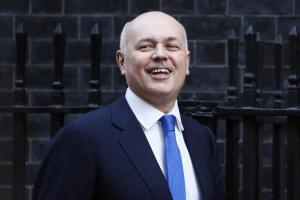
 

Iain Duncan Smith

Agree with this article? Violently disagree? Scroll down to leave a comment.

Follow Semi-Partisan Politics on TwitterFacebook and Medium.


David Cameron And Donald Trump – Promising Security Over Conservatism

David Cameron - Donald Trump - Conservatism - Conservative Party - Republican - GOP - Ideology - Security

Donald Cameron and David Trump. Or is it the other way around?

In many ways, you couldn’t imagine two politicians more different than Donald Trump and David Cameron.

The British prime minister (despite his best efforts) exudes an air of privileged, private school entitlement at all times, and has a reputation for making withering (if cruel) put-downs of his opponents in the House of Commons. The increasingly presumptive Republican Party presidential nominee, on the other hand, takes pride in being brash and boastful, and his claim to “have the best words” is as laughable as it is factually inaccurate.

Furthermore, David Cameron was quick to weigh in against Donald Trump when Trump made sweeping and inaccurate generalisations about Britain and Muslims, stopping short of the shrieking and hysterical calls for Trump to be banned from entering the UK, but still condemning him in strong words.

And yet, the two politicians – one seasoned in Westminster politics, the other making a virtue of his inexperience in the ways of Washington – are more alike than it first seems.

In seeking to understand the persistent appeal of Donald Trump to a large and broad swathe of the Republican Party base, Einer Elhauge argues that Donald Trump wins because he promises to be The Great Protector, keeping Americans physically safe and financially secure in an uncertain world.

Elhauge writes in the Atlantic:

The message of his Republican opponents has effectively been: We are more faithful to conservative principles. Trump’s message has been entirely different. He essentially says: I will protect you. I’m conservative, but if protecting you requires jettisoning conservative ideology, I will do so. Protecting you is the prime directive. This message has powerful resonance, especially for voters who feel the Republican Party has failed to protect their interests.

You see this pattern in all of Trump’s deviations from conservative orthodoxy. Take the debate over Planned Parenthood. Like all conservatives, Trump opposes abortions. But he stresses he does not want to stop funding their wonderful work protecting women from cervical and breast cancer. The other Republican candidates simply express a desire to destroy Planned Parenthood outright. Trump’s message to voters: The other candidates will adhere rigidly to ideology, even if it needlessly fails to protect millions of women from cancer. I won’t.

[..] Trump’s signature policy is to build a wall to protect his voters’ jobs. What could evoke protection more than building a huge wall? His opponents quibbled about its feasibility but ultimately adopted the same position. Trump’s message to voters: I care about protecting you enough to propose huge historic projects. The other candidates begrudgingly agreed, but their heart is not in it, so they are less likely to follow through.

Free trade is great, Trump says, but it has to be fair. His opponents just adhere to pure free trade, which does increase the economic pie. But economic research shows that free trade harms some subsets of voters, particularly the working-class voters flocking to Trump. The message to his voters: I will favor free trade only to the extent that I can protect you from harm, perhaps by compensating you using the gains of trade. My opponents will favor free trade even if it harms you.

And as it goes for policy, so it goes for style. Trump consistently eschews the hard-headed statements of fidelity to conservative principle or the Constitution which voters hear from Senator Ted Cruz, focusing instead on cultivating the same “your safety first” narrative:

Trump talks endlessly about his polls, because the polls stress that he is strong enough to protect his voters. He speaks extemporaneously and often crassly in a stream-of-consciousness way, which has many pitfalls but emphasizes that his views are unprepared, authentic statements of his views and that he will thus carry out his promises to protect his audience. He responds aggressively to every attack, no matter how minor, conveying the sense that he will also aggressively protect his voters.

It is hard to deny the success of this approach. Many voters, feeling let down by the stewardship of both President Obama and the reactionary Tea Party dominated Congress which followed in 2010, have lost faith in politicians selling explicitly ideological remedies for America’s ills.

Rand Paul, Mike Huckabee and Rick Santorum got nowhere this election cycle, suggesting that the public’s flirtation with Constitutional libertarianism and social conservatism respectively are not the vote-winners they once were. And the same goes on the Left, with Hillary Clinton now pulling clear of Senator Bernie Sanders in the Democratic primary, despite the huge achievements of Sanders’ campaign.

The situation in Britain is strikingly similar. David Cameron’s general election victory – at Labour’s expense and despite the rise of UKIP, the SNP and Green Party on the radical Right and Left – suggests that while a minority of voters (this blog included) crave stronger ideological differences and a move away from consensus politics, a larger number of people looked at the two main parties and went for the option which they believed would deliver them the most security.

Having secured his coveted Conservative majority government in the general election, David Cameron declared in his victorious 2015 party conference speech:

I tell you: our party’s success in growing our economy and winning the economic arguments has never been more vital.

Nothing less than the security of every single family in our country depends on it.

Before concluding:

And now with couples married because of us, working people backed because of us, the NHS safe because of us and children in the poorest parts of the world saved because of us, everyone in this hall can be incredibly proud of our journey – the journey of the modern, compassionate, One Nation Conservative Party.

This was not the speech of a flinty-eyed ideologue yearning to roll back the frontiers of the state. It was the speech of a leader who calls himself a conservative, but is perfectly willing to use the machinery of government to deliver the social and economic outcomes that he wants – in Cameron’s case, building an election-winning coalition by promising physical, social and economic security over and above freedom and individual liberty.

Ed Miliband, to the extent that his weak leadership stood for anything, ran on a platform of fairness and equality, emphasising entitlement over strength and security. And it got him absolutely nowhere.

David Cameron and the Conservatives, by contrast, ran on a platform of stability and security as the only objective. It wasn’t thrilling, inspiring or glamorous, but given the weakness of his opponents, it was enough to deliver a parliamentary majority that almost nobody predicted.

You can argue that David Cameron represents everything that is ideologically vacuous and wrong with modern British conservatism – as this blog does, loudly and often. But what you cannot do is deny the fact that Cameron has hit on a winning electoral strategy.

That’s why David Cameron ran for re-election with a manifesto pledging a creepy, statist “plan for every stage of your life”.

That’s why the Conservative Party talks about creating a strong economy not as an end in itself, but only in the context of generating more taxes to pay for ever more public services.

That’s why there is not an ancient right or civil liberty that David Cameron and Theresa May will not gladly crush in their effort to be seen as strong in the fight against terrorism.

Sure, they may look and sound different – almost complete opposites, in style and temperament. But both Donald Trump and David Cameron are both essentially playing the same trick – or perpetrating the same fraud – on their respective electorates, depending on your outlook.

Donald Trump was once a Democratic Party supporter and donor, talked up his great friendship with the Clintons and held positions which are diametrically opposed to his current conservative stances. David Cameron, meanwhile, calls himself a Conservative but is busily implementing Tony Blair’s fourth term New Labour agenda.

Neither man is what he publicly claims to be. And certainly neither Donald Trump nor David Cameron can fairly be described as small-c conservatives.


Donald Trump - Make America Great Again - Hat

Agree with this article? Violently disagree? Scroll down to leave a comment.

Follow Semi-Partisan Politics on TwitterFacebook and Medium.

David Cameron Is At His Arrogant Worst When He “Wins” PMQs

David Cameron - PMQs - Prime Ministers Questions

Since he has proved himself incapable of cleansing the Tories of their unfair reputation as the “nasty party”, what exactly is the point of David Cameron?

The media is abuzz today with talk of David Cameron’s withering put-down of Jeremy Corbyn at Prime Minister’s Questions.

The Spectator breathlessly reports that “Cameron delivers a knockout blow to a struggling Corbyn“:

This could have been a tricky PMQs for David Cameron. Instead, it will be remembered for Cameron ventriloquising his mother and telling Corbyn ‘put on a proper suit, do up your tie and sing the national anthem’.

What gave this jibe its potency, is that it sums up what a lot of voters think of the Labour leader. It was not quite as Flashmanesque as it sounds. For it came in response to a Labour front bench heckle asking what Cameron’s mother would say about cuts in Oxfordshire.

Even before Cameron floored Corbyn with that line, the Labour leader was struggling. He chose to go on the NHS and the junior doctors’ strike. But even on this subject, he couldn’t make any headway. Worryingly for Labour. Corbyn’s PMQs performances are—if anything—getting worse. You can tell that Cameron is now just cruising through the Labour leader’s questions.

Responding to a heckle from the Labour benches about his mother, Mary Cameron (who signed a petition opposing local public service cuts), the prime minister let loose with all of the pent-up frustration he feels at Jeremy Corbyn’s refusal to play the traditional role of Generic PMQs Sparring Partner.

Here’s Cameron’s quote in full:

“I’ll ask my mother. Oh I think I know what my mother would say, I think she’d look across the dispatch box and she’d say put on a proper suit, do up your tie and sing the national anthem.”

If this is what “winning” Prime Minister’s Questions now looks like, then both the tone and content of our political debate – even by the low standards set by Parliament – is in far worse a state than even I have been lamenting.

And Tim Montgomerie’s decision to leave the Conservative Party is vindicated, as David Cameron’s latest flash of temper reminds us that under his leadership, the Tories are not interested in enacting radical conservative reform in the model of Thatcher, but rather seek to wield power just for the sake of it, while ridiculing everybody else from their lofty perch. Why else refuse the opportunity to respond directly to criticism and defend his record in favour of delivering smarmy, schoolboy jaunts directed at the Leader of the Opposition?

People who defend David Cameron’s rootless, opportunistic leadership of the Conservative Party love to claim that by steering such a centrist, New Labour-friendly course, the prime minister is in some way helping to “de-toxify” the Tory brand.

The clear implication of this is that we should shut up and accept the fact that there is almost nothing conservative about this Conservative government, because bland centrism and the failure to advance conservative principles is the price we have to pay whilst conservatism’s reputation is cleansed of the “stain” of Thatcherism. And to be fair, with so little else to recommend Cameron’s government other than the fact  it is not Ed Miliband’s government, they have a point. Detoxification is all that the Tories have going for them at the moment.

Except they don’t even have that. We live in a political climate where anti-Tory activists will daub “Tory Scum” on war memorials, spit at innocent people attending the Conservative Party conference and indulge in all manner of overblown rhetoric about the heartless Evil Tories coming to take away your human rights and cast your disabled relatives out onto the streets to die of exposure. If the past few years are supposed to have been an exercise in image rehabilitation for the Tories, they have been the most abject failure and waste of political capital.

Yet David Cameron is supposed to be our Great White Hope, the man who delivers Conservative majority governments at general elections by running away from any policy or principle which might be seen as “nasty” or right wing.

It is all the more surprising, then, that Cameron consistently chooses to be so nasty and unnecessarily aggressive at PMQs – not just putting his points across or counter-attacking forcefully, as PMQs requires, but actively relishing in delivering the most personal put-down or remark possible. Less Tony Blair’s devastating but above-the-belt “weak, weak, weak” jibe at John Major’s expense, and more “you’re too poor to buy nice clothes”.

Seriously, how did David Cameron think that his “proper suit” comment would play once it seeped beyond the Westminster and media echo chamber and into the public consciousness? Sure, it won a big laugh and sustained mockery of Corbyn in the House of Commons chamber, but replayed on television it just looks like a cheap and nasty stunt from a man who would rather resort to personal insults than answer a straightforward question.

People sitting at home – those few who actually pay any attention to the outcome of Prime Minister’s Questions, at any rate – will not have seen a clever and likeable prime minister slapping down an angry, extremist left-winger. They will have seen a haughty, self-important Old Etonian standing at the dispatch box and making cutting personal remarks about the sartorial choices of a slightly befuddled but harmless-looking professor type.

Even when David Cameron “wins” Prime Minister’s Questions (as he did today) he loses, because he is fundamentally incapable of winning his exchanges with the Leader of the Opposition without morphing into the most ridiculous caricature of a snobbish public school boy imaginable in order to do it.

And hey presto, Labour’s work is done for them – smoking gun evidence that the Tories are a party of arrogant toffs, and that if they had their way then politics would only be for impeccably dressed people from establishment families, wearing Savile Row suits and speaking the Queen’s English. And all Jeremy Corbyn had to do in order compound this perception in the public consciousness was wince through David Cameron’s latest smarmy insult.

Remind me: what was David Cameron’s essential winning quality, again?


Jeremy Corbyn - PMQs

Agree with this article? Violently disagree? Scroll down to leave a comment.

Follow Semi-Partisan Politics on TwitterFacebook and Medium.

The Daily Toast: Douglas Murray On Putting Country Before Party

Tim Montgomerie - 2

The exodus begins…

Douglas Murray lends an eloquent voice of support to Tim Montgomerie and his brave decision to quit the Conservative Party as an act of protest against Cameronism:

In the wasteland of principles that is Westminster, Tim Montgomerie has always been an exception.  The area is filled with ambitious, bland careerists whose idea of taking a stand (as with most of the commentariat) consists of trying to locate two ‘extremes’ before comfortably wedging themselves equidistant between them.  But in resigning from a lifetime’s membership of the Conservative party, Tim Montgomerie has demonstrated that there is still room for principles in politics.

[..] But here is the bigger problem for [Montgomerie’s critics]. It may well be that they shouldn’t care about the founder of Conservative Home, and one of their party’s most loyal and thoughtful members, choosing to leave the party.  Just as they may for the time-being not mind taking all those leaflet-deliverers for granted while riding against their core wishes.  But one day they may wake up to discover that amid all the high-handed dismissals and principle-free careerism, there is nobody around left to watch their political backs.  What a day that will be.  And perhaps it will come sooner rather than later.

If anything is going to hasten this day of reckoning, it will be the coming EU referendum. The party grassroots are overwhelmingly at odds with the leadership on the key question of Brexit. The parliamentary Conservative Party is on course to split just as dramatically as Labour split over the vote for military action in Iraq back in 2003.

Then throw in a rancorous, ill-tempered EU referendum campaign – our country is debating an existential issue, and tempers will inevitably fray and then snap. Things will be said that are far worse than David Cameron’s prissy, coded jibes at the expense of Boris Johnson in Parliament today.

And in the midst of this intra-party warfare, Conservative MPs may come to realise – or recall – that there is far more that divides them than just the question of Brexit. Other ideological differences, suppressed in the name of the “greater good” of general election victory, will come bubbling back to the surface.

Some Tory MPs might even make the mistake of asking themselves what the Cameron/Osborne legacy will be – and then recoil in horror when they realise that they fought their way back to power only to blindly implement Tony Blair’s fourth term New Labour agenda.

And then will come the desperate casting around for a more authentic conservative vision, and a more credible leader to bring it about. And vindication for Tim Montgomerie.


Read my take on Tim Montgomerie’s resignation from the Conservative Party here, as part of the “What Conservative Government?” series.


Tim Montgomerie

Agree with this article? Violently disagree? Scroll down to leave a comment.

Follow Semi-Partisan Politics on TwitterFacebook and Medium.

Support David Cameron? I’d Rather Feel The Bern

Bernie Sanders For President

Bernie Sanders or David Cameron? There’s no contest

At a time when far too many conservatives on both sides of the Atlantic have revealed themselves to be either snarling authoritarians (Marco Rubio, Donald Trump) or patrician, vacuous hairdos (David Cameron), the search for authentic commitment to individual liberty can sometimes lead to unexpected places.

Spiked are now making the controversial argument that this search leads all the way to Vermont, and to US presidential candidate Bernie Sanders.

Todd Gillespie writes:

Despite being slammed by some as a big-government lefty, Sanders’ track record is more complicated — and arguably more libertarian than has been appreciated. Even libertarian stalwart Ron Paul has come out in support of Sanders’ small-government credentials, shortly after his son, Rand, left the Republican race.

Bernie has espoused positions similar to Rand’s, even joining with him to oppose government surveillance. Last year, Sanders wrote a blistering criticism of the ‘Orwellian’ practice of spying on citizens. He voted against the 2001 Patriot Act and its dreadfully named replacement, the Freedom Act, in 2015 — both of which Clinton supported. He is arguably the only candidate left who takes positions that can legitimately be described as libertarian.

He supports freedom of speech. He backs net neutrality and opposes attempts to censor the internet. In 2005, he introduced the Stamp Out Censorship Act, which sought to prohibit the government enforcing ‘indecency fines’ on non-public media (it failed to pass). Recently, addressing students at Liberty University (a Christian institution whose president has just endorsed Donald Trump), most of whom think very differently to Sanders, he said ‘it is vitally important for those of us who hold different views’ to engage in debate.

Anti-surveillance. Anti-censorship. Pro civil liberties. Pro free speech. All more than can be said of many American conservatives, who ostentatiously flaunt their love of the Constitution – by which they mean the Second Amendment, while conveniently overlooking the First and Fourth Amendments.

Gillespie continues:

Sanders’ right-wing critics write him off as a big-state socialist. But a better label might be ‘libertarian socialist’. Yes, he has a vision of centralised government spending funded mainly by tax hikes on big business, but Comrade Bernie also envisages having a private sector with greater employee ownership. He has introduced legislation several times to increase government funding for centres that would provide training and technical support for the promotion of worker ownership and participation. He introduced the Rebuild America Act 2015, proposing an extra $1 trillion investment to renew America’s crumbling infrastructure, increasing airport capacity, improving and expanding railways, roads, bridges and broadband connection. He also wants to end crippling student debt and drastically increase loans to fuel small-business innovation. You can’t accuse him of thinking small.

Of course there is also much in Bernie Sanders’ platform to abhor – the punishing effective tax rates which would be required to fund this social democratic revolution, the increase in the size of government and the stripping away of agency and responsibility from free citizens to make their own decisions and take their own risks, for a start.

But perhaps it is also a sign of the divergence between the American and British political spectrums that I quite often find myself nodding along in agreement when the ornery senator from Vermont opens his mouth to speak. Perhaps when you move far right enough in your British politics (many certainly seem to think I am Thatcher on steroids) you actually break through and register on the far left of the US political scale.

And one thing is certain – if Bernie Sanders were prime minister of the United Kingdom, we would have a far more ideologically conservative leader than we currently have in David Cameron.

Spot The Socialist - David Cameron vs Bernie Sanders - Semi Partisan Politics - Sam Hooper

Agree with this article? Violently disagree? Scroll down to leave a comment.

Follow Semi-Partisan Politics on TwitterFacebook and Medium.