The Daily Smackdown: Toby Young’s Misguided Invitation To Dan Hodges

Dan Hodges - Labour Party - Defect to Conservative Party

Not so fast, Toby Young. Dan Hodges is an honourable man, but he has no place in the party of Margaret Thatcher

It wasn’t the first time and it probably will not be the last, so understandably you may have paid little attention when Dan Hodges quit the Labour Party this week in disgust at the leadership of Jeremy Corbyn and the behaviour of his supporters.

Hodges departed again this week, firing this parting shot:

I’m done. Yesterday I cancelled my direct debit to the Labour Party. “Why don’t you just sod off and join the Tories”, Jeremy Corbyn’s supporters regularly ask anyone who dares to challenge their rancid world view.

I won’t be joining the Tories. But I am sodding off.

Fair enough. Dan Hodges has legitimate, irreconcilable differences with Jeremy Corbyn – both his policies and the way in which he runs the party (though Hodges’ sudden sensitivity to supposed bullying from the Corbynites seems a little odd coming from someone who was only too happy to get scrappy in his past life as a political campaign manager).

But clearly Dan Hodges and Jeremy Corbyn have very different visions of what the Labour Party should be, and nobody should fault Hodges’ decision to quit. I made the conscious choice not to re-join the Conservative Party when I returned to Britain in 2011, out of disgust with the centrist course plotted by David Cameron and an unwillingness to associate myself with the record of the coalition government, and so I’m certainly not preaching any kind of “stand by your man” dogma.

And now, inevitably, the offers to Dan Hodges to come join the Conservative Party are coming rolling in. At first, these were mostly coming from mocking Corbynistas on social media, rejoicing that a turncoat “Red Tory” like Hodges had finally gone (again). But then the mocking from the far left was replaced by more earnest offers from the supposed political Right.

Foremost of these offers came from Toby Young, Hodges’ colleague at the Telegraph, who wrote an open letter attempting to woo the ex-Labour columnist into the Tory fold. This letter is well-meant, but utterly misguided and counterproductive, as we shall see.

Toby Young begins:

On all the biggest political issues facing our country – what to do about the Islamic State, tackling the deficit, the renewal of our independent nuclear deterrent, education reform – you and the other Labour moderates are far closer to the leadership of my party than to Labour’s. I think that’s even true of the NHS, given that the health budget has increased in real terms year-on-year since David Cameron became Prime Minister. The commitment to increase spending on the NHS even further in the Autumn Statement surpasses anything promised by your party. And, as I’m sure you know, the minimum wage is set to rise faster under this government than it would have done under Ed Miliband, assuming he’d stuck to Labour’s manifesto.

And it’s true – Dan Hodges does hold refreshingly realistic perspectives on tackling ISIS in Syria, the deficit and Trident. When it comes to fundamental issues of national security, as all of these are, people from the Left and Right are often united.

More worryingly though, when it comes to trampling civil liberties in pursuit of an unattainable degree of security, both he and Theresa May are on the same page. And if Dan Hodges actually believes that throwing more money at a fundamentally broken and outdated NHS model is a good thing, then there is great crossover potential there, too. I’m just not sure that this is a good thing, as Toby Young seems to believe.

Young continues:

Indeed, on all the most important aspects of Osborne’s economic policy, the Labour moderates are much more closely aligned with us than you are with John McDonnell, not least because it’s virtually indistinguishable from the policy set out by Alastair Darling. In this respect, as in so many others, the Prime Minister and his Chancellor are the heirs to Blair.

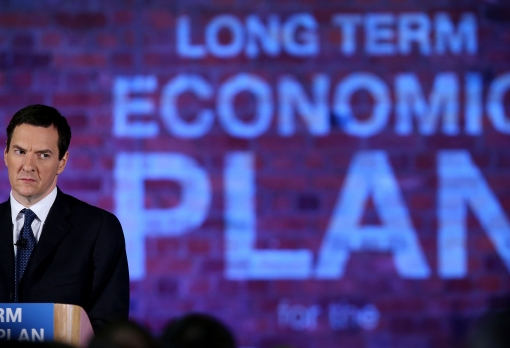
Toby Young clearly meant this to be a bright and positive pitch to Dan Hodges to jump ship. But by hammering home the similarities between George Osborne and Alastair Darling and their remarkably similar (in practice if not in rhetoric) approaches to deficit reduction, all he manages to do is reveal just what a weak and ineffectual supposedly conservative government we currently have – Blairites with a patrician Tory façade.

Young concludes:

If your only hope of improving the lot of the least well-off is to persuade the Conservative Party to be more compassionate, then shouldn’t you do exactly what you’ve been urging the leadership of your own party to do? Say to hell with ideological purity and strike a bargain?

[..] I also think that, in time, many people on my side will come to see the value of a Blairite faction within the Conservative Party. Some of us are already worried about the corrosive effect that a lack of serious opposition will have on the government and would welcome a proper challenge. If that’s not going to be provided by Labour, then it must come from within our own ranks. Those of us who style ourselves “modernisers” will regard you as natural allies. In my mind’s eye, I can already see Lord Finkelstein standing at the other end of the welcome matt, bottle of champagne in hand.

So come on over, Dan. You already have many friends in the Tory party,including the Prime Minister, and I’m sure you’d quickly make many more. I think we’d be lucky to have you.

Unfortunately, in his rash invitation to Dan Hodges, Toby Young is falling into the same trap as David Cameron’s woolly “One Nation” model. Sure, it may be possible for the Tories to eke out a couple more narrow election victories by becoming so blandly inoffensive and unrecognisable that a sufficient number of the most bovine voters grunt their approval. But these narrow victories, like David Cameron’s “miracle majority” of twelve, provide a mandate only for the dull, technocratic management of Britain’s public services. Essentially they elect a Comptroller of Public Services – someone to kick when the trains don’t run on time or NHS waiting times get too long – not a world leader.

Convincing majorities – margins of the sort that allow radical changes to the country like realigning foreign policy, rolling back the remaining vestiges of the post-war settlement and delivering a smaller, more effective state – don’t come from pretending to be sufficiently like the Labour Party that it tricks a few wavering voters into switching sides. They come from articulating a vision so clear, so exciting and so blazingly inspirational that people vote as enthusiastic citizens inspired by the message, not self-interested consumers voting based on fear or greed.

A Conservative Party that is tame and toothless enough to accommodate someone like Dan Hodges would by definition be of the former type, not the latter. The mere fact that Toby Young is able to make his offer with a straight face proves that there is not currently a cigarette paper’s worth of difference between Blairite Labour-in-exile and the Cameron Conservatives, a party which enthused the electorate with their vision so much that they are perpetually just six defections away from defeat in the House of Commons.

In 1968, over a decade before she became prime minister, Margaret Thatcher warned in a speech:

There are dangers in consensus; it could be an attempt to satisfy people holding no particular views about anything. It seems more important to have a philosophy and policy which because they are good appeal to sufficient people to secure a majority.

[..]

No great party can survive except on the basis of firm beliefs about what it wants to do. It is not enough to have reluctant support. We want people’s enthusiasm as well.

Many supposed conservatives and Tory party members seem to have forgotten that lesson – the essential truth which delivered three terms of a Thatcher premiership, saving this country from seemingly inevitable decline and irrelevancy. David Cameron and George Osborne, both old enough to reap the fruits of Thatcherism without having really understood why it was so necessary, seem never to have absorbed this lesson in the first place.

Announcing the defection of Dan Hodges to the Conservative Party – having David Cameron welcome him at the door of Number 10 Downing Street with a big bottle of champagne and a basket of pears – would be the ultimate triumph of One Nationism. It would complete the transformation of the Conservative Party, underway since Thatcher left office, from a party of some ideological coherence to a well-oiled and finely calibrated PR machine, excelling in being all things to all people. An intelligent but soulless hive mind of people who quite fancy being in power, and who are content to say anything or compromise on any conviction in order to keep it. Thus, David Cameron will go down in history as the twenty-first century version of Ted Heath.

I don’t think that this is good enough. A Conservative Party sufficiently bland and uncontroversial that it might appeal to Dan Hodges, even on his most jaded day, is not one which I could bring myself to vote for at the ballot box. It’s not good enough for me. But way more important than that, it’s not good enough for Britain. This country is crying out for real leadership, a renewed sense of national purpose, and the re-imagining of the state and its role in our lives. Monolithic institutions like the broken welfare state and “our NHS” (genuflect) – fraying anachronisms from the post-war consensus – need to be redesigned from the ground up, with their blind apologists and vested interests dragged kicking and screaming into the new century.

But if Dan Hodges is walking around with a Conservative Party membership card in his wallet by the time 2020 rolls around, it’s all over. None of this essential conservative reform will happen. Not because Hodges is in any way a bad person, but because he is Labour to his core – and a Conservative Party which provides a political home for him is quite simply no longer a conservative party at all. They will defeat Labour and win a third term, sure. But their voter coalition will be so broad and so lacking in common aspiration that they will be even more rudderless and scattershot in government than they are today.

I’m almost certain that I know who Toby Young would pick if he was forced to choose, but I’m going to make the ultimatum anyway, because I care deeply about the Conservative Party too, and I am deadly serious about this.

Toby Young: It’s Dan Hodges or me.
Toby Young - Dan Hodges - Defect to Conservative Party

Agree with this article? Violently disagree? Scroll down to leave a comment.

Follow Semi-Partisan Politics on TwitterFacebook and Medium.

What Does The Conservative Party Stand For In The Era Of Jeremy Corbyn?

David Cameron - What Do The Conservatives Tories Stand For In The Age Of Jeremy Corbyn

With Jeremy Corbyn’s Labour Party consumed by infighting and discredited with the public, David Cameron’s Conservative government could do almost anything it desires. So why is it treading water?

What does the Conservative Party stand for in the era of Jeremy Corbyn?

What do the Tories stand for when they are barely opposed in Parliament, and consequently have virtual carte blanche to do anything they please?

The answer, apparently, is not much of anything. And it’s good to see that more people on the Right are finally starting to get impatient with the lack of conservative conviction flowing from Number 10 Downing Street.

Janet Daley gets straight to the point in her latest Telegraph column, asking what is the point of the Tories if they refuse to radically shrink the size of the state:

It is fairly clear what use the Tories have decided to make of the current lack of opposition. They will become not just the accepted party of government but the only political party that anybody would ever need. Instead of putting forward a specific, identifiable view of what government should be and how it should relate to the people, which they can offer up for debate, they will occupy all the ground, cover all the bases, be everywhere on the political spectrum at once. They will incorporate centre-Left and centre-Right, and make economic intervention live alongside the free market. They will even, as Mr Osborne did in his Autumn Statement, filch the language of enforced equality (“social justice”).

In short, if Labour is not fit to carry on a debate, then the Tories will scrap the idea of debate altogether. They will be all things to all men: the all-purpose, all-embracing, totally inclusive permanent party of government. This new single-party monopoly will incorporate every popular measure, however inconsistent or contradictory, into its amorphous programme. By the time Labour is ready to engage in election-winning argument, there will be nothing to argue about.

Instead of being emboldened by the lack of serious opposition and seeing it as a once-in-a-generation opportunity to do necessary radical things, the Tories have decided to play it for short-term political advantage. The real problems will not be addressed. They will just be fudged – and bought off with fistfuls of money.

The depressing truth is that the Tories in government have made a decision to solidify their grip on power by effectively ceasing to be a small-C conservative party at all, instead rebranding themselves as the only sane choice when the alternative is the Corbyn/McDonnell socialist double act.

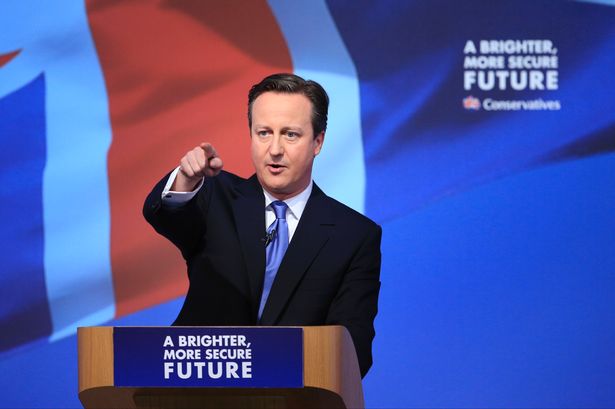
This worrying lack of ideological commitment has been reinforced over and over, whether it’s the Autumn Statement that sounded more like a Gordon Brown-style moneybomb than a fiscally conservative blueprint for government, or David Cameron’s triumphal party conference speech – which even the Independent thought was shockingly centrist.

But not everybody sees it like this. Iain Martin, writing in CapX, sees opportunity in the fact that the Conservatives now essentially govern unopposed:

Corbyn’s leadership does gift the British Conservatives an historic opportunity. Not one of those “they might they win the next general election” opportunities, but the chance to capitalise on Labour’s existential crisis and create a broad-based coalition of interests that dominates the coming decades and turns the UK into an even more dynamic, market-based, technologically advanced, prosperous society.

No. The government can either lead Britain kicking and screaming towards a more dynamic, free and market-based future, or it can create a broad-based coalition of special interests, each with their own collection of whiny, selfish demands and veto rights over national policy. But it cannot do both.

Radical policies of the kind needed to cure Britain’s productivity gap and vastly improve our competitiveness are not borne out of consensual, hand-holding workshops where all of the public service unions and taxpayer funded charities lounge around together brainstorming new ways to extort taxpayer money. Nor are bold policies borne out of the ingratiating desire to please everybody all the time, and never come face to face with a critical newspaper headline.

The radical conservative/libertarian policies that this country needs in order to roll back the state – and empower the people to shape their own destiny rather than remaining vassals of the state or passive consumers of public services – will not be divined by drawing a line half way between the David Cameron and Ed Miliband election manifestos of 2015 and splitting the difference.

When Margaret Thatcher came to power in 1979 she knew that there could be no appeasement with the dismal establishment belief that the best Britain could then hope for was a smoother, more orderly century of national decline than we witnessed during the Winter of Discontent. She knew that Britain needed harsh medicine if things were to be turned around and the patient saved. That didn’t mean that Thatcher rode to battle against every pillar of the post-war consensus simultaneously – nationalised companies and the NHS remained even after her premiership – but it did mean that she was not terrified of being seen as an ideological, even polarising figure. She stood for something.

What do David Cameron and George Osborne stand for, besides keeping the Conservative Party in power and (hopefully) executing a smooth transition from Dave to George by 2020? What kind of Britain do they want to preserve, protect or change? It is almost impossible to tell, because the key decisions – as with the Autumn Statement – are always so depressingly tactical and reactive, not strategic. I was not yet born when Margaret Thatcher became prime minister, but I could describe in some detail her evolving political philosophy and accomplishments in government. By contrast, David Cameron came to power when my political engagement was very high indeed, and yet I would struggle to fill two paragraphs outlining Cameron’s ideology or aims for this country.

Even the few hints of a long-term strategy from the Conservatives – making us more secure, or paying down the national debt – only serve to highlight how far the government is falling short of these goals. The surveillance state continues to expand while the root causes of the extremist Islamist threat are barely discussed, much less tackled; the Chancellor burbles on about fixing the roof while the sun is shining, and yet the deficit is far from eliminated and the national debt continues to increase every single day.

David Cameron - Centrist

But it does not have to be this way. The Conservative Party leadership may be depressingly void of ambition and tainted with the first blush of scandal, but there are green shoots of a future conservative renaissance visible within the party.

Last week I attended a Westminster lobby event held by Conservatives for Liberty, the right-libertarian campaign group for whom I am proud to write. During the course of the evening, we were addressed by five Conservative MPs, each of whom was able to make a far more convincing case for individual liberty in ten minutes than David Cameron has made for the entirety of his premiership.

Chris Philp described himself as a “proud Thatcherite” and dared to make reference to both “The Road To Serfdom” by Hayek and “On Liberty” by John Stuart Mill.

Lucy Allan, the antithesis of a career politician, said “my view is that a real conservative is definitely a libertarian”, and proceeded to speak out against mass surveillance and the rise of authoritarianism in the name of national security.

The irrepressible James Cleverly warned against paternalistic government and the excesses of the public health lobby, saying “I don’t want to live in a world where personal choice is codified. We have a word for that, and that word is fascism”.

John Redwood made a point that the Treasury sorely needs to hear, lamenting that too many MPs “forget they are there to represent taxpayers as well as beneficiaries of state largesse” and describing the state’s overbearing presence in all aspects of life as “a wooden public monopoly that guarantees maximum inconvenience and maximum cost”.

And David Nuttal vowed that he would continue to work tirelessly “to stop the relentless march of the nanny state” and the “massive industry” which supports it.

Of these excellent speakers, Chris Philp, James Cleverly and Lucy Allan (if she stays in politics beyond 2020) are all potential leadership material for the future, particularly in a world where the official opposition is virtually non-existent and the country is crying out for a new, clear sense of direction. Any one of these rising stars have the inspiration and charisma to one day lead the party in a new, more transformational direction.

With the Parliamentary Labour Party seemingly intent on self-administering a near mortal wound with their relentless sniping and bitter briefing against Jeremy Corbyn, a bold new Conservative leader committed to the principles of liberty and a small state (the antithesis of George Osborne, who doesn’t even pay lip service to these ideals) could re-shape the Right and promote a better, more inspiring form of conservatism than the current “Blairism when there’s no money left” status quo.

The fact that David Cameron and George Osborne are watching the slow implosion of the Labour Party and conjuring up plans to woo Ed Miliband voters – rather than capitalise on this once-in-a-century opportunity to execute a real conservative agenda unopposed – reveals their worrying lack of confidence in core conservative principles and values. If the Prime Minister and Chancellor really believed in reducing the tax burden, reforming welfare, building up our armed forces, shrinking the state, promoting localism and devolving decision-making to the lowest level possible (with the individual as the default option), they could do so. They could be building a new, conservative Britain right here, right now. Virtually unopposed.

But Cameron and Osborne are doing no such thing. They simper and equivocate, and talk about fixing the roof and paying down the debt while doing no such thing, and still they attract endless negative headlines for inflicting an austerity which exists primarily in the minds of permanently outraged Guardian readers.

If Britain is not a transformed country in 2020 – with a smaller state, more dynamic private sector and greater presence on the world stage – there will be absolutely nobody to blame other than the party holding the keys to government. The party with the word “conservative” in their name. The Tories will have been in power for ten years and have nearly nothing to show for it, save some weak protestations about having fixed Labour’s prior mismanagement of the economy.

That’s not the kind of party I want to be associated with. That’s not the party I campaigned to elect in 2010, back when it seemed possible that a new Conservative administration might aspire to being something more than a moderate improvement on Gordon Brown.

The Conservatives have a choice. Presented with the golden opportunity of Jeremy Corbyn’s leadership of the Labour Party, the Tories can seize the chance to transform themselves into the party of Allan, Philp or Cleverly. Or they can continue to be the equivocating, triangulating party of Cameron and Osborne.

Yes, of course there’s no point having bold new conservative ideas unless you can stay in power to make those ideas a reality, as the Cameron/Osborne apologists would no doubt respond. But neither is there any point winning and holding power unless you actually have ideas worth implementing.

The Conservatives have the power. And thanks to the Labour Party, they are under no immediate threat of losing that power, no matter what they do in office. So where are the big ideas?

George Osborne - Chancellor of the Exchequer - Budget

Agree with this article? Violently disagree? Scroll down to leave a comment.

Follow Semi-Partisan Politics on TwitterFacebook and Medium.

No, Jeremy Corbyn’s Labour Leadership Candidacy Is Not A Disaster


It’s encouraging to see the Telegraph’s Rupert Myers echo this blog’s view that the presence of Jeremy Corbyn in the Labour leadership contest is a good thing, and not the unmitigated disaster that conventional wisdom and repetitious Labourite talking heads continue to say it is.

From Myers’ column today:

A Corbyn victory would allow the free democratic choice not between two shades of middle, but between what could properly be definied as the left and the right. Angry voices calling for true, radical alternatives to capitalism would (we can pray) be silenced for a generation (or at least a few months) if Jeremy had the chance to present a bold, socialist agenda for Britain. Floating voters would have the opportunity not to pick between politicians with similar manifestos, but to decide a political battle waged in technicolour. The Corbyn ultimatum would bring the far left from out of the shadows of a Labour HQ intent on fussing about how to win elections, and test the rhetoric of a legion of angry young socialists against the wisdom of the electorate.

Voters like a real, solid, discernable choice. If Labour pick Jeremy Corbyn and Tom Watson to head their efforts between now and 2020, I predict a renaissance of political engagement. Rather than spend the next five years arguing about the threshold of tax allowances, we could argue the merits of state ownership of the railways, banks, fast food industry, and the Premier League.

Instead of bureaucratic tinkering with foreign aid, we’d be debating whether to drop our borders to allow the unrestricted movement of people. PMQs could be a discussion on how to cap pay to the level of tube drivers, to be set at £200,000 a year. New Labour might not like the image which emerges, but at least Corbyn would turn the contrast button up to full and then rip it off the set.

Absolutely. It’s long past time we had a proper political debate in this country again, instead of these interminable, finickity squabbles about negligible ideological differences.

Continue reading

Don’t Congratulate George Osborne For Stealing Labour’s Living Wage

George Osborne - Budget 2015 - Living Wage - Minimum Wage - Conservative Party


We are in danger of getting so carried away praising George Osborne’s tactical genius in commandeering Labour’s compulsory national living wage that we forget to notice his total betrayal of conservative principles.

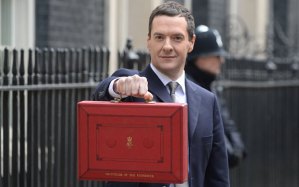
On a purely tactical level, George Osborne’s Budget of 2015 – the Conservative Party’s first for nineteen years – was a masterstroke.

At the nadir of Ed Miliband’s dismal attempt at being Leader of the Opposition, the Labour Party attempted to wow voters with their feeble plan to increase the minimum wage to £8 per hour – by the year 2020. And yet despite having defeated Labour resoundingly in the 2015 general election, it seems that the Tories were only just getting started – they have now twisted the knife by neutralising Labour’s main line of attack against the budget with their secret weapon, a re-branded “national living wage” of £9 per hour by 2020. With Tories like this, who needs the Labour Party anyway?

A fair question. But given George Osborne’s shameless appropriation of a flagship Labour policy, here’s another equally valid question: why bother voting Conservative ever again, either?

The national minimum wage – state control over the wages and employment conditions of over one million people – is a thoroughly un-conservative idea. What’s more, George Osborne’s rush to embrace the living wage makes a mockery of conservative arguments against government-controlled pay – either the Chancellor is deliberately riding roughshod over conservative orthodoxy, or he genuinely believes that conservatives were wrong about the minimum wage all along.

Continue reading

Where Are Our Priorities? Tory Defence Cuts Are Dangerous And Unnecessary

Troops Westminster Parliament


Ministry of Defence ordered to find £1 billion of further cost savings from the defence budget while OFGEM gives £500 million to power companies to make electrical power lines look prettier

Government has no more fundamental duty than the protection of the realm from threats foreign and domestic. But while David Cameron’s Conservative majority government is quick to take action against domestic threats (eagerly spending money and passing laws which undermine our fundamental freedoms and civil liberties in the process), it is worryingly weak when it comes to keeping Britain well equipped to deal with foreign dangers.

In just the latest manifestation of Tory disdain for defence issues, no sooner had the Conservatives secured their surprising general election victory than George Osborne sent an edict to the MoD demanding that they find another £1 billion of cost savings from an already pared back and insufficient budget.

Isabel Hardman, writing in The Spectator, remarks:

Even though the prospect of Britain failing to meet that Nato target is upsetting Washington, and even though it is something that agitates Tory backbenchers, and even though one Labour leadership candidate (Liz Kendall) has said they would stick to 2 per cent, this is unlikely to cause as big a row in Westminster as perhaps it should.

For starters, the Opposition is still officially not endorsing the 2 per cent target. For another thing, one of the best-briefed proponents of the Tories keeping their commitments, Rory Stewart, is no longer chair of the Defence Select Committee and is now a minister. And for another thing, Tory MPs are trying their best currently to behave rather than pick fights. Even if they did, a rebellion organised by a backbencher would number a few dozen at the most and would unlikely to be joined by Labour unless Liz Kendall wins the party leadership. There will be criticism from the sidelines, but few are expecting any sort of real trouble that is troublesome for the government.

Of course, this is only if you measure trouble as being purely confined to the walls of the Palace of Westminster, rather than the sort of trouble the armed forces may be required to deal with but just with even further reduced capabilities, but there we go.

Continue reading