Boris Johnson’s Water Cannon Gambit Proves He Is Unfit For Higher Office

water cannon boris johnson


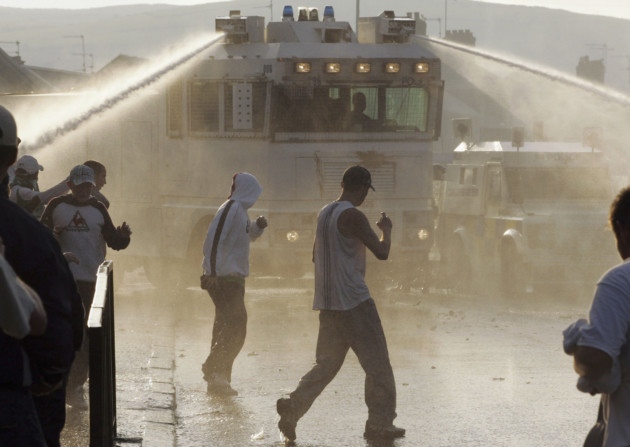
The sinister move by the Association of Chief Police Officers (or ACPO) to seek government approval for the purchase and use of water cannon as a means of crowd control on the British mainland was met with widespread alarm when the idea was first mooted in January.

Even more concerning now is the news that the Mayor of London, Boris Johnson, has unilaterally purchased three such devices from the German police in the presumptuous expectation that the Home Secretary will agree to ACPO’s request before Theresa May has had the opportunity to make her decision.

This blog noted at the time that the ACPO’s move was a transparent power play, that there were no serious concerns about impending violent protests in Britain and that even if there were a repeat of the 2011 riots, water cannon would be uniquely unhelpful to the police in containing the disorder:

So what is this really all about? One explanation could be that ACPO are politically agitating, and trying to send a message of their disapproval of coalition austerity policies to the public and their elected representatives, essentially saying “we told you that cutting government spending would lead to chaos and disorder and we were right; now we have to take the draconian step of procuring water cannon to prevent the country from sliding into anarchy”.

This is one plausible possibility – as we have seen only too recently with the Andrew Mitchell “plebgate” scandal, there are those in the police force with very hardened agendas who would stop at nothing to discredit or cast doubt on the performance of Conservative ministers.

But in truth, a more convincing explanation is that the police just really fancy having these new toys to scare and intimidate people, that they have decided that building good community relations with the public and doing the hard work of policing large scale events just isn’t worth the effort when they can just bully the public into cowed obedience much more easily.

And so it is. The coalition government’s ‘austerity’ policies have now been in effect for over three years, and have yet to provoke widespread public disorder of any significant kind, other than the usual antics of misbehaving students. Why then does ACPO believe that Britain is a smouldering tinder box about to erupt in an explosive delayed reaction to policies which are old news and have already taken effect?

The Guardian also condemns the Mayor of London’s actions in a stinging editorial, and calls on the Home Secretary to refuse ACPO’s request. This would have the double benefit of standing up for civil liberties and giving the mayor of London a slap in the face for presuming to anticipate her decision:

But this cannot be a matter for City Hall and Scotland Yard alone. The Met has a significance that extends beyond London. Westminster should have a say in what would be a profound decision affecting the rights of the UK citizen and the nature of British policing. The mayor will have his water cannon, but cannot use it without the approval of the home secretary. She should ensure it never leaves the depot.

The Guardian’s second point, that Boris Johnson’s move is of particular concern because the significance of the Metropolitan Police extends well beyond London, is also important. With some chief constables up and down the country agitating for water cannon of their own (though to their credit, some realise their lack of utility in policing normal protests), where the Met goes, others would be certain to follow.

The fact that Boris Johnson (in what he thinks is a conciliatory move) is publicly offering to demonstrate the water cannons supposed safety by being blasted by the newly-acquired water cannon himself  is entirely meaningless, unless he intends to be hit directly with the maximum force that the Metropolitan Police will be permitted to use the machines. This is unlikely.

Johnson will almost certainly only submit himself to a light sprinkling from one of the machines at its lowest power setting, and then appear charming and even more bedraggled than usual in front of the television cameras, assuring us that he got a good soaking but is otherwise perfectly unharmed.

Others who have come face to face with the full power of water cannon have not been so fortunate as the Independent notes:

Dietrich Wagner, a German pensioner, remembers the exact moment he was knocked over by a water cannon, in Stuttgart in 2010. It felt as though he was being punched. He fell backwards, lost consciousness, and when he woke, blood was running down his face. “I couldn’t open my eyes,” he says. “I only saw black.”

The former engineer, who turns 70 this year and has had six operations on his eyes, is still almost completely blind. He is in London to warn Home Secretary Theresa May not to authorise the use of water cannons on the streets of mainland Britain.

But the devastating injuries sometimes inflicted by water cannon and the potentially chilling effect on the rights and willingness of people to assemble and protest are already known and much discussed.

Of equal concern is the fact that this draconian, illiberal and presumptuous step was taken by a politician with a fair chance of becoming the next leader of the Conservative Party, and therefore also a potential future prime minister. How will Boris Johnson’s unilateral move to acquire draconian new policing weapons in response to a nonexistent threat affect his already somewhat inexplicable popularity?

The simple fact is that Boris Johnson purchased the water cannon before approval for their use has been given by the Home Secretary. Either he is attempting to strong-arm the government into giving him what he wants in the belief that the Home Secretary will rubber-stamp his decision, in which case he has no respect for the democratic process and the deliberations of government, or he has made a huge gamble and is willing to potentially lose taxpayer money by investing in capital equipment that may not be authorised for use at all, in which case he has committed a major strategic blunder and is terrible guardian of the public purse.

Worse still, if this is about forcing his rival for the future leadership of the Conservative Party into making an illiberal and politically damaging decision that he can somehow later use against her, as is also being suggested, then he is also playing political games with the cherished civil liberties of our country.

None of these possibilities or their associated character traits are desirable in someone who has their sights set on the highest political office in Britain.

Dick Cheney Has No Regrets

He hasn’t gone anywhere, in case you were wondering. And he remains entirely unrepentant about all of his decisions and actions while in office. The authorisation of and boasting about torture, the clampdown on civil liberties, all of it. Andrew Sullivan has curated some of the latest goings-on in Dick Cheney Land.

Andrew Sullivan's avatarThe Dish

The trailer for R.J. Cutler’s The World According To Dick Cheney, which premiered last March:

http://www.youtube.com/watch?v=L3BPK8ahNPo

What has long struck me about Dick Cheney was not his decision to weigh the moral cost of torture against what he believed was the terrible potential cost of forgoing torture. That kind of horrible moral choice is something one can in many ways respect. If Cheney had ever said that he knows torture is a horrifying and evil thing, that he wrestled with the choice, and decided to torture, I’d respect him, even as I’d disagree with him. But what’s staggering about Cheney is that he denies that any such weighing of moral costs and benefits is necessary. Torture was, in his fateful phrase, a “no-brainer.”

Think about that for a moment. A no-brainer. Abandoning a core precept of George Washington’s view of the American military, trashing laws of warfare that have been…

View original post 485 more words

Is Microsoft Voluntarily Censoring The Internet?

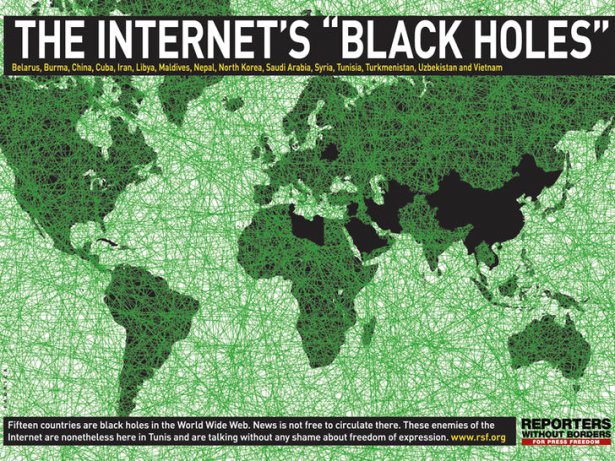
There was once a debate about whether large Western multinational corporations – particularly the newly rising high tech companies such as Google, Twitter and Facebook – should do business in countries such as China, where governments are openly hostile to the concept of free speech, a free media and unregulated access to information for their citizens.

That debate was settled some time ago, the winners being those who advocated expanding into China and then perhaps doing a little bit of agitating or talking up the virtues of freedom when time and decorum allowed. And though there has been precious little lobbying of the government in favour of free speech by those multinationals, the investment in China has, by and large, been a good thing.

Having long ago lost the argument that it is not their place to participate in Chinese government efforts to filter and censor the web when operating in China itself, everyone was bobbing along quite merrily in a morally dubious equilibrium, where the big tech companies would parade their wholesome, consumer-oriented credentials around in front of anyone who would listen or take down quotes, while also co-operating with Chinese censorship requirements and allowing the NSA ready back-door access to personal information held on their servers.

Enter Microsoft.

It is now believed that in addition to complying with the Chinese government’s demands that search engine query results originating from mainland China are filtered and censored, Microsoft’s also-ran search engine, Bing, has been applying those same censorship algorithms to searches in the Chinese language originating from anywhere on the planet. In other words, Microsoft, either in their zealousness to please the Chinese regime or out of sheer laziness and unwillingness to maintain two separate protocols, has apparently been applying Chinese-style censorship to internet searches not just where the Chinese government has geographical jurisdiction but anywhere in the world, whenever the user happens to be searching in Chinese.

chinese-authorities-force-businesses-to-help-censor-the-web-pg

The Telegraph reports:

According to research by Greatfire.org, an anti-censorship campaign blog, Microsoft’s Bing search engine filters Chinese-language results around the world, in the same way as it does in mainland China

Searches for potentially controversial terms such as “Dalai Lama” produce very different results when they are carried out in Chinese than they do in English, even if both searches are carried out on US soil, Greatfire said.

Its claims are likely to raise questions about whether Beijing is trying to extend its censorship regime to the Chinese populations of other countries, and whether Microsoft is making inappropriate concessions.

This is inappropriate to say the very least. The Chinese government’s policy of filtering the internet for its citizens so as to effectively pretend that certain viewpoints, ideologies or historical events are not real is bad enough, as is the fact that Western technology companies have complied with it in order to gain access to Chinese markets while demanding and extracting no concessions or easing of restrictions in exchange. But this allegation, if correct, suggests that corporate malfeasance has been taken to a much more worrying level.

One of the great advantages of globalisation and the free movement of people is that people from different countries can be exposed to different ideas, practices and ways of working. Even though the internet is restricted in mainland China, Chinese citizens could access the full, uncensored internet when traveling abroad, just as they could read the free press. In turn, exposure of Chinese citizens to new and contradictory ideas from outside could ultimately increase pressure on the government to relax their draconian policies.

Basing internet censorship on language rather than geography, as Microsoft appears to be doing, completely destroys this premise and removes the potential for this to happen. As the Telegraph rightly indicates, it would appear that Microsoft is aiding and abetting efforts by the Chinese government to extend their control over expatriate Chinese populations in other countries. In countries such as Britain this may merely be an odious and shameful act, but in other countries such as America, where the right to freedom of expression is constitutionally enshrined, a plausible legal argument could potentially be made that Microsoft is committing a First Amendment violation and breaking the law.

This revelation also contrasts Microsoft very negatively with Google, whose own search engine results for sensitive topics prime for Chinese censorship remain similar whether the search is conducted in English or Chinese, when outside of the Chinese mainland:

Users searching for “Dalai Lama” in Chinese were offered a link to information about a documentary produced by CCTV, the Chinese state-owned broadcaster, before any other search results of results linked to two entries on Baidu Baike, a heavily-censored online encyclopedia. Yahoo, whose search engine is powered by Bing, produced the same results.

By contrast, Google produces broadly similar results for web searches conducted in the US, regardless of whether the terms are searched for in Chinese or English.

But it is Greatfire, the online transparency and pressure group, who pose the ultimate question to Microsoft:

But whose law is dictating the manipulation of search results for Americans who are using Bing in the United States? Or French who are using Bing in France?

It is one thing to prostrate oneself to the laws and whims of a foreign government when negotiating terms to do business in that country. But if incompetence or monetary greed has led Microsoft to start applying Chinese censorship laws to citizens of other countries, then they have a big case to answer.

Where else are Chinese web censorship algorithms lurking?

Satya Nadella, Microsoft’s new CEO, may only be one week into his tenure in the top job, but this is a potential crisis of image and trust that needs to  be nipped in the bud and resolved – yesterday.

Microsoft has gone silent in response to the allegations from Greatfire so far. When the firm eventually comes up with an official story and breaks the silence, it will be very interesting indeed to hear their excuses.

Edward Snowden And The Assault On Journalism

Mike Rogers - basically, Peter King, part 2.


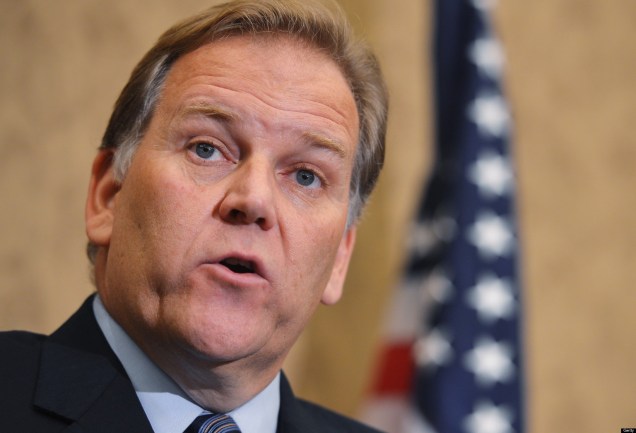
The pig squeals ever louder. Embarrassed at having been caught red-handed secretly violating the US constitution’s prohibitions on unreasonable search and outraged that their power to do what they like without oversight should ever be called into question, those at the heart of the national security apparatus and their apologists in Congress are lashing out. And in their fury and blind fear of being exposed, they are no longer restricting their attacks to the arch-whistleblower, Edward Snowden himself, but are now expanding their campaign to target those journalists who dare to report and lay bare the abuses of power that Snowden revealed.

Representative Mike Rogers, the chairman of the House Intelligence Committee, has become the latest to join the fray, casting doubt on the motives of journalist Glenn Greenwald who worked with Snowden to bring the NSA’s clandestine public surveillance activities into the light of day. The Guardian reports:

Congressman Mike Rogers, chairman of the House intelligence committee, suggested Greenwald was a “thief” after he worked with news organizations who paid for stories based on the documents.

“For personal gain, he’s now selling his access to information, that’s how they’re terming it … A thief selling stolen material is a thief,” Politico quoted Rogers as saying after a committee hearing on Tuesday. Rogers said his source for the information was “other nations’ press services”.

If, by “selling his access to information”, Rogers means “charging a standard rate to write articles for publications based on his investigative journalism” then I suppose the accusation is spot-on. But of course, it could also be leveled just as easily at any other freelance reporter in the country, and is therefore completely meaningless.

Mike Rogers seems to think that the appropriate mode of behaviour on stumbling upon evidence of criminal activity and abuse of public trust by the government and making it public is to enter into some saintlike – almost socialist, shall we say – stance whereby any future commentary or writing about that subject is then given away for free to all and sundry. Only then, according to the Mike Rogers doctrine, would one avoid the charge of profiting from stolen material.

Rogers is apparently unfamiliar with the work of Bob Woodward, perhaps the most high-profile American investigative reporter in living memory and someone who conducted journalism that was equally damaging to people in power but which never raised public speculation that he should be charged with a crime, a point which Greenwald also notes in a recent interview with Vice Magazine:


Of course, Greenwald does not let Mike Roger’s slanderous accusation that he is profiting from the sale of stolen goods go unchallenged, as The Guardian, his former employer, reports:

Greenwald said that the claim was foolish, unfounded, and designed to intimidate journalists. “The main value in bandying about theories of prosecuting journalists is the hope that it will bolster the climate of fear for journalism,” he tweeted Tuesday.

But Mike Rogers was not the only one to go after Greenwald. James Clapper, the Director of National Intelligence – whose principal accomplishment in office has been to sit in front of Congress and lie to them with a straight face about the extent to which the government monitored the communications of US citizens – also decided to use the terminology of crime and policework when discussing journalists who either worked directly with Snowden or dared to publish information that came from him:

James Clapper, the director of national intelligence, has issued a blistering condemnation of Edward Snowden, calling the surveillance disclosures published by the Guardian and other news outlets a “perfect storm” that would endanger American lives.

Testifying before a rare and unusually raucous public session of the Senate intelligence committee that saw yet another evolution in the Obama administration’s defense of bulk domestic phone records collection, Clapper called on “Snowden and his accomplices” to return the documents the former National Security Agency contractor took, in order to minimize what he called the “profound damage that his disclosures have caused and continued to cause”.

This is a strange development indeed, publicly promoting the idea that a journalist doing their job and reporting government secrets that they themselves did not steal, but which were given to them by a third party informant, is somehow committing a crime. The use of the word “accomplices” by James Clappers says everything that you need to know about his point of view on the leaks, and the contempt in which he holds the American public who are now starting to realise the extent to which their government has been acting in secret.

Even the Director of the FBI got in on the act:

FBI director James Comey said that a reporter “hawking stolen jewelry” was a crime, but it was “harder to say” journalism based off the Snowden leaks was criminal, since such a determination had “first amendment implications.”

This one is a real hoot. Director Comey makes very clear with his choice of words that he would love nothing more than to designate Glenn Greenwald’s (and others who publish information embarrassing to the national security elites) actions a crime, but that he is prevented from doing so because of “first amendment implications”. Note that he does not speak clearly and admit that to do so would be a flagrant breach of the Constitution – no, rather there would merely be “implications”, constitutional hurdles and awkward challenges to be overcome on the road to fulfilling his ultimate goal, namely criminalising free speech.

While the administration of George W. Bush long ago did away with any claim by the Republican Party to basic competence on national security issues, the GOP are by no means alone in their inadequacy – many Democrats seem only too keen to join the false prognosticators and the “mission accomplished” cheerleaders in their continuing efforts to sound tough on every issue of security while speaking absolutely no sense at all. Clapper and Comey, it must be remembered, are appointees of President Obama.

When it comes to those people – be they Republican or Democrat – whose first instinct in any scenario is to defend the government and preserve its power over that of the people – I can only take them as seriously as does this meme that has been doing the rounds:

cheneysnowden


An enemy of Dick Cheney’s may not automatically be a friend of mine. But it gets you a good hefty proportion of the way there.