Jeremy Corbyn’s Labour Party – No Home For Centrists

jeremy-corbyn-rally

Jeremy Corbyn and his supporters vastly outnumber the Labour centrists. So whose party is it really?

Very slowly – journalist by journalist, publication by publication – the realisation is beginning to dawn that the unwelcome outsiders in the Labour Party are now the centrist members of the PLP, and not Jeremy Corbyn and his leftist support base.

From the Spectator (my emphasis in bold):

A few months ago, Watson and his fellow MPs thought Corbyn was the anomaly. That if he was dislodged, the natural balance of the Labour Party would be restored. Now it’s clear that there are tens of thousands of Corbynites who now hold party membership cards and are itching to use them. Labour MPs are starting to ask if they are the anomaly. And an anomaly that the new far-left members will seek to correct when Westminster boundaries are redrawn and MPs are selected.

Slow hand clap.

Yes, centrist MPs are indeed now the anomaly, just as centrists should always be the pitiable, wishy-washy anomaly in a political party. Finally, realisation dawns that maybe it is the centrist machine politicians who are the parasites in the so-called Labour Party, and not the socialists.

A political party is nothing if not the voice and champion of its members. Any other arrangement – such as the noxious idea that MPs, once selected, should have license to ignore their local party at will while being at no risk of ever losing their seat – makes the party membership little more than a fan club for some generally rather unremarkable career politicians. And under Jeremy Corbyn, the Labour Party is finally becoming less of a fan club and more a champion of its members.

Naturally, there are losers in this reconfiguration, namely the centrist MPs who have enjoyed utter dominance since the late 1990s, who suddenly find themselves out of favour and at theoretical risk of deselection. But what is the alternative? That Blairite and Brownite machine politicians, despised by the very constituency associations who will be tasked with pounding the pavements and handing out leaflets to get them elected, have the right to a “job for life”?

This is why we need to radically re-examine the way in which MPs are selected and removed from office. We need real powers of recall, so that constituents (on gathering a sufficient threshold of signatures in a petition) can recall from Westminster an MP who is underperforming, betraying their election pledges or dishonouring themselves and Parliament through scandal. But more than that, we need to move toward to mandatory re-selection and a competitive primary system.

As this blog recently pointed out:

This would bring Britain into line with other countries like the United States, where Representatives and Senators do not have “jobs for life” and must compete in party primaries if they wish to run for their seat at the next election. Such a move would put the wind up an often self-entitled political class, forcing MPs to justify their worthiness of a place on the ballot at regular intervals and forcing many of the older, less useful bench warmers off into retirement.

No constituency should be lumbered with a doddering old MP who doesn’t care any more, or a sharp-elbowed go-getter who ignores their constituency as they focus on climbing the greasy pole. Mandatory reselection goes a long way to solving those problems.

The current system, by contrast, is an abomination – incumbent MPs, often initially selected to stand for parliament in their constituencies through dubious, opaque or even downright corrupt means are then largely free from scrutiny by their own party for the rest of their career. As soon as they enter parliament they are enveloped in the Westminster self-protective cloak which serves to insulate parliamentarians from the consequences of their behaviour and political decisions.

If you know that nothing you can do will ever get you fired – if there is no political betrayal (like, say, pretending to be a eurosceptic during selection and then turning around and supporting the Remain campaign) for which you will ever be held to account – then there is every incentive to lie about your real political beliefs and motivations during selection, and then behave in as abominable and self-serving a way as you please as soon as your are elected to the Commons.

The Labour Party now has two choices if it wants to avoid a permanent schism:

  1. Rig the leadership election process (deceptively known as “restoring the electoral college”) to ensure that pesky party members and their awkward convictions never again elect an ideological leader, or
  2. Embrace a system of mandatory contested primaries, where sitting MPs have to win a party primary in order to stand as the Labour candidate for their constituency at each general election

Failure to adopt one of these two solutions (and this blog strongly favours the second) will ensure that the party remains permanently vulnerable to irreconcilable differences between the directly elected leader and the PLP, thus rendering Labour ungovernable.

Either it must be made harder for ordinary party members to choose the leader they want, or it must be made significantly easier for party members to remove MPs who prove themselves unwilling to work constructively with that elected leader.

The past year has been a viscerally painful case study in what happens when the can is endlessly kicked down the road and people pretend that some other magic solution will offer itself, saving them from having to pick one of these harsh medicines. And whatever harm Jeremy Corbyn’s left-wing positions may have done to Labour’s electoral fortunes pales in comparison to the harm inflicted by the centrist-led campaign to undermine and destabilise their leader.

Either the centrist Labour MPs must take a hike (at least resigning themselves to a few years of quiet irrelevance on the back benches) or the hundreds of thousands of new party members must take a hike, for they have proven themselves incapable of co-existing.

And while this blog disagrees with nearly the entire Corbynite platform, I side strongly with the ordinary Labour Party members who are about to overwhelmingly re-elect their man.


Jeremy Corbyn - PMQs

Top Image: Mirror

Support Semi-Partisan Politics with a one-time or recurring donation:

Agree with this article? Violently disagree? Scroll down to leave a comment.

Follow Semi-Partisan Politics on TwitterFacebook and Medium.


Alan Johnson’s Permanent Revolution

Despite Owen Smith’s imminent, glorious defeat at the hands of Jeremy Corbyn in the Labour leadership contest Take 2, New Labour grandee Alan Johnson is in no mood for acceptance and reconciliation.

In fact, as the Telegraph reports, Alan Johnson is still firmly stuck in the “denial” stage of grief for the stalled New Labour centrist agenda to which he dedicated his political career:

Moderate Labour MPs must wage a remorseless campaign to undermine Jeremy Corbyn’s leadership “year after year” or the party will die, Alan Johnson has said.

The former Cabinet minister called on his colleagues on the centre-Left to “recapture this party” from Mr Corbyn and his socialist allies by emulating their record of opposing previous Labour leaders.

Mr Corbyn is expected to be re-elected as party leader next week, with another landslide majority from members, but he lacks the support of most of his own MPs.

The Labour leader admitted on Saturday to making mistakes and disclosed that he would be making a peace offer to MPs in an attempt to persuade his critics to return to the shadow cabinet.

However, Mr Johnson, the former Home Secretary, condemned Mr Corbyn as “useless”, “incompetent” and “incapable” of running a political party, and called on rebels not to give up their efforts to oust him.

So it’s to be a permanent revolution, then – at least in the puffed-up, self-important world of Alan Johnson’s imagination. Labour MPs should continue to loudly and proudly wear their contempt for their core voters like a perverse badge of honour, be it on Brexit or their preferred choice for leader of the party. The PLP should ruthlessly pursue its own agenda while still demanding and assuming the support of the CLPs who stated their preference for Corbyn, and who will become increasingly enraged by any further attempts to remove him. What could possibly go wrong?

Back on planet Earth, though, the groundwork continues to be laid for the PLP’s abject, humiliating capitulation to Jeremy Corbyn – as this blog has discussed here and here.

Labour’s centrist MPs have severely tarnished their reputation by opportunistically exploiting the EU referendum result to rise up against their party leader, and then failing to put forth any better candidates than the hapless Angela Eagle and the detestable Owen Smith. They have no real political capital left to spend, and while the Corbynite dream of mass deselections may still be out of reach now, another mass rebellion of the centrists would all but guarantee a severe grassroots response.

Besides, all this talk of petulant, hysterical and unending opposition to Corbynism is a bit rich coming from a man repeatedly urged to step up and challenge for the Labour Party leadership himself, but who lacked the courage and willingness for self-sacrifice to answer the call even once.

If Alan Johnson really wants to recapture the Labour Party from the Corbynites, he might consider sitting down with a notepad and pen and trying to come up with some attractive new centrist policies which don’t simply look like splitting the difference between Margaret Thatcher and Michael Foot. Want ordinary people to be enthused by centre-leftish policies? Then stop making them such a darn fudge. Stop desperately chasing votes and start crafting the policies which might actually win votes.

But why go to the trouble of doing anything constructive when one can just carp from the sidelines?


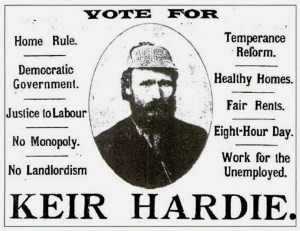
keir-hardie-labour-party

Support Semi-Partisan Politics with a one-time or recurring donation:

Agree with this article? Violently disagree? Scroll down to leave a comment.

Follow Semi-Partisan Politics on TwitterFacebook and Medium.

Submission, Part 2

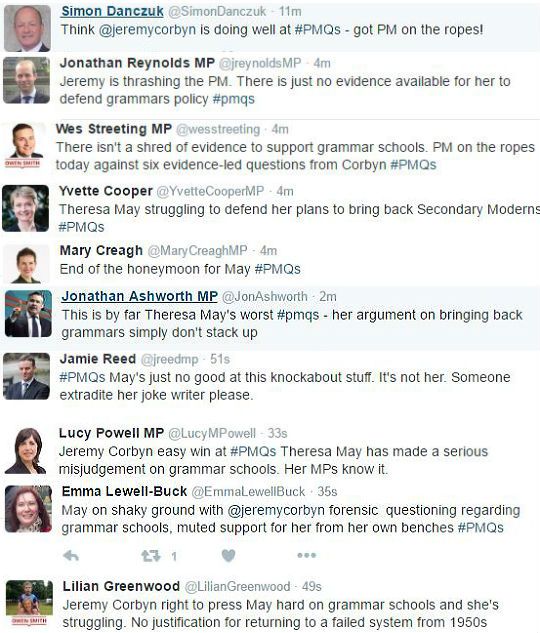
labour-plp-centrist-mps-praise-jeremy-corbyn-pmqs-guido-fawkes-twitter-compilation

More signs of the humiliating capitulation to come

After Jeremy Corbyn managed to surprise everyone and trounce Theresa May at yesterday’s Prime Minister’s Questions, it was interesting to note the fulsome praise he received, even from many of his staunchest critics.

Guido compiled some of the most striking olive branches as they flashed across Twitter, and it makes for interesting reading – see the image above.

And so we have yet more evidence of the PLP resigning itself to Owen Smith’s inevitable defeat and trying to make nice with the man they so opportunistically stabbed in the back in the panicked aftermath of the EU referendum. MPs who haven’t had a single kind word to say about Jeremy Corbyn in months are now keen to be seen cheering on their leader.

Is this just a collective expression of relief that Corbyn didn’t self-immolate at the dispatch box for once? No, clearly something more is at work here.

Why? Because many of these centrist Labour MPs realise that they have put themselves in an untenable position. In their fury at being sidelined, these MPs queued up to publicly declare that Jeremy Corbyn was awful and that there was simply no way that they could productively work together. Now Jeremy Corbyn is about to receive another stonking mandate from the party membership, which rather leaves the door open for the centrists, not Corbyn, to leave the party if they don’t like the direction the members have set. All the while, the ominous threat of deselection hangs over their heads, and so these MPs – many of whom have absolutely infuriated their local party branches with their disloyal behaviour – are understandably desperately seeking to shore up their positions.

As this blog recently pointed out:

The Parliamentary Labour Party called Jeremy Corbyn’s bluff and lost, badly. There is ample blame to go around – some for the remaining “big beasts” of the party who were too cowardly and self-serving to put their names forward as leadership contenders, leaving it to unloved support acts like Angela Eagle and the contemptible Owen Smith; some for misbehaving shadow ministers like Hilary Benn who took the job and then rebelled and briefed against their leader at every opportunity; and last but not least, a portion of the blame rests with every single one of the 172 Labour MPs who opportunistically calculated that the confused aftermath of the EU referendum provided a great “fog of war” in which they could go full Brutus on Jeremy Corbyn’s Caesar and get away with it.

Well, it didn’t work. Nobody viable stepped forward, the party membership was enraged at the parliamentary party challenging their pick for leader less than a year into the job, and Owen Smith’s damp squib of a campaign lurched from one unforced error to the next.

[..] And so the unhappy bedfellows will likely limp on together, Corbynites and centrists openly despising one another but remaining stuck with each other thanks to the British political system. The centrists will continue to moan to any journalist who will listen, Dan Hodges will have more material for his Mail on Sunday column than he knows what to do with, the PLP will do everything they can to make Jeremy Corbyn’s life a living hell, and Corbyn’s team will do all they can to set the stage for a purge of the centrists, either at the upcoming constituency boundary review or when it comes time to choose candidates for the 2020 general election.

But of course, if anyone is capable of seizing defeat from the jaws of victory (or at least taking 1.5 steps back for every 2 steps forward) it is Jeremy Corbyn. And so it is again today, with news that overzealous Corbynite aides have prepared another one of their infamous enemy lists, this time superciliously keeping note of those centrist MPs who have supposedly undermined Corbyn’s leadership in the past.

From the Guardian:

Jeremy Corbyn’s campaign team has issued a list singling out 14 Labour MPs, including deputy leader Tom Watson, who it claims have abused the leader and his allies, triggering a new row in the party.

Corbyn’s team said the list was sent out by mistake by a junior staff member, but the leader later appeared to stand by the substance of the allegations, saying all the remarks had been made on the record.

In the release, Owen Smith, the challenger for the Labour leadership, was accused of being the “real disunity candidate”, who has failed to tackle abuse meted out by his own supporters.

The list, obtained by Press Association, highlighted the behaviour of a number of Labour MPs, including Jess Phillips for telling Corbyn’s ally Diane Abbott to “fuck off”, John Woodcock for dismissing the party leader as a “fucking disaster” and Tristram Hunt for describing Labour as “in the shit”.

Watson was highlighted for calling the grassroots Corbyn campaign Momentum a “rabble”.

Cue lots of sanctimonious outrage from those MPs on the list – Jess Phillips is already parading her supposed vulnerability to crazed Corbynite violent attacks on social media.

This doesn’t make anyone look good. One of the most dispiriting things about the Labour Party in recent years, particularly since the departure of Ed Miliband, has been the continual games of competitive weaponised victimhood played by centrists and Corbynites alike. Both sides are clearly drinking deep from the well of social justice and identity politics, and have decided that the best way to win (or at least shut down) an argument they don’t like is to screech hysterically that the other side is somehow encouraging or tacitly accepting violence.

We are used to seeing this from the centrists, furious at their fall from power and lashing out at anyone and everyone who dares to suggest that their plight might just be self-inflicted. But it is depressing to see Corbynites now adopting the same behaviour, keeping finickity little lists of those MPs who have “abused” them or made them feel “unsafe”.

This, more than anything else, is why the British public views the Labour Party as an unelectable dumpster fire of a political party right now. Yes, Jeremy Corbyn’s outdated socialism is failing to win over centrists (in what is a broadly centre-right country, as recently reasserted by a new non-partisan report as well as by common sense), but far worse than that is the constant spectacle of briefing, counter-briefing and backbiting. These are the seething, petty politics of the student union, being practised by grown adults with prestigious jobs and £74,000 salaries. Frankly, it is pathetic.

But this is all just a flash in the pan. However much some Labour MPs may huff and puff about being placed on Corbyn’s enemy list, the majority of the PLP will fall into line. In fact, given the continual and widespread criticism that he has endured from his own back (and front) benches, the real miracle is that there are only fourteen names on the list.

And there are only fourteen names on the list because in this one key respect, Jeremy Corbyn acknowledges reality rather than struggling against it. Corbyn knows that most of the PLP, whatever histrionics they may have engaged in over the past year, will come trudging meekly back through the door of his tent the moment he finishes wiping Owen Smith’s blood off his sword. And like any smart vanquishing general trying to occupy hostile territory, Corbyn knows that the best thing to do is to make a very public example of those who were most disloyal to him while granting the majority a reprieve contingent on future behaviour.

Having utterly failed in their opportunistic and self-serving bid to rid Labour of Jeremy Corbyn, nearly all of his restive MPs – even the ones who pompously declared the impossibility of ever working with their leader – will shortly bend the knee in a humiliating show of submission.

This is Jeremy Corbyn’s party now, and the centrists are going to have to do a hell of a lot better than Twitter tantrums and Owen Smith if they are serious about changing that fact.


Jeremy Corbyn - PMQs

Support Semi-Partisan Politics with a one-time or recurring donation:

Agree with this article? Violently disagree? Scroll down to leave a comment.

Follow Semi-Partisan Politics on TwitterFacebook and Medium.

What Became Of The Great British Progressive Majority? It Never Existed

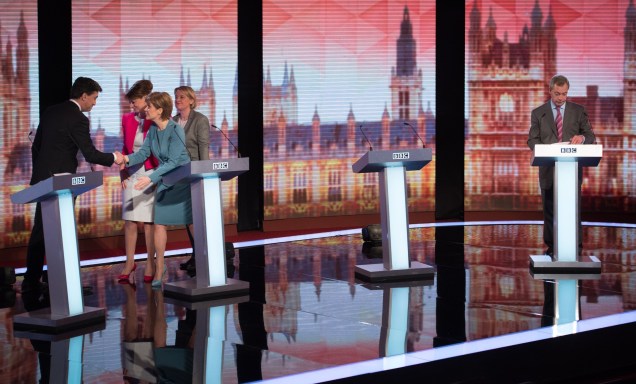
BBC Challengers Debate - Leaders Debate - General Election 2015 - Nigel Farage Stands Alone

Turns out that pooling their strength and holding hands beneath a big progressive rainbow will not help Britain’s left-wing parties get back into power after all. What a shame.

Remember the Great British Progressive Majority, that overwhelmingly large (yet always infuriatingly hidden) bloc of centre-leftish voters who together wielded the power to lock the Evil Tories out of 10 Downing Street and government forever, if only they could be organised and persuaded to vote tactically?

You know, that vast conclave of redistributionist, environmentalist, identity politics-wielding, Big Government-supporting luvvies who supposedly outweigh the 11.3 million British voters who re-elected the Conservative government last May?

Well, no worries if you don’t recall the fabled progressive majority. Because it turns out that it doesn’t exist after all, and never has.

Guido reports:

This morning the centrist, cross-party Social Market Foundation held a well attended seminar headlined by Chuka Umunna, Nicky Morgan and Nick Clegg. It felt like a wake for the Labour Party. SMF claims – on the back of research from Opinium – that there’s no progressive left-leaning majority in the country – the majority of voters hold “traditionally right-wing views” that will guarantee a “healthy majority” in the future for the right-wing parties.

The wonks categorised voters’ attitudes into eight political tribes/parties that share very distinctive political views. Despite the majority of voters self-describing as “centrist”, most voters actually identified with centre-right and right-wing political attitudes.

But…but…but Nicola Sturgeon promised us! One can hear the wailing from trendy lefty dinner tables from Brighton to Aberdeen. And so she did. So did they all – Sturgeon, Nick Clegg of the forgotten “Lib Dem” tribe, Plaid Cymru’s Leanne Wood, the Green Party’s underwhelming Natalie Bennett. In the tawdry hunt for votes, all of these party leaders told the electorate that between them, they carried the votes to “lock David Cameron out of Number 10 Downing Street“.

The only one to object, as all of this unfolded, was the hapless Ed Miliband, whose votes these other parties were ruthlessly cannibalising. Miliband, still entertaining sweetly pathetic hopes of becoming prime minister, had no great desire to share power in a leftist coalition, to have moralising Scottish and Welsh nationalists perched on either shoulder, scolding him for his insufficient fidelity to socialist principles.

But Miliband need not have worried about sharing power. Between them, the main parties of the Left – Labour, the LibDems, Plaid Cymru, the SNP and the Green Party – managed to accumulate just 13,102,483 votes in the 2015 general election. Meanwhile, the main parties of the Right – Conservative and UKIP – racked up 15,215,675 votes. This gave the parties of the Right an edge of well over 2 million votes, despite the fact that David Cameron’s lacklustre Coke Zero Conservatives hardly put a spring in people’s steps as they went to the polling station. Britain’s fabled progressive majority didn’t show up on polling day. And they didn’t show up because they don’t exist other than in the minds of starry-eyed leftists.

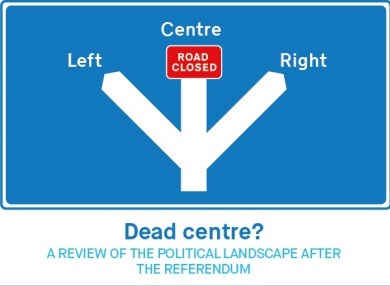
social-market-foundation-britain-progressive-majority

If you have the time, the whole report – entitled “Dead centre? A review of the political landscape after the referendum” – is worth a read. Yes, it contains the obligatory sprinkling of shellshocked establishment wailing about Brexit, and is published by a think tank which claims to represent something (the so-called “radical centre”) which by definition can not exist. But the report nonetheless highlights the key reason why the parties of the Left cannot unite in opposition to the Evil Tor-ees, as many of their activists clearly want to happen.

Money quote:

On the whole, our analysis makes more cheerful reading for those on the right, than on the centre or the left. The two largest tribes, making up around 50% of the population, hold a range of traditionally right wing views, offering a solid foundation on which to aim for the 40-42% of the vote which normally guarantees a healthy majority under our electoral system. These groups share a desire to see immigration reduced to below 100k a year and were both solidly pro-Leave in the EU referendum.

In fact, of the eight different voter tribes identified by the report, “none of the other groups approaches the size or homogeneity of these two”. These two groups alone account for more than half the electorate, and are inherently distrustful of more leftist policies. Throw in a third tribe, the “free liberals” (perhaps including this blog) and you are looking at 57% of the electorate likely to be hostile to collectivist, redistributionist thinking.

If splits within the Conservative Party and between the Tories and UKIP look bad, that is nothing compared to the fissures on the right, according to the report. As Guido notes:

The progressive tribes are fragmented, disagreeing on openness to the world and attitudes towards the welfare state and taxation. This is bad news for the current Labour Party as the think-tank finds massive differences between so-called“Democratic Socialists” and “Community” party voter blocs – traditionally known as Labour supporters – while both tribes agree on socialist policies towards capitalism, they diverge on supporting the EU or having an internationalist approach.

Well, really it is just Labour that is fractured. The LibDems, SNP, Plaid Cymru and Green party have all clearly decided to tread the internationalist, social democrat path, worshipping at the altar of the EU and scorning the nation state as a worthwhile agent for change or guarantor of core liberties. This leaves the Labour Party as the only home for those patriotic left-wingers who might fall into the “Community” tribe. And even there, they find themselves under continual assault by the sneering middle class clerisy which is loathe to give up its stranglehold on policymaking. Jeremy Corbyn answers some of this tribe’s concerns, but not all. In fact, one might consider him equally dissatisfactory to the “Democratic Socialists” as to the “Community” tribe, rubbing each up the wrong way.

Even if the parties of the Left could hammer out an uneasy truce and electoral alliance, why would they? Despite the overblown leftist rhetoric, Theresa May’s Conservative government hardly shows signs of being a radical right-wing government in the manner of Thatcher (more’s the pity), so why attempt a political merger which is almost certainly doomed to failure, just to thwart a very non-threatening centrist Tory government? Leftists’ hatred of the Evil Tor-ees is certainly irrational, but they are not that irrational.

Besides, whatever faultlines currently run through the British Left, the headline numbers don’t lie. And despite the fatuous claims of opportunistic smaller parties that greater Westminster representation would enable them to participate in a progressive majority government, the votes simply are not there. They never were.

Of course, none of this is surprising – except, apparently, to London-dwelling metro-left members of the political class who never actually get out and talk to normal people. Anyone who actually does so knows that Britain remains a vaguely conservative country, shot through with a fairly strong authoritarian streak and a deeply ingrained suspicion of success.

We Brits will happily sign petitions for Things That We Don’t Like to be banned and made illegal (the authoritarian bit), light ourselves on fire outside Downing Street in protest at The Great British Bake Off moving from the BBC to Channel Four (the conservative bit) before going on a long, satisfying rant about how evil it is that the inventors and producers of that television show want to receive market-rate compensation for their creation (the suspicion of success). That’s just who we are as a country. I certainly didn’t need the Social Market Foundation and their “eight tribes” report to know that Britain is a small-c conservative country.

That’s why David Cameron was able to guide his wishy-washy, Coke Zero Conservative government to one and a half general election victories – by appealing to these instincts in us. Lord knows it wasn’t because we were excited about his agenda for government (whatever that may have been).

Anyone who pays the remotest bit of attention to British politics ought to be able to sum up our national character fairly succinctly in a manner such as this. In fact, the only ones unable to do so – who laboured under the hilarious misapprehension that there was some great progressive majority yearning to break free and assert itself, installing a wind turbine on every roof – were the deluded metro-leftists.

Perhaps now they can disenthrall themselves of this sweet but futile notion.


Postscript: This review of the report in Conservative Home is also worth a read.


social-justice-progressive-majority-meaningless-waffle

Support Semi-Partisan Politics with a one-time or recurring donation:

Agree with this article? Violently disagree? Scroll down to leave a comment.

Follow Semi-Partisan Politics on TwitterFacebook and Medium.

With David Cameron’s Resignation From Parliament, British Conservatism Can Begin A New, Bolder Chapter

david-cameron-resigns-as-mp-for-witney-parliament-westminster

Finding himself prematurely out of power and seeing no value in life as a mere backbench MP, David Cameron brings the curtain down on a bland, centrist, disappointing and entirely forgettable political career

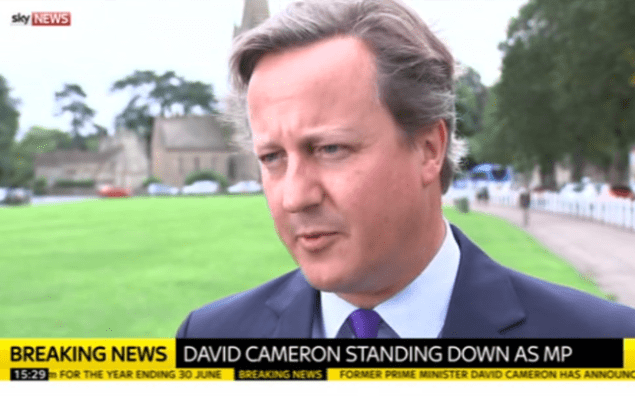
Having successfully completed Tony Blair’s fourth term of office and having a premature end called to his fifth, David Cameron today announced his decision to flounce out of parliament – despite having earlier promised to stay on as an MP after his fall from power.

He took his leave of us with these words:

With modern politics, with the circumstances of my resignation, it isn’t really possible to be a proper backbench MP as a former prime minister. I think everything you do will become a big distraction and a big diversion from what the Government needs to do for our country.

And I support Theresa May, I think she’s got off to a great start, I think she can be a strong prime minister for our country and I don’t want to be that distraction – I want Witney to have a new MP who can play a full part in parliamentary and political life without being a distraction.

[..] I hope I’ll continue to contribute in terms of public service and of course contribute to this country that I love so much.”

[..] I spoke to Theresa May and she was very understanding about this decision. I support her, I support what she’s doing, she’s got off to a cracking start. Obviously I’m going to have my own views about different issues – people would know that. And that’s really the point: as a former prime minister it is very difficult, I think, to sit as a backbencher and not be an enormous distraction and diversion from what the Government is doing. I don’t want to be that distraction; I want Witney to have an MP that can play a full role in parliamentary and political life in a way I think I would find very difficult if not impossible.”

Naturally this has led to speculation that David Cameron somehow disagrees with Theresa May’s loudly-trumpeted plans for new grammar schools and the return of potentially widespread academic selection to the education system.

I find this explanation…unconvincing. If the capsuled history of David Cameron’s premiership and leadership of the Conservative Party has taught us anything about Cameron the man, it is that he has absolutely no core political convictions which he is not more than willing to toss overboard for the sake of political expediency and his relentless desire to engage in centrist triangulation.

Fiscal conservatism? As long as he and George Osborne were able to find some statistical or rhetorical device to falsely claim that they were “paying down Britain’s debts”, Cameron was more than happy to continue spending hand over fist, driving Britain’s national debt ever-upward while exhibiting enormous timidity in reversing many of Gordon Brown’s most draconian tax increases.

Strong national defence? It took his successor, Theresa May, to drive through the parliamentary vote on the renewal of Trident, while under David Cameron’s watch Britain temporarily waived goodbye to our aircraft carrier capability (a true diminution in the eyes of the world) as well as the ability to effectively patrol our own coastline and airspace without the help of allies.

A smaller state? The much-vaunted “Big Society” was dead on arrival in 10 Downing Street back in the spring of 2010, and whatever rearranging of deckchairs the coalition government engaged in, nothing was done to tackle the biggest budget black holes – pensions and the NHS. Under David Cameron, the government preferred to virtue-signal their progressive credentials by spending borrowed money on international aid than get to grips with departmental spending.

So given this singularly unimpressive track record, the idea of David Cameron suddenly discovering an ideological backbone and beliefs strong enough to resign over is frankly ludicrous.

In fact, what really happened is quite obvious. Cast from power unexpectedly and with unexpected speed, Cameron lied when he said that he intended to stay on and complete his term as MP for Witney. To have said otherwise and admitted his intention to resign would have appeared churlish, and more than anything Cameron wanted to cultivate the image of himself as an easy-going happy warrior, ready to relinquish the trappings of office without regret and re-assume a more humble role as a backbencher.

This announcement came as quickly as it possibly could without making Cameron look completely dishonest and reprehensible. At least when Gordon Brown resigned as an MP he had managed four years as a backbencher – albeit four years in which he collected a hefty MP salary while being virtually invisible in Westminster. David Cameron’s brittle ego wouldn’t even permit him to last a year on the backbenches. His top flight political career having been brought to an unexpected end, Cameron saw no reason to stick around as a mere constituency MP.

To politicians like David Cameron, the role of constituency MP is merely a springboard to ministerial power. When the possibility of prize cabinet jobs or the keys to Number 10 Downing Street are no longer an option, wasting time on select committees or dealing with constituents’ issues appears a supreme waste of time – time which could be better spent cashing in on fame and carefully tended relationships while they are still relatively fresh and can bear the most fruit.

James Kirkup is similarly unimpressed with the manner of Cameron’s departure:

On June 27, David Cameron issued this statement: “I will continue with my duties as the MP for Witney. It is an enormous privilege to serve the people of West Oxfordshire.”

So enormous that he could only bear it for a few more weeks, apparently. He’s off, leaving the Commons and triggering a by-election in Witney: some lucky Tory will soon inherit one of the safest and prettiest seats in the country.

What does this tell us about Mr Cameron? Nothing terribly positive, to be honest. Let’s remember, he fought the EU referendum campaign promising not to quit if he lost, then quit when he lost — but only having clung to office as long as possible and having banned the Civil Service from doing any preparatory work for Brexit, thus making it harder for his successor to actually get on with the job.

In between breaking his promise not to resign as PM and breaking his promise not to resign as an MP, the only significant official work he undertook was drawing up an honours list handing an OBE to his wife’s stylist and a knighthood to his press officer.

Not exactly the most dignified departure from office, is it? And certainly not one that’s easy to reconcile with many, many statements from Mr Cameron about the sense of duty he owed to his nation, the selfless service he felt obliged to render.

And Kirkup’s unsparing conclusion:

And this is why flouncing out of Parliament in this way is so telling: it speaks to something fundamental about Mr Cameron’s character and his approach to politics: a lack of seriousness, the absence of real commitment.  Yes, he wanted the job and yes he put the hours in, to the cost of his family.

But he would never die in a ditch for his political beliefs, never shed blood and move mountains to hammer home his arguments. It was always enough to get by, to do just enough to get the top grade and do better than the rest.

Sadly, that describes Cameron perfectly – far more obsessed with optics than reality, and forever in search of the path of least resistance, even when that path ran direct through traditionally left-wing territory.

Ultimately, David Cameron was a weak and instantly forgettable prime minister because he was a centrist triangulator and a technocrat at heart. As prime minister he had no real interest in reforming Britain in his own image, imposing his own worldview or being a statesman. Rather, he was content to campaign and govern as a mere Comptroller of Public Services, the living, breathing symbol of the diminution of our national politics.

With his happy departure from Parliament (en route to a minor footnote in history) one hopes that the ground has shifted under British politics, and that the age of the technocrat might be coming to an end. His successor, Theresa May, while far from being this blog’s preferred choice, at least seems to have some strongly held political views of her own, while Jeremy Corbyn’s imminent re-election as Labour Party leader promises a 2020 general election offering genuine choice to the electorate.

All we need now is for George Osborne to follow his chum David Cameron into political retirement and we may finally be able to turn the page on this most boring and depressing chapter in Conservative history.


David Cameron - Coke Zero Conservative - I Cant Believe Its Not Miliband

Support Semi-Partisan Politics with a one-time or recurring donation:

Agree with this article? Violently disagree? Scroll down to leave a comment.

Follow Semi-Partisan Politics on TwitterFacebook and Medium.