Donald Trump, The Republican Fringe And Their ‘Second Amendment Remedies’

Donald Trump is not the first politician to invoke the Second Amendment as a potential tool for remedying grievances

From all of the media outrage, one would think that Donald Trump is the first major political candidate to ever hint at encouraging an armed uprising – that we are somehow in entirely unprecedented territory for a major party candidate to talk this way.

This is what Donald Trump actually said earlier this week:

“Hillary wants to abolish – essentially abolish – the Second Amendment. By the way, if she gets to pick – if she gets to pick her judges, nothing you can do, folks. Although the Second Amendment people, maybe there is, I don’t know.”

Trump’s apologists, including the increasingly unbearable Rudy Giuliani, leapt to their man’s defence, insisting that Trump was referring to the unified power of pro-2A lobbying efforts and the combined political might of gun owners. This is – how best to put it – a bold faced lie. If Trump was speaking about political activism he wouldn’t have said “maybe there is”. He would have issued a much stronger, more ringing call to arms, and probably specifically name checked the National Rifle Association while doing so.

Everybody knows that the NRA and allied Second Amendment supporters can muster a strong political campaign in support of gun rights – Trump’s “maybe” clearly refers to something else, something left unsaid but which no serious person can reasonably doubt (whether the suggested target is Hillary Clinton or her judicial picks).

It is sad to see Tim Stanley, whose American political commentary is usually so on the money, accepting this weakest of excuses:

Second, some people seem to want to condemn Trump for things he did not say. This is unnecessary: there’s plenty of legitimate reasons to dislike him without having to make more up. Trump did not say, for instance, that gun rights people should shoot Hillary Clinton to save the Constitution – he actually said that second amendment fans should lobby her to stop her unbalancing the Supreme Court.

Nope. No no no. That isn’t what Trump said at all (ironic, considering the thrust of Stanley’s point was criticising people who put words into the mouths of political candidates). If Trump wanted to make the point that Tim Stanley makes, he could have uttered words to that very effect. But he didn’t. We can be charitable and assume that Trump was joking when he made his comments, but what we cannot do is pretend that he meant something innocuous when the ominous suggestion was clearly left hanging open.

Besides which, Donald Trump knew exactly how his remarks would be interpreted and picked up by the media. He doesn’t find himself topping the news headlines every day by some quirk of chance – he deliberately says things and does things, knowing that they will be interpreted a certain way while still leaving himself just enough wriggle room to claim plausible deniability.

In this parallel universe, Trump didn’t mean to suggest that Fox News presenter Megyn Kelly was menstruating when he talked about “blood coming out of her…wherever”, he was going to say “nose” but couldn’t be bothered to finish his own sentence. He wasn’t really imitating a disabled reporter, he was just indulging in general mockery. This remark is just the latest in a litany of similar under-the-radar provocations.

But does this latest statement from Trump amount to “fighting words”, or a clear call to violence? No – and those authoritarian critics shrieking for Trump to be interrogated by the FBI (as though he is seriously hatching assassination plots) or thrown in prison need to go away and take a good long look at themselves. One can (and should) defend Trump’s technical right to skirt the line between passionate rhetoric and dog whistle politics while still abhorring his behaviour; not everything we despise should automatically be illegal.

(Reading online comments, one is also struck by the number of people who openly yearned for somebody to assassinate Donald Trump who are now clutching their pearls at Trump’s own casual allusion to violence).

Besides, the Republicans have form when it comes to this type of behaviour. This is why the current GOP elites who reach for the smelling salts every time Donald Trump says something inflammatory have no right to be shocked, because they are guilty of presiding over the dramatic increase in GOP craziness over the past eight years, mistakenly thinking that whipping people into an unthinking frenzy would offer them a short cut back to power.

Case in point, here is former Republican senatorial candidate Sharron Angle, fighting a tough senate race against Democratic Senate majority leader Harry Reid, playing to the Tea Party crowd back in 2010:


This is what Sharron Angle says about the Democratic-controlled Senate and her opponent Harry Reid:

“You know, our Founding Fathers, they put that Second Amendment in there for a good reason and that was for the people to protect themselves against a tyrannical government. In fact you know, Thomas Jefferson said it’s good for a country to have a revolution every twenty years. I hope that’s not where we are going, but, you know, if this, this Congress keeps going the way it is, people are really looking toward those Second Amendment remedies and saying my goodness, what can we do to turn this country around? And I’ll tell you the first thing we need to do is take Harry Reid out. 

What Trump is saying is nothing new, and nothing surprising about the morally debased Republican Party.

The only difference is that six years ago, they were funding and supporting a senatorial candidate in Nevada whom the majority of people nationwide and worldwide were paying no attention to. Now their ultra high-profile presidential nominee is saying the same things and they suddenly find it uncomfortable. Why? Because the GOP is willing to indulge in scummy behaviour when they think that nobody will notice, but get visibly upset when they are caught doing the same thing in the media glare of a presidential election.

So has this episode taught us anything new about Donald Trump, about the Republican Party or about this presidential election? No, it has not. We already knew that Donald Trump is a man who believes that any publicity, including (or especially) the screeching condemnation of the establishment media, is good publicity. We already knew that the Republican Party routinely trawls for votes by pretending that the Second Amendment itself is teetering on some kind of precipice when it clearly is not. And we already knew that this depressing presidential election comes down to a question of temperament.

And that question is as follows: Do the American people want as their leader and as the commander-in-chief of their mighty armed forces somebody willing to jokingly hint that “Second Amendment people” should take unspecified action against his political opponent (who, let’s face it, is so centrist and focus group led that she would never dream of touching the Second Amendment as long as there are votes to be lost by doing so) in order to protect their gun rights from a largely nonexistent threat?

In these highly charged times, when somebody not so smart and not in on the joke could easily miss the nuance and take the political rhetoric very literally, is suggesting that “maybe there is” something that Second Amendment people can do to protect their rights from a nonexistent threat a responsible way for a presidential candidate to behave?

Nobody is suggesting that the Donald Trump or the Republican Party actually want a lone wolf Second Amendment fanatic to take the defence of the Constitution into their own hands and start taking pot shots at Hillary Clinton or her potential judicial nominees. But the Republican Party does have a tawdry recent history of trawling for votes among people  who would heartily approve of such a course of action – always with just wiggle room in the comments to allow plausible deniability when called out.

At this point, nobody expects any better from Trump himself. But some of those politicians and commentators now leaping to his defence have reputations which presumably they would like to maintain beyond this presidential election cycle.

They should think on that the next time Donald Trump says or does something appalling.

 

Donald Trump Hosts Nevada Caucus Night Watch Party In Las Vegas

Support Semi-Partisan Politics with a one-time or recurring donation:

Agree with this article? Violently disagree? Scroll down to leave a comment.

Follow Semi-Partisan Politics on TwitterFacebook and Medium.

Mandatory Reselection Of MPs Should Be The Norm For British Political Parties, Not A Scandalous And Controversial Idea

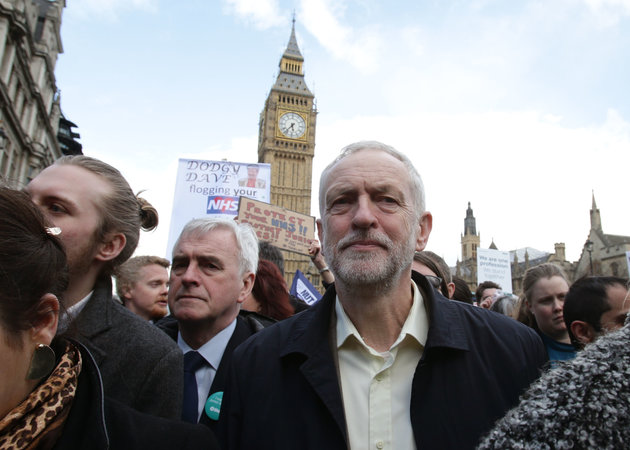
Jeremy Corbyn - Mandatory Reselection Labour MPs

MPs do not have a divine right to represent their constituencies forever once selected by their local party, Jeremy Corbyn is quite right to consider mandatory reselection for MPs and all political parties that profess to care about democracy should follow his lead

The Telegraph leads today with a breathless piece warning of Jeremy Corbyn’s intention to press for mandatory reselection of MPs whose constituencies are changed as a result of the coming boundary review, assuming he prevails in the Labour leadership contest.

Jeremy Corbyn’s allies are planning to end the parliamentary careers of dozens of critical Labour MPs by approving plans for mandatory reselection by the end of the year.

The Telegraph understands his supporters will use their increased majority on the party’s ruling body to clarify rules about which MPs can stand for election after the 2018 boundary review.

Rhea Wolfon, elected to the Labour’s National Executive Committee [NEC] this week, hinted at the move by saying the party must have a “conversation” about “mandatory reselection”.

However Andy Burnham, Labour’s new mayoral candidate for Greater Manchester, said it would “pull the rug from under our MPs” and fuel a “climate of distrust”.

While Politics Home reports that Steve Rotheram, Jeremy Corbyn’s PPS and now Labour’s candidate for the Liverpool city regional mayoralty, has also made approving noises about challenging the “divine right” of MPs to remain in their position come what may:

Steve Rotheram, who serves as Jeremy Corbyn’s parliamentary private secretary, said elected politicians should not think Westminster is the “repository of all the best ideas”.

It comes after Rhea Wolfson, a newly elected member of Labour’s ruling National Executive Committee, said the party should have a “conversation” on the mandatory reselection of MPs.

When asked whether he was in favour of such a proposal, Mr Rotheram said he was “attracted” to Tory MP Zac Goldsmith’s 2014 plan that would see misbehaving MPs face a by-election if 5% of constituents signed a “notice of intent to recall” and 20% then sign a “recall petition”.

He said he did not support Mr Goldsmith’s defeated amendment to the Recall of MPs Bill amid concerns about the exact motion he was putting before the House of Commons.

The MP for Liverpool Walton added: “But yes, I think that MPs should reflect what the membership who select them are putting them into parliament to do. We shouldn’t believe that we’re down here and that we’re the repository of all the best ideas.

“We really should be looking at what our members are telling us to do and I think that’s part of the role as a Member of Parliament.”

Cue shock, horror and clutching of pearls from the political establishment – Andy Burnham, himself about to jettison a Westminster career cul-de-sac in the hope of municipal glory in Manchester, says that it would be “pulling the rug” out from underneath MPs. Well, perhaps MPs need to have the rug pulled out from underneath them. Perhaps they need the rug to be yanked hard enough so that they either become genuinely responsive to the party activists who work to get them elected or quit the field of play altogether.

The great thing about democracy at its best is that it rewards those who show up when the times comes to choose. Old people reliably vote in large numbers, therefore government policy when it comes to housing, welfare spending and any number of other policy areas is generously skewed in their favour. If only young people could put their Pokemon Go games down for long enough to make it to a polling station, government policy might begin reflecting their concerns too. But they don’t, so it isn’t.

Unfortunately, the way MPs are currently selected by Britain’s main political parties takes this important aspect of democratic responsiveness and throws it out the window. Once an MP has been chosen as their party’s nominee, they have very little use for their own party activists. These dedicated and principled people are hardly likely to ever support a candidate from another party, and therefore an unscrupulous MP can abuse and betray them to their heart’s content knowing that they automatically qualify as their party’s parliamentary candidate the next time a general election rolls around.

And inevitably this can lead to a growing gulf between the political stance of a constituency party and the views espoused (and votes taken) by that constituency’s Member of Parliament. This is what we now see happening to the Labour Party, where depending on your view either the parliamentary party has shifted to the right or the membership has shifted dramatically to the left (in reality a bit of both) and no longer stand for the same principles.

The brutal truth right now is that many Labour MPs, including some quite prominent ones like former leadership contender Angela Eagle, are now irreconcilably out of step with their own local parties. Why, therefore, should they have the automatic, divine right to continue to represent local parties who despise them and wish to put forward someone for parliament who more closely reflects their own priorities and positions?

When viewed this way, Jeremy Corbyn’s proposal seems quite tame. In fact, this blog would go further – MPs should not only face mandatory reselection in the case of constituency boundary review (the specific circumstance currently under discussion) but every five years ahead of a general election. This would bring Britain into line with other countries like the United States, where Representatives and Senators do not have “jobs for life” and must compete in party primaries if they wish to run for their seat at the next election. Such a move would put the wind up an often self-entitled political class, forcing MPs to justify their worthiness of a place on the ballot at regular intervals and forcing many of the older, less useful bench warmers off into retirement.

No constituency should be lumbered with a doddering old MP who doesn’t care any more, or a sharp-elbowed go-getter who ignores their constituency as they focus on climbing the greasy pole. Mandatory reselection goes a long way to solving those problems.

The current system, by contrast, is an abomination – incumbent MPs, often initially selected to stand for parliament in their constituencies through dubious, opaque or even downright corrupt means are then largely free from scrutiny by their own party for the rest of their career. As soon as they enter parliament they are enveloped in the Westminster self-protective cloak which serves to insulate parliamentarians from the consequences of their behaviour and political decisions.

If you know that nothing you can do will ever get you fired – if there is no political betrayal (like, say, pretending to be a eurosceptic during selection and then turning around and supporting the Remain campaign) for which you will ever be held to account – then there is every incentive to lie about your real political beliefs and motivations during selection, and then behave in as abominable and self-serving a way as you please as soon as your are elected to the Commons.

The status quo needs to change, and whatever else one may think of Jeremy Corbyn (and however self-serving his motivations may be), he should be applauded for taking a stand for democracy and accountability and against the entrenched privilege of the political class.

If political parties are to be accountable to their supporters then there needs to be an established process for the base to hold their candidates to account for decisions taken in office. Mandatory reselection – together with a proper right of recall, empowering constituents to recall a failing or unpopular MP subject to a certain percentage of the local electorate signing a petition – is an important aspect of that process.

Under a properly democratic system, MPs should fear the wrath of their local constituency party and be closely responsive to their priorities and concerns. At present, too many MPs take their local party for granted as soon as their selection is assured, shunning the activists who knock on doors and deliver leaflets on their behalf in order to cravenly pander to the centre.

This needs to change. This can change. And Jeremy Corbyn should be commended for trying to do something about it.


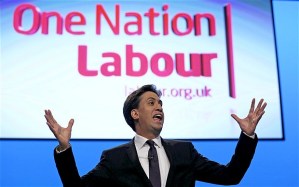
Ed Miliband Labour One Nation

Top Image: Huffington Post

Support Semi-Partisan Politics with a one-time or recurring donation:

Agree with this article? Violently disagree? Scroll down to leave a comment.

Follow Semi-Partisan Politics on TwitterFacebook and Medium.

This Weak Conservative Government Refuses To Get Tough With The Unions

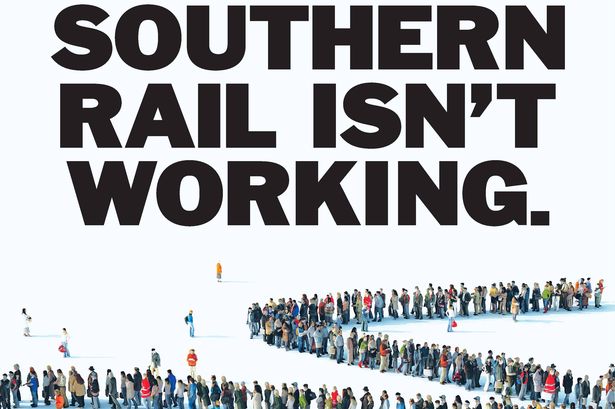
Southern Rail Isnt Working

When even staunch New Labour grandee and columnist John McTernan thinks the Tories are behaving like a weaker version of the Labour Party, British conservatism is in real trouble

As the RMT union’s strike on Southern Rail enters its third consecutive day, inconveniencing hundreds of thousands of commuters while a dithering Tory-lite government watches on, wringing its hands, former New Labour political adviser John McTernan uses his Telegraph column to tear into the Conservative Party.

McTernan writes:

We are in the middle of a five-day rail strike on Southern Rail. Commuters are being massively disrupted. And this is just the latest stage in a dispute in which the Luddite RMT union has made it clear that it is fully committed to fighting against the future.

What about the Government? Where are they in this dispute. It is a crystallisation if all their key themes: investment, modernisation, innovation and productivity. But they are silent.

Well not quite. What we have actually seen is the resignation of the then rail minister Claire Perry, who said:  “I am often ashamed to be the Rail Minister.” And so she should have been – just for her pathetic capitulation to the RMT. This, of course, is just what you would have expected from a Miliband government; but this is a Tory government, with a majority.

There is a famous scene in The West Wing episode about President Bartlet appointing a member of the Supreme Court. He meets Justice Joseph Crouch, whose retirement creates the vacancy, and is angrily addressed by Crouch: “I wanted to retire five years ago. Five years. But I waited for a Democrat. Instead I got you.” The Southern Rail dispute is just like that. Commuters in the Home Counties could be forgiven for thinking: “I waited 23 years for a majority Tory government. Instead I got you.” Where are the core Tory values? Where is the support for management’s right to manage?

This is utterly stunning criticism – shocking not only because it is self-evidently true (the Conservatives in government are a shadow of their glorious best under Margaret Thatcher) but because they are now so bad at governing in a conservative fashion that it has fallen to a former New Labour apparatchik to set them straight.

Why on earth has it fallen to a Labour Party grandee to inveigh against the more militant trades union? Where is the useless europhile Greg Clark, supposedly Secretary of State for Business, Energy and Industrial Strategy during this whole dispute? Where is Chris Grayling, Transport Secretary? Have they all taken lessons from their new boss in the art of disappearing and avoiding the media during scandals affecting their ministerial briefs?

This criticism is particularly damning:

Where are the core Tory values? Where is the support for management’s right to manage?

Where indeed. This blog has wondered the same thing, as the Tories in government behaved like centralising statists, presided over an unprecedented weakening of our national defence, dithered over the housing crisisfailed to get to grips with the nation’s finances, alienated principled conservatives, and as the leader of a supposedly eurosceptic party did all he could to cheat his way to victory for the Remain camp in the EU referendum. Where are the core Tory values?

A Thatcherite government would have stood boldly on the side of consumers over producers, and thus would have been unafraid to plant its flag squarely in the same corner as Southern Rail’s unfortunate commuters. And unlike the Cameron approach to industrial disputes (seemingly applying maximum pressure on businesses to capitulate to union demands, as seen with the London Tube strikes) a Thatcherite government would have recognised the offensive absurdity of the union demands and unashamedly sided against them.

Needless to say, we do not have a Thatcherite government – despite all of the ingredients being in place for another properly ideological right wing government to flourish. The left-wing opposition is hopelessly divided. The Conservatives are under new leadership for the first time in a decade. Boundary review looks set to help the Tories by correcting decades-old biases in favour of Labour, potentially gifting the Tories tens of additional seats. All of these factors stand ready and waiting to be exploited by a radical Conservative government which understands that it has a duty to do more than hold power for the sake of it.

And yet at every turn, the Tories triangulate and tack to the centre. They did so under coalition government (when they had a modicum of an excuse) and they continue to do so now, when they have none. Right now, there is effectively no opposition. A conservative government right now could make a fair stab at privatising pensions and the NHS, and still not be forced out of office so long as the Corbynite and centrist wings of the Labour Party continue their childish tussle for power. The political landscape is ripe for a radical conservative reduction and reshaping of the state, yet there is almost zero evidence that Theresa May’s government intends to attempt any such bold enterprise.

And for what? Will being a centrist clone of New Labour win the Tories any new fans? Of course not. The swivel-eyed Left have long ago convinced themselves that all Tories are “evil” and “vermin”, no matter what they actually do in government.

https://twitter.com/MomentumRugby/status/763072811627872256

We shall win no new fans by trying to adopt the cuddly persona of a young Tony Blair. We will never be liked. Therefore we should focus on being effective, without giving a second thought to winning over the admiration and votes of people who have been raised since birth to despise us. That’s what Margaret Thatcher taught us. And that is the lesson which we seem determined to cast aside in our feverish pursuit of the focus group’s favour.

John McTernan’s quote from The West Wing is very apt. Many conservatives have indeed been waiting for years – since Margaret Thatcher was forced from office, in fact – for another strong Tory leader; somebody committed to conservative, small government principles and willing to fight for them.

Conservatives waited thirteen long years of New Labour government only to get David Cameron. We then endured six years of Cameronism before being presented with the authoritarian Theresa May, foisted on the party in the confused wake of the EU referendum. And whatever electoral success Theresa May enjoys, she may well end up being every bit as much of an ideological disappointment as her predecessor.

But maybe this criticism is premature. Maybe the autumn Conservative Party conference will give birth to a conservative policy platform actually worth voting for. And to be fair to the new prime minister, even Margaret Thatcher bottled her first confrontation with the National Union of Mineworkers, staging a tactical retreat before coming back to finish the job in 1984-85.

But right now, British conservatives are in the ludicrous and humiliating position of being upbraided by a Labour Party grandee – someone from the party of Jeremy Corbyn and Owen Smith, for heaven’s sake – for being insufficiently dedicated to conservative principles.

And when it falls to Tony Blair’s right hand man to tell the Tories how to get tough with the unions, something is clearly rotten with the state of British conservatism.


David Cameron - Coke Zero Conservative - I Cant Believe Its Not Miliband

Support Semi-Partisan Politics with a one-time or recurring donation:

Agree with this article? Violently disagree? Scroll down to leave a comment.

Follow Semi-Partisan Politics on TwitterFacebook and Medium.

America’s Armchair Psychiatrists: Go To Town On Donald Trump, But Lay Off His Supporters

Donald Trump supporters - idiots

Donald Trump opponents should spend less time psychoanalysing Trump supporters and more time reflecting on the reasons for their own deep unpopularity

Sometimes, one wonders whether the American left actually want to defeat Donald Trump at all, or if they are more interested in parading their superior moral virtue for others to see. Certainly, the way that they are behaving in the media at present suggests that defeating Trump has become less important than using him as a mirror to reflect their own supposed holiness.

What else could excuse the rash of execrable articles openly mocking Trump supporters and suggesting that they are morally and intellectually defective?

First, a sanctimonious piece in the Washington Post explaining to it’s oh-so-enlightened readers why “facts don’t matter to Trump’s Supporters“:

How did Donald Trump win the Republican nomination, despite clear evidence that he had misrepresented or falsified key issues throughout the campaign? Social scientists have some intriguing explanations for why people persist in misjudgments despite strong contrary evidence.

Trump is a vivid and, to his critics, a frightening present-day illustration of this perception problem. But it has been studied carefully by researchers for more than 30 years. Basically, the studies show that attempts to refute false information often backfire and lead people to hold on to their misperceptions even more strongly.

This literature about misperception was lucidly summarized by Christopher Graves, the global chairman of Ogilvy Public Relations, in a February 2015 article in the Harvard Business Review, months before Trump surfaced as a candidate. Graves is now writing a book about his research at the Rockefeller Foundation’s Bellagio Center in Italy.

Graves’s article examined the puzzle of why nearly one-third of U.S. parents believe that childhood vaccines cause autism, despite overwhelming medical evidence that there’s no such link. In such cases, he noted, “arguing the facts doesn’t help — in fact, it makes the situation worse.” The reason is that people tend to accept arguments that confirm their views and discount facts that challenge what they believe.

This “confirmation bias” was outlined in a 1979 article by psychologist Charles Lord, cited by Graves. Lord found that his test subjects, when asked questions about capital punishment, responded with answers shaped by their prior beliefs. “Instead of changing their minds, most will dig in their heels and cling even more firmly to their originally held views,” Graves explained in summarizing the study.

Entirely missing from this “analysis” is any acknowledgement that the phenomenon works both ways, and that Trump supporters are not the only ones prone to confirmation bias, that entirely human instinct to search out more corroborating evidence when attacked rather than accepting the potential validity of the criticism.

The same charge could just as easily be levelled at Hillary Clinton supporters who aggressively dismiss questions around the ethics and competence of the Democratic Party nominee. And while this blog believes that many of these concerns have more to do with a good old fashioned witch hunt than principled criticism (note how Hillary Clinton was previously dismissed by many as a far-left ideologue and is now criticised by the same people, correctly, as a triangulating centrist) the reaction of hardcore Hillary Clinton defenders to criticism of their candidate is no different than the way that Donald Trump’s supporters defend their man.

Unfortunately, this Washington Post article (especially its headline, which in fairness to author David Ignatius was probably not of his creation) makes it seem as though it is only Donald Trump supporters who are susceptible to the trait of confirmation bias, when this is absolutely not the case. It is, in effect, another part of the grubby effort to dismiss the concerns of Trump-supporting Americans, suggesting that their views and political preferences are the result of defective thinking rather than legitimate grievances and concerns.

Even worse than the Washington Post piece, though, is this article from Raw Story, in which neuroscientist Bobby Azarian attempts to remotely diagnose supposed abnormalities found in the brains of Donald Trump supporters.

The piece (the cover picture of which shows a Trump supporter’s face frozen mid-gesture, all the more to make her look stupid) alleges:

The only thing that might be more perplexing than the psychology of Donald Trump is the psychology of his supporters. In their eyes, The Donald can do no wrong. Even Trump himself seems to be astonished by this phenomenon. “I could stand in the middle of Fifth Avenue and shoot somebody, and I wouldn’t lose any voters, OK? It’s, like, incredible.”

[..] So how exactly are Trump loyalists psychologically or neurologically different from everyone else? What is going on in their brains that makes them so blindly devoted?

Again, here we see the same arrogance which wrongly presumes that other partisans would behave differently when confronted with evidence that “their” candidate is in some way unacceptable. Yet anybody with eyes and a functioning brain knows that “Hillary Bots” and “Bernie Bros” were likewise called out for blindly supporting their chosen candidate regardless of new information presented.

The article then goes on to list various potential theories which may explain the supposedly uniquely abnormal thinking of Trump supporters:

Some believe that many of those who support Donald Trump do so because of ignorance — basically they are under-informed or misinformed about the issues at hand. When Trump tells them that crime is skyrocketing in the United States, or that the economy is the worst it’s ever been, they simply take his word for it.

[..] The Dunning-Kruger effect explains that the problem isn’t just that they are misinformed; it’s that they are completely unaware that they are misinformed. This creates a double burden.

Studies have shown that people who lack expertise in some area of knowledge often have a cognitive bias that prevents them from realizing that they lack expertise. As psychologist David Dunning puts it in an op-ed for Politico, “The knowledge and intelligence that are required to be good at a task are often the same qualities needed to recognize that one is not good at that task — and if one lacks such knowledge and intelligence, one remains ignorant that one is not good at the task. This includes political judgment.” Essentially, they’re not smart enough to realize they’re dumb.

And if one is under the illusion that they have sufficient or even superior knowledge, then they have no reason to defer to anyone else’s judgment. This helps explain why even nonpartisan experts — like military generals and Independent former Mayor of New York/billionaire CEO Michael Bloomberg — as well as some respected Republican politicians, don’t seem to be able to say anything that can change the minds of loyal Trump followers.

There is a kernel of truth here, inasmuch as that the Dunning-Kruger effect is certainly real, and does in some way explain the behaviour of Trump supporters (others have used it to similarly belittle Fox News viewers). But Azarian seems to be suggesting that Donald Trump supporters are particularly liable to this erroneous thinking, while providing absolutely no evidence to back this up.

Azarian would have us believe that Hillary Clinton supporters are wise oracles, high-minded arbiters of truth and wisdom, who dispassionately compare various politicians against their entirely rational criteria before coming to support their candidate. One can be quickly and easily disabused of this notion by actually speaking to a particularly committed Clinton supporter.

We also see creeping into Azarian’s analysis the same bias in favour of a “tyranny of the experts” which we saw in Britain’s EU referendum, where a whole parade of economists and members of the economic and political elite lined up to bully Britons into voting to remain in the European Union. When Britain rejected the threats of the Remain campaign and voted for Brexit, many commentators have had a complete meltdown, unable to understand how their compatriots could be so “stupid” as to reject the advice of so many self-described experts.

But what they failed to realise is that Brexiteers were not judging the question of Britain’s membership of the EU in the same terms as the experts. The experts, nearly all sinecured members of the establishment, had a post-patriotic mindset in which democracy and self-determination were irrelevant while economic stability and minimising disruption for current economic winners was all that mattered. Brexiteers, by contrast, actually cared about democracy and freedom, and having control over the decisions which affect their lives (as backed up by opinion polling in the immediate aftermath of the referendum). Seeing yet another EU-funded university professor wail that Brexiteers were “racist” and that leaving the EU might cause short term economic uncertainty left us entirely unmoved – to Brexiteers, such uncertainty is a price well worth paying to be free of an organisation as offensively antidemocratic as the European Union.

We see this same arrogance at work in Azarian’s lament that Trump supporters continually disregard the advice of military experts and their economic betters. One does not need to be a Trump supporter – this blog certainly is not – to understand that in the eyes of many Americans, the experts feted by the anti-Trump crowd are the very same people who presided over two very questionable wars and the greatest recession since the Great Depression. In other words, their advice simply doesn’t count for much in the eyes of Trump supporters – and often, the “experts” have only themselves to blame.

Azarian concludes:

So what can we do to potentially change the minds of Trump loyalists before voting day in November? As a cognitive neuroscientist, it grieves me to say that there may be nothing we can do. The overwhelming majority of these people may be beyond reach, at least in the short term. The best we can do is to motivate everyone else to get out to the booths and check the box that doesn’t belong to a narcissistic nationalist who has the potential to damage the nation beyond repair.

Well, congratulations – this article has contributed to a toxic atmosphere of derision against Trump supporters which will have only hardened his support (as even Azarian recognises at one point during the piece). By penning yet another unbearably sanctimonious piece absolving the political establishment of any responsibility for the rise of Donald Trump and suggesting that his supporters are uniquely prone to confirmation bias and other cognitive flaws, the anti-Trump forces are given more license to think of themselves as uniquely rational and virtuous, and to look down on the significant minority of their fellow Americans who prefer Trump to the rotten establishment.

If Donald Trump is to be halted (or the poison taken out of a narrow Trump defeat), the only words this blog wants to see running through the minds of moderate Republicans and Democrats are “how have I enabled the rise of Donald Trump?” and “what can I do differently to stop enraging so many ordinary decent voters, and pushing them into the arms of a demagogue with such questionable policies, morals and temperament?”.

The easy option for the #NeverTrump crowd is to sit back, bask in their own moral virtue and clutch their pearls while looking at horror at the ill-educated, uncouth white trash who give Trump the time of day. That way risks the world waking up to President-Elect Trump on 9 November.

The harder, more virtuous task is to engage in some real introspection, and think hard and uncompromisingly about how years of Democratic and Republican government and opposition have generated such disillusionment and outright hatred of the political class that ordinary, decent people are willing to vest their hopes in Donald Trump.

If the political class are to succeed in preventing a Donald Trump victory, they must demonstrate a willingness to change. Cheerleading for the status quo while angrily demonising those people who refuse to accept it is simply not good enough. Not this time.

Now is the time for the American political class to show that they are capable of humility and change, not simply to engage in anti-Trump moral grandstanding. Donald Trump did not become the Republican Party’s presidential nominee in a vacuum. The flame of Trumpism only burns bright because it is sustained by the hot air of establishment Democrats and Republicans who fight their furious pitched battles in Washington D.C. while too many Americans have seen zero change in their own personal circumstances.

So by all means, America’s smug armchair psychiatrists among the #NeverTrump political establishment should go on diagnosing Donald Trump all they want. This blog certainly believes that anyone who gets into Twitter spats with Gold Star parents and D-list celebrities while running for president is dangerously emotionally unstable at best.

But there is nothing to be gained from going to war with Donald Trump’s supporters, many of whom have been repeatedly let down by the moderate, establishment politicians we tend to respect, and whose anger deserves to be acknowledged.


Donald Trump - Occupy Democrats

Trump Supporters - Mad as hell

Donald Trump Hosts Nevada Caucus Night Watch Party In Las Vegas

Support Semi-Partisan Politics with a one-time or recurring donation:

Agree with this article? Violently disagree? Scroll down to leave a comment.

Follow Semi-Partisan Politics on TwitterFacebook and Medium.

Police Should Spend Less Time Persecuting Citizens For Free Speech Offences And More Time Serving Communities

Rome Police - Old Age Loneliness - Questura di Roma

Our police forces should be knitting communities together and keeping them safe, not prancing around in military gear and threatening citizens who dare to express themselves on social media

A heartbreaking (or heartwarming, depending on your perspective) story from Rome forces us to ask stark questions of our own society, the way we treat our elderly compatriots and the proper community role of the police.

From the Evening Standard:

Kindly police officers came to the aid of an elderly Italian couple after neighbours called emergency services when they were heard crying in their apartment – because they were so lonely.

Officers rushed to the flat in the Appio area of Rome after nearby residents heard shouting and crying coming from inside, and found and 84-year-old Jole, and her 94-year-old husband Michele.

The couple said they had not been victims of crime, but were overcome by emotion after watching sad stories on the news.

The pair, who have been married for 70 years, said they had not had visitors for a long time and were very lonely.

While they waiting for an ambulance to arrive to check the couple over, the officers prepared a hot meal.

They then sat down to have a chat while the elderly couple ate the spaghetti with butter and parmesan they had prepared.

More:

The police force said on its Facebook page: “Especially when the city empties and the neighbors are away on holiday, sometimes loneliness dissolves into tears.

“It can happen, as this time, that someone screams so loud from despair that eventually, someone calls the State Police.

“There is not a crime. Jole and Michele are not victims of scams and no thief entered the house – there is no one to save.

“This time, for the boys, there is a more daunting task – two lonely souls who need reassuring.”

Meanwhile, what do our police spend their time doing?

Well, no day is complete without threatening members of the public. Greater Glasgow Police in particular love to ostentatiously warn people that they are lurking on Twitter and Facebook 24/7, ready to pounce the moment anybody posts something deemed the least bit capable of causing offence.

And London’s own wonderful Metropolitan Police also love nothing more than turning up on the doorstep of people who dare to tweet the “wrong” opinions and sentiments, hauling them away to the police station and delivering them to the hands of the criminal justice system.

But never let it be said that the Met Police never leave their comfortable office desks. A new batch of them have recently acquired dystopian-looking, military grade combat uniforms and strutted their stuff before Britain’s news cameras in some kind of perverse authoritarian fashion parade. Ostensibly this new armed response unit is intended to keep us safer from Islamist terror attacks mentally ill people, though doubtless we will soon see the same militarised response to other, less violent incidents too. As is so often when it comes to the militarisation of the police, where America leads, Britain duly follows.

Counter Terrorist Armed Police - London

Meanwhile, communities go unpatrolled and some become no-go areas. Local police, either swamped with paperwork or too busy hounding innocent citizens for daring to exercise their right to free speech online, refuse to show up to cases of reported vandalism or burglary (though they mysteriously appear within minutes if a speech or thoughtcrime is reported by some beady-eyed public collaborator).

And to add insult to injury, we now live in a country where the idea of the police carting you away for something you write on Facebook seems perfectly normal, while the idea of the police coming to cook a meal for a lonely elderly couple is so rare that it makes the news headlines when it happens in another country.

Local Police and Crime Commissioners do not seem to have had much of an effect, though at this early stage it is difficult to be sure whether this is due to a lack of powers, regulatory capture by the police forces they are supposed to control or garden variety incompetence. And so here we are.

Is this the police force that we really want?

Is this the policing strategy that actually knits communities together, making them happier and safer?

Absolutely not. It would be very interesting to see a force-by-force breakdown of the number of police officers, civilian staff and other resources devoted to monitoring and curtailing the free speech rights and other civil liberties of Britons. And then immediately shutting down those statist, authoritarian programmes and diverting all of the freed resources to more worthy causes, like helping to tackle old age loneliness.

We’re not talking about police officers cooking roast dinners instead of catching criminals, but surely it should not be beyond the wit of man for police to act as an intermediary, perhaps connecting isolated elderly couples they come across in their work to suitable neighbours who could check in with them once in a while, or provide much needed regular social visits. The police already work with AgeUK to tackle scam criminals and improve home security. There is no reason why this collaboration could not be greatly extended.

At present, we have a police force of two extremes – small numbers of highly militarised officers, armed to the teeth with every counter-assault weapon one can possibly imagine, and a much larger force who seem unable to respond to garden variety crime in an acceptable way, and who are all too rarely visible on the streets.

If local, county and national government is serious about improving police-community relations, they could do far worse than by immediately ordering a halt to the nasty, frivolous and often arbitrary persecution of individuals on free speech and “hate crime” grounds and diverting those funds and resources to a much more worthy cause – helping to tackle the growing problem of old age loneliness in our society.


Postscript: You can donate to Age UK here.


Greater Glasgow Police - THINK - Social Media - Police State - Free Speech

Middle Image: BT

Support Semi-Partisan Politics with a one-time or recurring donation:

Agree with this article? Violently disagree? Scroll down to leave a comment.

Follow Semi-Partisan Politics on TwitterFacebook and Medium.