Donald Trump Victory Reaction: Clutching At Normality In The Age of Trump

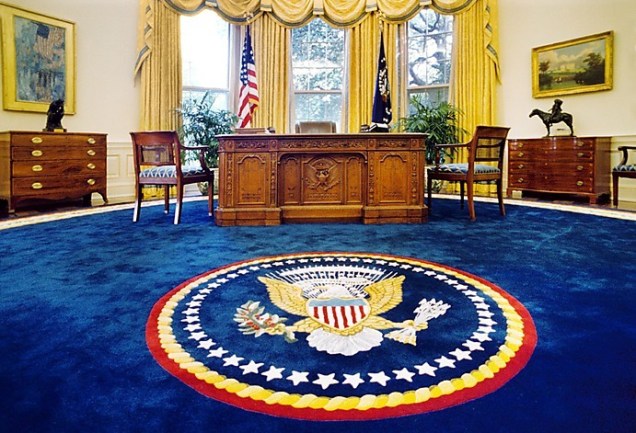
white-house-oval-office-carpet

Using positive reinforcement to steer Donald Trump in a better direction might just work, but only if we stop the blanket hysteria

It is fair to say that the New York Times – which, it always pleases me to remember, not so long ago showed such fawning deference to executive power that they forced their journalists to warp the English language, describing the same actions as “torture” when committed by swarthy foreigners but merely “enhanced interrogation” when conducted by Our Boys – has not taken well to the election of Donald Trump as 45th president of the United States.

But the preface to today’s Opinion Report from the Times, written by David Leonhardt, strikes the right tone and gives some sound advice:

If you opposed Donald Trump’s candidacy, it’s easy to be angry about almost everything he now says or does. When he does something outrageous — like appoint a promoter of racism to a top job — it confirms your fears. And when he does something reasonable — like say he wants to improve the lives of all Americans — it feels hypocritical.

Yet I would still urge people to welcome any step he takes toward democratic normalcy, including those that feel hypocritical.

Trump ran a campaign that was opposed in important respects to American democratic values — and he won. The question that now confronts us is whether our values will change or whether Trump will begin to change.

One of the main reasons that President Obama and Hillary Clinton have reacted to his victory as positively as they have is their desire to move the country back toward democratic normalcy. It’s the right instinct.

I think this is good advice. The endless catastrophisation of Donald Trump’s victory – extending well beyond those areas where we have good reason to fear a Trump presidency toward those where there are no suggestions he intends to make backward steps – is now in danger of doing real harm, not only to the reputations of some of Trump’s most hysterical critics (those who railed against Trump for not committing to accept the election result, and are themselves now refusing to accept the election result) but more importantly to Americans’ faith in their own democracy and electoral system.

During the press pool at their first White House meeting, one could sense the look on Donald Trump’s face that the realisation of what he has wrought is now finally starting to hit. The man who probably didn’t seriously believe he would be in this position, either on the day he announced his candidacy or the day before the election, is rapidly coming to terms with the vast amount of institutional and bureaucratic machinery which he must master, and which will inevitably constrain whatever plans made during the campaign he was serious about enacting.

The mere fact that President Obama spent 90 rather than 15 minutes in that initial meeting walking Donald Trump through the basics (oh to have been a fly on the wall during that American Government 101 session) and plans to hold many more such remedial governance classes with an apparently grateful Trump suggests that the president-elect is finally beginning to accept that there are many things he does not know, and many areas where his administration will need to be guided by the advice and precedent left by history.

And as a reader of this blog pointed out, Americans (and the world) have thrown themselves into a panic before about incoming Republican administrations – with similar accusations of naivety, ignorance and incompetence – only to later have to grudgingly concede that the resulting presidencies were quite good, even historic.

Now, to be clear: I have no such expectations of Donald Trump, who is a tiny fraction of the man that Ronald Reagan was, and certainly nowhere near as faithful a friend to conservatism or the cause of liberty. Real, visceral concern about Trump’s presidency is entirely warranted, especially where it can be eloquently articulated (as opposed to inchoate paranoia) and particularly where its expression closes off doors to some of the more obviously dangerous Trumpian flights of fancy. And of course public protest has an important place in expression opposition to the Trump agenda. But let’s spare the sackcloth and ashes, particularly those of us with public platforms either large or small.

If the goal (for everybody) is to survive the next four years intact and to make Donald Trump’s presidency a successful one for America in spite of the man himself, then we need to ask whether mass hysteria, Trump catastrophisation and total implacable opposition to everything the new administration tries to do is really the best approach, or whether it might be better to provide affirmation and support where Trump does something right combined with forceful dissent and opposition where he or his team stray from an acceptable path, in the hope of teaching the new president some boundaries.

It is quite clear to this blog which is the better option. Keep screaming that everything Trump now does is tantamount to fascism will be like crying “wolf!”, causing the president-elect himself to block out the just criticism along with the superficial, and his supporters to harden in their support for him. We saw just how well that approach worked during the election campaign. Let’s not now make the same mistake during the transition and on into the new administration.

Where Trump does the right thing – even if it means walking back on previous, extreme campaign positions – it wouldn’t hurt to try giving credit where credit is due, at least for a trial period. If we know anything of Donald Trump’s character, it is that while he will take any publicity, good or bad, he much prefers people to think well of him.

And while the Democratic Party and intra-GOP opposition take their time to get organised, Donald Trump’s desire to be admired and respected may turn out to be a very useful constraining factor on his behaviour on office.

Those of us with real concerns about Donald Trump’s presidency should not throw away that potentially vital lever of control in our haste to criticise absolutely everything about the incoming president.


donald-trump-presidential-election-victory-speech-2

Support Semi-Partisan Politics with a one-time or recurring donation:

Agree with this article? Violently disagree? Scroll down to leave a comment.

Follow Semi-Partisan Politics on TwitterFacebook and Medium.

After Hillary Clinton’s Defeat, The Battle For The Democratic Party’s Soul Begins

george-soros

Wealthy Liberal donors to the Democratic Party are debating whether to double down on their identity politics and victimhood culture-based strategy or to attempt meaningful outreach to the white working classes whom they so conspicuously cut adrift in 2016

And so the post-election autopsy begins, as analysts slice open the carcass of Hillary Clinton’s failed presidential campaign and methodically pick through the vital organs to determine what possible failure allowed a well-funded presidential campaign that has effectively been running for over a decade to go down in flaming defeat at the hands of Donald Trump.

Politico reports that the hilariously named Democracy Alliance (a group of mega-rich Democratic Party donors using their wealth to tilt the scales of genuine democracy every bit as much as the “evil” Koch brothers) is holding an emergency meeting at the Washington DC Mandarin Oriental hotel to thrash out the issues:

George Soros and other rich liberals who spent tens of millions of dollars trying to elect Hillary Clinton are gathering in Washington for a three-day, closed door meeting to retool the big-money left to fight back against Donald Trump.

The conference, which kicked off Sunday night at Washington’s pricey Mandarin Oriental hotel, is sponsored by the influential Democracy Alliance donor club, and will include appearances by leaders of most leading unions and liberal groups, as well as darlings of the left such as House Democratic leader Nancy Pelosi, Sen. Elizabeth Warren and Congressional Progressive Caucus co-chairman Keith Ellison, according to an agenda and other documents obtained by POLITICO.

The meeting is the first major gathering of the institutional left since Trump’s shocking victory over Hillary Clinton in last week’s presidential election, and, if the agenda is any indication, liberals plan full-on trench warfare against Trump from Day One. Some sessions deal with gearing up for 2017 and 2018 elections, while others focus on thwarting President-elect Trump’s 100-day plan, which the agenda calls “a terrifying assault on President Obama’s achievements — and our progressive vision for an equitable and just nation.”

However, there are now murmurings of discontent among some of the Democrats present, who claim that persisting with the same tired, clapped out old ideas and electoral strategies will not reverse their sliding fortunes:

Yet the meeting also comes as many liberals are reassessing their approach to politics — and the role of the Democracy Alliance, or DA, as the club is known in Democratic finance circles. The DA, its donors and beneficiary groups over the last decade have had a major hand in shaping the institutions of the left, including by orienting some of its key organizations around Clinton, and by basing their strategy around the idea that minorities and women constituted a so-called “rising American electorate” that could tip elections to Democrats.

That didn’t happen in the presidential election, where Trump won largely on the strength of his support from working-class whites. Additionally, exit polls suggested that issues like fighting climate change and the role of money in politics — which the DA’s beneficiary groups have used to try to turn out voters — didn’t resonate as much with the voters who carried Trump to victory.

“The DA itself should be called into question,” said one Democratic strategist who has been active in the group and is attending the meeting. “You can make a very good case it’s nothing more than a social club for a handful wealthy white donors and labor union officials to drink wine and read memos, as the Democratic Party burns down around them.”

This blog (and many others) have already written extensively that the cynical decision by the Democrats and the American Left in general to wage a relentless identity politics war against the Right is not only misguided, but actively polarising the country, as continued efforts to label working class white people as privileged “oppressors” will only further encourage them to form into a cohesive identity group of their own – the very one which elected Donald Trump as the next president.

Obsessing endlessly about the politics of race, gender and sexuality at a time when many Americans are either suffering economically or teetering on the brink of real economic insecurity is a privilege only available to the type of people who meet at the Mandarin Oriental to naively ask one another how anybody could possibly not have wanted Hillary Clinton to be the next president. To anybody else, the narrow interests and shrill, hectoring tone of the Democratic Party are an irrelevance at best and a source of supreme annoyance and alienation at worst.

People living in towns decimated by the loss of skilled manufacturing don’t want to be told that it is actually a good thing that their air pollution-causing factory closed down and took their job with it, or that they are borderline racists and bigots for not immediately adopting the latest social justice buzzwords spewing out of the university system. Yet the Democrats had little of value to say to the white working classes, the candidate herself clearly much more at home among the Wall Street and progressive celebrity class, spending the night before the election partying with the likes of Beyoncé rather than showing any empathy for struggling voters in the so-called rust belt.

Unfortunately, other delegates seem so wedded to the present profile of the Democratic Party that they believe that change is neither necessary nor desirable.

The Politico report continues:

“We should not learn the wrong lesson from this election,” said the operative, pointing out that Clinton is on track to win the popular vote and that Trump got fewer votes than the last GOP presidential nominee, Mitt Romney. “We need our people to vote in greater numbers. For that to happen, we need candidates who inspire them to go to the polls on Election Day.”

In other words – keep pursuing the SJW vote, even though many of these people have proven that the limit of their political activism is sharing a smug little meme on social media rather than taking the trouble to actually walk to their local polling place and participate in democracy.

This is abysmal advice, not only because it places the future hopes of the Democrats on the shoulders of people who have never once come through for the party, while many of those young people who were politically engaged are probably still smarting from the party’s frantic efforts to thwart Bernie Sanders and allow the coronation of Hillary Clinton as the eventual presidential candidate. That’s one very valid reason, but the other reason is that no party should actively seek to write off the votes of such a large constituency as the white working class. Even if the Democrats could win without the core of America, what does it say about the party that they don’t even bother with meaningful outreach?

Of course, one could level exactly the same criticism at the Republican Party, who for too long have been more than happy to cede the black and growing Hispanic vote largely to the Democrats rather than highlighting the many ways that conservative policy actually often meshes far more closely with some of their concerns (e.g. the Hispanic focus on the family). Indeed, the 2012 Growth & Opportunity Project report outlined a path toward better engagement with these communities and might have started to pay dividends in 2016 had the party not decided to tear it up and focus on complete obstructionism toward Barack Obama instead.

But while it is undeniable that the Republican Party has serious issues of its own – not only relating to minority outreach, but also a more fundamental question of how much to accommodate or push back against president-elect Trump’s authoritarian, big government instincts – it is the Democrats who snatched defeat from the jaws of victory, and who twice in two decades managed to lose a presidential election despite winning the national popular vote. The onus is on the Democrats first and foremost to work out what they stand for in 2016.

More encouraging than the billionaire talking shop underway at the Mandarin Oriental – a sign of just how disconnected the modern Democratic Party has become from its former roots – is defeated primary candidate Bernie Sanders’ efforts to wrest control of the party away from the dull, visionless centrists who have nothing to offer once you strip away the thin veneer of jealous identity politics.

In another Politico piece entitled “Bernie’s Empire Strikes Back“, we learn:

Supporters of Bernie Sanders’ failed presidential bid are seizing on Democratic disarray at the national level to launch a wave of challenges to Democratic Party leaders in the states.

The goal is to replace party officials in states where Sanders defeated Hillary Clinton during the acrimonious Democratic primary with more progressive leadership. But the challenges also represent a reckoning for state party leaders who, in many cases, tacitly supported Clinton’s bid.

“I think the Bernie people feel very strongly that they were abused, somehow neglected during the primary process and the conventions,” said Severin Beliveau, a former Maine Democratic Party chairman who supported Sanders in the primary. “In Maine, for instance, where Bernie got 70 percent of the caucus vote, they are emboldened and in effect want to try to replace [Maine Democratic Party chairman] Phil Bartlett, who supported Clinton.”

[..] The movement outside Washington to install new leadership — especially new leaders whose progressive credentials include support for Sanders’ presidential bid — mirrors the battle in the nation’s capital for the Democratic National Committee chairmanship in the wake of the devastating Clinton defeat and congressional elections where Democrats failed to win back either the House or the Senate. Sanders has endorsed Rep. Keith Ellison, leading House progressive and a prominent backer of his presidential campaign, to be the next permanent DNC chairman.

While this blog disagrees with Bernie Sanders on nearly everything, Hillary Clinton’s defeated primary opponent does at least correctly identify many of modern America’s ailments and propose more authentically (if flawed) left-wing solutions to them. And one can plausibly argue that Sanders has a greater ability to reach out to unionised or working class America than Clinton displayed (though one can only wistfully imagine how much better Joe Biden would have been in this role).

Better still, Bernie Sanders seemed to have comparatively little time for peddling in divisive identity politics. Rather than seeking to fracture America into a thousand competing victimhood groups, each one jealously guarding its own unique set of grievances against the common oppressor, Sanders has consistently more interested in the wealth divisions in society. And while playing rich and poor off against one another in quite such an overt way as the openly socialist Sanders comes with its own set of problems, on balance it is probably much less harmful to the fabric of America than seeking to divide and stoke up fear based on race, gender or sexuality.

Indeed, the fact that Bernie Sanders frequently found himself on the wrong side of Black Lives Matter and the gun control lobby only proves his resonance with the great core of working class America rather than the ultra-progressives. If only Sanders didn’t hug the S-word (socialism) quite so tightly in a country where people are (rightly, in this blog’s view) raised to be automatically suspicious of it, he might have prevailed over Clinton in the primary and taken the fight to Donald Trump on a number of very different fronts.

In short, as during the primary season, none of the options facing the Democratic Party are greatly appealing. Having taken conspicuously little interest in white working class concerns throughout the 2016 presidential election cycle, any efforts to restart outreach will be met with scepticism at first, and take time to pay dividends.

But for their own sake, the Democrats must persist. The alternative – doubling down on their toxic identity politics strategy and continuing to carve America up into competing victim groups and seeking to make them all fear the Evil Republicans – will only inspire an equal and opposite reaction among America’s largest minority group, the white working class.

In 2016, this strategy brought us president-elect Donald Trump. Do the Democrats really want to roll the dice and bet that the same inputs will deliver a better outcome in 2020?


donald-trump-presidential-election-victory-speech-2

Top Image: Wikimedia Commons

Support Semi-Partisan Politics with a one-time or recurring donation:

Agree with this article? Violently disagree? Scroll down to leave a comment.

Follow Semi-Partisan Politics on TwitterFacebook and Medium.

U2’s Bono Named Woman Of The Year

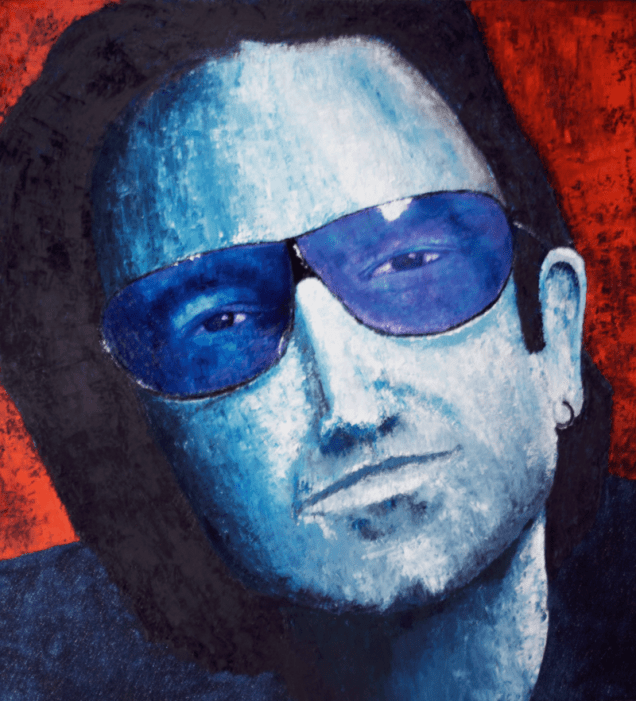
bono-glamour-woman-of-the-year

Glamour magazine is so hard-stretched to find enough worthy female candidates for its Women of the Year shortlist that any progressive male with a decent track record of philanthropy is now in with a shot of winning the prize

Meanwhile, back in SJW-land, life goes on as normal… Glamour magazine has named Bono as one of its Women of the Year.

Now, parents can tell their daughters that one day they too can grow up to be Bono, that designer stubble-sporting, wraparound sunglasses-wearing crooner. Though of course in the age of identity politics, this was always self-evidently the case – it simply involves standing up, declaring that “I identity as the lead singer of Irish rock band and celebrity philanthropist U2” and then demanding that everybody else bow down and play along with your delusion, lest they be accused of intolerance or oppression.

But of course Glamour magazine is doing this to make a Worthy Point, and so we must all nod our heads at their little stunt and murmur “how provocative and brave”.

Christiane Amanpour gushingly writes in the magazine:

When humanitarian and rock icon Bono learned that he was being honored by Glamour as the first-ever Man of the Year, he called his wife of 34 years, Ali Hewson, to give her the news. “I asked did she think I deserved it. She wasn’t sure,” Bono tells me with a laugh. “She said I’ve work to do!”

U2’s front man has no doubts. “I’m sure I don’t deserve it,” he says. “But I’m grateful for this award as a chance to say the battle for gender equality can’t be won unless men lead it along with women. We’re largely responsible for the problem, so we have to be involved in the solutions.”

I’m on Glamour’s side: I think Bono is the perfect choice for this first-time honor because, now 56, he’s been trying to do good for as long as he’s been making music. I first met Bono, born Paul David Hewson, in Sarajevo over New Year’s 1996, shortly after peace accords ended the Bosnian civil war that November. It was the first time in four years that the guns were silent and the people of that beautiful city could celebrate by taking to the concert halls and cafés. I got pulled into a crowded car one night, heading for a party, and there was Bono. Our two-decade humanitarian friendship was launched.

And while my friend has sold 170 million albums and won 22 Grammys, what I admire most about him is his extraordinary talent for tackling problems that seem intractable—and making mighty and measurable gains. It’s not every superstar (or, for that matter, statesman) who can bring about $100 billion in debt cancellation for 35 of the world’s poorest countries, or persuade the U.S. government to pony up the largest contribution ever for lifesaving AIDS drugs in Africa, as President George W. Bush did in 2004.

Now Bono has created Poverty Is Sexist, a new campaign specifically aimed at helping the world’s poorest women—those who survive on less than $2 a day. “Women bear the burdens of poverty,” Bono says, meaning they are far less likely than men to have access to food, clean water, education, and health care; laws in many parts of the world don’t protect them from sexual violence or allow them to own the land they work. By establishing Poverty Is Sexist, Bono is making it clear that powerful men can, and should, take on these deep-rooted issues.

Poverty is sexist? Give me a break. By this alarmist logic, anything impacting men and women differently is inherently sexist, and therefore in need of immediate corrective action by government or other actors. Pregnancy? Utterly outrageous that women are left to bear the burden alone. Money should be poured into womb transplant research and artificial gestation technology so that men can either be surgically forced to bring 50 percent of new life to term themselves, or all of humanity can outsource the job to technology in the name of equality.

Real, grinding poverty – better thought of as the absence of wealth – is debilitating and responsible for nearly all of Beveridge’s famously identified Five Giant Evils. It should be tackled on that basis, not devalued and politicised by slapping an additional identity politics label onto poverty, as though calling it names will make it go away.

But a man winning an award designed for women?

The Telegraph’s Radhika Sanghani is unconvinced:

Glamour’s editor-in-chief Cindi Leive, tried to justify the decision: “We’ve talked for years about whether to honour a man at Women of the Year and we’ve always kind of put the kibosh on it. You know, men get a lot of awards and aren’t exactly hurting in the awards department. But it started to seem that that might be an outdated way of looking at things and there are so many men who really are doing wonderful things for women these days.”

Yes, there are. And none of these men who do “wonderful things for women these days” become women themselves by doing so.

Sanghani continues:

I know these decisions come from a good place. The UN’s appointment was probably meant to be a symbol to raise awareness, while Glamour referenced the #HeForShe movement as part of their reasoning for choosing Bono – saying gender equality will never be achieved unless privileged white men get on board.

Yet underneath the humour (see Tweet embeds for the best Bono jokes going around today) there is an uncomfortable feeling that no woman was good enough for the position. That Glamour couldn’t find a tenth inspiring woman deserving of the award, while the UN couldn’t find another Emma Watson to make empowerment appealing to the masses. Even Bono, gets it, telling the magazine: “I’m sure I don’t deserve it.”

There you have it; straight out of the 2016 Woman of the Year’s mouth – a man doesn’t deserve to have an award celebrating women. Who would have thought it?

I am less confident that these decisions come from a good place.

When Caitlyn Jenner won Glamour’s Woman of the Year award last year, at least the former Bruce Jenner made the effort to physically transition from male to female and begin living as the latter before being given her award. But those who worried about excessive fluidity in gender identity didn’t realise how quickly things would develop. Fast-forward just one year and now one might find oneself publicly declared a different gender just for doing a bit of charity work.

Together with some other individuals from my old firm, I once spent a day re-painting a community centre for elderly residents in east London, and another day teaching employment and job-searching skills to young NEET (not in employment, education or training) teenagers. Does that entitle me to be named as a contender for either Septuagenarian or Disadvantaged Kid of the Year?

We can trace this kind of stunt back to Bill Clinton – he who spoke of “super-predators” and did as much as anyone to promote mass incarceration – being lauded as the “first black president” back in 2008.

At one time we could dismiss stunts such as this from the Congressional Black Caucus as isolated incidents. But we seem to have reached critical mass with this phenomenon where it is now considered hip, edgy and provocative to deliberately misgender people, both as a way of generating controversy to keep public attention fixed on something increasingly irrelevant (print magazines) and to further undermine the idea of biological gender altogether.

This is becoming ridiculous. It is one thing for grown adults to declare that they wish to identify as a different gender – to which the polite response should be to comply with their request, no matter one’s personal stance on transgender issues. But it is another thing entirely for the media to start bestowing new gender identities on unwitting people as a signal of approval of their actions.

Gender is innate, and means far more than simply being a pat on the head for good work, even for a lifetime of charitable service. If U2’s Bono actually wants to be a woman, there is a clear and well-trodden path laid out for him to do so and many people will light the way with glowsticks and strew it with petals.

But assuming that he does not in fact want to become a woman, Bono should demonstrate real respect for women by refusing to participate in this insidious game, and decline the Glamour award.


glamour-women-of-the-year

Top Image: Rene Romero, Wikimedia Commons

Support Semi-Partisan Politics with a one-time or recurring donation:

Agree with this article? Violently disagree? Scroll down to leave a comment.

Follow Semi-Partisan Politics on TwitterFacebook and Medium.


Identity Politics Gave Us President Trump; More Identity Politics Will Not Make Things Better

identity-politics-us-presidential-election-donald-trump-white-working-class

Identity politics cultists created Donald Trump, President-Elect Edition, and from much of their subsequent complaining they haven’t learned a single thing from their mistake

Blogger and polemicist Phil Hendren is in unsparing mood as he takes the identity politics Left to task for their role in provoking the alleged “whitelash” which confounded the opinion polls and made Donald Trump president-elect of the United States last Tuesday.

Hendren’s critique is worth quoting at length, as he writes:

Of course, the political earthquakes have been followed in each case with a sentimental reaction that is both odd and downright scarier than the actual earthquake. This has been coupled with a lack of self-awareness by the losing side.

Be it Brexit or Trump we’ve seen knee-jerk reactions that ponder upon whether democracy is such a great idea after all. Amazingly we have idiots screaming about fascism whilst simultaneously suggesting that something be done about the pesky plebs that voted one way or the other.

They moan about bigotry whilst suggesting that the franchise be removed from certain people who are not suitably intelligent or are too old to be trusted with a vote - call me old-fashioned but that is bigotry right there.

You listen to analysts who say they are “just reporting the data” that tell you Trump scored well with “white males without a college degree”. Has there ever been a more obvious coded dog whistle for “stupid white trash”?

The same thing happened in Britain after the Brexit vote. People started arguing that it was those with less education that voted Leave, the implication being that the stupid unenlightened were to blame.

It astounds me that, as the hand-wringing goes on, there persists, even in defeat, a complete and total contempt for some part of the electorate by the chattering class and the elite.

Don’t they get it? Do they really not see that it is precisely that attitude toward the great unwashed that has caused them to lose? Don’t they also realise that they’re witnessing the ultimate end game of their own orthodoxies?

For the past 20 years, the dominant orthodoxy in the West has revolved around the politics of Identity. We’ve been constantly reminded that humanity should be pigeonholed into groups based on race, gender, sexuality or the Other.

The elephant in the room of this orthodoxy has been the marginalisation of the considered dominant social identity, be it so-called ‘cis-gender’ (essentially a pejorative for someone who’s gender identity is in line with their biology) ; heterosexuals; or good old whitey - aka ‘the oppressor’.

Is it any wonder that these groups have reacted by taking on the clothes of Identity Politics themselves? Anyone that claims to be shocked or disgusted by this development is, to put it as bluntly as I can, a fucking idiot.

If you constantly dehumanise people by making them the sum of arbitrary labels, and then you push the view that each of these groups is structurally disadvantaged by the oppressor then you inevitably structurally disadvantage the oppressor who begins to feel, rightly or wrongly, oppressed.

It isn’t fucking rocket science.

The vote for Brexit and the vote for Trump do not represent some sort of uprising of white supremacy, or the normalisation of misogyny and racism. They represent the inevitable consequence of this misanthropic orthodoxy that has infected the chattering class, the Academy and the elites.

Did I vote for Brexit? No, I was a reluctant (and regretful) Remainer. Would I have voted for Trump? Hell no. He’s an illiberal social authoritarian that supports ridiculous left wing protectionism, but I get why people did.

Until the elite and chattering “enlightened” class begin to realise that they’ve created this. That they are to blame for it, these political earthquakes will keep on coming.

My emphasis in bold.

As an anti-Trump conservative watching the reaction to Trump’s election with amazement and concern, I am absolutely stunned by the lack of introspection and self-awareness displayed by much of the Left.

As this blog has already noted, Donald Trump supporters propelled their man to the White House largely by following the proven playbook of the leftist Social Justice Warriors, and they were able to do so because of the pervasive victimhood culture which has been nurtured and aggravated in America by a succession of cynical politicians and activists.

As Hendren rightly notes, if you atomise society into “separate but equal” identity groups based on race, gender or sexuality, you inevitably spark an arms race of perceived oppression and claims of vulnerability which far exceed the actual real oppression which may still exist. Grievance group is pitched against grievance group in the battle of public sympathy, with only one constant – that “cisgender” white men are always portrayed at the top of the Hierarchy of Oppression, always cast as the villains – whether they live in a New York condominium with gold-plated elevators or an Appalachian trailer park on the outskirts of a town being ravaged by crystal meth and heroin addiction.

I’ve warned about this before, in the context of the oppressive climate faced by young conservatives on college campuses, pointing out that it will not be long before those with conservative views tire of being bullied, censored and portrayed as “hateful” by the social justice mob which the tacit consent of spineless university administrators, and begin to use the same language of vulnerability and victimhood to elicit public sympathy for their own plight. Conservatives see other “identity groups” taking this approach and winning their battles to silence criticism and elevate themselves to a privileged, untouchable position on campus, and already we signs of some harried conservatives adopting the same approach.

So it is outside the university campus too, in wider society. Many millions of decent, non-racist and non-sexist people, often (but not exclusively) white, have been told increasingly stridently that questioning open borders or very recent new norms around gender identity and sexuality is tantamount to “hate” – that they are, in fact, bigots. Leftist identity politics cultists have increasingly deployed the nuclear option accusations of racism, sexism and homophobia against anybody who displays the slightest hesitation in embracing their worldview, leaving no way to distinguish and flag genuinely racist, sexist or homophobic opinions or actions when they occur.

And now we face the worst-case scenario, a white working class which sees other minority groups claiming vulnerability and oppression to demand sympathy and claim perks, and which has decided to think of itself as an oppressed minority group too. A very large, very powerful minority group, as it turns out.

We even get an eerily prescient prophecy that this will come to pass in a 2008 essay by Mark Schmitt in Prospect Magazine, written six months prior to the election of Barack Obama in his battle against John McCain.

Schmitt suggests:

That leaves Republicans with a single alternative, one that’s embodied in the slogan of McCain’s first general-election advertisement: “The American President Americans Are Waiting For.” It’s the politics of identity–not necessarily racial or ethnic identity but identity as an American. The blog FiveThirtyEight.com, which has been gathering all sorts of data relevant to the Electoral College vote, recently noted a fascinating demographic fact: About 7 percent of people refuse to answer the Census questions about ethnic origin and instead write in “American.” Those defiant Americans are overwhelmingly found in the states and counties that turned away from the Democratic Party in 2000 and 2004–the Appalachian belt running from West Virginia through Kentucky, Tennessee, and southern Ohio–which are also the counties where Barack Obama has done worst in the primaries.

David Frum calls explicitly for this brand of identity politics, declaring that while the Republican Party’s issue positions have evolved over the years, “there is one thing that has never changed: Republicans have always been the party of American democratic nationhood,” whereas Democrats “attract those who felt themselves in some way marginal to the American experience: … intellectuals, Catholics, Jews, blacks, feminists, gays–people who identify with the ‘pluribus’ in the nation’s motto, ‘e pluribus unum.'” In case it’s not clear, in Frum’s Latin, “pluribus” means “parasites,” and he tells us helpfully, “As the nation weakens, Democrats grow stronger.”

In Frum’s book, this ugly bit of identity politics is carefully nestled within thousands of words about policy. And this is how the code is supposed to work. The GOP’s attack on “liberals” was always an attack on people not quite like “Americans”–secular, cosmopolitan, educated, egalitarian.

[..]

Traditionally, the phrase “identity politics” has referred to the Democratic coalition’s caucuses, interest groups, and competitive claims of wrongs to be righted and rights to be granted. Identity politics on the left, according to this very conventional wisdom, opened the door to an alternative politics of national identity on the right. And yet in 2008, the Democratic presidential nomination battle between an African American and a woman has not exacerbated left identity politics but brought it to a peaceful close. Obama is not Jesse Jackson; Hillary Clinton is not former Rep. Pat Schroeder. He chose to campaign on national reconciliation, she on bread-and-butter economics and her expertise on military affairs. Whereas McCain–a man whose known positions on the war and on the economy are deeply unpopular, whose other positions are endlessly shifting, whose party and ideology are rejected–is recast entirely in terms of his biography, his honor, his character, his American-ness.

This year the Republican argument is reduced to its barest essence: Americans versus “pluribus,” unprotected by the politeness of issues or safer symbolism. Hence McCain’s slogan, the politics of the flag pin, the e-mails charging that Obama doesn’t salute the flag, and the attempt to associate him with the anti-American politics of 1968, when he was 7 years old. This, then, may be the ultimate high-stakes gamble for the party of confident risk-takers: Accept that everything else–ideas, competence, governance–is gone, and instead of trying to reconstruct it, as the books recommend, bet everything on the bare essentials of Republican identity politics, “The American President Americans Are Waiting For.”

“The American President Americans Are Waiting For”. “Make America Great Again”. Schmitt wasn’t too far off in his prediction of the winning message, albeit eight years later than originally planned.

Read the whole article if you have time – the foreshadowing is quite spooky.

This is in significant part why Donald Trump will be taking the presidential oath of office on 20th January 2017 – because the American Left succeeded in shattering American society into a fractured group of warring special interests and victim groups, claiming nearly all of them for its own side but leaving the largest – the white working class – to the Trump-led Republicans.

And still they don’t see it. Still they rail against the ignorant, inbred hicks with their backward, racist ways. Still they treat the plurality of Americans who voted for Donald Trump as stupid, unwitting enablers of fascism (at best) or actively hateful “deplorables” at worst, unaware that every further such comment only serves to prove to the white working class that they are indeed under attack, and that they were right to band together and vote based partly (even largely) on the solidarity of identity.

At some point, somebody fairly prominent on the American Left is going to have to wake up, reach this conclusion and then have the courage to stick their head above the parapet and urge their fellow travellers to stop their destructive course of action. With their hysterical anti-Trump rhetoric, the American Left not only obscure Donald Trump’s many real and tangible flaws, they actively feed the monster which they fear the most.

Now that the populist Right are catching up with the new rules of the game, playing the identity politics card is turning into something approaching Mutual Assured Destruction. Sure, you can do it, but pandering to the politics of identity is now all but guaranteed to provoke an equal and opposite reaction from those being singled out as oppressors. And whoever wins on any given day, the country is left more divided, more bitter and less able to knit back together with goodwill when it comes time to govern.

The American Left needs to step back from this madness. Now.


white-trash

Support Semi-Partisan Politics with a one-time or recurring donation:

Agree with this article? Violently disagree? Scroll down to leave a comment.

Follow Semi-Partisan Politics on TwitterFacebook and Medium.

Music For The Day

This Remembrance Sunday, take some time to switch off from “broadcast” mode and enjoy a few moments of quiet reflection

The second movement (Andante) of Samuel Barber’s violin concerto, Op. 14, performed by Hilary Hahn with the Saint Paul Chamber Orchestra under Hugh Wolff.

As Michael Steinberg summarises in programme notes for the San Francisco Symphony:

The Andante begins with another inspired melody, this one given to the oboe. With touching tact, Barber lets the oboist bask in that glory, for the violin enters and occupies itself with quite different, more rhapsodic material; only at the recapitulation does the violin take the oboe theme, singing it molto espressivo low on the G-string. The coda, one of Barber’s most beautiful pages, is one of the products of the revision.

Listen to the whole piece here.

Now seems to be a particularly good time to enjoy the music of a quintessentially American composer. What were Samuel Barbers’ own personal political views? Would he be a Clintonite or a Trumpist if he were still alive and lived through the 2016 presidential election campaign? Would he believe that we are Stronger Together, or want to Make America Great Again? Would we consider Barber acceptably progressive or deeply intolerant by today’s standards?

Who cares? Today we know Barber as an American composer, not as a progressive or a conservative. Some things – like art, at its best – transcend our fierce little contemporary political debates. A point well worth keeping in mind on a day in which we recall that we are very much part of history, but blessed to be burdened with the the problems of 2016 rather than those of 1916 or 1936.


samuel-barber-us-postage-stamp

samuel-barber-concerto-for-violin-and-orchestra

Support Semi-Partisan Politics with a one-time or recurring donation:

Agree with this article? Violently disagree? Scroll down to leave a comment.

Follow Semi-Partisan Politics on TwitterFacebook and Medium.