Well okay, way down at the southern tip of Texas, a few miles from the Mexican border, to be more precise.
I’m off to Texas to spend the Christmas and New Year celebrations with my American family. Blogging will continue (I hope to resurrect the Postcards from America series started last year and have the chance to write a few more reflective pieces) but will be at a slightly slower tempo, with occasional hiatuses on those days when we are either travelling or making merry.
I am currently seeking recommendations for good places to eat in Austin, Houston and Las Vegas – if you have any inspired ideas, please do get in touch!
Many thanks as always for reading, commenting, cheering and arguing with me here at Semi-Partisan Politics. Stay tuned!
–
Support Semi-Partisan Politics with a one-time or recurring donation:
–
Agree with this article? Violently disagree? Scroll down to leave a comment.
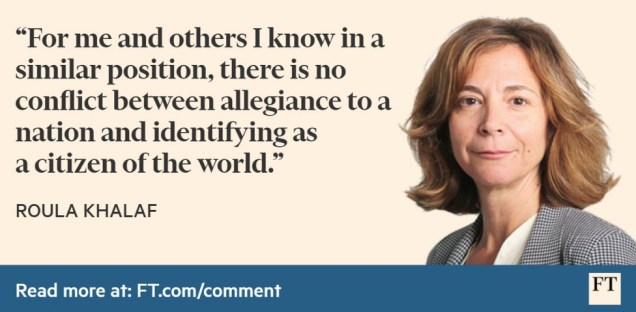
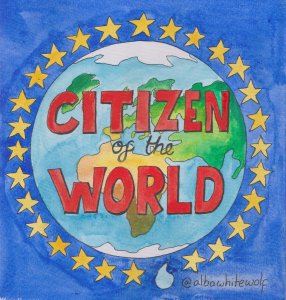
Most self-described citizens of the world are actually no such thing. They might enjoy the company of very similar people in increasingly similar global cities, but they probably couldn’t think of a single thing to say to somebody of different socio-economic status from a smaller town twenty miles down the road
Pete North explains perhaps better than anyone exactly why those people who style themselves as liberal “citizens of the world” are often no such thing – neither tremendously liberal, nor engaged citizens of anywhere, in any meaningful respect.
In the end there is nothing especially virtuous about people who are well travelled and outward looking. A society needs all stripes to function. We need people to work the routine jobs and then we need a fluid workforce not tied down with responsibilities. Moreover, having dealt with more well pampered HR people than a person ever should, one thing I have noticed is that travel does not necessarily broaden the mind.
If you take an incurious person and lavish travel upon them you are wasting your money. Some of the most shallow, snobby and fatuous people I know would consider themselves liberal citizens of the world. Such people have no concept of what it is to be building or maintaining something with a long term plan. They latch on to the fashionable and socially convenient worldview that the EU is the manifestation of liberal values but it little more than virtue signalling.
And develops his argument:
What I find is that the broader your horizons, the harder it is to fit in wherever you go, and so there remains a polarisation between the settled and the travelled. It is then no surprise that there is an obvious demographic divide and opinion is split between the ages.
In this, the remain side of the Brexit debate seem keen to pour over these demographic studies to pathologise the leave vote, and consequently delegitimise it, as though you need to be of a particular set for your opinion to hold any worth. Democracy is lost on such people. The whole point of democracy is one person; one vote, where we take a sample of opinion and move together on the basis of compromise.
In something as binary as EU membership though there is only winner takes all. There is no third option on the ballot so we move with the majoritarian view which is to leave. For whatever reasons they voted for, they did so in accordance with their own views based on their own choices. Their worldviews are formed by what they see and hear in the media, but also in the street and in the workplace. They are the best judges of what is important to them. To suggest that choosing a more conservative lifestyle means you are not qualified to make such an estimation is to invite the very sentiment behind the leave vote.
What these people know better than anyone is that the frivolous and rootless people telling them how to vote are no better than anybody. I imagine the working classes would like nothing more than to live a more adventurous life but they don’t because they can’t afford it. It’s then a bit rich to tell them that the EU brings them freedom of movement and prosperity.
Earlier this year Theresa May said “If you believe you are a citizen of the world, you’re a citizen of nowhere. You don’t understand what citizenship means”. I smiled when I heard that. Nothing quite so succinctly demolishes the flimsy worldview that believing in the borderless homogenised EU, along with all the pompous garb that goes with it, is somehow enlightenment. May recognises that being a citizen is more than holding outwardly liberal views. It means making a contribution – to be part of something.
It takes no particular talent to drift through life going place to place – and in so doing all you’re likely to meet is others who have made the same choices or enjoy an extraordinary privilege. Far from broadening the mind it merely reinforces a particular mindset which is never exposed to the values of the settled community. It’s why self-styled “citizens of the world” have no self-awareness and do not for a moment appreciate just how naff they sound to everybody else.
In my experience, self-described citizens of the world have tended to describe their outlook in terms of what they get from the bargain rather than what they contribute to the equation. They call themselves citizens if the world because being so affords them opportunities and privileges – the chance to travel, network and do business. Very few people speak of being citizens of the world because of what they give back in terms of charity, cultural richness or human knowledge, yet all of the people that I would consider to be true citizens of the world – people like Leonard Bernstein or Ernest Hemingway – fall into this latter, rarer category.
What does it really mean to be a modern day “citizen of the world”, anyway, besides having a determinedly self-regarding outlook? Most of those who claim the title – either members of the ruling class or young hipsters whining that their futures and European identities have been somehow ripped away from them – are from the big cities, London most prominently. But to a large extent, many world cities are so alike in culture that one can negotiate and skip between them fairly easily, even with a language barrier.
London has Starbucks, museums, galleries, bars and hipsters. So do Paris, Berlin, Copenhagen, Rome, Warsaw, Manchester, and everywhere else in Europe. In our interconnected world, large global cities are if not interchangeable then at least often share a common culture and vibe.
So you can successfully get smashed in Lisbon, Dublin, Stockholm and Munich? Congratulations, Mr. Citizen of the World. What do you want, a medal? Now go try to strike up a conversation with someone from your own country but from a different social class or region. Try going for a night out in Harlow or Wolverhampton or Preston. Your non-prescription hipster spectacles and quirky denim dungarees might buy you immediate entry to the trendy coffee shops of Amsterdam or the bars of Barcelona, but they’ll get you nowhere in Stoke-on-Trent.
And increasingly this is what it comes down to. We have a broad class of people with access to (and the desire to be part of) this emerging global tribe based in the top cities, and a class of people either cut off from this world or with little desire to participate in it. Now, we should certainly use economic policy to lift those who want to live more global lives into a position where they can do so, and avoid the urge to persecute or condescend to those who do not. But in general, we could all do with a bit less smugness and sanctimony from the Citizen of Starbucks Brigade.
For a start, the vast, vast majority of these people are such poor citizens of their own countries that they would feel adrift and culture-shocked, as though in a foreign land, if you lifted them from their home city and moved them to a smaller town thirty miles down the road. This is not some elite band of super-enlightened, non-judgmental, globally-minded, culturally-aware aesthetes, eager to experience new things. This is a pampered, cosseted tribe of relatively well-off millennials, many of whom are in thrall to the divisive Cult of Social Justice and Identity Politics, who barely understand their own compatriots yet arrogantly believe they are ready to be unleashed upon the world.
There is nothing particularly noble or praiseworthy about overcoming a language barrier to work and make friends with other people just like you who happen to live in other countries – which describes the vast majority of those people now tearfully painting the EU flag on their cheeks at anti-Brexit demonstrations and angrily declaring themselves “citizens of the world”.
Want to do something more challenging and actually worthy of praise? Try earning a reputation as somebody with friendships that span ages, social classes and other demographic indicators. Try living up to the ideal set by Rudyard Kipling:
If you can talk with crowds and keep your virtue,
Or walk with Kings—nor lose the common touch
And if you do so, you might not necessarily become a Man, my son. But at least you won’t be just another insufferable, identikit, cookie-cutter individual who conspicuously supports the European Union – despite barely comprehending what it really is – purely as a means of signalling your virtue to your insufferable, identikit, cookie-cutter fellow citizens of the world.
If you are not already taking these important measures to ensure that your child turns into a psychologically frail victim-in-waiting and/or a raging second generation Social Justice Warrior, completely unable to function in the real world, then you should check your privilege and begin immediately:
Two of my good friends had their first baby late this past year.
From the get-go, Baby was a cuddly little girl. (Or, as her two moms say, “We assume she’s a girl, but we won’t know for sure until she tells us herself.”)
Sigh.
She was all about being held and being rocked – and crying her head off the moment anybody dared to put her down. She wanted contact with all the people ever.
But in the past couple of months, it seems she’s had a serious change of heart.
When some of us were over for a visit, Baby suddenly wanted none of it. Passed from one person to the next, she wailed like a banshee until finally given back to one of her moms, where she instantly quieted.
“Don’t take it personally,” Mama said to everyone, bouncing Baby. “She’s just entering that stage where she’s developing some healthy stranger danger.”
And so the new process emerged: One of us would attempt to hold Baby every once in a while. And if she cried for more than 20 seconds, we’d hand her back to one of her moms.
If Baby didn’t want to be held by certain people, Baby didn’t have to be held by certain people.
It was as simple as that – and something her moms are determined to keep in place as Baby gets older.
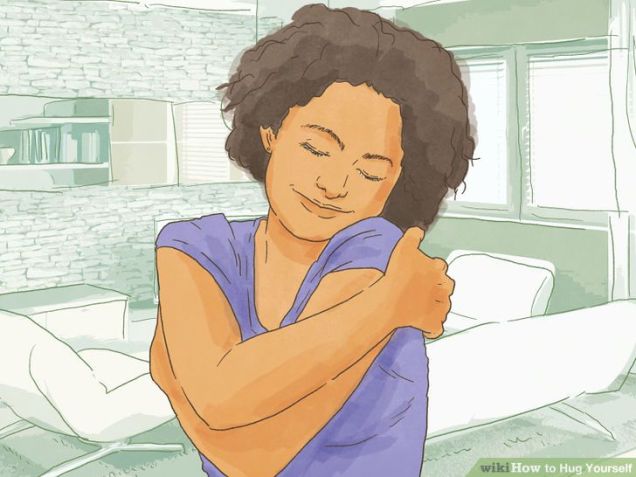
It took the brilliant minds at Everyday Feminism to make us realise just how tyrannical and oppressive the act of hugging really is:
We as a culture simply need to stop drilling into our own heads that there are only a select few ways to show love for another human being.
Families don’t need hugs in order to count as families, friendships don’t need high fives to pledge loyalty, and romantic relationships don’t need sex to be considered serious.
Are these things nice to give and receive? Sure. But only if both parties actually want them.
Such things only hold so much affection weight because we’ve given them that weight ourselves.
To someone who doesn’t want it, an affectionate action is rendered meaningless at best and damaging at worst.
Forcing hugging on a child tells them that 1) they’re expected to show affection toward this person, and 2) that this is exactly how they must show that affection.
Instead of being a hug tyrant, allow your child to be creative in how they show affection. Let them draw a picture or share a piece of their favorite food or read to you from their library book.
Those gestures count just as much as a hug. And your child needs to be validated in that fact.
In other news, parents should avoid unintentionally oppressing their children by bending over backwards to indulge an excuse their every passing whim and misbehaviour:
Don’t force them to eat everything on their plate, and remember that them needing to go to the bathroom as you leave the house, or saying they’re not cold and don’t need a jacket, are all examples of kids listening to their bodies.
That might be frustrating as a parent, but we should still do our best to respect that.
Yet parents should also take time to scare their children witless by discussing the “terrible things in the world” with them at every opportunity, even when they are patently too young to understand:
War, slavery, and corruption are all topics of conversation I’ve discussed with my five-year-old. Why? Because it is contextually important and sadly still relevant to our day-to-day life.
We watched the Disney/Pixar DVD with Frozen Fever on it, and the first short film up was John Henry. As a story about an African American folk hero, it got us started on talking about slavery.
We don’t idly consume media in our house.
If the book, movie or song is about a concept, person, or event that my daughter doesn’t understand yet, then we unpack it. Which can be a brutal process.
Trying to explain the concept of slavery to a five-year-old is no easy task. However, it needed to be done so that she could understand the context of the film (and the world she lives in).
I’m all for encouraging curiosity and a desire for knowledge in children, as well as a sense of justice and the instinct to consider the needs of people who are less fortunate. I’m pretty sure that this just used to be called “good parenting”, and didn’t require an army of online social justice activists churning out earnest articles to encourage.
But if these educational top-ups for a five-year-old child can be described as a “brutal process” then it is safe to say that you are probably going too far. It should be possible to watch Aladdin with your kid without first making them sit through a 30-minute lecture on classism and forced marriages.
And seriously: so now hugs are tyrannical?
On this current trajectory I give Western civilisation another twenty-five, thirty years, tops.
Postscript: For a more scholarly critique of hugging, see The Oatmeal.
As I walked down the road at set of sun,
The lambs were coming homeward one by one.
I heard a sheepbell softly calling them,
Along the little road to Bethlehem
Beside an open door as I drew nigh,
I heard sweet Mary sing a lullaby.
She sang about the lambs at close of day,
And rocked her tiny King among the hay
Across the air the silver sheepbells rang.
‘The lambs are coming home’, sweet Mary sang.
‘Your star of gold, your star of gold is shining in the sky.
So sleep, my little King, go lullaby.’
As I walked down the road at set of sun,
The lambs were coming homeward one by one.
I heard a sheepbell softly calling them,
Along the little road to Bethlehem
–
Agree with this article? Violently disagree? Scroll down to leave a comment.
One does not need to be a snarling authoritarian to reject the anti nation state, globalist worldview – and if being wary about the survival of our rights and liberties in a post-patriotic world makes one a populist then so be it
During his recent Intelligence Squared debate/discussion with Nick Clegg on the causes of the populist backlash currently roiling British, European and American politics, Jonathan Haidt makes an interesting observation:
Once you have these incredibly prosperous, peaceful, progressive societies, they people there begin to do a few things. First off, not everybody has those values. Everybody in the capital city and the university towns, they have these values. So if you look at our countries, in America we’re pretty retrograde in some ways, but if you look at our bubble places they’re just like Sweden. And that means that these people now think that, you know, nation states, they’re so arbitrary. And just imagine if there were no countries, it isn’t hard to do. Imagine if there was nothing to kill or die for, and no religion too! So this is the way the values shift, and this is what I and others are calling – the new left/right is the globalists versus the nationalists.
And so the globalist ethos is “tear down the walls, tear down the borders, nation states are arbitrary, why should my government privilege the people who happen to be born here rather than people who are much poorer elsewhere?” And so you get this globalist idea, you begin to get even a denial of patriotism, the claim – there are some pictures going around right wing media now in the United States of anti-Trump protesters holding signs that say “patriotism is racism”. So you get people acting in this globalist way, inviting immigration, spitting on the nation state, spitting on the country and people who are patriotic, and very opposed to assimilation when there is integration because that, as people on the Left in America would say that’s cultural genocide.
So you get wealthy, wonderful, successful societies that are so attractive to poor people around the world you get a flood of immigration, and they are met by the globalists who say “welcome welcome welcome, don’t assimilate because we don’t want to deny you your culture”. And this triggers an incredible emotional reaction in people who have the psychological type known as authoritarianism.
Now it’s a very negative term, but there’s a lot of psychological diversity in this world; there are some people who are attracted to the Lennonist vision, the John Lennon vision and there are other people who are more parochial – I don’t mean that in a bad way, I mean there are people who really care about hearth and home and God and country, and they are actually friends of order and stability, and they are friends of many good things about civic life.
But when they perceive that everybody is coming apart, that the moral world is coming apart, that’s when they get really racist, homophobic, they want to clamp down, they want to restore moral order, and if anybody here saw Donald Trump’s acceptance speech at the Republican National Committee that’s exactly what he said, he modelled himself after Richard Nixon’s 1968 speech, a time when cities are burning, there are riots, and Nixon came in – law and order will be restored, and that’s basically what Trump’s whole speech was.
So what I’m saying is successful democratic capitalist societies create – they change values, they generate wealth, they invite people in and then they make some of the people act in ways that trigger the other people to be furious, and those other people actually have a point because you have to have trust and social capital to have a redistributive welfare state. My point is that yes the economy matters and economic changes matter, but they matter in ways which always run through psychology.
I follow Haidt’s argument, but I do not see myself or many others of my acquaintance in the binary model he describes. For a start, I see nothing particularly liberal about the starry-eyed EU-supporting globalists, particularly when one examines the full palette of their typical political opinions. And there is certainly nothing inherently authoritarian about being a small-c conservative and fearing the jettisoning of the nation state in favour of an ill-defined globalism built upon the foundation of supranational institutions which are flawed, remote from the people and totally lacking in democratic legitimacy.
I and this blog are about as far from authoritarianism as it is possible to get, despite being staunchly pro-Brexit and anti-elite. I alternately use the labels conservatarian and libertarian to describe this blog’s desire for a much smaller state and greatly enhanced personal liberty – give me classical liberalism or give me death! The difference is that I see a strong and healthy nation state as being essential to the defence of these personal liberties, while the globalists (as described by Haidt) seem to lazily imagine that these liberties will automatically continue to endure beyond the era of the nation state.
Our experience with supranational governance – whether the United Nations or, more viscerally, the European Union, has not been a pleasant one in terms of democracy, accountability or the amount of control that ordinary people feel they have over their lives. Perhaps there are ways to reform those institutions in theory, but in practice they are loath to change and almost allergic to close scrutiny. Recall, even the prospect of losing its second largest economy and most powerful military member could not persuade the EU to consider the smallest of meaningful reforms.
Thus the European Union plods blindly onward towards a federal destination set decades ago by grey old men who presumed to decide for us how we ought to govern ourselves in the years following the Second World War, but who never thought to ask our permission. And the result is a remote and unloved supranational government whose “founding fathers” are unheralded and whose true leaders lack all accountability.
More worryingly, the ability of organic popular movements to influence the direction of supranational juggernauts like the EU is almost non-existent. Whether it is anti-austerity movements in Greece or the need for domestic industries to influence vital global trading rules in forums at which the EU speaks for all of us while really representing none of us, it is almost impossible to get the attention of EU leaders or encourage them to change direction. Just ask Greece’s Alexis Tsipras, or anybody who used to work in Britain’s beleaguered fishing industry.
I am patriotic because I love my country and consider it special and exceptional, yes. But I am also patriotic because I believe that the basic unit of the nation state remains a crucial building block in the world order, essential to the defence of our rights and liberties, and will remain so until humanity finds a way to make the various supranational institutions now undermining nation states more democratically legitimate and more responsive to popular opinion.
And so when confronted with a movement full of people who talk eagerly about being post-patriotic, who revel in being “more European than British” and who want to dissolve our democracy into a remote and dysfunctional supranational government of Europe without a second thought for our own distinct history and culture, I oppose them. Because however well-intentioned they may be, they are actively undermining the one institution (imperfect though it may be) which has thus far kept us relatively free and prosperous for centuries – our own nation state, the United Kingdom.
Does this make me an “authoritarian”? I hardly see how. While Britain has its share of authoritarian tendencies (which I despise and frequently campaign against), these tend to be even stronger on the continent. If hate speech laws seem draconian here, they would only become stricter if we were to harmonise our laws with those of much of mainland Europe. Want the police to regularly use water cannon to break up public protests? Again, look to Europe, not Britain. Much of Europe is ambivalent about property rights, to the extent that no watertight right to property is truly enshrined in the European Convention on Human Rights.
And putting all that aside, the vast majority of people in this and other European countries, when asked, do not want their countries to become dissolved into a federal European government and assume the subordinate rank of American states. Maybe rejecting this Utopian vision is backward and foolish, but a fully federal Europe is not what people want (which is why the EU has been forced to move in this direction by unapologetic stealth and deception for over half a century). So since the majority of people in the countries of Europe are not yet post-patriotic, how does opposing an institution which seeks to covertly undermine their wishes make me an authoritarian? And how does it make the people who know the truth but still support this vision enlightened “liberals”?
So much as I admire Jonathan Haidt, hail his work in exposing the Cult of Social Justice and Identity Politics and agree with most of his diagnosis of the reasons behind the current populist backlash, I cannot support his conclusion because it totally fails to take into account people like me and other liberal Leavers and Brexiteers.
Indeed, Haidt’s usual perceptiveness appears to desert him when he suggests that something simply snaps and makes people “get really racist, homophobic” when confronted with pro-globalism policies and sentiments. That is simply not how it works. All racists may be anti-globalist almost by definition, but that does not mean that everybody with reservations about globalism (as it currently exists) is remotely prone to racism.
Clearly there are other reasons for opposing globalist projects (or the current state of globalism, at least) that have nothing to do with authoritarianism, including those I have outlined here, which Haidt fails to take into consideration.
The full picture behind 2016’s populist backlash has yet to be fully understood.
–
Support Semi-Partisan Politics with a one-time or recurring donation:
–
Agree with this article? Violently disagree? Scroll down to leave a comment.








 Semi-Partisan Politics