Theresa May’s Brexit Speech: Soaring Ambition On A Foundation Of Sand

A grandiose speech with little serious thinking to back it up

Well, if anything lures me back to blogging then it may as well be Theresa May’s speech outlining the government’s long-awaited plan for Brexit.

I must admit that I am rather conflicted. This blog is on the record as holding Theresa May in rather low esteem in terms of her commitment to small government, individual liberty and conservatism in general, but it cannot be denied – least of all by someone like me who routinely criticises political speeches for being dull and uninspiring – that from a purely rhetorical perspective, May’s speech was satisfying both in terms of emotion and ambition.

Here was a speech almost in the American political tradition – reaching back through history to affirm the roots of British exceptionalism, the challenge now before us and the promise that an even greater Britain can be ours if only we strive for it:

It’s why we will put the preservation of our precious Union at the heart of everything we do. Because it is only by coming together as one great union of nations and people that we can make the most of the opportunities ahead. The result of the referendum was not a decision to turn inward and retreat from the world.

Because Britain’s history and culture is profoundly internationalist.

We are a European country – and proud of our shared European heritage – but we are also a country that has always looked beyond Europe to the wider world. That is why we are one of the most racially diverse countries in Europe, one of the most multicultural members of the European Union, and why – whether we are talking about India, Pakistan, Bangladesh, America, Australia, Canada, New Zealand, countries in Africa or those that are closer to home in Europe – so many of us have close friends and relatives from across the world.

Instinctively, we want to travel to, study in, trade with countries not just in Europe but beyond the borders of our continent. Even now as we prepare to leave the EU, we are planning for the next biennial Commonwealth Heads of Government meeting in 2018 – a reminder of our unique and proud global relationships.

And it is important to recognise this fact. June the 23rd was not the moment Britain chose to step back from the world. It was the moment we chose to build a truly Global Britain.

The peroration was particularly good, as May eschewed the temptation to bribe the electorate with glib promises of riches today and instead asked us to consider the longer term good, as well as our place in the history books:

So that is what we will do.

Not merely forming a new partnership with Europe, but building a stronger, fairer, more Global Britain too.

And let that be the legacy of our time. The prize towards which we work. The destination at which we arrive once the negotiation is done.

And let us do it not for ourselves, but for those who follow. For the country’s children and grandchildren too.

So that when future generations look back at this time, they will judge us not only by the decision that we made, but by what we made of that decision.

They will see that we shaped them a brighter future.

They will know that we built them a better Britain.

When nearly every other major set piece speech in British politics is little more than a dismal effort to placate a restive and self-entitled electorate by promising the people Free Things Without Effort or Consequences (ask not what you can do for your country but what your country can do for you), here was a speech that set its sights a little higher and actually aspired to statecraft.

May’s criticism of the European Union and justification of the UK’s decision to secede from the EU was very good, particularly coming from someone who herself supported the Remain side and kept her head firmly beneath the parapet during the referendum campaign:

Our political traditions are different. Unlike other European countries, we have no written constitution, but the principle of Parliamentary Sovereignty is the basis of our unwritten constitutional settlement. We have only a recent history of devolved governance – though it has rapidly embedded itself – and we have little history of coalition government.

The public expect to be able to hold their governments to account very directly, and as a result supranational institutions as strong as those created by the European Union sit very uneasily in relation to our political history and way of life.

And, while I know Britain might at times have been seen as an awkward member state, the European Union has struggled to deal with the diversity of its member countries and their interests. It bends towards uniformity, not flexibility.

Without straying into undiplomatic language, May firmly placed responsibility for Brexit at the foot of a Brussels supranational government which is inflexibly committed to endless political integration by stealth, with member state individuality subordinate to European harmonisation.

The prime minister was also at pains to point out that dissatisfaction with the EU is by no means a uniquely British phenomenon, and that significant numbers of people in other member states hold many of the same legitimate grievances:

Now I do not believe that these things apply uniquely to Britain. Britain is not the only member state where there is a strong attachment to accountable and democratic government, such a strong internationalist mindset, or a belief that diversity within Europe should be celebrated. And so I believe there is a lesson in Brexit not just for Britain but, if it wants to succeed, for the EU itself.

Because our continent’s great strength has always been its diversity. And there are 2 ways of dealing with different interests. You can respond by trying to hold things together by force, tightening a vice-like grip that ends up crushing into tiny pieces the very things you want to protect. Or you can respect difference, cherish it even, and reform the EU so that it deals better with the wonderful diversity of its member states.

Of course this blog, unconstrained by any need for diplomatic restraint, would have gone further. Theresa May was at pains to state that a strong and united European Union is in Britain’s interest, which sounds magnanimous and sensible until you actually recognise the punch which is being pulled.

If the EU is an antidemocratic straightjacket imposing unwanted political integration on national populations who are ambivalent at best, why do we wish that the organisation prospers for decades to come? Do we not think our European friends and allies as deserving of democracy and the right to self-determination that we demand for ourselves? But this is nitpicking – the Brexit negotiations would hardly be served if May openly salivated at the prospect of the breakup of the European Union.

In her outreach to other European leaders, assuring them of Britain’s continuing goodwill, one almost hears an echo (okay, a very, very distant and diminished echo) of Lincoln’s first inaugural (“The Government will not assail you. You can have no conflict without being yourselves the aggressors…”) as May asserts that the UK government will negotiate in good faith so long as the EU reciprocates:

So to our friends across Europe, let me say this.

Our vote to leave the European Union was no rejection of the values we share. The decision to leave the EU represents no desire to become more distant to you, our friends and neighbours. It was no attempt to do harm to the EU itself or to any of its remaining member states. We do not want to turn the clock back to the days when Europe was less peaceful, less secure and less able to trade freely. It was a vote to restore, as we see it, our parliamentary democracy, national self-determination, and to become even more global and internationalist in action and in spirit.

We will continue to be reliable partners, willing allies and close friends. We want to buy your goods and services, sell you ours, trade with you as freely as possible, and work with one another to make sure we are all safer, more secure and more prosperous through continued friendship.

You will still be welcome in this country as we hope our citizens will be welcome in yours. At a time when together we face a serious threat from our enemies, Britain’s unique intelligence capabilities will continue to help to keep people in Europe safe from terrorism. And at a time when there is growing concern about European security, Britain’s servicemen and women, based in European countries including Estonia, Poland and Romania, will continue to do their duty.

We are leaving the European Union, but we are not leaving Europe.

All of this is good. So why am I not celebrating?

Because then the prime minister proceeded to outline her government’s plans and priorities for the upcoming Brexit negotiation. And at that point it became clear that we are not dealing with Abraham Lincoln but rather with James Buchanan.

In other words, the real problem with Theresa May’s speech came when she pivoted from the background context to the government’s 12-point plan (or exercise in wishful thinking).

Pete North says it best:

In just a few short passages May has driven a horse and cart through all good sense.

For starters May has misunderstood the exam question. The process of leaving the EU is to negotiate a framework for leaving and a framework for continued cooperation. Instead she has taken it as the process of securing a trade deal – which doesn’t even begin to acknowledge the depth and complexity of the task. Because of this Theresa May will ensure we pay the maximum price possible.

By any estimation there is no possibility of securing a comprehensive agreement in two years and if we reach any kind of impasse then all of the leverage falls to member states as we beg for an extension.

Worse still, May has fallen for the mantra that no deal is better than a bad deal and is prepared to walk away from the table. This would result in the WTO option and would be the single most egregious act of economic self harm ever recorded. As much as that is to be avoided there is now every chance that it will happen by accident as our time expires.

May has drunk deeply from the Brexiteer kool aid and Britain is about to find itself substantially poorer with fewer opportunities for trade. This will be the Tory Iraq. Blundering with half a clue and no plan and no real understanding of the landscape, resting the fate of the adventure on some overly optimistic patriotic nostrums that fold at first exposure to reality.

While the EU Referendum blog patiently explains why Theresa May’s declaration of intent is such a tall order:

Mrs May has set her face against a rational, measured Brexit and is embarking on a wild gamble, the outcome of which she has no way of predicting.

Such is her idea of pursuing “a bold and ambitious Free Trade Agreement with the European Union”, an undertaking which others have tried in the recent past – the most recent being Canada, which has spent eight years now in trying to bring an agreement to fruition, and we’re still waiting. The possibility, therefore, of the UK negotiating a deal (and getting it ratified) inside two years is, to say the very least, remote.

Nevertheless, there are those who think otherwise. They argue that, because the UK is already in the EU and achieved full regulatory convergence, transition from one type of agreement to another should be relatively straightforward and swift.

That, however, is completely to understate the complexity of modern trade agreements. In addition to regulatory convergence, there must be a dynamic arrangement that will ensure the automatic uptake of new regulation, and also the changes mandated by ECJ judgements. There must also be internal market surveillance measures, agreed conformity assessment measures, customs agreements, dispute settlement procedures, agreements on competition policy, procurement and intellectual property rights, as well as systems to deal with rules of origin.

These and much else, will require an institutional structure to facilitate communication and ongoing development, a form of arbitration panel or court, and a consultation body, which allows input into, and formal communication with the EU’s regulatory and institutional system.

And concludes:

This is my way of saying that to achieve a “bold and ambitious” free trade agreement with the EU inside two years is not just difficult. It is impossible. It cannot be done. And it doesn’t matter how many times it is discussed amongst the chattering classes, it still can’t be done.

It has been over eighteen months since this blog woke up to the fact that lazy Brexiteer tropes about quick-n-easy free trade agreements being the golden solution to every problem simply do not cut it in the face of such an unimaginably complex undertaking as extricating the United Kingdom from the European Union.

Since that time, it has become clear to me and many others that forty years of political integration cannot be unpicked within the two-year timeframe granted through Article 50 of the Lisbon Treaty, and that any attempt to negotiate a bespoke solution within this timeframe would see us hit the deadline without a deal in sight, leaving us at the mercy of the EU27 as we scramble for an extension or risk going over the cliff and resorting to WTO rules.

But what has been clear to this blog (since I first read of the Flexcit plan for a phased and managed Brexit with an eye to developing the new global single market which must eventually replace the parochial EU) and to a growing number of Brexiteers remains completely opaque and mysterious to Her Majesty’s Government:

So as a priority, we will pursue a bold and ambitious free trade agreement with the European Union.

This agreement should allow for the freest possible trade in goods and services between Britain and the EU’s member states. It should give British companies the maximum freedom to trade with and operate within European markets – and let European businesses do the same in Britain.

But I want to be clear. What I am proposing cannot mean membership of the single market.

European leaders have said many times that membership means accepting the ‘4 freedoms’ of goods, capital, services and people. And being out of the EU but a member of the single market would mean complying with the EU’s rules and regulations that implement those freedoms, without having a vote on what those rules and regulations are. It would mean accepting a role for the European Court of Justice that would see it still having direct legal authority in our country.

It would to all intents and purposes mean not leaving the EU at all.

And that is why both sides in the referendum campaign made it clear that a vote to leave the EU would be a vote to leave the single market.

So we do not seek membership of the single market. Instead we seek the greatest possible access to it through a new, comprehensive, bold and ambitious free trade agreement.

That agreement may take in elements of current single market arrangements in certain areas – on the export of cars and lorries for example, or the freedom to provide financial services across national borders – as it makes no sense to start again from scratch when Britain and the remaining Member States have adhered to the same rules for so many years.

But I respect the position taken by European leaders who have been clear about their position, just as I am clear about mine. So an important part of the new strategic partnership we seek with the EU will be the pursuit of the greatest possible access to the single market, on a fully reciprocal basis, through a comprehensive free trade agreement.

Okay, great. And you plan to accomplish this in just two years, at a time when we are rebuilding our national trade negotiation competency from scratch? And what about the numerous other aspects of our co-operation with Brussels that do not directly relate to the single market? What process is there to be for evaluating and renegotiating these?

Ministers clearly still view Brexit through the narrow lens of wanting to sever all of the ties that bind us to Brussels and hope that a “quick and dirty” free trade agreement will somehow be a good substitute for patiently considering and unpicking each individual strand of co-operation between London, Brussels and the EU27.

And unless Theresa May has another, top secret Brexit ministry devoted to unglamorous issues like mutual recognition of regulatory standards (rather than burbling inanities about tariffs) then we are in for a very rude awakening at some point within the next two years.

Look: I like the ambition and confident tone of Theresa May’s speech. I like some of the swagger and self-confidence. And if May had been speaking about any subject other than Brexit in this manner I would be on my feet, giving a standing ovation. But unfortunately the prime minister has chosen to be smug and blasé about the one topic where airy self-assurance alone cannot win the day.

The prime minister accurately summed up many of the problems with the European Union, and did a good job in reminding people what an indispensable country Britain really is to the future economic, cultural and geopolitical prospects of Europe. That’s great. But it doesn’t begin to explain how Britain is going to negotiate an entirely bespoke new relationship with the European Union within two years when far less extensive deals focusing purely on trade routinely take over a decade to complete.

Ambition is good, but it must be tempered with reality. When John F Kennedy dedicated America to landing a man on the moon and safely returning him to Earth before the end of the 1960s, the specific technologies and facilities needed to achieve the historic feat may not all have existed, but the competencies to invent and build them certainly did. Not so with Britain and the goal of a two-year bespoke Brexit deal.

Unpicking forty years of political integration within two years would be an unimaginably tall order at the best of times, even if the organisation into which we are subsumed had not gradually drained us of the critical competencies required to complete the task. Theresa May promising a clean Brexit given our current national capabilities and negotiating climate is like President Theodore Roosevelt promising a moon shot in 1903, when the Wright brothers rather than Wernher von Braun represented the pinnacle of aviation technology.

So mixed feelings. How nice to finally hear a political speech that is so outward-looking and ambitious in content, positive in rhetoric. How sad that this particular one is likely to end in disappointment and recrimination.
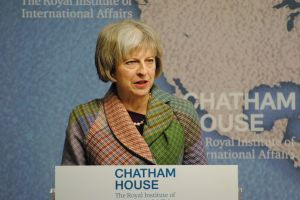

 

theresa-may

EU Renegotiation - Brexit - European Union

Support Semi-Partisan Politics with a one-time or recurring donation:

Agree with this article? Violently disagree? Scroll down to leave a comment.

Follow Semi-Partisan Politics on TwitterFacebook and Medium.

New Year Update

texas-capitol

A few changes for 2017

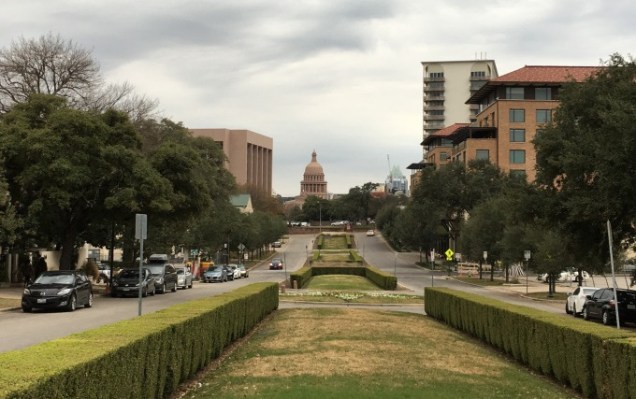
Greetings from Texas. Getting the blog up and running again after a longer-than-anticipated Christmas and New Year break is somewhat harder than in previous years – or rather, I should say that it is proving difficult to spurn the joy of unstructured leisure time for the largely thankless task of ranting into WordPress.

Having taken a full fortnight away from the daily grind has been refreshing, and also revelatory. 2016 was the fifth year of Semi-Partisan Politics and by far the most successful, with a threefold increase in readership compared to 2015, helped along in large part by the EU referendum campaign and the American presidential election. But this positive trajectory has come at the cost of nearly every free moment in my all-too-undisciplined free time.

Writing a political blog (and trying to make it successful) is hard. In order to build and maintain an audience you have to publish nearly every day, often multiple times. Unless you have the benefit of establishment connections to furnish you with gossip or pimp out your work, you have to be demonically active on social media, tweeting effectively and trawling for pageviews on Facebook. And for a one-man outfit like this, time spent promoting the blog on social media is time taken away from writing and the all-important reading and research which adds value to the content, while too much time spent reading and writing at the expense of self-promotion means that one’s best work often goes largely unread.

Whatever value Facebook has as a medium for discussion and promoting this blog, it is also a black hole from which I now intend to escape. I could easily double or triple this blog’s readership in a short time by actively promoting articles on the various political Facebook groups – and indeed I did so for a time in the buildup to the EU referendum. But my time is limited, and I will no longer waste it affirming people’s current biases to a lazy applause of “likes” or posting in hostile groups only to receive endless comments telling me that I am Hitler. A well-placed Facebook intervention may draw in countless likes and re-shares resulting in a thousand additional pageviews, but too often this is low quality traffic with no loyalty or engagement. The readers I value most are the ones who stick around without Facebook nagging, and who both educate and argue with me through the Comments.

SEO is a cruel mistress. This blog’s most-read piece for 2016 was a short, throwaway piece about Tony Benn’s euroscepticism and likely stance on Brexit. Because of an inadvertently well-chosen headline and a dearth of similar articles it placed well on Google, and attracted many thousands more views than the polemics, fisking pieces or other articles of which I am far more proud and which contain much greater originality.

Meanwhile, the British media establishment continue their demented hostility toward the political blogosphere and dogged refusal to acknowledge some of the best and most original analysis out there (though fully aware that it exists) simply because it appears on a site with a .wordpress or .blogspot suffix and does not carry the imprimatur of the prestige titles which increasingly churn out so much unoriginal pseudo-analysis or breathless court gossip.

This blog has been linked several times in both the National Review and the New Republic, the premier conservative and liberal journals in America, despite the limited attention that I have given to US politics this year. Meanwhile, links from the incestuous British media are almost non-existent – though I am grateful to the Guardian’s Andrew Sparrow for occasionally citing this blog in his own excellent and comprehensive political liveblogs. But the idea of sullying myself trying to attract the attention of SW1’s finest on Twitter in exchange for a mere “like” or (rarer still) a retweet no longer holds any appeal.

Then there is the constant feeling that one is only as good as one’s most recent blog post – which, if you are me, means long periods of self-doubt and wondering why I am bothering in the first place. As the email bulletins and Google alerts ping into the inbox every hour of every day there is the constant feeling of needing to go “on the record” about whatever new person or event is driving the 24-hour news cycle, of committing a hot take to public record while it is still relevant, to assimilate the latest information and latest developments, and then inevitable feelings of inadequacy when this high bar – impossible to achieve while working a full time job – is not met.

I have also been dwelling on the fact that the words published on any political blog do not hold their value for long. Sure, some articles will be blessed by the SEO gods and provide a constant stream of traffic, but generally speaking a reaction piece I write in response to a Guardian headline today will be lining the digital waste paper bin by tomorrow. I increasingly want to write words that hold their value for longer, and to some extent this means stepping back from the fray and going more in depth, which in turn requires more expertise (and a rebalancing away from writing toward reading and research).

The upshot of all this introspection is that the thought of returning to the fray – spending the bulk of my free time hunched over the laptop, only to be studiously ignored by those who drive the national conversation – has been less than appealing, especially while I am still enjoying the company of my American family and have easy access to some of the best tacos and Tex-Mex food that money can buy.

Fear not, though. Or don’t start celebrating, if you are a fire-breathing SJW who hates my guts. I’m not going away. This blog will continue. But I have taken a long, hard look at my priorities and there will be some changes afoot.

I am not yet at liberty to discuss the most significant change that I will be making from a personal perspective. Suffice it to say that I have decided that being taken seriously without some serious form of credential is almost impossible, and that it is time to bow to this inevitable fact. At present, I am neither a politician nor a lawyer, nor an accredited expert on the constitution, the European Union, healthcare reform or any of the other subjects on which this blog touches. Over time, this will now change. The focus of this blog may therefore shift and be refined slightly over time, though there will be no immediate change.

The fruits of this work may not be visible for some time, but I hope to be able to provide more detail in due course. In the meantime, here’s what you can expect:

  1. Slightly less frequent updates (I religiously posted nearly every day in 2016; this tempo is now likely to decrease)
  2. More short reaction pieces or flags (bringing other worthy articles or videos to your attention with only limited commentary from myself)
  3. Fewer “fisking” pieces (taking apart and critiquing articles and speeches line-by-line)
  4. Hopefully a few more longer-form, ruminative pieces on certain subjects close to this blog’s heart (Brexit, free speech, identity politics, healthcare reform and the NHS)

And one thing will not change. This blog will continue to be stridently independent, and I will at no time “sell out” to raise my profile through artificial means. If I happen to be published, linked or quoted elsewhere in the coming year, it will not be the result of modifying my positions or moderating my tone. Likewise if by some chance I end up back on the BBC as the token “anti-social justice” guy.

I will still be in Texas for the next couple of weeks, but activity on the blog will now slowly start to ramp up again. Please accept my apologies if I am slow to approve or respond to comments, emails or tweets – the backlog is long, and I am still very much in holiday mode.

I wish all my readers a very happy and prosperous 2017.

Sam Hooper.


img_4852

Support Semi-Partisan Politics with a one-time or recurring donation:

Agree with this article? Violently disagree? Scroll down to leave a comment.

Follow Semi-Partisan Politics on TwitterFacebook and Medium.

Merry Christmas

Merry Christmas from Texas

It is currently 29 degrees Celcius (84 Fahrenheit) on Christmas Eve in McAllen, Texas, and I am starting to regret not packing more shorts and t-shirts, as well as failing to remember to pack my sunglasses for the fifth consecutive year.

Christmas in the Rio Grande Valley is very different to the Christmases I knew growing up on the Hertfordshire-Essex border in southeast England, but it comes with its own unique and wonderful traditions – waiting in line with half the town to collect a delicious order of tamales from Delia’s, taking in a movie on the afternoon of Christmas Day, driving around to look at the most opulently decorated houses and streets, and of course attending bilingual English/Spanish Mass (complete with Mariachi music) at the local Catholic church or at the Basilica of Our Lady of San Juan del Valle.

And of course there are the many unifying factors too, common to Christmas in Britain and America – coming together as a family, sharing a Christmas meal (including a smoked turkey over here), opening presents, making the day extra special for the children.

While I enjoy celebrating with my wife’s family here in the Rio Grande Valley of Texas I also think of my dear family back home in England, including those who are sadly no longer with us but who had such a formative influence on me – particularly my grandparents and an aunt who did so much to make each Christmas special.

And of course I think of all of you, my growing family of readers on this blog. We agree, we argue, we (mostly) remain civil while passionately arguing our cases, we educate one another – or at least, you all educate me. I have a long reading list of new books and academic papers suggested by many of you which I hope to read in 2017 and a forthcoming New Year’s Resolution to read as many of them as possible, and hopefully reflect back a fraction of this distilled wisdom in the future pages of this blog.

To all those who are celebrating this weekend, I wish you a very Merry Christmas.


mcallen-christmas

Support Semi-Partisan Politics with a one-time or recurring donation:

Agree with this article? Violently disagree? Scroll down to leave a comment.

Follow Semi-Partisan Politics on TwitterFacebook and Medium.

What Is The Point Of Theresa May?

theresa-may

Right now, Britain needs a leader, not a placeholder – Theresa May needs to step up and set some ambitious national goals, or else be swept aside to make room for a real conservative leader

David Mellor doesn’t know what Theresa May stands for. And as Christopher Hope writes in the Telegraph, Mellor has good reason to be confused:

Theresa May is proving as Prime Minister that she is no Margaret Thatcher, a former Thatcherite minister has said, because she is not “seizing the initiative”.

David Mellor, who served under Baroness Thatcher for three years, said “the description of Theresa May as the new Margaret Thatcher is as wide of the mark as it could possibly be”.

Mr Mellor urged Mrs May to call a general election next year and win a larger House of Commons majority. The Tories have a consistently strong polling lead over Labour.

Mr Mellor was a minister in Lady Thatcher’s last government in four departments from 1987 to her resignation in November 1990.

He said Mrs May had shown herself “infirm of purpose”, most recently over the Christmas strikes at post offices, Southern Rail and Heathrow airport, where action will take place later this week.

He told Sky News’ Murnaghan: “When I was a minister for four years she treated me with even more disrespect than my mother did, but Margaret Thatcher knew what she wanted do and did it.

“I don’t think Theresa May knows what she wants to do. Her advisers appear to be the ones that create the headlines. I think she is sitting there and she is infirm of purpose, and she needs to seize the initiative.

“The main initiative she needs to seize is to have an election and get herself a mandate.”

This blog has never joined the calls for an early general election, not least because the laudable idea of having fixed term parliaments is rather undermined if we suspend the rule on the first occasion it becomes politically inconvenient. But if triggering a general election is what it takes to force Theresa May to really think about what kind of prime minister she wants to be (and hopefully give the British people a clue as well) then maybe we should just get on with it. Because right now Britain is idling in neutral at a time when we should be setting a firm course and all striving to pull in the same direction.

The underlying problem is that having succeeded to the office of prime minister unexpectedly in the most turbulent of times (in the wake of David Cameron’s resignation and Andrea Leadsom’s surprise departure from the following Conservative Party leadership contest), Theresa May evidently took office without ever having clearly thought about what it is that she wanted to achieve through her leadership of Britain (the recent Sunday Times interview is heavy on temperament and almost completely lacking in vision).

And it shows. Mellor cites Theresa May’s supposed “infirmity of purpose” when it comes to things like tackling the strikes on Southern Rail, but those are side issues. More troubling than May’s failure to get tough with striking railway workers is the fact that she used her first party conference speech as prime minister to declare war not on Labour and the vested interests of the Left, but on the libertarian Right.

What’s worrying is that Theresa May’s government has passed the Investigatory Powers Act 2016, dynamite for privacy and civil liberties, and is still toying with the idea of enforcing section 40 of the Crime and Courts Act and Part 2 of the Leveson Report, further curtailing freedom of the press. It is not just that we do not know enough about Theresa May’s agenda for Britain – what little we do no should give small government conservatives everywhere cause for concern.

Contrast this to the last great transformative Conservative prime minister, Margaret Thatcher, who had four years behind her as Leader of the Opposition in which to solidify her worldview and flesh it out with policy (notably from the Stepping Stones Report and Centre for Policy Studies think tank) before taking office. By the time Thatcher entered 10 Downing Street in May 1979, she had not only diagnosed Britain’s ailments but formed a fairly clear idea of how she intended to tackle them, even though the road ahead was inevitably marked by missteps and challenges.

Theresa May appears to have no such plan. If she has a burning ambition to change Britain from an X type of country to a Y type of country then she is keeping her cards very close to her chest, for there is no evidence of such a goal. All we have is her reputation of flinty-eyed authoritarianism and aversion to publicity, earned during six years at the Home Office, a grammar school fetish and some woolly words about focusing her government’s attention on helping the JAMs (people who are Just About Managing).

The danger, therefore, is that with Brexit on her plate, a populist rebellion afoot in the country and challenges abroad, Theresa May’s government will become so preoccupied with fighting fires and engaging in daily damage control that the big picture vision never emerges at all. Mellor is right to say that most of the useful tidbits of information about the government’s intentions have come not from the prime minister but from public spats between rival cabinet members. And who can be surprised that such turf wars are underway when there is no clear drumbeat emanating from Number 10?

Of course, Theresa May is by no means the first politician to reach 10 Downing Street without a plan for what to do in government. Gordon Brown famously spent so long plotting his own ascension and the downfall of Tony Blair that he cut a uniquely uninspired and uninspiring figure among world leaders, at least until the global financial crisis breathed some fire into his belly (even if his “solution” was hiking the top income tax rate up to an immoral 50 percent).

There are times when a bland and uninspiring individual, a technocrat, is the right leader for the moment – primarily when times are good and the key imperative is not to rock the boat. This scenario does not describe Britain in 2016. Brexit may be foremost of our challenges, but there are others, too. And from Theresa May’s cautious and unambitious start in office, it is difficult to see how she – and we – are to best confront them.


theresa-may-conservative-party-conference-2016-birmingham

Support Semi-Partisan Politics with a one-time or recurring donation:

Agree with this article? Violently disagree? Scroll down to leave a comment.

Follow Semi-Partisan Politics on TwitterFacebook and Medium.

When American Liberals Lose The Faith

Doesn’t this testimonial from a disaffected California liberal really speak volumes about just how far the American Left is going to lose friends and alienate people?

Rod Dreher shares an email from a reader:

So I was raised a secular liberal. My college professors were secular liberals. During my journalism phase, my newspaper colleagues were secular liberals. My law school professors and peers were – in the vast majority – secular liberals. Almost everyone at my corporate law firm was a secular liberal. My California neighbors and friends are secular liberals, as are my colleagues. My mother, siblings, and their spouses are all secular liberals.

By all rights, I should be a member in good standing of their tribe, “liking” their Facebook posts and joining their candlelight vigils against the evil Trump Administration. But November 8 and its aftermath revealed to me that I am just so tired of these people. I can’t be like them, and I don’t want my kids turning into them.

I am tired of their undisguised contempt for tens of millions of Americans, with no effort to temper their response to the election with humility or empathy.

I am tired of their unexamined snobbery and condescension.

I am tired of their name-calling and virtue-signaling as signs of supposedly high intelligence.

I am tired of their trendiness, jumping on every left-liberal bandwagon that comes along (transgender activism, anyone?) and then acting like anyone not on board is an idiot/hater.

I am tired of their shallowness. It’s hard to have a deep conversation with people who are obsessed with moving their kids’ pawns across the board (grades, sports, college, grad school, career) and, in their spare time, entertaining themselves and taking great vacations.

I am tired of their acceptance of vulgarity and sarcastic irreverence as the cultural ocean in which their kids swim. I like pop culture as much as the next person, but people who would never raise their kids on junk food seem to think nothing of letting then wallow in cultural junk, exposed to nothing ennobling, aspirational, or even earnest.

I am tired of watching them raise clueless kids (see above) who go off to college and within months are convinced they live in a rapey, racist patriarchy; “Make America Great Again” is hate speech; and Black Lives Matter agitators are their brothers-in-arms against White Privilege. If my kids are like that at nineteen, I’ll feel I’ve seriously failed them as a parent. Yet the general sentiment seems to be these are good, liberal kids who may have gotten a bit carried away.

I am tired of their lack of interest in any form of serious morality or self-betterment. These are decent, responsible people, many compassionate by temperament. Yet they seem two-dimensional, as if they believe that being a nice, well-socialized person who holds the correct political views is all there is, and there is nothing else to talk about. Isn’t there, though?

I am tired of being bored and exasperated by everybody. I feel like I have read this book a thousand times, and there are no surprises in it. Down with Trump! Trans Lives Matter! Climate deniers are destroying the planet! No cake, we’re gluten-free!

These are good people in a lot of ways. But there has got to be a better tribe.

It must be disturbing to “wake up” like this and realise that you are no longer fully in communion with your tribe, so kudos to Rod Dreher’s reader for putting into words something that cannot be easy to admit. With the wounds of the 2016 presidential election still raw, many on the American Left have little time for doubters, and admitting a heresy such as this would likely be met not with understanding (let alone introspection) but rather with intolerance and fury.

The scene that comes to my mind is from the film American History X, where protagonist Derek Vinyard, serving a jail sentence for the racist-motivated murder of a black car thief, realises the flaws of his white supremacist worldview while in prison and is then utterly unable to engage with that community – his only source of friendship and support – after his release. Eventually, Vinyard confronts the group’s leader and explicitly rejects their racist ideology, at which point they chase him out of their camp.

Increasingly, one has to either buy the whole regressive leftist agenda or none of it at all. Because it is couched in such explicitly moral terms, with any departure from orthodoxy seen as a moral failure, to question just one aspect of the worldview – the identity politics, the environmentalism, the statist paternalism – is to make oneself persona non grata within that community. Imagine the pain of realising that you no longer believe every article in the leftist gospel, and then being faced either with the prospect of admitting your heresy and being actively shunned by family, friends and colleagues, or else keeping your opposition quiet and living a lie.

The American Left has, with too few exceptions, given up on trying to win by persuasion, seeking instead to achieve victory by shaming and bullying dissenters into a sullen, resentful silence. That approach is no longer working and delivering benefits, to the extent that it ever did. When people like Rod Dreher’s reader are leaving the tribe in disgust at the sanctimonious echo chamber of questionable values then clearly something has gone wrong.

None of this is to say that American conservatism is in fine fettle – clearly not, as this blog has repeatedly warned. The fact that Republicans have closed ranks behind a profoundly authoritarian and un-conservative President-elect Donald Trump is evidence of the challenge faced by small-C conservatives in trying to maintain their influence and steer the Trump presidency away from endless pitfalls.

But it is the slow-burning revolution on the Left (particularly the growing elitism and the lethal embrace of identity politics) which fed the populist Right to the extent that Donald Trump won the White House. And until the American Left learns to moderate its many excesses and accept ideological diversity together with all the other kinds of diversity they champion, they will continue to alienate crucial allies and accelerate their march into irrelevance.


liberalism

Support Semi-Partisan Politics with a one-time or recurring donation:

Agree with this article? Violently disagree? Scroll down to leave a comment.

Follow Semi-Partisan Politics on TwitterFacebook and Medium.