How To Waste Public Money 101

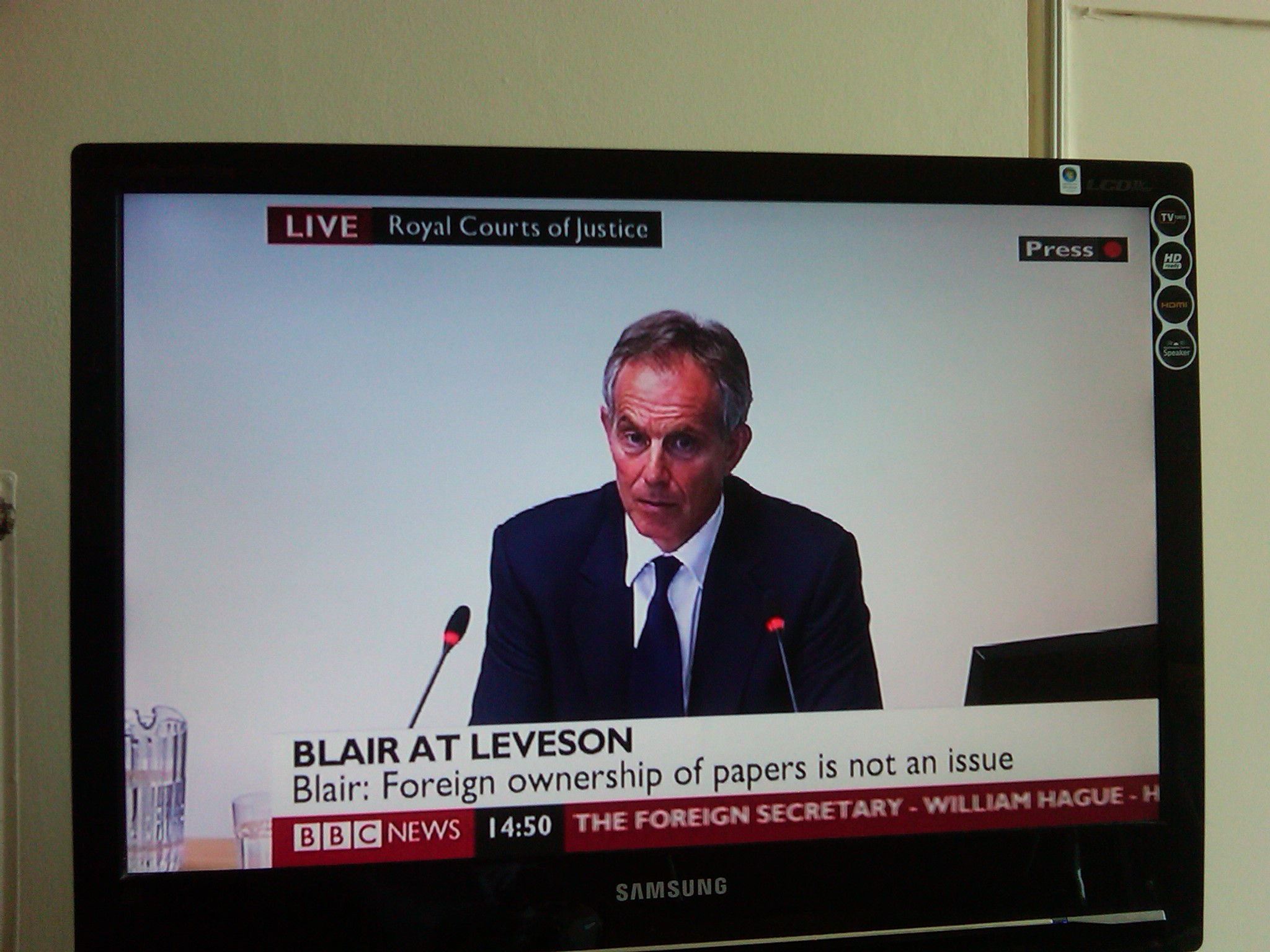
As I type, Tony Blair is giving evidence to the Leveson Enquiry. Why do I care? Because it is receiving wall-to-wall coverage on Britain’s rolling news channels, and as dull as the whole wretched thing is, I cannot bring myself to change channel to The Weakest Link or whatever other daytime television is on offer.

What is the Leveson Enquiry? For those unfamiliar, the enquiry has its own website. And logo. Funny how these things have become a kind of industry of their own in Britain.

http://www.levesoninquiry.org.uk/

I only tuned in toward the end of the session in which Tony Blair was giving evidence, but having subsequently seen the “highlights” repeated on BBC News, I am slightly concerned that we might just be paying a lot of people to sit around for no productive reason whatsoever.
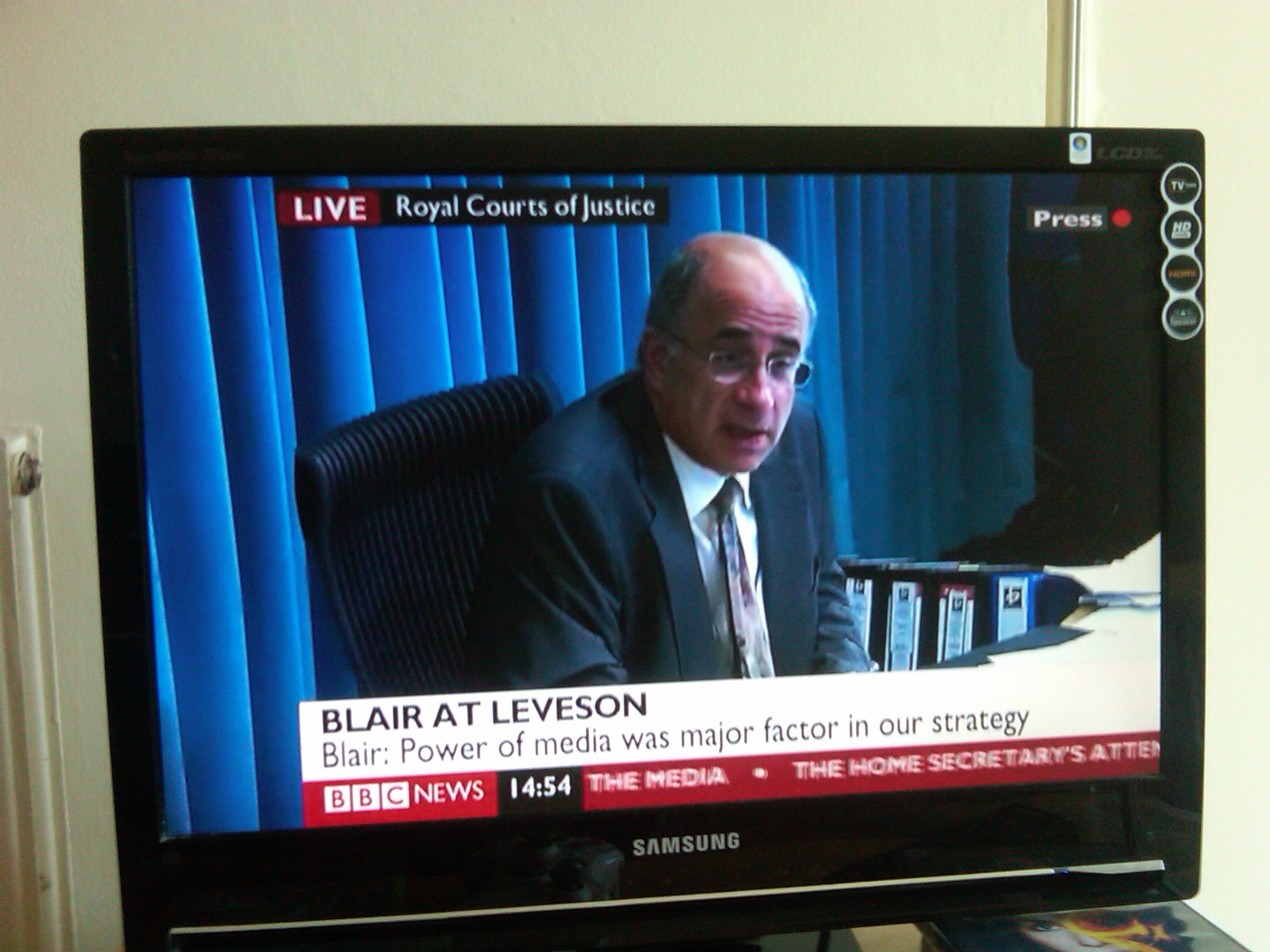
The world’s most tedious man embarks upon a ten-minute, multi-clause question seemingly designed to flatter himself and not to extract any remotely useful information from the witness

Television at its best here.

Tony Blair listens to the incredibly long, pompous question being addressed to him before realising that another 3 hours of this lie ahead, losing the will to live and giving another predictably bland answer.

And after all of this drama and posturing, what did we actually learn today from Tony Blair’s evidence? Essentially, that the media is very powerful and that Tony Blair recognised this when he was Prime Minister, and devised clever strategies to try to keep as much of the media as possible on his side. Oh, and that he didn’t think it was really very proper for the press to say nasty things about his wife and children. Fascinating.

We are paying for all of these people to sit in a room, surrounded by their lever-arch files and court stenographers, so that a glossy report can be published and life can continue exactly as it did before.

Here is all anyone needs to know about regulation of the press and freedom of speech in Britain. Quite literally, this is all anyone needs to know:

1. There is a small elite of powerful people in Britain whose families know each other, who attended the same schools, the same parties, and the same social events. Whether they end up in politics (in either of the main parties), industry (running big companies that do business in Britain) or the media (newspaper or television), their personal preferences, feuds and biases are reflected in the attitudes of their respective political parties / companies / newspapers to one another. Anyone surprised by this non-revelation is a simpleton.

2. We will never know whether any secret deals have been done between any prior governments and media entities in the past, because there are no robust rules about lobbying, declaring interests or exercising influence in place at the moment, and no one involved in such a scheme is very likely to blurt out the fact during an on-the-record, televised enquiry. If you are wondering whether this fact renders the whole enquiry a complete waste of time, you would not be alone.

3. Our libel laws are ridiculous and need urgent reform. Nothing to do with the Leveson enquiry, just a fact.

4. The division between news reporting and opinion is not as clear as it should be in British newspapers.

5. British media companies, like companies in general, sometimes hire bad people who do bad things while on the job. Sometimes this becomes endemic in the organisation concerned. We don’t need to create special new laws to prevent such things happening in the future. If phone hacking was illegal before, prosecute the people involved under the existing laws. Just as we don’t need to design new regulations when the misdemeanour happens in a construction company or a bank, so we don’t need to design new laws when it happens in the media. Tempting though it may be when everyone is a lawyer and wants to be paid for doing something.

6. Until we as a country codify at a very high, hard-to-amend level (i.e. in a constitution or bill of rights of some kind) exactly what, if any, restrictions we are willing to accept on free speech – both as individuals and as media – any time that anything happens to rock the boat, any time that anyone in the media does something improper, we will have another enquiry like this and pay a bunch of former and current lawyers and judges to sit around doing what they are doing at the moment.

7. That’s it.

Isn’t our unwritten constitution a wondrous, beautiful thing? Oh, how we must treasure and preserve it for all time.

UPDATE – Oh, here’s the best bit. Because Tony Blair was interrupted by a protester while giving evidence to the enquiry, Lord Justice Leveson has now ordered an enquiry into how his enquiry was interrupted by a protester. I’m not joking. Welcome to Britain.

Live-Blogging The Leveson Enquiry

22.38 – I’ll live blog about something worth covering next time

15.13 – Tony Blair’s evidence has finished, and immediately the BBC stops caring. I guess I missed all the “interesting” stuff.

15.11 – There are people who go out in the world and do things, and accomplish stuff, and change peoples’ lives for the better (or the worse), but leave an impact either way. And then there are the people sitting in this room at the Royal Courts of Justice. Tony Blair is the former; everyone else…not so much

15.09 – I DON’T KNOW WHAT’S HAPPENING OR WHY I AM PAYING FOR ALL THESE PEOPLE TO SIT HERE

15.07 – Oh geez, why don’t you just get a hotel room and invite Blair up if you like him so much, Leveson? Enough pointless flattery, let’s accomplish something today!

15.06 – Tony Blair is a broken man. William Hague and David Cameron at their fiery best never exacted such a toll on the former PM as Leveson’s pointless question

15.05 – Why is Leveson at pains to say he has no interest in imperilling the freedom of expression in the press? Isn’t the whole point of this goddamn enquiry to hear evidence from other people, not to hear this gasbag preening in front of a load of TV cameras? His so-called “question” just lasted 10 minutes

15.05 – Leveson has heard of the internet! He mentioned twitter and the internet just now! Gosh, isn’t he modern? Looking at all of the angles on press and media regulation here

15.04 – Why can’t Leveson just join his local bowls club like most old people? It seems cruel to the general population of the UK to devise this elaborate and boring way of keeping him occupied

15.03 – So glad I’m not a lawyer (sorry, solicitor or barrister), especially in this country

15.02 – I wish the director would show the expression on Tony Blair’s face as Leveson’s multi-part non-question enters its fifth minute…

15.01 – Leveson postulating about some bizarre scenario about what to do if someones’ leg is going to be chopped off. No idea.

14.59 – Leveson clearly thinks he is being paid by the word, God only knows what he is talking about at the moment.

14.58 – BBC News is showing rolling coverage of Tony Blair’s evidence to The Leveson Enquiry,  set up to analyse and recommend changes to press regulation in the wake of the “phone hacking” scandal. This is such a freaking exciting topic, and such great stewardship of our taxpayer money, that it seems to be the perfect candidate for the first live blog on SemiPartisanSam.

Obama Syndrome – Tom Friedman’s Diagnosis

Tea Party Protest - Barack Obama

In his latest New York Times column, Thomas Friedman succinctly puts into words what many centrists and probably nearly all frustrated liberals will immediately identify as one of the Obama administration’s biggest political failures thus far into his first term – Obama’s inability to properly sell his accomplishments, and their failure to prevent these accomplishments from being distorted and turned into electoral liabilities by the Republican opposition.

Friedman complains:

Barack Obama is a great orator, but he is the worst president I’ve ever seen when it comes to explaining his achievements, putting them in context, connecting with people on a gut level through repetition and thereby defining how the public views an issue.

True, though this is an age old complaint about Democratic politics – the inability to remain cohesive and on-message, and to deliver a point that is consistent, compelling, and easy to repeat and digest.

On what is perhaps Obama’s signature first term accomplishment – however imperfect it may be – reforming the US healthcare system, Friedman delivers the kind of blunt, incontrovertible smackdown of Republican talking points that make people like me want to shout out in agreement and kiss the screen:

“Obamacare is socialized medicine,” says the Republican Party. No, no — excuse me — socialized medicine is what we have now! People without insurance can go to an emergency ward or throw themselves on the mercy of a doctor, and the cost of all this uncompensated care is shared by all those who have insurance, raising your rates and mine. That is socialized medicine and that is what Obamacare ends. Yet Obama — the champion of private insurance for all — has allowed himself to be painted as a health care socialist.

Yes, yes, a thousand times yes. It’s painful that anyone should have to school the Republican party, the self proclaimed champions of fiscal conservatism, in such basic economic concepts as the free rider problem, but if someone has to do it then there is no one who can do so with more style than Tom Friedman. I’m not sure that I have it in me to hear one more Tea Partier lambasting Obamacare and lamenting that the US now has a socialised healthcare system and that he is being made to pay for his neighbour’s keep, without just straight up asking him “well, what the hell do you think you were doing before, idiot?”

And on the somewhat topical subject of government spending and deficits:

Finally, how did Obama ever allow this duality to take hold: “The Bush tax cuts” versus the “Obama bailout”? It should have been “the Bush deficit explosion” and the “Obama rescue.” Sure, the deficit has increased under Obama. It was largely to save the country from going into a Depression after a Bush-era binge that included two wars — which, for the first time in our history, we not only did not pay for with tax increases but instead accompanied with tax cuts — plus a 2003 Medicare prescription drug bill that we could not afford, then or now. Congressional Democrats also had a hand in this, but the idea that Bush gets to skate off into history as a “tax-cutter” and not as a “deficit buster” is a travesty. You can’t just blame Fox News. Obama has the bully pulpit.

The way in which Democrats managed to lose control of the narrative and allow the party who led America into two unfunded wars, a round of unfunded tax cuts and an unfunded expansion of Medicare (oh yes – socialised medicine, too) to reclaim any credibility whatsoever in terms of economic understanding or fiscal responsibility will forever astound me. And Friedman is right, Obama has the bully pulpit. He, his team and his spokespeople should have been sending out the right message from the start, and not have allowed themselves to have been forced to play defense.

To be fair – and as Friedman notes – sometimes actions speak louder than words, and in several notable instances the Obama administration’s actions have been as much of a reason for disappointment as the selling of their message. For me, the almost unforgivable failure of the Obama administration was the failure to embrace and push forward the Bowles-Simpson deficit reduction plan, which enjoyed considerable support (if not quite enough to mandate an up-or-down vote in the House and Senate) and which would have demonstrated beyond any reasonable doubt that Obama was serious about medium term deficit reduction. The Obama administration’s reticence on this point enraged many a centrist Obama supporter, and led blogger Andrew Sullivan to declare:

My own view, however, is that Obama badly bungled this by not embracing his current position in the State of the Union and pummeling the GOP with it for months. Bowles Simpson was his commission after all, and yet he dropped it like a stone and pandered to his left when he had a perfect moment to pivot to the debt question. Giving the GOP any credibility on debt by offering nothing of real $4 trillion substance until last week may well be seen as Obama’s greatest mistake in his first term. Now that he has finally offered it, his ability to maintain the high ground on a fair measure to tackle the deficit is much reduced from his January possibility. This is not a meep-meep moment. And it could easily have been, if Obama had shown, yes, courage sooner … On this score, leading from behind has been pretty much a disaster. And there is no longer much time to lead from the front.

So there are problems here of action as well as messaging. I don’t yet believe that this is cause for panic – as I have laid out in previous posts, I am very confident that given his opposition, Obama is heading for a likely landslide reelection victory. But an administration – and a party – that fails to create and stick to a positive narrative on so important a topic, deserves their fair share of woe.

But unfortunately it is not just President Obama and his administration that suffer as a result of their baleful communication efforts. For with every day that passes without a compelling, effective message from the administration about achievements won and plans for the future, the unrepentantly unreformed party of George W. “two unfunded wars” Bush and Richard “deficits don’t matter” Cheney will seem to more and more people like a potentially viable alternative to run the show again.

Booker, Bain And Private Equity

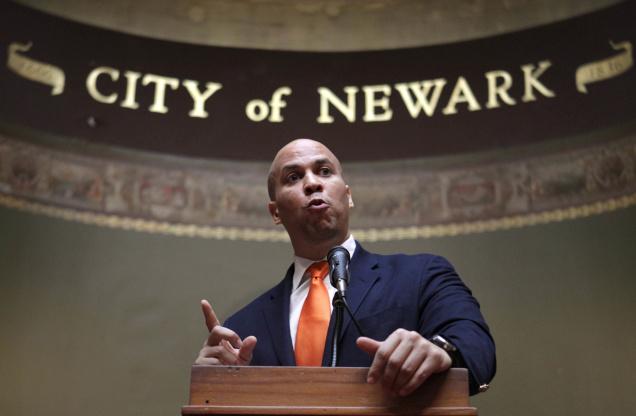
Cory Booker - Newark - Bain Capital

Today’s post is on the furore generated by Newark Mayor Cory Booker’s recent comments on last weeks’ NBC Meet The Press show, in which he appeared as a surrogate for the Obama reelection campaign.

When asked about attacks originating from the Obama campaign and aligned PACs, attacking Mitt Romney’s record at Bain Capital, Mayor Booker essentially said that those attacks were an unfair and unnecessary distraction from the real issues of the election:

“To me, it’s just this — we’re getting to a ridiculous point in America, especially that I know. I live in a state where pension funds, unions and other people are investing in companies like Bain Capital. If you look at the totality of Bain Capital’s record, it ain’t — they’ve done a lot to support businesses, to grow businesses.”

For those unfamiliar with the maelstrom of ridiculousness, accusation, counter-accusation, retraction and non-retraction that these innocuous comments generated, the consequences are related in amusing style by Kathleen Parker at The Washington Post.

Though really if you have taken in any American political news over the past week or so, you can hardly have failed to have heard about this story from one source or another. And in terms of the “press coverage to newsworthiness ratio” mismatch, this story scores quite highly.

As far as I can tell, despite all of the noise and column inches that this “story” has generated, most reasonable people could agree with the following sentiment: that there is nothing wrong with private equity – well, no more than what is right or wrong with any other industry – and the Obama reelection campaign has not publicly suggested otherwise.

No for-profit business is run for the sake of creating jobs – that just happens to be a fortunate side effect of growth and success, and private equity plays an important role in ensuring that capital is allocated most quickly and efficiently to those enterprises that can generate the best return on it. I don’t recall Mayor Cory Booker attacking private equity, capitalism and the American dream when he went on Meet The Press last week, nor Obama himself (though the Obama campaign and associated PACs and campaign surrogates have certainly crossed this line on occasions).

So what exactly is wrong with saying that attacks on private equity are nauseating? It may be a rather strong choice of words, but attacks on private equity are certainly irrelevant. And saying so does not blow apart Obama’s central campaign issue, as many conservative commentators seem eager to believe.

If we leave out the words of the Super-PAC political ads (and really we have to – on both sides, be they Republican and Democrat aligned – because they are loose cannons, unconnected with the campaigns and able to say anything they please regardless of the views of either candidate), what the Obama campaign is trying to point out is that a successful career in private equity is not of itself either a qualification for, nor indication of success at the presidency. Incidentally, one could (and many have) made the same argument about a career in community organising and constitutional law teaching.

Quite a few people work in private equity. And many more people – including ‘normal’ people, through their savings and investments and pensions – benefit from the work that these people do. Having a successful career in private equity does not of itself qualify someone to be President of the United States – it is a hard job, and probably nothing short of a previous stint as Head of State of another powerful nation really qualifies you for it.

And so if the Obama campaign wants to try to draw a contrast between the president’s four years of on-the-job experience and Mitt Romney’s lack thereof, that seems fair enough (though the old “don’t change horses midstream” argument is rather old and worn at this point, especially after George W. Bush’s reelection campaign), and as long as he avoids straying into “the corporations are raping the world” territory he should be allowed to make that point without being jumped on and labelled an anti-capitalist reactionary.

This seems to me like a big fuss about nothing – after eight days, let’s finally move on from this one now.

Obama The Inevitable – Continued

Just as I was starting to think that everyone had bought into the myth that the upcoming US presidential election is going to be anything other than a landslide for Barack Obama, Jamelle Bouie from The American Prospect brings a healthy dose of perspective to the matter:

I don’t mean to single out partisans; actual Beltway pundits are also too concerned with gaffes and faux controversies. Mike Allen and Jim VandeHei’s assessment of the last month—which has the top spot at POLITICO—describes the Obama campaign as “stumbling out of the gate” and “struggling” with message discipline. It’s everything you would expect from a micro-focus on the election

How much of this is remarkable, and how much of this is the usual sturm und drang of a presidential election? Campaigns always see blowback on their messaging, on account of the fact that political parties aren’t monolithic entities. Obama may have had a huge fundraising advantage in 2008, but in a polarized country where Democrats have taken steps to regulate Wall Street and raise taxes on rich people, it’s no surprise that Republicans have suddenly emerged with a fundraising advantage, and the support of interested billionaires. It would be unusual if that weren’t the case.

Hear, hear. Finally, some level-headedness on the start of Obama’s campaign.

The Republicans chose Mitt Romney as their nominee. Mitt Romney. And so unless Barack Obama is caught on camera having an extramarital affair, sneaking gold ingots from Fort Knox or peeing on the American flag while whistling jaunty showtunes, he is going to be re-elected president in November. And no-drama Obama ain’t going to be doing any of those things.