Another Reason To Dislike Gordon Brown

I am only allowed by my wife to rant about Gordon Brown and his toxic impact on British life and politics a maximum of three times per week. Yes, she keeps track, and yes, even I will acknowledge that this has sometimes been necessary. No such restriction applies to this blog, however, which is just as well given recent revelations made by former Labour spin-doctor Damian McBride.

Apparently, Brown’s first instinct upon realising the gravity of the situation brought about by the global economic crisis and Britain’s unique unpreparedness to deal with it (thanks to eleven years of big spending Labour government) was not to issue a heartfelt mea culpa and apology to the British people for the upcoming lost decade that he was unleashing, but instead to start plotting the implementation of martial law on the streets of Britain.
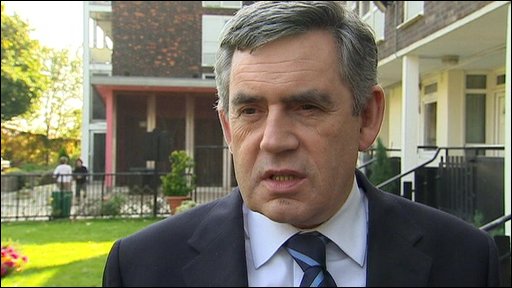
Help to engineer a global financial calamity and then propose banning people from protesting about it - that's the Gordon Brown way.
Help to engineer a global financial calamity and then propose banning people from protesting about it – that’s the Gordon Brown way.

The BBC reports:

Gordon Brown discussed deploying troops on Britain’s streets as news of the 2008 financial crisis became clear, an ex-Labour spin doctor has claimed. In extracts of a book published in the Daily Mail, Damian McBride said the former prime minister feared “anarchy” once the scale of the crisis was known. According to the book, Mr Brown said: “We’d have to think: do we have curfews, do we put the Army on the streets, how do we get order back?”

I am continually accused of being too hard on Gordon Brown. He was a good person, interlocutors on his behalf insist. His heart was in the right place, they plead. He was a simple humble methodist man who just wanted to do good for his country, they tell me. Blah, blah, blah.

This man, uniquely responsible for ensuring that Britain entered the great recession as the least well prepared of all of the major world economies, thought that the best way to deal with the potential fallout would be to deploy troops on the streets to stop us from looting and pillaging our country back to the stone age.

The article continues:

Mr Brown is quoted as saying: “If the banks are shutting their doors, and the cash points aren’t working, and people go to Tesco and their cards aren’t being accepted, the whole thing will just explode.

“If you can’t buy food or petrol or medicine for your kids, people will just start breaking the windows and helping themselves.

“And as soon as people see that on TV, that’s the end, because everyone will think that’s OK now, that’s just what we all have to do. It’ll be anarchy. That’s what could happen tomorrow.”

According to Mr McBride’s book, Power Trip, Mr Brown feared panic from other countries could spread to the UK.

I am genuinely unsure which is worse – the fact that the man brought our nation to a place where such draconian, apocalyptic scenarios even had to be considered, the fact that he thought they might be the best way of tackling the problem, or the fact that his current proteges are this very day standing giving speeches at the Labour party conference in Brighton where they are denying any responsibility for or complicity in Britain’s continuing economic malaise. There are no words or phrases critical enough of the premiership of Gordon Brown.

The book’s author, Damian McBride, does not do himself any great favours as he relates the tale. Grateful as we must be to him for shedding this additional light on the Brown terror, of course McBride was personally supportive of everything that Brown did:

“It was extraordinary to see Gordon so totally gripped by the danger of what he was about to do, but equally convinced that decisive action had to be taken immediately,” Mr McBride wrote.

He claimed the then prime minister understood the situation better than other world leaders, his UK opponents and senior bankers.

And the former spin doctor rated Mr Brown’s actions as “up with those of President Kennedy and his advisers during the Cuban Missile Crisis”.

John F. Kennedy and Gordon Brown – historical equals and political peers. Aside from the fact that they both ghost-wrote books about the meaning of courage, I’m not really feeling the similarity right now.

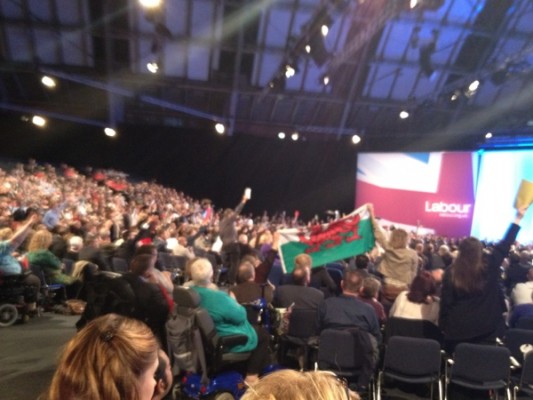
Labour Party Conference 2013 – Reflections

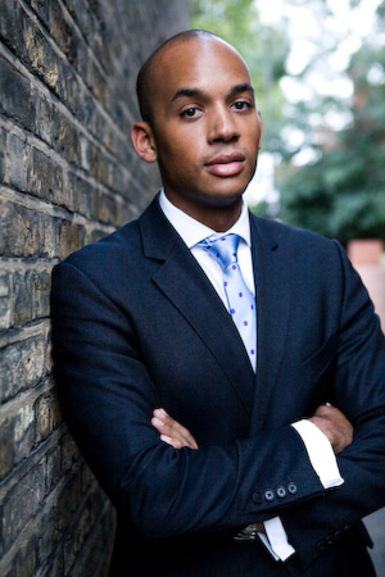
The economy was fine and everything was splendid until 2010 when the Tories came into power, according to Chuka Umunna, Labour's point person on Business


After listening to the various speeches at the 2013 Labour Party Conference this morning, I believe I have detected a theme running through almost all of them.

I don’t mean the usual Labour tunnel-vision and denial of their role in wrecking the British economy and increasing the size of the British state to freedom-crushing, unsustainable levels – that has already been well documented, on this blog and elsewhere.

Nor do I mean the incessant moralising, the endless strictures about how anyone who holds conservative views must be rich, heartless and hold the “common man” in contempt, or the assertions that skepticism about pooling national sovereignty and submitting to an ever-increasing burden of regulations emanating from the European Union somehow equates to a longing for isolationism and a desire to cut off trade and ties with with the world.

I refer instead to the mindset that for every problem, there is a government solution waiting to be proposed, seconded and carried at a Labour conference.

The smug cloud has already enveloped Brighton and is rapidly encroaching on the rest of the country.


There has been an increase on the number of workers on zero-hour contracts in these tough economic times. Gasp! Outrage! Zero hour contracts must be inherently terrible, a product of evil British businesspeople who want to make money on the backs of the poor, and must be outlawed immediately.

A British soldier was violently beheaded in a terrorist attack on the streets of London. Outrage! We need new laws making it a specific offense to attack military personnel, because if only the general laws against beheading people had been supplemented by additional laws prohibiting the beheading of service members, this heinous crime would not have been committed.

Watching the Labour party assemble for their yearly conference is like observing a group of weary, jaded old codgers assemble in a meeting hall to bemoan the state of humanity, how far it has fallen, and what they must do to forcibly drag the rest of us back up to their lofty levels of enlightened tolerance and progressivism.

How thoroughly depressing it must be to perpetually think so little of the human capacity to do good that the only solutions you can ever imagine are found in new regulations preventing people from being themselves, and transferring agency from the free individual to the faceless, bureaucratic state.

And of course, the answer to the societal problems that Labour bemoan can never be found in reducing the power and scope of the state, or empowering individuals to take more responsibility for themselves. It is as though the Labour party is incapable of taking the laissez-faire, hands-off approach to the people that they rightly champion in the social realm and applying it to the economic realm.

And that’s a great shame, because I feel sure that increasingly, the real divide in British politics will not be between the traditional left vs right paradigm, but between people who see government as the answer to everything, and people who are heartily sick of not being able to live their lives freely without continual badgering and preachy interference. Right now, neither party is ideally positioned to capitalise on this shift, but if today’s conference speeches are anything to go by, Labour has much more ground to make up.

On Political Silly Season

At least it isn't every year.
At least it isn’t every year.


It is party conference season in the UK, with the Labour Party currently enjoying their moment in the spotlight. It is times like these that I envy the Americans, who only have to endure the spectacle of their preferred political party’s most gung-ho, swivel-eyed or greasily ambitious apparatchiks getting together to engage in collective groupthink once every four years, unlike us Brits who are treated to these traveling roadshows each year.

And as usual, we have had our fair share of silliness.

The Liberal Democrat party conference was largely dominated by the news that Sarah Teather, the current government children’s minister (because apparently that is a separate role that we need?) is throwing her toys out of the pram and standing down as an MP at the 2015 general election because the LibDems are not sufficiently like the Labour party for her liking. In a similar vein, much of the remaining press coverage was driven by continual speculation about Nick Clegg’s leadership, and Tim Farron’s (the Liberal Democrat’s party president) evident desire to serve in coalition with Labour rather than the Conservatives, and quite possibly to shack up with Ed Miliband and take romantic mini-breaks together as well.

UKIP were hoping for a successful conference to build favourable press in the long run-up to the European Parliamentary elections, where they are expected to do very well and challenge for first place. However, they came a cropper when one of their MEPs hit a journalist and made an inappropriate “slut” joke, all in view of television cameras and witnesses. This is a typical example of the pointless distraction – the actions of a silly activist then overshadow anything substantive that may have been discussed or decided at conference. UKIP’s leader, Nigel Farage, did his frank and inimitable best to salvage some small gain from the smoking wreck and lift the morale of his troops, but the damage was already done.

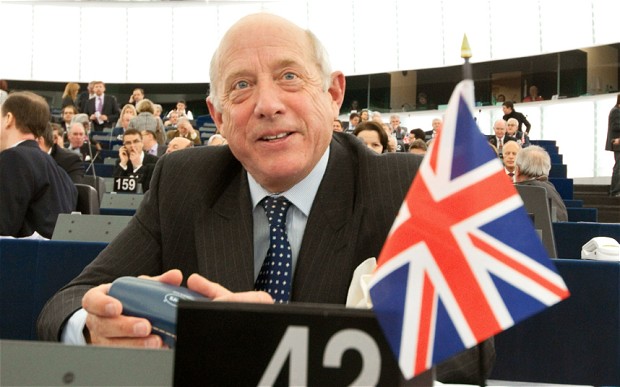
This man can make positive press conference disappear faster than I can finish this capt---
This man can make positive press coverage disappear faster than I can finish this capt—


Now we are enduring the Labour party conference, another exercise in denial as to the reasons for their 2010 general election loss and their persistent unpopularity throughout the country. Of course, no Labour conference is complete without the proposal for several new and entirely redundant laws. This time, in the wake of the horrific terrorist murder of British soldier Drummer Lee Rigby, Labour are proposing making it a specific crime to attack a member of the armed forces. Because, of course, at the moment anyone could do that and walk away entirely untouched by the criminal justice system. So we have the typical frenetic, pointless legislating that we have come to know and love from the Labour party.

Something to look forward to.


As of press time we can only speculate as to the joys that await us at the Conservative party conference, but as a conservative voter I am filled with my usual apprehension that we will see more moves to make the Tories indistinguishable from Labour, and the unceasing need to try to “outnice” their main electoral rivals by embracing universal benefits for rich and poor alike whilst continuing to clobber the rich with onerous tax rates. If Osborne and Cameron manage to articulate even one original policy that stands a snowball’s chance in hell of shrinking the state and increasing personal freedom, I will not only be delighted but I will eat my hat.

So, in conference season 2013 we have a party in denial about why they were booted out of government and remain widely distrusted, a party in the midst of severe post-wedding remorse pining for the other woman that it didn’t marry, a party whose manifesto and policy announcements were entirely upstaged by an ornery old man unfamiliar with the workings of television and a party calling themselves the Conservatives but who seem to have accidentally picked up the Labour party governing playbook by mistake.

It must be groundhog day.

Music For The Day

I don’t know who has laid down the definitive best recording of Verdi’s opera “Otello” – not because I have failed to listen to them all in my thirty years on this Earth, but because there are several top contenders. This one, surprisingly, only barely makes the cut for the top five. It does, of course, on the strength of Kiri Te Kanawa and Placido Domingo in the title roles.

Here is “Gia Della Notte Densa” by Domingo and Te Kanawa performed at the Royal Opera, under the excellent baton of Georg Solti:


I defy anyone to name a better performance of this particular duet.

And I’m sorry, but not all arts are equal. Dissenters and critics are free to call me out and accuse me of snobbery on my Comments or Contacts pages; but if you took Miley Cyrus’ twerking antics at the VMAs, multiplied it by a million and plated it in gold, you would have, at most, a hundredth of this performance.

This Extraordinary Pope, Ctd

Andrew Sullivan’s take on the extraordinary interview given by Pope Francis to a Jesuit publication is well worth a read. In this series of articles, Sullivan explores not just the stylistic differences between the new pope and his predecessors, but also the likely (and less likely) implications for church doctrine and policy. Well worth a read.

Andrew Sullivan's avatarThe Dish

Pope Francis Attends Celebration Of The Lord's Passion in the Vatican Basilica

Well, if the theocons hadn’t got the message by now, they can only blame themselves. The new interview with Pope Francis is a revelation. This Pope is not the Pope of a reactionary faction obsessed with controlling the lives of others – a faction that has held the hierarchy in its grip for three decades. He is a Pope in the spirit of the Second Vatican Council, a Pope with a larger and more humane perspective than the fastidious control-freaks that have plagued the church for so long. I need to read and absorb the full interview – it’s 12,000 words long – before I comment at any greater length. But here are the key phrases that are balm to so many souls:

“This church with which we should be thinking is the home of all, not a small chapel that can hold only a small group of selected…

View original post 215 more words