

Parliament by day and night.
Westminster, London.
Parliament by day and night.
Westminster, London.

“Le Tombeau de Couperin”, in the original arrangement for piano, performed by Angela Hewitt:
As always with Ravel, the clarity of the individual melodic lines and the ripe potential for orchestration is readily apparent. Though it may be that I am reverse-engineering a composition to justify my analysis, I do believe that there is something special in Ravel’s piano music that seems to contain the pure distilled essence of melody and musicality – that kernel of imagination that almost cries out for sketching out with the full tonal palate of the full orchestra.
But sometimes it is nice to enjoy the purity of the original, and Angela Hewitt does not disappoint in this CBC Music recording. There are some moments of real melting tenderness in this performance – indeed, the six movements of the suite were each individually dedicated to friends or relatives of Ravel who had died fighting in the First World War.

The subject of addiction gets a markedly varied treatment throughout the yearly cycle. For the first few weeks of Christmas, it is written about quite seriously. Lots of people, newspaper columnists included, are at that time emerging from the festive alcohol-induced haze wondering whether the various embarrassing or compromising predicaments in which they found themselves might be symptomatic of a larger underlying problem. The topic then gets quite a fair and sensible hearing for a few weeks, vying for equal coverage with other stories like new years resolutions, dieting, and finding love in 2014.
In a particularly good year, you might get a few slightly more scholarly articles at this time, focusing on the science, medicine and psychology behind addiction; pieces that weigh the comparative benefits and efficacy of different treatment models for addiction, or written testimonials about someone’s personal struggle.
And then, after a few weeks have passed you get the nonsense articles, the pieces ostensibly about addiction but really an exercise in self-aggrandisement, treading rhetorical water, hitting word count targets and powering through a slow news day. Lucy Mangan, writing in The Guardian, gives us one of this variety. She gave up sugar for the new year, and you’re going to hear all about it:
If you’d asked me 24 days ago if I was addicted to anything, I would have laughed in your slightly-overfamiliarly-inquiring face. I don’t smoke, I barely drink. I have one coffee a day. My entire drug consumption comprises five puffs of whatever the kids are calling marijuana these days – the last three were consecutive, after which I went cross-eyed, puked up everything I’d eaten since 1984 and fell asleep for two days. So, no, I would have said, I am a slave to nothing and to nobody, bar my toddler and my mortgage provider. Bring on the dancing girls – I have this life thing licked. That, of course, was before I decided, on 1 January, to give up sugar.
Cue revelations of a first world problem of the highest, most profound order. Waxing lyrical about her love for chocolate, Mangan writes:
When my tongue is coated in that ambrosial mixture of sugar, milk powder and vegetable fat, when the glucose hits my bloodstream, when my stomach is filling with caramel, peanut pieces, shortbread, wafer or any of the multitudinous other vehicles the ceaseless ingenuity of man has created to deliver yet more deliciously the very emptiest of calories to my Stakhanovite digestive system – that’s when I relax.
Multitudinous? Stakhanovite? Really? Lady, you just like to have yourself large quantities of chocolate every day. Dress it up with all the pretentious phraseology you like, but it basically boils down to just that. It’s quite hard to spin the simple fact of liking chocolate into a full-length column about anything at all, let alone a serious topic like addiction, not to mention rather insulting to those who suffer from more serious and potentially devastating ‘real’ addictions.

Mangan casually mentions these “other” addictions, which she knows all about through the educational vessel of anecdotes:
It’s been both ridiculous and terrifying to see how closely my (not even complete, remember) sugar deprivation has mimicked what we will, for reasons of limited time and space, just have to agree to call here “real” addiction – to booze, fags, drugs et al. I’m craving the stuff all the time. I can literally feel – or feel I feel – a hollow inside me that only Cadbury can fill. I can’t concentrate. I’m foul-tempered. Oh, and I totally lied before about how much I usually eat. I can’t bring myself to tell you now, but it’s much, much more than one measly bar an evening.
Yes, of course when deprived of something that the body is used to – be it sugar and caffeine or alcohol and narcotics – some of these symptoms will be experienced. The only real difference between her need for chocolate and the need of an addict for their mind-altering substance are those small details hardly worth mentioning (and indeed not mentioned) such as broken homes, physical and mental abuse, poverty and debt, criminal records, social stigmatisation, and the inexorable toll of wasted year upon wasted year of human life.
For Mangan to say that the pangs of irritability and withdrawal she has been experiencing in any way “mirror” addictions of a more serious nature is akin to her claiming empathy with the homeless because she was once caught out in a rain shower without an umbrella.

But the main thing as far as The Guardian is concerned, I am sure, is that the required column inches were filled and the word count met. Lucy Mangan’s editor was pleased with a forgettable, cookie-cutter puff piece about someone finding it hard to cut down on the old baked goods after the excesses of Christmas, and gave blessing for its publication. And so now we can all have a little giggle about how Mangan’s sweet tooth makes her just like your funny neighbourhood junkie.
In future, however, it might be better if idle newspaper columnists facing the January blues, a slow news day and writers block tried to steer clear of their love of chocolate, or biscuits, or chocolatey biscuits, when grasping for ideas thirty minutes before the filing deadline.
I, for one, would be grateful.


Dan Hodges may have resigned his Labour Party membership last year in protest of the parliamentary party’s opportunistic stance on intervention in Syria, but he still strongly identifies with Labour values – indeed, his Telegraph biography states that he “writes about Labour with tribal loyalty and without reservation”. One would expect no less from the son of my firebreathing local MP, Glenda Jackson. Which makes his scorn for the current Labour leadership and pessimism for their prospects in the 2015 general election all the more compelling.
Of course, one might say that it is perfectly natural for someone who has publicly fallen out with the party hierarchy to publicly root for their demise, and that it is unseemly to trumpet the latest poll results showing Labour’s lead over the Conservative Party almost completely extinguished. But Dan Hodges comes packing precedents, facts and statistics.
First come the simple, time-tested truths:
The party that is seen as being best placed to run the economic affairs of the nation normally wins the election. And at the moment that party is seen to be the Conservative Party. In fact, that party has been seen to be the Conservative Party ever since Labour was ejected from office in 2010. Through rain, through shine, through double-dip (erroneously reported double-dip if you prefer), and through recovery, the Tories have enjoyed a comfortable lead on the economy. The perception that David Cameron and George Osborne are the guys to run the nation’s finances is baked in.
Another issue is leadership. The man who people see as the best suited to be prime minister is usually the one they select as their prime minister. In this case that man is Cameron. From the day Miliband was elected Labour party leader, people have looked at him, and then they’ve looked at Cameron, and they’ve said “David Cameron is the one best suited to running the country”. There has never been a single day when they’ve said “Actually, I think that Ed Miliband is best suited to running the country”. Again, the Tory advantage on leadership is baked in.
Strikes one and two. On economic stewardship, for better or worse, the question is quite settled. George Osborne, for all the many things he has done wrong and key conservative principles on which he has compromised (partly through necessity of coalition and partly through want of a backbone), has still managed to deliver the strongest rate of economic growth since 2007. Meanwhile, Shadow Chancellor Ed Balls’ continued shrieking about economic flatlining and living standards (always a lagging indicator) are increasingly coming to sound churlish and divorced from reality.
Hodges also considers the trove of other indicators that are trending in favour of the government at present:
If you think abut it, it’s fairly logical. “So, Bill, I see the economy is growing faster than any of our EU rivals, unemployment is falling, crime is falling, that wave of east European migration didn’t materialise after all, business optimism has returned, wages are rising again, inflation is still low, interest rates are still low, and this lot seem the ones best placed to help the family finances. What are you going to do in the election on Thursday?” “You have to ask? I’m going to kick the bums out.”
The crux of the matter, according to Hodges, is that in order for Labour to win, the British electorate would have to simultaneously break almost all of their recent behavioural precedents and behave in a most unpredictable way, namely:
An opposition party could retain its midterm vote share. A party in power could be ejected after just one term. Even though the economy is improving and unemployment is falling and crime is falling and business optimism is increasing and interest rates are historically low and inflation is historically low and wages are rising in real terms, people could say “It’s time for a change.”
Well, when you put it like that…
It did not have to be this way. As any reader of this blog will know, I am no supporter of the Labour Party, and given the fact that the Conservative-led coalition government is at least making timid steps to roll back the size of the state and tackle government spending, I have no great desire to see things change in this regard. But I also saw a path that Labour could have taken to put themselves in a better position going into the 2015 general election, a path that they conspicuously chose not to take.
This route to potential victory involved making an initial very public mea culpa accepting responsibility for their previous economic mismanagement and unsustainable growth of government (and so drawing a line under it) and a pledge to take deficit reduction at least as seriously as the Tories, followed by a pivot to actually address some of the British public’s legitimate concerns on welfare, on Europe and on government spending. From his recent columns, it is evident that Dan Hodges also saw this potential door back into power, just as it was firmly being pushed shut by Ed Miliband and Ed Balls.
The Labour Party leadership and allied local party activists who have drunk merrily from the Ed Miliband Kool-Aid since 2010 probably do not like to hear any of this, from someone they no doubt consider a turncoat. But I have a strong premonition that, should the 2015 general election not go Labour’s way, it is the words of Dan Hodges that people will summarise and plagiarise when writing their post-mortems of the Ed Miliband era.
Maybe Dan Hodges isn’t Labour’s worst enemy in their own midst; in fact, he is quite possibly their very best friend at the moment. If only they could see that.

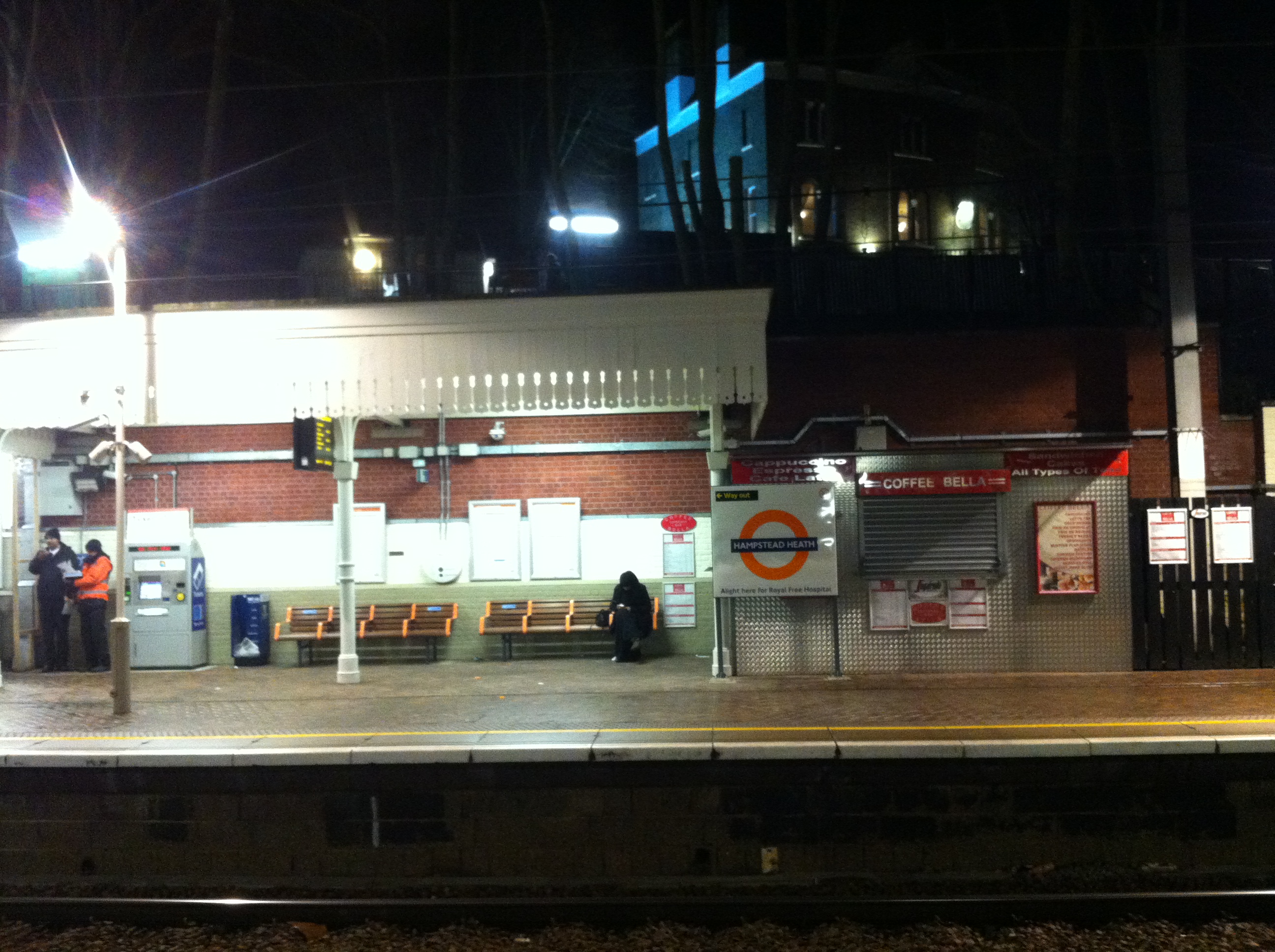
Hampstead Heath Overground Station, London.


