The Day We Fight Back

thedaywefightback


Sometimes help comes from the most unlikely places. That was certainly the case today when Ed Miliband used his speech at the Hugo Young memorial lecture to call for major changes to the oversight of Britain’s intelligence and security agencies.

The Guardian reports:

A major overhaul of the oversight of Britain’s intelligence agencies, which could lead to an opposition politician chairing parliament’s intelligence and security committee and reform of the intelligence commissioners, needs to be introduced, Ed Miliband has said.

The Labour leader praised Barack Obama for starting an “important debate” in the US – after the White House appointed a panel in the wake of the Edward Snowden leaks – and called for a similar debate in Britain.

In some of his most extensive comments on the NSA leaks, Miliband told a Guardian audience that reforming the oversight of GCHQ, MI5 and MI6 was “definitely” part of his campaign to challenge “unaccountable power”.

Though the details remain sketchy, it appears that Miliband envisions quite a far-reaching review, looking not just at the methods used by the security services but also the degree to which the agencies are funded, the scope of their responsibilities and the granting of a more formal role in oversight to the main opposition party:

Miliband made clear that his challenge to “unaccountable power” would include Britain’s intelligence agencies as he said that reform should focus on two areas. These are parliament’s all party intelligence and security committee, which is always chaired by a senior MP from the governing party, and the commissioners who oversee the intelligence agencies.

The Labour leader said: “I already believe, and this is what my Labour colleagues have been saying, that there are clearly changes that are going to need to be made in relation to the intelligence and security committee and the oversight it provides.

“That is everything from the resources they have at their disposal, who chairs the committee and whether it should be somebody from the government party or the opposition party, their power to compel witnesses – a range of issues.

While this may warm the heart of many a weary libertarian, it must be noted that Miliband has barely scratched the surface in terms of confronting the growth of the British national security apparatus – after all, even miracles have their limits.

Miliband praises US President Barack Obama for starting what he calls an “important debate” but neglects to mention that Obama would have quite happily allowed the NSA to continue to violate the privacy of US and world citizens in secrecy and in perpetuity, and that he is actively seeking to extradite the person who really started the debate – Edward Snowden – back to America to face charges of treason. Thus restated in the proper context, Obama’s carefully cultivated philosopher-king image begins to lose some of its sheen, as does Miliband’s boyish admiration of him.

It should also be noted that Miliband sees the answer to concerns about privacy and civil liberties very much in terms of incremental changes to the existing framework, and certainly not in creating cast-iron rules about powers that the government should rightly have and those which should be reserved by the people.  In particular, he sees the fact of ministerial oversight and sign-off of interception requests by the security agencies as a good thing and a solid check on power, rather than the rubber stamp that it really is:

On the ministerial oversight of interception, he said: “It is worth saying also that there is in this country … ministerial sign off when intercept and so on takes place. That is a very, very important safeguard. I do believe the intelligence services do important work. But I absolutely endorse the idea that there are important issues of liberty and liberty is an important part of Labour’s agenda.”

Perhaps Miliband (or indeed David Cameron or Theresa May) would care to set out a scenario – any scenario at all – where the British intelligence services might approach the government to get sign-off for a communication intercept on a surveillance target and actually be rebuffed by a skeptical minister. It simply would never happen.

Elected politicians, weighing the likely fallout of two different courses of action, are almost always going to follow the path that chips away at civil liberties by approving the intercept request rather than defending privacy and denying the request on grounds of insufficient evidence, and later being implicated in a security failure. Decisions on the authorisation of communications intercepts should rest with the judiciary, not the executive.

It is certainly true that public opinion in Britain has not swelled with outrage at the revelations of NSA and GCHQ collaboration in collecting and viewing private communications data with no reason for suspicion and no warrant.

And so Miliband’s contribution to the British debate on privacy and (remarkably) constraints on the power of the state – a very muted, anaemic debate compared to that now taking place in many other countries – is welcome, and very important. In America, politicians from both main parties and of all temperaments have spoken out in condemnation of secret government surveillance, raising public awareness and, in some cases, making continued support for these draconian surveillance measures an electoral liability. Meanwhile, the British political establishment has largely closed ranks in defence of the national security complex, and against the people.
berniesandersNSA

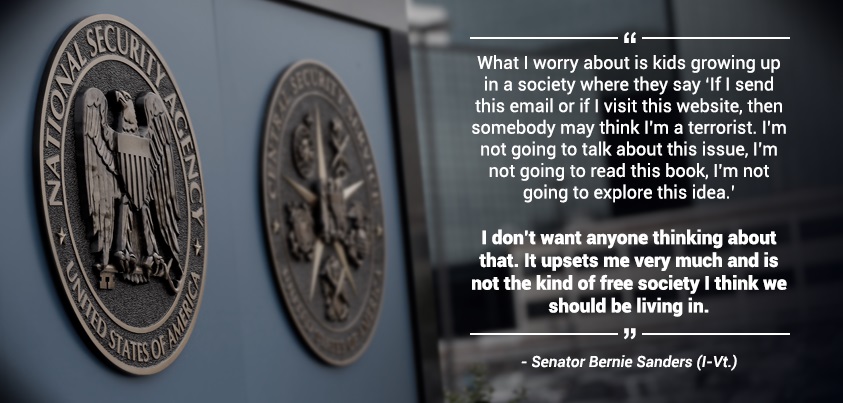
Contrast this quote from the independent Vermont Senator, Bernie Sanders, with Prime Minister David Cameron’s dismissive and aloof response to concerns about the practices of MI5, MI6 and GCHQ:

“We have very good rules in this country. If a telephone call is going to be listened in to, that has to be signed off by the Home Secretary personally. There are very good safeguards in place,” Cameron told ITV’s The Agenda. “You get asked, ‘What are the rules’? I’m satisfied we have pretty strong safeguards. I thought part of the reaction to the The Guardian story was – big surprise, spies learn to spy…it’s to help keep us safe.”

Does the fact that Ed Miliband took the first tentative step in support of civil liberties and dared to suggest the state should not be all-powerful over us mean that the torch has been passed to a new generation of leaders on the issue? Of course not. Miliband seems to place his complete faith in the power of the state to accomplish a whole range of other matters relating to the personal and private lives of the British people, and it is far from certain a this early stage that he is not simply using his Hugo Young lecture to score a few cheap political points with no intention of pursuing the matter any further.

But for perhaps the first time in his senior political career, Miliband spoke out in favour of the private citizen over the government, when the issue of government surveillance has been met with nothing more than dismissal and condescension by Number 10 Downing Street and the rest of the government. And for that action, he must be given some credit.

Today, February 11th 2014, has been labelled The Day We Fight Back against mass surveillance. Numerous websites are carrying links to the organisation, which is supported by more than 360 organisations in 70 countries, and which plans to petition lawmakers in these countries to take action on the serious issue of government surveillance and constitutional overreach.

The Day We Fight Back has been well-marked in the United States, with many prominent politicians adding their voices to the chorus of protest. In the UK, on the other hand, there has been a deadly silence. The focus of the British news media and the political class remains fixed on the issues of flooding in southern England, with elected politicians falling over themselves to be seen in photo opportunities surveying the damage and taking decisive action. Taking any kind of action in support of our right to privacy and freedom from government oversight is far down the list of priorities, where it even features at all.

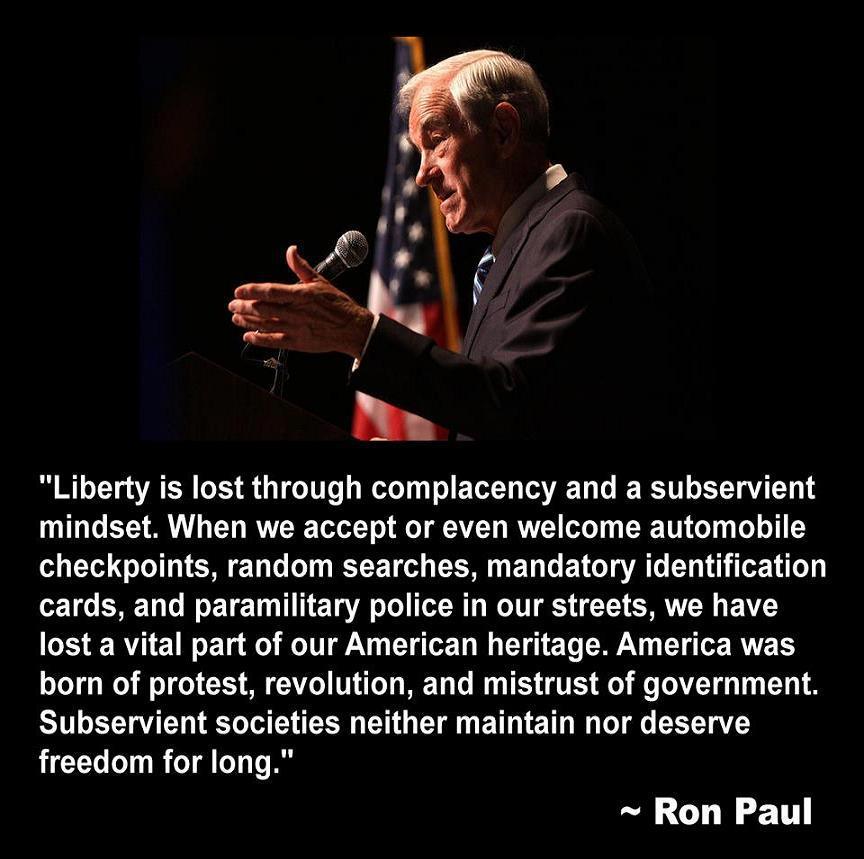
Former Texas Congressman Ron Paul is not right about everything, but his warning about the loss of liberty, echoing Franklin, is pertinent and timeless:
ronpaulwarning

People in Britain who truly appreciate the importance of the right to privacy and the need to place constraints of any kind on government seem to be few and far between, and consequently we must look for allies in unlikely corners.

Ed Miliband’s is certainly the very unlikeliest of corners. But perhaps the Labour leader’s taking a stand for civil liberties will shame others – those who should have been holding this issue aloft all along, and warning of the dangers of an omniscient, omnipotent government – into finally doing the same.


Concerned readers can visit The Day We Fight Back website and add their name to a petition here.

Cityscapes – 11 February, 2014

benedictarnold

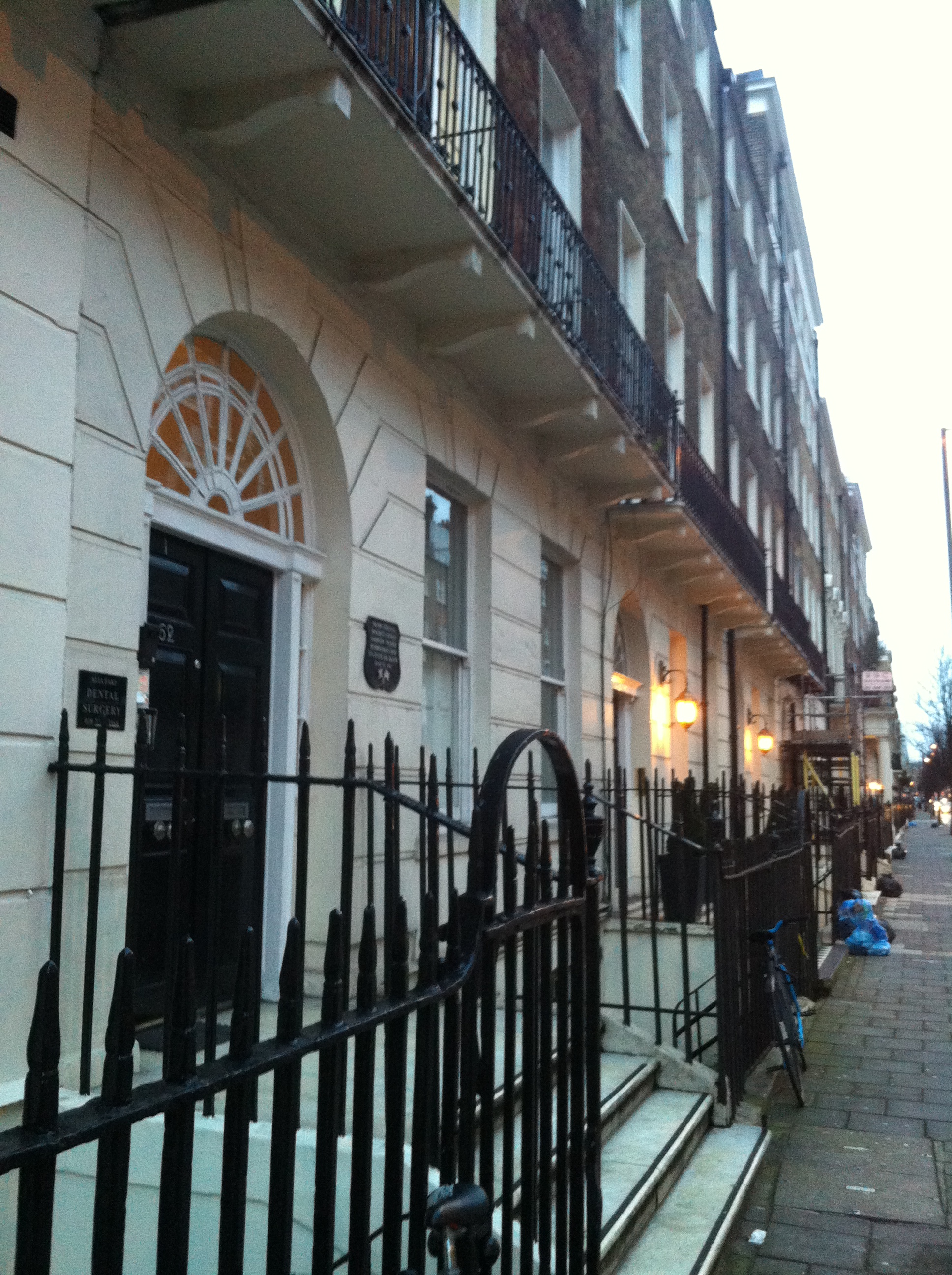
The final home of American Continental Army defector Benedict Arnold, at 62 Gloucester Place, Marylebone, London.

I have been meaning to photograph this building since realising that the historic residence casually sits on a frequently-taken bus route of mine. And so, when the opportunity arose, I could not let it go to waste:

Semi-Partisan Sam sometimes faces similarly torn loyalties.

The description of Benedict Arnold as an “American Patriot” is likely to cause raised eyebrows among American visitors, who naturally view Arnold’s actions somewhat differently. This, of course, only makes the commemorative plaque all the more amusing.

Music For The Day

The first book of the Well-Tempered Clavier, by J. S. Bach.


As interpreted by pianist Maurizio Pollini.

Glenn Gould would no doubt have spat out his milk and arrowroot biscuits in distaste at being made to listen to this particular recording, but for those with a broader aesthetic taste there is much to admire here.

Vladimir Putin, Gay Marriage’s Best Salesman?

Temperatures in the netherworld dipped below zero yesterday, and the outlook is forecast to remain glacial for the indefinite future. It’s official – hell has frozen over. And you don’t need a thermometer to bear witness to this fact – simply head over to Cristina Odone’s blog at The Telegraph and see for yourself.

Odone has publicly re-examined and changed her stance on gay marriage. Throwing her hands in the air in apparent acknowledgement of the inevitable, Odone – somewhat resentfully – now supports extending the institution of marriage to homosexual couples.

If, like me, you held the chances of such a thing ever happening to be so vanishingly small that its occurrence would represent a bellwether event in the movement for equality and civil rights, then this is more than just cause for celebration. We should celebrate. There must always be pause for reflection and thanksgiving when someone who once sat on the other side of the fence comes out in support of equal marriage, and bringing a hitherto-excluded group of people into the fold of marriage.

But after the celebration, it is also right to wonder what makes someone who is seemingly implacably opposed to an idea suddenly change their mind. Proponents of gay marriage will want to know this so that they can focus their arguments and target their resources where they will do the most good. And it is here, unfortunately, that one of the most high-profile recent converts to the cause of marriage equality will do them absolutely no good at all.

Because Cristina Odone was convinced not by rational argument or through personal experience, but by the President of Russia.

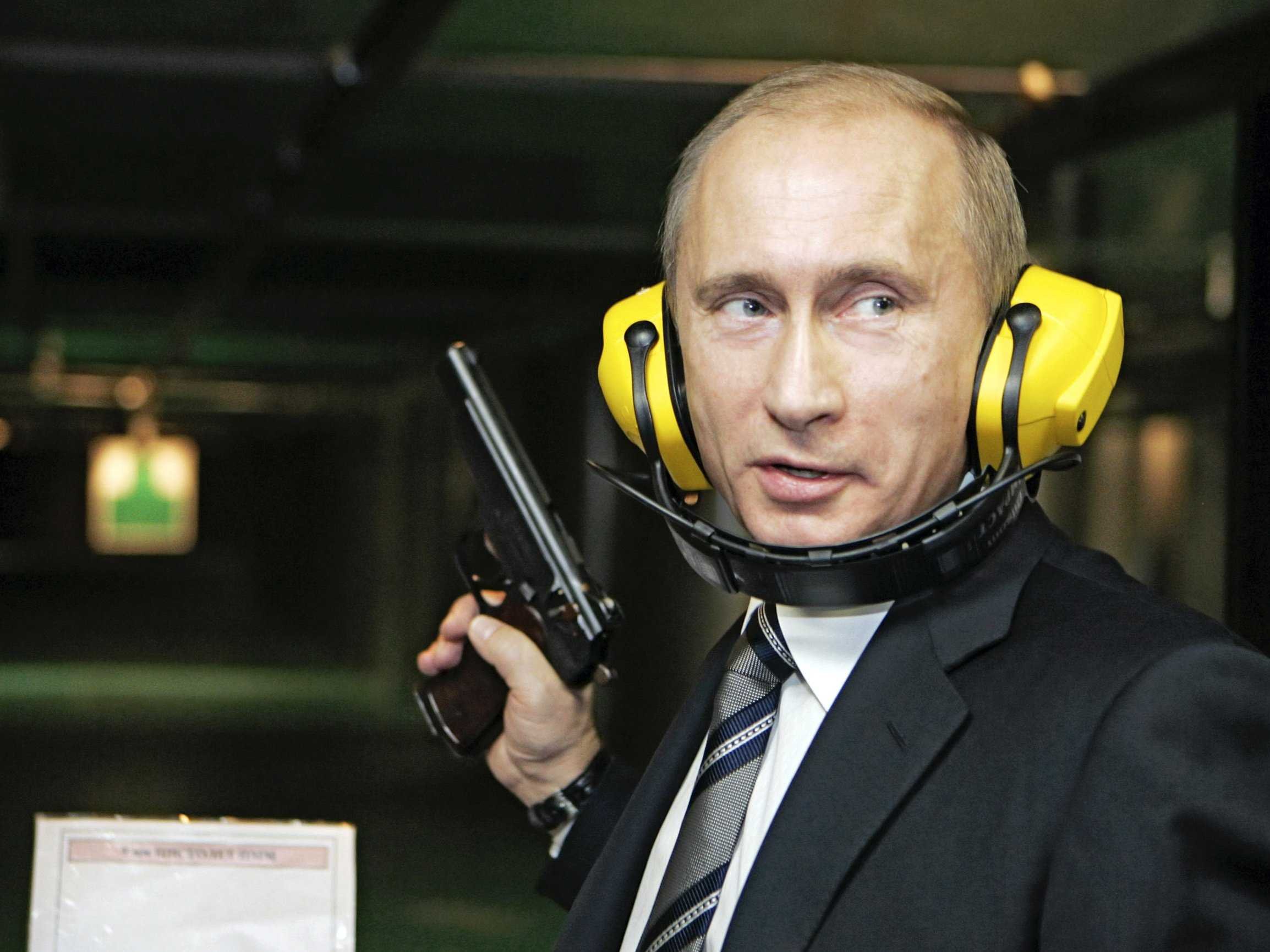
Vladimir Putin made Cristina Odone support gay marriage.

All the reasoned argument in the world could not sway Cristina Odone. But apparently this man has what it takes.
All the reasoned argument in the world could not sway Cristina Odone. But apparently this man had what it takes.


And this dramatic volte-face was carried out by a woman whose own vast persecution complex over gay marriage only recently led her to this spectacular “feed me to the lions” meltdown:

[David Cameron] may get away with bullying a great many – perhaps the majority – into accepting his proposals. But in doing so Cameron will create a less liberal and tolerant society. Those who have held fast to their principles, will have to accept what the majority wants. But will the majority respect what the minority believes in? Not in Cameron’s Britain, they won’t. The moment the vicar or priest refuses to celebrate a gay marriage in their church, the aggrieved couple will see them in court — in Strasbourg. Here, at the European Court of Human Rights, Christians will once again be thrown to the lions as their opponents will strive to set a precedent: equal rights means equal access to religious marriage ceremony. Anyone who stands in a gay couple’s way will be persecuted by the law (and those strident gay rights lobbyists who tolerate only those who see everything their way.)

But that was Cristina Odone in 2012. The Odone of 2014 has this to say, in her most recent column for the Telegraph:

I have written before about my fear that legalising gay marriage would affect the special status of marriage as a sacred institution. I have argued that once gay people could demand to be married, believers who refused to open their churches or even church halls to the ceremony would be punished. But Putin’s homophobic measures have changed my mind. If I oppose gay marriage I may be seen as condoning his anti-gay campaign. I couldn’t live with that.

She rightly goes on to rake Vladimir Putin over the coals for his opportunistic and divisive decision to shore up his political position by focusing attention on gay people as the new “enemy within”:

Putin will continue to pursue this hateful campaign because it strikes a nasty populist chord. Sadly it would seem that his supporters are not just in Russia but abroad, too: Putin ranks as number three most admired world figure, ahead of Pope Francis. Why? because Putin has manoeuvred himself to be the crusader against “the other” – in the shape of immigrants, alternative lifestyles, and above all gays. He has driven a fault line through 21st-century culture. On one side, there are the Russian leader and his supporters, who believe gays are fair game for abuse. On the other side are gays – vilified and beaten –  and those who oppose their persecution. Putin is forcing us all to choose between him and his victims. I cannot stand with Putin.

Good. But think for a moment about the logic (or startling lack thereof) behind this statement. Cristina Odone apparently inhabits a world where deeply held personal convictions are no longer something to be defended through reasoned, intellectual debate and changed only in the face of persuasive evidence to the contrary. In this world, beliefs and opinions are instead chopped and changed as they wax and wane in popularity or inevitability, and can be picked up or discarded according to the reputation or behaviour of other people who hold them.

Always believed in low taxes, but just found out that a prominent individual got caught engaging in tax evasion? No problem, simply join the Labour Party and clamour for a mansion tax, because believing in low taxation is no longer fashionable. More horrific revelations in the media about the coverup of child abuse in your local Catholic diocese? Why not convert to Buddhism for a nice refreshing change, surely everyone loves a Buddhist?

The ease with which one can pick apart Odone’s reasoning does not mean that we should not be pleased at the end result. We can be delighted with the destination if still somewhat puzzled by the winding, circuitous route taken on the journey to reach it. But as someone who has long opposed gay marriage and full equality for gay people in Britain, I think Cristina Odone owes us a peek at the Google (or perhaps more likely Apple) Map routing that led her to this strange new place.

To publicly change a staunchly-held position on a major issue such as gay marriage without providing a line-by-line or argument-by-argument account of the evolution in her thinking is intellectually lazy, and significantly detracts from the impact of Odone’s announcement. That is bad for her personal credentials as a thinker and a writer, but it also denies equal marriage supporters the propaganda victory that could then take their argument further.

Until recently, Cristina Odone was thundering that the sanctioning gay marriage represented the “tyranny of the majority” and the end of religious liberty for anyone of faith. And yet she now supports gay marriage. So either her fears of tyranny and oppression were unfounded – in which case admitting as much would be the only intellectually rigorous and honest thing to do – or she considers aiding and abetting the onset of tyranny to be a small price to pay in exchange for preserving her reputation as a national newspaper columnist who does not want to be associated with a homophobic foreign regime.

Which is it?

The uneasy thought remains that perhaps Odone’s column was not intended seriously, and is simply the journalistic equivalent of throwing her toys out of the pram at being discredited by association with the likes of Vladimir Putin. We should certainly pay careful attention to her pronouncements on gay marriage once the Sochi Winter Olympics are over and the attention fades on Russia’s regressive attitude toward homosexuality.

Changing your mind on dodgy or unexplained pretexts once is cause for notice and concern. But if it were to happen twice on the same issue – if Odone should decide to backtrack on her words once Vladimir Putin is no longer commanding world attention and making her look bad – it would pose a very serious question as to why anyone should continue paying attention to anything she writes or says at all.

Let’s hope that Cristina Odone’s defection is the real thing, and not just a tactical ruse.

Filling In The Blanks On Bach

Andrew Sullivan touches on one of my favourite topics – the music of JS Bach and his unparalleled interpreter, Glenn Gould.

Andrew Sullivan's avatarThe Dish

George Stauffer appreciates that John Eliot Gardiner’s recent book on the great composer has insights into his personal character:

Moving beyond the hagiographies of the past, he presents a fallible Bach, a musical genius who on the one hand is deeply committed to illuminating and expanding Luther’s teachings through his sacred vocal works (and therefore comes close to Spitta’s Fifth Evangelist), but on the other hand is a rebellious and resentful musician, harboring a lifelong grudge against authority—a personality disorder stemming from a youth spent among ruffians and abusive teachers. Hiding behind Bach, creator of the Matthew Passion and B-Minor Mass, Gardiner suggests, is Bach “the reformed teenage thug.” In the preface we read: “Emphatically, Bach the man was not a bore.” Neither is Gardiner.

(Video: Glenn Gould plays Bach’s Keyboard Concerto No.1 with Leonard Bernstein and the New York Philharmonic in 1960)

View original post