Let’s Unleash Britain’s Great Cities

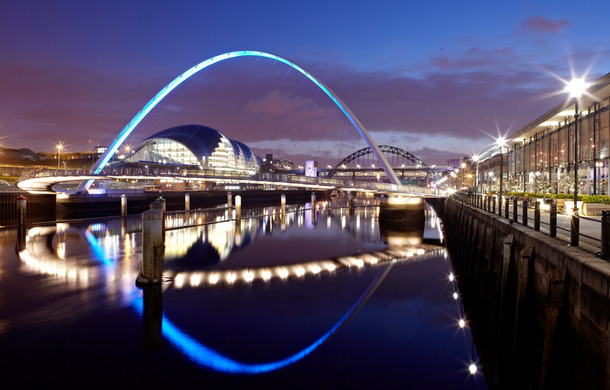
newcastle

London may be the centre of the universe, but that is no longer any reason for the British government to ignore the provinces and our other major cities.

Thus far, recognition of this important fact has come mostly from London envy and the desire to drag the capital city down a peg or two – not a very sensible policy as far as the national interest is concerned. But the debate is gradually coming to be seen in terms of helping the UK’s other cities to grow and to prosper. In essence, the debate is moving away from a Labour-style “let’s drag everyone down to the same mediocre parity” argument and towards a “let’s create opportunities for innovation and growth and see what happens” proposal. This is most welcome.

The economist Jim O’Neill, writing in The Telegraph, has half of a good idea when he proposes merging northern cities and devolving fiscal powers to them in order to spur economic growth:

After considerable discussion, and for primarily practical reasons, we settled on what we are describing as the 15 largest “metro regions”. This is not to downplay the importance of other cities, towns or villages, but to emphasise – as many experts have concluded – that it is the largest urban areas that usually generate the most economic activity. We need to concentrate our efforts there; evidence from other countries shows that the biggest urban areas matter most when it comes to unleashing a step-change in national economic activity.

In this context, I raised a delicate topic with the last of three panels: namely whether the Greater Manchester area is, in fact, big enough. If you look at a list of the world’s largest cities by population size, you have to go a long way down from London before any other UK city appears. Some argue that in the absence of another city with anything like the population and diversity of London then attempts to boost growth, however smart, won’t lead to much.

This is good stuff. Greater Manchester is certainly prime for devolution of fiscal powers under a unitary authority and an elected mayor, along the lines of London. Manchester is a large, globally recognised city. Granting it more power to alter local taxes, services and policies would be a great example of localism at work.

This blog has long advocated wholesale constitutional reform for the United Kingdom, in which England would gain its own Assembly to debate matters relating to England only, and powers of taxation and policymaking would be equalised between the assemblies of the four home nations under the UK Parliament.

Basing this new English assembly in one of the great northern cities would be a boon to the host city and would help to reduce the London-centricity of political and media focus in the UK without taking anything away from London, which remains the goose that lays the golden egg.

Unfortunately, after proposing the devolution of powers to major cities, O’Neill follows a somewhat different train of thought and his economist brain takes charge to the detriment of what was otherwise an intriguing proposal:

In the spirit of trying to keep an open mind, I quizzed the group further. What did they think of the notion of “ManPool”, where Liverpool and Manchester might bring together their populations and resources to create a “supercity” in the north? Many Telegraph readers might be familiar with the depth of history between Liverpool and Manchester, even if they are not followers of a team from either city. Football allegiances aside, the reaction I received made it pretty clear the prospect was highly unlikely from an administrative perspective.

Sometimes, things that make perfect sense when viewed on a chart or an Excel spreadsheet are self-evidently ludicrous when you consider the human beings that the numbers represent.

While devolution of greater powers to the UK’s major cities is to be welcomed, the power must be devolved to recognised levels. People know what Manchester is, and at a push they could get behind the idea of the Greater Manchester conurbation. The same can probably be said for Birmingham. But ‘Manpool’ or the West Midlands Conurbation are places that exist only in the minds of civil servants and economists.

This is where a politician’s mind is required in addition to that of an economist. Great cities need more than the perfect mix of investment, local skills and natural resources. There is an element of civic identity, the fact that being a Londoner or a Mancunian or a Brummie is a clearly identifiable term and means something, which must be considered as well as the cold hard calculations as to what makes an ‘optimal’ self-governing urban unit.

Unfortunately, this fact seems lost on O’Neill, who takes his consolidation proposal to even more objectionable extremes:

One could easily apply the same logic to other cities close to each other, such as Derby and Nottingham, or Newcastle and Sunderland.

Following this logic to its ultimate conclusion, we would be better off if we treated the entire United Kingdom as one giant conurbation, a single vast city-state. The UK could devolve power to itself, and under unified authority it would enjoy better coordination of projects and higher economic growth. This is clearly preposterous.

Nonetheless, Jim O’Neill has proposed half of a good idea. The UK’s major cities need to strengthen their individual identities and improve their economic vibrancy. Devolving more power to them could only be a good thing, if only the seemingly inbuilt British resistance to variety and fear of the dreaded ‘postcode lottery’ could be overcome.

But rather than wasting fruitless hours in committee trying to come up with a catchy, memorable name for the new NorIpsCamWich Urban Region, let’s just use those handy city names conveniently handed down to us by history and actually recognised by the people who live in them.

After all, there’s no point in creating extra work.

Week 2: Samuel’s Photos

Your blogger has been learning the rudiments of photography as part of the Big Issue Online Journalists training programme. Here are some of my halting early efforts, taken while out and about in east London where it was surprisingly difficult to persuade passers by to consent to being photographed.

bigissueonlinejournalists's avatar

DSCF1728

DSCF1737

DSCF1734

DSCF1731

DSCF1727

View original post

Citing Religious Freedom To Excuse Discrimination Will Come Back To Bite

segregation

If your religion requires that you attend church every Sunday, you have the right to do so, and no government should ever strip you of that freedom. And if your religious beliefs compel you to speak out publicly on social issues, that also should be your absolute right, provided that you are not inciting violence against anyone else.*

But if the free exercise of your religion requires that you don’t serve gay people at your place of business because you disapprove of their lifestyle choice, that is just called being sanctimonious, and has nothing to do with piety and everything to do with being judgmental – incidentally, a character trait that some major religions frown upon.

And yet this is exactly the type of behaviour that would be sanctioned under a raft of discriminatory legislation working its way through a number of state houses throughout America. MotherJones reports on this new social conservative backlash:

Kansas set off a national firestorm last week when the GOP-controlled House passed a bill that would have allowed anyone to refuse to do business with same-sex couples by citing religious beliefs. The bill, which covered both private businesses and individuals, including government employees, would have barred same-sex couples from suing anyone who denies them food service, hotel rooms, social services, adoption rights, or employment—as long as the person denying the service said he or she had a religious objection to homosexuality. As of this week, the legislation was dead in the Senate. But the Kansas bill is not a one-off effort.

Republicans lawmakers and a network of conservative religious groups has been pushing similar bills in other states, essentially forging a national campaign that, critics say, would legalize discrimination on the basis of sexual orientation. Republicans in Idaho, Oregon, South Dakota, and Tennessee recently introduced provisions that mimic the Kansas legislation. And Arizona, Hawaii, Ohio, Oklahoma, and Mississippi have introduced broader “religious freedom” bills with a unique provision that would also allow people to deny services or employment to LGBT Americans, legal experts say.

One gets the very strong sense that the principle of “religious freedom” is being used by the proponents of these bills as a cudgel with which to hit people that they don’t much like.

We can also safely strike out the word “religious” and replace it with “Christian” without affecting the real intent of the legislation, because you can bet your life that supporters of the Kansas bill would go insane if the same law that they support was cited in defence of a Muslim waiter who refused to serve pork sausages to a customer. In fact, ten new campaigns to “keep Shariah law out of America” would be launched before you could utter the phrase “hypocritical, discriminatory nonsense masquerading unconvincingly as a principled defense of religious freedom”.

In short, these bills are exactly what we have come to expect from a religious and social right wing in America that believe the founding fathers established America as an explicitly judeo-Christian land and that the Constitution is nothing more than an appendix to the Bible.

Dan Savage pulls no punches in delivering his verdict on the spate of new discriminatory legislation:

I don’t remember where I read it but this is a good idea: these laws should include a provision requiring business owners who wish to access their “protections” to publicly post signs in their windows and on their websites that list the types of people they refuse to serve. That might prompt some hateful Christianists to think twice. Because then they wouldn’t just be losing the business of the odd gay couple they got to turn away in a fit of self-righteous assholery. They would also be losing the business of straight people who don’t want to patronize businesses that discriminate against their gay and lesbian friends, neighbors, and family members—and others who worry about where empowering religious bigots could ultimately lead.

Not a bad idea at all. Savage may propose it only in jest, but perhaps, if these odious bills are to be passed over Democratic opposition, they could be sabotaged with amendments to include just such a poison pill clause. You want to arbitrarily turn away gay people from your business establishment? Well sure, go right on ahead – but make sure that you post a big sign out front listing all of the types of people whose lifestyles you frown on and consequently refuse to serve. And while you’re at it, post the same list prominently at the top of your company website, just to make absolutely clear which potential customers you are willing to welcome and which ones you will shun. After all, a well-functioning market requires perfect information.

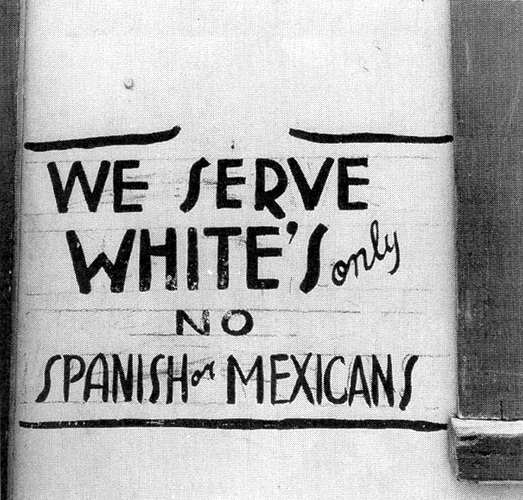
In seeking to usurp the protections of the First Amendment and bastardise them in service of their cynical anti-gay agenda, supporters of this pro-discrimination legislation are starting down a dangerous road. Having only recently put the Jim Crow era behind them, some people seem only too eager to dust off the old “No Colored Allowed” signs and repurpose them for the war against their next target.

Of course, even if the pro-discrimination bills do successfully make it through the state legislatures and get signed into law by the Governors (many of whom have national political aspirations of their own), and even if they survive their inevitable challenge all the way up to the Supreme Court, the legislation would almost certainly be destroyed in the fiery crucible of broader public opinion, most of all among young people with whom the Republican Party has enough of an image problem already.

One of the main problems is the fact that there are no real logical or enforceable limits to “religious freedoms” being proposed. One can easily picture Newt and Callista Gingrich forlornly walking the streets of Washington D.C. in the rain, being turned away from one fancy restaurant after another because the proprietor’s sincerely held religious beliefs prohibit adultery and call it a sin. Of course, under no circumstances could the proprietor ever entertain the idea of serving a customer whose life story did not perfectly comply with the teachings of Jesus Pat Robertson, and if the new legislation is passed he would now have the weight of the law to back him up.

A prohibition on stealing was important enough to be included among the Ten Commandments, so perhaps we can also expect huge lines building outside places like Starbucks as the already overworked employees complete the mandatory criminal records background check before serving you your tall non-fat vanilla spice latte with extra nutmeg.

We are able to laugh at these ludicrous examples of the laws being applied to their bizarre extremes because although the attempt to push new legislation is troubling, it is really nothing more than the death throes of an old way of life where persecution and ostracisation of people because of their sexuality is excused and permitted. The legislation represents a collective shriek of indignance and self-pity from people who are finally starting to realise that they have irretrievably lost the argument, and will soon have to change their own behaviour rather than bully others into suppressing their real selves for fear of causing offense or inviting persecution.

As Andrew Sullivan said of the Kansas bill:

It is premised on the notion that the most pressing injustice in Kansas right now is the persecution some religious people are allegedly experiencing at the hands of homosexuals.

Such a notion is plainly absurd. Certain bigoted Christianists may have convinced themselves that they are being persecuted because they are no longer allowed to inflict their worldview and moral code on others, but there are now too few Americans willing to show up to their pity party to be of any help. Playing the victim card will not work outside the confines of their own shrinking closed network of intolerant people. Sullivan continues:

It’s a misstep because it so clearly casts the anti-gay movement as the heirs to Jim Crow. If you want to taint the Republican right as nasty bigots who would do to gays today what Southerners did to segregated African-Americans in the past, you’ve now got a text-book case. The incidents of discrimination will surely follow, and, under the law, be seen to have impunity. Someone will be denied a seat at a lunch counter. The next day, dozens of customers will replace him. The state will have to enforce the owner’s right to refuse service. You can imagine the scenes. Or someone will be fired for marrying the person they love. The next day, his neighbors and friends will rally around.

If you were devising a strategy to make the Republicans look like the Bull Connors of our time, you just stumbled across a winner. If you wanted a strategy to define gay couples as victims and fundamentalist Christians as oppressors, you’ve hit the jackpot. In a period when public opinion has shifted decisively in favor of gay equality and dignity, Kansas and the GOP have decided to go in precisely the opposite direction.

Instead of full-throated encouragement from the Republican national leadership in support of what the state parties are doing in their name, there is nothing but a conspicuous silence from the likes of John Boehner and Eric Cantor. Nothing from the congressional leadership and precious little from the conservative blogosphere either – tumbleweeds abound. There is a reason for this.

There exists a group of people whose behaviour is so odious and disgusting that it should not be spoken of in polite society; those involved in promoting it are amoral subversives perpetrating foul deeds which constitute an affront to God and to civilisation itself. Such people can barely be described as Americans, and certainly don’t deserve acknowledgement from Washington or protection by the law.

Unfortunately for the Kansas GOP, through their actions they are now that group, not the gay people they so love to persecute.


* Should be, but sadly is not currently the case in modern Britain, where the rights of the ultra-sensitive and the politically correct not to be offended supersede the right of the people to free speech.


Dick Cheney Has No Regrets

He hasn’t gone anywhere, in case you were wondering. And he remains entirely unrepentant about all of his decisions and actions while in office. The authorisation of and boasting about torture, the clampdown on civil liberties, all of it. Andrew Sullivan has curated some of the latest goings-on in Dick Cheney Land.

Andrew Sullivan's avatarThe Dish

The trailer for R.J. Cutler’s The World According To Dick Cheney, which premiered last March:

What has long struck me about Dick Cheney was not his decision to weigh the moral cost of torture against what he believed was the terrible potential cost of forgoing torture. That kind of horrible moral choice is something one can in many ways respect. If Cheney had ever said that he knows torture is a horrifying and evil thing, that he wrestled with the choice, and decided to torture, I’d respect him, even as I’d disagree with him. But what’s staggering about Cheney is that he denies that any such weighing of moral costs and benefits is necessary. Torture was, in his fateful phrase, a “no-brainer.”

Think about that for a moment. A no-brainer. Abandoning a core precept of George Washington’s view of the American military, trashing laws of warfare that have been taught…

View original post 484 more words