Paris Terror Attacks: The World Turns On Its Dark Side

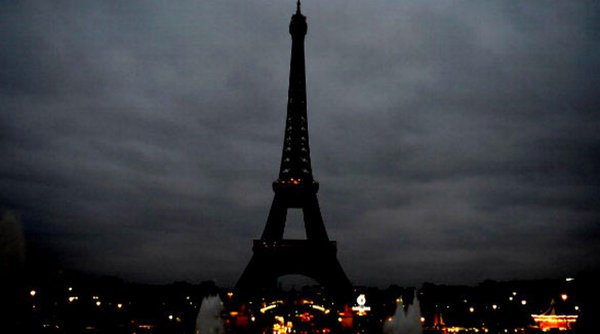
Paris Terror Attacks - Eiffel Tower Dark - 2

Our hearts break for Paris and the French people. For the sake of the victims and their families, our response to these latest terror attacks must be more than the standard denial and clichéd mistakes

Since awful showpiece terrorist attacks like those that tore through the heart of Paris last night are becoming a regular occurrence, it is worth reminding ourselves of the standard political response in their aftermath. It goes something like this:

Day 0: Expressions of shock, sorrow, anger and solidarity

Day +1: Insistence that now is a time for mourning, not asking difficult questions about how or why the atrocities were committed

Day +1, later: The first difficult questions are asked, particularly of the government and security services

Day +2: The intelligence services dust off their wishlist of draconian new powers, and strongly suggest that if only they already had these powers, the attack could have been avoided

Day +2, later: Some brave soul pokes their head above the parapet and tries to start a discussion about the link between unlimited multiculturalism and homegrown extremism, to near universal c0ndemnation

Day +3: The official narrative is established – “we will defeat this terror by giving our intelligence services the tools they need, and making radical or hateful speech illegal”

And so, within a week, the status quo reasserts itself. More civil liberties infringements, more free speech crackdowns, more government surveillance – and then more terror attacks, weeks or months later.

The status quo is not working. As this blog noted shortly after the Charlie Hebdo attacks:

Attempting to start a meaningful conversation about the root causes of Islamist terrorism is, apparently, highly unseemly and inappropriate so soon after an attack. And yet those who make this claim never explain why talking about the root causes of Islamist terrorism in its immediate aftermath is opportunistic and wrong, while conveniently it happens to be the perfect time for governments to demand sweeping, draconian new powers. And that is exactly what we now see.

One thing should now be absolutely clear, though apparently it needs constant restating: There can never be enough surveillance, never enough restrictions on movement, never enough laws banning hate speech to prevent a small number of determined, radicalised citizens – and likely non-citizens who have taken advantage of Europe’s loose borders – from going on the rampage and causing the kind of bloody mayhem that we now see, again, in Paris.

With the exception of the Stade de France, these were soft targets. It is simply not possible to protect every restaurant, every corner bistro or every theatre from a jihadist army of two who turn up in a car, spray innocent people with bullets and speed off to their next target. Concrete road blocks, razor wire, metal detectors and CCTV are of no use against these nimble threats.

So whatever else is said in the aftermath of these latest Paris attacks, let no one pretend that more government surveillance and more draconian crackdowns on free speech – either that of the Islamists or the Islamophobes – are the right answer. At best, these policies – favoured by the French and British governments – are a sticking plaster on an open wound, addressing the symptom but not the problem.

And that problem is the same as it was on 7 January, when Islamist gunmen stormed the offices of Charlie Hebdo, massacring journalists and shoppers at a Parisian kosher supermarket. The problem is that there are people living among us – a very small, but determinedly growing number, either citizens or recent migrants – who may hold the same passports as us and walk the same streets as us, but who feel no connection with us.

Those who propose nothing but even more security would apparently be content to live in a society where a small, segregated minority still hate us, but are thwarted in their attempts to kill us by omnipotent security services. They would be happy to live in a divided, ghettoised, multicultural dystopia, so long as the terror plots are always successfully thwarted.

Those of us who believe in the western and enlightenment values of freedom and individual liberty should not be satisfied with this goal – which is unattainable anyway, since perfect security can never be achieved. We should want a society which is open and welcoming to those who wish to come and contribute, but not credulously undiscriminating in accepting everyone. We should want a society where people feel bonds of kinship and affection which transcend racial and religious boundaries, where a healthy sense of patriotism ensures that there are common shared values which unite us all. But when patriotism and a robust defence of western values is seen as gauche, unseemly and culturally insensitive, there is no way to transmit these essential values to those who most need to receive them.

No government action taken by France in the aftermath of the Charlie Hebdo attacks could likely have prevented these new attacks on Friday 13 November – simply not enough time has elapsed for any bold new government policies to have taken effect. But appallingly, neither have any bold new government policies been proposed, let alone implemented. France still struggles with the existence of economically deprived, socially isolated immigrant communities who feel no allegiance to the country where they live – people who often feel more Muslim than French. Weak to nonexistent border enforcement makes it impossible to properly who control who comes and goes.

Meanwhile, the West – and Europe in particular – is in the midst of its own identity crisis, increasingly uncomfortable defending the principles of liberal democracy, free speech and tolerance. Many would rather bury their heads in the sand and deny the existence of the problem than insist that everyone abide by certain values and standards of behaviour. Too often, a warped strain of Islam has been allowed to run side-by-side with Western culture in a dual, effectively segregated society. And the growing Western culture of victimhood only adds fuel to the jihadist fire.

As Frank Furedi wrote on the tenth anniversary of the 7/7 London bombings:

The redefinition of terrorism as an ideological competitor is linked to the decline in the self-belief of the West. Even before the events of 11 September 2001, never mind 7 July 2005, there was more than a hint of defensiveness about the ability of Western values to prevail over those of their hostile opponents. One conservative American observer gave voice to this sentiment, and concluded that ‘protecting Western culture from foreign assault requires domestic revival’. A decade before 9/11 he warned that ‘the 21st century could once again find Islam at the gates of Vienna, as immigrants or terrorists if not armies’. Today there is little evidence of a domestic revival. Indeed, Western governments are sensitive about their very limited capacity for inspiring their own publics. The problem of engaging the public and gaining its support is one of the most striking features of the post-9/11 political landscape.

[..] There are signs that, in the decade since 7/7, some sections of the British establishment have woken up to the fact that what drives homegrown jihadism is the failure of society to clarify its values and way of life. The constant calls from Cameron and others to teach British values in schools represents an indirect recognition of the absence of such values from young people’s lives. But the values that inspire must be lived; they can’t be recycled through a shopping list of good intentions. Until there is a more courageous attempt to address this problem, tragedies like the London bombings of a decade ago will always be a possibility. The real threat is not the poisonous ideology of Islamic State, but Western society’s failure to live out and stand up for the principles of liberal democracy.

As it is in Britain, so it is in France. Neither country has done enough to tackle the sense of alienation or the crisis of British / French values which make radicalisation possible.

Tim Stanley touches on these points in his moving tribute to Paris in the Telegraph following yesterday’s terror attacks:

The brutality of this attack shows that we are not dealing with an enemy that can be negotiated with, only confronted and beaten. Perhaps that confrontation will be existential. Are we doing enough to integrate everyone, enough to fight poverty, enough to eradicate prejudice? Are we confident enough about our own values to teach and promote them? Are our security measures appropriate? Do we all have to come to terms with living with permanent anti-terror measures (I hope not). And what will our society look like as a consequence of this conflict? Less free, perhaps?

Are we doing enough to integrate everyone? I don’t think that any French or British politician could say that enough is being done. Worse still, it isn’t even a top priority at the moment.

Are we confident enough about our own values? Clearly not – in many cases, we have so little confidence in our own values that we fail to insist that others (recent immigrants and segregated communities) abide by the enlightenment values which have served us so well. In fact, sometimes we make an ostentatious virtue of parading our tolerance of thoroughly anti-enlightenment values, in warped service to “multiculturalism”.

Are our security measures appropriate? Our intelligence services will walk a tightrope here, insisting that they do everything they can to keep us safe, while making clear that if we do not grant them additional powers, any future blood spilled will be on our hands.

But Tim Stanley’s final question is the most pertinent: Do we all have to come to terms with living with permanent anti-terror measures?

That question is best answered with another question: What concrete actions are we taking that might feasibly lead to the rolling back of the semi-permanent anti-terror measures and powers which are now a depressingly familiar part of life? What one single thing are we doing that might mean we need less security and less surveillance a decade from now?

The regrettable answer is that we are doing virtually nothing. The world continues to turn on its dark side, and we can reasonably look forward to a future of more random terror, more sombre presidential addresses and the familiar sight of militarised police SWAT teams crawling over our major cities. This is the new normal, and nothing we are presently doing is going to change that fact.

It is now Day +1. This time, can we break with rotten, failed convention and actually talk about root causes?

Paris Terror Attacks - One World Trade Center - New York

Top Image: Eiffel Tower, darkened after the 13 November attacks: Auskar Surbakti Twitter feed

Bottom Image: One World Trade Center, New York, lit in French colours: Jon Swaine Twitter feed

Scroll down to leave a comment.

Follow Semi-Partisan Politics on TwitterFacebook and Medium.

Music For The Day

“The world turns on its dark side”, from the cantata “A Child Of Our Time” by Michael Tippett

Performed by the BBC Symphony Orchestra / Sir Colin Davis

The full work is below:

Scroll down to leave a comment.

Follow Semi-Partisan Politics on TwitterFacebook and Medium.

Tracey Crouch, Tax Credits And The Unravelling Of The Left Wing Mind

Tracey Crouch MP

When even Tracey Crouch’s sympathetic  words on tax credits provoke left-wing fury, there is no hope for real welfare reform in Britain. And no hope for the Labour Party, either

Had Conservative Sports Minister Tracey Crouch known about the outrage that would be whipped up by her interview in The Spectator before she gave it, she would quite possibly have chosen to go without the glowing portrait by Isabel Hardman in order to avoid the deluge of left-wing bile which immediately followed.

Unfortunately for Crouch, there is no telling which harmless phrase or action will send the modern British Left into a full-on social media jihad, and so she has had to spend the better part of today apologising for offending the Poor and Vulnerable.

Here is the part of Crouch’s Spectator interview with Isabel Hardman that caused so much left-wing outrage:

But given Crouch knows what it means to struggle to make ends meet, isn’t she worried about the cuts to tax credits that will hit families not unlike the one she grew up in? She’s happy to defend these controversial reforms that have agitated so many of her colleagues. ‘I think it’s about communication,’ she says, adding:

‘We will be discussing this, and I’m sure that DWP are looking at all of these issues, in great detail but I think at the end of the day one of the kindest things that we can do is try to help people to support themselves and work around their finances: some of my most heartbreaking cases are those that come to me saying that they are struggling and then you go through with them their expenditure and income – I’m not generalising at all, I’m talking about some very individual cases – and actually they just haven’t realised some of the savings that they need to make themselves, you know it can be… things like paid subscriptions to TVs and you just sit there and you think you have to sometimes go without if you are going to have people make ends meet.’

Fairly innocuous stuff, no? Just look at all of the caveats, provisos and exemptions in Crouch’s words:

“I’m not generalising at all”

“I’m talking about individual cases”

“Some of my most heartbreaking cases”

“One of the kindest things we can do”

There’s no reasonable way that you can read Tracey Crouch’s words and come away thinking that here is some callous, unfeeling elitist who thinks that people are poor through their own fault. There just isn’t. Tracey Crouch is hardly some monacle-squinting, golden pocketwatch-twirling Monopoly man, looking down on the working poor from a lofty aristocratic perch and finding them wanting.

And yet that’s exactly how her interview is being spun by the perpetually outraged Left. The Daily Mail provides a good sampling of the preening, self-righteous virtue signalling which followed Crouch’s interview. First Labour pile on:

Shadow Treasury minister Rebecca Long-Bailey said: ‘Another day and yet more evidence of out of touch Tory MPs insulting working people in low pay in what has been a further torturous week for George Osborne on tax credits.

‘It’s outrageous for a serving minister to claim that working families simply need to ‘go without’ in order to make ends meet. Losing £1,300 a year isn’t about cutting back on luxuries, it’s about families being able to pay the bills.’ 

And then come the Lib Dems, twisting the knife:

Liberal Democrat president Sal Brinton said: ‘This is hypocrisy at its worst. For a Tracey Crouch, someone on a ministerial salary, to turn around to the people who are going to be hit by her Government’s heartless cuts to tax credits and tell them it’s now their fault for not budgeting properly shows just how utterly out of touch the Tories are.’

I re-emphasize: Tracey Crouch was talking specifically about poor budgeting decisions made by certain individual constituents, emphasising multiple times that she was not generalising from the examples that she gave. And yet still we are treated to this hand-wringing mock horror from the Left, as though the Sports Minister had called for all tax credit recipients to be sent to the workhouse.

When the entitlement culture runs so deep that a government minister who grew up relatively poor cannot give true personal testimony about the importance of budgeting, or cite real-life examples of those struggling on low incomes who had not considered every option for reducing their outgoings, what hope can there possibly be for meaningful welfare reform?

What chance can there ever be of lifting people out of the benefit trap, into entry level employment and then onward and upward in self-sustaining careers when as honest and humble an MP as Tracey Crouch cannot even make a factual statement about her constituent cases without being vilified by left-wing activists?

Unfortunately, the reality of modern Britain is that too many people work hard in very low-paying jobs which are only financially viable when topped up by government tax credits. Gordon Brown can splutter and roar all he likes about the supposed virtues of his benefits brainchild, but the cold hard reality is that tax credits promote a form of welfare dependency.

Yes, it’s more noble form of dependency because the recipient is working – often very hard – for their low wages. But dependency means coming to rely on something day-to-day in order to maintain a certain standard of living. People rage against the Evil Tories for daring to consider tax credit changes in their effort to restore fiscal sanity to Britain, but have no words of condemnation for the moralising New Labour government who made millions more people dependent on welfare in the first place.

When I grew up poor in Essex, we didn’t have a Sky TV subscription. We didn’t even have a colour television until I reached secondary school in the 1990s – I watched Neighbours and Newsround in black and white. These things were not the essentials of life, much as I would have loved them, and so we went without.

Fast forward to 2015 and a Netflix subscription is no more necessary now than an expensive Sky subscription was in the early nineties. So why, exactly, was Tracey Crouch wrong to call attention to cases where those on low incomes had not considered cutting down on unnecessary expenditure?

As Julia Hartley-Brewer notes in the Telegraph:

In reality, the only people who are out of touch with how ordinary people live are Labour MPs like Rebecca Long-Bailey, who appear to think that Sky TV is some kind of inalienable human right to be funded out of taxpayers’ hard-earned cash.

Everyone has to make choices about what they can and can’t afford to spend their money on. Tracey Crouch was simply pointing out what every ordinary family in Britain knows: you have to cut your cloth according to your means.

But you can’t say that any more, according to the Left. To acknowledge the basic economic truth that poor people cannot purchase unlimited luxury goods is grossly offensive – not to the millions of low paid people who already strive to live within their means, but rather to those who do not, and the Labour politicians who cheer for their “right” to never have to collide with fiscal reality.

The government’s approach to tax credits is flawed, and considering other areas of continued state profligacy (universal pensioner benefits, for example) there is no great reason why tax credit recipients must swallow such a harsh dose of George Osborne’s fiscal medicine upfront while others slip by unchallenged. And Labour might have a realistic chance at forcing an important, beneficial concession from the Chancellor on this topic, if only they could stop the bickering and infighting long enough to organise themselves.

But when Labour MPs charge mindlessly into battle against the Conservatives (especially a self made Tory Minister like Tracey Crouch) in defence of the Universal Human Right to subscription TV, of all stupid things, they make no serious point, they win no new allies, and they help precisely no one.

But then that’s the Labour Party and the modern British Left in a nutshell. Noisily hating the Tories and whining about fairness but not doing, saying, thinking or proposing a damn thing to hold the current government to account or make anyone’s lives permanently better.

Tracey Crouch - Sports Minister

Agree with this article? Violently disagree? Scroll down to leave a comment.

Follow Semi-Partisan Politics on TwitterFacebook and Medium.

The Daily Toast: Hugo Rifkind On The Dilemma Of Labour Party Centrists

Labour Centrists

Why don’t those members and activists who hate the new direction of the Labour Party simply leave?

It’s hard to bring yourself to leave an organisation when you have convinced yourself that everyone outside of it is hateful, immoral and evil. That’s the point Hugo Rifkind makes in his latest piece for the Spectator, a reflection on why there has been no hint of a centrist exodus from the Labour Party in the Age of Corbyn, despite much grumbling and plotting.

Rifkind wonders out loud:

What is wrong with these people? It’s like they’re children. Part of the madness comes, I suppose, from social media, whereby every utterance is ‘campaigning’, even if you’re just doing it in the office, on the loo. The bulk of it, though, is the idea that Labour people have to be Labour forever, even if they completely disagree with Labour, or else they’re not Labour. It’s weird and it’s needy and it’s anti–intellectual, and it makes no sense at all. They went big on this during the leadership election, when a host of people with politics virtually indistinguishable from Jeremy Corbyn’s were kicked out on the basis of prior support for the Greens or the Scots Nats. Because, of course, if they were true Labour they’d support Labour even while disagreeing with Labour, because that’s what Labour does.

Why does it? Nobody else behaves like this. Nobody else turns party into a tribe, not just putting loyalty over policy, but feigning a virtue with it, too. In any other party, anyone who disagreed with the party line as often as Corbyn has might have been expected to resign at least once, if only out of embarrassed deference to the voters who had blithely ticked the ‘Labour’ box. Perhaps due to its history, though, Labour is not merely a jumble of policies in the manner of other parties. Labour is a ‘movement’ and if you aren’t with it, you’re against it. No matter which direction it currently happens to be moving in.

An interesting argument, but it’s hardly as if the other main political parties are chock full of people who resign in fits of pique and then come crawling meekly back in rhythm with party policy. The only really noteworthy defections of the past few years are those of Mark Reckless and Douglas Carswell – both from the Tories to UKIP.

So while the gulf between the Corbyn left and the Blairite centre of the Labour Party may be particularly large, right-wing Tory MPs such as John Redwood and Bill Cash – with no frontbench career aspirations of their own to worry about – are just as unlikely to leave the Conservative party in disgust at David Cameron as Chuka Umunna or Andy Burnham are about to forsake Labour out of despair with Corbyn.

Rifkind closes by admonishing the centrists:

This is what happens when you brainwash yourself into believing that your lot are the only good guys; when you forget that it’s not the club that matters, but what the club does. This is what happens when you grow so used to feeling superior to everybody outside Labour that you can no longer properly believe such people are proper, moral humans at all. It’s not a church. It’s not a sin to go somewhere else for a bit if you need to. Not when the nuts do it, and not when you do either. Pull yourselves together. People are laughing.

This part is very true, and speaks to a sickness at the heart of the Labour Party – and the British Left in general – which this blog was one of the first to report on, and the most consistent in highlighting.

There are many reasons why Jeremy Corbyn’s leadership of the Labour Party is not yet provoking an exodus. First, there is the hope that Corbynism may yet prove to be a passing phase, and that a couple of years of underperformance or a 2020 general election defeat will shock the Left back to its senses. Second, there is the self-protective instinct most Labour MPs have over their political careers – breaking away to start a new political party rarely leads to career advancement and power. But thirdly, there is what Hugo Rifkind calls the “tribal” instinct – that same stubborn unwillingness to leave which kept Jeremy Corbyn in the Labour Party for all his long wilderness years, and which now keeps the centrists grimly hanging on.

Would it be so hard for the centrists to step away from the Labour Party had they not grown up telling themselves that the Evil Tories represent everything bad about Britain, that Britain’s greatness can be summed up by the output of our public services alone, and that Labour have a monopoly on both wisdom and compassion? Probably not. But they did, and they still do.

Back when the Labour leadership contest was still raging, this blog argued:

If Jeremy Corbyn is not the answer to Labour’s irrelevance, whoever ends up taking the party forward will need to explicitly make peace with capitalism, and undo the bad blood created by Gordon Brown’s brooding statism and the hand-wringing “predators vs producers” equivocation of Ed Miliband. And this will require explicitly praising the virtues of capitalism, and potentially letting the Jeremy Corbyn-led wing of the party split off and float away back to the 1970s.

This does not mean that the remaining rump of the Labour Party should then cast itself as just another centrist alternative to the Tories – British politics desperately needs real ideological variety and choice. But the future ideological lines will be drawn over how to make capitalism work for all the people, with laissez-faire small government types on one side, and bigger government interventionists on the other.

[..] Sniping at capitalism while conspicuously enjoying the fruits of all that it provides has proven to be a deeply unconvincing platform. And it won’t become any more convincing, or win Labour any new voters, by the time of the next election.

So can a Labour Party at peace with the free market still stand for anything, and be a party of clear principle and ideological coherence? Absolutely. But it won’t happen by chance, it will require careful and determined consideration.

But Jeremy Corbyn did win the contest, and it is clear that the Labour Party will not “make peace” with capitalism so long as he remains leader. And in some ways that’s fine – I supported Jeremy Corbyn’s candidacy precisely because I wanted to end the stale centrist consensus which currently grips British politics.

However, it does leave those centrists in a bind: disagreeing with nearly everything their leader says, used to attacking capitalism themselves in their lazy campaign rhetoric, but increasingly coming to appreciate capitalism the more they look at Corbyn’s alternative.

If Corbyn looks as though he will stay in power up to the 2020 general election, at some point the centrists will have to jump. And when they do, they will be ruthlessly attacked and vilified by precisely those voices who currently believe that virtue and salvation can only be found within the Labour Party.

But if the centrists wish to stay in politics and be taken seriously, what other choice will they have?

Jeremy Corbyn - Labour Leadership Election - Victory Nears

Agree with this article? Violently disagree? Scroll down to leave a comment.

Follow Semi-Partisan Politics on TwitterFacebook and Medium.

The Daily Smackdown: Europhiles Cry About The “Brexit Bullies”

BSE - Britain Stronger in Europe - Crybabies

It is laughable for Britain Stronger in Europe to claim that the Prime Minister and the Confederation of British Industry were “threatened” by two teenage hecklers

The Britain Stronger in Europe campaign group sent this victimhood-wallowing missive to their supporters today:

We always knew UKIP and the Leave campaigns would try and pull the wool over people’s eyes – we didn’t know they’d try and threaten them.

But this week the Head of Vote Leave tweeted: “You think this is nasty you ain’t seen nuthin yet (sic).” Classy, hey?

It’s clear what type of campaign they’re going to run, Samuel – they can’t win the argument so they’re going to try to silence anyone who disagrees with them. We can’t let them win.

Sounds like something serious happened, right? Wrong.

The “threat” that so upset BSE was a couple of young Vote Leave activists who stood up in the middle of a speech the Prime Minister was giving to the CBI and started shouting “CBI, voice of Brussels!” over and over again.

While it’s a documented fact that the CBI grossly misrepresented a survey of their membership to falsely claim that a majority of British firms back staying in the EU, these two first-time hecklers were hardly political heavies sent to intimidate the opposition. In fact, they were pretty poor even by modern dumbed-down heckling standards – the prime minister came off looking simultaneously wittier and more serious by the time the Vote Leave duo were escorted from the hall.

Watch this video of the encounter, and judge for yourself who comes across as calmer and more intelligent:

Hilariously, BSE are now parading the incident to their supporters as evidence of some dastardly eurosceptic plot to threaten all those sweet, innocent europhiles.

And now failed Labour leadership candidate Chuka Umunna is getting in on the act too, writing in the Telegraph:

Rather than seeking to promote debate, however, the leave campaigns are now desperately trying to shut it down and muzzle those who take a different view. They are behaving like gangsters, trying to close down the debate with behaviour that has no place in public life.

In their repeated attacks on the Confederation of British Industry (CBI), trying to force the organisation’s hand and sit out of this debate, Vote Leave’s is making a concerted attempt to stifle the views of some of the country’s largest businesses. Protests outside the CBI conference, disrupting speeches, aggressive letters – these bully boy tactics are a sign they are losing the argument rather than embracing it.

Well excuse me, but I can’t find a violin small enough to play in mournful solidarity with the mighty CBI, let alone the Prime Minister of the United Kingdom – who has the bully pulpit of his high office and the entire machinery of government with which to campaign against Brexit. It is frankly ludicrous to suggest that eurosceptics possess the official, financial or physical muscle to drown out the europhile message in the way that BSE pretend.

But what we lack in a bully pulpit, we eurosceptics more than compensate for by the simple virtue of being right. Right on the facts, and on the right side of history, too.

The pro-EU campaigns will inevitably get away with a lot of lies and distortions during this referendum campaign, simply because it will not be possible for us Brexiteers to refute each and every single one of them. But one thing that BSE and other europhile campaigns absolutely must not be allowed to get away with is successfully portraying themselves as the plucky underdog, fighting an uphill struggle against the mighty forces of euroscepticism.

I don’t think that there is currently a great chance of that happening, but we should take care to slap down any attempts to portray the pro-EU juggernaut as some kind of rough-and-ready insurgency. Nothing could be further from the truth.

But I do hope that someone remembers Chuka Umunna’s impassioned defence of the CBI – and how he came out swinging in support of downtrodden multinational corporations in their battle to be heard over the little guy – the next time he runs for the Labour leadership.

EU Democracy - Brexit

Agree with this article? Violently disagree? Scroll down to leave a comment.

Follow Semi-Partisan Politics on TwitterFacebook and Medium.