The Daily Toast: Glenn Greenwald On Succeeding In Journalism

Glenn Greenwald


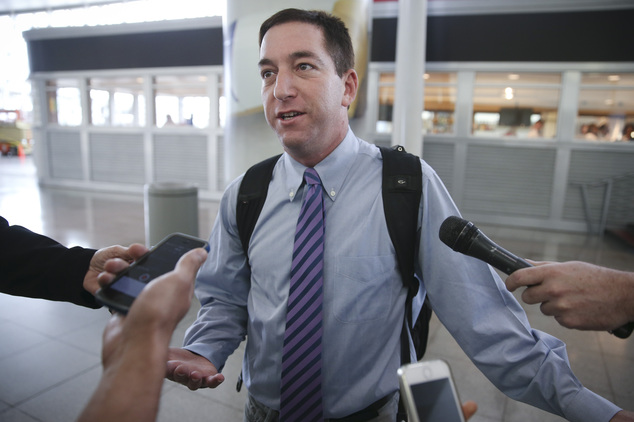
Glenn Greenwald gives an interview to Dillon Baker in The Freelancer, and offers his thoughts on succeeding in online journalism:

I think the most important thing is to avoid being a generalist. Don’t be willing to write about every single topic, because no person can be well-versed in every topic. If you write about stuff in which you are not well-versed and you don’t really have expertise, you’re just going to turn out mediocre product. And that’s going to affect how you’re perceived in the long run.

It’s so critical to figure out what you’re really passionately interested in. Because there’s a market for everything. There’s a huge Internet out there. Topics that seem really obscure can definitely, if you do it the right way, generate enough attention and interest to sustain you, and maybe even push you beyond that. It’s critical to just pick a few topics of which you have a great deal of passion, and develop genuine expertise in those so that what you’re producing can’t be found anywhere else except with you.

Wise words, which this blog will continue to strive to observe. This blog has long admired Glenn Greenwald for the passion and urgency behind his writing, and his principled stance against the secret surveillance state.

So what is the purpose of this blog?

Semi-Partisan Politics will continue to campaign – loudly and unapologetically – for the following goals and ideals:


Brexit: freedom from the European Union

Democracy and national sovereignty

Constitutional reform and a federal UK

Separation of church and state

Smaller, smarter government

Free speech, without restriction

Fighting timid centrism on the Right

Fighting empty virtue-signalling on the Left


If you agree with these objectives and have enjoyed this blog’s coverage over the past year, please do consider using the PayPal tip jar to make a small contribution:


Any donations will 1) be an ego boost, and 2) help me to do more original reporting, like the successful live blog of this year’s UKIP annual conference.

But most of all, please continue to click, like and share those articles that you enjoy with your family and friends. My loyal readers help keep me fighting the good fight.


Follow Semi-Partisan Politics on TwitterFacebook and Medium.

Arrogant MPs Want To Turn Political Debate Into Their Own Safe Space

Syria Vote - Trolling - Online Abuse - MPs - 3


Being heckled and pilloried by obnoxious online trolls is a regrettable part of the job description for any 21st century MP. But the right answer is to ignore the idiots and move on, not to impose draconian codes of conduct or prison sentences for insulting speech

When Britain is in the midst of debating great issues of war and peace, it is frankly astounding that much of the media seems more concerned with the hurt feelings of Labour MPs threatened with deselection by angry constituents than the consequences of British military action in Syria.

In the aftermath of the Syria vote in parliament, I saw one newspaper headline in particular that represented such an unhinged piece of self-aggrandising hyperbole that it made me do a double-take:

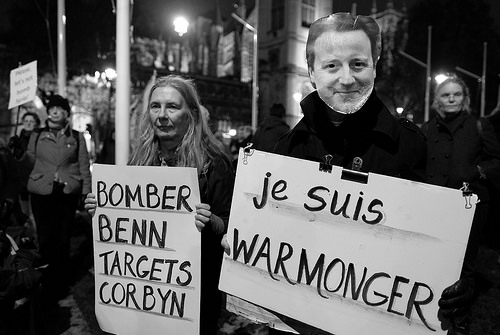
Jeremy Corbyn has made us targets for jihadists - shadow cabinet - Syria vote - ISIS.jpg

Apparently, by failing to assume direct control of the hearts and minds of every single one of his supporters – and physically preventing them from blowing off steam in the aftermath of the Syria air strikes vote in Parliament – Jeremy Corbyn is personally responsible for endangering the lives of those MPs who voted with the government for military action:

Jeremy Corbyn has made his MPs targets for home-grown jihadists in the wake of the vote to back Syrian air strikes, a shadow cabinet minister has warned.

The accusation that MPs are being left open to revenge attacks came as a backbencher made a formal complaint to Labour’s chief whip over Mr Corbyn’s “despicable and deliberate” threats over the Syria vote which he said will lead to “personal violence” against MPs.

In the immediate aftermath of the vote, which saw 66 MPs defy Mr Corbyn to back David Cameron’s plans for military action, Labour Unity, a hard-left organisation linked to the party leader, released a “traitor list” of backbenchers who should be targeted for de-selection.

Mr Corbyn and his allies have been directly accused of “aiding and abetting” the intimidation of Labour MPs by leaking the names of MPs preparing to back the Government in recent days.

This is not a joke. A member of the Labour Party shadow cabinet – a fully grown adult with an important constitutional role to play in our democracy – serious believes that by expressing his scepticism about air strikes on Syria, Jeremy Corbyn has made dissenting MPs vulnerable to terrorist attack. They believed it strongly enough – or hated Corbyn enough – to give these quotes to a national newspaper.

First of all, Jeremy Corbyn needs to identify who this self-aggrandising crybaby is, and kick them so hard out of his shadow cabinet that they end up back in local government debating bin collections and street lighting. Such brazen disrespect of the leader is absolutely intolerable in a serious political party.

Jeremy Corbyn, of course, tolerates self-important asides from whiny, self-entitled members of his own shadow cabinet every single day, which suggests that he has the patience of a saint, whatever his many other flaws. But no leader should expect to be confronted with daily leaks and insubordination of this kind from their own shadow cabinet, particularly scurrilous juvenile fantasies that he is somehow endangering the lives of his colleagues simply by disagreeing with them.

This blog agrees with almost none of Jeremy Corbyn’s socialist platform, but this open defiance of the leader has to stop if the Labour Party ever hope to be taken seriously as a cohesive force in British politics. Right now, the only hope for the Labour centrists is that Corbyn proves himself to be so unelectable in the London mayoral, local and devolved assembly elections that real momentum builds for him to be replaced.

By constantly snarking and running to their media sources in the media every time Corbyn’s leadership style hurts their pwecious wittle feewings, Corbyn will be able to point to all of this insubordination later on, when he is on the ropes, and say that he is failing not due to a popular rejection of his policies but thanks to disloyalty from his own shadow cabinet. This is the last thing that the centrists should want, but in typical myopic fashion they are totally incapable of looking more than one step ahead.

Syria Vote - Trolling - Online Abuse - MPs

But it’s not just the fifth column within Jeremy Corbyn’s shadow cabinet who are at fault. An increasing number of MPs from all parties (but particularly Labour) are speaking out, claiming that robust and sometimes distasteful criticism of their political views and voting records is somehow tantamount to “bullying”.

This has now reached the point where even expressing the view that your MP is doing a bad job and should be deselected as their party’s candidate at the next general election is also being described as “bullying” by some self-entitled and wobbly-lipped MPs.

The BBC reports:

Ann Coffey, who has represented Stockport since 1992 was told: “Get behind the leader or kindly go.”

In response, she said she will “await the assassins to come out of the shadows”.

Assassins? What Ann Coffey is referring to is the great fear now stalking the Parliamentary Labour Party – deselection.

While the Metro reports on the party establishment’s hurt response:

Shadow home secretary Andy Burnham, who voted against air strikes, called on Mr Corbyn to show ‘no tolerance’ of abusive behaviour within the party and said a code of conduct was needed for members’ use of social media.

He was particularly disappointed with the treatment colleague Ann Coffey had received after voting for the strikes.

‘She has served Stockport, her constituents and our party for many years with distinction, and people need to have a look at themselves before they go around throwing threats at people like that,’ he told BBC2’s Victoria Derbyshire Show.

Whether Ann Coffey has served her constituents and her party well or not is beside the point – it is not for Andy Burnham, a fellow MP, to decide on behalf of Coffey’s constituents whether or not she should continue to be their Labour Party candidate, nor to shield her from public criticism.

Syria Vote - Trolling - Online Abuse - MPs - 2

This is a ludicrous state of affairs. MPs are grown adults, serious people who should be capable of participating in the rough and tumble of democratic debate without needing some higher authority to step in and moderate the debate to spare their delicate sensitivities.

Spiked’s Tom Slater agrees, writing:

Let’s get a few things straight. First of all, if you’re over 16 – let alone a prominent politician – you’ve got no right to claim you’re being bullied. Bullying is what happens in the playground. And most kids put up with far worse than a few nasty emails. It’s pathetic. Secondly, being called a ‘baby killer’ isn’t nice, but it’s not abuse or intimidation. It’s political critique – asinine, sixth-formerish, idiotic political critique, but it’s political critique nonetheless. And as for those who have claimed to have received death threats, they’re just not credible. Neil Coyle MP contacted the police, all because someone tweeted three knife emojis to him. Jesus wept.

[..] This is bad news for politics. The war on trolling, we were told, was all about protecting poor, vulnerable people from being hounded out of the public square. Now, 40-plus politicians are using the same language to protect themselves from criticism. In these strange political times, we need more conflict, more argument and, yes, more abuse-hurling. Politicians crying foul when someone disagrees with them – that’s what the ‘kinder, gentler’ politics looks like.

It is bad enough that our universities – supposedly places of intellectual rigour and ‘no holds barred’ debate – are turning into soft cornered safe spaces where delicate snowflake students insist on being protected from ever having to encounter a dissenting or provocative opinion. But apparently the disease has not been contained and has spilled over the borders of academia into the very heart of our democracy, the political sphere.

This is exceedingly dangerous. Angry, safe space-dwelling students are proving themselves more than capable of stifling debate, changing whole curricula and agitating for decent staff to be fired, despite having almost no formal power in the university hierarchy system. How much more damage, then, can elected MPs do to our already-weakened free speech rights when they are the ones setting the political agenda and making the laws that we must follow?

Enough is enough. Being told that one has blood on one’s hands because of a vote for military action may be jarring, unsettling and nasty. But MPs should be able to separate the wheat from the chaff, and engage with those constituents who engage with them respectfully, whilst either ignoring or belittling those who are rude or aggressive.

In fact, Labour MP Stella Creasy herself – usually leading the charge to criminalise Twitter abuse – inadvertently demonstrated how best to handle mean Twitter insults in the aftermath of the Syria vote when she responded to a member of the public who swore at her and called her a witch:

Syria Vote - Trolling - Online Abuse - MPs - Stella Creasy - Twitter - 2

Highlight the idiocy, publicly smack it down and move on. Or simply ignore the haters altogether. That’s all an MP has to do.

This should be the model which all MPs follow, all the time. Engage with the genuine constituents, especially when they are legitimately angry. Ignore those who are gratuitously mean, insulting or belligerent. But only report to the police those who make serious and credible threats of physical harm.

This is how anyone who has ever worked in a private sector customer service job would handle their interactions with the public every single day. Ask any London bus driver if they call the police every time they are demeaned, insulted or “bullied” while at work, and they would laugh in your face. When you work in a tough job like that, you grow a thick skin.

We should expect no less maturity (in the face of occasional public immaturity) from our elected representatives in Parliament.

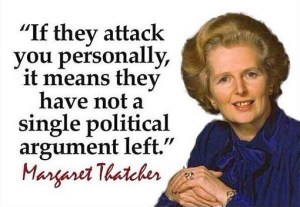
Margaret Thatcher - Internet Trolling

Agree with this article? Violently disagree? Scroll down to leave a comment.

Follow Semi-Partisan Politics on TwitterFacebook and Medium.

Oldham, UKIP And The Soft Bigotry Of The Guardian

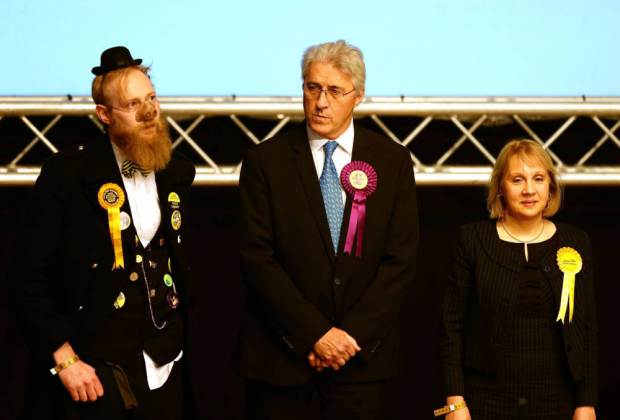
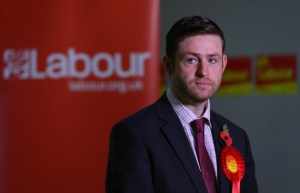
Jim McMahon - John Bickley - Labour Party - UKIP - Oldham by election

In their smugness at the Oldham by-election result, the Left are in danger of learning the wrong lessons from UKIP’s failure to gain traction

It goes without saying that the by-election result in Oldham is of great reassurance to Jeremy Corbyn and a bad, bad outcome for UKIP.

Much is already being written about how the result provides breathing space for Corbyn after a difficult week marked by the Syria vote. But one piece of commentary caught my attention, specifically this throwaway line at the bottom of the Guardian’s analysis:


Ukip can take no joy from failing to win in a racially charged area.


In this short, throwaway sentence lies all of the sneering anti-UKIP bigotry which has come to typify the new middle-class left-wing clerisy and their house journal, The Guardian.

Why would UKIP “take joy” from winning in a racially charged area? The Guardian clearly accepts this idea as gospel, but why would any decent human being be actively thrilled to profit from racial unrest and community tension?

That’s not to say that UKIP do not benefit from these conditions when they occur. But as newspapers like the Guardian usually love to point out, UKIP actually tend to do best in areas where there are fewest immigrants but where local deprivation is high. If anything, the ideal target constituency for UKIP is not somewhere awash with hardworking Polish immigrants, but a run-down, faded and economically dying coastal or northern town with few job prospects and even fewer immigrants.

No decent person would arrive in a constituency marred by racial tension, rub their hands in glee and look forward to collecting the electoral dividend. But this is precisely what the Guardian accuse UKIP of doing. Because they don’t believe it is possible to be decent and a Ukipper. First they continually equate UKIP’s opposition to unlimited EU immigration with racism, which it categorically is not, whatever the other rights and wrongs of their position. And then they write about UKIP taking joy from exploiting racial tension as though they were the BNP in tweed.

Last week while campaigning in Oldham, Labour’s shadow chancellor John McDonnell stood in front of a crowd of supporters and called UKIP (and, by extension, the party’s supporters and sympathisers) “evil”. That was an incredibly insulting, ignorant and offensive thing to say, as well as being factually inaccurate. But at least we all know where John McDonnell stands and exactly what he thinks of people who believe in democracy, quiet patriotism and the nation state.

The Guardian would never be so gauche as to explicitly say that UKIP are evil. But they don’t need to. Their typical reader assumes it to be true, and so will nod along unthinkingly at a line about UKIP being supposedly disappointed not to have successfully exploited racial division.

Unfortunately, this is just further evidence of the Left assuming a very two-dimensional, cartoon caricature image of people who disagree with them. Conservatives can never disagree with socialism due to honest differences in outlook, they must be selfish Tory Scum. And Ukippers cannot have legitimate concerns over democracy and immigration, they must simply be racist.

We saw this same inability to empathise, to think from the perspective of the other person, when Channel 4 aired their ridiculous mockumentary “UKIP: The First 100 Days”, where Ukippers were portrayed by London-dwelling middle class film makers as two-dimensional, foul-mouthed, racist simpletons with working class accents.

There’s no doubt that the Oldham by-election was a very bad result for UKIP. Either UKIP have reached a natural ceiling in their support, their current electoral strategy is wildly misfiring, or the party’s reported financial troubles are so severe that they prevented the deployment of any serious ground game and voter mobilisation effort. The reality is likely to be some combination of all three.

But sneering that UKIP lost because they failed to exploit racial tensions – as though that goal is what motivates the party, and as though Nigel Farage were just another Nick Griffin – is wrong and ultimately counterproductive to the Left’s attempt to defeat the UKIP challenge.

Lasting victory can only ever come via a thorough understanding of one’s opponent. And the Guardian’s response to Labour’s by-election victory in Oldham proves that the Left are still a long, long way from understanding UKIP.

Labour Launch their Oldham West and Royton By-election Campaign

Agree with this article? Violently disagree? Scroll down to leave a comment.

Follow Semi-Partisan Politics on TwitterFacebook and Medium.

Syria Vote: Hilary Benn, Saviour Of The Labour Party?


Despite deep division within Labour, Hilary Benn’s excellent speech in the Syria debate made David Cameron look very small indeed. But it changes nothing in terms of Jeremy Corbyn’s leadership

Is Hilary Benn the saviour of the Labour Party, the chosen one sent to lead the party out of the Corbynite darkness?

People are starting to say so – first as a result of Benn’s determined stance in the crunch shadow cabinet meeting yesterday, and especially now, after that electrifying speech in the Syria debate.

The speech was undoubtedly a good one. Here’s a key excerpt:

So the question for each of us – and for our national security – is this: given that we know what they are doing, can we really stand aside and refuse to act fully in our self-defence against those who are planning these attacks? Can we really leave to others the responsibility for defending our national security when it is our responsibility? And if we do not act, what message would that send about our solidarity with those countries that have suffered so much – including Iraq and our ally, France.

And the stirring peroration:

Now Mr Speaker, I hope the house will bear with me if I direct my closing remarks to my Labour friends and colleagues on this side of the House. As a party we have always been defined by our internationalism. We believe we have a responsibility one to another. We never have – and we never should – walk by on the other side of the road.

And we are here faced by fascists. Not just their calculated brutality, but their belief that they are superior to every single one of us in this chamber tonight, and all of the people that we represent. They hold us in contempt. They hold our values in contempt. They hold our belief in tolerance and decency in contempt. They hold our democracy, the means by which we will make our decision tonight, in contempt.

And what we know about fascists is that they need to be defeated. And it is why, as we have heard tonight, socialists and trade unionists and others joined the International Brigade in the 1930s to fight against Franco. It’s why this entire House stood up against Hitler and Mussolini. It is why our party has always stood up against the denial of human rights and for justice. And my view, Mr Speaker, is that we must now confront this evil. It is now time for us to do our bit in Syria. And that is why I ask my colleagues to vote for the motion tonight.

The House erupted into rare and sustained applause (which is apparently okay these days, so long as it is not SNP Members of Parliament doing the clapping), while social media and the blogosphere lit up with praise for Benn and hopeful talk that this speech might represent the reassertion of the centrist Left and the high water mark for the Corbynite flood.

Here’s Dan Hodges, waxing lyrical:

Hilary Benn’s speech. It is about to become the House of Commons “where were you when Kennedy was shot” moment. Where were you sitting. Who were you with. What were you thinking.

It was a truly incredible moment. He did not just captivate the House, he inverted the House. Hilary Benn did not look like the Shadow Foreign Secretary. He did not look like the leader of the opposition. He looked like the prime minister. And by extension, his party, which for the past few days has appeared broken and beaten, looked like the government.

Most amazing of all was the effect on the real Leader of the Opposition. Though we may as well now refer to him as the former leader of the opposition. Jeremy Corbyn started by looking agitated. Then he appeared uncomfortable. Then he began to shrink. It was like watching the witch from the Wizard of Oz who has just had a bucket of water thrown over her. All the talk of his “mandate”. All the talk of his legions of new activists. They were destroyed in an instant. Crushed by Hilary Benn and 100 years of the Labour party’s accumulated moral authority.

If only that were so.

Of course Hodges would talk up Hilary Benn, or anyone else from the Labour front bench who managed to sound eloquent while undermining Jeremy Corbyn – and fair enough. The praise is deserved, if somewhat excessive. People will not long remember this speech, and only people within the Westminster bubble and the highly politically engaged will have paid it any note at all. We should not allow ourselves to get carried away by the adrenaline of the moment.

While Hilary Benn’s speech may have been extraordinarily cathartic for centrist Labour types who have had little cause for hope since Jeremy Corbyn (or even Ed Miliband) won the leadership of their party, there is little reason to believe that one speech will dramatically change the fortunes of the Labour Party.

Most people do not watch parliamentary debates, even moderately iconic ones (and this one has certainly been hyped out of all proportion, with politicians and the media talking up the extension of existing airstrikes as some kind of paradigm-shifting declaration of war). Few people will have actually seen Hilary Benn grow in stature, or Jeremy Corbyn shrink a little next to him on the green benches last night.

Martin Kettle acknowledged as much in his own piece praising Benn’s speech:

Wednesday was certainly a reminder that speeches can still make a difference in politics. It was, though, a Victorian political event in a digital age. Benn’s speech was electrifying in the chamber. It triggered an instant Twitter storm among what may have been several hundred BBC Parliament watchers. But most people watch other things. Most people still don’t know who Hilary Benn is, let alone that he made a well regarded speech. And the sleepless digital news caravan has already moved on.

While it’s great that the dignified, sober part of the Labour Party briefly asserted itself – by thwarting Corbyn’s desire to whip the Syria vote, and in Hilary Benn’s speech – it does little to change the cold, hard calculus facing the Labour Party.

Jeremy Corbyn is still not going anywhere – he smilingly said as much on the Andrew Marr show last weekend. His supporters are still growing in influence within the Labour Party, and their memories are long – the current talk of deselections will not have been forgotten by the time the 2020 general election rolls around. And while Benn’s speech was excellent, it only further highlighted the division within the shadow cabinet. That’s the message that most people will take away – that on an important decision about committing British armed forces to action, the Labour Party is no longer able to come to a common position.

Hilary Benn may have displayed his leadership credentials last night, but there is no escaping the fact that Jeremy Corbyn retains firm control of the party, and that any effort to remove Corbyn will produce a nuclear backlash from the activist party base.

The Labour Party needs more than one man with a good speech in his pocket and centrism in his heart. If the goal is to recapture the centre ground of British politics, Labour needs a new wave of members to dilute and counteract the thousands of left-wing activists attracted by Corbyn. And while Hilary Benn gave a good speech on foreign policy, there is no evidence that he is beloved by the public or capable of attracting legions of centre-left supporters back to the party.

Labour Party centrists are desperate for a saviour, and that is understandable. But Hilary Benn is not the answer – not even if ten of his clones sat in Jeremy Corbyn’s shadow cabinet.

To change course, the centrists don’t need one Hilary Benn. They need one hundred thousand new people to be inspired enough by Benn’s words to pick up the phone and join the Labour Party. And that’s simply not going to happen.

The Labour Party needs a new membership before it can even begin to think about choosing a new leader.

Hilary Benn - Syria Speech

Agree with this article? Violently disagree? Scroll down to leave a comment.

Follow Semi-Partisan Politics on TwitterFacebook and Medium.

Labour’s EU ‘Remain’ Campaign Launches With Their Weakest Argument

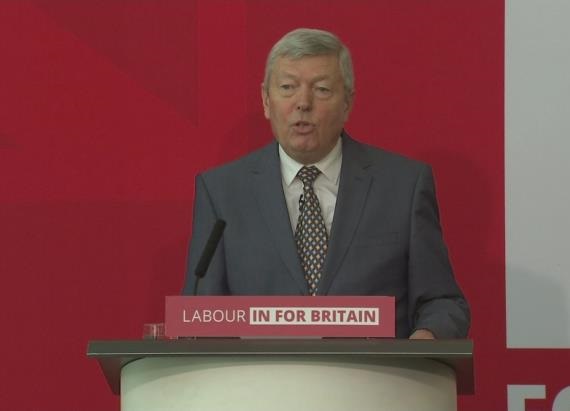
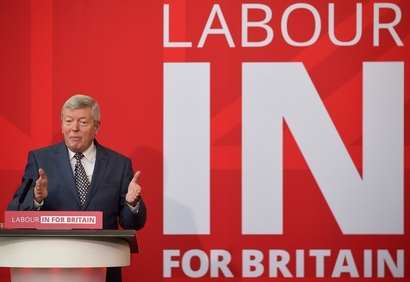
Alan Johnson - Labour - In for Britain - EU Referendum - Brexit

Claims that Britain being in the EU “keeps us safe” are completely without basis. Nations are more than capable of co-operating on national security without dissolving into the same flawed political union

If the slavishly europhile “Remain” campaigns are putting their best feet forward and leading with their strongest arguments then perhaps there is hope for we eurosceptics after all.

Last month, the farcical launch of Britain Stronger in Europe was tarnished by the somewhat unwilling presence of Lord Stuart Rose as campaign chairman, and then rendered ridiculous by “youth ambassador” June Sarpong’s confused non-endorsement in the press.

And now, with today’s launch of Labour In for Britain, the Labour Party’s own pro-EU campaign group, the europhiles decided to lead with the weakest of all their weak arguments – that leaving the EU would somehow be injurious to Britain’s national security. And they are quite willing to exploit the recent shocking terrorist attacks in Paris to do so.

Alan Johnson, chairman of the Labour In for Britain campaign, writes in the Mail:

We should be in no doubt that these are dangerous times. 

The tragic events in Paris, and the government’s recent confirmation that seven terror plots have been foiled in the UK in recent months, have underlined the threat that violent extremism poses to us here at home.

For some, the answer to this is to withdraw from Europe and to try to combat the threats we face on our own. 

So no positive vision, then. Just a lot of scaremongering followed by the reassurance that we can avoid being blown up in our favourite clubs and restaurants for the low, low price of the surrender of our democracy, sovereignty and right to self-determination.

Of course, Johnson never explains why leaving the explicitly political construct known as the EU would mean that Britain has to withdraw from Europe the continent, or Europe the home of our friends and allies. But then it is very much in his interest to conflate all of these things and falsely imply that leaving a political union means cutting ourselves off and standing alone in the world.

From a man who is constantly lauded as one of the Labour Party’s finest assets, a fundamentally decent man of irreproachable morals, this is really dirty and opportunistic stuff from Alan Johnson. Apparently there is no moratorium on using a mass killing for political gain when the people taking advantage of our shock and grief are do-gooder left wing types who think they know best for us.

Johnson continues:

Our campaign will focus on the economic security of British workers – the millions of British jobs that are linked to trade with Europe, and the employment rights that are enshrined in EU law. 

But we will also be laying out the ways in which Europe protects British citizens and keeps us safe.

First, working with our European partners provides us the best way to stop would-be terrorists entering Europe [..]

Second, thanks to the European Arrest Warrant, pushed through in 2004 under a Labour government, we are able to more effectively bring would-be terrorists to justice [..]

Finally, it should not be forgotten that Islamist terrorism is not the only threat we face. At a time of deep instability on Europe’s borders, Britain benefits from its ability respond collectively.

The Brexit campaign group Vote Leave are also pushing the security aspect quite hard, so it is unsurprising that the pro-EU groups want to cut them off by claiming that it is their position which will keep Britain safe. Unsurprising, but wrong.

And Johnson concludes:

By sharing intelligence, pooling resources and working together, European countries add value to each others’ efforts to keep the peace. A Brexit would leave us all more vulnerable.

Damningly, it is never explained why all of this co-operation is dependent on Britain remaining part of an ever-tightening political union with its own parliament and courts and government.

Alan Johnson never explains why our intelligence and security services rely on our EU membership every day to protect us from terrorist attacks. Because they don’t. This co-operation – and any other matters of vital national security – would go on regardless of our future relationship with the EU, because that’s how mature democracies work. Europe will not simply go off in a sulk and stop sharing intelligence with us simply because we decide that we no longer want to be just a star on the EU’s flag, because they need our military support and intelligence capabilities far more than we need theirs.

Don’t forget – Britain’s closest military ally and intelligence sharing partner is not any one of the European Union countries, but rather the United States. We host US air bases on our territory, we embed our own armed forces with theirs (and vice versa) on active operations and we buy and sell weapons and equipment to America. On the intelligence front, GCHQ and the NSA work together hand in glove – sometimes too closely, to the extent that they conducted mass surveillance without our knowledge – and are indispensable partners.

The closest of military allies and vital partners in global intelligence sharing – somehow the UK and US are able to maintain this partnership without a joint legislature handing down laws to Congress and Parliament, a judiciary sitting above our own respective Supreme Courts, or a shadow government running a large and expensive bureaucracy on our behalf.

And yet the europhiles will declare with a straight face that we desperately need this cumbersome, irrelevant and antidemocratic sideshow just to be able to ensure military and intelligence sharing co-operation with a country separated from us by just twenty miles English Channel. What nonsense.

So, Alan Johnson: why is it that Britain is able to maintain our closest and most strategic partnership in the world with the United States without ourselves becoming the 51st state, while a lesser degree of co-operation with the other countries of Europe is somehow impossible unless we dissolve ourselves into the same ever-tightening political union with them?

Truly, the security aspect is the weakest of all the pro-EU arguments, and yet it is the one with which Labour chose to lead. And the only possible calculus for doing so must have been the belief that people were still so shocked and traumatised by the recent terrorist attacks in Paris that they would be susceptible to scaremongering tactics which openly suggested that a vote against the European Union is a vote for more Paris-style attacks on our own city streets.

That tells you a lot about the intellectual weakness and desperation of pro-EU case and the “Remain” campaign as a whole. But it tells you even more about today’s grasping, manipulative and utterly shameless Labour Party.
Alan Johnson - In for Britain - EU Referendum - Brexit

Agree with this article? Violently disagree? Scroll down to leave a comment.

Follow Semi-Partisan Politics on TwitterFacebook and Medium.