Forget Migrant Benefits In The EU Debate; What About The S-Word?

Alan Johnson - Labour In for Britain

The EU debate is about so much more than relatively petty questions about migrant benefits and immigration. But few from the official “Leave” campaigns are willing to broaden the debate

It is rare for this blog to find itself in agreement with Labour grandee Alan Johnson, chairman of the “Labour In For Britain” campaign group.

But Johnson is absolutely correct in his criticism – expressed on the Andrew Marr show today – that the EU debate has been narrowed down to an insultingly simplistic degree.

LabourList reports:

Johnson, who is leading Labour’s campaign to stay in the EU, appeared on The Andrew Marr show this morning to make the case for Britain to stay in the EU. He pointed out that issues like climate change can only be solved by countries working together, and that the EU was an essential “political union”.

He slammed the Prime Minister for narrowing the debate, saying there has been a lot of focus on Cameron’s attempt to ban migrants who are in work from receiving benefits until they have been employed in the UK for four years. Cameron is thought to have abandoned these plans in favour of imposing new limits on benefit payments to out-of-work migrants instead of those people in jobs. Johnson said this focus had distracted from other important issues.

Forget the orchestrated shenanigans over David Cameron’s supposed tussle with other EU leaders over migrant benefits – this is a ridiculous sideshow obsessed over by a credulous media, as my Conservatives for Liberty colleague and editor Ben Kelly wearily points out.

But Alan Johnson’s broader criticism is devastatingly accurate. From the outset, particularly on the “Leave” side, the Westminster campaign has been incredibly myopic and unimaginative.

We should expect no better from the prime minister – David Cameron is an avowed europhile, has stated numerous times that his preference is for Britain to remain a member of the EU, and has been unable to force the words “campaign for Brexit” from his lips even as a remote hypothetical. And thus it is no surprise that Cameron went in to the renegotiation with no set demands (contrary to the media narrative) but simply with a begging letter to Donald Tusk pointing out areas for discussion.

And those areas do nothing to assuage the concerns of the thinking eurosceptic or Brexiteer. Because the real problem with our continued membership of the European Union is not immigration, welfare, fiscal policy, social policy or the euro. The real problem is the little-mentioned S-word: sovereignty. Because this one word encapsulates all of the many ways in which the EU infringes upon our democracy.

It’s not about Schengen, or the single market – Britain is already outside the former and a full member of the latter. That’s why when David Cameron comes back brandishing something called “associate membership” we should be immediately suspicious, because it will essentially be a formalisation of the status quo, with all of the existing drawbacks of Britain’s EU membership hardwired into a future new treaty, with a few extra problems sprinkled on top as a garnish.

The fundamental issue of sovereignty will go unanswered, because David Cameron is not even raising it as part of his sham renegotiation, and while the overly credulous may believe that a toothless and unenforceable exemption from “ever closer union” is some kind of great victory, it ignores the fact that our union with Europe is already far too close. The EU remains an explicitly political union (as Alan Johnson happily states in his Andrew Marr interview) and Britain remains firmly part of it.

Neither Leave.EU nor Vote Leave hammer the sovereignty aspect, having decided that scare stories about what the EU will do to “our NHS” (genuflect) and other public services will do more to win over the bovine masses. But sovereignty is the key.

Is Britain to be a real democracy, accountable to its own citizens once again? If so, then we need to recognise – and repeat endlessly – that national democracy and the European Union are fundamentally incompatible.

As the preamble to the Bertelsmann Stiftung report “A Fundamental Law of the European Union” (soon heading our way via the Five Presidents Report) explicitly states:

This proposal for a Fundamental Law of the European Union is a comprehensive revision of the Treaty of Lisbon (2007). Replacing the existing treaties, it takes a major step towards a federal union. It turns the European Commission into a democratic constitutional government, keeping to the method built by Jean Monnet in which the Commission drafts laws which are then enacted jointly by the Council, representing the states, and the European Parliament, representing the citizens. All the reforms proposed are aimed at strengthening the capacity of the EU to act.

It’s right there in black and white – a major step towards a federal union. The EU will drive a wedge between nation states and their citizens by enshrining and expanding the model whereby national governments sign off on laws and policies initiated by the EU Commission, while the people will have redress only through the European Parliament, thus (hope the federalists) gradually legitimising the Brussels and Strasbourg parliament.

But you’ll hear none of this from the major “Leave” campaigns, and certainly from nobody within the Conservative Party. The only real exception at present is the small but growing group of campaigners and bloggers coalescing around Dr. Richard North’s site eureferendum.com, who do a good job holding the media to account and pointing out lazy thinking and writing (sometimes including this blog) which unwittingly aids David Cameron’s agenda.

At least the Left and the “Remain” camps are able to appreciate that the EU referendum is a fundamental question of who we want to be as a country, and where we believe democracy and decision making should rightly sit. They have their particular vision – abhorrent to me, but clear and unambiguous – that the UK is a weak and ineffectual country incapable of robustly defending our own national interests, and that the fifth largest economy, formidable military power and cultural beacon that is the United Kingdom can only survive by dissolving our political identity into the European Union. And they will be repeating this message from now until referendum day.

The “Leave” campaigns have no similar clear vision. They believe that the referendum can be won by reducing the great questions of democracy and Britain’s place in the world to a tedious, nitpicking discussion over how many migrants can be kept out of Britain, or how much money saved by renegotiating the terms of our surrender. Alan Johnson’s view is utterly wrong, but at least he has the confidence to state his case.

When will the Leave campaigns appreciate that the referendum cannot be won if people believe that leaving the EU is a leap into the unknown, or when the only ones talking passionately about Britain’s place in the world are the europhiles?

When will the Leave campaigns stop their myopic obsession with issues like migrant benefits, an arbitrary issue picked by our devoutly pro-EU prime minister, which are only designed to distract our attention from the ultimate deal – associate membership – which will ultimately be presented?

And when will the Leave campaigns get over their overriding fear of the S-word?
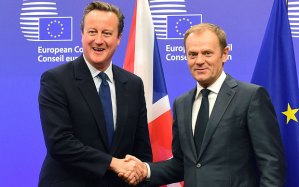
David Cameron - Donald Tusk - EU Renegotiation - European Union - Brexit

Agree with this article? Violently disagree? Scroll down to leave a comment.

Follow Semi-Partisan Politics on TwitterFacebook and Medium.

The Daily Toast: Tony Blair On Labour’s Future In The Age of Corbyn

Tony Blair - Labour Leadership - Jeremy Corbyn - Annihilation

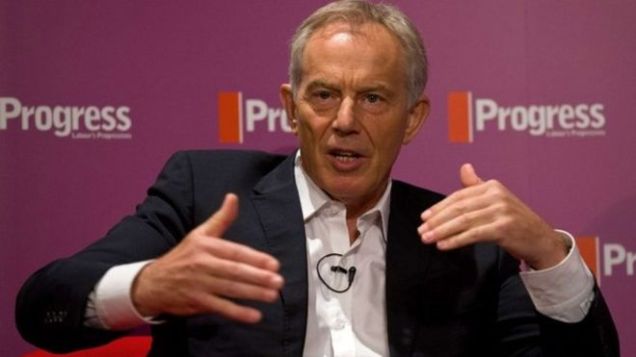
The Labour Left may dismiss him as a Red Tory war criminal, but Tony Blair raises some awkward questions about what Labour stands for in the Age of Corbyn

In the Christmas special edition of The Spectator, Tony Blair offers a typically self-aggrandising but (to the Corbynite Left) infuriatingly perceptive take on the challenges facing Labour, and why the emboldened hard Left are not equal to the task before them.

Defending New Labour’s record in government between 1997-2010, Tony Blair writes:

In a society in which fewer and fewer people thought of themselves as traditional working class, we needed to build a new coalition between the aspirant up and coming and the poorest and most disadvantaged. For the task of winning power, the emphasis on the values of community, society, family, compassion and social justice was highly effective.

But for the task of governing, we had to do more than proclaim our values, we had to have the courage and creativity to apply them anew to a changing world and make what counted what worked rather than defending interests or tradition.

That’s the rub: what does Labour stand for in a society where fewer and fewer people  think of themselves as being working class, or attach any real meaning or identity to that label? And specifically, what does the Corbynite Left of the party stand for in this new reality?

Blair points to an uncomfortable truth for Labour. Because few people, other than the Owen Jones romantic Left, still obsess about class. And though economic inequality is very much a real thing, many of us share common tastes in popular culture to an extent which was simply not the case in the 1920s or even the 1950s.

What does social class even mean when thousands of one-percenters listen to the same pop music and partake of traditionally working class interests such as football, and the technological revolution has given the masses the same access to entertainment, culture and travel destinations as the very wealthy? Does class mean anything at all in 2015, besides being a shorthand way to describe a person’s accent? Arguably not.

So what has replaced the issue of class in our public discourse? The answer, of course, is the new obsession with equality. Nebulous and never clearly defined, the Left harp on about equality without ever explaining whether they are referring to equality of opportunity or equality of outcome. But as a crude generalisation, one could say that centrist Labour strives (however badly) for equality of opportunity, while the Corbynite Left dream of a word of total, enforced equality of outcome.

What unites these two warring factions within Labour is the fact that neither side have the first clue about how to use public policy to translate their vision into reality. Centrist Labour is intellectually dead and hasn’t had an original idea since Tony Blair left office, but the rot became particularly bad during the Ed Miliband era. Miliband’s speeches were full of meaningless platitudes and waffle about creating a “fair” Britain, but shockingly free of specific policies or strategies to reshape the country accordingly.

And the emboldened Left are full of spittle-flecked condemnation of the Evil Tories, not to mention the endless, preening virtue-signalling which has become their hallmark. But they offer no solutions either, just a 24/7 Twitter stream of criticism of Tory policy. Want to know what the Corbynites want to do with taxes or welfare? Good luck finding out. Most of them don’t have a clue, and the few that do know won’t say because they know that their real vision for Britain would be hugely unpalatable to the general electorate.

The danger for Labour in failing to stand for an election-winning coalition of voters – as they did when they represented a cohesive working class in the twentieth century – is that others will define Labour to the electorate, and not in a flattering way.

Already, the Conservatives are pushing the message that Labour are the party of welfare, entitlement and anybody who is a net “taker” from society. And what can Labour possibly say to counter this claim, when they can always be found popping up on television to denounce spending cuts without announcing anything amounting to a cohesive plan of their own?

Blair closes his Spectator piece by warning:

Right now we’re in danger of not asking the right questions never mind failing to get the right answers. All of it is about applying values with an open mind; not boasting of our values as a way of avoiding the hard thinking the changing world insists upon.

Unfortunately, even the anti-Corbyn elements of the Labour Party seem utterly unable to grasp this fundamental truth. And too often, it seems that all Labour know how to do is hate the Tories and boast about their own values, rather than identifying solid policies to put them into practice.

Consider how the recent vote on military action in Syria descended into a mudslinging sideshow, with the Corbynite left accusing anyone who disagreed with their pacifist stance of being an Evil Tory warmonger. Or the way that the Labour Party rode to battle against the tax credit changes, the welfare cap and the NHS junior doctors pay dispute, enthusiastically taking up arms against the Conservatives without uttering a word about how they would address very real problems of concern to many British voters.

On these issues and more, Labour currently propose no solutions. While military intervention in Syria may well fail or lead to a worse outcome, no alternative has been clearly outlined – assuming that airy talk about negotiating with ISIS is not to be taken seriously. Ask ten Labour MPs (including the shadow cabinet) what the party proposes to do about welfare or the NHS and you are likely to get fifteen different answers.

In his article, Tony Blair repeatedly argues against focusing on ideology:

Infrastructure, housing, social exclusion – all these challenges require more modernising and less ideological thinking.

But this is misleading. Strong viable governments only come about when there is a coherency and consistency of ideology which informs the policies offered to the electorate. It’s no good just coming up with a basket of pragmatic policies – people rightly see this for what it is: electoral opportunism.

Labour need to pick an ideology, whether it is that of their leader, that of Tony Blair or that of the incoherent band of uncharismatic centrists who currently pass for party heavyweights. And then they need to show the public that real, tangible policies for government can flow through the party, shaped and informed by those ideals. Labour’s credibility is currently so low that opportunistic opposition to individual Conservative policies will deliver them nothing at the ballot box. An alternative platform for government is what’s needed.

And that takes us back to the opening question: who does Labour actually represent in the Age of Corbyn and his sulky centrist antagonists, when nearly everybody with an aspirational bone in their body is abandoning the party?

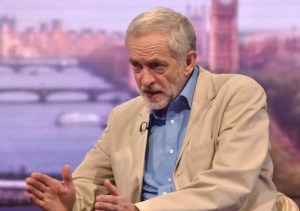
Jeremy Corbyn - Labour Party - Andrew Marr Show - BBC

Agree with this article? Violently disagree? Scroll down to leave a comment.

Follow Semi-Partisan Politics on TwitterFacebook and Medium.

Gay or Straight, The Robert Dyas Christmas TV Ad Is Cheap and Cynical


Don’t praise Robert Dyas for their awkward, virtue-signalling Christmas television commercial. Condemn them for exploiting the hard-won civil rights accomplishments of others for monetary gain

If any further proof was needed that tolerance and equal rights have morphed from being simply the right thing to do into just another opportunity for ostentatious virtue-signalling, you need look no further than the bizarre Christmas television commercial recently released by Robert Dyas.

In the ridiculous TV advert – a parody of a 2009 satirical video by Rhett and Link – various Robert Dyas staff members are shown confessing their sexuality before going on to plug completely unrelated products stocked by the retailer.

(The original video showed black and white employees explaining how the products in their furniture shop were suitable for both black and white customers).

From the Telegraph:

The minute-long film, described as “the weirdest Christmas advert ever”, shows men and women declaring whether they are straight, gay or bisexual while describing unrelated products in the store.

In the clip filmed in one of the chain’s branches, a member of staff introduced himself by saying: “Hi, my name’s Marcus, I work at Robert Dyas, and I’m gay.”

Before showing off a large inflatable yellow Minion toy, he adds: “I like going out with my friends and playing volleyball. I also like showing our gay and straight customers a funky range of our Christmas gifts.

[..] The confusing advert then comes to a close with a shot of staff members and customers standing at the shop’s counter, and announcing in unison: “Robert Dyas – where gays and straights can buy drills and much, much more”.

Like all clever television adverts, this was clearly designed to be controversial and to generate discussion which would expand Robert Dyas’ marketing reach well beyond the number of people who will ever see the commercial on television. And as with the creepy John Lewis “Moon Hitler” commercial, also released this year, much of the weirdness is intended to get people talking – so mission accomplished.

But in this case it is worth taking the bait, because the message of the Robert Dyas commercial is symptomatic of a wider trend sweeping Anglo-American society, whereby it is no longer enough to quietly practice the principles of tolerance and non-discrimination in one’s own life, but rather we are continually encouraged to make ostentatious public displays of conformity with the new enlightened PC dogma.

Of course people of any sexual orientation should be treated with respect and dignity at all times, including people either working for or shopping at large chain retailers. But since when did it become the job of hardware shops to start preaching about social issues? How does the spectacle of individual staff members inexplicably revealing their sexuality help to advance equal rights? And what of those customers of traditional (or bigoted, depending on your view) beliefs, who do not agree with the message? Are they worthy of no respect, or magnanimity in the face of now-inevitable ideological defeat?

The Robert Dyas affair is not dissimilar to a similar action taken by Starbucks in the United States following the shooting of unarmed black teenager Michael Brown in Ferguson, Missouri. Following that tragic death, Starbucks became possessed by the idea that they were going to make a meaningful contribution to race relations in America, and encouraged their baristas to “start a conversation about race” with customers while serving them in store.

In other words, Starbucks decided that it was no longer enough for private citizens to be non-racist themselves, and engage in whatever activism or campaigning on the issue that their hearts dictated in their roles as private citizens. Now, Starbucks – that beacon of moral enlightenment – would “help them along” by prompting them with guilt-tripping conversation openers about white privilege.

Quite how initiating a serious conversation about Ta-Nehisi Coates’ “The Case for Reparations” with a bleary-eyed morning commuter might meaningfully help the country was never fully explained. And no sooner was the proposal announced in a blaze of sanctimonious publicity than it was then quietly dropped in the face of public scepticism and mockery.

The Robert Dyas affair is much the same – an ostentatious display of “right on” progressivism from a corporate retailer, who rather than being lauded for their enlightened position on civil rights should be condemned for co-opting the still serious issue of discrimination against gay people and exploiting it in service of their viral Christmas marketing campaign.

Of course Robert Dyas has the right to say anything they like in their television commercials – that much is an issue of free speech which should be protected and defended at all times. But not every PC pronouncement is made for the “right” reasons, and we should be smart enough to see through the virtue signalling of the social justice warriors and the cynicism of the business interests, which are more about self aggrandisement or monetary gain than advancing important social issues.

Real social change – positive or negative – comes from the ballot box, the picket line, the popular culture, the academy and the hearts and minds of private citizens.

Real social change does not come from the marketing department of Robert Dyas or their advertising agency – though thanks to their cynical marketing they do stand to reap financial rewards from the hard-won accomplishments of others.

UPDATE – 14 December: As the sharp-eyed commentator below points out, the Robert Dyas video is a parody of a 2009 satirical internet commercial by Rhett and Link, which is very similar – except that gay and straight are replaced by black and white. Top of the piece is now updated to make this clear, though I don’t think this necessarily changes the validity of my argument. Robert Dyas still chose to make and release the parody, and their motivations were still likely to be as described, half viral quirkiness and half virtue signalling – only now we can add unoriginality to the list of faults.

Robert Dyas have yet to comment on the video.

Robert Dyas - Christmas TV Advert - Gay

Agree with this article? Violently disagree? Scroll down to leave a comment.

Follow Semi-Partisan Politics on TwitterFacebook and Medium.

The Daily Toast: Alex Massie Calls Out Britain’s Growing Illiberal Streak

Ban Donald Trump Petition

The pathetic petition to ban Donald Trump from entering Britain – for the high crime of being an idiot – reveals a festering illiberal sickness at the heart of our nation

Are we really that country? Are we really that petty, authoritarian, second rate destination that bans foreigners whom we accuse of endangering the “health and morals of the nation”?

Yes. Increasingly, regrettably, yes we are. Donald Trump will escape the travel ban which many on the virtue-signalling Left are desperate to impose by virtue of who he is, the fact that he has no plans to come here anyway, and the diplomatic impossibility of thus spurning a US presidential candidate, even an unlikely one. But others before him have not escaped Britain’s growing intolerance of intolerance.

Comedians such as Dieudonné M’bala M’bala have been banned from visiting Britain to perform their racist comedy routines. Bloggers like Pamela Geller have been banned from entering the UK because their pungent and unpleasant political views have been deemed to be “not conducive to the public good”.

So we are already that country, no matter whether or not Theresa May decides to put Donald Trump’s name on her little list. We are already that country which has lost so much faith in our British, Western and democratic values that we now see unpleasant or inflammatory speech as something which will harm our already-fragile society.

The wretched story even made it to Prime Minister’s Questions. The fevered ramblings of that reality TV star turned presidential candidate were actually raised by an MP in the House of Commons, and George Osborne (standing in for David Cameron) was asked to intervene to protect us from the Big Bad Man. Serious journalists debated whether or not a ban was appropriate, when they could have been writing about something, anything else.

There’s certainly nothing like a swaggering, ignorant Republican presidential candidate to bring out the angry, authoritarian cheerleader in Dan Hodges:

What we have just witnessed is not just another attention-seeking rant from a Republican hopeful who is trying to secure definition in a crowded primary field. What Trump has done is effectively call for a race war.

[..] One of the most popular TV shows in the US at the moment is an alternative history drama called The Man In The High Castle. It is set in a world in which the Allies lost the second world war, and America lives under a fascist dictatorship.

Donald Trump wants to be the man in the high castle. Ban him. Ban him now.

But this is far from an uncommon reaction. The Independent earnestly argued exactly the same point – that Donald Trump’s views were not simply factually incorrect and misguided views to be challenged and debated, but potentially “harmful” words of such power that their speaker must be forcibly kept at bay and prevented from corrupting the impressionable minds of the British public.

Fortunately, there are dissenters. This blog weighed in when the Donald Trump story first broke, making the case that the illiberal instincts of the outraged Left are just as harmful as the nonsense spouted by Trump.

And now Alex Massie has an excellent piece in CapX, taking square aim at the “fatheaded nincompoops” more interested in signalling their virtue and parading their ignorance of the free society than defeating the actual ideas espoused by Trump.

Massie writes, sarcastically:

If we ban something, you see, that something will disappear. Even better, by banning ugly speech we will be able to demonstrate our moral superiority. And, when push comes to shove, that’s what matters most. Smugness warms the soul like nothing else this winter and every place must be a “safe space”.

And so it is. Imprisoned by the dogmatic belief that all cultures and values are inherently equal, none superior to any other, all that some parts of the Left can now do is squeal with protest when anyone does anything to hurt someone else’s feelings.

Massie continues, making reference to the parallel “controversy” surrounding champion boxer Tyson Fury whose nomination for Sports Personality of the Year is causing hysteria because of his unreconstructed views on gender roles and sexuality:

Repeat after me: there is no right not to be offended. But if we must be outraged let us be more outraged by those who seek to stymy and prohibit speech than by those whose speech the censors would have us suppress.

I deplore Donald Trump and have little admiration for the cut of Tyson Fury’s jib but, damn it, I’ll defend their right to be objectionable – and even repellent – if the alternative is siding with those who instinctively react to disagreeable opinions by seeking to suppress them. These people pose a vastly greater threat to liberalism and public decency than the people they deplore themselves.

These arguments over Trump and Fury might seem trivial but they are minor manifestations of a much larger issue. Remember January? Remember “Charlie Hebdo”? Remember all the pious declarations of sympathy and support and solidarity? Remember how politicians discovered that free speech might actually be something worth defending? Remember “Je suis Charlie”?

[..] Trump and Fury do not, in themselves, matter very much. But the reaction to their speech does matter. It is always depressing to discover that there are vastly fewer liberals in this country than you might wish there to be. But that discovery should no longer surprise us.

One can hope that the growing number of signatories to the Ban Donald Trump petition are drawn entirely from the ranks of virtue-signalling left-wing keyboard warriors, and are thus entirely unrepresentative of the British people as a whole.

One can tenuously hope that some of those who say that they want to ban Donald Trump are simply registering their strong disagreement with his latest inflammatory comments, and that they don’t really mean it when they call for a person to be banned from entering this country on account of their political views

One can even hope that the angry petitioners are outnumbered by a greater silent majority of Britons who don’t see Britain’s current, shameful track record of banning controversial people from entering our country as a marvellous precedent which should be extended to Donald Trump, simply because he’s an exceedingly offensive ass.

One can hope.

But I’m not sure any more. Perhaps it’s entirely a function of following the daily news cycle too closely and attaching too much weight to the petty storms and crusades of social media. Perhaps Britain isn’t really becoming a more sanctimoniously self-satisfied and intolerant place, populated by beady-eyed, brittle-egoed adult babies whose first reaction to encountering dissenting or unpleasant opinions is to screech indignantly for the authorities to have them banned.

Perhaps.

But it’s hard to feel much hope after reading much of the Donald Trump coverage in Britain over the past couple of days.

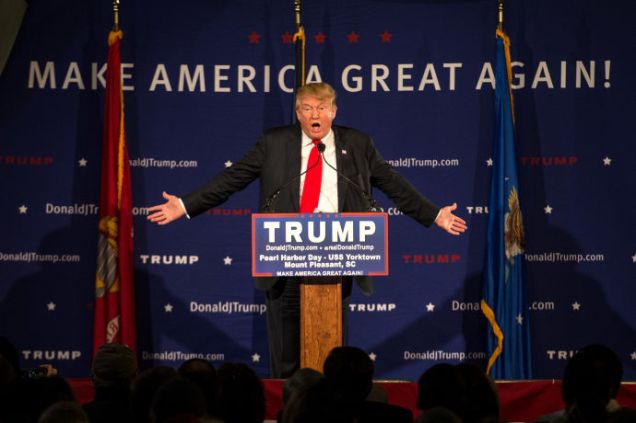
Donald Trump Hat - Make America Great Again

From next week, I’ll be in Texas and Ireland to celebrate Christmas and the New Year respectively. Blog updates will continue, but at a reduced frequency until normal service resumes in January.

Many thanks to everyone for reading, sharing, commenting, debating and contributing.

Agree with this article? Violently disagree? Scroll down to leave a comment.

Follow Semi-Partisan Politics on TwitterFacebook and Medium.

The Left’s Donald Trump Syndrome Is Worse Than The Man Himself

Donald Trump - Muslims - Islamophobia

Donald Trump’s derisive comments about London and his proposal to ban all Muslims from entering the United States are idiotic and hugely illiberal. But the self-righteous backlash from parts of the Left is just as bad

American politicians – especially wannabe presidential candidates – insult London at their peril.

Mitt Romney found that out the hard way back in 2012, after his off-the-cuff comments about the London Olympic Games preparations earned the ire of the British public and a personal rebuke from David Cameron.

But current Republican presidential candidate (and, depressingly, frontrunner) Donald Trump managed to make Mitt Romney’s gaffe-prone diplomacy look like a veritable charm offensive with a two-pronged effort to capture the news cycle which saw Trump first suggest that the US implement a complete ban on Muslims entering the country, and then insult America’s closest ally by suggesting that whole swathes of London are so full of Islamist extremists that the police do not enter them for fear of their lives.

From the New York Times:

Donald J. Trump called on Monday for the United States to bar all Muslims from entering the country until the nation’s leaders can “figure out what is going on” after the terrorist attacks in San Bernardino, Calif., an extraordinary escalation of rhetoric aimed at voters’ fears about members of the Islamic faith.

A prohibition of Muslims – an unprecedented proposal by a leading American presidential candidate, and an idea more typically associated with hate groups – reflects a progression of mistrust that is rooted in ideology as much as politics.

Mr. Trump, who in September declared “I love the Muslims,” turned sharply against them after the Paris terrorist attacks, calling for a database to track Muslims in America and repeating discredited rumors that thousands of Muslims celebrated in New Jersey on 9/11. His poll numbers rose largely as a result, until a setback in Iowa on Monday morning. Hours later Mr. Trump called for the ban, fitting his pattern of making stunning comments when his lead in the Republican presidential field appears in jeopardy.

And the Guardian:

In a bid to justify his controversial comments that Muslims should be barred from entering the US, Trump had said parts of London and Paris were so “radicalised” – seemingly a reference to Islamist extremism being rife – that police officers were scared.

“Paris is no longer the safe city it was. They have sections in Paris that are radicalised, where the police refuse to go there. They’re petrified. The police refuse to go in there,” he told MSNBC, refusing to name specific neighbourhoods in the city.

He added: “We have places in London and other places that are so radicalised that the police are afraid for their own lives. We have to be very smart and very vigilant.”

It really isn’t necessary to counter either Donald Trump’s back-of-a-napkin immigration policy, his supremely un-American idea for a religious test in order to enter the United States or his uninformed comments about the city which some years ago overtook New York and Paris as the world capital for finance and tourism respectively. We’ll take it as a given that every thinking person can recognise these comments as the unfiltered bilge that they are.

Of far more concern are the growing hordes of MPs, commentators and members of the public calling for Donald Trump to be banned from ever entering the UK on the grounds of “hate speech”.

The inevitable online petition is already circulating and picking up names, reports the Huffington Post:

An online petition calls on U.K. Home Secretary Theresa May to bar the Republican presidential frontrunner from entering the country for allegedly violating the nation’s hate-speech laws. 

If it receives 100,000 signatures, the petition could be taken up for debate in the House of Commons, according to The Independent. 

The petition launched by Scottish resident and longtime Trump critic Suzanne Kelly blasts Trump for “unrepentant hate speech and unacceptable behavior” that “foments racial, religious and nationalistic intolerance which should not be welcome in the U.K.”

While Sunder Katwala sets out the illiberal case over at British Future:

It is important that the UK Government makes very clear that this extreme view is rejected and repudiated in the strongest possible terms.

The UK Home Office has set out clear guidelines which have led to the exclusion of preachers of hate from the UK if their presence here would not be conducive to the public good. Theresa May has excluded extreme Islamists on these grounds, and also kept out those who have fanned extreme anti-Muslim prejudice, such as the bloggers Pamela Geller and Robert Spencer. Trump’s statements are more extreme than theirs.

Unless and until Trump were to retract these highly prejudiced comments, there is a good case for making clear that he would be refused entry to the UK by the Home Secretary.

No. It is only “important” that the UK government does anything at all about this wretched circus act if you take the view that it is the proper role of government to be a watchful, overprotective parent who oversees everything that we do, say or hear, supposedly for our own good.

It’s only “important” if you take such a dim view of the intelligence of the British people that you believe – like a Victorian prude – that the health and morals of the nation are somehow at stake, and that general public might be inspired to commit racist or Islamophobic deeds either at the mere sound of Trump’s words or at the sight of his ridiculous hairdo.

Such a view is as nonsensical as it is insulting. Why on earth should the UK government care what a reality TV star turned presidential candidate says, and why can’t the British people be trusted to hear what he has to say and judge the merits (or the idiocy) for themselves? Besides, either Trump’s candidacy remains a complete joke, in which case illiberal UK government censorship would be a massive overreaction, or he is a viable contender – in which case the UK needs to remain neutral while our closest ally chooses their next leader.

Donald Trump didn’t cover himself in any glory with his latest comments on Islam and London. But who expected anything more of him? For all his natural gift as a TV personality, Trump is a blowhard, anti-intellectual populist of the worst sort – a man who is fundamentally incurious but convinced that he has the right answer for everything (usually involving “winning” a trade war with China).

And to be sure, Trump’s latest remarks disqualify him as a serious candidate for the presidency, if the ten previous outrage-baiting comments had not already done so. In many ways, this is Trump’s “choosing Sarah Palin” moment – the action which finally doomed his candidacy, much like John McCain’s desperate and opportunistic pick for a vice presidential candidate back in 2008.

But the Left supposedly hold themselves to a higher standard. And yet in response to Trump’s inflammatory words we have seen such a parade of ostentatious outrage and cheap virtue-signalling that one could almost be forgiven for forgetting that the Left are in no small part responsible for the rise of Trump in the first place, as Douglas Murray devastatingly explains in The Spectator:

When the political left refuses to identify where Islamic terrorism comes from, what drives it or what it can even be called, it leaves the ground wholly open for anyone else to do or say anything they want.  Far from being blunt tools or broad brushstrokes, referring to ‘Islamic extremism’ or ‘Islamism’ makes an obvious and conscious effort to put down a delineating line between non-extreme Muslims and the extremists from their faith.  Yet many Muslim organisations, among others, reject this.

[..] But what people seem slow to realise is that suppressing legitimate concerns and decent discussion inevitably leads to people addressing the same things indecently.  We can thank the American left for the creation of Donald Trump and we can thank them for his comments last night.  For years the left made the cost of entering this discussion too high, so too few people were left willing to discuss the finer points of immigration, asylum or counter-terrorism policy and eventually the only release valve for peoples’ legitimate concerns is someone saying – wrongly in my view – ‘keep them all out.’

Yes, of course Donald Trump’s comments are reprehensible. But the answer is not to parade our outrage on social media, as though engaging in a competition to be more publicly offended by Trump’s words is a meaningful substitute for real activism. And nor is the answer to ban Donald Trump from coming to these shores, thus denying Boris Johnson and thousands of eager Londoners the opportunity to prove him wrong about our city – and Trump himself from receiving this much needed education.

Outrage on Twitter is nothing more than empty virtue-signalling, whilst indignant calls for Trump to be banned from entering the UK are every bit as illiberal as Trump’s own proposal to set a religious test for entry into the United States.

Donald Trump’s opponents believe that they are better than the business mogul, reality TV star and presidential candidate. If so – if they are all simply better, more enlightened people, a belief they make little effort to hide – they have a funny way of showing it.

Donald Trump - Make America Great Again

Agree with this article? Violently disagree? Scroll down to leave a comment.

Follow Semi-Partisan Politics on TwitterFacebook and Medium.