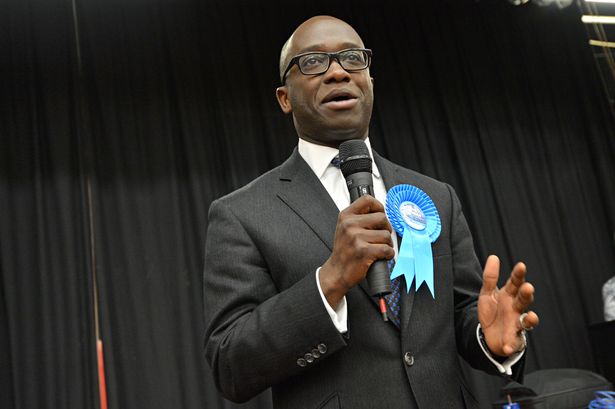
Sam Gyimah’s Great Conservative Roadshow

Sam Gyimah - Universities Minister - Conservative Party - Tories

It’s great that Universities Minister Sam Gyimah is embarking on a tour of university campuses to spread and defend the Conservative message in traditionally hostile territory. Now we just need the government to come up with a conservative platform that’s actually worth defending

Sam Gyimah appears to be on manoeuvres. Writing in the Times today, the Minister for Higher Education announces his intention to take part in a tour of higher education facilities and campuses, engaging in a dialogue with students, academics and administrators.

Gyimah writes:

In my new role as universities and science minister, I will continue to visit institutions across the country to meet with vice-chancellors, lecturers and researchers, but also, crucially, to speak directly to students. They are a key stakeholder in the success of our higher education sector – for universities to thrive, their students must flourish.

So many young people feel disengaged from politics and, although some students and I might not always agree, I want them to have a voice and be heard in the corridors of power. I’d like to be thought of as minister for students as much as minister for universities.

Politics should be a dialogue, not a monologue, so I’m looking forward to discussing tuition fees, safe-spaces, access to higher education and our potential post-Brexit, among many other topics, in a robust and honest fashion.

Displaying more gumption than most of Theresa May’s uninspiring Cabinet put together, Gyimah continues:

We must also get out there, outside Westminster, into what used to be ‘no-go’ areas and defend our record whilst showing how we want to do better. We must continue to call out Jeremy Corbyn and prevent him monopolising the student space.

I don’t have all the answers, but I am going into this tour in good faith, ready to discuss the challenges and opportunities in our higher education system. Together, with all those who work tirelessly in it, we will ensure our universities remain the envy of the world filled with students who have the best possible chance of success.

This should be interesting to watch. On the one hand, it is great that we finally have a Tory government minister seemingly willing to mount a bold and unapologetic defence of conservatism before a hostile audience – that much is excellent. But on the other hand, the continuing drift and incoherence of Theresa May’s government makes one wonder what Sam Gyimah can possibly say at these events, what stirring national plan of action or highlights reel of political accomplishments he can present that might make any significant difference to the perception of conservatism among young people.

It’s all very well having the Higher Education Minister inveigh against safe space culture in front of an audience of baying students (though to be honest the time to do that was five or ten years ago, not today) but it counts for relatively little when the government shows no sign of rolling back draconian anti-free speech laws which see people visited by the police in the middle of the night and carted off to custody for saying or writing “offensive” things on social media. What message could be drawn from a pro-Tory stump speech, in this context? “Stop creating your own safe spaces on campus, the government is already hard at work creating a national safe space on your behalf, backed by the awesome power of the law”? Hardly a ringing defence of liberal values.

These qualms aside, one wonders why Gyimah actually volunteered for this thankless mission at all, attempting to preach free speech and liberal enlightenment values to an academic world which increasingly rejects any such notion. No Tory government minister, however charismatic, stands any great chance of reversing the antipathy of many students toward conservatism – it will take determined peers and influencers their own age to do that. So why put oneself through the ordeal of being heckled and used as a foil for leftist establishment posturing when there is so little to be gained?

Perhaps it is expecting too much, but is this a glimmer of a new, muscular and unapologetic conservatism which has been so conspicuously missing under David Cameron and Theresa May? Is it the beginning of a slow motion, unofficial audition for the Tory leadership? And dare one hope that this might be a good thing? True, Sam Gyimah espoused the same kind of bland, reflexive, unthinking pro-EU stance in 2016 as most others within the parliamentary party, but the Tory bench is hardly brimming with sufficient talent that having been on the wrong side of the EU referendum can count as an automatic disqualifier. With the rising profile of Jacob Rees-Mogg and Moggmentum the only other sign that the Tories have an ideological pulse, beggars can’t be choosers.

When it comes to conservative policymaking, this blog has long argued that rather than running off in a million different directions and formulating a bunch of panicked quick fixes to the various slow-burning crises which ail Britain, a more analytical, holistic approach is required – a methodical study of how these national challenges and opportunities are interlinked so as to arrive at a suite of mutually-reinforcing policies which address them as a whole. But when it comes to conservative personalities, the same rule does not necessarily apply.

While it is true that there is much intellectual work to be done behind the scenes, it is also true that British conservatism desperately needs fresh new faces. For reasons both deserved and undeserved, Theresa May’s government has the pallor of death about it, pale and emaciated despite the recent reshuffle. And while throwing a hundred half-cooked policies at the wall to see what sticks (as Tory regeneration efforts risk degenerating into) is a suboptimal approach, throwing a handful of ambitious new Tory MPs at a crowd of sceptical students might be just the kind of proving ground the party needs as it searches for a new generation of leaders.

Let’s watch this space and give Sam Gyimah the opportunity to fill the unforgiving minute with sixty seconds’ worth of conservative apologetics. It can’t do any harm, and maybe in the process of saving student souls from the clutches of Corbyn the lost Tories will finally begin to rediscover themselves.

Conservative Party Logo - Torch Liberty - Tree

Support Semi-Partisan Politics with a one-time or recurring donation:

Agree with this article? Violently disagree? Scroll down to leave a comment.

Follow Semi-Partisan Politics on TwitterFacebook and Medium.

The False Allure Of A Second EU Referendum

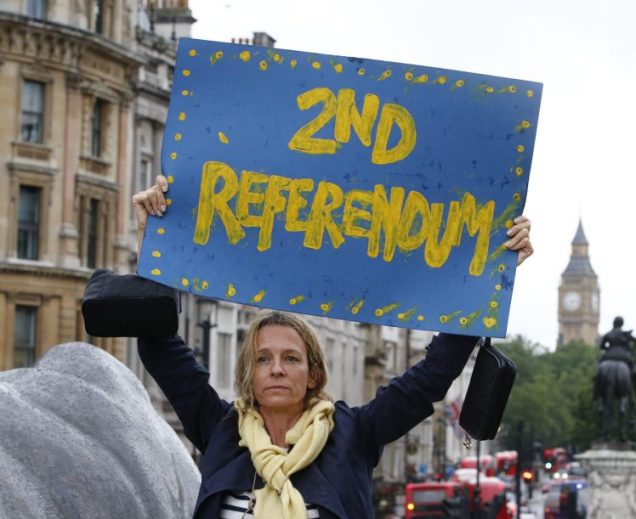
Anti Brexit Pro EU protester holding Second Referendum banner

Beguiled by the irresistible prospect of overturning Brexit before it even happens, many Remainers are even more oblivious to the consequences of forcing and winning a second referendum than Brexiteers were to the fallout from victory in the first

What would actually happen in the event that there was a second EU referendum? Unforgiving timescales mean that the prospect of a second vote may be more remote than ever before, despite much salivating on the Left and in the media, but the question is still worth asking because it reveals a pathology within the Remain side which not only mirrors but now exceeds that of the most unlettered Brexit Ultras.

Whether any future second referendum offered voters a choice between accepting the government’s secession deal or remaining in the EU on current terms, or if it posed a choice between the government deal and having to apply for re-entry on likely punitive terms, the argument put forward by establishment Remainers like Chukka Umunna is that “new facts” which “we could not know at the time” would inevitably swing the vote the other way.

Why do they think this? Because the intellectual leaders (though such a term may be too grand) of the Remain movement still refuse – either on principle or through basic incompetence – to empathise with the Brexit case. They live in a world of tenuous economic forecasts and financial charts designed to portray immediate economic ruin but refuse to acknowledge, let alone properly engage with, the democratic or self-deterministic case for leaving the European Union.

Even now, the idea that someone might reasonably vote for a cause which does not personally line their pockets or send perks and opportunities flowing their way is unfathomable to many Remainers (though of course there are Remainers of good conscience who do “get” the democratic argument while disagreeing with it). So on the whole, Remainers are no better equipped to fight any putative Referendum Take Two than they were the first time round.

But it gets worse. At the same time as they failed to update their overall case for Remain (for example by finally producing a forthright and unassailable case for European political union as a valid or exclusive solution to the problems we face), there has also metastasised within the Remain camp a very ugly and shrill Cultural Remain narrative which is openly hostile to Brexiteers as people, not just because of their vote.

This much is evident in that the cultural figureheads of Brexit are people like AC Grayling, Ian Dunt, Gina Miller and other polarising types who make no visible effort to see the argument from the other side (the first rule of persuasion), as to thus engage with “evil” would offend their delicate sensibilities.

Rather than outreach and understanding, there has been a constant hum of outraged, self-entitled contempt emanating from Camp Remain, and a seething hatred of Brexit voters which does not even attempt to mask itself. This is most clearly shown in the way that some Remainers publicly console one another at the prospect of elderly Leave voters dying, while others actively salivate at the prospect:

https://twitter.com/MikeH_PR/status/929634101090504704

(The “wall of gammon” is a derogatory reference to white men of middle age and upwards, for whose deaths it is now perfectly acceptable to openly pine on social media and be blessed by the imprimatur of a Twitter verified tick).

So when the starting gun is fired on any second EU referendum, the pent-up cultural anger from this angry subgroup of Remainers will produce a banshee-type wail of fury and hatred toward the 52% that all but guarantees they alienate more swing voters than they are able to win over.

But we must also consider the dynamics of the public backlash. I wrote immediately following the June 2016 referendum how unprepared I was for the extent of the anti-Brexit backlash – partly because I fully expected the Leave side to lose the referendum and so had not mentally prepared for victory, but also because Brexiteers were so used to being the instigators of populist revolt that we neither saw the Remain backlash coming nor had any experience in defending against such a wave.

What should have been obvious to us then is that given the Remain side consists of the vast majority of politicians, academia and the cultural scene, their capacity to generate and sustain a backlash (or huge public tantrum) was always infinitely greater than a disorganised, squabbling band of Brexiteers who had wanting to leave the EU (in one form or another) in common with one another, but little else.

If Nigel Farage and UKIP were able to create a lot of noise and help dictate the UK political agenda in the years leading up to the referendum – and do so on a shoestring budget while riven with factional infighting, dogged by unforced errors and PR disasters – how much louder and more persuasive would the screams of self-entitled outrage be when they emanated from nearly every artist, celebrity, teacher, professor, public sector worker and a phalanx of journalists and commentators? Most Brexiteers, myself included, completely underestimated that part.

But if the establishment’s ongoing howl of outrage about Brexit is deafening, it would be nothing at all compared to the reaction of Brexiteers to having their decision called into question and the vote re-run in the hopes of getting a different answer. Rightly or wrongly, the resulting social and political conflagration would make AC Grayling’s Twitter feed look like a mellifluous, level-headed stream of soothing wisdom.

I say “rightly or wrongly” because I have no personal hostility toward a second referendum on principle, only that we only seem to be having this discussion because the Remain side lost. Ideally, guided by a written constitution rather than machinations behind closed doors, the terms EU referendum and the consequences of each result would have been more carefully considered, and the potential need for public ratification of any secession deal built into the process. But this did not happen.

On the contrary, the expensive pro-EU government propaganda inflicted on every British household made it absolutely plain that the UK government would implement whatever result was decided in the first and only referendum, despite their strong preference for keeping the status quo. And given the uncharitable way with which they would doubtless be dealing with Leave voters had the result gone the other way, their case is not a tremendously strong one, logically or morally.

Remainers should, however, learn from the harsh experience of Leave voters following our unexpected victory in 2016. Back then, Brexiteers were so keen on winning a “Leave” vote that we didn’t think through the extent of cultural opposition we would face between the referendum and secession day. And now many Remainers are so fixated on overturning Brexit they can’t think past the daydream of a “Remain” vote in a Referendum Take Two.

We hear much wailing about how Brexit has supposedly “divided our country”. This is mostly nonsense – the country was always divided over the EU, it’s just that the side who were used to having their way for 40 years suddenly find themselves unable to call all the shots, often for the first time in their living memory. The balance of divisiveness now tilts the other way.

But the divisiveness of a second EU referendum would make the first seem like good-natured banter between best friends – and having forced a replay, the Remain side would emerge neither victorious nor with their reputation intact. They would be responsible, in the worst case, for a rending of our social and democratic fabric which would likely prove impossible to repair. And even in the very best case scenario, the price of overturning the referendum would be millions of British citizens, half the country, effectively giving up on democracy and returning to a state of resigned indifference, a toxic and self-fulfilling belief that they have neither the right nor the ability to influence national events according to their values.

Remainers, who often consider themselves enlightened and progressive, would ordinarily recoil in horror from any course of action which threatened such toxic side-effects. They just can’t think clearly right now because the (unattainable) prize of scrapping Brexit and rendering the past two years little more than a centrist’s bad dream is so desperately shiny and alluring.

Protester placard at parliament - Europe We Demand A Vote - Second EU referendum - Remainers

Support Semi-Partisan Politics with a one-time or recurring donation:

Agree with this article? Violently disagree? Scroll down to leave a comment.

Follow Semi-Partisan Politics on TwitterFacebook and Medium.

On Citizenship

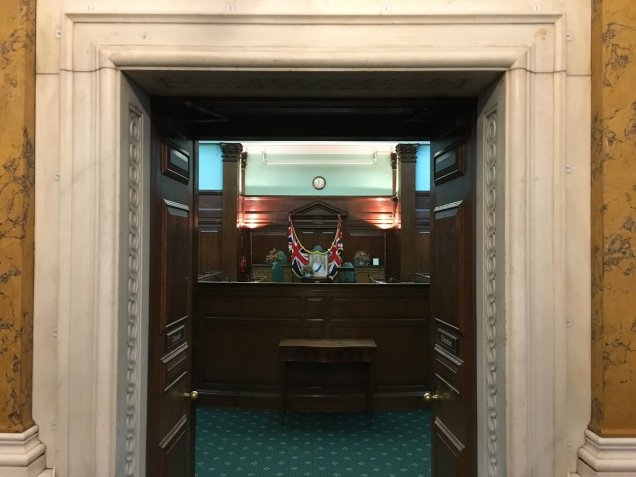
Camden Town Hall council chamber doorway - Citizenship ceremony - British UK flags and Queen Elizabeth portrait

The unexpectedly moving experience of watching forty strangers become fellow citizens and compatriots at a UK citizenship ceremony

“Citizenship is more than an individual exchange of freedoms for rights; it is also membership in a body politic, a nation, and a community”
— Melissa Harris-Perry

“There can be no daily democracy without daily citizenship”
— Ralph Nader

On Wednesday this week I had the privilege of attending a citizenship ceremony at Camden Town Hall, as my American wife finally took the oaths and became a British citizen.

This journey has been quite the odyssey for us. Jenny first came to this country on a short study abroad programme, staying for only a matter of months. She returned a couple of years later to study for her postgraduate degree, which is when we met, and after marrying we moved back to London (she on a spousal visa) and have been living here together since 2012.

The subsequent steps – applying for indefinite leave to remain, studying for and taking the Life in the UK test, providing biometric data more often than one would think necessary given the unchanging nature of one’s fingerprints and of course forking over large sums of money to the Home Office at regular intervals – were frequently stressful and time consuming, but there was never a question that this was a step we were going to take.

Britain is home for Jenny just as much as is the United States of America. She may have stubbornly refused to learn the 24-hour clock, use Celsius when talking about the weather or guzzle tea ten times a day along with everyone else at her office, but she is indisputably a proud Brit and a Londoner. She understands our cultural quirks, appreciates our history, loves the natural beauty of our countryside and maintains a richer social life and a wider network of British friends than I have ever cobbled together for myself.

Thus, naturalisation was simply a case of formalising on paper a transformation which had already taken place in her heart and mind. Jenny was already British in pectore; we were simply waiting for the legal side of things to catch up with reality. And so it was that I found myself sitting in the gallery of the council chamber at Camden Town Hall in King’s Cross, witnessing my wife and a diverse group of strangers complete the long and arduous process to become something which (through accident of birth) I have been fortunate to take for granted my entire life.

It was a genuine honour to be present as over 40 people from all backgrounds, races, religions and countries of birth solemnly affirmed their commitment to our United Kingdom. Many people are content to live in this country, building lives here, contributing and receiving back, without making this gesture of commitment. But I believe that it is very important, and admire those who do so.

Citizenship is more than a basket of rights, privileges and perks. It is also a binding commitment to the society in which we live. Choosing to naturalise means a willingness to undertake obligations as well as demand one’s due. Becoming a citizen is a declaration that one is bound to one’s fellow citizens by something more than temporary convenience or the accidental byproduct of an overseas work assignment or relationship.

This bond is hard to describe or put down in words, which is perhaps why so many self-declared “citizens of the world” – people who consider themselves to have transcended national alignment and who flit from place to place without ever making a binding commitment to anywhere they set foot – don’t understand why it matters.

But if you have built a life in Britain over the course of years or even decades, why would one not want to formalise that connection? Yes it costs money, and yes the Home Office does its damnedest to make the process as bureaucratic, expensive, frustrating and opaque as possible, often actively throwing barriers in the way of people who desperately want citizenship. But if one has the means and the opportunity, why not take the pledge and acquire the passport? Failing to do so is the civic version of cohabiting with a partner but never marrying, one foot always out the door, one eye always casting around for something better.

If I was a non-citizen living in Britain, I would take citizenship in a heartbeat. In fact, as a natural born citizen of this country I was almost envious that the immigrants who were naturalised today in King’s Cross were able to solemnly mark the event. Those of us born here often take our citizenship for granted, but these immigrants strove and sacrificed to attain their status.

With the ongoing debates around Brexit, I encounter all manner of arguments from people who clearly don’t understand the first thing about what citizenship entails or represents. For example, many are genuinely outraged that EU citizens could not vote in the 2016 referendum. I find it to be astonishing that people who live here but are unwilling to share the bond of citizenship with me seriously believe that they should still have the right to help determine the future of my country.

At this point I inevitably hear outraged spluttering along the lines of “I pay my taxes / serve in Our Blessed NHS / help employ local people, so why shouldn’t I have a say?” But this only highlights the transactional view of citizenship that many now hold, with paying taxes and claiming benefits the only relationship one might possibly have with a country.

And to be fair this transactional view of citizenship is also encouraged by the UK government, which rather than pursuing an immigration policy optimised for economic growth, social stability or national security instead blindly chases an arbitrary and unattainably low net migration number. When the state makes clear its view of immigrants as a problem to be mitigated and prospective citizens as purely a bureaucratic burden to be processed it is difficult to demand greater fealty or civic engagement from immigrants themselves.

Yet citizenship still matters, despite its somewhat tarnished image. Only citizens are able to participate fully in our civic life – voting, running for office, serving on a jury. If one is unwilling to undertake these commitments 99% of the time, as long-term EU residents who choose not to take citizenship are essentially declaring, you can’t object when you are then prohibited for participating in the one very specific event (voting in the EU referendum) in which you have a direct interest. That kind of cafeteria civics would represent a one-way flow of benefits from the state to the individual and undermine the reciprocity needed for society to function.

The Brexit debate has highlighted just how degraded our conception of citizenship has become. With reduced and increasingly ineffectual armed forces, only a very limited opportunity for national service (the National Citizen Service being one of the few entirely positive policies enacted by David Cameron) and our exquisite embarrassment about any display of patriotism, it is really no wonder that we have come to see citizenship as just a bunch of perks.

As I wrote back in September last year:

This very transactional approach has frayed the contract or bond between citizen/resident and the state. Of course, people still expect the state to protect them from foreign foes, guard against domestic security threats, provide healthcare, offer a welfare safety net and distribute various domestic and EU services. But even as they make these demands they offer rapidly diminishing loyalty to the state in which they live. People are increasingly insatiable for the benefits while being less and less willing to accept the responsibility.

I am sure that some of those who naturalised in the citizenship ceremony today did so for purely practical or transactional reasons. But I hope that even they will look back on today with pride and now feel a deeper connection to the country they call home.

Ultimately there is nothing magical about naturalisation. The certificate does not hold any special magical powers. It is not a measure of personal worth, and of course many UK residents who are non-citizens on paper are far better citizens in practice than many of us who are natural born. Naturalisation is just one indicator, albeit a very important one, of an important responsibility solemnly accepted.

Of course, none of this will be the case in perpetuity. The nation state is not forever, and in a century or two, civics and geopolitics will doubtless look very different. But for now, the nation state remains the best guarantor of freedom and incubator of prosperity that mankind has yet devised, and attachment to the nation state has been the means of securing these blessings for an individual. Wishing for its premature demise is foolish.

To those citizens of the world, outraged by Brexit, who hold their EU citizenship more dear than their British citizenship, I would simply point out that any objective, dispassionate analysis shows us that the European Union is not the only (nor best) vehicle for international cooperation, its status as the natural successor to the nation state is far from certain and it will never possess the essential spirit of democracy until there is a European demos – a body of citizens willing to take the oath that my wife and forty others willingly gave to the United Kingdom.

Watching these people – as diverse as one would imagine forty people randomly plucked from the streets of Camden to be – take the oaths of allegiance was to witness them transform from being strangers and fellow immigrants to being compatriots. It was nearly as emotional for me, sitting perched in the gallery, as it clearly was for many of them.

And if only more of us knew the journey involved and the sacrifices made by these people so that they might share the same rights and responsibilities that we enjoy as British citizens, we would not be so cavalier about our own citizenship and all that it represents.

Camden Town Hall council chamber - view from public gallery - Citizenship ceremony

Oath of allegiance - British UK Citizenship ceremony

Support Semi-Partisan Politics with a one-time or recurring donation:

Agree with this article? Violently disagree? Scroll down to leave a comment.

Follow Semi-Partisan Politics on TwitterFacebook and Medium.

Are Technocrats To Blame For The Rise Of The Know-Nothing Celebrity Politician?

Oprah Winfrey - Golden Globes acceptance speech - MeToo - President Oprah

When unelected technocrats increasingly set policy and carry out the day-to-day business of governance we should not be surprised that electoral politics, castrated and less consequential than ever before, is becoming a circus freak show

Michael Brendan Dougherty has a new piece in the National Review which so succinctly captures the state of Western democratic politics that busy as I am this week, I feel the immediate need to blog a response/reaction to it.

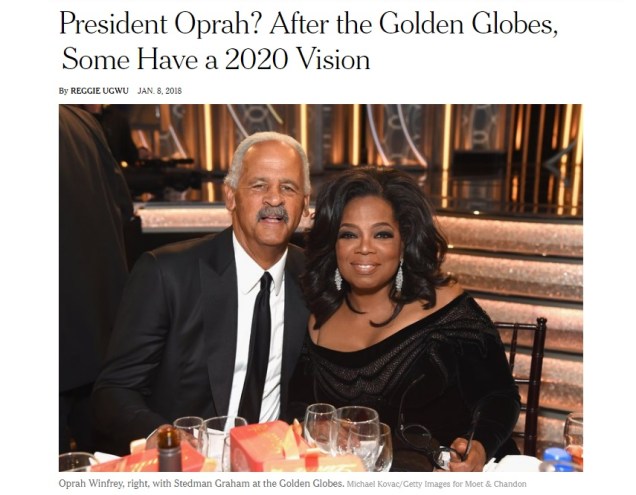
Dougherty’s jumping off point is the sudden, feverish interest among assorted leftists and Democrats for television personality Oprah Winfrey (yes…) to run for president against Donald Trump in 2020, driven almost entirely by a speech Winfrey gave about the #MeToo movement while picking up an award at last night’s Golden Globes.

You might think it a little hypocritical for people who have spent the past two years bashing Donald Trump as an inexperienced dilettante in way over his head, a reality TV blowhard with no credentials and no right to occupy the office he holds, to immediately embrace a similar figure from their own side of the political divide – and you would be correct in thinking so. But the mere fact that voters are being drawn to these celebrity candidates is itself noteworthy, and crucially, Dougherty places the blame not with the voters but with the bland, interchangeable technocrats of the political class who offer those voters no compelling alternative.

Dougherty writes:

The average voter is going to be blamed for this. The great disdain of the educated class will fall on the Uhmurkans who have been hypnotized by their televisions. Maybe some of that’s right. But I blame the wonks. It was the wonks who, unawares, made the celebrity president not just desirable but logically necessary.

The wonk’s role is well-fitted to the centrist political ideal in the post–Cold War West. For them, government is most highly admirable when it is totally denuded of questions of value or morality (these having obvious and uncontroversial answers), and reduced to a purely technical exercise. The politician working with the wonk finds that his job is reconciling the public with what’s good for them. And this fits the machinery of the executive branch, which is filled with hundreds of thousands of civil servants, overseen by a much smaller retinue of political appointees almost all chosen from within the governing class of the country. Where this model of government is most advanced — in Europe — policy questions are routinely taken away from the passions of democratic peoples, and quarantined for expert management.

Taken together, these trends are more or less the abolition of traditional democratic politics. And so there is little use for the traditional politician, a person of judgment and charisma who represents the community from which he or she emerges, using his own wisdom in reconciling the diverse interests and needs of his nation and constituency.

You couldn’t write a better paragraph describing the impact of Westminster centrism and EU integration on our democracy, even though Dougherty is talking in his essay about American politics as much as European. On both sides of the Atlantic, political leaders have behaved as though we are living in the End of History even when Francis Fukuyama’s prediction has long since been disproven through bitter experience. Elections, while often bitter and hard fought, have generally offered little meaningful choice when it comes to big questions about how the nation can best order society and relate to the world. Even when political rhetoric has been heated and the candidates have seemed very different, the economic system and world order they ultimately support has tended to be the same, an embrace of the status quo.

Michael Lind also wrote at length in 2017 about the severing of the compact between the ruling class and the governed, with those in the political, professional and creative classes increasingly feeling no bond of kinship with or obligation to others in society, those they look down upon for holding “incorrect” or “oppressive views” (which can often be taken to mean “that which was mainstream twenty years ago”. And many politicians, nearly all drawn from this class (or inducted into it soon after election) do indeed spend their time explaining and defending the status quo to the citizens they nominally represent, rather than striving to change the status quo on their behalf.

I noted the same phenomenon only last month, in the context of Brexit:

Look at the big issues facing the West and the world in general in 2017 – global migration flows, Islamist terror, globalisation, outsourcing, automation and more – and there is not one of these complex problems which we as a country have failed to comprehensively sweep under the rug or otherwise avoid meeting the challenge.

Even on those occasions when the people have recognised burning problems and the need for bold new solutions, public opinion (such as on Brexit and immigration) has been repeatedly slapped down over the years by a cohort of politicians who think it is their job to explain and defend the current status quo to the citizenry rather than change the status quo according to the demands of the citizenry.

As I have also written, this managerialist technocratic approach to government, with the wonks in the driving seat and politicians as mere interlocutors to the public can potentially be justifiable when things are in steady-state, when times are good, society and the economy stable and when no large threats loom on the horizon. However, rather than a benevolent steady-state we instead live in interesting times, with numerous opportunities and threats ranged around us. This is the discontinuity about which I have been writing so much of late.

In such periods of discontinuity politicians must not remain in the back seat, because it then falls to unelected civil servants and powerful economic agents to dictate the nature and scope of change on their own terms and to their own advantage. For two decades now, globalisation, automation, outsourcing and immigration have changed the structure of our economies and the very meaning of work, and yet there has been no meaningful political debate about these topics until public dissatisfaction reached such a level that the debate could no longer be suppressed.

Nowhere has the debate been suppressed more effectively than on the subject of immigration, and nobody has done more to suppress that debate (thus pushing it toward the unpleasant fringes) than the Labour Party. On immigration, Labour and left-wing politicians very much see themselves as interlocutors rather than elected representatives. When people (including many of their own constituents) raise concerns about the dramatic levels of net migration since 2004, left-wing politicians and commentators see it as their job to explain why unprecedentedly high immigration is actually a good thing rather than seriously engage with voter concerns and amend policy based on that feedback.

When politicians refuse to take voters at their word and assume that their qualms about immigration are really about something else, this is not only patronising but ultimately counterproductive. One of Labour’s favourite fallbacks when it comes to immigration concerns is to pivot to worker exploitation. They think that by instituting new laws to crack down on hiring workers for less than minimum wage (as though it were not already illegal) the public will be placated because foreign workers will no longer be able to undercut local labour. Another favoured technique is to talk about infrastructure, a glib pseudo-concession to the reality that roads do not automatically widen nor hospitals acquire additional beds with every new migrant who lands at Heathrow. Of course, if they really cared about matching infrastructure to population increases caused by immigration they would have done so when they had the opportunity, so this is yet another evasion.

And even now that this tactic of ignoring voter sentiment and patronisingly explaining to voters why they are wrong to be concerned about mass immigration has spectacularly blown up in their faces, still the key voices of the Left can imagine no other way of functioning. Accepting that voters may have a point and amending their policies to reflect the democratic mood doesn’t occur to them. Instead we just see more earnest think pieces about how voters need to be better taught the benefits of immigration.

But immigration is only the most prominent policy area where we see this behaviour from politicians. The same haughty dismissal of public opinion occurs in nearly every sphere. As another example, both Labour and the Conservatives have long since coalesced around what is basically a social democratic economic worldview where profits were tolerated (though rarely celebrated) because the resulting taxes on those profits fund the massive, omnipresent public sector. This locked old-school socialists and more free-market conservatives out of the conversation until Ed Miliband’s failure to win the 2015 election saw Jeremy Corbyn bust open the consensus on the Left and take Labour in a more ideological direction. Theresa May still stubbornly refuses to come to an accommodation of her own with the libertarian right of her party, and this obstinacy and unwillingness to allow alternative views to influence policy is one of many reasons why the Conservative government is idling in neutral, doing nothing of value for the country and waiting for somebody to put it out of its misery.

So given the fact that our politicians (at least the ones who get ahead) tend to be dismal functionaries rather than inspired leaders with disruptive new ideas to meet the period of discontinuity in which we find ourselves, it is perhaps less surprising that many voters gravitate toward someone, anyone with charisma and a willingness to do something more than patiently explain to voters why all of the things they dislike are actually really good for them.

Dougherty writes:

Having eliminated the need for real probity in politicians, why shouldn’t the parties turn to celebrities as their political leaders? The celebrity will do the job of winning elections and riling up the public, but the machinery of government will go on, almost undisturbed.

This may be cathartic for some voters, but it has not taken long for the establishment blob to get the measure of most populist uprisings and swiftly tame them in all but rhetoric. In France for example, Emmanuel Macron discovered that by jumping around on stage and shouting a lot he could amass huge numbers of disillusioned voters and easily see off the threat from Marie Le Pen’s Front National, even though Macron is himself little more than a young face and a neat hairdo atop the same policies which so irritate the public and have increasingly proven inadequate to our present challenges.

And so it is too in America. Dougherty writes:

We can see how the permanent class of Republicans in government almost immediately tamed the Trump presidency. Instead of the populist presidency Trump promised, Trump is ushering in much of the pre-existing “moderate” Republican agenda of corporate tax cuts and economic deregulation. The political class and the media allied to it were able to expunge most of the populist figures from the administration. Soon, they might even succeed in expunging Trump, too.

We are thus heading toward a place where the theatre of democracy is almost entirely divorced from the process of governing. The connection between national elections and meaningful policy reform is becoming about as tenuous as the link between scripted reality TV and actual reality – in other words, almost nonexistent.

In this increasingly dystopian world, all our favourite celebrities can duke it out to become nominal presidents or prime ministers while the technocratic wonks pay no heed to the sideshow and quietly continue to go about implementing their preferred policies relatively unmolested.

But the blob may no more have the national interest at heart than the populist celebrity politician. Both are prone to self-interest, and while the celebrity politician’s interest likely lies in self-aggrandisement, the blob has often proven itself to be more interested in perpetuating policies which benefit its constituent classes in the short to medium term than strategically positioning the nation(s) they effectively govern to face the challenges and reap the rewards of the future.

And the blob is especially dangerous right now, having been moved to anger by unprecedented popular rejection in 2016. The disruptors may have thought that they could summon a good rage or indulge in a lavish pity party when they wanted, but their antics have proven to be nothing compared to the centrist persecution complex the displaced establishment has conjured up in response.

Neither side does their country any favours. The populists – whose figureheads are Donald Trump in America and the Hard Brexit Ultras in Britain – have by now proven their unseriousness and detachment from reality, but the blob still seems to be of the opinion that things can go back to the way they were once what they see as these temporary aberrations are over and the populist rebellions put down.

Patrick Deneen put it best in the Spectator this week, remarking that we now have “a liberal elite without a populace, and a populace without a moderating elite.” And so we are left to pick our poison – on the one hand an arrogant technocratic class which even now shows no humility or willingness to change its ways, and on the other a succession of telegenic performers who are great at channelling public anger but totally lacking the knowledge or leadership ability to turn anger into smart policy.

Not an enviable choice.

donald-trump-anxiety-therapy

Support Semi-Partisan Politics with a one-time or recurring donation:

Agree with this article? Violently disagree? Scroll down to leave a comment.

Follow Semi-Partisan Politics on TwitterFacebook and Medium.

Dead In The Water

Theresa May - Conservative Party - Tories - Government Cabinet reshuffle

Looking for positive signs in this most underwhelming of ‘major’ Cabinet reshuffles

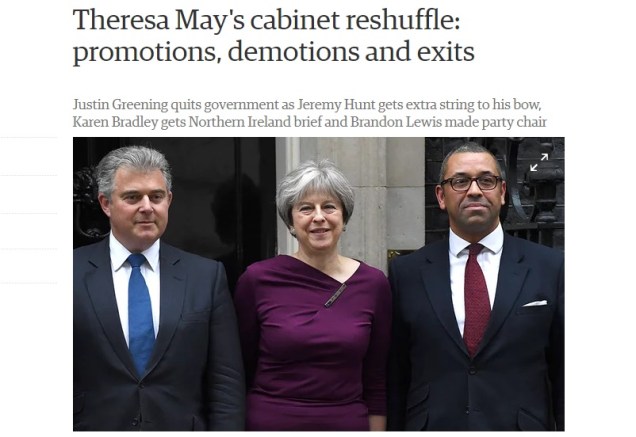
What to make of Theresa May’s Cabinet reshuffle?

Firstly, one cannot escape how incredibly underwhelming it is. If you are going to let the media run with the story that a “major” Cabinet reshuffle is imminent, better make darn sure that the extent of shuffling lives up to the hype. On this occasion the advertisement was significantly glitzier than the product, which together with the stunningly botched rollout only added to the impression that the Tories are a frightened, disorganised mess.

Following on from that, the limited extent of the reshuffle – with Education being the only really significant department seeing a change – is another depressing reminder that Britain is led by someone without the authority to stamp her will on a party which is crying out for firm direction, let alone on a fractious and divided country.

Thirdly, even if Theresa May had wanted to carry out a wider-ranging reshuffle, what could she possibly have done that would have made the slightest difference to the direction of her party, the ambitions of the government or the fortunes of the nation? Maybe tomorrow we will see some encouraging promotions to the junior ministerial ranks – one might hope that some solid backbenchers with a bit of vision and ideological gumption, people like Kwasi Kwarteng or Chris Philp, might finally be given some executive responsibility and a launchpad to bigger and better things.

But in terms of big-hitters whose appointment or shuffling might make an immediate impact on the overall tone of the government, there was precious little that could be done even if the prime minister had wanted to shake things up. The sickness within the Conservative Party is deep, pervading all the way up from the (dying) grassroots through the activists, prospective parliamentary candidates and much of the parliamentary party, and a reshuffle can only be as good as the cards you have to deal.

In terms of bright spots, one can summon a degree of enthusiasm for the fact that charismatic MP James Cleverly has been made Deputy Chair of the Conservative Party, but odds are that the centralising, micromanaging bureaucrats of CCHQ will chew him up and spit him out just as they did to Rob Halfon before him, nodding sagely while Cleverly reels off a litany of smart and worthwhile suggestions before ploughing on in exactly the same dismal direction as before, tacitly encouraged by Theresa May.

I do also reserve a spot of admiration for “beleaguered” Health Secretary Jeremy Hunt (which Health Secretary of either party has ever not been described as beleaguered, and at this point shouldn’t that really tell us more about the anachronistic National Health Service for which they are responsible than the personal acumen of any given incumbent?).

Being a Tory Health Secretary is surely the most lethal of poisoned chalices when it comes to future career prospects. The role guarantees that one will be pilloried by the Left as a heartless monster who cackles as nurses are forced to food banks and patients die on trolleys, regardless of one’s actual record.

Yes yes, All Hail the NHS.

For some reason either involving masochism or great nobility, Jeremy Hunt has borne this burden stoically for six years, and for him to plead with Theresa May to not only keep his current brief but also assume responsibility for social care is quietly impressive, and shows character. I personally think that the Tories are far too timid when it comes to healthcare, but if we must set our sights low and keep Our Blessed NHS in more or less its current form, we at least need to merge it with social care – and hopefully this is an indication that the government is looking to do so.

The main problem with the reshuffle though, aside from its timidity, is that it gives no real indication of a likely change in the soul of this ideologically lost Tory government. All of the great offices of state, the main levers through which a government might seek to remake the country in its image, remain in the same uninspiring hands. Meanwhile, a bunch of junior ministers play musical chairs with one another in a frenetic pantomine apparently designed to distract us from the fact that the prime minister remains far too politically weak to move any of the people who most need moving.

But even if Theresa May did have any residual authority to undertake a real reshuffle, what difference would it make? The reshuffles that truly matter in historical or strategic terms are ones where you think “ooh, that person is going to take Department Y in a totally different direction because they are a strong believer in X”. One thinks of Margaret Thatcher’s reshuffle in 1981, in which she sought to purge some of the Tory Wets, remaining holdovers from the days of opposition who were still wedded to the failed post-war consensus.

Yet few MPs serving in Theresa May’s Cabinet, especially the most senior ones, are known for having strong ideological feelings about anything at all. Indeed, many of them seem to cultivate a deliberate sense of vagueness, giving speeches stuffed with meaningless platitudes to disguise the fact that they are chickening out from taking a bold position on anything remotely controversial (cough, Amber Rudd, cough).

Believing in things and daring to stake a bold position is dangerous in this day and age – unless you are Jeremy Corbyn or retiring from electoral politics. Far better to be blandly inoffensive, to keep everybody on side and be ambiguous about your intentions if you want to get ahead – only too often this leads to the gradual atrophy of any real policy intentions at all. Spend long enough trying to be all things to all people and soon enough you’ll forget what, if anything, you went into politics to do in the first place.

This uninspired, unambitious, managerial technocracy was the algae-asphyxiated pond in which Theresa May went to fish for new talent, and her near total lack of authority within her own party was the dismal climate in which she set off with her rod and tackle. Unsurprising, then, that she came back with little more than a few old boots to show for her efforts.

And so to abandon the fishing metaphor for another, we have ended up with a reshuffle that most closely resembles a particularly dissatisfying game of Scrabble (or Words with Friends, for the smartphone-owning crowd). One swaps out a number of pesky and useless letter tiles in the hope of getting something better in exchange, but ends up with virtually the same tiles back again, only arranged in a slightly different sequence. All that effort and a missed turn, and still you are unable to spell anything meaningful or score more than a handful of points, be it on the Scrabble board or the statute books.

So far as I can tell, virtually nothing has changed. Good luck and God speed to James Cleverly as he goes off to bash heads together (or more likely have his own caved in) at CCHQ, and may angels minister to Jeremy Hunt as he continues his lonely mission to serve as Chief Cartoon Villain to every leftist in the land. But besides that, who seriously expects a shockingly new bold policy to emerge from this cohort?

I hope I’m wrong. But more than ever I think it is going to take external events – potentially very disruptive and unwelcome ones – to shock any kind of life back into the moribund Conservative Party, the kind of political shock therapy which also tends to land the patient back in Opposition for a time.


Conservative Party Logo - Torch Liberty - Tree

Support Semi-Partisan Politics with a one-time or recurring donation:

Agree with this article? Violently disagree? Scroll down to leave a comment.

Follow Semi-Partisan Politics on TwitterFacebook and Medium.