Tales From The Safe Space, Part 23 – Manchester University Students’ Union To Debate Banning Conservatives

Manchester University Students Union building

Activists at the University of Manchester Students’ Union are to debate a motion which would essentially ban conservatism and enshrine one particular leftist worldview as the only acceptable political thought on campus

The students’ union at Manchester University never had a particularly strong commitment to democracy and free speech, preferring to act as one of those authoritarian talking shops where activists percolate in their own ideological certainties.

The university is rated Amber while the students’ union has consistently been rated Red in the Spiked free speech rankings, meaning that together they preside over a chilling and hostile climate for freedom of speech on campus.

But the current set of illiberal policies are nothing compared to a new student-initiated union debate which could see David Cameron – and theoretically, by extension any conservative politician or personality – banned from campus on the grounds that they may harm or manipulate weak and vulnerable students with their dangerous right-wing ideas.

The text of the motion, due to be debated this Thursday (14 April), reads:

Ban David Cameron from the Students’ Union building

David Cameron is a dangerous Tory whom has continually attacked the welfare state with the intent of destroying it since the Tory government assumed absolute power in a so called “democratic” vote.

David Cameron and his right-wing Tory government were elected by a minority of the electorate, and zero students voted Tory, therefore we must make a stand against this undemocratic regime by banning David Cameron and his Tory government from our democratic Students Union and our University Campus.

In addition, David Cameron has continually violated the Safe-Space policy by implementing changes to Junior Doctors NHS contracts. We must fight back against the Tory steamroller which is destroying the NHS and destroying the United Kingdom and also Europe. Also David Cameron has said that we should vote to stay in the EU, but he is a Tory and therefore he must have lied, therefore to prevent him being able to manipulate venerable [sic] students at the University we must ban him.

The motion is so childish in its demands and so illiterate in its expression that only a year ago one may have wondered whether it was a clumsy parody. But life on campus in British and American universities has now indeed become such a sick joke that the motion was almost certainly submitted in earnest – and could well be adopted by authoritarian student activists regardless of the motive behind it.

This, after all, is the same students’ union which had an anti Safe Space petitioner dragged out of a student senate meeting by campus security for daring to criticise and speak over the Women’s Officer during a debate about abolishing the union’s Safe Space policy.

(Curiously, the motion to abolish the Safe Space policy was recorded as being rejected in the senate meeting minutes, although there were 38 votes for the motion, 3 against and 4 abstentions – I have contacted the students’ union for clarification on that rather surprising decision, and am awaiting their response).
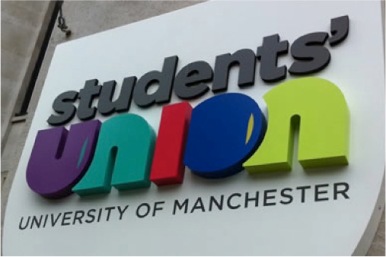
University of Manchester Students Union

But consider the type of childish, underdeveloped mind which could seriously propose a motion to ban David Cameron from the students’ union (thus wrecking the prime minister’s plan to hang out there extensively in the near future).

The motion begins with the accusation that David Cameron is a “dangerous Tory”. Well, by that logic, so are the 11.3 million British citizens who cast their vote for the Conservative Party in the 2015 general election. Is this entire segment of the population also dangerous – or are they either evil and greedy people voting to enrich themselves at the expense of the poor, or “venerable” people conned into voting the wrong way?

Laughably, the motion describes the Conservative Party’s return to power as being the result of a “so-called ‘democratic’ vote”. Now one can criticise the UK’s electoral system legitimately and with good reason, but Manchester University Students’ Union was not exactly the scene of hunger strikes or self-immolations when the Labour Party won the 2005 general election with 9.5 million votes and 35% of the national vote, which strongly suggests that this is politically (not constitutionally) motivated.

The author of the motion then goes on to claim, ludicrously, that “zero students voted Tory”, which speaks volumes about this particular student’s limited social circle and cheerfully ignorant closed mind. As it happens, some students do vote Conservative – in fact, there has been a slight rise in 18 to 34 year olds voting Tory, particularly women. The fact that many of these right-leaning students keep their political views so quiet is because to talk about them openly would be to invite hostility, ridicule and social ostracisation from the sanctimonious Left.

Slipping the surly bonds of earth and touching the face of insanity, the pompous student motion continues:

In addition, David Cameron has continually violated the Safe-Space policy by implementing changes to Junior Doctors NHS contracts. We must fight back against the Tory steamroller which is destroying the NHS and destroying the United Kingdom and also Europe.

So now, taking a position in an industrial dispute which does not directly affect a single member of the students union is still a grave violation of the Union’s safe space policy. The author of the motion asks us to believe that government running the country and making decisions which anger the Left and the public sector actively makes students unsafe.

And the motion wraps up with the naive and childish statement that David Cameron “is a Tory and therefore he must have lied” about wanting Britain to stay in the European Union. In fact, David Cameron did lie inasmuch as he falsely presented the negligible and non-binding results of his abject capitulation as a bold renegotiation that would result in some kind of reformed EU.

But it was David Cameron’s own lack of character and patrician disregard for democracy which caused him to lie – not the fact that he is a Tory. One could just as easily seek to ban all Labour politicians and personalities from Manchester University by claiming that Tony Blair lied about weapons of mass destruction in Iraq – and yet one can be certain that if Labour Party leader Jeremy Corbyn set foot on campus tomorrow, these students would drop whatever they were doing and follow him around like he was the Messiah.

University of Manchester - Occupied

One would hope that Manchester University Students’ Union will reject this babyish motion out of hand when it is earnestly debated at this Thursday’s Senate meeting, on the grounds that it makes everyone who touches it look stupid.

One would hope that there are enough liberty-loving students at Manchester to prevent the adoption of a measure designed to infantilise them and treat them as delicate snowflakes incapable of so much as being in the presence of people who disagree with them (though such sensible people tend to be repulsed by student politics and stay well away).

One would hope that the idea of passing a symbolic motion banning the democratically elected – not to mention remarkably dull and centrist – prime minister from setting foot on union property would be laughed out of the house by student leaders who realise that demonising over a third of the country for their perfectly legitimate political views makes honest political debate impossible, and (most dangerously) enshrines one particular left-wing ideology as the only “acceptable” political opinion.

One would like to think a good many warm and positive things about the generation of Stepford Students currently passing through our academic institutions, both here in Britain and in America. But every day we are given ten times as many reasons to despair as causes to hope.

And now we have the ludicrous spectacle of Manchester University students earnestly debating whether or not they need to protect themselves by placing a de facto restraining order on David Cameron and his Evil Tory brethren.

As Manchester goes, so goes every other major university in the country. Never has a group of students been so in need of a robust, small-L liberal education, yet so thoroughly unprepared to receive one at university.


Safe Space Notice - 2

Top Image: manchesterhistory.net

Agree with this article? Violently disagree? Scroll down to leave a comment.

Follow Semi-Partisan Politics on TwitterFacebook and Medium.

Tales From The Safe Space, Part 22 – Students For Slightly Less Coddling!

NUS Protest - No Platform Policy - Free Speech
What do we want? Slightly less censorship! When do we want it? At some point!

The student resistance to campus safe space policies and academic trigger warnings does not inspire much confidence

This student from the University of South Florida is mad as hell at being coddled and treated like a child with endless trigger warnings and safe spaces on campus, and she is not going to take it any more:

At USF’s Faculty Senate Executive Committee meeting on Wednesday, faculty members discussed trigger warnings and how to approach sensitive issues as they sought an answer to the growing demand for “tolerance” in classrooms.

No one is arguing most graphic material shouldn’t come with a warning, but creating campus-wide policies catered to coddling students will only inhibit our education.

So far so good. But it doesn’t take long before the wheels start to come off this student’s plea to be treated like an adult:

Obviously, no one wants a student to undergo stress or anxiety because of something they were blindsided with in class. However, it is ultimately up to both the professor and the student to ensure they can avoid that situation.

Professors need to begin offering detailed syllabi for their classes. Not a basic one-page overview of the course, but a week-by-week outline of what they intend to teach. While some professors already offer a detailed breakdown of their courses, many do not.

Yes, this will take more time to create, but let’s be honest — most professors don’t make major changes to their courses. Taking the time to create a detailed syllabus isn’t a big deal considering they can re-use it for years with just minor tweaks along the way.

Then it’s up to the students. Students, take five minutes out of your oh-so-busy schedule and actually read the syllabus handed out on the first day of class. If you see something is going to be covered that will trigger you, drop the class.

Do some research. Find out exactly what you’ll be reading before you commit to a course, and you won’t be caught off guard when the sensitive material comes.

Universities could even have a frank conversation with incoming students at orientation or during campus tours. Let them know this is a university, not an elementary school. In an effort to grow students’ minds and character, the university will approach subjects students may disagree with or find uncomfortable.

Oh dear. This isn’t so much an argument to sweep away the whole infantilising concept of trigger warnings and begin treating students like moderately resilient human beings once again, but rather a technical argument that trigger warnings should be brought forward to the beginning of the academic experience.

Breanne Williams is not upset with the idea of trigger warnings in general. She just wants one massive trigger warning placed at the beginning of each college class, or perhaps when students first arrive on campus. Quite how this is any less infantilising than individual content warnings before each lecture or book is never made clear.

Unfortunately, such is the calibre of much of the resistance to campus censorship these days. Even the voices arguing against the harshest and most illiberal measures often accept the general principle behind them – that words and text can be dangerous, and that students need to be protected from them.

Witness Edinburgh University students union officer Imogen Wilson, who stressed the importance of safe space policies to journalists even as she was being accused by others of violating the safe space of a student council meeting.

Or the protest outside the hugely censorious National Union of Students headquarters, where protesters held the risibly pathetic placards declaring “Reform, don’t scrap, no-platform policies”.

Depressingly, even some of the pushback against the censorious, infantilising treatment of students on campus now accepts the basic rationale behind trigger warnings and safe space policies. This is dangerous because conceding the fundamental principle – that free speech is dangerous, and that words can equate to “violence” – means that the debate becomes a simple matter of degrees, establishing an inevitable one-way ratchet to greater censorship.

The correct response to the slapping of trigger warnings on academic content is not “Please put them at the beginning of the class so that we can avoid studying entire subjects if we spot one thing in the syllabus which might cause us mental discomfort”.

The correct response is “To hell with your trigger warnings! Treat us like the adults that we are”.


Safe Space Notice - 2

Agree with this article? Violently disagree? Scroll down to leave a comment.

Follow Semi-Partisan Politics on TwitterFacebook and Medium.

When Deciding How To Vote In The EU Referendum, Do Your Own Research – All The Information Is Out There

It is becoming fashionable among the undecideds in the EU referendum campaign to complain about the supposed lack of available facts in the debate. But they don’t want facts – they want to be spoon-fed opinions and simultaneously reassured that these answers are unbiased

There is a rather nauseating new trend among those people who have somehow not yet come to an informed opinion on whether or not Britain should vote to leave the EU, whereby they blame their inability to reach a decision on the supposed lack of available facts handed down to them from on high.

We even see this cropping up in Question Time, as the Independent reports:

With 113 days until the EU referendum – that’s more than 15 weeks away – levels of stamina among the public for the flow of information being directed at them seem to be waning.

And when the opening question of BBC’s Question Time was on how much the referedum’s outcome would depend on “which side could scare us more”, one audience member put the problem laid before the country in very clear terms.

A young man said the decision to continue or terminate the 40-year relationship all rested on wondering who could be trusted to give impartial, accurate information.

“With all this scaremongering that’s going on in the media about this, I don’t see how us as the general public can make an informed decision,” he said, prompting nods from those around him.

[..] In the light of such risks, the audience member seemed to be concerned that he was given little information with which to make a safe and long-term decision.

“It’s just all sides saying different things and you just don’t know who to believe,” he said.

Boo hoo. It’s so difficult for undecided voters today, bombarded with passionate (but often fact-free) arguments from both sides. How can they possibly be expected to vote when the government and the meejah don’t give them a clear and unambiguous signal?

The amusing thing is that the young Question Time audience member asking the question would probably have absolutely no difficulty using the internet to research a complex and technical query relating to his malfunctioning Playstation or home cinema system. He is likely adept at finding YouTube tutorials which show how to disassemble and repair household appliances, and if he has a favourite sports team, band or celebrity he can quite likely find all manner of information about them online with no difficulty at all.

But when it comes to the workings and operation of his own country and the European Union which influences so many aspects of his life, it apparently does not occur to the questioner that he can use exactly the same skills he honed researching his fantasy football team to turn up some relevant, unbiased facts about the EU. The thought simply does not compute. When it is something glitzy and fun, he is more than willing to spend five minutes consulting Google and a few hours reading through the results that his search throws up. But on “boring” matters like the governance of the EU, what the European Union might look like in the future or how Brexit might actually be accomplished, he loses focus before he can finish typing a query into the Google search bar.

Of course he is not getting unbiased information from the media. Playing the role of high-minded, neutral arbiter has not proven to be very successful for most media outlets, nearly all of which instead churn out content which plays to the gallery of their readerships. That’s life. But it does not mean that the primary information needed to reach an informed and independent opinion is unavailable. It just means forsaking Monday Night Football or the Great British Bakeoff for one night and using the internet or local library to make oneself a more informed and engaged citizen.

EU referendum blogger Pete North has by far the best response to these aggrieved undecided voters who flaunt their ignorance of the debate as though it is an injury inflicted upon them by evil external authority figures withholding “the facts”:

I watched Question Time last night. I heard that whining bovine complaint once more “I just want to be given the facts”, expecting that it’s the government’s job to spoonfeed them with information, under the assumption government can and will. Could they be any more bovine?

As it happens, the facts are available insofar as anything is ever truly a fact. On something as comprehensive as the EU there is all the information you could possibly want. And while you can say a lot of bad things about the EU, one thing we can say is that it is transparent. It publishes most of what it does, the schedules, the regulations, the meeting minutes, the agendas and the agreements. It’s all there if you can be bothered to look for it. I didn’t learn what I know by reading John f*cking Redwood.

And when it comes down to it people say they want the facts but they don’t. You can give them the facts but it’s always “tl;dr”. So they want a digest version of the facts. So you provide them with that and it tells them things they don’t want to hear – and so they stick with their ridiculous notions that either we can pull out overnight and comes the dawn of a new utopia – or on the other side the europhiles pretend the European Union IS that new utopia.

What people mostly want is to be told what to think. To have someone else make the decisions. To not let the complexity of life disturb their comforting ignorance. It’s the “I pay politicians to do the politics” attitude. THAT is how we get in these messes to begin with. Politics is too important to be delegated to these bozos and if this referendum has revealed anything it is that most of our elected representatives are intellectually subnormal and know f*ck all about nine tenths of anything.

In the end, to have a proper democracy participation requires more than just turning up to vote. It requires that you educate yourself, keep yourself informed, keep yourself up to date and find the facts for yourself – and especially that you do not rely on the media – after all our media are very much part of that political class with even less clue than the morons we elect. If you can’t be bothered to engage on that level you really do deserve everything you get from your “leaders”.

It is a lazy, naive idea that we can outsource the running of our country to elected politicians and only perk up and pay attention once every five years or so when there is a general election. As Pete North rightly says, that is how we got into this mess in the first place – people failing to hold their leaders to any kind of account, while the politicians did as they pleased.

If you want to be told what to think by the government or those in authority, don’t complain when David Cameron comes back with a one-sided, pro-EU propaganda leaflet costing the taxpayer over £9 million to produce and distribute. That’s what you get for outsourcing your decision-making processes to people with vested interests.

But at least if you do so, you are in plentiful (I won’t say good) company. Neither the official Remain or Leave campaigns are exactly brimming over with deep expertise on the workings of the European Union, in which direction the EU will travel or the logistics of achieving Brexit.

Fortunately, there are those who stopped watching television for long enough to educate themselves on this important subject. A number of them have become experts in the subject, certainly far more so than the Westminster media with its superficial grasp of the facts, all while holding down day jobs. They are the the bloggers of The Leave Alliance, and the plan they promote for leaving the European Union in a safe, orderly and non-disruptive way is called Flexcit, or the market solution.

Start with that. Or start with the European Union’s own websites – as Pete North says, much of this information is “hidden” in plain sight. Begin your search for facts in any number of places, just don’t repeat the whiny, false complaint that there is no factual information available.


Postscript: The irony is that facts and figures supporting either side are not the most important thing in this referendum, while economic projections are particularly unreliable to the point of being pure fiction. This blog contends that the EU referendum comes down to more qualitative factors like democracy, sovereignty, governance and constitutional reform, which simply cannot be calculated in an Excel spreadsheet.


European Union - United Kingdom - Britain - Flags

Agree with this article? Violently disagree? Scroll down to leave a comment.

Follow Semi-Partisan Politics on TwitterFacebook and Medium.

Tales From The Safe Space, Part 21 – Monetising Identity Politics With A Safe Space Coffee Shop

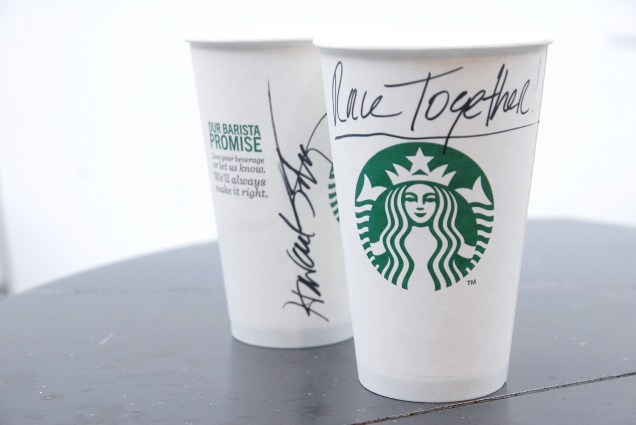
Race_Together_(1)

If safe space dwelling students don’t want to enter the grown-up job market and workplace when they graduate, they may simply create their own parallel Identity Politics economy

Until now, the one source of comfort to those of us alarmed by the rise in student illiberalism and authoritarianism on university campuses in Britain and America has been the fact that those tyrannical student activists will soon face a day of reckoning when they graduate and find themselves in a job market which has no interest in nurturing their fragile egos.

Sadly, that source of comfort is now being taken away from us. Because a former academic from Winchester, Virginia has found a way to successfully monetise the safe space concept with a coffee shop designed for “marginalized populations”.

Your4State reports:

A new coffee shop in the city of Winchester is one of many, but its owners say the open and safe environment it provides is the only one of its kind in the city.

According to Victoria Kidd, part-owner of the Hideaway Cafe, coffee is not an “accessory beverage,” and grabbing your cup of joe requires a journey to reach your ideal destination.

“You’re looking for a coffee house that offers you a great atmosphere and offers you a great product served by people who care about your opinion of the coffee and care about your experience here,” Kidd said.

For Kidd and her wife, Christy, the journey to open the perfect coffee house started in July when they thought of the safe-space concept for the Hideaway Cafe.

Because why leave safe spaces and infantilised life behind at graduation when you can continue behaving in the same sheltered, censorious way right through adult life?

(No press reports as yet give any detail as to precisely what policies or behaviour codes will make the Hideaway Cafe a safe space, or how the safe space will be enforced).

Of course, the cafe’s proprietor fits the exact profile that one would expect:

“Well I never thought I’d be in coffee,” [Dr. Jess] Clawson admitted.  “I have a Ph.D. in education. I’m an education historian, so I thought I would be teaching college right now and on the tenure track.”

According to Clawson, graduate school prepared her to co-own a coffee house.

She said the level of intensity in her master’s work translated well to creating drinks quickly and accurately.

She also mentioned that her dissertation was on the emergence of LGBT student visibility on Florida college campuses in the 70s and 80s.

Given her background, Clawson said she couldn’t refuse to be a part of the “safe space” business, which she said has been a long time coming.

Finding surprisingly little demand for her peerless knowledge of the LGBT university scene in 1970s Florida, Jess Clawson was forced to improvise and tenuously reapply her academic skills to the field of handcrafting caffeinated beverages. And so the Hideaway Cafe now exists to do for supposedly mature adults what campus safe spaces do for decidedly immature students – provide an intellectual cave where occupants can literally hide from scary ideas and the big bad world.

The Hideaway Cafe is not the first such institution to transform itself into a safe space venue. A coffee house at Claremont McKenna College did the same thing, though only on an ad hoc basis, and within an academic campus setting:

Safe spaces for minority students have appeared on the campuses of other Claremont Colleges as well. Last week, the Motley Coffeehouse at Scripps College issued a statement on its official Facebook page, “The Motley sitting room will be open tonight from 6-10 only for people of color and allies that they invite. Please feel free to come and use the space for whatever you need – decompress, discuss, grieve, plan, support each other, etc. In solidarity.”

But neither is Hideaway Cafe the first to bring the safe space concept to the outside world. Last year, Starbucks in Seattle announced that its stores would be working with the city police to turn their locations into safe places where victims of homophobic “hate crime” could wait until the police arrive.

Pink News reports:

The coffee chain has provided special training to its more than 2,000 Starbucks employees across 97 shops, training them to offer help to those who have been victims of hate crimes.

The initiative came about via a partnership with the Seattle Police Department, with special rainbow-coloured ‘SPD Safe Space’ stickers indicating each shop’s status. Staff will contact the authorities, ensuring victims are safe and allowing them to remain on the premises until police arrive.

The bold initiative is the first such take-up of a scheme by the chain, but Starbucks indicated that it would work with police departments elsewhere to set up ‘safe spaces’ in more cities.

This is somewhat less offensive – although the definition of “hate crime” is very vague and encapsulates many things which should probably be classified as protected free speech, at least the Starbucks safe spaces are reactive rather than anticipatory. They exist to help people who have been the victims of unpleasant homphobic experiences rather than seeking to restrict speech within the store lest somebody be offended.

But whether it is the Hideaway Cafe, the coffee shop at Claremont McKenna or your friendly local Starbucks, what is clear is that the idea of providing infantilising places of refuge for grown adults has escaped the college campus and is starting to be taken up in wider society – more ammunition for those of us who are constantly asked why we spend time fixating on something often portrayed as a niche student issue which poses no risk to wider society.

However, it cannot be said often enough that these censorious young generation now at university did not materialise out of thin air. Their self-centred outlook and inability to process contradictory or offensive ideas is very much a product of their environment and upbringing, and older people – including the liberal university administrators now being hounded and forced out of their jobs by emboldened student activists – bear much of the blame for having created a therapeutic culture and a climate which does not value free speech and is happy to place restrictions on freedom of expression for the comfort of others.

Rolling Stone’s Matt Taibbi goes further and suggests that older Americans are actually guilty of creating the first safe spaces and intellectual bubbles, long before they started appearing on college campuses.

Money quote:

But conservatives who get hysterical about the “delicate snowflakes” on campus should take a look at their own media-consumption habits. It’s hard to imagine anything funnier than a 70-year-old who watches 90 hours of Fox News a week and then rails against college kids who are afraid of new ideas.

But it’s not just Fox viewers. Most of the cable TV news industry is just a series of safe spaces. There are conservative channels and liberal channels, all of them huge seas of more or less unanimous opinion. Viewers tune in, suckle their thumbs, and wait to have their own opinions vomited back at them.

The commercial formula at the all-liberals-suck channel is the same as the one at the all-Republicans-are-boneheads channel. People in this country tend to follow politics in the same way they follow sports teams. They don’t think, they root.

The campus safe space movement is often derided as evidence of a rise of a newly censorious political left, a movement that’s ideological in character. And who knows, maybe that’s true. I don’t spend enough time on campuses to know.

But the safe space movement among the somewhat older members of the commercial media has virtually nothing to do with ideology, and everything to do with money.

The political punditry business is all about riling up an ad-consuming, subscription-buying demographic. We’re paid by the eyeball, and you don’t attract eyes by sticking fingers in them. So opinion-makers on both sides quickly learn to stay in their lanes.

If your job is throwing meat to wingers, you’re not going to suddenly start admitting Mexicans are people or criticizing the Israeli occupation of Palestine.

And Taibbi’s conclusion:

The modern American media consumer has a genuine mania for orthodoxy. We’ve habituated readers and viewers not just to expect content that caters to all their opinions down the line, but also to expect and demand a completely binary representation of the political landscape: blue and red, Us and Them.

Consumers on both sides don’t like pundits whose views are all over the place. They want white hats and black hats, allies and enemies, even though in real life most people are not wholly one thing or another. And when one of the performers steps off-script, it’s a “problem.”

To me this is consumerism, not political correctness. Capitalism in this country has become so awesomely efficient at target-scratching every conceivable consumer itch that it’s raised a generation of people with no tolerance for discomfort, particularly the intellectual kind.

There are so many products available now that customers have learned to demand that every single purchase choice they make be perfectly satisfying. People want nacho chips that taste awesome every time, and they want pundits who agree with them every time. They don’t want to fork over time or money to be told they’re wrong or uninformed any more than they want to eat a salad.

This is a very valid point. For what are Fox News and MSNBC if not media-based safe spaces for adults who live in their own ideological bubbles, rarely socialising or venturing otuside their own circle, and whose news consumption is driven less by a desire to hear the facts and reach their own conclusion than the lazy desire to have existing suspicions and prejudices constantly reinforced?

One can certainly criticise the illiberalism of today’s college students for seeking out safe spaces and pressuring their university administrations to enforce harsh new speech and behavioural codes on campus, but one cannot blame the students alone.

Growing up in an MSNBC or Fox News household where the other side are routinely demonised as being evil, traitorous, un-American or oppressive means that many students may arrive at university without ever having been in close quarters with somebody with a different political philosophy. And just as they experience the first twinges of surprise and discomfort at the discovery of non like-minded people, the campus Identity Politics brigade rides to the rescue, telling them that they are right to be upset, that they are uniquely oppressed and that they require ideologically policed safe spaces just to get through the traumatic years which await them at university. It is a toxic message, but a very powerful and compelling one for many young adults.

So by all means let’s criticise instances of campus authoritarianism when they occur. It is important that we continue shining a spotlight on these incidents and helping liberty-minded students push back and wrest control of their campuses away from the priests and priestesses of the cult of Identity Politics.

But we should not be so smug as to think that we who have left university (or who never went) are in any way superior. For it turns out that older generations have been monetising the idea of safe spaces for years before the Hideaway Cafe even opened for business, and many of us have been unwittingly helping them to do so.


More Tales from the Safe Space here.


Safe Space Notice - 2

Top Image: International Business Times

Agree with this article? Violently disagree? Scroll down to leave a comment.

Follow Semi-Partisan Politics on TwitterFacebook and Medium.

William Hague’s Bizarre Critique Of Donald Trump

Donald Trump Hosts Nevada Caucus Night Watch Party In Las Vegas

William Hague is just the latest media personality to use Donald Trump’s presidential candidacy as an opportunity for virtue-signalling, rhetorical target practice

William Hague is getting rusty.

The former Conservative Party leader has already shredded his reputation among real conservatives through his shameful support of David Cameron and the Remain campaign. And now, added to that, his latest column on the US presidential election is written with all of the insight of someone who has been paying no attention to the American political scene for years, and is basing their hastily-written column on all of the most tired generalisations from a British television news report.

Whatever happened to the sparklingly witty and intellectually nimble political personality who could keep the House of Commons spellbound (or laughing uncontrollably) with his skills as a raconteur? Perhaps that side of William Hague is curled up in the foetal position, rocking backwards and forwards in shame and incredulity at what the europhile side is up to.

Hague begins with this remarkable statement about the main factors which should disqualify Donald Trump from becoming president of the United States:

Two characteristics make Trump fundamentally unfit to be president: his attitude to women and the way he treats rivals. The first of these, including crude and offensive remarks about female interviewers and candidates, shows deeply patronising instincts.

This isn’t just foul manners. It really matters because the way to liberate the greatest quantity of untapped talent in the 21st century is to achieve the full social, political and economic empowerment of women. Having a leader of the world’s most powerful country who shows no recognition of that cannot be a good idea.

His insulting response to rivals is another disastrous weakness in a potential global leader. The belittling of political opponents – “Lying Ted”, “Little Marco” and so on – shows no grasp of the fact that any president must work with them in Congress the minute he or she is elected. Even worse, Trump’s bullying attitude to other countries – telling Mexico it will have to pay for a wall along its border – would be utterly counterproductive and diminish the power of the USA by destroying its moral authority and crucial ability to persuade others to act.

Of all the things that Hague could have picked as Donald Trump’s disqualifying features, he chooses to virtue-signal and cite Trump’s view of women – as though Trump’s public attitude to women is any worse than, say, JFK’s attitude and behaviour were in private. Of all the things about Trump that Hague can think of, his frequent obnoxiousness is deemed the most serious.

Nothing to do with Trump having no functional knowledge of trade or foreign policy. That’s fine, according to Hague – President Trump can pick all of that stuff up on the fly. But God forbid that the next occupant of the Oval Office says off-colour, crass things about people (despite claiming to have “the best words”).

Hague even goes on to specifically mention some of Trump’s more outlandish statements on foreign and defence policy, so it is not as though he is unaware of them:

When Trump says that South Korea and Japan should have their own nuclear weapons, rather than rely on America, and that the US should stop funding Nato, what he is advocating is the collapse of the entire security architecture of the western world. But the people voting for him and such policies are telling us that they are fed up with paying for the defence of other countries who do very little to look after themselves.

[..] Trump’s other main policy with an impact on all of us is trade protectionism: he wants to impose swingeing tariffs on imports from China and Mexico, and withdraw from new trade agreements. This would be another disastrous act. It would result in widespread retaliation against American products, higher prices for consumers, and lower growth for the world. For Britain, the ninth largest exporter in the world, such policies would be very bad news indeed.

But apparently itching to provoke a trade war and undermining the security structure which has protected the West since the Cold War – with no clear plan for its replacement – is less of a disqualifying factor than Trump’s ongoing feud with Fox News anchor Megyn Kelly.

Hague’s broader point – that by supporting Donald Trump, his voters are sending an important message about longstanding, unresolved problems with the American economy – is a fair observation, though it is one which has been made by many other commentators (including this blog) for some time now and so hardly counts as original.

The awkward truth, of course, is that one of the primary drivers of the rise of populists like Donald Trump is the way that mainstream politicians have comported themselves, behaved in power and failed to govern on the platforms on which they ran for office. It is unsurprising that William Hague makes no mention of his, because he is a prime example of the kind of politician who pushes voters toward populists.

William Hague built a career and a reputation out of eurosceptic posturing. Yes, those who paid attention a little more closely could discern that Hague’s euroscepticism was not of the same nature or intensity of that of, say, Iain Duncan Smith. But Hague was nonetheless happy to hoover up eurosceptic support by making the right noises against Brussels and in favour of British sovereignty – right up until his stunning betrayal of the Brexit movement.

Similarly, the establishment Republicans now shunned and held in derision by Trump supporters also have a record of campaigning and posing one way, but acting in quite another. GOP voters have been let down in turn by cynical politicians cosying up to evangelical Christians and promising them the world, but then failing to prevent the enormous recent social changes in America. They have also been let down by the GOP’s brand of faux fiscal conservatism, which preaches the necessity of belt-tightening and cuts but often succeeds only in cutting taxes for higher-earners and exploding budget deficits.

Meanwhile, the Rick Santorum-esque wing of the Republican Party have either pretended that every American is a job-creating millionaire in waiting or talked about solidarity with the American worker while watching the American middle class getting squeezed and then decimated by the forces of globalisation without enacting a single proposal to help them make the adjustment to the new economy.

William Hague is right when he says “my experience of 30 years of elections is that when you think voters might have gone mad, they are actually trying to tell you something”. Unfortunately, what Trump voters are saying is that they are heartily sick of being lied to and peddled shiny promises of a New America which never come true.

Hague can focus on Trump’s abrasive and sometimes obnoxious personality all he wants, but it will not assauge his guilty conscience nor change the fact that his decision to support the Remain campaign in Britain’s EU referendum means that he himself has become just another flip-flopping politician of the type which feeds, not dampens, populist insurgencies like that of Donald Trump.


William Hague - Parliament

Top Image: The Spectator

Agree with this article? Violently disagree? Scroll down to leave a comment.

Follow Semi-Partisan Politics on TwitterFacebook and Medium.