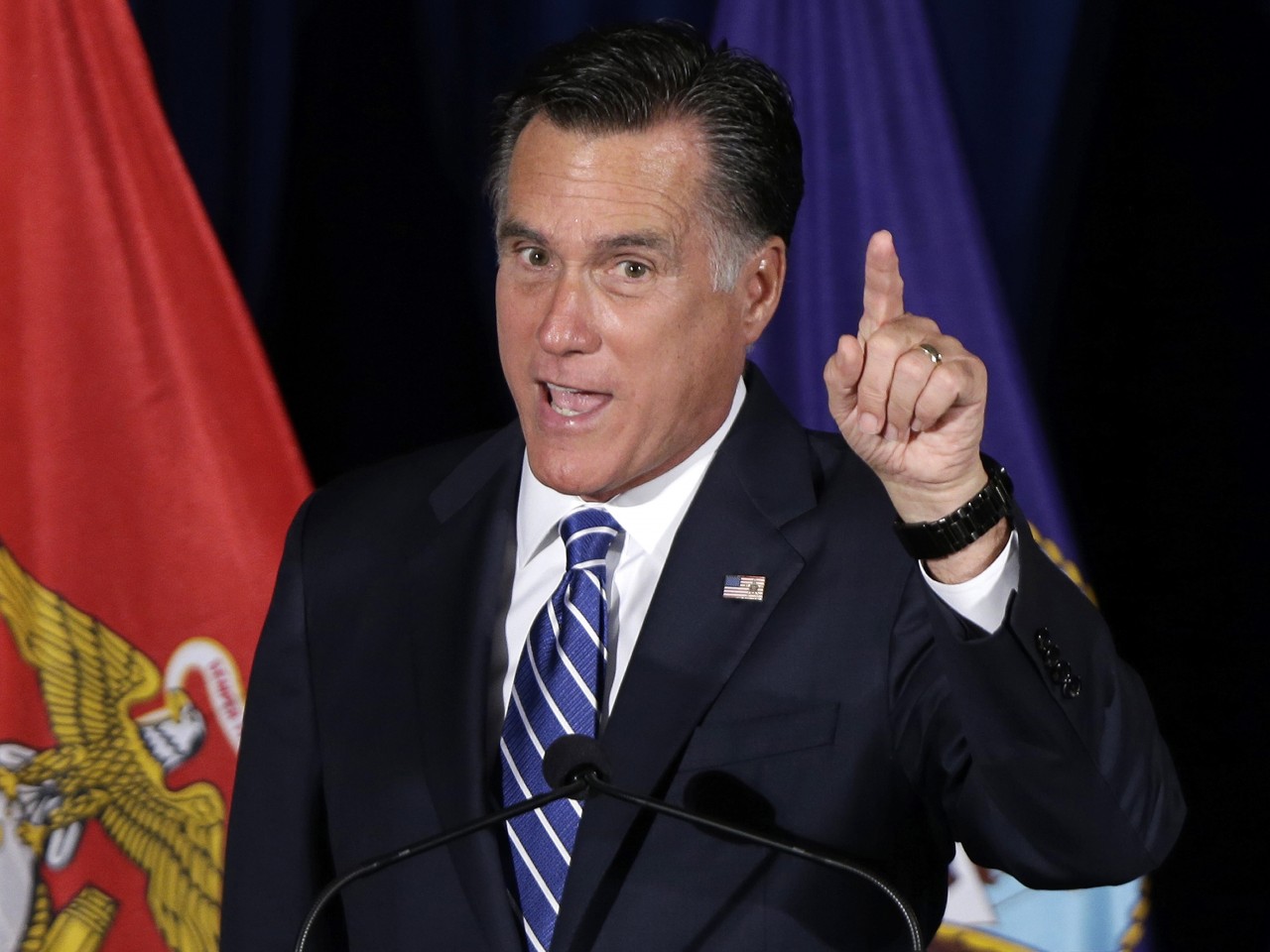
Why Santorum Is Wrong On Healthcare… Part 1/5000

Rick Santorum - Obamacare - ACA - Healthcare Reform

There is a small part of me that wants desperately to like Rick Santorum. This is entirely based on the fact that he will stake out a bold, uncompromising position based on his beliefs and defend it to the hilt rather than running away or backpedalling from the position under opposition pressure. That is a rare attribute in a politician and in the US Republican primaries he is matched or exceeded in this regard only by fellow candidate Ron Paul.

The small part of me that admires Santorum, however, is vastly outweighed by the rest of me, which is aghast at his riffs on the separation of church and state, on women’s healthcare, on contraception, on economic policy and his naive or callously cynical pledge (depending on how you view him) to bring about a manufacturing renaissance in America by tweaking the tax code a bit and drilling for more oil (domestic oil production is, of course, higher now under Obama than it was under Bush):

Furthermore, I am becoming increasingly convinced that Santorum is being given far too much praise for being an “honest politician”, when there is an increasing pile of evidence from his campaign speeches to suggest otherwise. By all means praise him for saying things that ignite his party’s base, and not backing down in the face of liberal objections, that’s one thing. But when you are standing in front of friendly crowds who more or less share your worldview and policy positions, that is not so hard to do.

If he really were honest though, he would avoid saying things like this, as quoted by the Jeffrey Anderson and Bill Kristol in the Weekly Standard today:

“The reason that .  .  . I ultimately decided to get into this race was .  .  . one particular issue that to me breaks the camel’s back with respect to liberty in this country—and that is the issue of Obamacare. .  .  . [A] little less than 50 percent of the people in this country [now] depend on some form of federal payment, some form of government benefit, to help provide for them. After Obamacare, it will not be less than 50 percent. It will be 100 percent. Now every single American will be looking to the federal government, not to their neighbor, not to their church, not .  .  . to the community .  .  . [but] to those in charge, to those who now say to you that they are the allocator and creator of rights in America. Ladies and gentlemen, this is the beginning of the end of freedom in America.”

You know what, Rick? You hate ObamaCare, and that’s fine. I mean, you haven’t proposed any detailed alternative solution to deal with the problems of the uninsured, or the rate of healthcare inflation (and as I said before, medical malpractice lawsuit reform and cross-state selling of insurance nibbles at the edges rather than fixing the problem), so let’s just assume that you believe 30 million uninsured to be a price worth paying to preserve the “liberty” that once existed in America, but which disappeared in a puff of smoke once the Affordable Care Act was signed. That’s fine.

But there are two things in the above extract from Santorum’s “victory” speech on Super Tuesday:

1. The fact that he laments that nearly 50% of Americans depend on some form of federal payment or benefit. Now, I am a fiscal conservative and also believe that this number is rather too high and represents an overexpansion of the federal government. However, Santorum says nothing about Medicare, the ‘socialist, government-run healthcare benefit’ that the grey-haired brigade benefit from, which makes up a substantial portion of that 50%. And why? Because they vote. MedicAid recipients, and those on unemployment or food stamps are less likely to vote, so it’s a lot easier to talk about them when you bash the percentage of Americans who rely on some federal handout.

2. “It will be 100 per cent. Now every American will be looking to the federal government, not to their neighbor, not to their church…” Now this one really has me stumped. I would be grateful if Santorum supporters could point me to the exact parts of the Affordable Care Act (and yes, I have the PDF downloaded on my computer) where extending health insurance to an additional 30 million people means that everyone – everyone –  is now beholden to the federal government. Unless parts of the bill were written in invisible ink, I saw nothing that says that government is taking over the means of healthcare delivery (hospitals) or health insurance (insurance companies). So say for example that I work in finance and have health insurance through my company, and have done for years. Which part of ObamaCare is going to cause me to spurn my current coverage and go running to nourish myself at the teat of the federal government?

Rick Santorum: There is nothing honest about you when you propogate arguments such as these. Like most other Republicans at the moment, you have decided to go along with the doomsday hyperbole and fear-mongering that has sadly become a feature of the GOP’s position on healthcare reform, rather than engaging and crititicising it on true conservative principles. This has been very effective for your party, and I understand why you have made it the lynchpin of your presidential candidacy. But it does not make you an honest man.

We Choose To Go To The Moon


“We choose to go to the moon. We choose to go to the moon [interrupted by applause]. We choose to go to the moon in this decade, and do the other things, not because they are easy but because they are hard. Because that goal will serve to organise and measure the best of our energies and skills. Because that challenge is one that we are willing to accept, one we are unwilling to postpone, and one we intend to win, and the others too.” – President John F. Kennedy, Rice University, September 1962

I have recently been re-watching the excellent television mini-series “From the Earth To the Moon”. Executive produced by Tom Hanks and in much the same style as the film “Apollo 13”, it tells the story of the entire Apollo space programme, from its early beginnings and the tragedy of Apollo 1, through the enormous triumphs of Apollo 8 and 11, the lucky escape of Apollo 13 right the way through until the end of the endeavour. If you have not seen it, it is very well worth watching.

I have been a project and programme manager by trade for the past six or so years, and the exploits of NASA and particularly the Apollo programme have always held a particular fascination for me. In past job interviews I have joked that while most people look at the first moon landing and wish they were an astronaut, I was probably the only one who was moved to become a project manager! Of course, I would not have minded being an astronaut at all, and do very much hope to fly in space some day. But I suppose one of the things that has always excited the geeky part of my brain is how human beings can come together and organise such a complex programme to achieve the goal of landing a man on the moon – in the 1960s no less, when the technology and computer processing power in even my humble, malfunctioning BlackBerry vastly outstrips that which was available to NASA at the time. How do people organise themselves to run such a huge project, and plan and track all of the millions of individual actions and steps that must be successfully completed in order to achieve the desired outcome?

I post the above video for a couple of reasons. I am a (very) amateur scholar both of the history of the Apollo space programme and the life of President John Fitzgerald Kennedy, and rewatching my television series and flicking back through some of my books about the space programme made me think about more recent human achievements.

I was born in 1982. What great accomplishments of the human race have taken place in my lifetime? I might think of the fall of the Berlin Wall and the defeat of communism, and the spread of liberty and prosperity that is still occuring as a result. I might also think of the cooperation of many nations to construct and inhabit the international space station – though no humans have left low earth orbit since that final Apollo flight, this is still a remarkable technological achievement. Or on a more micro scale I might think of the successful mapping of the human genome, with all of the promise that this holds for curing diseases in the future. There are probably many more that I have overlooked, and I would be interested if any readers would care to suggest some of them in the Comments section.

But all of this brings me back to President Kennedy’s speech on September 12th, 1962. How many people became scientists because of the unmatched human endeavour that followed this speech? How many people became engineers, or mathemeticians, or pilots, or astronauts, and how many people’s lives have been changed because of the new technologies and discoveries that resulted from it?

And in these hard economic times, when so many of the western powers seem to be retrenching and lowering their ambitions, what are we doing now that will inspire people, or challenge them, or make them proud of us in 40 years’ time?

We Choose To Go To The Moon - John F Kennedy - JFK - Apollo Program

How British Conservatives Miss Their American Mark

Fraser Nelson takes to his Daily Telegraph column today to extol the virtues of Mitt Romney, in a puff piece entitled “David Cameron need take no lessons from Barack Obama, but he might listen to Mitt Romney”. But by fundamentally misunderstanding today’s Republican Party, he fails to make a convincing case.

You might expect Nelson to perhaps talk about some of the reasons why David Cameron should pay heed to Mitt Romney rather than President Obama on his upcoming trip to the United States. But all we really get is this solitary paragraph:

“In the Republican primary contest, meanwhile, the candidates have been very precise about debt. American conservatism is now defined by plans to tackle it, and the candidates compete on which taxes they’d cut to kick-start the economy, increase employment and balance the books. Romney’s 59-point plan for growth is easily the most moderate, yet is still more radical and holistic than anything produced in Britain. He has ruled out tax rises, and pledged to cut state spending by 5 per cent on day one. Cameron, by contrast, is aiming for a 3.3 per cent cut over five years.”

Would that this were true.

mittromneyrolemodel

American conservatism, defined by plans to tackle the debt? If there is one thing – and there are a lot at the moment – which distinguishes British and American conservatives, it is the fact that British conservatives (perhaps with the exception of the ultra-hardcore Eurosceptic fringe) live predominantly in the real world, while American conservatives have decamped en masse to cloud-cuckoo land, where huge swathes of the federal budget can be eliminated at a stroke without causing any undue suffering to those who have been coaxed and encouraged over the years to depend on various government programmes, and with no political repercussions.

Romney’s plan may well be more radical and holistic than anything produced in Britain, but that doesn’t really matter because nothing remotely resembling it is ever going to be implemented. The British Tories, on the other hand, are willing to risk alienating public opinion and their petulant Liberal Democrat coalition partners to actually implement a programme of needed budget cuts. So who should get the praise, the man who gives tough speeches about slashing trillions from the federal budget with no earthly chance of ever actually doing it, or the man who treads more carefully and holds together a precarious coalition to deliver more modest budget cuts that are actually attainable?

That’s not to say that the British conservatives are in the right with regard to the slower pace at which they have chosen to tackle budget deficits and spur economic growth while in government. Many people, myself included, are frustrated at the glacial pace at which much needed supply-side reforms are being implemented in the UK (often thwarted by EU regulations and/or the Liberal Democrats). A little more ambitious, far-reaching zeal would not be a bad thing at all, though how possible this is as long as the Liberal Democrats are partners in government remains in doubt. And so at first glance, once can understand why some British political pundits look at the fiery rhetoric emanating from the Republican primaries on the economy and find the British conservatives lacking. But to look closer, and to remember the different respective points that Britain and America occupy on the left-right political spectrum, is to realise firstly that the British conservatives have very little political scope to move further to the right, and secondly that the policy positions that the Conservative Party occupies do not differ greatly from the Democratic party in many cases.

And this is the crux of the matter. Even as the Republican Party in America continues to lurch further and further to the right and stake out ever more extreme positions on all manner of issues, the British Tories and their supporters in the British press as yet are unable to sever the psychological link which tells them that they should cheer the Republicans and boo the Democrats. This mindset may have worked in the past, when there was a greater degree of comity and moderation in American politics and the two parties were not so greatly divided, but it does not work today.

It seems to be of entirely no matter to the Republican cheerleaders in the British press that the majority of Democratic party policies are equivalent to or to the right of many current Tory principles (even the long-cherished and now-abandoned public health insurance option is significantly to the right of having a single-payer National Health Service), or that many members of the new Republican tea party congressional intake would (if they actually possessed a working knowledge of the world beyond their own borders) look at Britain with disdain, regarding us as some type of socialist dystopia.

Sadly, the time has come for the British Tories and their allies to acknowledge that they no longer have a serious, thinking partner on the other side of the Atlantic. This is probably just a temporary blip, as all such overcorrections to the right or the left tend to be countered by a return to more moderate positions (as will either happen in 2012 when Obama beats Romney/Santorum, or in 2016 when Obama’s heir runs against a chastened GOP desperate to win back the votes of the women and minorities that it is currently shedding so carelessly). But for the time being, British conservatives have nothing to gain by cosying up to the Republican Party of John Boehner, Eric Cantor, Mitch McConnell, Sarah Palin, Rush Limbaugh, Newt Gingrich, Mitt Romney and Rick Santorum.

The Conservative Party’s American role models may have embraced tea as their emblem, but their economic policy prescriptions are not based in reality, and are going a long way toward making the Republicans look callous, backward and foolish. There is no need for the Tories to damage their still-fragile brand by standing next to them, wearing a T-shirt that proclaims “I’m with Stupid”.

Rick Santorum, Honest Politician?

Rick Santorum - Obamacare - ACA - Healthcare Reform

Ian Leslie, over at the excellent blog Marbury, talks about Rick Santorum’s violent reaction to John F. Kennedy’s famous speech about the separation of church and state:

Money quote from Marbury:

“One of Santorum’s most striking characteristics as a politician is a willingness to own his most controversial remarks. Most politicians running for president wouldn’t have criticised JFK’s speech in the first place, JFK being the iconic figure he is for Americans across the political spectrum. Neither would they have used such extreme language. But if they had, they would definitely find a way to “walk it back” when asked about it on national TV. Santorum doesn’t do that. He repeats, explains, and intensifies. He doesn’t succumb to pressure from advisers, because he doesn’t have any advisers, at least not in the professional sense. He can truly claim to be “unspun”; an honest politician.”

I quite agree with the point about Santorum being willing to own his most controversial remarks. That is very true, and in many ways is admirable for a politician in this age. Too often, politicians will pander by straying across the line of acceptable or reasonable discourse in order to pick up a few stray outlier votes (sadly, we see this time and again with some Republicans and the birtherism movement), only to walk their remarks back just enough when called out by the media. And to give Santorum credit where credit is due, he usually does not do this. He doubles down, stands by his position and defends his remarks. As I have said before, this does make him one of the most genuine candidates.

However, calling him an honest politican goes too far. Honesty is not just the trait of saying what you believe, it also must be the practice of calling out and correcting those who speak falsehoods in your presence, especially those who support your candidacy. Rick Santorum was notably silent when an audience member at one of his town hall meetings stated that President Obama was born outside of the United States and was therefore ineligible to hold office, pivoting instead to agree that he should be removed from the White House at the next election rather than disavowing her words.

Neither can Rick Santorum be said to be honest when he peddles false hope of a manufacturing renaissance in America, as I discussed in this previous post.

Meet Mitt Romney, Normal Bloke

Well, colour me surprised!

Willard “Mitt” Romney, when a sufficient distance away from a television camera and campaign appearance, is a normal-looking (though still clearly super wealthy) guy!

Check out this post on Buzzfeed, showing a montage of Mitt Romney shots taken by his daughter-in-law for her blog:

http://www.buzzfeed.com/mckaycoppins/25-photos-of-mitt-romney-looking-normal

Waiting for a free table at Applebee's, just like you.

Now, I’m not saying that Mitt Romney’s entire campaign team should be fired. I’m just saying that they should be politely invited to enter the barrel of a giant cannon and then smoothly launched at high velocity from their recumbent positions on a swift journey to an alternative, watery location, many miles from dry land.

The talking heads always tell us that image is everything. So why have none of these images surfaced until now? Why, when anyone utters the name “Romney”, do we picture without fail the stiff, patrician, ill-at-ease baby boomer that we all know and love, standing stiffly in a pair of dark blue jeans that he would clearly never wear off the campaign trail, a vote-winning automaton programmed to say (approximately) the right thing and squeak by with the narrowest of margins?

I’m not saying that I could single-handedly do a better job than everyone on the Romney 2012 campaign payroll. Actually, yes, yes I am. I am saying that I could single-handedly do a better job than everyone on the Romney 2012 campaign’s current payroll. And so could my wife’s cat.