The Left’s Donald Trump Syndrome Is Worse Than The Man Himself

Donald Trump - Muslims - Islamophobia

Donald Trump’s derisive comments about London and his proposal to ban all Muslims from entering the United States are idiotic and hugely illiberal. But the self-righteous backlash from parts of the Left is just as bad

American politicians – especially wannabe presidential candidates – insult London at their peril.

Mitt Romney found that out the hard way back in 2012, after his off-the-cuff comments about the London Olympic Games preparations earned the ire of the British public and a personal rebuke from David Cameron.

But current Republican presidential candidate (and, depressingly, frontrunner) Donald Trump managed to make Mitt Romney’s gaffe-prone diplomacy look like a veritable charm offensive with a two-pronged effort to capture the news cycle which saw Trump first suggest that the US implement a complete ban on Muslims entering the country, and then insult America’s closest ally by suggesting that whole swathes of London are so full of Islamist extremists that the police do not enter them for fear of their lives.

From the New York Times:

Donald J. Trump called on Monday for the United States to bar all Muslims from entering the country until the nation’s leaders can “figure out what is going on” after the terrorist attacks in San Bernardino, Calif., an extraordinary escalation of rhetoric aimed at voters’ fears about members of the Islamic faith.

A prohibition of Muslims – an unprecedented proposal by a leading American presidential candidate, and an idea more typically associated with hate groups – reflects a progression of mistrust that is rooted in ideology as much as politics.

Mr. Trump, who in September declared “I love the Muslims,” turned sharply against them after the Paris terrorist attacks, calling for a database to track Muslims in America and repeating discredited rumors that thousands of Muslims celebrated in New Jersey on 9/11. His poll numbers rose largely as a result, until a setback in Iowa on Monday morning. Hours later Mr. Trump called for the ban, fitting his pattern of making stunning comments when his lead in the Republican presidential field appears in jeopardy.

And the Guardian:

In a bid to justify his controversial comments that Muslims should be barred from entering the US, Trump had said parts of London and Paris were so “radicalised” – seemingly a reference to Islamist extremism being rife – that police officers were scared.

“Paris is no longer the safe city it was. They have sections in Paris that are radicalised, where the police refuse to go there. They’re petrified. The police refuse to go in there,” he told MSNBC, refusing to name specific neighbourhoods in the city.

He added: “We have places in London and other places that are so radicalised that the police are afraid for their own lives. We have to be very smart and very vigilant.”

It really isn’t necessary to counter either Donald Trump’s back-of-a-napkin immigration policy, his supremely un-American idea for a religious test in order to enter the United States or his uninformed comments about the city which some years ago overtook New York and Paris as the world capital for finance and tourism respectively. We’ll take it as a given that every thinking person can recognise these comments as the unfiltered bilge that they are.

Of far more concern are the growing hordes of MPs, commentators and members of the public calling for Donald Trump to be banned from ever entering the UK on the grounds of “hate speech”.

The inevitable online petition is already circulating and picking up names, reports the Huffington Post:

An online petition calls on U.K. Home Secretary Theresa May to bar the Republican presidential frontrunner from entering the country for allegedly violating the nation’s hate-speech laws. 

If it receives 100,000 signatures, the petition could be taken up for debate in the House of Commons, according to The Independent. 

The petition launched by Scottish resident and longtime Trump critic Suzanne Kelly blasts Trump for “unrepentant hate speech and unacceptable behavior” that “foments racial, religious and nationalistic intolerance which should not be welcome in the U.K.”

While Sunder Katwala sets out the illiberal case over at British Future:

It is important that the UK Government makes very clear that this extreme view is rejected and repudiated in the strongest possible terms.

The UK Home Office has set out clear guidelines which have led to the exclusion of preachers of hate from the UK if their presence here would not be conducive to the public good. Theresa May has excluded extreme Islamists on these grounds, and also kept out those who have fanned extreme anti-Muslim prejudice, such as the bloggers Pamela Geller and Robert Spencer. Trump’s statements are more extreme than theirs.

Unless and until Trump were to retract these highly prejudiced comments, there is a good case for making clear that he would be refused entry to the UK by the Home Secretary.

No. It is only “important” that the UK government does anything at all about this wretched circus act if you take the view that it is the proper role of government to be a watchful, overprotective parent who oversees everything that we do, say or hear, supposedly for our own good.

It’s only “important” if you take such a dim view of the intelligence of the British people that you believe – like a Victorian prude – that the health and morals of the nation are somehow at stake, and that general public might be inspired to commit racist or Islamophobic deeds either at the mere sound of Trump’s words or at the sight of his ridiculous hairdo.

Such a view is as nonsensical as it is insulting. Why on earth should the UK government care what a reality TV star turned presidential candidate says, and why can’t the British people be trusted to hear what he has to say and judge the merits (or the idiocy) for themselves? Besides, either Trump’s candidacy remains a complete joke, in which case illiberal UK government censorship would be a massive overreaction, or he is a viable contender – in which case the UK needs to remain neutral while our closest ally chooses their next leader.

Donald Trump didn’t cover himself in any glory with his latest comments on Islam and London. But who expected anything more of him? For all his natural gift as a TV personality, Trump is a blowhard, anti-intellectual populist of the worst sort – a man who is fundamentally incurious but convinced that he has the right answer for everything (usually involving “winning” a trade war with China).

And to be sure, Trump’s latest remarks disqualify him as a serious candidate for the presidency, if the ten previous outrage-baiting comments had not already done so. In many ways, this is Trump’s “choosing Sarah Palin” moment – the action which finally doomed his candidacy, much like John McCain’s desperate and opportunistic pick for a vice presidential candidate back in 2008.

But the Left supposedly hold themselves to a higher standard. And yet in response to Trump’s inflammatory words we have seen such a parade of ostentatious outrage and cheap virtue-signalling that one could almost be forgiven for forgetting that the Left are in no small part responsible for the rise of Trump in the first place, as Douglas Murray devastatingly explains in The Spectator:

When the political left refuses to identify where Islamic terrorism comes from, what drives it or what it can even be called, it leaves the ground wholly open for anyone else to do or say anything they want.  Far from being blunt tools or broad brushstrokes, referring to ‘Islamic extremism’ or ‘Islamism’ makes an obvious and conscious effort to put down a delineating line between non-extreme Muslims and the extremists from their faith.  Yet many Muslim organisations, among others, reject this.

[..] But what people seem slow to realise is that suppressing legitimate concerns and decent discussion inevitably leads to people addressing the same things indecently.  We can thank the American left for the creation of Donald Trump and we can thank them for his comments last night.  For years the left made the cost of entering this discussion too high, so too few people were left willing to discuss the finer points of immigration, asylum or counter-terrorism policy and eventually the only release valve for peoples’ legitimate concerns is someone saying – wrongly in my view – ‘keep them all out.’

Yes, of course Donald Trump’s comments are reprehensible. But the answer is not to parade our outrage on social media, as though engaging in a competition to be more publicly offended by Trump’s words is a meaningful substitute for real activism. And nor is the answer to ban Donald Trump from coming to these shores, thus denying Boris Johnson and thousands of eager Londoners the opportunity to prove him wrong about our city – and Trump himself from receiving this much needed education.

Outrage on Twitter is nothing more than empty virtue-signalling, whilst indignant calls for Trump to be banned from entering the UK are every bit as illiberal as Trump’s own proposal to set a religious test for entry into the United States.

Donald Trump’s opponents believe that they are better than the business mogul, reality TV star and presidential candidate. If so – if they are all simply better, more enlightened people, a belief they make little effort to hide – they have a funny way of showing it.

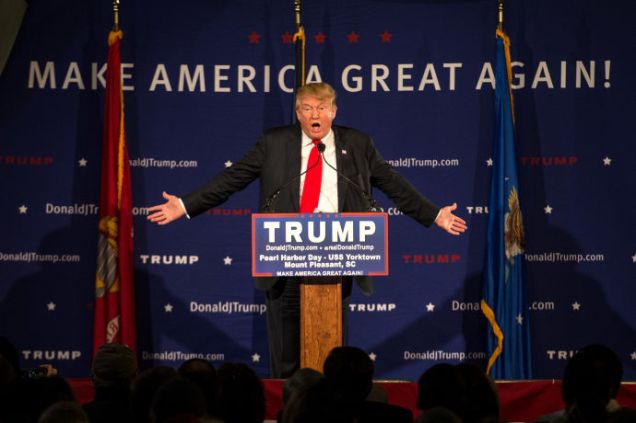
Donald Trump - Make America Great Again

Agree with this article? Violently disagree? Scroll down to leave a comment.

Follow Semi-Partisan Politics on TwitterFacebook and Medium.

Why I Am A Conservative

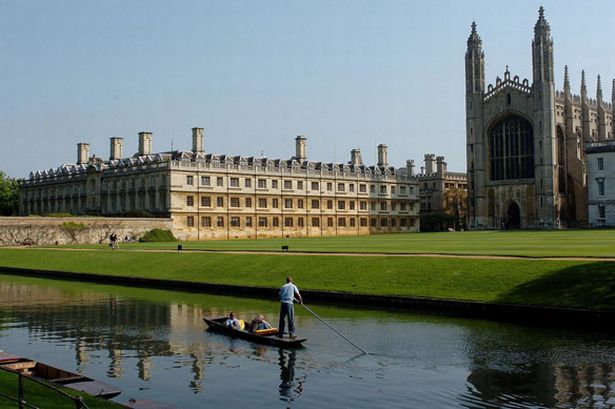
Cambridge University - Conservatives for Liberty - Why Im A Conservative

First published at Conservatives for Liberty

I came from a single parent family and a working class background, got into Oxbridge, worked hard and made something of myself – no thanks to the modern Labour Party or the nurturing support of Big Government

I first realised I was a conservative the day after I heard George Galloway speak at the Cambridge Union Society in 2002. Galloway has a certain way with words when he turns on the charm, and perhaps like many other people that evening I left the debating chamber thinking that maybe there was something to this socialism business after all.

It was only after letting the ideas percolate in my head overnight, trying and failing to match the socialist rhetoric against my own life experience, that I realised that everything George Galloway said that evening was complete hogwash – and that conservatism remains our last, best and only hope for building the just and prosperous society.

If this is all starting to sound a bit Brideshead Revisited – privileged young man goes to Oxbridge, dons a tuxedo and gets in with the Young Conservative set – perhaps I had better start over. I came from a poor, single parent family in Essex. I grew up on benefits, not that it is tremendously relevant. The point is that everything I achieved since that time has been the result of a nurturing family environment and my own hard work. Despite coming of age at the peak of New Labour’s power and popularity, our supposedly benevolent welfare state was at best an irrelevance and at worst was an an outright hindrance to my progress.

Continue reading

We Need A British CPAC

CPAC merchandise


As UKIP’s spring conference gets underway, The Spectator makes lighthearted fun of the patriotic, themed merchandise available for delegates to purchase. And fair enough – some of it is quite kitschy. In fact, some of the trinkets remind one of the gaudy offerings you might find displayed for sale at the annual CPAC conference, currently underway in the United States.

Bloomberg reports:

The CPAC exhibition floor is about marketing, and advertising to conservatives is the same as marketing to anyone else: everything has to be unique, free, or superhero-themed. 

On the free stuff front, there are dozens of buttons, posters (including one celebrating the day President Obama leaves office), pens, steel water bottles, and other knick knacks people want more than need. The libertarian group Young Americans for Liberty gave out free “Stand with Rand” t-shirts to anyone who filled out a political philosophy form, with questions like “There should be no restrictions against law-abiding citizens owning firearms.” Each response (agree, maybe, and disagree) comes with a score, and the higher the score, the closer the attendee’s political philosophy is to Ronald Reagan.

All of which leads to some pressing questions: Why is there no equivalent of CPAC, the Conservative Political Action Committee, in Britain? And are not British conservatives and big government sceptics greatly in need of one?

Continue reading

A Sermon On Justice And Reconciliation From Ferguson, Missouri

Ferguson Missouri MO Fourth 4th July parade 2


What to say about the slow-motion tragedy unfolding in Ferguson, Missouri?

The few known facts – that a black teenager, Michael Brown, was shot to death by Darren Wilson, a white police officer, in disputed circumstances – belie the visceral anger that has consumed the town.

The subsequent actions by the authorities, notably the St. Louis County Police – stonewalling on releasing the name of the officer involved, refusing to release the autopsy details, waging an increasingly military-style war of aggression against legitimate protesters and journalists, and releasing CCTV footage of Michael Brown purportedly robbing a convenience store in what can only be interpreted as an act of pre-emptive character assassination – have only compounded the sense that a predominantly white establishment have more interest in protecting their good names and quelling dissent than administering justice.

St. Louis is a city that I know, have spent much time in, and feel close to. People should not be put off St Louis, Missouri and the surrounding area by the horrible scenes unfolding there now on television and Twitter, because the current crisis is not representative of the state and its citizens. But having personal experience of the area,  it is also glaringly evident that the violence and racial tension that forced itself into our collective consciousness with the shooting of Michael Brown last week was looming, unaddressed, for a long time.

Since I have known St Louis, it has been a city of two halves – the still somewhat dicey downtown area and select suburbs with higher black and lower income populations on one level, and the highly desirable enclaves and suburbs (such as Clayton and University City) that surround them, populated by a much wealthier (and whiter) demographic on the other. Everyone may cheer on their hometown St. Louis Cardinals baseball team on game day, but there is a clear divide between those who can afford tickets to watch the game at Busch Stadium and those who have to tune in on the radio or TV.  Tensions between the city’s two halves, while not ordinarily visible to the casual observer, have roiled this part of Missouri for years.

The New York Times thoroughly summarised the history of this divide in a recent article, revealing the underlying causes of the difference between St. Louis City and County:

Back in 1876, the city of St. Louis made a fateful decision. Tired of providing services to the outlying areas, the city cordoned itself off, separating from St. Louis County. It’s a decision the city came to regret. Most Rust Belt cities have bled population since the 1960s, but few have been as badly damaged as St. Louis City, which since 1970 has lost almost as much of its population as Detroit.

This exodus has left a ring of mostly middle-class suburbs around an urban core plagued by entrenched poverty. White flight from the city mostly ended in the 1980s; since then, blacks have left the inner city for suburbs such as Ferguson in the area of St. Louis County known as North County … 

Many North County towns — and inner-ring suburbs nationally — resemble Ferguson. Longtime white residents have consolidated power, continuing to dominate the City Councils and school boards despite sweeping demographic change. They have retained control of patronage jobs and municipal contracts awarded to allies.

This history lesson may seem a million miles away from the reality on the streets of Ferguson today, but it is directly relevant. It is because of structures such as this, where the now-minority white establishment continues to wield almost unchallenged control over the levers of local government, that allow the scenes of high-handed crackdowns on civil assembly and free speech as practiced by the predominantly white County Police.

The attitude – sometimes explicit, sometimes more subtle – of many of the wealthy St. Louis County residents to their St. Louis City and poorer County neighbours – has often been one of impatience and grudging forebearance on one end of the spectrum, and wilful ignorance on the other.

In 2009, St. Louis residents faced draconian cuts to their Metro public transportation service, the network of buses and light rail that connects the city. Residents of generally wealthy St. Louis County voted against an increase in the transit sales tax that would have raised $80 million to fund the Metro’s operation. They made little use of public transportation themselves – they were wealthy and drove cars. But the subsequent service cuts predominantly impacted the poorer County residents and the City residents who rely on public transport to get around. One figure implied that access to jobs in St. Louis County was reduced from 98 to 71 per cent.

Why does this matter? Because it was the poorer, predominantly black workers who served the coffee, sold the groceries and worked in the nursing homes used by the wealthy St. Louis county residents. A measure came up for vote that would have prevented it from becoming exponentially harder for these people to get to work in their low paid jobs every day. And the response of the County voters: Tough luck, we won’t pay a penny more to fund the civic infrastructure that you need. Screw you, we got ours.

Take this attitude and repeat it in every area, from education to police traffic stops, and you get a sense of the climate in which the Michael Brown shooting took place, and how little the two sides of St. Louis have historically been able to empathise with one another.

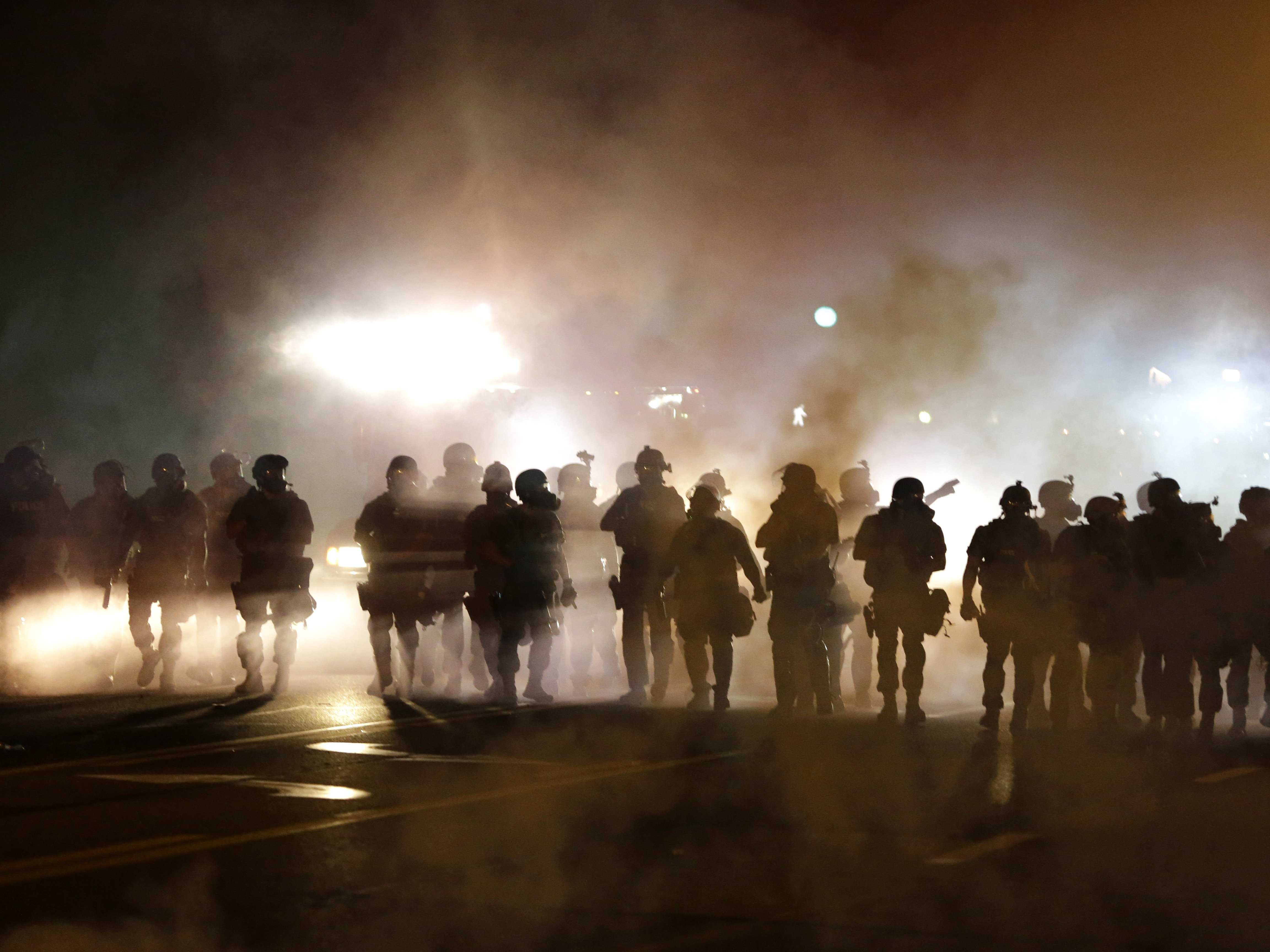
And on Saturday 9th August, it led to this:

Ferguson Missouri Michael Brown Protests Police


On my visits to St. Louis, a visit to the Episcopalian Christ Church Cathedral was always on the itinerary. The church and its community made a lasting impression on me with their many acts and expressions of love, welcoming and tolerance which sometimes seem so much at odds with the prevailing impression of Midwestern Christianity in America.

The way that Christ Church Cathedral (both in its grand stone home on Locust Street and its lively Facebook presence online) is responding to the crisis as it roils the city is perhaps a model to be studied and followed by all of the jostling interest groups – police forces, politicians, civil rights groups, the media and the oft-reported but scarcely-heeded residents – that have descended upon the area.

Yesterday, the Cathedral’s Dean Michael Kinman had this to say:

“The police and the justice system needs to hear the cries of the people and the people need to hear the cries of the police and the justice system, and we as followers of Jesus are the ones to stand in the breach between and even as we are being convicted and converted ourselves, help everyone on every side have their Jesus moment of conviction and conversion, of truth and reconciliation….

“The cry is ringing out from St. Louis around the world. The mothers are crying “Save my child,” and it is time for us to hear that cry and let it change our hearts and with changed hearts together lead this change in the world.

“St. Louis, this is our moment. And we know that this is not a child that will be healed instantly. The tasks are many, the obstacles are large and the journey will be long. But we are the Body of Christ and, with God’s help, together we will get the job done.”

Amen to this. Thus far, the police and the justice system have not been hearing the cries of the people. And in many cases they have conspicuously not been listening, either. Not in Ferguson, Missouri, and, sadly, not in many other towns and cities across America. For black Americans, the police are not automatically the reassuring presence on the street that they are to most whites – in fact, quite the opposite.

The protests taking place now would not be happening on their current scale and intensity if the death of Michael Brown was not just the latest of a litany of tragedies – and perhaps even injustices, depending on the outcome of this investigation – to disproportionally befall black victims and black communities. Looting and violence are reprehensible, but the situation in Ferguson does not exist in a vacuum, and it is not fair or intellectually honest to haughtily condemn them exclusively as failures of personal responsibility and ethics without taking the context of deprivation and repression in which they are happening.

That is not to say that a better, more peaceful path is not there for the taking. The police captain whose empowerment to take over control of the ongoing Ferguson situation from the hapless (and very culpable) St Louis County Police initially caused such a lull in the violence and bitter feeling showed the way with his early remarks:

“And we all ought to be thanking the Browns for Michael. Because Michael is going to make it better for our sons to be better black men. Better for our daughters to be better black women. Better for me so I can be a better black father. And, our mothers, so they can be even better than they are today. Lets continue to show the nation who we are. But, when these days are over and Michael’s family is still weeping, still on their knees praying. No matter what positive comes out, we still need to get on our knees and pray. We need to thank Mike for his life. We need to thank him for the change that he is going to make in America. I love you, I stand tall with you and I’ll see you out there.”

The difference that good leadership – and one man – can make is telling, and is encapsulated in this quote from a local resident, given last Thursday when hopes that the crisis was easing were still high:

But the presence of Johnson was clearly the difference between Thursday and the four nights of turmoil that preceded it.

 “I love this man so much,” said Angela Whitman of Berkeley. “He’s been here since the beginning,giving us encouragement and letting us know we’ll get through this.”

Conversely, the fact that the residents of Ferguson are not yet “through this” shows the limitations of good leadership and one man. Putting a local police chief – with black skin and roots to the community – in charge was a good first step, but it does not make up for the woefully slow response of Missouri Governor Jay Nixon. Nor does it make up for the fact that America’s libertarian political cheerleaders paused so obviously to test the waters before finally jumping into the fray.

The parachuting in of a black police captain does not make up for the many blatant violations of civil liberties – and the dignity of Ferguson protesters – inflicted by the overequipped and underprepared St Louis County Police in the preceding days. It does not make up for the flagrant inequalities in the American justice system, which incarcerates and punishes a huge number of young black men, stamping an indelible black mark on their records and making it even harder for them to ever break free from their circumstances and achieve the American Dream. And it does not make up for the false but universally known fact – reinforced over and over again, in lessons from cautionary tales like those of Trayvon Martin and now Michael Brown – that in America, a black life is worth far less than a white one.

One way or another, the protesters will eventually leave the streets of Missouri. So will the riot police, the clouds of tear gas and the world’s media filming it all. Michael Brown’s family will continue to grieve. These facts are certain, predictable, unchangeable. What remains within the power of people to influence is the legacy of this latest tragic black death on a city street. Will there be a meaningful and lasting change in police tactics, and a broader change in the way that the police seek to interact with – and reflect – the communities that they serve? And will there be a recognition that on America’s present trajectory, Michael Brown’s death was every bit as inevitable as that of the next person shot down without justification or consequences?

It takes a lot to change the culture of a local police department, let alone the judicial system of an entire nation. And for all the good that the players in Ferguson can do to bring these issues to our attention and make us face uncomfortable facts as they seek to reconcile and come to terms with what has taken place, it is usually at the state and national level where any lasting, widespread changes are enacted.

Unfortunately, this means that it is left to the slow-moving and cautious Missouri governor Jay Nixon, the vacationing President Obama (himself hamstrung in his response after failed interventions in the Trayvon Martin shooting and other incidents) and a host of national politicians who are more inclined to use the pain of Ferguson, Missouri for their own ends than to solve a common problem. With this predictable cast list, there seems little hope that we will not be reassembling in a few months’ time to beat our breasts over the next police shooting, mass shooting or other act of wanton violence.

But still, we must hope. And in the absence of any meaningful national leadership, the people of Ferguson, Missouri must lead the way themselves in turning a case study in “Community Policing – How Not To Do It” into a model of outreach and reconciliation for the rest of America.

For the sake of everyone, black and white, city and county, this dark chapter in American history must not be endured for nothing.


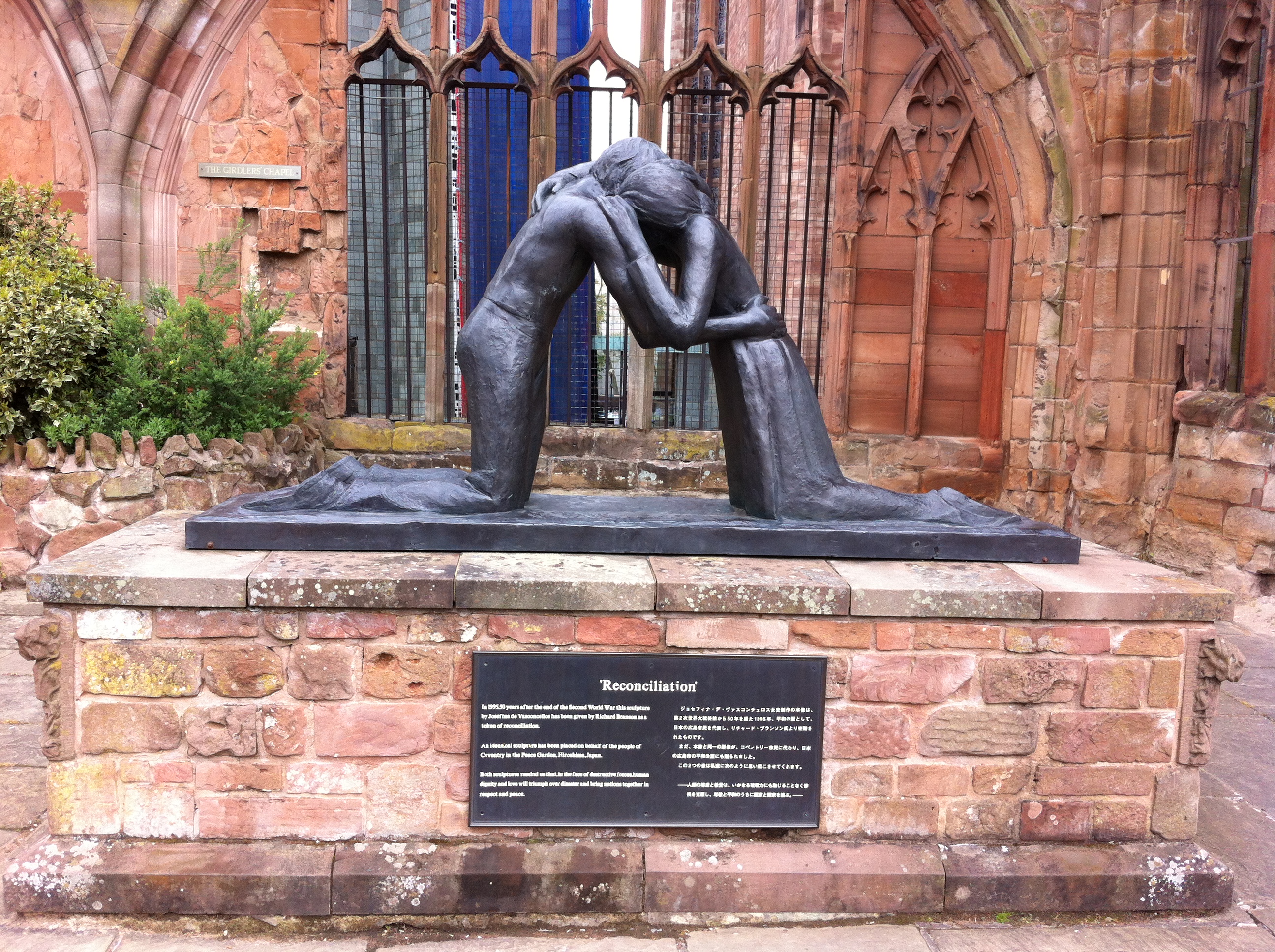
Statue of Reconciliation Coventry Cathedral Britain


Cover Picture: Fourth of July Parade in Ferguson, Missouri – NOCO magazine

Middle Image: Police in riot gear advance through clouds of tear gas in Ferguson

Closing Image: Statue of Reconciliation, Coventry Cathedral, Coventry, UK


Can The Margaret Thatcher Conference On Liberty Rescue British Conservatism?

Keith Joseph Margaret Thatcher


These are not auspicious times for people who believe in the rights of the individual and the need for a pared-back, smaller, more efficient state.

It says everything about today’s Conservative Party, governing in weary coalition with the Liberal Democrats, that Ed Miliband’s Labour Party find the current Tory spending levels palatable enough that they have vowed to stick to them should they win back power in 2015, while their eurosceptic credentials are now so widely distrusted that UKIP have become the standard-bearers for defending Britain’s national interests abroad.

Just as Gordon Brown agitated for power and eventually deposed Tony Blair without a real agenda for governing (and we all know how well that worked out for him), so David Cameron’s Conservatives stumbled across the finish line and into Number 10 Downing Street with a half-hearted policy agenda built only to address the immediate economic crisis while ‘detoxifying’ the conservative brand rather than building the foundations for twenty-first century Britain.

Meanwhile, the assault on personal privacy and freedom from the surveillance state is gathering speed and momentum. In the United States, those on the side of liberty have at least found voice through whistleblowers such as Edward Snowden and journalists like Glenn Greenwald, forcing American politicians to at least pay lip service to the protections set out in their Constitution.

In the United Kingdom, however, the juggernaut has continued without so much as slowing down. Politicians from David Cameron on downwards have expressed no contrition that such a pervasive surveillance apparatus was constructed without any public debate or approval, while civil servants from the intelligence services remain unrepentant and continue their work without proper Parliamentary oversight.

As this goes on, the British people are assured that there is no reason to worry because we are only being spied on to protect us from terrorists, and that the surveillance takes place under “strict legal controls” – though thanks to the opaqueness of the British legal system and the propensity of the government to interpret laws creatively in their favour, this is of no reassurance at all.

Britain may not yet be facing a new winter of discontent – there may be no widespread industrial unrest, the rubbish may not be piling up uncollected in the streets and the economy may not be in freefall – but you would have to be mad not to pick up on the sense of pessimism and foreboding. The economic recovery remains an “order book recovery” at present, its benefits not yet felt by many financially squeezed families.

And now we are told to rejoice that six years after the financial crash, Britain’s economic output has finally caught up with where it was in the heady days of 2008. More than half a lost decade.

No, these are not auspicious times.

Paul Goodman agrees, writing at Conservative Home:

50 years on from the new social freedoms of the 1960s, and 30 years on from the new economic ones of the 1980s, liberty has decreased, not increased.  What we drink, what we smoke, what we speak, how we drive, how we bank, how we live: all these are far more restricted by law than was the case in the 1970s.  The reasons for curtailment may be contestable – health and safety, Islamist terror, the Dunblane atrocity, NHS costs – but the direction of travel is clear.

While there is no major existential threat to Britain at present as there was in 1979 – the unions having been tamed and the Cold War won – there is still an urgent need for radical conservative thinking and policy solutions, just as there was in 1979 when Britain stood at the abyss.

All those years ago it was the (then) new think tank, the Centre for Policy Studies, that served as the intellectual engine behind the incoming Conservative government under Margaret Thatcher. No mere talking shop, the CPS developed ideas that changed Britain for the better once put into practice, as John O’Sullivan reminds us in the Telegraph:

This stream of pamphlets argued for limited government, reduced public spending, control of the money supply as a means controlling inflation, an end to prices and incomes control, the abolition of exchange controls, the privatization of industry, the scrapping industrial subsidies and the wider dispersal of wealth. Study groups, at one time numbering more than twenty, were set up. One of them, the Trade Union Reform Group under the chairmanship of Sir Len Neal, a former trade union leader, laid the foundation of the legislation later introduced to reform trade union law. Another pamphlet was inspired by Keith’s vision of the wider ownership of wealth; it led to PEPS (later restructured to become ISAs).

In 2014, the CPS is now celebrating its 40th birthday with a major international conference, the Margaret Thatcher Conference on Liberty.

It should be encouraging that the organ which did so much to inform and influence Thatcher’s government is riding to the rescue once again, but a glance at the agenda for today’s event hints more at the degree to which Britain has fallen back from the ‘peak’ of liberty achieved by Thatcher than it offers hope for bold new policy initiatives ready to be rolled out.

The first order of conference business, after the introductory speech by Sir V S Naipaul, is ditheringly titled: “The EU and the Big Corporations: are they ganging up against liberty and its protector, the nation state?”

After everything that has happened in Europe and Britain over the past several months, with the electorate’s rejection of the pro-European integration status quo and the rise of parties like UKIP, is this still a question that really needs to be asked? A forward-looking conference would be debating the best way to take advantage of the public’s growing scepticism and antipathy toward undemocratic supra-national institutions in order to either enact radical reform or achieve freedom from them, not half-heartedly speculate about whether the EU and the Brussels lobbying industry pose a threat in the first place.

And at the risk of venturing into conspiracy theorist territory, the fact that a number of conference attendees will participate in a session entitled “Big Government, Big Corporations: what chance for small business and innovation?” having come fresh from the Bilderberg 2014 meeting in Copenhagen, where big government gets together with (you guessed it) big corporations to the exclusion of everyone else does not speak very well of their legitimacy to discuss such matters.

One gets the sense that the Margaret Thatcher 2014 conference agenda was devised in order to fit the specialist knowledge and talking points of those special guests who accepted their invitations rather than the more fearless approach, which would have been to identify the most pressing trends facing Britain and the West, determining what needs to be discussed, and then engaging the support of those high-profile individuals who can best offer and promote policy solutions.

And while CPS is eager to promote the credentials and resumes of the conference’s star panellists, some of the luminaries scheduled to impart their wisdom – conservative celebrities though they may be – have decidedly questionable records when it comes to standing up for liberty in action.

If the Centre for Policy Studies is serious about rejuvenating conservatism and ushering in a new birth for freedom (to paraphrase Abraham Lincoln), the honoured guests from America should include the likes of libertarian standard-bearer Senators Rand Paul of Kentucky, or Ted Cruz of Texas (abrasive and odious though he may sometimes be) or at the very least Congressman Paul Ryan of Wisconsin.

If this conference really is to recapture the success of 40 years ago and spark some new ideas, there should be representation from that force which is doing the most to upend the stale conservative status quo across the Atlantic, the American Tea Party.

But instead, the Margaret Thatcher Conference on Liberty 2014 will be hearing from discredited, neo-conservative fossils the likes of Jonah Goldberg, who has never seen a war that he was not in favour of launching (though not personally participating in, of course), and Rich Lowry, who openly and unapologetically fantasises about the populist, proudly anti-intellectual Sarah Palin.

Sure, these big-name commentators may talk the talk when it comes to small government – at least, if you consider relentlessly hammering away at a “no new taxes, ever” message whilst simultaneously seeking to shrink the deficit and ringfence government spending on generous benefits for senior citizens or America’s bloated defence budget to be a “principled” form of conservatism – but it all goes out the window when it comes to foreign policy, national security and the surveillance state. On these issues, the likes of Goldberg and Lowry whine and clamour for big government louder than most die-hard left-wingers.

These people are Believers in Liberty in Name Only – or BLINOs. What insights and advice are they expected to give that they do not already regurgitate week after week in their National Review columns?

People like Jonah Goldberg – neo-conservative nepotism beneficiary extraordinaire – should be pariahs at a rejuvinated, forward-looking Centre for Policy Studies conference, not guests of honour.

It is curious that while some of the CPS’s American invitees are both out of power and widely discredited, their British counterparts are currently in power but are struggling to make a noticeable impact on an otherwise very centrist, pro big state, pro-Europe government.

Michael Gove, due to attend, is a formidable intellect and the closest that the Cabinet has to a libertarian (his bravura performance when giving evidence at the Leveson Inquiry saw him at his best); but Gove has achieved all that he feasibly can at the Education Department, and has recently made a series of political missteps that could harm his chances of winning another major government brief in the upcoming reshuffle.

Likewise, the Conservative MEP Daniel Hannan is an articulate advocate for the eurosceptic cause, and yet his caucus did not do enough by way of defending Britain’s national interest to stop the rising tide of public fury at the antidemocratic European Union, which saw the Conservatives’ European Parliament group leader, Martin Callanan, lose his seat.

John O’Sullivan, writing in The Telegraph, notes:

As Henry Kissinger points out, senior people in modern government are simply too busy and too tired to think creatively about the problems facing them. If they haven’t used opposition to do some fresh thinking, they have to fall back on the ideas of their opponents.

The Margaret Thatcher Conference on Liberty 2014 has the advantage of throwing together conservative thinkers in power (albeit the dying days of coalition with the Liberal Democrats) with those in the wilderness of opposition (as President Obama’s administration inches closer to its lame duck days). According to Kissinger, this should be the best of both worlds – a combination of Tory blue sky thinking and hard nosed pragmatism from the coal-face of government.

Such a conference could do more than generate headlines for one day in a slow news season – it could provide the spark that finally drags British conservatism out of its introspective, apologetic, New Labour Continued stupor.

But the conference is heavy on has-beens and light on rising stars. Instead of conservative thinkers like Andrew Sullivan, we get demagogues like Jonah Goldberg. Instead of rising political stars like Marco Rubio or Rand Paul, we will hear from elderly statesmen like former Australian prime minister John Howard. Instead of someone, anyone with a post-Snowden mindset on national security, we get former CIA director General David Petraeus.

That’s not to say that there will be no people of interest to watch – Michael Gove will be attending, along with Daniel Hannan, Estonian prime minister Taavi Rõivas and intellectual heavyweights such as Niall Ferguson. But nothing sums up the tightrope walked by the Centre for Policy Studies more starkly than the fact that Margaret Thatcher’s biographer, Charles Moore, is also a guest of honour at today’s conference.

British conservatism needs to look forward, but too much of the guest list suggests that the focus is on the past, not the future. Margaret Thatcher was right for her time and place – Britain in the eighties. But the next transformative British conservative leader will not look or sound like Thatcher; nor will he or she share the same priorities or advance the same policy goals. In the year 2014 Britain faces different challenges requiring different, bold solutions.

Tempting though it may be to sit back and reminisce about that day forty years ago when the Centre for Policy Studies was founded, there is too much work to be done in the present if British conservatism is to save itself.

And that work needs to start today.