Seumas Milne Bashes America

seumasmilne

Seumas Milne rides to battle against the United States

It must be a slow news day, because Seumas Milne has taken to his Guardian column to denounce the presence of US military bases on British soil. You might think that resuscitating a dusty old left-wing fall-back piece like this might at least warrant some new angle on the story, or at least be based on some recent newsworthy transgression by the American military that we host here. You might think so, but you would be disappointed. Milne apparently just got out of bed feeling vaguely smug and anti-American, and decided to repeat the same predictable talking points, namely:

1. They came to help fight Nazi Germany in 1942 and the war ended a long time ago, so what can they possibly still be doing here?

2. America has dragged us into unnecessary and failed wars (Iraq was clearly a calamitous mistake, but why this warrants booting 10,000 US servicemen from our shores is never explained by Milne, unless it is supposed to simply be an act of vengeance) but we can absolve ourselves of these sins by closing down their bases here.

3. The British security elite are desperate to maintain a lopsided special relationship with the US, and only tolerate their bases on our soil as the price of achieving this goal.

4. Being so chummy with the Americans makes us less safe. Rather than being proud of our alliance with a country that symbolises democracy and individual freedom (however self-tarnished this image is becoming as a result of the unconstitutional activities of their national security complex), we should actively disown them to curry favour with fundamentalist theocracies who foment terrorism.

The column is not worth quoting at length, but here is an excerpt:

But whose interests are actually served by such a role? No doubt arms contractors are delighted, but it’s hard to argue that it benefits the British people – let alone those on the receiving end of the US and British military. Politicians and securocrats claim it gives them influence over US policy, but they struggle to produce the evidence on the rare occasions they’re asked to explain how. “The foreign policy elite still have a strong idea,” as the Chatham House analyst James de Waal puts it, that intervention based on “values” is an “innate part of what the UK is all about”. In fact, what successive governments have done is mortgaged Britain’s security and independence to a foreign power – and placed its armed forces, territory and weaponry at the disposal of a system of global domination and privilege, now clearly past its peak.

Milne wonders what the Americans would think if we had a military base on their home soil. Aside from the fact that British officers and military personnel routinely serve alongside their American counterparts both at home and in the field, I think that the Americans would be only too happy to see British military spending increased to such a level where we could afford more overseasbases (though whether this itself would be desirable is another matter). The reason for the lack of RAF bases in North Dakota is not that the British are the victims of some one-sided game in which the US gets to play and we have to sit on the sidelines, but everything to do with the fact that we choose to deprioritise defence in sacrifice for other goals, and all the other things that our caring government does for us. And look how that’s working out.

But this is where Milne really reveals his argument for what it is:

Britain’s fake patriots who bleat about the power of the European Commission are more than happy to subordinate the country’s foreign policy to the Pentagon and allow its forces permanent bases on British soil.

Firstly, our foreign policy clearly is not subordinate to the whims of the Pentagon, as the British parliamentary vote against taking military action in Syria made abundantly clear. Try as he might to build a convincing narrative of the British being led by the nose, two conflicts (Afghanistan and Iraq) over thirteen years are not enough to establish the damaging precedent that he wants to portray.

And secondly, I strenuously object to being labelled a fake patriot by Milne, but so bankrupt is his argument that insults are likely the only weapon left in his arsenal. Fake in relation to what, Milne’s more enlightened, cerebral left-wing patriotism? What Milne carefully chooses not to see is the fact that British government policy and the day-to-day experience of British life are influenced far more by the goings-on in the corrupt, undemocratic European Commission than they are by the garrisons of American military personnel on our soil – troops, incidentally, who are there to underwrite our common security objectives. If anything, it is an indictment of the European Union that Milne slavishly and unquestioningly adores that they punch more weight in this country by undemocratic diktat than do the “hostile American occupiers” against whom he childishly rages.

I’m sure that Milne thinks himself terribly persuasive in his closing paragraph:

But the withdrawal of British troops from Germany and this year’s planned renewal of the US-British defence agreement offer a chance to have a real debate on the US military relationship – and demand some transparency and accountability in the process. There is no case for maintaining foreign military bases to defend the country against a non-existent enemy. They should be closed. Instead of a craven “partnership” with a still powerful, but declining empire, Britain could start to have an independent relationship with the rest of the world.

But why should these two things be mutually exclusive? In Milne’s crazed imagination, the fact that we enjoy such a close alliance with a great country like America is shutting us off from good relations with other countries, or, as he puts it, having an “independent relationship with the rest of the world. This would probably come as a great surprise to the British ambassadors representing our country in foreign capitals across the globe, and to everyone working at the Foreign & Commonwealth Office in London toward the same ends. Exactly what relationship with the rest of the world does Milne think we are missing out on by failing to snub and humiliate our closest ally in the way that he proposes? Which are the countries in whose bad graces we currently dwell, who will suddenly warm to us if we send the Americans packing? North Korea? Venezuela? Iran?

I propose to Seumas Milne that he is trying to make an argument in reverse. He is clearly upset about British-American military cooperation and about our alliance in general. He would doubtless prefer to see us much closer to Europe, and have us actively working to further undermine American hegemony. But the American military bases and other visible manifestations of our close alliance are not a cause but an effect. In the case of Britain and America, an alliance such as ours is what you inevitably see when two countries, one larger and one smaller, have so much in common in terms of culture, economic ties and global interests. If Milne wants the US bases to close, he is making the wrong argument. Rather than bleating about Iraq and Afghanistan, he needs to begin convincing us that we are a different country than the one we think we are.

I don’t fancy his chances.

Saving The World, From A Swiss Fortress

The wait is finally over.


What do Bono, Eric Schmidt, Matt Damon, Jamie Dimon and David Cameron all have in common?

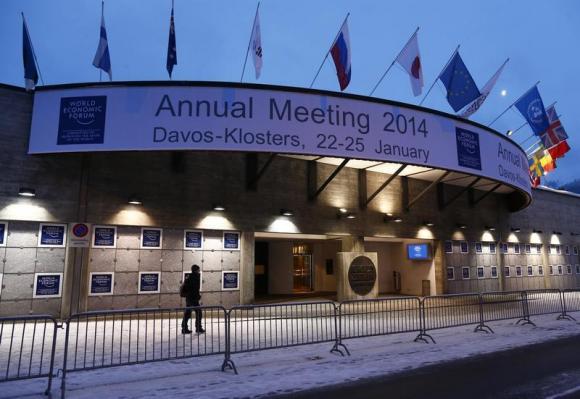
No, U2 are not auditioning for a new band member. The answer is even more thrilling – the World Economic Forum 2014 is convening for their annual gathering in Davos, Switzerland. The tired, the poor and the huddled masses can rest easy because these luminaries, together with Benjamin Netanyahu, the CEO of Wal-Mart and the King and Queen of Belgium have arrived in full pomp and splendour, to do…whatever it is exactly that they do there every year.

From the WEF homepage:

Profound political, economic, social and, above all, technological forces are transforming our lives, communities and institutions. Rapidly crossing geographic, gender and generational boundaries, they are shifting power from traditional hierarchies to networked heterarchies. Yet the international community remains focused on crisis rather than strategically driven in the face of the trends, drivers and opportunities pushing global, regional and industry transformation.

“The Reshaping of the World: Consequences for Society, Politics and Business” is therefore the thematic focus of the World Economic Forum Annual Meeting 2014. Our aim is to develop the insights, initiatives and actions necessary to respond to current and emerging challenges.

If this sounds to you like something you might hear in a second-tier business school lecture or the opening paragraphs of a particularly bad Tom Friedman column, you would be forgiven your mistake. It’s the year 2014 and our moral, intellectual and financial betters have apparently only just come to the realisation that technological forces are transforming our lives, communities and institutions.

Thank goodness for the sagacity of these wise men (and they still mostly are men), who alone among us have perceived that some kind of shift has taken place in our national economies and personal behavioural patterns since the internet and these fancy cell phones popped into being. It is astounding to witness how some of the brightest, busiest and most successful businesspeople, politicians and artists can sit and listen to so much meaningless garbage, and then come back a year later under the powerful spell of collective amnesia to do it all over again.

And seriously – “networked heterarchies”? All outward evidence suggests that there is but one solitary networked heterarchy that has gained and consolidated power in recent years, and that is the one currently booked into a Swiss convention centre to discuss just how wonderful networked heterarchies are, and to divide up the spoils of another bumper year.

In sessions with meaningless titles such as “The New Digital Context”, the world will be put to rights in Davos 2014 – and any outstanding items from the Bilderberg 2013 agenda will no doubt followed up and neatly resolved by those people privileged to be invited to both.

Here’s Klaus Schwab (what better name could there be for the leader of such an event?), the Founder and Executive Chairman of the WEF, welcoming the distinguished delegates to the annual shindig. And yes, he does have a symphony orchestra on the stage behind him. Pity them.


At least Schwab has the decency to admit at around the 1 minute 20 second mark that the whole affair is really about providing an opportunity for the global super-elite to relax, do business deals and network. He puts it somewhat more prettily than this, but the meaning is quite clear. This alpine convocation is like a gold-plated version of LinkedIn, with extra snow.

Cardinal Peter Turkson of the Pontifical Council for Peace and Justice also traveled to Davos, and read aloud a message from Pope Francis. Given the Pope’s well known thoughts about conspicuous displays of wealth and false displays of public piety, one must wonder whether poor Cardinal Turkson found himself having to ditch his prepared remarks and speak extemporaneously for fear of being run out of town for speaking truth to power.

On a personal level, I just don’t quite get it. For most of my career I have worked as a management consultant and project manager. But when I went on vacation, I left my work and all the trappings of my professional life behind at home. I didn’t walk the streets of Paris or the hills of the Lake District pretending to still be running IT projects or anything else to do with my line of work. And so if the shining people in Davos wants to have a good shindig in snowy Switzerland, I would have a lot more respect for them if they would just say so, and spend their time skiing rather than propagating the farcical myth that they are bringing their unique professional skills to bear on the problems of the world.

And yet every year we go through this worn-out pretense that the greatest minds of our generation are sequestering themselves in the mountains to hatch new plans to save the world, when really we all know they are there to slap themselves on the back for another successful year, drink glühwein and try to avoid being isolated in a corner and engaged in interminable, pious conversation by Gordon Brown.

So I have a proposal. Let’s test the mettle of these great, good and benevolent people who claim to care so much for us small folk. Let’s hold the World Economic Forum 2015 somewhere different, somewhere cheaper, calculate the difference in cost and give that sum of money to a front-line charity picked at random from a hat.

Let’s hold the World Economic Forum 2015 in my hometown of Harlow, Essex.

Superb transport links. Al Gore and Bono can hop on the 501 bus from Stansted Airport and stay at the new Holiday Inn Express.


Marissa Mayer, Eric Schmidt and Mark Zuckerberg can network and negotiate new business deals at this conveniently located Wetherspoons pub.


Concrete jungle where dreams are made, oh, there's nothing you can't do.
Concrete jungle where dreams are made, oh, there’s nothing you can’t do.


I’ll see you there!


On Booty Calls and Morning Croissants, Ctd. 2

Former French president Nicolas Sarkozy is now weighing in on the ongoing scandal of the presidential booty calls and morning croissants, claiming that President Hollande has made himself and the French presidency “ridiculous”.

The Telegraph reports the following quote attributed to Sarkozy by French investigative journal Le Canard:

“While everyone has the right to a private life, when one is a public figure and president, one must be careful to avoid being ridiculous,” he is quoted as scoffing.

“Well, that photo of Hollande coming out of his mistress’ place with a motorbike helmet makes Hollande look totally ridiculous. He is the ridiculous president.”

The Daily Mail gives an even less flattering report of Sarkozy’s views:

Former French president Nicolas Sarkozy views his successor Francois Hollande as a ‘ridiculous little fat man who dyes his hair’, it emerged today.

The vicious attack is reported by l’Express, the highly respected Paris news magazine whose editor is a close friend of Mr Sarkozy’s third wife, Carla Bruni.

As I see it, the bottom line is this – in three weeks, the French president has to fly to Washington, D.C. to represent his country abroad and maintain bilateral ties with a close ally. And all anyone will care about is whether Hollande might be found late at night zipping around capitol hill on the back of a scooter, looking for ladies. Even if there are non-scandal-related questions at the joint press conference, the only soundbites that will be reported will relate to the scandal back home in France. Hollande is supposed to make his country look good abroad, strengthen bilateral ties and promote France’s interests. Barring a miracle and a swift resolution to this tawdry affair, he won’t be doing that for some time to come.

The scandal is also now causing disquiet and unrest at home, as Buzzfeed reports that a man was arrested for dumping several tonnes of horse manure in front of the Palais Bourbon in protest at Hollande and the French political class in general:

Image from buzzfeed.com

And so this isn’t just an issue of invasion of privacy, or an educational tale highlighting the different attitudes toward privacy between the French and Anglo-American cultures. This is about basic competence, and the ability of a senior politician and statesman to effectively do their job. Actions taken in ones private life can impact this ability to effectively perform the job, and while the utmost respect and tact should rightly be shown to the president as he works through any problems in his personal life (as many have already argued), the most searching and uncompromising oversight should be applied to his performance in the job.

Francois Hollande has, through his own actions, rendered himself incompetent and, to some degree, incapacitated – politically, at least. This incapacity may be temporary or it may be irreversible, but either way it is self-inflicted and profound. It is down to the French people to determine how long they are willing to tolerate a leader for their failings, not in terms of their personal life but in terms of their ability to do the job.

On Booty Calls and Morning Croissants, Ctd.

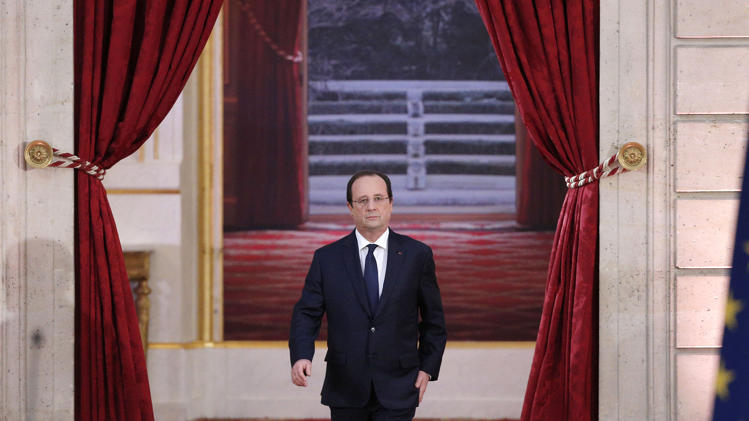
The scandal continues, and embattled French President Francois Hollande’s annual new year’s press conference did absolutely nothing to bring any closure to the saga of the early morning croissant deliveries. Hollande did not even deign to acknowledge the disrepute that he is bringing on his nation during the text of his prepared remarks, and when asked about it during open questions he shot the line of questioning down.

So, the economy...
So, the economy…

The Guardian summarises the day’s happenings as well as anyone:

Asked in an exceedingly roundabout way whether Trierweiler was still the first lady, Hollande made clear his view that matters pertaining to his private life should be resolved in private, and said he would be taking no further questions on the subject (although he did promise to sort out his situation before his visit to Washington), and that was pretty much that.

There were one or two mild-mannered attempts to come at the question sideways, by asking about changes to France’s strict privacy laws, for example, and a brave bid by the Associated Press to come at it head on (“Does the president’s image matter?”). All received the same curt treatment.

The nature of the press conference revealed a couple of things to me – firstly, the huge deference shown by the local French press to their political leaders in any matters relating to personal behaviour and actions deemed to belong in the never-well-defined “private sphere”. Several commentators have already picked up on the fact that David Cameron or Barack Obama, embroiled in a similar scandal, could never have walked away from a set-piece press conference so unscathed. But what also shocked me was the unwillingness or inability of the foreign press, less beholden to the French political establishment for future favours and a good ongoing working relationship, to press home the lines of questioning. They had little to lose, but almost without exception they failed to follow up after Hollande declared the subject off-limits.

Still, if the French are content with their current arrangement whereby their politicians are free to engage in any manner of behaviour provided that it does not effect their performance in the day job, I suppose that this must be accepted, and the curiosity/outrage felt by many of us foreigners set aside. It is still my gut feeling that the supposed outrage of the French people at the invasion of Hollande’s privacy is partly a view expressed on their behalf by the elites who harbour skeletons of their own, but the polls suggesting that French attitudes toward Hollande remain unchanged are fairly conclusive.

I am glad to see that various media sources have finally started asking the question that I raised on this blog the same day that the story broke – namely, the implications for President Hollande’s security (and, by extension, the national security of the French republic) given the fact that he was taking off from the presidential palace incognito on the back of a scooter, unattended by any bodyguards during the night. As I said at the time:

Skulking around the capital city in the dark with limited protection, exposing oneself (and the  secure, uninterupted governance of one’s nation) to any risk of kidnapping, physical harm, blackmailing or worse in the pursuit of a booty call, is probably not behaviour that voters would wish to see in a serving head of state. Transgressions which take place before taking office, honestly explained, atoned for and forgiven by the electorate, are one thing. Actively committing further such acts whilst in office is another matter entirely.

Three days later and the Telegraph picks up on this same concern, which if we are to have no expectations for how a head of state conducts him or herself in their private life is the only real area left for criticism.

Le Monde reported Monday that Mr Hollande had visited the apartment on the Rue du Cirque with two trusted police officers in tow and with another team providing extra security, about ten times since last autumn.

But Mr Valiela said security was so lax that the president’s bodyguards failed to spot the paparazzi who had been spying on the apartment and taking pictures of the president arriving and leaving on two occasions just before and after the start of the new year.

The security detail also apparently failed to inquire about who the flat belonged to.

Yikes. This is pretty much the worst case scenario that I had considered – the lean security team being unaware of paparazzi in the vicinity of the president, let alone any more serious threats. My point, I suppose, is that in accepting the office of president and the powers and responsibilities vested in that office, a person has a responsibility to refrain from endangering the continued exercise of those powers. I’m not suggesting for a second that the French president should follow the lead of the United States and travel around in the excessive pomp of an Obama motorcade, not for a second. But being the leader of your country and sneaking off virtually unprotected to consummate a secret relationship seems to be an either/or proposition. The two just don’t sit very well together, even leaving questions of dignity and decorum entirely aside.

The next chapter in the pointedly unquenched rumour mill is that Hollande’s alleged mistress may be pregnant, thus continuing another time-honoured French presidential tradition. The French president may come to regret his failure to tackle the stories swirling about his personal life head-on when he had the world’s full attention.

On Loyalty and Anzac Biscuits

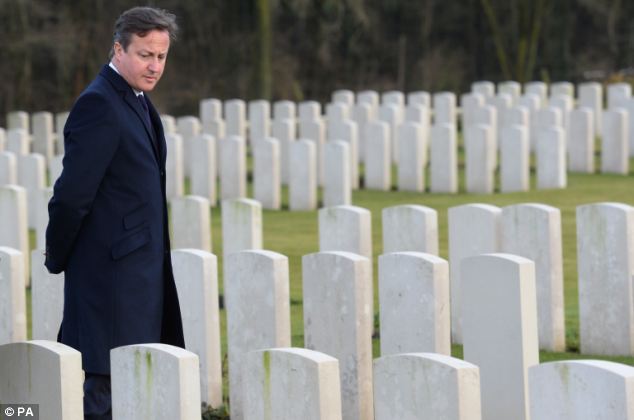
The British coalition government continues to act in an entirely clueless and dysfunctional way when it comes to planning the events to commemorate the upcoming centenary of the First World War. In addition to beginning a pointless and unnecessary argument about why the war was fought, the government has seemingly now decided that it will be beneficial to snub Australia and New Zealand by minimising the contribution that they made to the Allied war effort.

Apparently Australia and New Zealand don't count.
Apparently Australia and New Zealand don’t count.

The Telegraph reports:

The latest row follows a briefing to Australian journalists by Whitehall officials that no events were being planned to mark their country’s contribution and that internal discussions on the plans do not mention Australia or New Zealand. The briefing disclosed, instead, that officials were concentrating on promoting the role played by so-called New Commonwealth countries, those which achieved independence since 1945.

The countries singled out for promotion were India, Bangladesh and Nigeria, along with other west African nations. The reports state that this is to promote “community cohesion” in the UK.

This is unacceptable.

It’s one thing to foolishly overlook an arcane point when conducting international diplomacy, but that is not what we are talking about here. It seems instead that the government has taken a deliberate decision to snub two of our closest allies and Commonwealth partners, and then to brief the precise details of this snubbing to the press. A greater diplomatic faux-pas and insult to our friends can scarcely be imagined.

16,000 Australians and 18,000 New Zealanders gave their lives in support of the Allied cause in World War 1. This, to me, is not a contribution of blood and treasure that can justifiably be overlooked for any reason.

Let us compare this brazen ingratitude and ignorance on the part of some within the British government with the words of the Australian Minister for Defence at the outbreak of war in 1914:

“Australia will recognise that she is not merely a fair-weather partner of the Empire, but a competent member in all circumstances.”

And the Leader of the Opposition, Andrew Fisher:

“Should the worst happen, after everything has been done that honour will permit, Australians will stand beside the mother country to help defend her to our last man and our last shilling.”

And, most poignantly, the Treasurer, Sir John Forest:

“If Britain goes to her Armageddon, we will go with her. Our fate and hers, for good or ill, are as woven threads.”

If it is the honest view of the British government that social cohesion in our country is so bad that we now need to snub some of our closest friends and allies in order to curry favour with any particular group for the ominous and opaque purpose of “community cohesion” then we should all be a lot more worried about the true state of our nation.

As a long-time lover of Anzac biscuits and someone who cares deeply about Britain’s international relations and wants to see Britain nurture its relationships with proven and time-tested allies, especially those with whom we share such obvious historical and cultural bonds, I hope that a swift apology and a 180 degree U-turn on this foolish and gravely insulting stance to be quickly and publicly forthcoming from the government.

Given the government’s recent ability to shoot itself in the foot, however, I hold out limited hope.