


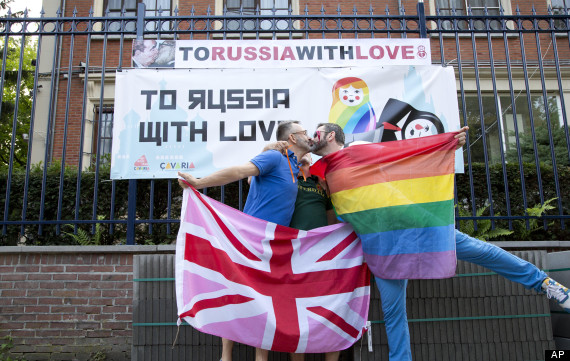
Though it has been depressing to witness the extent to which homophobia and violence against LGBT people remain so widespread in Russia as the Winter Olympics take place, it has been commensurately heartening to see the outpouring of support from so many other countries for Russia’s beleaguered gay population.
Artists, celebrities, politicians, ordinary citizens and fellow sports people have all registered their solidarity with the LGBT community and spoken out against discrimination and Russia’s strict laws against ‘homosexual propaganda’.
This is good – Russia continues its regrettable backward slide from nascent democracy into a corrupt authoritarianism, and as the IOC saw fit to make Sochi the winning bid for the Winter Olympics it is only right that the rest of the world ensures that the event does not descend into a mere forum for pro-Putin glorification.
But as the swell of voices raised in protest at Russia’s treatment of the LGBT population grows, it is becoming increasingly difficult to ignore the fact that many of those people throwing stones are living in enormous glass houses of their own – and that while it is great to revel in being less homophobic than Russia, this achievement alone is not much of an accolade.
As Laurie Penny writes in the Guardian, being less homophobic than Russia is no great feat of tolerance – the bar set by Russia can be cleared by almost anyone:
There’s absolutely nothing wrong with expressing support for LGBT people in Russia, who are facing grotesque discrimination. But being less homophobic than Russia is not necessarily something other countries should give themselves a medal for. A lot of things are less homophobic than Russia.
Queer activists call this sort of thing “pinkwashing” – playing up the gay-friendly branding of a state or corporation to make it seem more liberal than it actually is. Britain likes to think of itself as a tolerant place, but the Border Agency has been accused of almost “systematic homophobia” by the gay rights group Stonewall. Leaked Home Office documents show bisexual asylum seekers being asked degrading questions during hours of interrogation by Home Office officials – questions that included: “What is it about men’s backsides that attracts you?”
This is just one of several examples given by Penny, who points out the less-than-stellar track records of various other supposedly enlightened western countries – even the Canadians.
All too often, a generally increasing acceptance of homosexuality and LGBT people within the general population is not met with an equal acceptance in national bureaucracies and institutions. This is certainly true in Britain, as Penny points out, but is just as true in the United States, where condemnation about Russia’s awful treatment of the gays has been vociferous, but also seemingly ignorant of the many cultural and legal barriers to the full acceptance of gay rights that remain in America.
Britain’s Channel 4 television network apparently decided that the best way to respond to homophobia in Russia would be to make this video – entitled “Gay Mountain” – which has been playing nearly continuously between their scheduled programmes:
The song, which begins in the same portentous style as the Russian national anthem, quickly descends into a camp, colourful, musical extravaganza as the (shirtless) singer exhorts “Good luck Gays, on Gay Mountain”. The profound lyrics continue “Mens and all mens / And womens and all womens / Come together tonight, sing with pride”.
One YouTube user, identifying him or herself as IMB2U, commented:
We should all thank the Russian government for bringing everybody together and creating this huge wave of support and love for the LGBT community. Their hateful ignorance has brought on something wonderful.
Something wonderful? Really? Mildly amusing, perhaps. Entertaining and catchy, yes – if your tastes lean that way. But “wonderful” seems to be overdoing it a little.
While the sentiment behind Channel 4’s video – that of solidarity and support – is certainly admirable on the surface, one has to admit that it does absolutely nothing to improve the lot of gay, lesbian, bisexual or transgender people in Russia. Gay Mountain works perfectly at enabling us Brits – enlightened and sophisticated as we supposedly are – to feel good by sneering at the “backward” Russian people, but does absolutely nothing about actually helping the Russian LGBT community.
Laurie Penny also questions the value of these flamboyant gestures of support which do little, if anything, to help people in real need of tangible help and intervention:
Personally I have no problem with media outlets, businesses and individuals making jokes at the expense of homophobes, or hanging out the queer pride flag. It’s a statement of support that’s fun and costs nothing. But the fact that it costs nothing is precisely the problem. As soon as there’s a price tag attached, the foot-shuffling begins. The rainbow flag is supposed to symbolise safety. Hung over a bar, it’s supposed to mean that this is a place of refuge. For western nations to brand themselves in this way while subjecting LGBT people to humiliation and imprisonment at their borders is simply disingenuous.
While western nations flap the rainbow flag defiantly in Russia’s face, actual lesbian, gay, bisexual and transgender people are being harassed and abused at their borders when they arrive seeking safety. Supporting the rights of LGBT people worldwide is to be commended, but if that sentiment is more than pinkwashing, it should be backed up by action at home.
This just about sums it up. Statements of support from any quarters are welcome, but they don’t mean an awful lot when there is nothing to be lost by making them. Channel 4 has no business interests in Russia, the Russian people will not see the Gay Mountain video in any significant numbers, and Channel 4 has no contracts or revenues at stake in that country. In other words, they have absolutely nothing to lose. Contrast this with the behaviour of a western company such as Coca-Cola, which has a direct financial stake in Russia – both through sales of their product and sponsorship of the Sochi Games – and which has been very timid indeed when it comes to condemning the persecution of gay people there.
But what really tarnishes Channel 4’s civil rights musical extravaganza is not the pinkwashed song, but the caption that appears on screen at the very end – the words “Born Risky” superimposed on the gay rainbow flag:
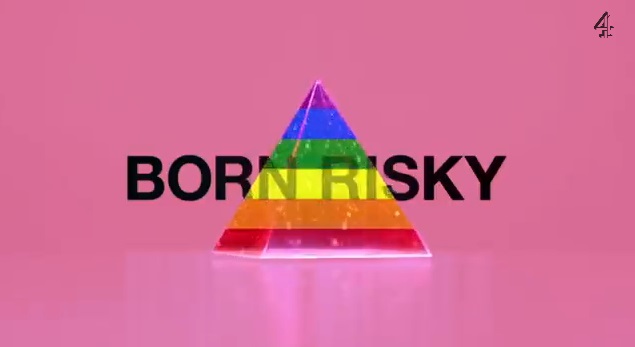
What exactly does Channel 4 believe to be “risky”? They risked absolutely nothing, we know that. But we do know that Channel 4 is inordinately proud of the fact that they like to get a rise out of people by setting out to provoke and offend them:
We were set up to experiment, provoke and entertain, and to put our profits into our programmes. You may love us, you may want to punch our lights out, but we make programmes we believe in. We can do this because we were Born Risky. That doesn’t mean “risky” as in naked abseiling, it means creatively risky. Like seeking out undiscovered talent, making films about taboo subjects or championing alternative voices. Born Risky means going where other channels can’t to create something new, alternative and different.
And so the whole campaign is revealed to be not about actually improving the circumstances of gay people in Russia (which we already knew) and not even about believing in or promoting gay rights in general, but rather about product differentiation. It was about burnishing Channel 4’s image as a provocative, edgy television network that likes to push the boat out, defy normal conventions and be a hip alternative to the boring old BBC.
Gay Mountain wasn’t about concern for LGBT people – it was just the next iteration of a very slick, very successful marketing campaign. And that goes rather beyond mere pinkwashing. I’m not sure which colour best represents the soul of a television network which is happy to capitalise on the suffering of foreign LGBT people to show its domestic audience just how cool and trendy it is, but it almost certainly would not be pink.
So by all means, let’s join in another rousing chorus of Gay Mountain. Let us be proud on gay mountain, as the song exhorts us to do. But when the singing is over, let’s not fool ourselves that we have done anything other than disturb the neighbours and make ourselves feel better, comfortably smug in our relative openness and tolerance.
And at least we helped improve the ratings of a certain television network.

There was once a debate about whether large Western multinational corporations – particularly the newly rising high tech companies such as Google, Twitter and Facebook – should do business in countries such as China, where governments are openly hostile to the concept of free speech, a free media and unregulated access to information for their citizens.
That debate was settled some time ago, the winners being those who advocated expanding into China and then perhaps doing a little bit of agitating or talking up the virtues of freedom when time and decorum allowed. And though there has been precious little lobbying of the government in favour of free speech by those multinationals, the investment in China has, by and large, been a good thing.
Having long ago lost the argument that it is not their place to participate in Chinese government efforts to filter and censor the web when operating in China itself, everyone was bobbing along quite merrily in a morally dubious equilibrium, where the big tech companies would parade their wholesome, consumer-oriented credentials around in front of anyone who would listen or take down quotes, while also co-operating with Chinese censorship requirements and allowing the NSA ready back-door access to personal information held on their servers.
Enter Microsoft.
It is now believed that in addition to complying with the Chinese government’s demands that search engine query results originating from mainland China are filtered and censored, Microsoft’s also-ran search engine, Bing, has been applying those same censorship algorithms to searches in the Chinese language originating from anywhere on the planet. In other words, Microsoft, either in their zealousness to please the Chinese regime or out of sheer laziness and unwillingness to maintain two separate protocols, has apparently been applying Chinese-style censorship to internet searches not just where the Chinese government has geographical jurisdiction but anywhere in the world, whenever the user happens to be searching in Chinese.
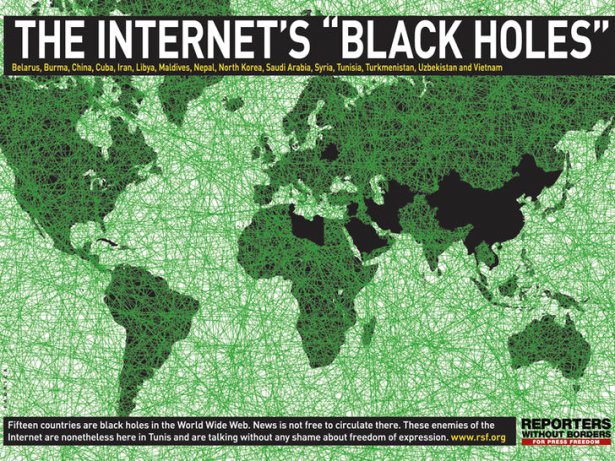
The Telegraph reports:
According to research by Greatfire.org, an anti-censorship campaign blog, Microsoft’s Bing search engine filters Chinese-language results around the world, in the same way as it does in mainland China
Searches for potentially controversial terms such as “Dalai Lama” produce very different results when they are carried out in Chinese than they do in English, even if both searches are carried out on US soil, Greatfire said.
Its claims are likely to raise questions about whether Beijing is trying to extend its censorship regime to the Chinese populations of other countries, and whether Microsoft is making inappropriate concessions.
This is inappropriate to say the very least. The Chinese government’s policy of filtering the internet for its citizens so as to effectively pretend that certain viewpoints, ideologies or historical events are not real is bad enough, as is the fact that Western technology companies have complied with it in order to gain access to Chinese markets while demanding and extracting no concessions or easing of restrictions in exchange. But this allegation, if correct, suggests that corporate malfeasance has been taken to a much more worrying level.
One of the great advantages of globalisation and the free movement of people is that people from different countries can be exposed to different ideas, practices and ways of working. Even though the internet is restricted in mainland China, Chinese citizens could access the full, uncensored internet when traveling abroad, just as they could read the free press. In turn, exposure of Chinese citizens to new and contradictory ideas from outside could ultimately increase pressure on the government to relax their draconian policies.
Basing internet censorship on language rather than geography, as Microsoft appears to be doing, completely destroys this premise and removes the potential for this to happen. As the Telegraph rightly indicates, it would appear that Microsoft is aiding and abetting efforts by the Chinese government to extend their control over expatriate Chinese populations in other countries. In countries such as Britain this may merely be an odious and shameful act, but in other countries such as America, where the right to freedom of expression is constitutionally enshrined, a plausible legal argument could potentially be made that Microsoft is committing a First Amendment violation and breaking the law.
This revelation also contrasts Microsoft very negatively with Google, whose own search engine results for sensitive topics prime for Chinese censorship remain similar whether the search is conducted in English or Chinese, when outside of the Chinese mainland:
Users searching for “Dalai Lama” in Chinese were offered a link to information about a documentary produced by CCTV, the Chinese state-owned broadcaster, before any other search results of results linked to two entries on Baidu Baike, a heavily-censored online encyclopedia. Yahoo, whose search engine is powered by Bing, produced the same results.
By contrast, Google produces broadly similar results for web searches conducted in the US, regardless of whether the terms are searched for in Chinese or English.
But it is Greatfire, the online transparency and pressure group, who pose the ultimate question to Microsoft:
But whose law is dictating the manipulation of search results for Americans who are using Bing in the United States? Or French who are using Bing in France?
It is one thing to prostrate oneself to the laws and whims of a foreign government when negotiating terms to do business in that country. But if incompetence or monetary greed has led Microsoft to start applying Chinese censorship laws to citizens of other countries, then they have a big case to answer.

Satya Nadella, Microsoft’s new CEO, may only be one week into his tenure in the top job, but this is a potential crisis of image and trust that needs to be nipped in the bud and resolved – yesterday.
Microsoft has gone silent in response to the allegations from Greatfire so far. When the firm eventually comes up with an official story and breaks the silence, it will be very interesting indeed to hear their excuses.

As the countdown to the opening ceremony for the 2014 Winter Olympics in Sochi nears its conclusion, Google marks the commencement of the Games:

A timely reminder of the Olympic values, at a time when the host country conspicuously fails to practice them when it comes to respecting and upholding the rights of its own citizens.
I was never in favour of the Olympics being awarded to Russia, especially at a time when that country’s tentative moves toward real democracy were being so rapidly undone and an authoritarian one-party government consolidated its power. Indeed, today’s Russia exhibits almost all of the characteristics that you would not want to see in a country hosting a major international event – corruption on a massive scale, dangerous levels of internal unrest, displacement of local people, oppression of minorities, lack of a free press, suppression of political dissent and the strangulation of democracy in every way.
But in mitigation, it should be remembered that in some very pertinent aspects, we are not so much more “advanced” or enlightened than the Russian state. Andrew Sullivan makes the excellent point that many people from the United Kingdom and United States who are so aghast at Russia’s controversial laws prohibiting “homosexual propaganda” overlook the fact that until quite recently, things were not so different back home:
At the same time, it seems to me we need to be careful not to misread the specific cultural context here. There’s a worrying tendency for some gay activists to assume that because a foreign country is not identical to the US on the question of gay rights, it’s an outrage that must be immediately confronted and changed. But America, only a decade ago, was not identical to the US today. Many states still have in their very constitutions the relegation of gay people to second class status. The last president of the US, George W Bush, wanted to enshrine the inferiority of gay couples in the federal constitution. It’s been only a few years since gays were able to serve openly in the US military. To turn around and then be shocked and appalled that homophobia is still very much alive and well in the Russian rural heartland is more than a little obtuse.
A fair point well made. Indeed, there are a number of British and American pundits and politicians, strident in their opposition to equal rights for gay people, who openly admire and praise the actions of the Russian government. And so I should reiterate that my antipathy is toward the authoritarian, corrupt President Putin and the culture that he has helped to create, and not toward the Russian people themselves.
I will watch the Sochi Olympics with interest, as I always do, and I hope that they are a wonderful sporting success, free from any of the feared violence or disruption. But you must excuse me for not joining in the celebration of the despot Vladimir Putin’s moment of triumph – the man does not deserve a victory lap on the world stage.

It is irking see the Conservatives so publicly and comprehensively outmanoeuvred by Labour recently on a variety of issues, most recently related to education and welfare. To witness the same thing now happen in the sphere of foreign policy is yet another worrying sign that the Conservative-led coalition government is coasting at this point, perhaps made complacent by the recent uptick in economic indicators, and taking their eye off the ball.
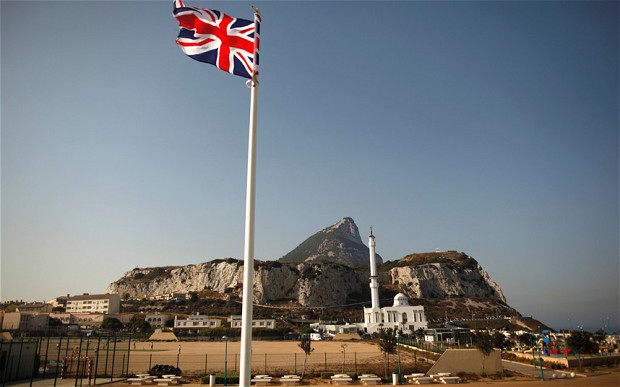
The Telegraph reports that Gareth Thomas, the Labour shadow minister for Europe, has raised concerns that Britain is not doing enough to forcefully push back against recent Spanish misbehaviour with regard to Gibraltar:
Gibraltar is a territory “under siege” and Spain should be made to account for its actions in relation to The Rock, the shadow minister for Europe has said.
Gareth Thomas, the Labour MP for Harrow West, said that residents of Gibraltar were concerned that Britain was not doing enough to defend them from Spanish harassment. The past 12 months have seen the highest ever number of incursions by Spanish ships into Gibraltar’s waters, with the almost double the incidents from 2012.
“I was struck by the sense that the Gibraltarians have of being under siege,” said Mr Thomas, who visited Gibraltar in November. “Spanish ships are coming into their waters on a regular basis.”
We have seen this before. The leaders of countries that are in the doldrums, facing economic malaise and restive populations (hi, Argentina), suddenly dredging up ancient grievances against Britain. Grievances that were once dead and buried during happier economic times. If you are going to make the case that the absence of the Falkland Islands or Gibraltar is like a gaping hole in your respective nation, I would have slightly more sympathy if we didn’t hear your plaintive appeals only during times of economic recession.
This continual harassment of a British overseas territory is unacceptable, and one cannot help but feel that the diplomatic protest by the UK in response has been far too small. Relying on a corrupt body such as the European Commission to mediate the dispute by visiting Gibraltar was clearly never going to be the answer, and why William Hague thought that this option would be sufficient to resolve the situation is mystifying. Diplomatic pressure is clearly failing in this case, and more stringent unilateral action may be required to bring the Spanish back into line. Bullying behaviour tends only to respond to a show of strength, a clear assertion that the bullying will no longer be tolerated.
Of more concern to me, though, is the fact that William Hague, the Foreign Secretary, has failed to make it sufficiently clear that Britain will not tolerate these childish antics. I had not expected someone so competent and capable to drop the ball or fail to forcefully defend the interests of the UK to the extent that he clearly has. Showing forebearance to Spain on the issue of Gibraltar, particularly given the childish means by which the Spanish government chooses to pursue its non-cause, is no longer cute or charming or patient. It’s weak.
Michael Gove on education, Iain Duncan Smith on welfare and now William Hague on foreign policy, all caught napping and hit from the right by their Labour counterparts. I don’t know whether a weekend retreat is in order at one end of the spectrum, or a wide-ranging cabinet reshuffle at the other, but David Cameron urgently needs to get his cabinet to come out of cruise control.

 Semi-Partisan Politics