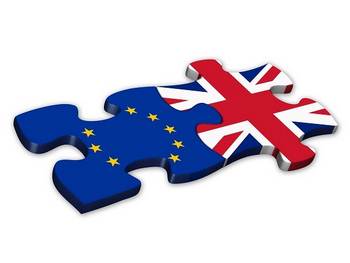
The Other European Election


EU British flags

You may not realise it, but there’s an election campaign in full swing at the moment.

No, not the one in the news where everyone screams about immigration and take turns accusing one other of being either fascists or traitors – that campaign is certainly happening, but it’s an exclusively British affair. The rest of Europe, on the other hand, is engrossed in quite a different campaign, focused on the policies and initiatives to be pursued by the European Union.

There’s a cuddly-looking German chap named Martin Schulz running for José Manuel Barroso’s soon-to-be-vacated job as President of the European Commission – in fact, Schulz is quite likely to win. He has been busily campaigning for the job, holding events in cities throughout Europe, but you won’t see him talking to prospective voters anywhere in Britain. People here would be bemused to see him even if he came, failing to understand the significance of the role he seeks or the details of his specific policies (such as they are).

In short – Britain is continuing its introspective (and perpetually unresolved) debate over whether or not to remain a member of the European Union, while the the twenty-seven other member states discuss how to shape and influence European policy, having already decided (or resigned themselves) to their secure place within the EU club. Guess whose voices are heeded and turned into tangible actions, and whose voice is either politely ignored or never heard at all?

He's running for President of something...
He’s running for President of something…


There is plenty of blame to go around for this wretched and depressingly familiar state of affairs.

The lions share of the blame must rest with successive British governments and prime ministers who failed to check back with the British people as the European Community (which won 66% approval in the 1975 referendum) slowly morphed into something much grander and more far-reaching than the common market that so appealed to the voters in Harold Wilson’s day. Each subsequent treaty and tightening of the ever-closer union served only to increase the disquiet and pushback against what was happening, and rather than hold a fresh debate over Britain’s membership or make ratification of the new treaties subject to a national referendum, the British government cut the people out of the loop on fundamental matters of sovereignty.

There is plenty of blame to be lavished on the europhiles, too. For decades now, their mantra has been that “of course Europe needs reform”, but that this can only be achieved with Britain as an active and participating member, not as a surly observer from the sidelines. Unfortunately, by continually fighting the eurosceptics to a draw, Britain’s negotiating stance has barely budged in all that time – we neither became deeply committed members at the vanguard of European policymaking, but neither did we leave our continental neighbours to their own devices.

But there is also blame for the eurosceptic movement, whose chief advocates have often been their own worst enemy when it comes to advancing their agenda. Doom-laden apocalyptic predictions of Britain’s demise within a suffocating EU were revealed time and again to be overblown. The EU was certainly a drag on economic growth and job creation, but  it was not the nail in the coffin of the UK as an independent entity that some insisted it would be.

More recently, eurosceptics – particularly UKIP – have been at fault for focusing so much of the debate on immigration, specifically the number of economic migrants entering the UK from eastern Europe in order to work. In their effort to ride the tiger of British anti-immigration sentiment, UKIP has become a lightning-rod for criticism about their real motivations (read: accusations of racism) and the immigration debate has drowned out many of the other eurosceptic points about loss of sovereignty, burden of regulation and misspent money.

In all of these failings, the British media have been complicit. Given the choice between explaining the technical workings of a byzantine EU organisation structure and policy debates or playing exciting footage of Nick Clegg and Nigel Farage ripping chunks out of each other in a televised debate, the press has consistently taken the low road, abdicating any real responsibility to inform and educate.

And so it is that with the European Parliament up for election and powerful EU positions also in play, the campaign in Britain is being fought almost exclusively along domestic political lines. If you like the Labour Party and plan to vote for them in the concurrent local council elections, chances are you will vote the same way when you fill in the European election ballot paper. Complex issues such as regulation or taxation of financial transactions, and other contentious policy debates that will occupy Europe in the months ahead, are covered only from the topmost level of detail (regulation good / regulation bad) with none of the detail and nuance that makes for informed decision-making.

This blog is unabashedly eurosceptic, appreciating what the EU has done to forge links between the nations of Europe and prevent further twentieth century bloodshed, but balking at the fact that the goals of ‘ever-closer union’ and the creation of a supra-national and undemocratically accountable superstate are being so vigorously pursued without the full cognisance or permission of the people of Europe. Nonetheless, given the extent to which EU laws, regulations and institutions are currently intertwined with the fabric of Britain, on balance it could well be better for Britain to enthusiastically embrace the EU than to maintain the current harmful ‘half-in, half-out’ status quo.

Today we in Britain truly do enjoy the worst of both worlds – subject to all of the rules and requirements of EU membership but only half-committed to the decision making process, and alarmingly ignorant of the European institutions and how they work. While a negotiated and amicable secession would be the best option, better to join France as the EU’s co-head cheerleader than remain dissatisfied on the margins any longer.

This is why David Cameron’s proposition to the electorate – that we vote Conservative in exchange for an in-out referendum in 2017 after certain nebulous ‘concessions’ have been negotiated for Britain – is so unappealing. Putting aside the fact that promises to hold referenda are routinely discarded by politicians without a second thought, endorsing this policy only condemns Britain to two more years of limbo and unnecessarily limited influence over EU policy while any potentially fruitless renegotiation takes place.

There are two parties who proudly distrust the British people to make an informed decision and advocate for continued membership of the European Union, public opinion be damned – but since the Liberal Democrats are likely to be wiped out as an electoral force at these elections based on current polling, Labour is the party to choose if you adhere to this vantage point. And this essentially makes it a two-horse race.

UKIP vs Labour. Amicable secession from the EU vs continued membership and slightly more enthusiastic engagement with Brussels. At this point either option will do. What we cannot, must not do is continue to have the same navel-gazing debate for another wasted decade.

If Britain is to continue going to the trouble and expense of sending elected representatives to Brussels (and Strasbourg), her people deserve a real European election campaign.

Should We Punish Artists For Their Political Beliefs?

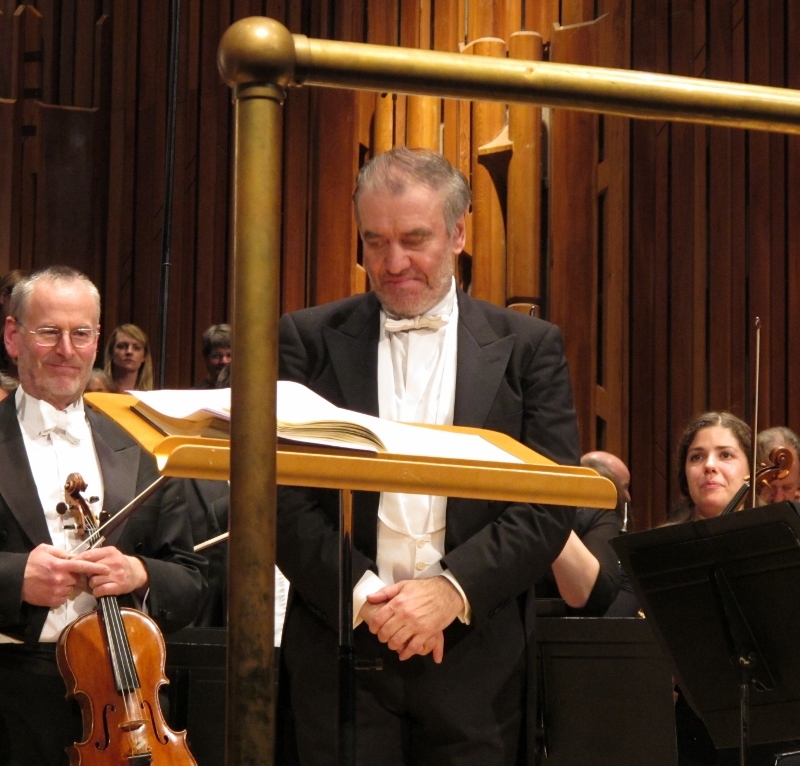
LSO Valery Gergiev
Maestro Valery Gergiev with the London Symphony Orchestra


Music and politics make uneasy bedfellows, and this timeless truth has only been reconfirmed with the continuing tumult and unrest in Ukraine.

Russia, the protagonist in this latest crisis, provides ample recent evidence that politics and music are best kept apart. The punk band Pussy Riot, for example, is hardly ever out of the headlines in recent months, with members being jailed, released, threatened and attacked by the authorities merely for adding their voices to the civic discourse, for wanting to make themselves and their beliefs heard.

But at the other end of the artistic spectrum, for the fine arts – especially classical music – the problem is not the Russian government’s persecution of artists, but artists’ apparent eagerness to praise the political leadership and to lend President Vladimir Putin their credibility.

The most famous current case is the Russian conductor Valery Gergiev, principal conductor of the London Symphony Orchestra. Gergiev was one of the most prominent Russian artists to sign an open letter in support of Vlarimir Putin’s foreign policy towards Ukraine. Part of the letter’s text reads:

In the days when the fate of our compatriots in the Crimea is decided, Russian cultural figures can not be indifferent observers with a cold heart . Our common history, our cultural roots and spiritual origins , our fundamental values ​​and language have united us forever. We want to see the commonality of our peoples and our cultures have a strong future. That is why we firmly reiterate support for the position of President of the Russian Federation and Ukraine Crimea.

Sometimes, these messages of support for Vladimir Putin’s policy of aggression are downright perplexing, such as when the Russian Writer’s Union decided to make their love and support for Putin known in a very Soviet style open letter, a sloppy wet kiss to power. Craven though they can sometimes be, one can hardly imagine the British or American press joining together as one to praise and defend the Cameron or Obama foreign policies.

At other times, however, particularly in the case of artists responsible for institutions that depend on government support, the situation is not so clear-cut and such acts of public sycophancy may be part of the inevitable cost of doing business. The Financial Times picks up on this point:

There is little doubt [Gergiev’s] position is compromised. Deep down he is a nationalist, as his ill-judged support for the Russian intervention in Georgia in 2008 demonstrated. At his two Mariinsky theatres in St Petersburg, he has 3,000 employees on his payroll and a rich tradition to maintain. No other figure could raise the kind of money that Gergiev does to keep the Mariinsky going. Much of that money comes from members of the Putin circle. If Gergiev is presented with a petition in support of government policy, he is obliged to sign – unlike prominent freelance musicians such as Denis Matsuev and Yuri Bashmet, who have foolishly toed the line.

This is perhaps a distinction worth making, though it could equally be argued that the brave and moral thing to do would be to speak out against government malfeasance, consequences be damned. US country music group The Dixie Chicks tried this approach in 2003 when they spoke out against their president and their country’s imminent invasion of Iraq.

The aftermath was not pleasant, and it is a brave person who now does what the Dixie Chicks did – and this was in the United States, where the rule of law still means something. One can only imagine what might befall the likes of Gergiev if they actively spoke out against their government, when even maintaining a diplomatic silence would invite negative repercussions.

But of course Valery Gergiev would not speak out against Vladimir Putin’s policy of bullying and undermining Ukraine; he actively supports it, his signature to the open letter was enthusiastically given. So the question then becomes one of whether artists with differing political or world views should continue to be welcomed in foreign concert halls, or be else ostracised and made artistic pariahs?

A significant weight of critical opinion seems to be coming down on the side of ostracisation and intolerance. Prominent human rights campaigner Peter Tatchell has already made headlines by protesting Valery Gergiev’s continued association with a top-flight British artistic institution, going so far as to hijack the opening night of the London Symphony Orchestra’s Berlioz season in November 2013 and later issuing an open letter to the LSO, effectively demanding Gergiev’s dismissal. The letter concludes:

It is our view that Mr Gergiev’s current position is untenable and he should be suspended with immediate effect until he officially withdraws his name from the list published on the Russian Culture Ministry’s website and fully explains his position on the Anti-Homosexual Propaganda Bill.

If he decides he is not prepared to do this, his employment should be terminated as he is not an appropriate person to be in receipt of UK public funding. He supports discriminatory legislation which goes against the UK values of equality and diversity, and he supports Russian military action which the prime minister and foreign secretary have unequivocally condemned.

Ironically, the open letter sent by the Peter Tatchell Foundation and the Ukrainian Institute uses the same basis of government-policy-as-justification that we see in the Russian Ministry of Culture’s letter of support from Russian artists. Tatchell’s letter demands that Gergiev be fired because he supports a policy “which the prime minister and foreign secretary have unequivocally condemned”. Does this then mean that any artist or artistic institution not in complete accordance with the current views of the British government should be denied funding and actively picketed?

As is so often the case with campaigners from the political left, it is never enough to let the people vote with their feet on matters of moral principle. Rather, they instinctively turn to the government to invoke its power to make people fall into line. If it transpired that Valery Gergiev was jetting off between concerts to personally help foment unrest in eastern Ukrainian cities, people would be outraged and his situation would immediately become untenable. But he has not, and would never do this. Ultimately, Gergiev is guilty of little more than supporting the overwhelming view – however wrong it may be – among his own countrymen, something that most of us would likely do ourselves.

The Washington Post also picks up on this point, noting that famous Soviet artists were welcomed when they performed in the West even at the height of the Cold War, at a time when diplomatic relations were far more precarious than they are now:

If a musician chooses not to take a stand, he or she is often automatically charged with collaboration in any case. Gergiev, through his support of a challenging regime, may have in some sense “deserved” the protests at some of his concerts in 2013 (though this was not a reaction many Soviet artists got when they performed in the West at the height of the Cold War, sent by an even more suspect government).

For those in the West who watch Russia’s bullying and takeover of parts of Ukraine with mounting concern and anger, it may well provide a moment of catharsis and sweet justice to send the likes of Valery Gergiev packing prematurely from the London Symphony Orchestra, and to see other prominent Russian artists who do not disavow their country similarly exiled.

But it is precisely at times like these – when passions are high and tempers flared – that humanity most needs to remain in touch with the few common threads that unite us all. Music is perhaps the most precious of these unifying threads. After all, while the West may have a legitimate quarrel with the Russian government, the Russian people are largely innocent, as much victims of Putin’s repressive regime as the people of Ukraine and Crimea.

And even when prominent artists such as Valery Gergiev weigh in on the “wrong” side of an international dispute or a political debate, how can it be right to sever an important international cultural tie, a key reminder (to quote John F. Kennedy) that whatever our many differences, “We all inhabit this small planet. We all breathe the same air. We all cherish our children’s futures. And we are all mortal”?

In the end, it was Valery Gergiev together with the London Symphony Orchestra and Chorus who answered the conundrum most eloquently, with their recent concert performance of Alexander Scriabin’s First Symphony, part of Gergiev’s ongoing promotion of the Russian classical repertoire and a concert attended by Semi-Partisan Sam.

Sitting in London’s iconic Barbican concert hall, the rich sound of the LSO’s strings and peerless brass section enveloping the audience as the symphony drew toward its noble conclusion, hearing the chorus intone “Slava isskustvu vo veki slava!” – Britain’s finest musicians conducted by a Russian maestro – it hit home that if anything is truly transcendental, if anything must be held sacred and kept apart from our cynical, self-serving and sometimes hypocritical geopolitics, it should be music.

From the text of the choral finale to Scriabin’s first symphony, in praise of art’s unifying gift to humanity:

You are an exalted vision of life,
you are celebration, you are peace,
you bring your enchanted visions
as a gift to humankind.
In those cold, dark moments
when our souls are troubled,
mankind can discover in you
life’s joys, consolation and forgetfulness.

Gather here, all nations of the earth,
let us sing the praises of art!
Glory, eternal glory to art!


More on Scriabin‘s first symphony hereMore on the London Symphony Orchestra here.


Nigel Farage vs The Politically Correct Line On Russia

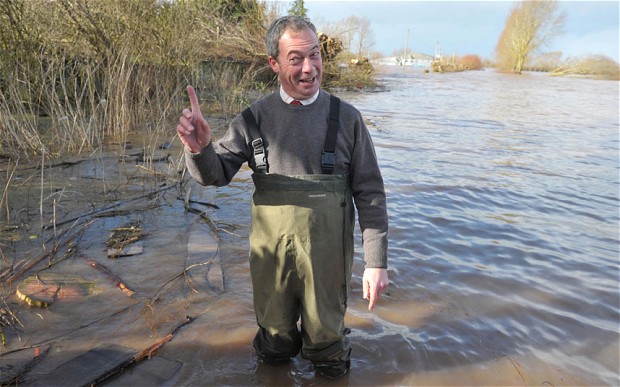
Attempts to sink Nigel Farage tend to fail


In the aftermath of last week’s debate on Britain’s place in the European Union, UKIP leader Nigel Farage had gall to say that he admired the tactics of the despotic Russian president Vladimir Putin. Not that he admired Putin as a person, agreed with his annexation of Crimea or supported his policies in any way, mind you – just that he thought Vladimir Putin had played a good hand and used methods both conventional and shady to advance the national interest of his country.

To hear Deputy Prime Minister Nick Clegg’s subsequent shrieks of outrage, quickly repeated and parroted thoughtlessly by numerous political commentators and talking heads, you would think that Nigel Farage had whipped a large Soviet flag out from behind his podium and paraded up and down with it during the debate, singing  the State Anthem of the USSR at the top of his lungs (incidentally, it’s a cracking piece of music).

The second live televised Leader’s Debate on the EU will take place tonight, and given the establishment media’s heroic efforts last week to spin the results of the first as a victory for the hapless Nick Clegg – until overwhelming reality and the results of a YouGov poll made their position indefensible and forced a sudden reassessment of Farage’s performance – this blog aims to clear the fog of war which still threatens to obscure what Nigel Farage actually said (eminently reasonable) and what he has subsequently been accused of saying (treachery).

Here is what Nigel Farage actually said, when asked by Alastair Campbell which world leader he most admired:

“As an operator, but not as a human being, I would say Putin. The way he played the whole Syria thing. Brilliant. Not that I approve of him politically. How many journalists in jail now?”

 The recognition of Putin’s moral failings and outrage at Russia’s insidious suppression of free speech was not enough to save Farage from what followed. The point was clearly that Russia has been running rings around a hopelessly divided (and in some cases, morally equivalent) international community, not that Russia pursued a just or worthy course of action.

Nick Clegg chose to see it somewhat differently:

“It shows quite how extreme people can be like Nigel Farage when their loathing of the European Union becomes so all-consuming that they even end up siding with Vladimir Putin in order to make their point.

The only reason we are able to seek to exert any influence – and it is difficult enough as it is – on Vladimir Putin is because we can act with the clout of being part of the economic superpower that is the European Union, upon which Russia depends a lot.”

A heady mix of deliberate misrepresentation and the sadly typical denigration and talking down of Britain’s capacity to act in it’s own interests on the world stage such as this would be remarkable coming from anyone other than the Liberal Democrat leader and our Deputy Prime Minister.

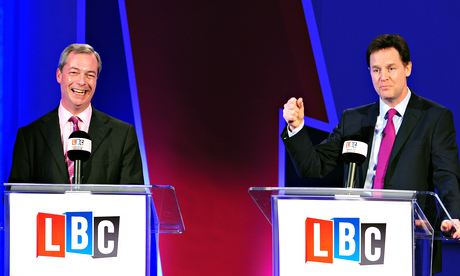
Clegg and Farage


Former Conservative Foreign Secretary Malcolm Rifkind also loses the plot over Farage’s comments, railing against the UKIP leader in his uniquely blustering, pompous style:

How very revealing. When asked which world politician he most admires, Nigel Farage chooses, of all people, Vladimir Putin. While others might have sought a successor to Winston Churchill or Nelson Mandela, Farage fawns over an autocrat who has made Russia the least free country in Europe – a man who locks up his political opponents and has just invaded his neighbour, annexing part of its territory.

Rifkind also chooses to go with the trusty trick of blatant misrepresentation. Nigel Farage was clear to add the caveat “as an operator, but not as a human being” before making his comments about Russia’s effective foreign policy. Those key words by Farage, which place his remarks in context and which came literally right before the ones that Rifkind quoted to support his diatribe, seemed to sail past his ears unnoticed.

Rifkind then goes on to miss the point entirely:

[Farage’s] irresponsibility has not just been restricted to Putin’s behaviour in Ukraine. He described Putin’s policy on Syria as “brilliant”. Does he not realise that Russia has vetoed every resolution in the UN Security Council that was aimed at pressing Assad to end his murderous violence – which has led to the deaths of over 140,000 Syrian men, women and children? Does he not know that without Russian arms supplies, the Assad regime would have been forced to negotiate an end to the civil war two years ago?

Again, we see the deliberate, false equating of Farage’s admiration of the brilliant execution of an terrible policy with actual support for that policy. But the two are clearly not one and the same, no matter how much the prevailing climate of political correctness may insist that because something is judged by the collective to be bad, all aspects of it must be denounced as equally terrible and any positive aspects be purged from discussion and memory.

Russia’s annexation of Crimea is outrageous and terrible – on that much, nearly everyone aside from Russia agrees. But to stop at saying that is not enough for the politically correct pundits of today. In this world, because Russia has done this terrible thing and made itself persona non grata in the international community, we all must now say that everything about Russia is bad, and never acknowledge any good until we are told by our superiors that it is safe to do so.

To be fair, Russia makes this task quite simple. Through their domestic and foreign policies on any number of issues, that country has placed itself on the wrong side of human rights, freedom of speech and even the arc of history. The lamentable implosion of Russia’s nascent democracy is well known, as are the stories about increasing suppression of free speech, the government takeover of the media and Russia’s appalling record on civil rights for gay people. But why must all of these misdeeds be meticulously restated before a British politician can say the truth – that despite Russia being completely wrong on all of these issues, they played their foreign policy hand really well in support of their own national interests?

Telegraph columnist Tim Stanley hits the nail on the head in support of Nigel Farage’s right to say the blindingly obvious:

Farage’s sin was to say that he admires Putin as a political leader, although not as a human being. Why this is controversial, I have literally no idea. Farage made it abundantly clear that he regards the Russian leader as a despot (“How many journalists in jail now?”); he simply thinks that he outwitted Obama on Syria. I think that; you think that; even Obama probably thinks that … Ah, but you can’t say such things out loud because the consensus in Westminster right now is that Putin is Hitler, Ukraine is the Sudetenland and anything less that outright Russophobia is treachery. And probably a little bit homophobic.

Precisely. Believing that Putin outwitted other world leaders in terms of the response to the awful situation in Syria does not imply support for Putin’s position, just as believing he is currently one step ahead with regard to Ukraine does not mean that Nigel Farage wants Russia’s gamble to succeed.

Tim Stanley continues, giving a brilliant summation of the current problem with British political discourse:

And that’s Farage’s real sin: he dares to be different. Contemporary British politics works by an unusual degree of consensus. All three party leaders want to stay in the EU, all wish to preserve the principle of the welfare state, all back gay marriage, all accept the need to go green, none will challenge the concept of open borders on immigration. Some or all of these positions may well be right – that’s not the issue. The issue is that this homogeneity of opinion is fundamentally undemocratic. In democracies, voters are supposed to be offered real choices rather than one establishment philosophy spun three different ways. To make matters worse, the party leaders now not only sound alike but also lookalike.

This much is true, and scarily so. The sad fact is that the British political elite have imposed a consensus on society that the people themselves have not yet reached. For good or ill (okay, for ill) there is a large rump of opinion within the British population that would bring back the death penalty in a heartbeat, scrap the new legalisation of gay marriage, become Fortress Britain for immigrants seeking the right to work, and undertake any number of other regressive policies. But in Britain the elite went ahead and determined the “correct” answer to all of these issues on behalf of the people but without seeking their input, and so the debate is continually suppressed – except for when it bubbles to the surface manifested as support for the insurgent or extremist parties.

Contrast the situation in Britain with that in the United States. The political debate there is no more enlightened or informed, but there is still the sense that they debate important issues, often from diametrically opposing viewpoints. The US senate hears strident views from such diverse characters as self-proclaimed socialist Bernie Sanders, the senior senator from Vermont, as well as the fire-and-brimstone filibusterings of Tea Party darling Ted Cruz. And people with views anywhere within this spectrum are made to feel welcome in the political debate. As a result, though the American process is a lot slower, louder and more contentious, when political unanimity is finally reached (and it takes a long time – civil rights has more or less just crossed the line, with gay rights looking at another 30 years of toil) it is much more strongly reflected in the people, and is consequently much more likely to stick.

The difference could not be clearer – a lively national debate where everyone feels they can speak and be heard, or the stultifying restrictions of an artificial consensus imposed by the political elite.

Now faced with a politician who refuses to follow the approved talking points on Russia, these weasely politicians who came scurrying out of the woodwork to denounce Nigel Farage over his comments are deliberately misleading the public and attempting to change the narrative. Hell, let’s call a spade a spade – they are lying, deliberately lying to the British people in the political establishment’s latest doomed attempt to make Nigel Farage, the UK Independence Party and the millions of people who share his viewpoint seem extremist, weird and dangerous.

All of these armchair pundits know what Nigel Farage meant when he said he admired the direct effectiveness of Vladimir Putin’s assertive foreign policy as compared to the dithering and retrenchment which have all too often characterised the governments of David Cameron and Barack Obama. But why let a non-story go to waste when words can be twisted and mischaracterised to falsely make their speaker sound like the CEO of the Vladimir Putin Fan Club?

Of course, all of this kerfuffle could have been avoided if Nigel Farage had chosen his words more carefully. Had Farage prefaced his words with a lengthy (but surely unnecessary) denunciation of Russia’s behaviour and Putin’s morals, he might have escaped censure by the self-appointed moral arbiters of British political debate. That’s exactly what they want to happen, and it is why they are now so furious with the idiosyncratic UKIP leader, resolved once more to try to drive him out of British politics.

In the heavily thought-policed world of Nigel Farage’s critics, no opportunity to say The Correct Thing should ever remain unseized. If you want to make a point about the effectiveness of Russia’s foreign policy then that’s okay, but by God you had better utter the cross-party approved talking points before you do so. Only once all of your political pronouncements become entangled in endless disclaimers and footnotes grounding them in established political correctness will these meddling people be satisfied.

Tim Stanley puts it well:

Westminster is going to continue hitting its head against the brick wall of public antipathy towards politics-as-usual. The more that Farage acts up, the more different he seems, the more the establishment will hate him, the more the voters will like him.

And there, right there, is the popularity of Nigel Farage. Political correctness and towing the establishment party line? He will have none of it, thank you very much. Whether you like his political stances or not, he is the only leader of a major political party in Britain who remains willing and able to speak honestly and passionately as though he isn’t reading from a focus group-approved script.

How richly will the voters reward him in May’s elections for daring to talk like a normal human being?


The next Leader’s debate on the European Union takes place tonight (Wednesday 2nd April) at 1900 BST, and will be shown on BBC Two.

Britain’s Future In Europe – Reviewing the LBC Debate

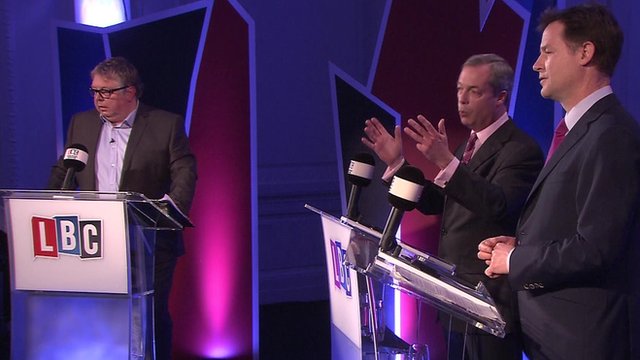
Image from BBC
The LBC debate on Europe – Image from BBC


Finally, the British voters got what they had always wanted – a real debate between politicians on the merits and disadvantages of Britain’s continued EU membership. The political elite and main party leaders may have snubbed the debate and thumbed their noses at the concerns and sentiments of the people, but the discussion went ahead nonetheless, thus proving that important and thorny issues will be debated and tackled in Britain, even when it does not dovetail conveniently with the news strategies of the main political parties.

This blog offered a running, real-time commentary on the debate as it took place, on Twitter.

Nick Clegg, having been nominated to begin the debate, started with the risible and misleading suggestion so beloved of Europhiles that Britain’s trade with Europe and membership of the European Union are essentially one and the same thing – that to leave the political organisation that is the EU would be to build a wall and sever all trade ties with our continental European trading partners. Of course, in reality this is simply not the case, and Nigel Farage took the earliest opportunity to swat down this false argument.

Farage continued his strong start by cunningly reversing the question and asking if Britain were currently outside the EU, and given what we all now know about the costs and flaws and drawbacks of EU membership, whether the British electorate would likely vote to join. This simple shifting of the lens on the debate is clever, and moves focus away from distracting side-issues about the mechanics of secession, looking instead specifically at the merits.

The debate then moved on to whether a referendum on British membership of the EU is desirable at all. Here, Farage did a superb job of calling out the main political party leaders for repeatedly promising referenda in the run-up to elections and then back-peddling or stalling when the time came to deliver on the promises.

Here, Nick Clegg was firmly on the defensive, continually resorting to the official line that he might deign to grant the British people a say on future EU membership, but only in the event of some future treaty change. The justification for this particular stance, at one time used by all of the major political party leaders, has never been convincingly made. People in Britain are unhappy with the EU as it is now, not with how it might be after some as-yet unknown treaty modification. So why can the debate and the referendum not take place on Britain’s current status quo relationship with the EU? As this blog observed at the time, if you catch someone stealing from you, you don’t wait until the next theft before alerting the police, you would do so immediately. And so if Britain’s EU membership has been acting against our national interests, why should the British people have to wait until the next harm is caused to the country before seeking redress?

Of course, the topic of immigration was raised, thus exposing the major chink in UKIP’s armour – the perception that the party and its supporters are hostile to immigrants per se. The fact that the question was asked by an audience member of the ‘swivel-eyed lunatic’ type appearance and then heartily embraced by Farage did not help matters. A party that aims to abhor regulation and restrictions on business and the market really needs to ask itself if continued opposition to immigration is a sound policy in 21st century Britain.

Aside from this inevitable rocky point, Farage remained combative and humorous throughout, while Clegg – despite deploying his usual tricks of staring into the camera and repeating the names of audience members as many times as possible – seemed defensive and on the back foot. There was even time for an awkward Marco Rubio-style on-camera gulp of water from the Deputy Prime Minister.

Farage landed yet another blow on Clegg when he reminded viewers of the apocalyptic doomsday scenarios laid out by pro-Europeans in the 1990s, claiming that Britain’s economy would be dealt a mortal blow if we failed to sign up for the single European currency. “Thank God we didn’t listen,” thundered Farage, to loud applause.

This left Nick Clegg scrabbling around for any remaining mud to sling at Nigel Farage and the Eurosceptic movement. In the end, he resorted to a beloved bogeyman of British social discourse, paedophilia. Nick Clegg, in his desperation to score a final point against Nigel Farage, actually appeared to suggest that British secession from the EU would eradicate Britain’s ability to extradite and prosecute paedophiles – a ludicrous argument, and basically a reassertion of the false argument that Britain would leave the EU without drawing up replacement political, trading and justice treaties with the remaining member states.

And on that damp squib of a counter-argument, save only the closing statements, the debate was over. A solid victory for Nigel Farage, one might have thought, until one witnessed the commentary on television and the internet.

Several commentators rightly pointed out that the media showed several worrying signs of institutional bias. In the buildup to the televised debate, ably anchored by Kay Burley on Sky News, at one point a panel member – a visiting university student from America – was asked if she was ‘worried’ or ‘alarmed’ by the fact that Britain was debating the topic as she landed in the country. Never mind the fact that the poor girl clearly knew next to nothing about what the EU is or how it works, the question was so leading as to be risible. Rather than painting the in/out decision in more clinical terms and asking for a comment, it was suggested to the American student that the very idea of Britain leaving the European Union is alarming and scary. Naturally, the student – on live television – agreed with the questioner that it was indeed a scary prospect. So much for objective coverage.

Peter Oborne, writing in The Telegraph, also found significant institutional fault in the way that the mainstream media handled the coverage and the issue of Britain’s EU membership in general. Oborne saw a deliberate attempt to spin the results of the debate as a victory for Nick Clegg and the pro-European side, until the overwhelming results of the post-debate poll forced them to amend their stories:

Last night’s debate between Nigel Farage and Nick Clegg was a very good example of this phenomenon. The lobby wanted a Clegg win and … collectively called victory for Clegg the moment that the debate was over.

It was only when the YouGov poll came through showing that Farage had won the debate hands-down with the public that lobby journalists were forced into an abrupt U-turn.

I am not going to embarrass reporters by naming names. However, it is fair to hold both Sky and the BBC to account.

Oborne concludes that the UKIP and Eurosceptic-leaning side not only have to win their argument in the court of public opinion, but also overcome a second opponent in the British press:

Farage is leading a political insurgency. Last night was a reminder that Ukip’s opponents are not just the other political parties, but also the mainstream British media.

The Spectator also picked up on the media’s U-turn upon realising that their preferred narrative was falling apart in the face of the YouGov poll:

Nick Clegg had been given the night off babysitting; but, after the poll verdict on tonight’s EU debate with Nigel Farage, he may wish he’d stayed at home with the kids. As the dust settled, the Deputy Prime Minister was bundled into a car and fled the field of battle. Meanwhile, Nigel Farage headed for a victory lap at the Reform Club, where his party donors had been watching.

Backstage, Westminster’s hack-pack was necking cheap vino and Pret sandwiches after carrying out a spectacular volte face. Initially ‘the spin room’ had called the duel for Clegg, on both style and substance. But, as news of the Sun/YouGov poll filtered through to the scribblers, headlines were rewritten and awkward tweets deleted. Soon, only the BBC was left flying the Clegg flag, with the help of Danny Alexander and Tim Farron.

And even now, in the cold light of a new day, the general consensus from the headlines appears to be that that it was an honours-even draw, and that there were ‘no knock-out blows’:

The question of the hour, should Britain stay in the European Union? But the question now being asked? Who won, Nick or Nigel?

Well, it might be disappointing but both men certainly remain standing after tonight’s event. Neither was knocked to the ground and both sides will be pleased with how their leaders performed.

Given the testy nature of the debate and the fact that Nick Clegg was on the back foot for nearly the entire duration, one wonders what would have had to happen – short of either man accidentally lighting his podium on fire – for the news media to declare an actual victory for either side.

And this typifies a problem that is becoming endemic in the news media, not only in Britain but also in the United States. All too often, there is such a tremendous pressure to appear nonbiased and objective that news organisations are terrified to report on anything of a partisan nature without giving equal balance to both arguments. The compulsion to treat both sides of an argument as equally valid and legitimate – even when one is clearly correct and the other one wrong – is paralysing the ability of many news outlets to correctly report the news, even when there is no deliberate attempt to give favourable editorial treatment to a particular side.

The only news outlet with a convincing explanation (i.e. one not based on bipartisan spinelessness) for why both UKIP and the Liberal Democrats seem happy with last night’s debate is The Spectator:

Nick Clegg and Nigel Farage may have looks straight into the same camera and appeared to be addressing the same audience, but they were aiming for different listeners. That’s why the Lib Dems were happy with the 36 per cent that they polled last night. It demonstrates to them that there is some kind of constituency that likes to hear a politician being honest that he likes Europe and that he is pessimistic about Britain’s chances outside the EU.

Last night’s result also demonstrates that even if you appear a bit ratty and sweaty at times, as Nigel Farage did to those who are not instinctively his supporters, you can still win the debate, because there is a bigger constituency of voters who do agree with what you are saying, even if you’re not as polished as Nick Clegg. Thus the first of the two debates went very well for both parties: both were shoring up their own bases and motivating them to vote in elections with typically very low turnout. The real mission for these party leaders is to get their voters to go to the polling booths, not bother about people who haven’t made up their minds.

This ‘one debate, two audiences’ explanation makes a good deal of sense.

Of course, there is one further debate to take place, this one hosted by the BBC on Wednesday 2 April. Again, the Prime Minister and Leader of the Opposition have declined to participate. And once again, despite their resistance and the timidity of much of the British press, the public will continue to debate the issues in their absence.

At Last, A Debate On Europe


Europe: The LBC Debate


Tonight at 7PM, the British public will finally be granted what they have wanted – and been consistently denied – for years: a debate on Britain’s continued membership of the European Union. This would be a great milestone to celebrate, were it not for the fact that the two most important protagonists in British politics – Prime Minister David Cameron and opposition leader Ed Miliband – are entirely absent from the festivities.

Nonetheless, the match-up between Deputy Prime Minister Nick Clegg and UKIP leader Nigel Farage should be one to watch.

Tim Stanley at The Telegraph has the best preview of the debate, which is well worth a read:

We might wish that Ed and Dave were debating the EU, but at least someone is. It’s proof that the Europhiles realize they can no longer rely on public uninterest in what Brussels does to keep the status quo and proof that Euroscepticism has finally come of age.

So we shouldn’t expect a debate that changes the course of history, but we ought to welcome the fact that continued membership of the EU is up for discussion at all. I’m old enough to remember when the argument for leaving was the preserve of clinically insane Tory backbenchers, half a dozen pig farmers in Devon and Edward Fox. Times, they are a-changin’.

Indeed they are. For all the efforts of the pro-European apologists to cast any Eurosceptic thought as little-England lunacy bordering on outright racism, and all of the falsely apocalyptic suggestion that Britain’s trade with Europe is solely contingent on membership of the political superstate-like entity that the EU has become, the debate could not be suppressed any longer.

This blog will offer trademark semi-partisan analysis and commentary after the fact.