Where Is The Passion For Or Against Brexit From Our Elected Representatives?

When it comes to voting and speaking their conscience on Brexit, British MPs should do as former American congressman Anthony Weiner said…but perhaps not as he did

When the British parliament gets rowdy, it tends to be the braying backbench donkeys at Prime Minister’s Questions making the noise, usually in response to some tenuously witty put-down from David Cameron.

What you see far less in parliament are individual politicians getting angry or visibly passionate about particular issues (Mhairi Black’s vastly overrated maiden speech notwithstanding). Perhaps this is partly because of our British reserve – though this is a comity which notably does not seem to extend to social media.

The parliamentary debate following the announcement of David Cameron’s pitiful renegotiation deal with the European Union was a case in point, and the following drip-drip of MPs and ministers once considered to be dependable eurosceptics dutifully lining up behind the prime minister was especially depressing.

Even when solid arguments were made for or against Britain’s continued EU membership, much of the debate was conducted in that dry, technocratic and risk-averse style which does so much to turn people away from politics.

Thus the media expended many more column inches writing about whether David Cameron felt “betrayed” by Michael Gove’s decision to support Brexit, and what kind of punishment Boris Johnson might expect for doing the same. In the near complete absence of really passionate and full-throated arguments on either side (except in the thriving Brexit blogosphere), the Westminster media focused on the court drama and palace intrigue rather than the policy.

It needn’t be so. It is possible to show passion and wear one’s heart on one’s sleeve in a political debate, and doing so (provided that it is genuine) can actually foster greater trust between the people and politicians who are actually perceived as standing for something.

Former New York representative Anthony Weiner resigned from Congress in disgrace, but during his time in Washington he built just such a reputation as a firebrand, with floor speeches which frequently went viral and broadened the reach and appeal of politics.

One such speech – in which Rep. Weiner excoriated Republicans for hiding behind procedural rules as cover for voting against providing healthcare to 9/11 first responders – is particularly applicable to the Brexit debate as it is now being conducted in Westminster:

You vote yes if you believe yes. You vote in favour of something if you believe it’s the right thing. If you believe it’s the wrong thing, you vote no.

You would think that this would be stating the obvious, but apparently not, judging by the number of committed europhile MPs who are quick to reel off all the things they hate about the EU rather than make a full-throated defence of Brussels, and the eurosceptic turncoats who have suddenly come up with implausible-sounding pressing reasons why now is not the right time for Brexit.

Am I the only one who would like to see a bit more genuine passion (as opposed to the creepy “passion” of Ed Miliband, or David Cameron pretending to be “bloody lively”) in our politics, rather than the same old consensual blandness?

Of course, for fiery debates like this to take place in the House of Commons, certain stultifying rules would need to be relaxed (though PMQs and the reaction to SNP MPs clapping shows just how arbitrary the enforcement of these rules already is).

But more than that, to have Anthony Weiner style passion in our politics, and the Brexit debate in particular, we would need more of our elected representatives to do the following:

1. Dare to make the honest, non-technocratic or fearmongering case for or against Brexit (with the europhiles ceasing to deny their desire and preference for European political union), and

2. Place their sincerely held beliefs over and above thoughts of career advancement.

But partly because the legislature and the executive are intertwined in the British political system, career-minded MPs are not currently incentivised to build a reputation as passionate and independent-minded firebrand legislators, as to do so would immediately mark them out as “troublemakers” to be passed over for promotion.

There is, at present, no attractive or lucrative career path in Westminster politics that does not lead inexorably away from legislating and toward joining the government, and the warping effect that this has on our lawmaking process cannot be overstated.

Yet another reason for comprehensive constitutional reform in Britain, to separate the executive from the legislature so that both are better able to do their jobs.
 

Parliament - House of Commons - Debate

Agree with this article? Violently disagree? Scroll down to leave a comment.

Follow Semi-Partisan Politics on TwitterFacebook and Medium.

Cameron The Weakling

David Cameron thinks that publicly exaggerating and flaunting Britain’s supposed weakness and vulnerability will make people vote to stay in the European Union, while having no impact on perceptions of his own leadership

We have already been treated to the spectacle of our wobbly-lipped Foreign Secretary insinuating that he is so inept at managing our foreign relations and defending Britain’s interests that we would likely be “punished” by our European friends if we voted to leave the EU.

And now it is David Cameron’s turn to make an ostentatious public spectacle of just how weak and insignificant he believes we are as a country, and how hopelessly unable to defend the British interest he is.

From Michael Deacon’s sketch in the Telegraph:

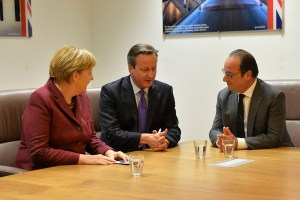
Francois Hollande, the President of France, respects the British people. He respects their democratic right to choose how they wish to be governed. He would never wish to put pressure on them. And if, when the referendum comes, they decide that the UK should leave the EU, he will respect their decision.

But, he added casually, there would of course be… “consequences”.

He said the word many times. “Consequences.” There would be “consequences” relating to trade, “consequences” relating to immigration. “Consequences?” Oh, he was “unable to deny” there would be “consequences”.

Was it true, asked a journalist, that if the UK left the EU, France would abandon the deal that helps stop migrants crossing illegally from Calais to Britain?

Monsieur Hollande looked at the journalist equably. Well, he replied. Naturally there would be “consequences”.

All of this took place while our prime minister stood limply next to the French president at his podium, as though French special forces had kidnapped Samantha and the kids and were holding them at gunpoint in the background.

At what point does the dirge-like, pessimistic drivel offered up by the Remain campaign and spouted ceaselessly by loyal government ministers stop making the public question whether Brexit is safe, and start making them question why the hell we pay these people if not to aggressively defend our own national interest?

Not to get all Land of Hope and Glory here, but Britain is still a reasonably big deal in the world. A major economic power, the premier European military power and one of a handful of countries in the world with real expeditionary capabilities, and a cultural reach probably second only to the United States. Most British people know this, and do not buy into the miserablist, declinist view of Britain peddled by so many in the Remain camp.

David Cameron has clearly made a calculation that talking about the catastrophic consequences of Brexit on the United Kingdom will scare up a significant number of votes and thus undermine the Leave campaigns. Never mind that it makes him look like a liar for having previously suggested that he might recommend Brexit if he was not successful in securing his pitiful package of “reforms”. And never mind the galling spectacle of a British prime minister actively and passionately running down his own country for electoral advantage.

Allister Heath picks up on this same theme in the Telegraph:

But the Government and many of its anti-Brexit allies have gone too far: instead of carefully stoking the public’s understandable fear of change, and planting doubt in its mind, they have decided to wildly exaggerate the downsides of leaving. The hit to the economy could be greater than that from the Great Recession, we are told by some hysterical economists, and even that best-selling children’s books would no longer be written because, apparently, no non-British authors or illustrators would be allowed into the UK if we were not part of the EU.

These and many other of the similarly extreme claims that have been made in recent days are laughably implausible, even to nervous, swing voters; fear is only effective as a political strategy if it is credible. Even worse for the Government, it has also allowed a toxic narrative to set in: the idea that it would be powerless to stand up for Britain’s interests and look after our economy in the event of a Leave vote.

It’s all rather pathetic and defeatist. It would be too hard and time-consuming to conclude alternative trade deals, we are warned, and we apparently don’t have the requisite skills in the Foreign Office; there is nothing anybody could do to stop our companies, consumers and tourists being bullied and victimised by vindictive foreign governments; and we would be bulldozed by the angry bureaucrats of Brussels wherever we turn. Dominic Grieve, the former attorney general, has claimed that British expats living in Europe would risk “becoming illegal immigrants overnight”, even though their status would in fact be protected under the Vienna Convention of 1969.

Project White Flag, as we should learn to call it, boils down to one long stream of nauseating, miserable, declinist negativity. Alarm bells ought to be going off in Downing Street: politicians don’t win elections or referenda by pretending to be weak and powerless, and by claiming to be at the mercy of foreign governments.

As this blog has repeatedly stated, the Remain campaign need to make up their minds. Is the EU a soft and friendly club of countries getting together to braid each other’s hair and co-operate on a range of mutually beneficial issues, or is it a snarling, angry organisation which threatens to rough us up if we attempt to leave? Are we in a happy marriage with the EU, or an abusive relationship?

And we British citizens also need to make up our minds about something. We need to decide why we should continue to tolerate having in office a prime minister, foreign secretary and other elected officials who hold our country in lower estimation than many of their own citizens, and who – by their own admission – have stated that they would be unable to aggressively defend our national interest in the event of Brexit.

Because we are rapidly reaching the point where the public may start to question the point of keeping a pampered man and his family installed in Number 10 Downing Street at all,  when all he does is openly boast about his inability to influence other nations and stand up for Britain.


David Cameron - Angela Merkel - Francois Hollande - EU Renegotiation - Brexit

Agree with this article? Violently disagree? Scroll down to leave a comment.

Follow Semi-Partisan Politics on TwitterFacebook and Medium.

Tony Benn And The Left Wing Case For Brexit

What is the left wing case for Brexit? The same as everyone else’s case: democracy and self-determination

In this response to a student’s question at the Oxford Union, the late Tony Benn makes a calm but passionate argument for Brexit which anybody of any political leaning should be able to embrace:

When I saw how the European Union was developing, it was very obvious that what they had in mind was not democratic. I mean, in Britain you vote for the government and therefore the government has to listen to you, and if you don’t like it you can change it. But in Europe all the key positions are appointed, not elected – the Commission, for example. All appointed, not one of them elected.

[..] And my view about the European Union has always been not that I am hostile to foreigners, but that I am in favour of democracy. And I think out of this story we have to find an answer, because I certainly don’t want to live in hostility to the European Union but I think they are building an empire there and they want us to be a part of that empire, and I don’t want that.

Typically, the left-wing argument against the EU and for Brexit consists of lamentations that EU rules prevent the government from renationalising industries, erecting protectionist barriers to trade and entry, or otherwise meddling in the free market. Jeremy Corbyn would be busy making such arguments right now, were it not for his colossal failure of political courage in rolling over to the demands of the die-hard pro-Europeans the moment he became Labour Leader.

Such arguments are all well and good, if you are one of the small minority of the population for whom the British government’s current inability to renationalise the energy sector keeps you awake at night in a cold fury. But such people are few and far between.

When asked his own thoughts about the European Union, Tony Benn did not do what most contemporary Labour Party personalities do, and talk about the virtues of undemocratically imposing more stringent social and employment laws on Britain (an irritatingly less social-democratic country than our continental friends). Because Tony Benn understood that the left-wing case against the European Union was about democracy, democracy and more democracy.

Tony Benn understood that some things are more important than whether Britain might happen to move in a slightly more left or right wing direction as a short and medium term consequence of Brexit. He understood that self-determination and democracy – particularly the ability for the citizenry to remove people from office – is the first and most important consideration in determining the democratic health of a country.

And Benn understood that living in a democracy where his own side would sometimes win and sometimes lose was far preferable to living in a dictatorship where his own preferred policies were implemented through coercion with no public redress.

Jeremy Corbyn also seemed to understand these things, until he most unexpectedly ascended to the leadership of the Labour Party, which loves the European Union with a blinkered fierceness with which there can be no reasoning.

Indeed, there are now so few high profile left-wing eurosceptics that the bulk of the heavy lifting in this EU referendum will inevitably be done by those on the centre-right. Their challenge – our challenge – will be to make a positive case for Brexit as a desirable thing in and of itself, and not as part of a partisan political agenda.


Jeremy Corbyn - European Union - EU Referendum - Capitulation

Agree with this article? Violently disagree? Scroll down to leave a comment.

Follow Semi-Partisan Politics on TwitterFacebook and Medium.

The Left Wing Case Against Mass Surveillance And The Investigatory Powers Bill

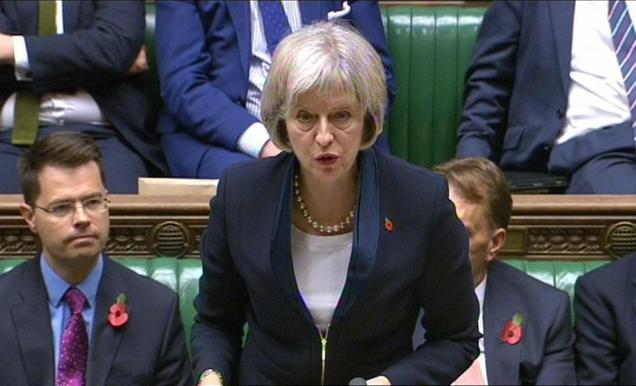
Theresa May - Investigatory Powers Bill - Mass Surveillance

The draft Investigatory Powers Bill will neither increase security nor effectively tackle extremism

Laura Westwood argues in Left Foot Forward that existing mass surveillance techniques have proved ineffective at stopping terror attacks, and that the new measures outlined in the government’s draft Investigatory Powers Bill would further undermine civil liberties with no commensurate reward:

Perhaps most unsettling is the potential harm caused by intruding on the lives of innocent people. Whatever the rationale, mass surveillance practices imperil our rights to privacy and freedom of expression. The UK’s Independent Reviewer of Terrorism Legislation himself warned that taking missteps could sow divisions in society and incubate the problem of ‘home-grown’ terrorists.

Why? Because extremists thrive on exploiting disenfranchisement and grievance. We are told so by former members of Islamist extremist groups. Taking blanket surveillance even further than it already goes is a calculated risk at best, and right now, the sums aren’t adding up.

Already, people languish in British prisons not for committing or inciting terrorist acts, but merely accessing articles and propaganda which praises terrorist acts, or expressing support for them on social media. Such actions may be reprehensible, but bringing the full weight of criminal law crashing down on people with odious foreign policy views and sharp tongues on social media is punishing thought, not words, and is incompatible with a free society.

Furthermore, locking up people like Runa Khan – imprisoned for “disseminating terrorist material”, which basically meant sharing pro-ISIS propaganda articles on Facebook – does nothing to confront and kill the noxious ideas in question, but rather elevates them to an unearned position of nobility, and makes a martyr of their speaker.

As Mick Hume argues in his book “Trigger Warning: Is The Fear Of Being Offensive Killing Free Speech?”:

If she had dressed her young children in suicide vests and sent them out to die in a bomb attack, that would be terrorism. But going online to argue that Muslim mothers should try to raise their sons to grow up as jihadis is something else entirely, more like perverse parenting advice than a military command. Words are not physical weapons and viewpoints are not violence, however ‘radical and extreme’ they might appear to most of us. The opinions expressed by the likes of Runa Khan need to be openly challenged. Trying to bury them instead in prison, on the ground that they are too dangerous to be let loose on Facebook, can only lend their radical message more credence.

At a time when almost all the serious business of governing has ground to a halt for the duration of the EU referendum campaign, mass surveillance is the one area where David Cameron’s ideologically rootless, authoritarian government seems determined to make progress. All other reforms and legislative activity have effectively been placed on hold, yet this most un-conservative government is formalising and expanding the powers of the state to indiscriminately collect and hold data on the private activity of citizens, with the kind of weak and unenforceable safeguards that you would expect from a country with no written constitution.

Why? Because while everything else is allowed to drift as David Cameron seeks to bully and scare the British people into fearfully voting to remain in the European Union, expanding the power and influence of the state over our lives knows no rest.

Those on the Left who oppose this are right to do so – not in pursuit of a political victory over the Evil Tories, but because the Investigatory Powers Bill is bad law and bad policy. And because it will be the poorest, most disadvantaged and least well-connected citizens who first fall prey to the surveillance state, as it always is.

Don't Spy On Me - Mass Surveillance

Agree with this article? Violently disagree? Scroll down to leave a comment.

Follow Semi-Partisan Politics on TwitterFacebook and Medium.

The SNP Government Is Unilaterally Creating Its Own Foreign Policy

Humza Yousaf - Scottish National Party - SNP - Foreign Policy

Grandstanding SNP politicians do not have the right to unilaterally set British foreign policy

In a concerning report by the Herald Scotland, it transpires that the SNP government north of the border is attempting to create its own mini foreign policy, not aligned with nor cleared through the Foreign and Commonwealth Office in Westminster.

More concerning still, the fact that the Foreign Office quite rightly asked the Scottish government to cease and desist from this irresponsible behaviour is being portrayed as the real scandal, rather than Nicola Sturgeon’s back-of-an-envelope attempt at statecraft.

From the report:

The Foreign Office in Westminster is demanding to vet Scottish Government dealings with other countries on human rights, according to correspondence seen by the Sunday Herald.

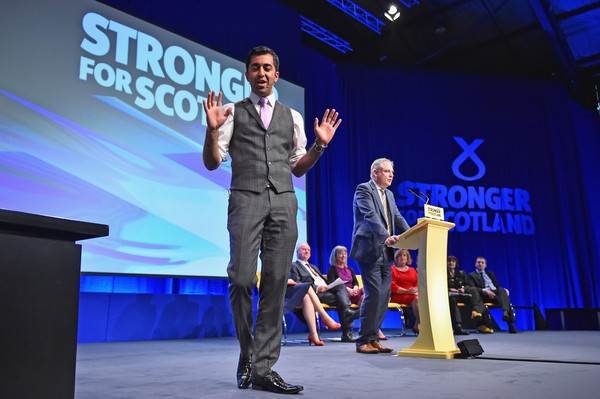
The UK foreign minister, James Duddridge, has asked the Scottish international development minister, Humza Yousaf, to clear all his letters to foreign governments with the UK government before raising concerns about human rights infringements and other matters.

The move has infuriated Yousaf. “It beggars belief that the Tories – who are in the midst of scrapping the Human Rights Act – want to vet the Scottish Government’s letters raising human rights concerns abroad,” he said.

“I am proud of the SNP raising concerns about human rights without fear or favour – and certainly will take no lessons from the Tories on this,” he added.

“Whilst we are happy to share correspondence with Westminster, as we have done to date as a matter of courtesy, we certainly will not be asking or seeking permission before raising legitimate concerns about human rights.”

And for context:

Yousaf wrote to Duddridge and the Malawian High Commission, Kena Mphonda, on December 16 2015 raising concerns about the arrest of two Malawian nationals, Cuthbert Kulemela and Kelvin Gonani, for alleged homosexual offences.

Duddridge replied on January 7 2016, saying that following representations from the UK government, charges against the two men had been dropped. “You mention that you have written to the Malawian High Commissioner on this matter,” he wrote.

“While it may be useful that the Malawi High Commission is aware of your concern about this issue, I would be grateful if correspondence with governments on human rights and other reserved matters be cleared through this department.”

There is no grey area or room for interpretation here – this was a completely irresponsible act on the part of the devolved Scottish government. Foreign and defence matters are reserved to the UK government and Westminster parliament as you would expect in any country even remotely based on the principle of subsidiarity. It is not the job of any of the devolved assemblies – in Wales, Scotland, Northern Ireland or indeed England, if there was one – to enter into sensitive diplomatic correspondence with other sovereign nations.

Imagine for a moment that one day California or Texas decided to start acting as an independent agent on the world stage, raising all manner of issues with foreign governments, and maybe even negotiating their own trade deals or bilateral arrangements. The federal government in Washington, D.C. would rightly never tolerate such an arrangement, as it would undermine the very sovereignty and credibility of the United States. The same goes for Scotland.

Whether the SNP government had a point is immaterial. In this case, the SNP and their buccaneering international development minister Humza Yousaf (again, a role which should not exist in a Scotland which remains part of the UK) are probably on the right side of the issue. Malawi has a very concerning record on LGBT rights and the persecution of individuals, and the concerns raised were valid. But being right on this one occasion does not validate the wholly offensive principle of Scotland creating its own mini foreign policy behind the UK’s back.

In typical virtue-signalling SNP fashion, Yousaf tries to fold this issue into their pitched battle against the Heartless Evil Tories in Westminster, saying he will “take no lessons from the Tories” on human rights. But this isn’t about human rights. It is about the structure and proper running of our country. If we now establish the principle that self-regarding Scottish politicians can make interventions like this with foreign countries, what is to say that they cannot one day scupper a sensitive trade, security or intelligence negotiation by blundering onto the scene and undermining the UK’s position?

Even if the Scottish government happens to be right, any differences of opinion on foreign policy matters should be discussed and settled behind the scenes, so that the UK government can speak with one voice. Anything else will see the UK mercilessly divided and conquered by our foreign negotiating partners.

The Scottish people voted in 2014 to remain part of the United Kingdom on the understanding that certain additional domestic powers would be devolved from Westminster. Whether or not you believe that the UK government has delivered on those pledges, at no time was the idea of an alternative Scottish foreign policy raised for debate. There was no expectation that the Scottish government should be an independent actor on the world stage any more than the governor of Iowa or Texas can sign treaties with North Korea.

But as with so many other matters, a repeat of instances like this can only be prevented if we decide once and for all what kind of country we want to live in, and how the various parts of it should work together. And that means holding a constitutional convention as soon as possible. Given the approaching EU referendum, some time shortly after 23 June would seem to be a good time.

If we are to truly resolve the roiling questions about the future of the United Kingdom and our democracy and settle these issues for a generation or more, we need to collectively agree a fair and equitable devolution of powers to the four home nations on an equal basis. The question of whether England is treated as a home nation or a group of regions is of secondary importance, though this blog strongly believes that for true parity, England must be treated as a single entity just like Scotland. But this discussion must take place soon, within the wider context of a full constitutional convention.

Such a convention would give us the opportunity to debate and agree which powers should properly reside at each level – the federal UK government in Westminster, the devolved assemblies in the home nations, and county and town councils. We can simultaneously reform our legislature, ideally making the House of Lords democratically elected and ejecting the Lords Spiritual so that Britain no longer ranks alongside Iran as the most prominent technical theocracy in the world.

If this all seems ambitious and unlikely, then this is only a failure of our imagination. There is no good reason why we should not have such a debate (well, there is one reason – the future of the monarchy – which will be discussed in a future blog post). And as Pete North argues, why should we not be ambitious in terms of the future governance of our country?

Do nothing, and we can be sure that more of these instances will occur in the future, with ambitious Scottish politicians looking to make a name for themselves and burnish their human rights, national security or trade credentials by taking advantage of our lack of a written constitution and designing their own far-reaching roles on the world stage, with no oversight and no accountability.

Enough. No more SNP diplomacy by numbers. Whether they happen to be right or wrong on a given issue, for so long as Scotland is part of the United Kingdom, diplomacy and foreign policy should be a reserved matter for our shared government in Westminster and not hijacked by the Scottish nationalists.

That is the settlement which the people of Scotland signed up for in the 2014 referendum, and that is what they should now get.

UK Scotland Flags

Agree with this article? Violently disagree? Scroll down to leave a comment.

Follow Semi-Partisan Politics on TwitterFacebook and Medium.