Self-Entitled Young People For Remain

Students for Europe - EU Referendum - Brexit - European Union

The EU’s young cheerleaders have lots to say about their own material self-interest, but fall strangely silent when it comes to democracy

After Abi Wilkinson’s petulant complaint that Leave campaigners attempting to restore British democracy are harming the job prospects of the young, we now have another youthful but clueless voice making the same case.

Presenting Richard Godwin in the Evening Standard:

I just feel European. I’m part of a generation that has had easy access to mainland Europe for both work and play.

I like Penélope Cruz and Daft Punk and tiki-taka and Ingmar Bergman and spaghetti and absinthe and saunas and affordable trains.

As sentimental as it sounds, Europe represents opportunity, cosmopolitanism, modernity, romance, enrichment, adventure to me

Cutting all that off — even symbolically — would feel both spiteful and arbitrary.

Quite why leaving the explicitly political construct of the European Union would mean that Richard Godwin is no longer part of the continent of Penelope Cruz and Daft Punk is never explained – because of course, it wouldn’t. We would be cutting off nothing, symbolically or otherwise, aside from the dead weight of a supranational political organisation which suppresses democracy in a misguided attempt to harmonise 28 distinct European countries into a single, new European state.

But then at least Godwin has the decency to admit that he is being driven primarily by instinct, unlike the hapless Abi Wilkinson who seemed to suggest that the pro-europeanism of the young is based on enlightened consideration while the pro-democracy euroscepticism of older generations is based on selfishness and whimsy (when of course youthful pro-europeanism is almost entirely the product of ignorance and selfishness).

Sadly, this does not stop Godwin from lecturing us about how young people – my generation – have a greater stake in the future:

It should go without saying that the young have more stake in the future but it’s also contrary to electoral logic. Only 34 per cent of over-65s are in favour of remaining, there are more of them, and they’re more likely to vote.

It means that young people end up in a death spiral, defeated by their own disillusionment. But my hunch is that the only way to change that is with an appeal to hearts rather than heads. Shouldn’t we always aspire to act together rather than alone?

Apparently Godwin’s only concern for the future is that he has the maximum chance of living in a big house with lots of shiny consumer goods to distract him from the fact that he no longer lives in a democracy, has no influence over the decisions which affect his life and has no way of removing the people who make all the key decisions.

In other words, Richard Godwin, like Abi Wilkinson, is thinking primarily as a consumer. Material considerations (job, house, iPhones) consume his every thought – at no point in his paean to the European Union did he even mention democracy or self-determination, or acknowledge any of the many and growing flaws in the EU’s governance.

And of course despite the scaremongering of the Remain campaign, there is no evidence to suggest that Britain would face economic ruin by leaving the EU – and every reason to believe that staying in the EU only perpetuates a discredited, anachronistic model of regional protectionism rather than the global regulation and removal of non-tariff trade barriers that are really needed to unleash global trade and unleash real prosperity.

But Godwin wouldn’t know about any of that, because he is too busy eating spaghetti, watching Penelope Cruz movies and congratulating himself for being such an enlightened, post-national, European citizen. He doesn’t care about the history, traditions or culture of the country which gave him life and liberty – or if he does, they are very much secondary thoughts compared to the ignorant and false assumption that he will no longer be able to work and play in Europe if we become an independent, self-governing country again.

Apparently Richard Godwin is happy to behave and be seen as a selfish consumer first and foremost, rather than an engaged citizen whose thoughts extend beyond his own narrow interest. And that’s actually fine. I hope that more Richard Godwins and Abi Wilkinsons come crawling out of the woodwork as this EU referendum campaign goes on.

Because every new spoilt millennial who comes blinking from their parents’ basement to complain that the evil Leave campaign is threatening their gilded future serves to prove that this campaign is about principled citizenship versus naked self interest.

Very few people are covering themselves in glory in this EU referendum campaign. But the European Union’s youthful cheerleaders from Generation Me Me Me are clearly intent on doing everything they can to make young people look as bad as possible.


European Union - United Kingdom - Britain - Flags

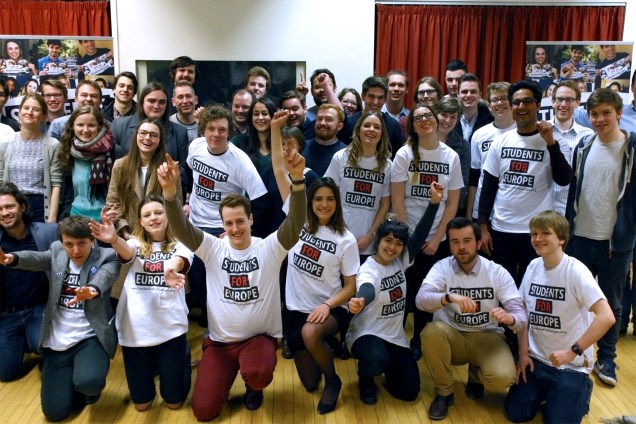
Top Image: Students for Europe

Agree with this article? Violently disagree? Scroll down to leave a comment.

Follow Semi-Partisan Politics on TwitterFacebook and Medium.

This Reckless Talk Of Brexit Is Making Whiny Young People Anxious

Team of creative people taking a break and using computer.

Staying in the EU and surrendering our democracy is a small price to pay to keep self-entitled millennials happy, because nothing is more important than generation Me Me Me

We of the millennial generation are fast acquiring a reputation as lazy, self-entitled whiners, endlessly complaining about how hard we have it – as though we are the first generation in history to come of age during economically uncertain times.

One might have thought that living in an age when each of us has a mini computer in our pocket which can tap the accumulated knowledge of the entire world – and when we don’t have to worry about, say, dying from tuberculosis – might make us momentarily grateful. But of course we are not, and now apparently the latest “injustice” being inflicted on the millennial generation – my generation – is the terrifying idea that Britain might vote to leave the European Union and seek to govern ourselves as an independent democracy once again.

Channelling this fear, Abi Wilkinson has written a nauseating piece in the Telegraph, explaining why the existential question of Brexit and Britain’s place in the world should be based entirely on the selfish desires and career insecurity of our generation.

Her piece – hilariously titled “Stubborn old people who want to leave the EU are condemning the rest to a lifetime of uncertainty” – is so patronisingly, finger-waggingly sanctimonious (and so readily swallows every talking point from Britain Stronger in Europe) that it makes anyone under the age of 35 seem completely insufferable, not to mention utterly wrong on the fundamentals.

Wilkinson opens:

When you consider that the risks of leaving the EU fall disproportionately on young people, it’s unsurprising that 18-29s are the group least likely to support the move. Almost three quarters of us say we’ll vote to remain, compared with just 37 per cent of over 60s. For many under-30s, worrying about employment has been a defining feature of our adult lives. Having come of age at the height of the financial crisis I know I’m certainly not keen to endure another similar economic downturn.

Of course becoming an adult and entering the workforce during a major recession is tough. Back in 2008 I had friends at Bear Stearns and Lehman Brothers who came home from work one day with all of their possessions in a cardboard box, and I narrowly escaped a redundancy round at my own company. Nobody wants economic uncertainty if it can be avoided, but at what point do infringements on democracy and the fundamental right to self-determination outweigh the hope of greater short term stability?

Wilkinson sees no such tradeoff at all – she is ready to jettison democracy at the first sign of trouble, throwing away our freedom even if it buys a measly 0.1% additional GDP growth. But the truth is that Brexit is possible while keeping disruption to a minimum by exiting to EFTA and EEA membership (the “soft landing” approach which would almost certainly be adopted by civil servants even if it is currently being furiously ignored by the mainstream Leave campaigns).

Abi Wilkinson might have known that there exists a comprehensive plan to achieve Brexit, extricating us from political union while minimising economic and other disruption. But like too many others of my generation, Wilkinson can’t be bothered to do her research, and so instead she swallows and regurgitates propaganda from the Remain campaign.

A man walks past various currency signs outside a brokerage in Tokyo

Wilkinson continues:

Already, young people are particularly likely to be in low-paid, precarious employment. Many are stuck working jobs well below their qualification level and struggle to secure the full-time hours they need to pay their rent and basic living costs. For anyone in this situation, the TUC’s warning that workers’ rights enshrined in EU law could come under attack following a Brexit vote is another serious worry.

At this point, Wilkinson’s politics become clear. She is one of those cookie-cutter lefties who love the European Union because they believe it acts as a social democratic bulwark against the Evil Tory policies which would otherwise ravage the nation. Or to put it another way, Abi Wilkinson doesn’t give a damn about the right of the British people to vote for the policies that they want for themselves. The population is too conservative for Wilkinson’s taste, and so we must have values and policies imposed upon us which we are not currently enlightened enough to vote for ourselves.

Abi Wilkinson is a great champion of democracy, you see.

But now it starts getting really offensive:

Less negatively, many people in their teens and 20s also appreciate the broader benefits of belonging to the European community. We’re more likely to travel abroad to work or study. Many of us have friends who were born in other countries so we’re less inclined to be wary of other cultures. We’re also much more likely to date someone who was born outside the UK.

In contrast, supporters of Brexit often seem to be motivated by a fear of the unknown. Older people are more likely to distrust migrants and to feel nostalgic for the comparatively homogenous UK of days gone by. Though there’s a sizeable retiree expat community residing in countries such as as Spain, over 60s are statistically likely to see the free movement of people as a threat rather than an opportunity.

Of course, for those who’ve already exited the labour market – or are planning to retire within the next few years – it’s much easier to focus on your gut instinct. If you’ve not got to worry about your employment prospects, the economic facts of the matter can be treated as a secondary concern. Young people have a reputation for being reckless, but in the EU referendum it’s older folk who will be playing fast and loose with the livelihoods of younger generations.

And continues:

As more countries have joined the EU, migration to the UK has gradually increased.

As a 20-something living in London, this isn’t something that worries me. I’m used to hearing a whole range of different languages and accents as I go about my daily life. It’s a mundane fact that many of my neighbours are relatively recent immigrants, not a cause for concern.

For someone who has lived in the same area for decades, however, I can see that it might be harder to adjust to changes in the local community. Still, it’s worth noting that UK-born people who live in relatively diverse neighbourhoods tend to feel more positively about migrants than those who don’t — suggesting that fear of immigration might be disproportionate to the reality.

Young people, open and tolerant; old people, suspicious and racist. Got it?

Note too how Wilkinson has pivoted, portraying young Remainers as the fearless go-getters off to pursue international careers and date hot Italians, while old people are now “[afraid] of the unknown”. She switches perspectives at several points throughout the piece, as though she cannot make up her mind whether young people are brave pioneers or snivelling victims (probably because it suits her purposes to be both at different times).

But worst of all is the suggestion that older people supporting Brexit are doing so not out of considered deliberation, but through “gut instinct”; that they are somehow not taking this seriously, and playing “fast and loose” with the livelihoods of the young.

Here, Wilkinson is seriously suggesting that the generation who have abandoned watching a nightly news bulletin in favour of Buzzfeed listicles pushed to their smartphone screens are the wise and discerning citizens, while those who actually have living memory of the European Union’s incremental power grabs are the ones making light of a critical geopolitical issue. The sheer gall of it is quite unbelievable.

Read the whole thing, if you can get to the end of Wilkinson’s sanctimonious lecture without wanting to punch your computer screen.
EU Referendum - Brexit - Democracy

The problem with Abi Wilkinson – and too many other members of Generation Me Me Me – is that they believe their right to an easy path through life trumps everyone else’s right to live in a representative democracy. As far as they are concerned, the fact that our own elected Westminster and devolved parliaments are increasingly sidelined by a supranational European entity is just the price we will have to pay for their ongoing contentment, because heaven forfend that the fuzzy career aspirations of some first year Gender Studies student are thwarted by a badly-timed outbreak of democracy.

In other words, too many millennials don’t know how to think or act as engaged citizens. Rather, they are capable only of behaving like selfish consumers, jealously guarding what they see as their special pot of privileges without the slightest care for the wider impact on the customs and institutions which together make up the fabric of our country, and which have often existed for decades or centuries before they were even born.

To this arrogant mindset, the older generations (like those strange grey haired people who gather round the Cenotaph every November wearing their silly medals for doing something or other in the past) don’t have a clue about what is best for Britain.

Apparently the generation which fought and bled and died to secure our freedom – whose contemporary Britain was reduced to rubble and rationing and deprivation in the 1940s when they were in the prime of life – is the selfish one, while their descendants (and I include myself) who sacrificed nothing but have mastered the Art of the Selfie somehow have a lot to teach our elders about responsible citizenship.

I’m sorry, but I’m not buying it, and I will not have it proclaimed in my name. Abi Wilkinson can speak for her very selfish self, but she should not presume to speak for the rest of her generation, or to demean the older generations so haughtily and glibly.

Some of us actually respect our elders. Some of us appreciate that coming of age when the building on the corner was a smoking crater from a German V2 rocket – rather than an artisan coffee shop with free WiFi – might possibly have imparted some wisdom and experience that we have not yet managed to acquire for ourselves.

Some of us weren’t born expecting all of the good things in life to be handed to us on a golden plate, or raised to be so rude that we write articles in the Telegraph essentially declaring “to hell with your democracy, give me a job in Madrid and cheap mobile roaming charges!”

Some of us are not so arrogant to assume that because we are “the future”, we are free to completely reshape society as we please, with no regard for the traditions and proven solutions of the past – you know, things like representative democracy, that old-fashioned concept where you actually get to vote out the people who make the key decisions if you disagree with them (try doing that in Wilkinson’s beloved EU).

Abi Wilkinson’s narcissistic, self-centred embrace of the Remain campaign makes me sick. It represents everything bad about the millennial generation, confirming every worst stereotype and instantly negating all of the better angels of our generation’s nature.

To those older Britons who wore the uniform, who fought for this country, who grew up in real deprivation in the early post-war years, who actually remember a time when Britain was a sovereign democracy and who are rightly incensed at being addressed as though you are stupid and greedy by a vapid, know-nothing millennial: please know that Abi Wilkinson does not speak for us all.


 

Hello I'm A Millennial

European Union - United Kingdom - Britain - Flags

Agree with this article? Violently disagree? Scroll down to leave a comment.

Follow Semi-Partisan Politics on TwitterFacebook and Medium.

The EU’s Model Of Supranational Harmonisation Does Not Keep Us Safe

EU - European Union - Security Defence Policy

On national security as with trade and social affairs, the case for Brexit hinges on the conflict between intergovernmentalism and supranationalism

In his latest Telegraph column, Christopher Booker joins this blog in refuting the baseless, scaremongering claims by the Remain camp that being in the EU in any way protects Britain from the risk of terrorist attack.

Booker writes:

It was unfortunate timing for our not very convincing Defence Secretary Michael Fallon, when he used the Brussels terrorist attacks to claim that they only confirm how disastrous it would be for Britain to leave the EU. “The fact is,” he said, that “across Europe we do have these mechanisms now” for “sharing intelligence about terrorists’ movements” that enable “all intelligence services across Europe to pool their efforts”.

Do those “mechanisms” for sharing intelligence include the Parliament, Court of Justice, Commission, the supranational elements by which the European Union undermines nation states and seeks to usurp their role on the world stage? Of course not – these are all explicitly political institutions. All of the collaboration which actually helps to combat terrorism in Europe occurs on an intergovernmental, not a supranational basis, mostly outside of European Union structures.

When sovereign governments are free to co-operate on mutually important issues, they can often do so well. But when a busybody supranational regime seeks to take on ever more responsibilities from the nation state, vesting them in inappropriate and unproven institutions, that’s when things can easily fall through the cracks, as this blog explained yesterday.

Booker rightly goes on to argue:

In fact, there is here a much wider point, which highlights one of the most common misunderstandings about the EU, whose supporters try to persuade us that without it, international cooperation could not exist. In fact, over a whole range of issues, countries have long evolved extremely effective systems of inter‑governmental cooperation, such as on air-traffic control, Interpol, the international postal union, the European Space Agency and dozens more (not to mention Nato).

All these, negotiated between national governments, regardless of whether or not they are in the EU, work very well. And not the least absurd feature of the EU’s attempt to make itself a “supranational government of Europe” is how often it has tried to absorb these examples of effective cooperation into its own clumsy bureaucratic empire: as when it launched its “Single European Sky” programme, or set up “Europol”, or issued directives on postal arrangements with which it then expected non-EU states to comply, or tried to take over the European space programme for its crazy Galileo satellite project.

If only more people appreciated the crucial difference between “inter‑governmental”, which works, and “supranational”, which doesn’t, how much more enlightening our debate might become.

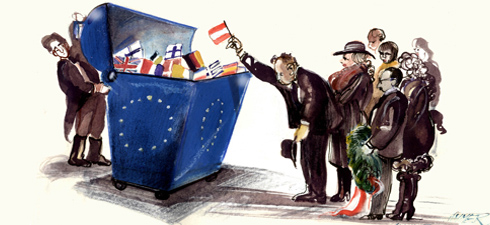
Inter-governmental versus supranational. It is very much in the interests of the EU’s apologists and closet federalists for the general public not to realise the difference between these two important terms.

The former describes the healthy co-operation between friendly allied countries, sometimes bilaterally and other times facilitated by an organising body (like Interpol). The latter describes weak nation states outsourcing key responsibilities to a higher third party, a reckless and unproven approach only ever attempted by national politicians seeking to escape accountability to their own electorates.

If the Remain camp succeed in their effort to lay a thick fog of war over the EU referendum debate so that important terminologies and ideas are confused and muddled, they automatically win. If they can persuade people that the EU equals warm, fuzzy co-operation with our friends while Brexit equals snarling isolationism and being an international pariah, the Remain camp need to nothing else. And so far, they are succeeding.

In order to turn this around, the Leave campaign absolutely must succeed in educating the public on the difference between laudable and (ideally) transparent and accountable co-operation between European countries on one hand, and the outsourcing of core government competencies to undemocratic, unwanted and untested unified European institutions on the other.

This applies not only to national security, but economic and social affairs too. When the Leave campaign are able to cut through the fog of confusion and make people realise that leaving the EU would actually represent an affirmation and strengthening of the only kind of co-operation which actually delivers positive results (the inter-governmental kind), they are far more likely to embrace Brexit and realise how the EU actively harms healthy intergovernmentalism in its rabid pursuit of ever-closer union.

Can the Leave campaign this message across in less than three months between now and the referendum? Perhaps. But enlightenment will not spring from the mouths of deliberately ignorant “leaders” like Boris Johnson.

Those who can actually distinguish between the real issues and the cosmetic ones – which sadly excludes much of the British press corps – urgently need to find a way to amplify their message.


Intergovernmental vs Supranational - European Union - EU Referendum

Bottom Image: Cartoon by Wolfgang Ammer, published in Intergovernmentalism & Liberal Intergovernmentalism

Agree with this article? Violently disagree? Scroll down to leave a comment.

Follow Semi-Partisan Politics on TwitterFacebook and Medium.

The EU’s Undermining Of National Identity Creates A Space Where Islamist Extremism Freely Grows

Jean Claude Juncker - Manuel Vals - Brussels Attacks - European Union

Eroding national identities while forging an unwanted and unloved new European identity creates a dangerous gap, which Islamist extremists are now exploiting

There is a welcome glimmer of realisation in today’s New York Times that repeated attempts to artificially force political union on the disparate peoples of Europe (alternately by threat and by stealth) is leading to increasingly suboptimal outcomes.

Jochen Bittner writes:

Official Europe has worked hard to move past nationalism, so that there is no German or French Dream. But there’s no European Dream, either, not yet. So new migrants have no spirit to tap into, as they do in the United States. Instead, some Muslims find it more attractive to give their loyalty to Allah, their fellow believers or the Islamic State.

Intelligence services estimate that up to 6,000 jihadists from Western Europe have traveled to join the Islamic State. This enormous figure does not illustrate merely the failures of integration policy. It also shows the failure of mainstream European Muslims to keep their youth immune from extremism.

A result of this mutual apathy is too many Islamists, and too few police and intelligence officers — particularly in Belgium, but not just there. We may have a common European currency, but we still do not have a common European terrorism database. Islamists in Western Europe seem better coordinated than the European authorities hunting them.

There is a creeping awareness too that the head-in-the-sand insistence by many Western leaders that Islamist terror has “nothing to do with Islam” has been a textbook case of wishful thinking overriding political judgement, even common sense:

For the sake of social peace, after the Sept. 11 attacks, and later after the Madrid and London bombings, we told ourselves that Islam and Islamism had nothing to do with each other. But sadly, they do. The peaceful religion can sometimes serve as a slope into a militant anti-Western ideology, especially when this ideology offers a strong sense of belonging amid the mental discomfort of our postmodern societies.

That’s not to say that the article is right about everything. At one point it lapses back into the lazy, unthinking assertion that the European Union is solely responsible for keeping the peace since the Second World War:

So are Germany’s critics right? Is it reasonable to pull up the drawbridge?

In a way, the very question shows the disproportionality of the thought — unless you think it’s worth sacrificing 60 years of peace and international cooperation to the depredations of terrorists. It’s what they want; European disunity, confusion and extremism put them a step closer to the all-out war between Muslims and non-Muslims they so desperately seek.

The notion that the leaders of Islamic State – or radical jihadists in general – could give a hoot whether the Western European countries they so fervently loathe are grouped together under a single political umbrella or under their own auspices is ludicrous beyond words.

The home-grown radical Islamist terrorists from Belgium, Britain and France do not feel any allegiance to Europe or to their own particular country. Their only allegiance is to their warped strain of Islam, which teaches them to loathe anything and everything which does not conform to a very fundamentalist, conservative and specific worldview.

If anything, the European Union’s insistence on subordinating the national identities of individual member states in a thousand ways large and small, and attempting to shoehorn in an artificial new European identity which consistently fails to take root is primarily responsible for allowing a radical Islamist identity to creep in between the cracks.

If the European Union is the vehicle for international collaboration that its cheerleaders consistently claim, then it would focus on intergovernmental co-operation – for that is what will do the most good thwarting future terror attacks. But the EU doesn’t particularly care about co-operation between security services. Such matters are exquisitely boring to the architects and drivers of European political integration, who care only about creating a single European state.

Consider: if the European Union is a benign and non-threatening group of countries coming together to trade and solve common problems (like the threat of Islamist terrorism), why is such a tiny fraction of its budget – and an even smaller percentage of officials’ time – spent on enhancing intergovernmental co-operation so that agencies and forces work seamlessly together when they most need to?

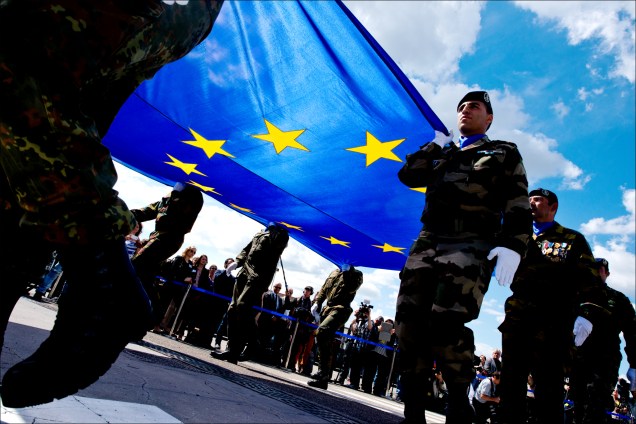
No, the European Union has a flag, anthem and parliament for a reason – because those are the things that matter to them, the building blocks of political union. Sure, the EU’s leaders are happy to take advantage of the Brussels terror attacks – as they do with every other crisis – to declare that the only solution is “more Europe”. But the more Europe they have in mind won’t do a damn thing to thwart future terror attacks. It will only make them more likely.

Building a politically unified European state involves first dissolving existing national identities, and then replacing them with a new European identity commanding the loyalty and affection of the people. The EU has been moderately successful at the former, but absolutely hopeless at the latter. Staggeringly few people see themselves as European first and foremost – nearly all retain primary loyalty to their country, or in some cases to a region – like Scotland or the Basque region.

And as the nation state is undermined on one side while the vaunted new European identity consistently fails to materialise, this creates an ever widening gap which can be filled by Islamist extremist recruiters and terrorists. When there is no healthy sense of national identity, first and second generation immigrants may struggle to assimilate, and sometimes they will find meaning and belonging in undesirable places.

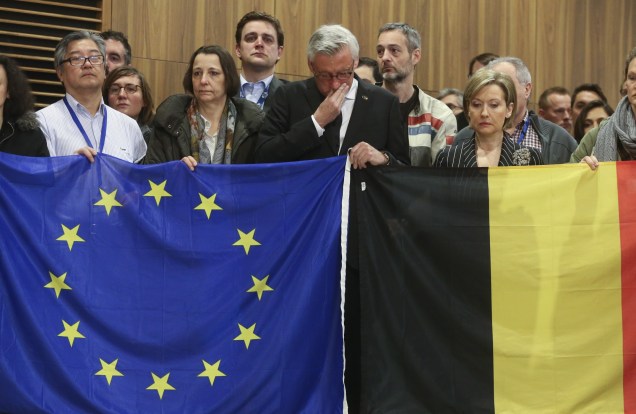
None of this should be shocking. Much of it was entirely predictable. But the European Union – who are now sickeningly claiming that they were the true victims of the attack, as though a self-important bureaucratic talking shop even registers on the Islamic State’s radar – refused to take the threat seriously, because it was too busy building up the appearance and trappings of a state.

Proper co-operation and coordination between national intelligence services does not require a European Parliament, a European Council, a flag, an anthem or pretensions on the world stage. If the EU really cared about keeping its citizens safe first and foremost, it could immediately deprioritise all further steps toward political integration, roll back its outsized role in supranational governance and focus on facilitating the kind of basic inter-governmental cooperation that might have feasibly prevented the Paris and Belgium attacks.

But of course the European Union will never do this in a million years. Because the EU has some other objective, far more important than trifling concerns over national security, on its agenda.

Now what could those other priorities possibly be?


Brussels Attacks - Je Suis Bruxelles

Agree with this article? Violently disagree? Scroll down to leave a comment.

Follow Semi-Partisan Politics on TwitterFacebook and Medium.

Brussels Attacks: Solidarity With Belgium Today, But What About Tomorrow?

Bruxelles - Brussels - Terrorist Attack - Brandenburg Gate - 3

Solidarity is great. What’s next?

There is a very familiar pattern to all of this.

A bloody Islamist terrorist attack brings carnage and fear to the streets of a major Western city.

Everyone from heads of state to the man next door rush to publicly register their shock and solidarity on Twitter.

Someone inevitably pops up after a few hours to lecture us that there is nothing Islamic about Islamic State, and that we should really be calling them Daesh, or “so-called Islamic State”.

Someone else usually pops up to say something incredibly bigoted or ignorant about all Muslims.

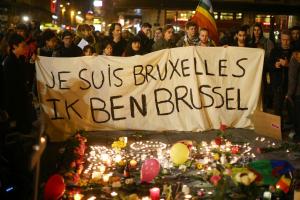
Impromptu shrines appear in a major square of the afflicted city, with candles, chalk drawings and sometimes a bit of impromptu John Lennon.

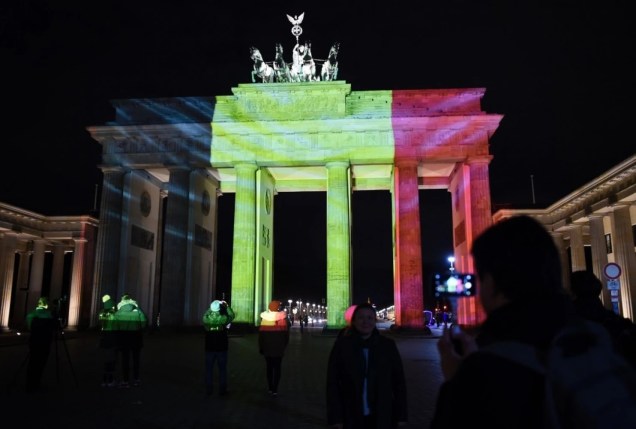
And the day closes with Europe and America’s major landmarks illuminated to resemble the national flag of the afflicted nation. They’re getting really good at that part now.

Fast forward a day, and plans are well afoot to grant even more powers to the well-meaning but overstretched security services – who were unable to make use of their current extensive powers to thwart the attack – and generally at the expense of our civil liberties. Particularly our rights to privacy and free speech.

Fast forward a month, and we have all moved on. Domestic political concerns, celebrity scandals and daily life have reasserted themselves.

I think we can all agree that we’ve got the public grief, cathartic expressions of solidarity and stern faced authoritarianism down to a fine art at this point.

When are we going to start acknowledging – and maybe even tackling – the root causes?


Bruxelles - Brussels - Terrorist Attack - Le Monde - Cartoon

Agree with this article? Violently disagree? Scroll down to leave a comment.

Follow Semi-Partisan Politics on TwitterFacebook and Medium.