Tales From The Safe Space, Part 51 – The Social Justice Movement’s Toxic, Self-Defeating ‘Call-Out Culture’

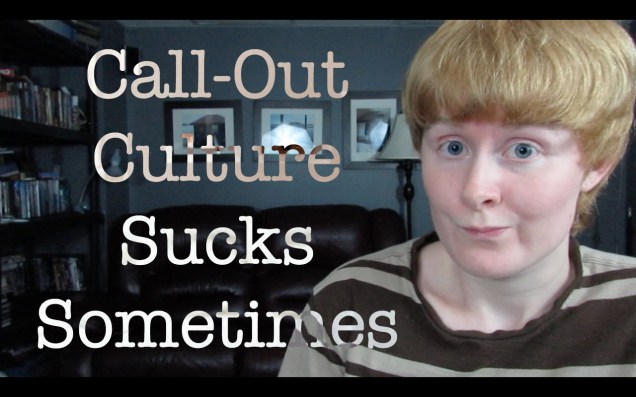
Call-out culture sucks sometimes - social justice - SJWs - identity politics

Self-awareness is a rare, endangered commodity within the Cult of Social Justice and Identity Politics

This blog has previously written about the ways in which the Cult of Social Justice and Identity Politics is a revolution determined to eat its own – see here, here, here, here, here, and (most recently) here.

Back in December I reported that there have been potential fleeting flashes of self-awareness from within the social justice community, as certain members – typically those who at one time found themselves persecuted and ostracised by their former comrades for having committed some minor act of thought crime – came to realise that the “call-out culture” within the social justice movement is doing far more harm than good.

Today there is another such spark of self-reflection in the pages of Everyday Feminism, as writer Lola Phoenix offers her tribe a few tentative suggestions as to how they might present a slightly less insufferable face to the outside world.

Of course, Phoenix’s testimonial begins with the now-familiar recitation of personal oppressions and “marginalised identities” to serve as mitigation for the harsh truths she is about to deliver:

Six months ago, I really got called out.

And by “called out,” I mean that the person had more interest in collecting me like I was garbage in a very public way and less interest in helping me understand where I was going wrong.

Hmm, sounds familiar.

Despite my willingness to apologize, to try and learn, their attitude pulled me back into that whirlwind of cognitive ability confusion. As a person on the autistic spectrum, I can’t count the amount of times I’ve been unsure of what I’ve done wrong and have tried to figure out what I did.

Blah blah, you get the idea. But pre-emptive excuses aside, Phoenix goes on to engage in some fairly accurate self-reflection:

We’re not robots, and when we learn we’ve been oppressive in some way, we’re going to have feelings about that. And sometimes that needs to be expressed, but – as of now – there’s no really appropriate place to do that.

As a white person, I’ve seen myself do this to other white people who haven’t learned better. When they exhibit the attitudes I once held, I become embarrassed, enraged at their ignorance, and treat them accordingly.

But we have to keep in mind that so many of us committed to social justice are living in a culture where we aren’t taught how to handle or process anger effectively, so it comes out in abusive ways even when we don’t mean it to.

More:

There is a “callout culture” where ally theatre happens and people enjoy “calling out,” naming, and shaming, witch hunting, and publicly humiliating people.

I’ve been on the receiving end of that.

I do think there’s a difference between confronting someone about their behavior versus humiliating them.

Wow. This is an astonishingly frank admission. It is perhaps unfortunate that it took being on the receiving end of an SJW witch hunt for Phoenix to realise that enforcing ideological conformity through public shaming and strict social ostracising is a bad thing, but we should take what we are given.

Meanwhile, Sara Lynn Michener – coining the term CSJW, or “Counterproductive Social Justice Warrior – makes some equally valid observations for Empire South Magazine, including advice such as:

Disproportionate Punishment
Someone has made a legitimate mistake, and there are calls by CSJWs to essentially have them drawn and quartered, thereby eclipsing the original offense and opening it up further for ridicule. Example: it is true that the British astrophysicist who wore a shirt covered in B-Grade Vargas Girls to an event of international significance (that would have had impressionable science-loving little girls in its audience) made a poor wardrobe selection that day that also spoke volumes of the negative experiences of women in science and tech. But verbal abuse or calls to have him fired, rather than specifically explaining the harm caused, were counter productive and fuel for the opposition. This rule also applies when the person who erred apologizes, but the apology is deemed insufficient (often not because it was deemed insincere, but because more than a sincere apology is what is being demanded) and calls for the proverbial pound of flesh continue until the vultures move onto another body.

And:

Confusing Preaching to The Choir vs Outreach
Sometimes expressing outrage and drawing support from such a community is wonderful and gives you strength for the fight. I do it all the time, but I do it knowingly. It is not the same thing as outreach and one rarely lives in the same place as the other. When a group (or individual) truly seeks to explain something to a listening audience who are not yet the in-group but are sympathetic, curious, and ripe for conversion; there is no excuse for using the same hostile and demeaning snark that you use in the in-group. So, if you’re about to post about an issue, ask yourself: am I sharing this for the people who already know? Or for the people who don’t? And proceed accordingly, especially in the comments section. Here’s a hint: preaching to the in-group is easy. Outreach is very, very hard work that keeps you honest about why the issue matters.

And:

Not being able to adequately explain the why behind your thesis
This one is practiced so often by college educated CSJWs it makes me wonder how tough their professors were on them. If your argument relies on a label rather than proving it is a correct usage of said term, your argument will only ever make sense among those who already agree with you. Rhetoric is a slogan. A real argument is both more and less work depending on how you look at it, but if you’re accusing someone of something like Ableism and you can’t explain why or back up your argument, you’ve already lost.

And:

Rejecting Imperfect Members of the Resistance
Amy Schumer, Taylor Swift, and Lena Dunham are imperfect members of the resistance. I am an imperfect member of the resistance. So are you. Human beings tend to have faults. Famous people’s faults, whether they are even real or not, get nevertheless amplified all over the world. It’s fine to call out a celeb if they have genuinely said or done something problematic. But if you then never forgive them, bring it up every time they are invited to speak at a rally, and routinely say they have no place in the resistance because of things they have long since apologized for, then you will have a very small and ineffective resistance. I personally only accept flawed people in my resistance, including CSJWs who sound like they’re sitting at a high school cafeteria announcing YOU CAN’T SIT WITH US, when they do this.

The above point is a great observation. But note how the language could almost describe a Christian’s understanding of himself as a sinner, and the Church as a community of sinners. This is the extent to which Social Justice has become a new, secular religion for those involved – that we now see “love the sinner, hate the sin” discussions taking place in SJW Land.

And so from these and a growing number of other articles expressing unease at the way the Social Justice community polices itself and engages with the world, ther is at least a recognition that their own behaviours are making activist communities “toxic” for many people. Will it ultimately change anything? Probably not.

Mea culpas and moment of self-reflection such as this can be likened a man trying to find his way out of a pitch black cave with only a broken cigarette lighter for illumination. Press the button and it may spark briefly, revealing tantalising glimpses of a safe path through the interior, but no sooner does the spark appear than it is extinguished again, and the darkness returns. “Call-out culture” and public shaming is such an inherent part of the Social Justice movement that nobody in the ascendancy within the cult has any incentive to stop using the techniques of free speech suppression and ideological enforcement which they themselves practice and benefit from.

Some time ago, I described the Cult of Social Justice and Identity Politics as “a constant, bitchy, backbiting game of snakes and ladders, with one insufferable petty tyrant rising to the top of the Moral Virtue Pyramid only to be brought down by their jealous rivals, either for no reason at all, or for having unknowingly violated one of the many red lines that they themselves helped to draw across our political discourse.”

I still think that this is a fair and measured description of the movement as a whole. But if the social justice warriors could get their impulses for virtue signalling and heresy persecution in check – at least within their own tribe, if not to change their sanctimonious attitude toward non believers – then they might at least stop appearing so ridiculous and out of touch to so many outsiders.


Safe Space Notice - 2

Support Semi-Partisan Politics with a one-time or recurring donation:

Agree with this article? Violently disagree? Scroll down to leave a comment.

Follow Semi-Partisan Politics on TwitterFacebook and Medium.

SJWs Say The Most Racist Things

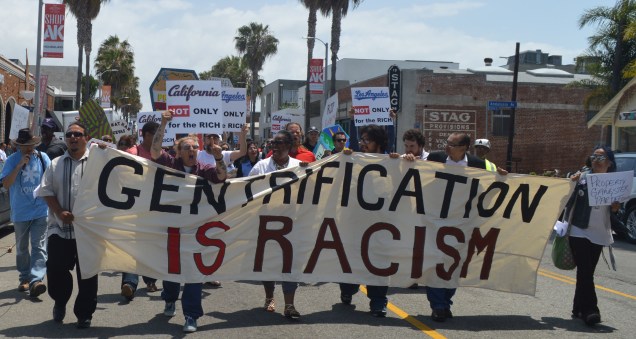
Gentrification is Racism

If racist sentiments like this count as “progress”, count me out

If anyone were still in doubt that much of the social justice movement is often little more than a thin veneer of moral respectability plastered over a movement built on the hatred and resentment of “cisgender, straight white males”, they need only read this article by writer/performer Taylor Steele in online publication The Body Is Not An Apology.

In the piece, Steele reacts to the creeping gentrification of her Brooklyn neighbourhood with a racist tirade that would see her roundly condemned and excommunicated from polite society were she white and the target of her ranting black:

Gentrification happened to me in steps.

At first I was confused.

Were the non-POC in this predominantly Black/Brown neighborhood lost? Did they miss their stop on this Queens-bound train? Are they simply taking a tour of the best Caribbean spots in Brooklyn? When I let it sink in that they were here to stay, noticeable implants to a previously self-contained body, there was anger and frustration. I could feel my rent rising every time a white family, Air BnB-ing in my neighborhood, asked which way to the nearest organic market. And yes, that really happened on a Bed Stuy corner outside of the Crown Fried Chicken and family-run bodega.

(For the uninitiated, “POC” means “people of colour”, and “Black/Brown” are capitalised while “white” is not for reasons that will soon become all too evident.)

Okay, so we have what appears to be a fairly standard diatribe against urban gentrification. So far, so typical. But Steele then continues:

It is traumatic finding strangers in your house, not understanding completely how they got there, not being able to ask them to leave, them rearranging the furniture, and you not being able to move any of it back — nothing will ever be the same; change is trauma.

I can logically/intellectually understand that the white people who move into predominantly Black and brown spaces do not do so with mal-intent; perhaps, these are the places they can afford to live. Perhaps, they can’t see that their presence in these spaces can serve as a kind of terrorism. I also understand they are not responsible for my mental health. However, this is how white supremacy works. It makes it impossible to point the finger at any one thing because the problem is a systemic, political, institutional one. White supremacist capitalist patriarchy proclaims that I am supposed to feel an inherent inadequacy and replaceability.

Author’s emphasis in bold.

A kind of terrorism. Go back and read that passage again, lingering over each sentence. Just read it, and then tell me with a straight face that the world is somehow better off for the presence of this toxic, self-obsessive, cancerous movement in our society.

Imagine that the situation were reversed, and a white author was complaining about black or other ethnic minority residents moving into the neighbourhood, explicitly complaining about the way that they are “rearranging the furniture” through their presence and fretting that the unwelcome newcomers cannot simply be asked to leave. Imagine that the white author described the mere arrival and presence of these newcomers as a form of terrorism being perpetrated on the white inhabitants. Just imagine the reaction. Imagine the outrage and social ostracisation which would rightly follow the expression such heinous, prejudiced sentiments. Now answer this: how does this new form of racism toward the often white beneficiaries of urban gentrification in any way expunge or heal historic racism aimed at black people?

While stubborn racist holdouts and the vestiges of real privilege and discrimination clearly do still exist in places, they are a shadow of what they once were, and thankfully in terminal decline. While full equality under the law should always be the only acceptable goal, those who fought for civil rights in the 1960s and preceding decades would often be astonished by the landscape faced by their successors in 2017. In fact, the only ones now openly using racist language and seeking to resurrect the “separate but equal” days of Jim Crow and segregation are the Social Justice Warriors, in their perverse fight against perceived “oppression”.

And this leads us to the perverse spectacle of a black writer, seemingly oblivious to the historical parallels she is invoking, talking resentfully about white people moving into “her home”, “terrorising” her with their somehow-illegitimate, organic food-purchasing presence (as though no wealthy black people shop at Whole Foods).

Here is someone who would no doubt be the first to join an anti-Trump protest as it marched through Brooklyn, and yet describes her resentment and fear of change in exactly the same language – social loss, fear of change, the undermining of local institutions – that she would castigate a white person or Trump apologist for using to articulate their own feelings about uncontrolled immigration and social change. There is simply no self-awareness at all – just rage, entitlement and self-inflicted fragility.

Have we really come this far as a society only to revert back to fearful, paranoid tribalism of this kind?

For some of us, yes, apparently so.


Gentrify This

Bottom Image: Amanda Farrer

Support Semi-Partisan Politics with a one-time or recurring donation:

Agree with this article? Violently disagree? Scroll down to leave a comment.

Follow Semi-Partisan Politics on TwitterFacebook and Medium.

Immigration And The Media, Part 2

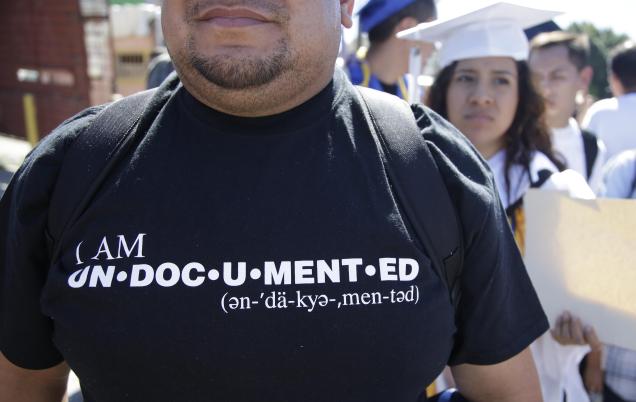
I am undocumented illegal immigrant shirt

In Social Justice Land, flouting US immigration law is deliberately portrayed as a badge of honour

This dispatch from deep inside SJW-land, purporting to provide “undocumented immigrants” with ways to “love themselves”, warrants line-by-line deconstruction.

Ella Mendoza writes at Everyday Feminism (naturally):

When you’re constantly the subject of laws, amendments, and media speculation, it’s easy to forget that you’re more than just a number.

Technically we are all the “subject” of laws and amendments – the Rule of Law isn’t some spiteful system concocted for the specific purpose of tormenting only those who choose not to respect national borders. But let us continue.

Your existence is valid, regardless of how you crossed the border, where you’re from, and where you’re today. Human beings cannot be “illegal,” especially in a country whose laws are built on the enslavement of Black people and the murder of Native people.

When the government talks about laws upon our bodies, we have to remember that no matter how much they tell us that our existence is “illegal,” they’re wrong.

Here is the first disingenuous straw man argument – and it only took us two sentences to get there. Nobody, not even the most hardcore anti-immigration zealot, believes that people themselves are illegal. That would be stupid. Nobody disputes that everyone’s existence is “valid”. Everyone is a child of God (if you believe in God), everyone has certain inherent and inalienable rights. But those rights do not presently include sticking a pin in a map and deciding to relocate to another country without first obeying that country’s immigration laws and procedures. The crime or civil violation is illegal, not the person, just as someone who drives faster than the speed limit or burgles someone’s house does not become personally illegal because of their transgression.

But it so suits the propaganda purposes of the open borders zealots to roll around on the floor pretending that Evil Conservatives are declaring their very bodies “illegal” (and what is this strange obsession with bodies in SJW-land?) that they cannot bring themselves to let the deception go. Pretending that border control advocates consider All Immigrants (activists deliberately blur the line between legal and “undocumented”) to be inherently illegitimate makes it easier to accuse them of wanton, inhumane cruelty rather than intellectually engaging with their argument and doing the much harder job of making a coherent case for a borderless world.

More:

Take Time to Take Care of Your Needs

Sometimes this is the hardest thing to do, as everyone faces undocumentation in different ways, and through different lenses.

“Faces undocumentation”? What a peculiar turn of phrase. It is almost as though the author is trying to suggest that “undocumentation” is a condition inflicted upon a hapless victim (whoops! where did my documents go?) by the snarling, evil state rather than the consequence of a person’s deliberate decision to violate immigration law.

As a small-C conservative who believes in upholding and strengthening the nation state but who maintains great sympathy with America’s illegal immigrant population – and who would gladly see some form of amnesty so long as it were part of a grand bargain, to be enacted when border security and internal cooperation between agencies is properly strengthened – I would have a lot more respect for illegal immigration advocates if they would just stop lying.

But unfortunately they seem determined to insult our intelligence at every turn, first by always talking about “immigrants” in general, so as to blur the line between those who followed the rules and those who did not, and secondly by pretending that illegal or “undocumented” status is something inflicted on the subject by government rather than being the direct consequence of their own action (or the action of family members in the case of minors).

How can one have a meaningful dialogue with people who have convinced themselves that your desire to see the law enforced and legal immigrants treated fairly means that you consider the very existence of “undocumented” people to be illegal? Where is the potential compromise with somebody who has no respect for the law and who will not be satisfied with anything less than fully open borders and the de facto abolition of nation states?

More:

As migrants, we have been taught that in order to have our needs met, we must assimilate and work through the system. But this is not true.

No, sorry, not migrants. Illegal immigrants. But yes, no matter how one comes to be in a new country, assimilating into that culture and learning to work through existing systems is surely pretty sound advice. What good do activists like Ella Mendoza possibly think they are doing by telling people that they should refuse to assimilate as a point of pride?

More:

As someone who has made up her mind about not pursuing citizenship, I often find myself questioning not just this choice, but all choices in my life.

Wait, what? The natural reading of this sentence would suggest that Ella Mendoza has the opportunity to pursue US citizenship but has “made up her mind” to instead remain an illegal immigrant in America. This is preposterous – she should question her choice, and continue questioning it until she arrives at a less moronic answer. Why willingly remain in the shadows if there is a path to citizenship available, other than to deliberately thumb your nose at the very concept of citizenship in the first place?

I can think of no other reason for this – readers, please correct me if I am wrong – than the fact that Mendoza is so wedded to the idea of herself as a hapless, persecuted victim that she is unwilling to take the steps toward legalisation and citizenship because to do so would deprive her of a critical part of her identity as a persecuted “undocumented” person. This is a sickness, pure and simple – how else to describe deliberate, self-inflicted fragility of this kind?

More:

Allow yourself to breathe and make hard choices, as well as postpone the easy ones. Sometimes time can feel so heavy and so uncertain. By being hard on ourselves, we are only traumatizing our bodies more and more.

Remember that you made the right choice by choosing to live.

Though many will tell you that you could’ve done it differently, remember that your migration to this country meant choosing to survive, no matter what.

Your body has survived the trauma of borders and the bureaucracy of colonization. You’re a living breathing testament to your dreams.

What is this weepy, overwrought nonsense?

Look: many people currently living illegally in America are deserving of real sympathy – pulled as much as pushed into their adopted country by a rapacious underground economy which demanded their labour and let down by successive generations of politicians who preferred them to toil cheaply in the shadows rather than acknowledge their contributions or confer the rights – and responsibilities – of citizenship. Local, state and federal government (not to mention unscrupulous employers) often bear equal responsibility for the situation, but this does not diminish the agency and responsibility of those who nonetheless choose to flout federal immigration law.

And of course many people currently living illegally in America have indeed faced trauma, violence and persecution in their home countries, that much is also not disputed. And by virtue of that fact, many (though certainly not all) illegal immigrants are sadly accustomed to adversity the likes of which most of us can scarcely imagine. Therefore, the last thing that they probably need is some prancing SJW to come along to infantilise them and teach them how to better “love themselves”. This kind of kindergarten nonsense is effective only on cosseted middle class American college kids who grew up entirely ignorant of real hunger, want or danger, and who actually think that somebody saying something mean about them online or in a newspaper article constitutes a mortal danger and an assault on their person.

More:

Colonization and assimilation are both very hard subjects on our bodies. As migrants, we’re not from here, and as undocumented migrants, we’re told that we don’t belong here, either.

In order to survive, we’re often forced to adapt to a country whose culture consists of appropriation and theft, as well as an overwhelming amount of artificial media.

Decolonizing our bodies is more than just a ten-step program.

Well done for avoiding Nicholas Kristof’s mistake of comparing “oppression” to a twelve-step recovery program from addiction; ten steps is much more neutral.

It’s a daily practice of reconnecting and challenging the way our lives have been whitewashed, challenging the ways our bodies have been educated to assimilate into a system that profits from our struggle.

Let’s put aside the irony of someone who claims to speak for an army of people who intend to settle in a new country in flagrant defiance of local immigration laws while proudly refusing to assimilate (her words, not mine) into the local culture actually daring to accuse the host population of somehow being the colonists in that situation. I trust that any reader of sound mind will immediately perceive that if anything, the situation is reversed.

More:

Remind Yourself That You Are Magical

You are a magical human being.

Your body has defied laws and lines on papers and maps. You crossed these lines and now find yourself in a strange place that you have somehow built a home out of.

In order to make this home real, you’ve had to find a way to live, a way to connect, and a way to survive.

Many of us did this without speaking the local language. All of us did this in fear. Yet, through these obstacles you have survived. You’re here, living, and breathing, and still traveling in many ways.

You’re not from here. But you’re not from there either – not anymore.

Instead, you’re from somewhere else.

Your body belongs only to you and the culture you’ve created from living in between worlds. You’re a survivor. You’re a traveler.

What does this garbage even mean? No, you are not “magical”. If you want to be seen as exceptional and deserving of praise and affirmation from dawn to dusk then for heaven’s sake, try doing something exceptional and deserving of praise. Do not expect or demand validation and encouragement for glorifying in your violation of US immigration law, as though there is something inherently virtuous in deciding to jump the queue and demand unearned residency in another country.

If you truly believe – having actually sat down for a few minutes and thought through the consequences of what you are advocating – that you want to swiftly bring about a borderless world where anybody can demand (and be unconditionally granted) residency of any country where they wish to live, with no strings attached and no commensurate responsibilities of citizenship, then by all means make that argument. Be my guest. Explain how tearing down border fences and customs checkpoints while singing Kumbaya can be accomplished without wreaking huge economic disruption and social unrest upon millions if not billions of people. Explain how a society of people who feel entitled to indulge whatever fanciful whim pops into their head without moral restraint or the slightest thought for the consequences creates and maintains a cohesive society. Please, go ahead and make that case.

Just don’t come back with any more of this childish yet cynical and manipulative twaddle about how those evil people who believe in border security and the rule of law are so heartless and cruel that they consider the “bodies” of “undocumented immigrants” to be inherently illegal, their very existence a crime. Try to win the argument on its intellectual and moral merits, if you dare, but enough of the emotional blackmail.

But of course they will not stop. Reductive, black and white arguments and piercing moral outrage are all that the SJWs have left, any intellectual or moral basis for their beliefs having rotted away long ago.


Petition to make campus safe for illegal undocumented immigrants

No Human Being Is Illegal

Support Semi-Partisan Politics with a one-time or recurring donation:

Agree with this article? Violently disagree? Scroll down to leave a comment.

Follow Semi-Partisan Politics on TwitterFacebook and Medium.

Hugging Is Bad, Mmkay? Parenting, ‘Everyday Feminism’ Style

how-to-hug-yourself

Now the act of hugging is oppressive

If you are not already taking these important measures to ensure that your child turns into a psychologically frail victim-in-waiting and/or a raging second generation Social Justice Warrior, completely unable to function in the real world, then you should check your privilege and begin immediately:

Two of my good friends had their first baby late this past year.

From the get-go, Baby was a cuddly little girl. (Or, as her two moms say, “We assume she’s a girl, but we won’t know for sure until she tells us herself.”)

Sigh.

She was all about being held and being rocked – and crying her head off the moment anybody dared to put her down. She wanted contact with all the people ever.

But in the past couple of months, it seems she’s had a serious change of heart.

When some of us were over for a visit, Baby suddenly wanted none of it. Passed from one person to the next, she wailed like a banshee until finally given back to one of her moms, where she instantly quieted.

“Don’t take it personally,” Mama said to everyone, bouncing Baby. “She’s just entering that stage where she’s developing some healthy stranger danger.”

And so the new process emerged: One of us would attempt to hold Baby every once in a while. And if she cried for more than 20 seconds, we’d hand her back to one of her moms.

If Baby didn’t want to be held by certain people, Baby didn’t have to be held by certain people.

It was as simple as that – and something her moms are determined to keep in place as Baby gets older.

It took the brilliant minds at Everyday Feminism to make us realise just how tyrannical and oppressive the act of hugging really is:

We as a culture simply need to stop drilling into our own heads that there are only a select few ways to show love for another human being.

Families don’t need hugs in order to count as families, friendships don’t need high fives to pledge loyalty, and romantic relationships don’t need sex to be considered serious.

Are these things nice to give and receive? Sure. But only if both parties actually want them.

Such things only hold so much affection weight because we’ve given them that weight ourselves.

To someone who doesn’t want it, an affectionate action is rendered meaningless at best and damaging at worst.

Forcing hugging on a child tells them that 1) they’re expected to show affection toward this person, and 2) that this is exactly how they must show that affection.

Instead of being a hug tyrant, allow your child to be creative in how they show affection. Let them draw a picture or share a piece of their favorite food or read to you from their library book.

Those gestures count just as much as a hug. And your child needs to be validated in that fact.

In other news, parents should avoid unintentionally oppressing their children by bending over backwards to indulge an excuse their every passing whim and misbehaviour:

Don’t force them to eat everything on their plate, and remember that them needing to go to the bathroom as you leave the house, or saying they’re not cold and don’t need a jacket, are all examples of kids listening to their bodies.

That might be frustrating as a parent, but we should still do our best to respect that.

Yet parents should also take time to scare their children witless by discussing the “terrible things in the world” with them at every opportunity, even when they are patently too young to understand:

War, slavery, and corruption are all topics of conversation I’ve discussed with my five-year-old. Why? Because it is contextually important and sadly still relevant to our day-to-day life.

We watched the Disney/Pixar DVD with Frozen Fever on it, and the first short film up was John Henry. As a story about an African American folk hero, it got us started on talking about slavery.

We don’t idly consume media in our house.

If the book, movie or song is about a concept, person, or event that my daughter doesn’t understand yet, then we unpack it. Which can be a brutal process.

Trying to explain the concept of slavery to a five-year-old is no easy task. However, it needed to be done so that she could understand the context of the film (and the world she lives in). 

I’m all for encouraging curiosity and a desire for knowledge in children, as well as a sense of justice and the instinct to consider the needs of people who are less fortunate. I’m pretty sure that this just used to be called “good parenting”, and didn’t require an army of online social justice activists churning out earnest articles to encourage.

But if these educational top-ups for a five-year-old child can be described as a “brutal process” then it is safe to say that you are probably going too far. It should be possible to watch Aladdin with your kid without first making them sit through a 30-minute lecture on classism and forced marriages.

And seriously: so now hugs are tyrannical?

On this current trajectory I give Western civilisation another twenty-five, thirty years, tops.


Postscript: For a more scholarly critique of hugging, see The Oatmeal.


Safe Space Notice - 2

Top Image: WikiHow

Support Semi-Partisan Politics with a one-time or recurring donation:

Agree with this article? Violently disagree? Scroll down to leave a comment.

Follow Semi-Partisan Politics on TwitterFacebook and Medium.

How To Use Social Justice And Identity Politics To Ruin Your Unborn Child

everyday-feminism-3-things-my-husband-needs-to-know-about-the-black-baby-were-going-to-have

No, your child’s life does not depend on you teaching them to be an insufferable social justice activist or an artificially frail victim-in-waiting

Imagine being married to the kind of spouse who writes an open letter to her husband and publishes it in Everyday Feminism, insisting that she take the lead in all parenting decisions as you raise a mixed race child together because she is black while you are white.

Imagine being publicly instructed that it is your solemn duty to raise a social justice warrior child, the newest member of the Cult of Social Justice and Identity Politics, whether they want to follow down that dismal path or not.

Well, the poor husband of Adiba Nelson doesn’t have to imagine, for he is living the nightmare. For a start, Nelson addresses him as though she were an android, which cannot be pleasant (unless he happens to be one, too):

Husband, for the last few years, we’ve been very firm in our decision to not have a child of our own.

You have two sons from your previous marriage, I have my daughter, and that has seemed like plenty. I’ve been so firm in this decision that I’ve gone as far as telling friends that they’re wise to only have one, or none at all.

Then about two months ago, we had a change of heart, and lo and behold, we’re taking steps to prepare for pregnancy.

And so the scene is set.

However, there is no blood test you can take or vaginal swab I can provide that can prepare you, White husband, to raise our Black child.

Yes, our Black child. Because even though our child will technically be biracial, having a biracial child who is half Black means you have a black child (by social, legal, and sometimes medical standards), and that comes with a whole new set of rules.

While your oldest White child may be targeted for his mental illness, statistically speaking, our Black daughter is 2.5 times more likely to be killed by police. So yes, there are some things you need to know before we embark on this journey.

Because in the words of Aladdin, you are about to enter a whole new world.

A whole new world, yes. A whole new world of pained continual racial awareness at all times and a laser-like focus on what divides rather than unites us; a whole new world of corrosive victimhood culture, combined with an infantilising trend among adults to affirm one another (and their children) well in excess of their merits, setting them up for future failure.

And then comes the agenda:

1. We’re Raising a Social Justice Activist

Today, more than ever in our lifetime, this is crucial. Not just to the world that our child will grow up in, but also, to our child’s survival.

The world at large will see our child as Black when it comes to crime, academia, housing, and everything else, but it will question their loyalty to their Jewish heritage when they stand up for the rights of people that look like me.

It’s crucial that we remind our child that one identity and experience does not negate the other, but that as a Black individual living in this country, it’s our collective responsibility to ensure that everyone is entitled to (and receives) fair and just treatment.

By that same token, we also need to teach them how to leverage their access to Whiteness and all of the privileges that come with it to help achieve this goal.

We need to gird them with the confidence, wherewithal, and history of both our heritages so that they can not only speak out against all the -isms with knowledge, but also with empathy.

It’s critical to our child that they understand that while they are in fact, Jewish, Puerto Rican, Panamanian, and African American, the beautiful bouncy curls and caramel colored skin that earned them oohs and aahs as children can also earn them an all expenses paid trip to Rikers Island, or worse, the morgue.

We are raising a social justice activist. Their life depends on it.

Their life really does not depend on becoming a Social Justice Warrior; this cannot be emphasised enough. Using this kind of overwrought language may help to imbue the Cult of Social Justice and Identity Politics with a nobility that it would otherwise lack, but it does not make the statement true. In fact, while nobody should discourage political activism, it is probably true that becoming a social justice activist and involving oneself in various conflicts with an often militarised police force actually increases rather than lowers mortal risk.

More:

2. I Need You to Follow My Parenting Lead in Public

Black people are exonerated at an exponentially higher rate than other races (four times more than Latinx folks and 1.2 times more than White folks), which means that our child is more likely to be arrested, tried, and convicted for something they didn’t do – simply because of the color of their skin and the kink in their hair.

So if we’re out and about and I scold our child for touching things, or I preface every outing with “when we go in the store, you stay right by my side, and you don’t touch anything,” it’s not me being mean.

It’s me educating our child (as subtly as possible) in the ways of the world, so that we aren’t one day paying for court appeal after court appeal.

Adiba Nelson might call it “educating our child in the ways of the world”. Others might view it as constricting their curiosity and imbuing them with a paranoia and vulnerability which they ought never to possess, certainly not at such a formative age.

More:

3. If We Have a Daughter, Fill Up Her Cup of Self-Worth on the Daily

Yes, to the point of obnoxiously overflowing. I really mean that. Obnoxiously. Overflowing.

As Black women, our styles, beauty regimen, body shape, and facial features have historically been mocked, shunned, and in the case of Sarah Baartman, even put on display in a traveling circus.

When we’ve been nothing but ourselves, we’ve been told it is not good enough, not pretty enough, not right enough – simply not enough.

However, when these same looks, regimens, and shapes are worn, relished and co-opted by other races, it becomes socially acceptable, the hot new fad, and all the rage. But you know this. This is nothing new to you. What you may not know is how to counter this.

Well, I’ll tell you.

To proactively counter this, from minute one of her girlhood, she needs to hear the words “hello beautiful girl,” and every day from that day forward (unless she tells us otherwise).

From the moment we teach her her first anything – rolling over, holding her head up, tracking with her eyes – she needs to be told how fiercely intelligent and unstoppable she is.

Because what could go wrong with filling a child with so much unearned positive affirmation that entering adulthood (or, god forbid, the corporate workplace) is set up to become a traumatic event due to lack of continual praise?

What if Adiba Nelson’s daughter isn’t “fiercely intelligent and unstoppable”? That is not to speculate that she will be ugly and dim (though both are a possibility). But she may be dreamy and artistic, have street smarts rather than book smarts or be known for her empathy and sensitivity rather than as an indefatigable warrior queen. All parents probably project something of themselves onto their young or unborn children, but Nelson seems to have predetermined that her child must become SJW 2.0 or else consider her life a failure.

And what’s all this about the husband having to defer to the wife when it comes to parenting techniques? As the social justice warriors would say: Um, doesn’t that, like, totally reinforce existing harmful gender role stereotypes?

Nelson then leaves her husband with this motivating pep talk:

Husband, being the father of a Black child will not be easy, because by nature (and history), it forces us to confront the fact that the world we thought we knew is not the world we know at all.

There will be times you will feel a rage you didn’t know existed because of someone’s “innocent” microaggression towards our child. However, those moments will be countered with earth-shattering bliss as you watch our child break through every ceiling with ease.

And when those moments come, I’ll turn to you, give you some dap and whisper in your ear, “Congratulations, husband. We did that.”

But today, as we prepare ourselves to bring a beautiful Black child into this world, I only have one thing to say to you.

You got this.

How incredibly condescending. How arrogant, to assume that a fully grown man and existing parent of two children (not to mention somebody Nelson presumably loves and respects enough to have willingly married) requires public guidance and cajoling in the art of raising their new daughter, simply because she will emerge into the world with slightly darker skin than his own.

What chance does this child stand if it isn’t merely exposed to infantilising victimhood culture through the education system but is marinated in that culture from birth at home? How much harm stands to be done to this child as she is raised to view the world entirely through the intersectional prisms (or should that be prisons?) of race and gender theory?

Thank heavens that I didn’t have to put up with any of this nonsense growing up as a biracial child myself. Thanks heavens that I was raised to relate to people as fellow humans rather than members of separately siloed racial identity groups, and not to see colour (I know, I know, how triggering to hear such a thought expressed today).

I fear for the child that Adiba Nelson and “husband” are about to raise together. But then I remember that children do love to rebel against the faith and values of their parents, and that gives me hope. May Adiba Jr. grow up to be a huge ideological frustration to her mother and a thorn in the side of the social justice and identity politics movement.


identity-politics-us-presidential-election-donald-trump-white-working-class

Support Semi-Partisan Politics with a one-time or recurring donation:

Agree with this article? Violently disagree? Scroll down to leave a comment.

Follow Semi-Partisan Politics on TwitterFacebook and Medium.