Thirty Years After Challenger, Who Now Inspires Us To Dare Mighty Things?

Whether we meet triumph or disaster in our national endeavours, our politicians – and their words – are no longer up to the job of inspiring us to move forward

“Far better it is to dare mighty things, to win glorious triumphs, even though checkered by failure, than to take rank with those poor spirits who neither enjoy much nor suffer much, because they live in the gray twilight that knows not victory nor defeat”

– Theodore Roosevelt, 1899

Thirty years ago today, the NASA space shuttle Challenger exploded in flight shortly after takeoff, killing the crew of seven.

Responding to the tragedy, which was witnessed by millions of people on live television – including many schoolchildren, for one of the astronauts was to be the first teacher in space – US president Ronald Reagan addressed the nation. He said:

We’ve grown used to wonders in this century. It’s hard to dazzle us. But for twenty-five years the United States space program has been doing just that. We’ve grown used to the idea of space, and, perhaps we forget that we’ve only just begun. We’re still pioneers. They, the members of the Challenger crew, were pioneers.

And I want to say something to the schoolchildren of America who were watching the live coverage of the shuttle’s take-off. I know it’s hard to understand, but sometimes painful things like this happen. It’s all part of the process of exploration and discovery. It’s all part of taking a chance and expanding man’s horizons. The future doesn’t belong to the fainthearted; it belongs to the brave. The Challenger crew was pulling us into the future, and we’ll continue to follow them.

[..] There’s a coincidence today. On this day three hundred and ninety years ago, the great explorer Sir Francis Drake died aboard ship off the coast of Panama. In his lifetime the great frontiers were the oceans, and a historian later said, “He lived by the sea, died on it, and was buried in it.” Well, today, we can say of the Challenger crew: Their dedication was, like Drake’s, complete.

The crew of the space shuttle Challenger honored us by the manner in which they lived their lives. We will never forget them, nor the last time we saw them, this morning, as they prepared for their journey and waved goodbye and “slipped the surly bonds of earth” to “touch the face of God.”

Two decades earlier, and another tragedy. On April 4 1968, Martin Luther King Jr. was been shot and killed by an assassin in Memphis, Tennessee.

On hearing the news, Robert Kennedy, then junior senator from New York, addressed a crowd of people in the open air in Indianapolis, saying:

Martin Luther King dedicated his life to love and to justice between fellow human beings. He died in the cause of that effort. In this difficult day, in this difficult time for the United States, it’s perhaps well to ask what kind of a nation we are and what direction we want to move in. For those of you who are black — considering the evidence evidently is that there were white people who were responsible — you can be filled with bitterness, and with hatred, and a desire for revenge.

We can move in that direction as a country, in greater polarization — black people amongst blacks, and white amongst whites, filled with hatred toward one another. Or we can make an effort, as Martin Luther King did, to understand, and to comprehend, and replace that violence, that stain of bloodshed that has spread across our land, with an effort to understand, compassion, and love.

My favorite poem, my – my favorite poet was Aeschylus. And he once wrote:

Even in our sleep, pain which cannot forget
falls drop by drop upon the heart,
until, in our own despair,
against our will,
comes wisdom
through the awful grace of God.

What we need in the United States is not division; what we need in the United States is not hatred; what we need in the United States is not violence and lawlessness, but is love, and wisdom, and compassion toward one another, and a feeling of justice toward those who still suffer within our country, whether they be white or whether they be black.

[..] And let’s dedicate ourselves to what the Greeks wrote so many years ago: to tame the savageness of man and make gentle the life of this world. Let us dedicate ourselves to that, and say a prayer for our country and for our people.

Now think about the last great British political speech you remember.

And don’t mention Hillary Benn huffing about Britain doing “our bit” to defeat ISIS in Syria, because competent and well delivered though it was, if that now passes for a great political speech for the ages then we are all ruined.

Need some more time to think?

Challenger Shuttle Memorial

There is no poetry in our politics any more. There is barely even decent prose, judging by the inauthentic passion of Ed Miliband or the randomised utterances of someone like Sarah Palin in America. In place of poetry – the kind of language which is only possible when we focus on ideas, goals or aspirations bigger than ourselves – we have dull, technocratic language about the performance of our precious public services, and overwrought emotional language either detailing how something makes us feel, or demonising the other side (the Evil Tories).

Imagine if David Cameron responded to some future aviation or exploration disaster by talking about slipping the surly bonds of Earth and touching the face of God. Just picture it. He would be laughed out of office – or at least mercilessly pilloried in the press – for speaking in what we would now consider to be such a pompous way. At best you might tease from him a few careless, cookie-cutter lines about the families of the victims being in our “thoughtsnprayers” (or just thoughts now, more commonly). But nothing big picture. Nothing that encourages us to look beyond ourselves for one second.

That’s because in our society today, there is nothing bigger than the Self. We are the gods of our own lives – or at least we often think so. And politicians, painfully aware of this fact, talk down to us as though we were children, always seeking to catch our eye with flashy pledges of “what’s in it for us” rather than what is necessarily good for the country, or for human liberty and progress.

Vote Labour and your NHS waiting times will go down. But don’t worry, we’ll get them to pay for it through higher taxes. Vote Conservative and your taxes will go down, and if that means fewer public services for them, so be it.

Now I’m certainly not suggesting that taxes and public spending are not important issues. But when even the Conservative Party can fight the 2015 general election on an offensively paternalistic manifesto promising “a plan for every stage of your life“, can we really deny that we have become a nation of consumers rather than citizens, more interested in who will deliver the most goodies for ourselves and the people we like than who will best steer the ship of state through challenging times?

That’s what we now expect from our prime ministers today – not a world leader, but a lowly Comptroller of Public Services. No call to arms in service of a great national goal. Nothing remotely inspirational at all. Just a checklist of things promised to us in return for our vote. I’m not assigning blame for this depressing chicken-or-egg state of affairs. But this is how our politics now works, more than ever. Less asking “what you can do for your country”, and much more emphasis on “what your country can do for you”.

Even the coming EU referendum – when the British people have a vanishingly rare opportunity to reconsider the very way that we are governed, the way we face the world and deal with the challenges and opportunities of globalisation – is being treated by the main campaign groups on either side as a parsimonious matter of saving or incurring relatively trivial sums of money, with rival (and equally ludicrous) numbers being batted back and forth by the rival camps.

Vote Leave asks us to imagine freedom from the EU in dismal terms of saving enough money to build a new NHS hospital every week, as though that trumps the democratic right of the British people to live in a sovereign country, while Britain Stronger in Europe attempt to bribe us with a gimmicky calculator purporting to show how much our shopping bill will go up unless we remain part of a European political union.

It’s all so tediously depressing and uninspiring. Is it any wonder then that political apathy is on the rise, and that those of us who remain engaged increasingly opt for virulently anti-establishment parties like UKIP or the SNP? Or that with the decline of moderate religion and our failure to confidently express and transmit British values through our culture, some disaffected young Muslims, rootless and yearning to feel part of something bigger, are stealing away to Syria to fight for ISIS?

I’m a political blogger, and for my sins I sit and listen to far too many political speeches by cabinet ministers, shadow ministers and other establishment types. And to begin with, I thought that I would judge a speech according to whether it felt in any way inspirational, transcendent or like a genuine attempt to rally people toward a goal beyond their own personal enrichment and the state-sanctioned smiting of the hated “other”. A speech which, regardless of its political leaning, might set the pulse racing a little with possibility.

Well, four years later and my pulse continues to flatline. I haven’t heard a genuinely good speech yet – as in one that you might actually remember six months later or recite a key passage from – at least not one hailing from the three main parties. If anybody believes that they have heard one, please send me a link or transcript and I will be forever in your debt.

Maybe I’m just romanticising the past. Maybe in thirty years’ time when Ed Miliband’s kid is running for the leadership of the Labour Party, we will all look back on Ed’s fifteenth personal relaunch speech or David Cameron’s 2015 general election stump speech and hail them as bold, visionary masterpieces. Maybe.

But I strongly suspect that in the year 2046, anybody wanting to listen to listen to a great British political speech – with the exception of those made by firebrands like Margaret Thatcher – will have to look back in time almost a century, and certainly past the haunted late years of the 2010s.


Downing Street - Podium - Lectern - Press Conference.jpg

Agree with this article? Violently disagree? Scroll down to leave a comment.

Follow Semi-Partisan Politics on TwitterFacebook and Medium.

EU’s Google Ruling Undermines Freedom Of Information

Google ECJ data ruling

The European Court of Justice, in another inspired ruling, has effectively declared that EU citizens have the right to request that Google delete undesirable search results which may portray them in a negative light.

With astonishing disregard for freedom of information and a troglodyte’s grasp of modern technology and its administration, the court held that there are certain circumstances when an individual may petition Google (and presumably other search engines) to delete links to various sites which contain information deemed false, obsolete or irrelevant.

Supporters of this backward and anti-democratic move might argue that Google search results function in a similar way to road signs, and that just as a city has a responsibility to remove road signs that point to closed routes or demolished visitor attractions, so a responsible search engine should prune its records to remove links to outdated information. And this neat analogy almost holds together.

Nearly, but not quite. The difference, of course, is that Google search results point to information on the internet that is still very much in existence and potentially of great importance. Forcing Google to remove search engine results is akin to a city deciding that a prominent building should be removed from local maps because it has fallen into disrepair and become an eyesore. The building remains, and it is in the interests of many people that its whereabouts remain public knowledge, whether or not it causes embarrassment for the city council or town planners.

Already a growing list of people with shady pasts are coming forward with petitions to Google, in the hope of wiping the digital slate clean of their past misdeeds, as the Telegraph reports:

Since it was introduced, more than 1,000 people have asked Google to remove links to unfavourable stories. They include a former MP seeking re-election, a man convicted of possessing child abuse images and 20 convicted criminals.

But more concerning than the granting people the ability to falsely curate the digital history of their lives for potentially nefarious purposes, the court’s decision places a human being at Google – or wherever the decision over which records should be removed is ultimately taken – in the role of moral arbiter of what information is still ‘accurate’ or ‘current’, and what information the public has a right to know. No human being or committee should be vested with such power, least of all one that hears petitions from people or institutions with overriding personal reasons to meddle with the perception of their past.

(Even the publication of false information, after all, becomes a matter of historical fact when it takes place, potentially an important one – such as cases of libel or political misstatement – which should be preserved for easy reference by future scholars, historians or lawyers.)

Furthermore, the court’s ruling shows complete and utter contempt for the ability of human beings to filter good information from bad, and accurate data from the misleading. Even if it were the case that erroneous information about a person’s criminal past or business dealings existed online, people are equipped with the mental faculties to check and verify the information before acting on it. The court’s opinion holds the human capacity to reason in such scant regard that it effectively decides it must be the job of someone – Google, the courts, the Truth Committee, anyone – to filter our reality before we observe it, lest we find ourselves being mislead.

Mark Weinstein forcefully sums up the argument against the ruling in the Huffington Post:

No company or entity should be able to build an online persona about us from the privacy of our actions and searches. Nor should anyone be able to erase legally documented history just because they find certain information unflattering. This is separate from the absolutely needed right to be able to remove my own personal posts or tagged photos of me posted by others.

One might expect that a ruling of this magnitude might prompt a response from the Prime Minister, but as is so often the case with matters of principle, David Cameron disappoints:

Asked by the Telegraph whether the ruling had any implications on freedom of speech, Mr Cameron replied: “I haven’t actually had a lot of time to look at this issue, so maybe I will have to get back to you on that.

“The basic principal that your information belongs to you is a good one, but I haven’t had a careful look at this, so I have to give you a considered answer another time.”

He added: “There you go – a politician who doesn’t know all the answers.”

It should not require many long nights spent poring over philosophical treatises and legal documents in order to form an opinion about the ECJ’s regressive ruling, but at least David Cameron is able to make a joke out of his total lack of conviction. For this blog, by contrast, the matter is quite clear-cut.

Our shared ideal of freedom and democracy requires as its aspiration (albeit never fully realised) the free and unfettered access to information on which to base our opinions and decisions. Establishing a precedent which says we cannot be trusted to distinguish current information from the obsolete, the relevant from the irrelevant, the true from the false, and setting up an intermediary system to do the job for us – which is what the European Court of Justice has so outrageously done – places the ECJ on the same morally repugnant ground as the internet censors of North Korea and the architects of the Great Firewall of China.

The people of Europe do not need the European Court of Justice, Google or anyone else to limit the scope of their information world. The justices wildly overstepped the mark, and should be condemned in the strongest possible terms.

Note: The Guardian has a good explainer on the case which can be read here.

GCH Who?

Who?
Who?


Watching the debate on government surveillance and citizen privacy play out differently on opposite sides of the Atlantic is both astonishing and depressing.

While the issue has become a hot political topic and an electoral issue leading into the 2014 midterms – with candidates and incumbents lining up to praise Edward Snowden for whistleblowing and revealing the extensive activities of the NSA, or condemn him as a hypocritical traitor – in Britain, the debate has caused barely a murmur.

Despite the fact that as closest allies, the United States and United Kingdom cooperate intensively on surveillance and national security issues, sharing the front-end technology as well as the intelligence results, those responsible from the United Kingdom side have escaped serious political pressure and questioning almost completely.

The closest to uncomfortable scrutiny that anyone from the British security apparatus came was when former GCHQ chief Sir David Omand was asked a softball question at the Home Affairs committee, and used it as an opportunity to bemoan the fact that all of this pesky, pedantic oversight of the intelligence community is harming their morale and making them feel sad.

John Naughton, writing in The Observer, has a theory about this relative lack of interest in Britain. He proposes that people would sit up and pay more attention to the erosion of their right to privacy and protection from unreasonable search if only the technological aspects of the question were explained in a more accessible way:

As someone who is supposed to know about these things, I’m sometimes asked to give talks about computing to non-technical audiences. The one thing I have learned from doing this is that if you want people to understand technological ideas then you have to speak to them in terms that resonate with their experience of everyday things.

Naughton believes that the problem is a lack of technical understanding in the British population – that if only the man on the Clapham omnibus knew what it meant to tap transatlantic fibreoptic cables to eavesdrop on data, to use computer malware to snoop on untargeted citizens or to maintain logs of telephony metadata, he would suddenly take to the streets in anger. This seems somewhat naïve. After all, American citizens are no more technically sophisticated than the British, and yet they managed to generate and sustain a sense of outrage that their privacy was being routinely violated by a government that would have happily continued doing so in secret were they not caught red-handed.

Naughton continues:

One of the things that baffles me is why more people are not alarmed by what Edward Snowden has been telling us about the scale and intrusiveness of internet surveillance. My hunch is that this is partly because – strangely – people can’t relate the revelations to things they personally understand.

The average Brit may not be conversant in the technical details, but they know the broad strokes – that the government is and has long been collecting and sharing data on us all with our international intelligence partners, that this was done without ever bringing the question up for national or parliamentary debate, and that the government is more interested in bullying people who try to report on the truth than in making their activities more transparent and democractically accountable.

The problem is not that the average Brit simply doesn’t understand what it means when GCHQ or the intelligence services collect reams of data indiscriminately with no targeting and no proof or suspicion of ill intent – they understand all too well. The problem is that far too many British people, when asked, simply shrug their shoulders and say something along the lines of “well, if it keeps us safe we should probably keep doing it,” or “if you have nothing to hide you have nothing to worry about.”

And more worrying still is the fact that some elements of the press also seem willing and eager to promulgate this attitude.

The reason for this apathy among both the people and the press is the fact that the British people have no real terms of reference when it comes to thinking about what government actions are good and which are bad. In the United Kingdom, the law of the land is only as cast iron and certain as the whims of the current government and current parliament. Aside from the European Union and European law (which act as brakes on British government ambition in almost every other sphere than this), the British citizen has no real defence against any action taken against him by the elected dictatorship of the day. And where it comes down to interpretation of existing law by the intelligence agencies, the cases are fought in court in a very opaque way that hardly anyone understands.

Contrast this to the situation in our closest ally, the United States of America, where precisely the same debate is playing out but at a much louder volume. The debate is much more accessible to the average American because the US government is structured in a much more understandable way and the powers and limitations of each branch of government are delineated by the Constitution. Though ambiguities and disagreements naturally always occur, the Constitution at least provides a frame of reference.

When issues such as bulk collection of telephony metadata or the recording of international telephone calls or the intercepting of emails come up, Americans can point to the Fourth Amendment to the United States Constitution, which clearly states:

The right of the people to be secure in their persons, houses, papers, and effects, against unreasonable searches and seizures, shall not be violated, and no Warrants shall issue, but upon probable cause, supported by Oath or affirmation, and particularly describing the place to be searched, and the persons or things to be seized.

There it is, in black and white. And it protects Americans in perpetuity until such time as it may be repealed or replaced with a new amendment (for which the bar for passage is prohibitively high).

That’s not to say that the US Constitution has done anything much to help American citizens defend themselves from unwarranted government intrusion. The Obama administration, and the Bush administration before, are able to come up with all manner of tortured (no pun intended) interpretations of the law to justify both the illegal things that they do and the fact that they try so hard to keep them secret.

But the mere fact that the highest echelon of law concerning search and seizure of property is so comparatively well known in the United States means that shady government activities suspected of falling on the wrong side of the line between legality and unconstitutional overreach are noticed much sooner and debated much more vigorously. By contrast, it would be astounding if any more than one in a thousand Britons of voting age could point to the relevant laws and statutes which define the British government’s legal powers to monitor the communications and data of its citizens.

The sad irony is that the Fourth Amendment protections enjoyed (or at least referred to) by American citizens derive largely from British legal doctrine, and yet it is the former colony which now tenuously keeps alive something which has been slowly and deliberately extinguished in the mother country.

John Naughton is right to be alarmed at public apathy toward the growing British surveillance state – it is perhaps the greatest threat to our democracy and free speech currently in existence. But public opinion will not be inflamed by holding a national technology seminar to explain the small print; there will only ever be opposition to government overreach on spying or anything else when we sit down together as a country and agree exactly what should be the limits on government power.

Holding a constitutional convention for the United Kingdom – as this blog has consistently advocated – to determine once and for all the powers that we are willing to grant the government and those which we would keep for ourselves may not be popular or sexy. But it is needed now more than ever.

Is Microsoft Voluntarily Censoring The Internet?

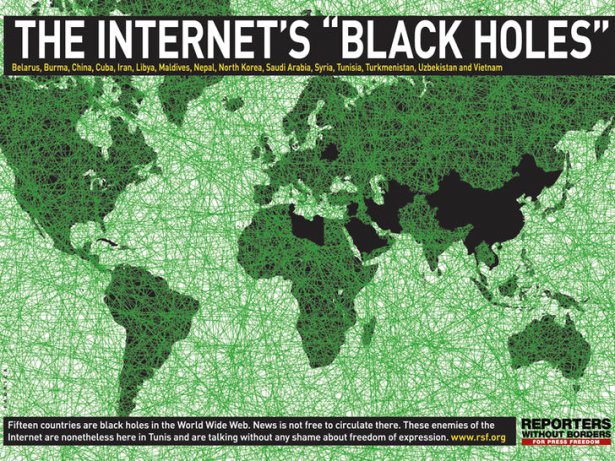
There was once a debate about whether large Western multinational corporations – particularly the newly rising high tech companies such as Google, Twitter and Facebook – should do business in countries such as China, where governments are openly hostile to the concept of free speech, a free media and unregulated access to information for their citizens.

That debate was settled some time ago, the winners being those who advocated expanding into China and then perhaps doing a little bit of agitating or talking up the virtues of freedom when time and decorum allowed. And though there has been precious little lobbying of the government in favour of free speech by those multinationals, the investment in China has, by and large, been a good thing.

Having long ago lost the argument that it is not their place to participate in Chinese government efforts to filter and censor the web when operating in China itself, everyone was bobbing along quite merrily in a morally dubious equilibrium, where the big tech companies would parade their wholesome, consumer-oriented credentials around in front of anyone who would listen or take down quotes, while also co-operating with Chinese censorship requirements and allowing the NSA ready back-door access to personal information held on their servers.

Enter Microsoft.

It is now believed that in addition to complying with the Chinese government’s demands that search engine query results originating from mainland China are filtered and censored, Microsoft’s also-ran search engine, Bing, has been applying those same censorship algorithms to searches in the Chinese language originating from anywhere on the planet. In other words, Microsoft, either in their zealousness to please the Chinese regime or out of sheer laziness and unwillingness to maintain two separate protocols, has apparently been applying Chinese-style censorship to internet searches not just where the Chinese government has geographical jurisdiction but anywhere in the world, whenever the user happens to be searching in Chinese.

chinese-authorities-force-businesses-to-help-censor-the-web-pg

The Telegraph reports:

According to research by Greatfire.org, an anti-censorship campaign blog, Microsoft’s Bing search engine filters Chinese-language results around the world, in the same way as it does in mainland China

Searches for potentially controversial terms such as “Dalai Lama” produce very different results when they are carried out in Chinese than they do in English, even if both searches are carried out on US soil, Greatfire said.

Its claims are likely to raise questions about whether Beijing is trying to extend its censorship regime to the Chinese populations of other countries, and whether Microsoft is making inappropriate concessions.

This is inappropriate to say the very least. The Chinese government’s policy of filtering the internet for its citizens so as to effectively pretend that certain viewpoints, ideologies or historical events are not real is bad enough, as is the fact that Western technology companies have complied with it in order to gain access to Chinese markets while demanding and extracting no concessions or easing of restrictions in exchange. But this allegation, if correct, suggests that corporate malfeasance has been taken to a much more worrying level.

One of the great advantages of globalisation and the free movement of people is that people from different countries can be exposed to different ideas, practices and ways of working. Even though the internet is restricted in mainland China, Chinese citizens could access the full, uncensored internet when traveling abroad, just as they could read the free press. In turn, exposure of Chinese citizens to new and contradictory ideas from outside could ultimately increase pressure on the government to relax their draconian policies.

Basing internet censorship on language rather than geography, as Microsoft appears to be doing, completely destroys this premise and removes the potential for this to happen. As the Telegraph rightly indicates, it would appear that Microsoft is aiding and abetting efforts by the Chinese government to extend their control over expatriate Chinese populations in other countries. In countries such as Britain this may merely be an odious and shameful act, but in other countries such as America, where the right to freedom of expression is constitutionally enshrined, a plausible legal argument could potentially be made that Microsoft is committing a First Amendment violation and breaking the law.

This revelation also contrasts Microsoft very negatively with Google, whose own search engine results for sensitive topics prime for Chinese censorship remain similar whether the search is conducted in English or Chinese, when outside of the Chinese mainland:

Users searching for “Dalai Lama” in Chinese were offered a link to information about a documentary produced by CCTV, the Chinese state-owned broadcaster, before any other search results of results linked to two entries on Baidu Baike, a heavily-censored online encyclopedia. Yahoo, whose search engine is powered by Bing, produced the same results.

By contrast, Google produces broadly similar results for web searches conducted in the US, regardless of whether the terms are searched for in Chinese or English.

But it is Greatfire, the online transparency and pressure group, who pose the ultimate question to Microsoft:

But whose law is dictating the manipulation of search results for Americans who are using Bing in the United States? Or French who are using Bing in France?

It is one thing to prostrate oneself to the laws and whims of a foreign government when negotiating terms to do business in that country. But if incompetence or monetary greed has led Microsoft to start applying Chinese censorship laws to citizens of other countries, then they have a big case to answer.

Where else are Chinese web censorship algorithms lurking?

Satya Nadella, Microsoft’s new CEO, may only be one week into his tenure in the top job, but this is a potential crisis of image and trust that needs to  be nipped in the bud and resolved – yesterday.

Microsoft has gone silent in response to the allegations from Greatfire so far. When the firm eventually comes up with an official story and breaks the silence, it will be very interesting indeed to hear their excuses.

Living In The Shadow Of The Bomb

Slate Magazine has a thought-provoking article exploring the condition of disused above-ground nuclear test sites in the former Soviet Union, and the nascent tourism industry which is springing up to give intrepid explorers an experience of this slice of recent military and geopolitical history:

Nuclear test site in Kazakhstan. Photo by Jacob Baynham.

Focusing on a particular test site in Semipalatinsk, Kazakhstan, the article looks at the impact that 116 above-ground nuclear tests can have on the wildlife and topography of an area:

Looking out from the epicenter of these blasts, you can still see remnants of structures the Soviets built to test the power of these explosions. To the right are the crumpled remains of a bridge. To the left are fortified bunkers and barracks that had been filled with dogs, pigs, and goats to approximate the effects a blast would have on soldiers. In a line in both directions, 10 four-story concrete buildings rise from the Earth like the moai of Easter Island. These structures were filled with sensors to measure the explosions. Strilchuk calls them “geese,” because from a distance that’s what they look like: giant goose necks craning up from the grass, facing the place where man played God.

As well as the human impact on those in the nearby towns, fifty miles away:

Anastacia Kyseleva is an 86-year-old resident of the Institution for the Elderly and Disabled in the nearby town of Semey. She was newly married and living in a village near the test site when the explosions began. “We didn’t know what it was,” she recalls 60 years later, wringing a scarf in her hands. It wasn’t until a test in 1956 that soldiers told the villagers to leave their houses and stand beside the river. “We could see the mushroom cloud from the field,” she says. “It looked like a sunset. Since that year, a lot of people started dying.”

But amidst this ongoing legacy of sickness, birth defects and infant mortality, there is also cause for optimism:

The government’s optimism for the Semipalatinsk test site reflects Kazakhstan’s emergence from a Soviet nuclear wasteland into a prosperous capitalist economy. Kazakhstan has come to terms with its history quicker than most former Soviet republics. A wealthy, resource-rich country, Kazakhstan is broadening its profile as a leader of the nonproliferation movement by hosting negotiations on Iran’s nuclear program. They’ve volunteered to establish an international nuclear fuel bank, a measure of nuclear security that the International Atomic Energy Agency is seriously considering. The government even talks of building a nuclear energy reactor of its own, a peaceful application of the fierce atomic power that the Soviet Union once wrought upon the Kazakh steppe.

The full article is well worth a read.