A Sermon On Justice And Reconciliation From Ferguson, Missouri

Ferguson Missouri MO Fourth 4th July parade 2


What to say about the slow-motion tragedy unfolding in Ferguson, Missouri?

The few known facts – that a black teenager, Michael Brown, was shot to death by Darren Wilson, a white police officer, in disputed circumstances – belie the visceral anger that has consumed the town.

The subsequent actions by the authorities, notably the St. Louis County Police – stonewalling on releasing the name of the officer involved, refusing to release the autopsy details, waging an increasingly military-style war of aggression against legitimate protesters and journalists, and releasing CCTV footage of Michael Brown purportedly robbing a convenience store in what can only be interpreted as an act of pre-emptive character assassination – have only compounded the sense that a predominantly white establishment have more interest in protecting their good names and quelling dissent than administering justice.

St. Louis is a city that I know, have spent much time in, and feel close to. People should not be put off St Louis, Missouri and the surrounding area by the horrible scenes unfolding there now on television and Twitter, because the current crisis is not representative of the state and its citizens. But having personal experience of the area,  it is also glaringly evident that the violence and racial tension that forced itself into our collective consciousness with the shooting of Michael Brown last week was looming, unaddressed, for a long time.

Since I have known St Louis, it has been a city of two halves – the still somewhat dicey downtown area and select suburbs with higher black and lower income populations on one level, and the highly desirable enclaves and suburbs (such as Clayton and University City) that surround them, populated by a much wealthier (and whiter) demographic on the other. Everyone may cheer on their hometown St. Louis Cardinals baseball team on game day, but there is a clear divide between those who can afford tickets to watch the game at Busch Stadium and those who have to tune in on the radio or TV.  Tensions between the city’s two halves, while not ordinarily visible to the casual observer, have roiled this part of Missouri for years.

The New York Times thoroughly summarised the history of this divide in a recent article, revealing the underlying causes of the difference between St. Louis City and County:

Back in 1876, the city of St. Louis made a fateful decision. Tired of providing services to the outlying areas, the city cordoned itself off, separating from St. Louis County. It’s a decision the city came to regret. Most Rust Belt cities have bled population since the 1960s, but few have been as badly damaged as St. Louis City, which since 1970 has lost almost as much of its population as Detroit.

This exodus has left a ring of mostly middle-class suburbs around an urban core plagued by entrenched poverty. White flight from the city mostly ended in the 1980s; since then, blacks have left the inner city for suburbs such as Ferguson in the area of St. Louis County known as North County … 

Many North County towns — and inner-ring suburbs nationally — resemble Ferguson. Longtime white residents have consolidated power, continuing to dominate the City Councils and school boards despite sweeping demographic change. They have retained control of patronage jobs and municipal contracts awarded to allies.

This history lesson may seem a million miles away from the reality on the streets of Ferguson today, but it is directly relevant. It is because of structures such as this, where the now-minority white establishment continues to wield almost unchallenged control over the levers of local government, that allow the scenes of high-handed crackdowns on civil assembly and free speech as practiced by the predominantly white County Police.

The attitude – sometimes explicit, sometimes more subtle – of many of the wealthy St. Louis County residents to their St. Louis City and poorer County neighbours – has often been one of impatience and grudging forebearance on one end of the spectrum, and wilful ignorance on the other.

In 2009, St. Louis residents faced draconian cuts to their Metro public transportation service, the network of buses and light rail that connects the city. Residents of generally wealthy St. Louis County voted against an increase in the transit sales tax that would have raised $80 million to fund the Metro’s operation. They made little use of public transportation themselves – they were wealthy and drove cars. But the subsequent service cuts predominantly impacted the poorer County residents and the City residents who rely on public transport to get around. One figure implied that access to jobs in St. Louis County was reduced from 98 to 71 per cent.

Why does this matter? Because it was the poorer, predominantly black workers who served the coffee, sold the groceries and worked in the nursing homes used by the wealthy St. Louis county residents. A measure came up for vote that would have prevented it from becoming exponentially harder for these people to get to work in their low paid jobs every day. And the response of the County voters: Tough luck, we won’t pay a penny more to fund the civic infrastructure that you need. Screw you, we got ours.

Take this attitude and repeat it in every area, from education to police traffic stops, and you get a sense of the climate in which the Michael Brown shooting took place, and how little the two sides of St. Louis have historically been able to empathise with one another.

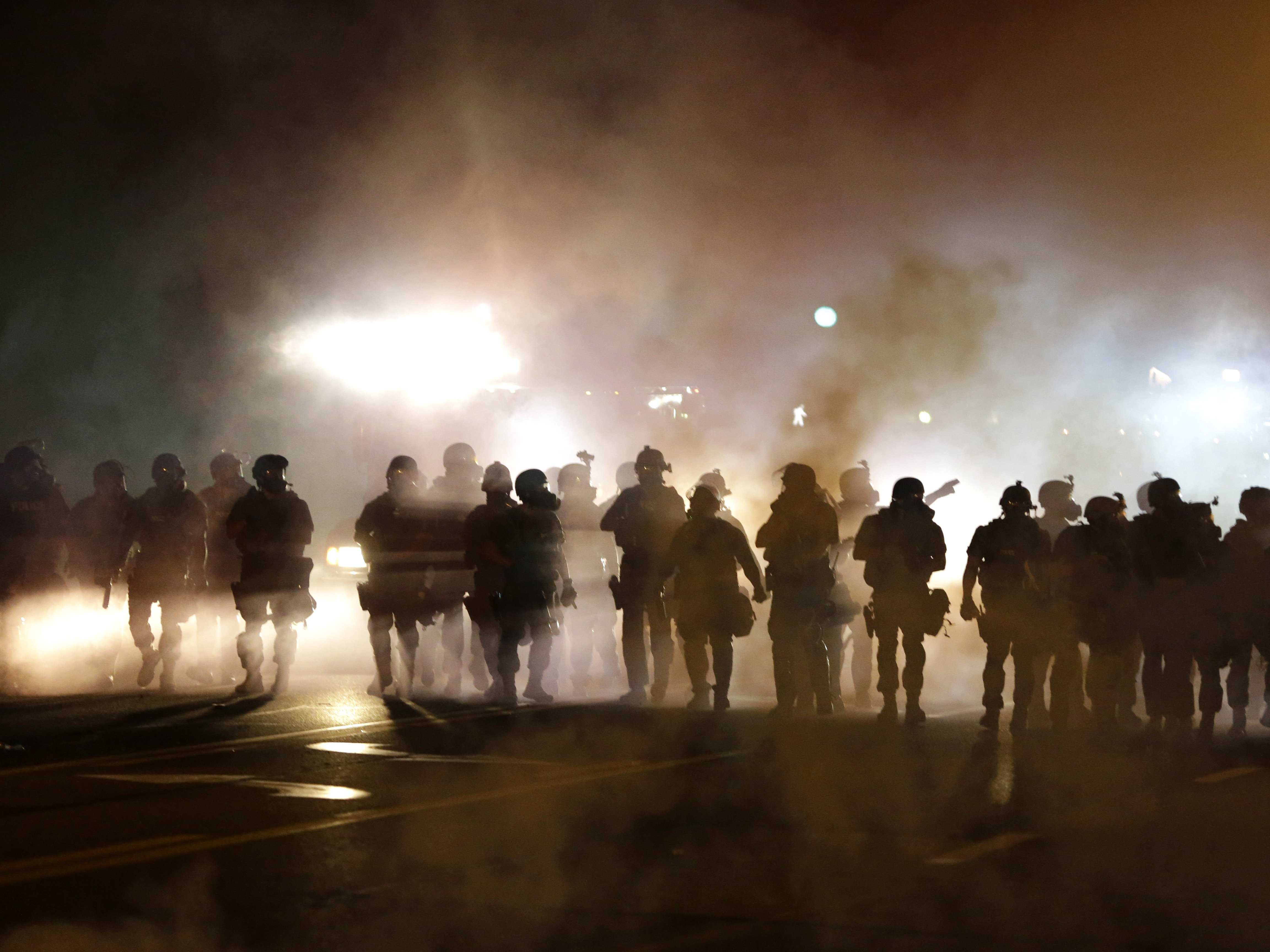
And on Saturday 9th August, it led to this:
Ferguson Missouri Michael Brown Protests Police


On my visits to St. Louis, a visit to the Episcopalian Christ Church Cathedral was always on the itinerary. The church and its community made a lasting impression on me with their many acts and expressions of love, welcoming and tolerance which sometimes seem so much at odds with the prevailing impression of Midwestern Christianity in America.

The way that Christ Church Cathedral (both in its grand stone home on Locust Street and its lively Facebook presence online) is responding to the crisis as it roils the city is perhaps a model to be studied and followed by all of the jostling interest groups – police forces, politicians, civil rights groups, the media and the oft-reported but scarcely-heeded residents – that have descended upon the area.

Yesterday, the Cathedral’s Dean Michael Kinman had this to say:

“The police and the justice system needs to hear the cries of the people and the people need to hear the cries of the police and the justice system, and we as followers of Jesus are the ones to stand in the breach between and even as we are being convicted and converted ourselves, help everyone on every side have their Jesus moment of conviction and conversion, of truth and reconciliation….

“The cry is ringing out from St. Louis around the world. The mothers are crying “Save my child,” and it is time for us to hear that cry and let it change our hearts and with changed hearts together lead this change in the world.

“St. Louis, this is our moment. And we know that this is not a child that will be healed instantly. The tasks are many, the obstacles are large and the journey will be long. But we are the Body of Christ and, with God’s help, together we will get the job done.”

Amen to this. Thus far, the police and the justice system have not been hearing the cries of the people. And in many cases they have conspicuously not been listening, either. Not in Ferguson, Missouri, and, sadly, not in many other towns and cities across America. For black Americans, the police are not automatically the reassuring presence on the street that they are to most whites – in fact, quite the opposite.

The protests taking place now would not be happening on their current scale and intensity if the death of Michael Brown was not just the latest of a litany of tragedies – and perhaps even injustices, depending on the outcome of this investigation – to disproportionally befall black victims and black communities. Looting and violence are reprehensible, but the situation in Ferguson does not exist in a vacuum, and it is not fair or intellectually honest to haughtily condemn them exclusively as failures of personal responsibility and ethics without taking the context of deprivation and repression in which they are happening.

That is not to say that a better, more peaceful path is not there for the taking. The police captain whose empowerment to take over control of the ongoing Ferguson situation from the hapless (and very culpable) St Louis County Police initially caused such a lull in the violence and bitter feeling showed the way with his early remarks:

“And we all ought to be thanking the Browns for Michael. Because Michael is going to make it better for our sons to be better black men. Better for our daughters to be better black women. Better for me so I can be a better black father. And, our mothers, so they can be even better than they are today. Lets continue to show the nation who we are. But, when these days are over and Michael’s family is still weeping, still on their knees praying. No matter what positive comes out, we still need to get on our knees and pray. We need to thank Mike for his life. We need to thank him for the change that he is going to make in America. I love you, I stand tall with you and I’ll see you out there.”

The difference that good leadership – and one man – can make is telling, and is encapsulated in this quote from a local resident, given last Thursday when hopes that the crisis was easing were still high:

But the presence of Johnson was clearly the difference between Thursday and the four nights of turmoil that preceded it.

 “I love this man so much,” said Angela Whitman of Berkeley. “He’s been here since the beginning,giving us encouragement and letting us know we’ll get through this.”

Conversely, the fact that the residents of Ferguson are not yet “through this” shows the limitations of good leadership and one man. Putting a local police chief – with black skin and roots to the community – in charge was a good first step, but it does not make up for the woefully slow response of Missouri Governor Jay Nixon. Nor does it make up for the fact that America’s libertarian political cheerleaders paused so obviously to test the waters before finally jumping into the fray.

The parachuting in of a black police captain does not make up for the many blatant violations of civil liberties – and the dignity of Ferguson protesters – inflicted by the overequipped and underprepared St Louis County Police in the preceding days. It does not make up for the flagrant inequalities in the American justice system, which incarcerates and punishes a huge number of young black men, stamping an indelible black mark on their records and making it even harder for them to ever break free from their circumstances and achieve the American Dream. And it does not make up for the false but universally known fact – reinforced over and over again, in lessons from cautionary tales like those of Trayvon Martin and now Michael Brown – that in America, a black life is worth far less than a white one.

One way or another, the protesters will eventually leave the streets of Missouri. So will the riot police, the clouds of tear gas and the world’s media filming it all. Michael Brown’s family will continue to grieve. These facts are certain, predictable, unchangeable. What remains within the power of people to influence is the legacy of this latest tragic black death on a city street. Will there be a meaningful and lasting change in police tactics, and a broader change in the way that the police seek to interact with – and reflect – the communities that they serve? And will there be a recognition that on America’s present trajectory, Michael Brown’s death was every bit as inevitable as that of the next person shot down without justification or consequences?

It takes a lot to change the culture of a local police department, let alone the judicial system of an entire nation. And for all the good that the players in Ferguson can do to bring these issues to our attention and make us face uncomfortable facts as they seek to reconcile and come to terms with what has taken place, it is usually at the state and national level where any lasting, widespread changes are enacted.

Unfortunately, this means that it is left to the slow-moving and cautious Missouri governor Jay Nixon, the vacationing President Obama (himself hamstrung in his response after failed interventions in the Trayvon Martin shooting and other incidents) and a host of national politicians who are more inclined to use the pain of Ferguson, Missouri for their own ends than to solve a common problem. With this predictable cast list, there seems little hope that we will not be reassembling in a few months’ time to beat our breasts over the next police shooting, mass shooting or other act of wanton violence.

But still, we must hope. And in the absence of any meaningful national leadership, the people of Ferguson, Missouri must lead the way themselves in turning a case study in “Community Policing – How Not To Do It” into a model of outreach and reconciliation for the rest of America.

For the sake of everyone, black and white, city and county, this dark chapter in American history must not be endured for nothing.
  

Statue of Reconciliation Coventry Cathedral Britain


Cover Picture: Fourth of July Parade in Ferguson, Missouri – NOCO magazine

Middle Image: Police in riot gear advance through clouds of tear gas in Ferguson

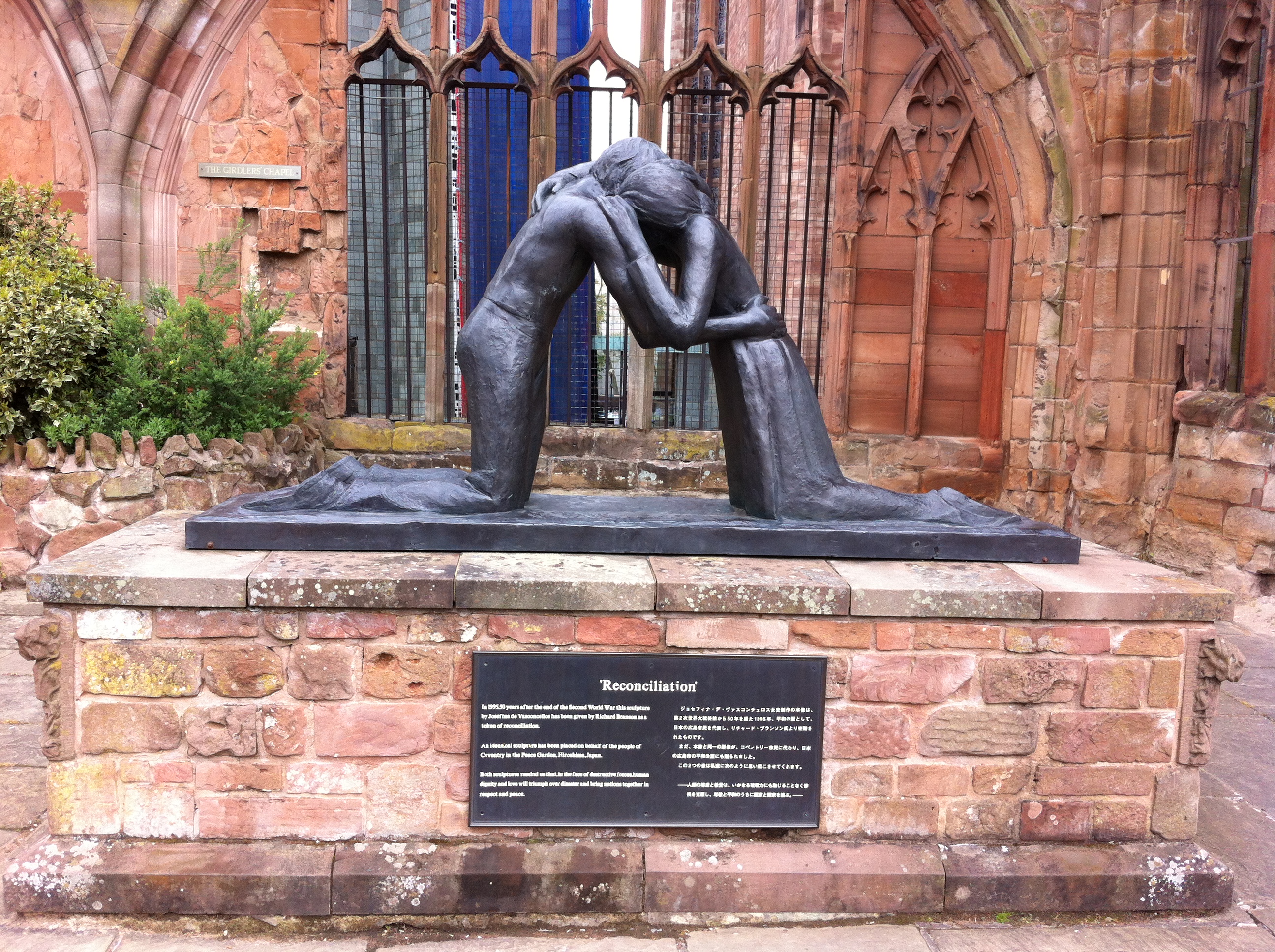
Closing Image: Statue of Reconciliation, Coventry Cathedral, Coventry, UK


Headline London Debate: Should Britain Make Eid And Diwali Public Holidays?

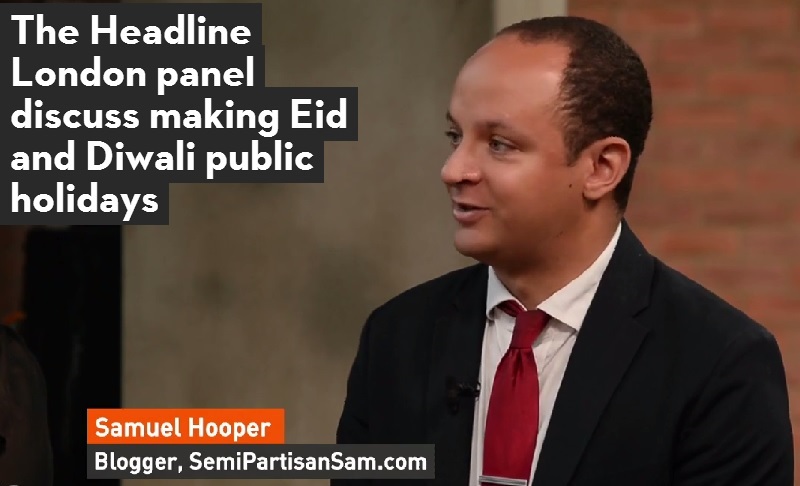
Samuel Hooper London Live Headline London Eid Diwali Public Holiday 2


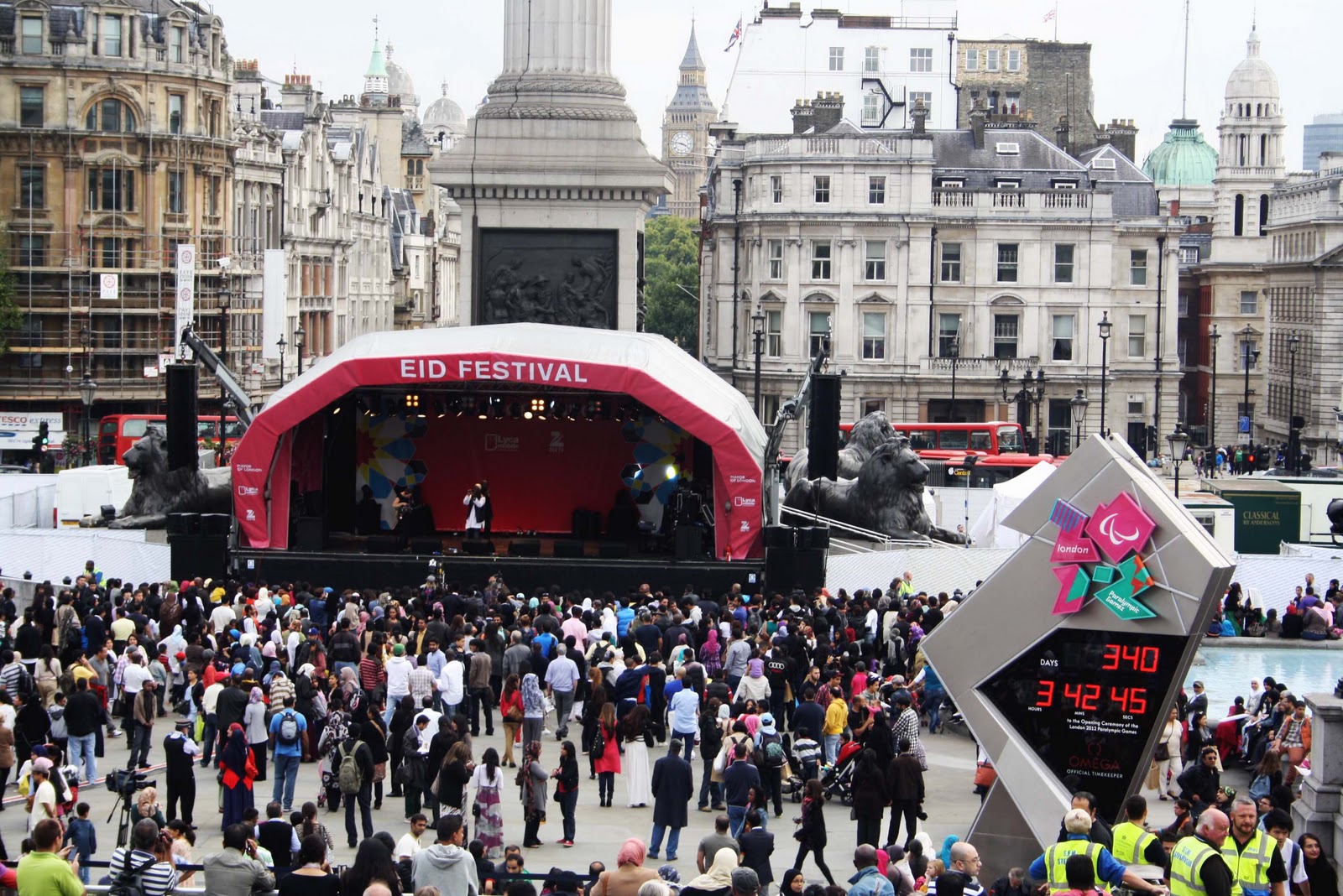
Yesterday, London Live TV’s Headline London lunchtime news programme covered the Eid celebrations taking place in the capital, and asked whether the UK government should make Eid (and the Hindu festival of Diwali) nationwide public holidays.

The idea was first raised in Parliament last week by Conservative MP Bob Blackman, in response to an online petition signed by more than 120,000 people. I vehemently disagreed with the proposal at the time, for the reasons set out here.

Semi-Partisan Sam was pleased to be invited to debate the issue with poet Mohamed “Mo Rhymes” Mohamed and political activist Peymana Assad on the Headline London panel. The debate was courteous and good-natured, which cannot often be said of debates on religion – but I believe my argument, founded on national unity, church/state separation and the rights of the individual won the day.

London Live’s website only shows the first part of the panel discussion, but the full segment is embedded here, via Semi-Partisan Sam’s YouTube channel:

If you enjoyed reading this article, please take a second to LIKE or SHARE it on social media using the buttons below. Help to spread the word and continue the debate.

TV Debate – Making Eid And Diwali British Public Holidays

Eid celebration london


Last week I vociferously disagreed with Bob Blackman MP’s efforts in Parliament to make the religious observance days of Eid and Diwali public holidays throughout the whole of Britain.

This was in no way out of animosity to Britain’s Muslim or Hindu communities; Semi-Partisan Sam acknowledges and appreciates the good that all of Britain’s religions and denominations (as well of people of no faith) contribute to the rich tapestry of our country.

But carving out a new exception, or concession, to minority religions in Britain would be a backward step just as small signs of progress are being made in rolling back the pervasive and anachronistic influence of our own established national church.

Furthermore, if we are to add a new public holiday to our calendar, Semi-Partisan Sam strongly believes that it should be one that unites, rather than divides, the whole of our United Kingdom. At a time when Britain is seemingly fracturing into a loose, uncomfortable coalition of competing interest groups and distinct sub-communities, and when many people struggle even to articulate any sense of British values, any new public holiday should celebrate the history and achievements of our entire nation – the one to which we all belong, Christian, Muslim, Hindu or otherwise – rather than flatter or appease any one particular group marked out for sponsorship by the government.

I will be on London Live TV’s Headline London show today, from 1230-1330 UK Time, participating in a panel discussion in which we will debate this topic.

You can watch on Sky 117, Virgin 159 or Freeview 8 from 1230 onwards.

As MPs Debate Making Eid and Diwali Public Holidays, The Wall of Separation Is Under New Threat

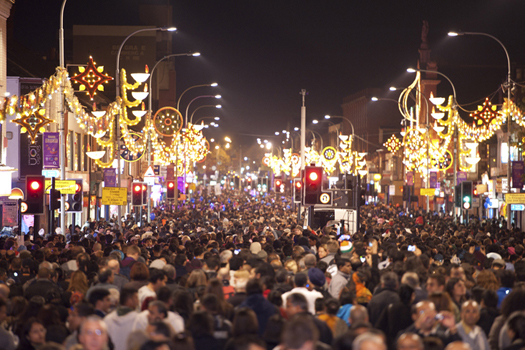
Leicester Diwali celebration


The wall of separation between church and state is under threat once again.

Not officially, of course. We in Britain have no written constitution, no final recourse to turn to in the event of gross government or judicial overreach, or the flagrant violation of our natural rights. But nonetheless, just as progress is being made elsewhere in placing religion in mutually beneficial quarantine from government, the parties of God (a term coined by the late Christopher Hitchens) are launching a counter-attack. And this time the attack comes not from the aggrieved Christian plurality, but the Muslim and Hindu minorities.

The BBC reports:

MPs are set to debate an e-petition aiming to make Eid and Diwali public holidays in the UK.

The e-petition is being championed in Parliament by Conservative MP Bob Blackman, after being signed by more than 120,000 people.

It is only fair that Muslims and Hindus have “the most important days in their faiths recognised in law”, the petition argues.

It should be noted that the government has already rejected the petition. But the fact that a Member of Parliament (and a conservative one at that) is willing to publicly go against the grain and argue for greater, not less government enforced religion in the lives of the people is worrying, and a sign that must be watched carefully.

The reasons for not widening the UK’s current public holidays are many, the first being the fact that shoehorning in another two religious public holidays which are set according to religious timetables rather than the economic rhythm and needs of the nation will only further exacerbate the current skewed system. At present, the UK’s bank holidays are concentrated very unequally in the early part of the year: a brace over the Easter weekend, a volley in May, a last hurrah in August and then the long, slow autumnal death march through the rest of the year until the people are saved by the Christmas holidays. This does little to take into account the needs of businesses (who lose their labour for a day), or for people who might wish the days to be spaced out more evenly.

Secondly, unlike many other countries, none of Britain’s public holidays are used for the beneficial purpose of celebrating our entire nation, our shared culture (as opposed to niche interests – a category under which Christianity increasingly falls) or our collective accomplishments as a British people. Unlike the United States, we have no equivalent to Independence Day, when we can all celebrate being British and indulge in an important exercise in positive patriotism. Unlike France, we have no Bastille Day, celebrating pivotal moments in our national history.

Aside from the fact that recognising pivotal days in our nation’s history helps to nurture the ties that bind us all together, it can be a money-maker too – the American economy may lose a day of labour every year on July 4 and Thanksgiving, but how much is injected into their economy through family gatherings, travel and public celebrations? And how great are the non-monetary benefits of fostering a shared sense of collective identity – one which Britain sometimes sorely lacks?

Thirdly, expanding the public holiday schedule to include more religious days would ignore the simultaneous (and popular) campaign underway to make St. George’s Day a national holiday. The saints days for the home nations are not recognised as UK-wide public holidays, which only fosters internal resentment and fuels the nationalist separatist causes which threaten the balkanisation of Britain.

And finally, written constitution or none, Britain urgently needs to raise a wall of separation between religion and our government, a cause that would be significantly set back by bestowing official government sponsorship on even more faiths. That is not to denigrate the great good that many religious congregations, parishes, charities and organisations do every day. But this social good cannot be used as a bargaining chip to blackmail the rest of the country (an increasingly secular one, for good or ill) into following the same lifestyle practices, moral codes or days of observance as the faithful.

Taken to its logical conclusion, ceteris parabus, this would mean the disestablishment of the Easter and Christmas public holidays. But this would not be a good idea. The Christian holidays, by virtue of having been part of our national fabric for so long, now occupy a place in our culture which transcends their religious origin. Many millions of people celebrate Christmas and Easter who have never set foot in a church, and could not name even the most fundamental tenets of the Christian faith. Furthermore, businesses and organisations around the world – especially in Britain’s main trading partners in North America and Europe – also observe these days as public holidays, making it unwise for Britain to deliberately put itself out of sync. Thus, because the Christian holidays are so embedded in our national life, and are an important reminder to our nation’s history and Christian heritage, there should (and will likely never) be no move to end these holidays.

(This is in no way to suggest that religious festivals and holidays cannot or should not be observed in other ways. The annual Diwali celebration in Leicester, for example, is rightly acclaimed as one of the finest in the world – though such celebrations should at all times be privately funded through sponsorship, and never from public money).

Race, culture and religion often make a volatile, contentious mixture. By granting special rights and favours to some, it can only lead to resentment among the unfavoured, and embolden the beneficiaries to ask for yet further recognition in the future. We already live in an age of religious persecution complexes and exaggerated victimhood – from the mild culture war still fought by the socially conservative Christian rearguard in Britain to the disillusioned British youths jetting off to fight for their so-called faith in Syria – and the very last thing we should be doing is anything that fans the fames of discord at home.

The UK’s Hindus and Muslims (and Christians, and everyone else) are all equally British under the law, and have an equal, important stake in our society, to the extent that they are willing to be British first and foremost. Only recently in the Birmingham schools scandal we have seen the damage that can be done to education and to young minds when religion is placed on a pedestal and sycophantic multiculturalist apologists are too petrified of causing offence to stand up for British values against religious extremism.

Rather than debating the admission of two more exclusionary, religion-oriented public holidays to the British calendar, Parliament should be debating a root and branch review of all our existing holidays as part of a broader effort to make our days off count for something more than a chance for a long weekend and an excuse to jet off out of the country.

What if together we celebrated the Acts of Union which created Great Britain? Or Nelson’s victory at Trafalgar in the Napoleonic wars? Victory in Europe day? Or any one of many other days that could plausibly be used to draw us together as people of a United Kingdom rather than a fractured coalition of different faiths, interests, grudges and resentments?

For the sake of our fraying national unity, admitting more faiths into the elite club of state sponsorship and approval must be rejected as the misconceived idea that it is.

How Can We Teach British Values In School If We Are Afraid To Assert Them Ourselves?

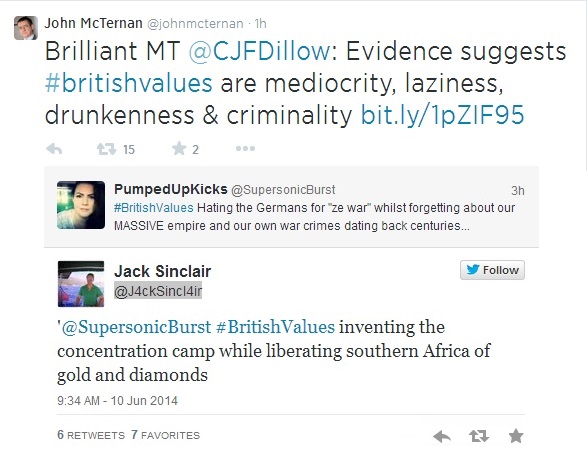
British Values Twitter 3

Just what are British Values?

Well, apparently the concept is sufficiently fuzzy in the minds of some people that we all now need to take time to argue amongst ourselves and reach a common consensus while one of the biggest and most worrying educational scandals in recent years plays out unobserved.

In response to the ongoing scandal of Birmingham schools being compromised by activist governors to deliver covert Islamic religious teaching, the Education Secretary, Michael Gove, made the slightly awkward if well-meant assertion that in future, all primary and secondary schools will be required to “promote British values”.

The Guardian reports:

Michael Gove, the education secretary, has seized on a finding byOfsted that a “culture of fear and intimidation” existed in someBirmingham schools by announcing that the government will require all 20,000 primary and secondary schools to “promote British values”.

These values will include the primacy of British civil and criminal law, religious tolerance and opposition to gender segregation. Gove also suggested girls wearing the burqa would struggle to find their voice and must not feel silenced in the classroom.

In what is being described by ministers as a decisive shift away from moral relativism in the classroom, the education secretary took action after a landmark series of reports by the schools inspectorate into 21 Birmingham secular schools found an atmosphere of intimidation, a narrow, faith-based ideology, manipulation of staff appointments and inappropriate use of school funds.

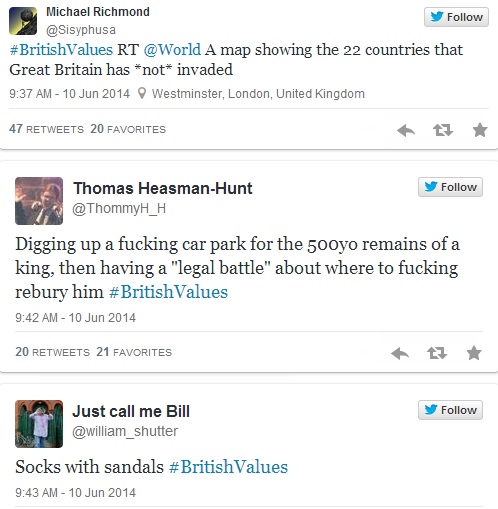
Unfortunately, the predominant response thus far has not been one of outrage that such a thing could happen to compromise children’s education in the UK’s second city; instead, we have seen race to come up with the funniest self-deprecating anti-British putdown as expressed by the #BritishValues hashtag now trending on Twitter.

When presented with the opportunity to express outrage that local school curricula could be so easily hijacked by fundamentalist members of any faith and ‘turned’ to start promoting beliefs very far from the British values of democracy, equality, non-discrimination and obedience to the law, a majority seem more interested in having an introspective discussion about what modern British values really are (at best), or suggesting through Twitter witticisms that any concern is tantamount to xenophobic intolerance  (more common).

The Huffington Post has collated a selection of what it considers to be “the best” responses, which take an almost uniformly dim view of British culture and history:

British Values Twitter 4

(It should be acknowledged that there have also been some very sensible and thoughtful contributions from others, such as the pianist Stephen Hough).

The hashtag activist comedians and earnest scolds of Twitter currently attempting to look cool by running Britain down on social media are actually revealing a few ingrained British traits of their own – excessive self deprecation and an almost craven desire not to offend or appear controversial – which easily become insidious and harmful when taken to extremes.

There is a gnawing anxiety behind some of the mocking #BritishValues tweets. “Isn’t patriotism so old fashioned?”, they scream. “Let’s list all the bad things that Britain has done so that no-one thinks we’re being boastful”. It may come across as cool, trendy liberalism but look closer and you see that some of it is actually rooted in fear.

Somewhere along the way the idea of expressing pride in Britain, and in British exceptionalism, became interchangeable in the minds of many people with that altogether darker and more insidious disease of racism. To express the former is, in the eyes of many, to come uncomfortably close to embracing the latter. And as a result, people instinctively turn away from patriotism, and instinctively oppose suggestions such as teaching British values at school, mistaking it for something else (and, incidentally, leaving a vacuum that the far right is only too happy to exploit).

And yet there is a serious issue at stake here, with the integrity of children’s education in question. Even the Guardian’s John Harris felt the need to weigh in to the ongoing argument about the fundamentalist Muslim influence in Birmingham schools, reminding his readers that state-subsidised religious indoctrination or interference with the curriculum is wrong whatever the source, and that this is no time for those on the left to bury their heads in the sand:

At the risk of reopening old wounds on the liberal left, for all the noise from those on the right of culture and politics, it is no good crying “witch hunt” and averting your eyes from this stuff. It should have no place in any state school, and most of it is an offence to any halfway liberal principles.

But Harris still felt the need to couch his tortured article in the wider context of a state education system which is failing and falling into disarray under the hated Tory government – the harsh unexpectedness of his gentle reminder that it’s not okay to look the other way and pretend to ignore the fundamentalist corrupting of education for fear of seeming racist or intolerant having to be soothed with a good old swipe at the real enemy, those on the political right.

Efforts to stamp out casual and institutional racism in Britain, while incomplete, have come a long way, even since the 1980s and 1990s. A large part of eradicating the scourge of casual racism has been (quite rightly) to mock it, deride racist thoughts and speech as backward and out of place, and doing everything possible to make racism distinctly uncool. The campaign to eradicate racism from football is a prime example of how successful Britain has been, especially when compared with continental and eastern Europe.

But while there is unquestionably still much work to be done, we must also begin to ask ourselves if one of the side effects has been a growing inability for people to express deeply felt but harmless national pride and patriotism in any but the safest, media-approved settings (such as the 2012 London Olympic Games).

If our generation’s instinctive response when they see criticism levelled at a person or group within a religious or ethnic minority is not to check the veracity and demand action if it is found to be true, but either to flinch and avert their eyes out of shock and unwillingness to believe or to become so embarrassed that their only coping mechanism is to resort to self-deprecating humour on social media, perhaps this is the price that our country has to pay in order to purge itself of the ingrained, widespread, casual racism that was common and socially acceptable for so long. Perhaps.

But being this way makes it much harder for us to deal with the problems facing Britain today, where the pernicious influence of fundamentalists (of all religions) on the young and the lack of assimilation of some cultures into wider British society are real issues that are being only half-heartedly tackled because of the paralysing fear of saying the ‘wrong thing’ or giving the wrong impression.

When asked why it was that Americans are so much more openly patriotic than Brits, the late Christopher Hitchens attributed it to the fact that overt displays of patriotism and love of country in the United States are borne out of the fact that as a nation of immigrants, Americans have no real shared history going back more than a couple of centuries. Therefore, simple acts such as reciting the pledge of allegiance every morning in schools and singing the national anthem before sporting events have, over time, helped to forge that unity within diversity.

But what has always been true of America is now increasingly becoming true of Britain. Immigration into Britain may bring profound economic and cultural benefits, but with each successive year of high net immigration and a lack of assimilation in some quarters, that degree of shared common history is diluted a bit more. And that’s absolutely fine, if other measures are in place to balance it out – like reciting a pledge, offering comprehensive British history as a mandatory subject at schools, or, shock horror, teaching children “British values”.

At the moment, though, these countermeasures are lacking. It should come as little surprise then that certain groups within society do not feel as much desire or pressure to integrate as they rightly should, and that when the door is left wide open in places like Birmingham to influence schools to teach children according to certain subcultural norms, some people will seize the opportunity with both hands.

Unfortunately, in the age of hashtag #Britain, not only does it surprise us when this happens, the thought of condemning or intervening in these events embarrasses us so acutely that we are barely able to have a national conversation without descending to xenophobic conspiracy theorising on one side or accusations of scaremongering on the other, topped off with a sprinkling of nervously self-deprecating Twitter jokes.

As John Harris noted in his article, by this point “inflammatory language and alarmism” have now done their work and made it harder to get to the bottom of what has really been going on in Birmingham’s schools. But there is an equally powerful countervailing force working in the other direction, suggesting that any concern is an unwarranted attack on a minority and misrepresenting any calls for the assertion and teaching of British values as xenophobic, Islamophobic and a direct attack on the principle of multiculturalism. It is not.

If we carry on in this way, we will never succeed in building and maintaining the unified, diverse and tolerant Britain that we all say we want.


If you enjoyed reading this article, please take a second to LIKE or SHARE it on social media using the buttons below. Help to spread the word and continue the debate.