Music For The Day

A flawed, beautiful 20th century masterpiece

Is there a more beautiful 20th century chorale than “Almighty Father”, the hushed invocation from Leonard Bernstein’s Mass? If so, I struggle to bring one to mind.

Almighty Father, incline thine ear
Bless us, and all those who have gathered here
Thine angel send us,
who shall defend us all.
And fill with grace,
All who dwell in this place.
Amen.

Leonard Bernstein is my favourite composer. Several of his compositions make my Top 50 list – Serenade for Violin and Strings in particular, but also Chichester Psalms and Symphony no. 2, The Age of Anxiety – and while other pieces of music by other composers often get more of a hearing on my iPhone, it is my contention that these Bernstein compositions contain some of the most beautiful (and profoundly human) music ever written.

This is certainly the case with Mass. As to whether Bernstein’s dramatic staged reworking of the Latin Mass works as a cohesive whole, my answer probably varies day by day and according to my mood. Mass is certainly transcendent, flawed, beautiful, stark, cheesy, smug, original in places, derivative in others and often achingly rooted in 1970s style.

The orchestral meditations, interspersed throughout the piece, have a uniquely haunting beauty of their own – particularly the first meditation, whose desolate questioning in the ethereal violin phrase followed by the slowly-building crisis and final, soothing, repeated falling notes on the organ are about as close to a religious experience as music has yet taken me.

A rather mediocre recording of the first meditation is here:


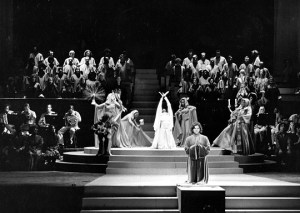
The complete recording of a recent (2012) performance of Mass at the BBC Proms is below:

https://www.youtube.com/watch?v=9tjsKzhpSwE


Leonard Bernstein - Mass - Kennedy Centre

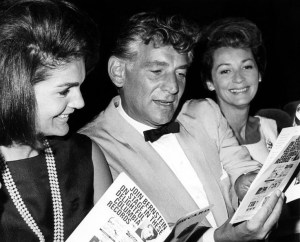
Leonard Bernstein

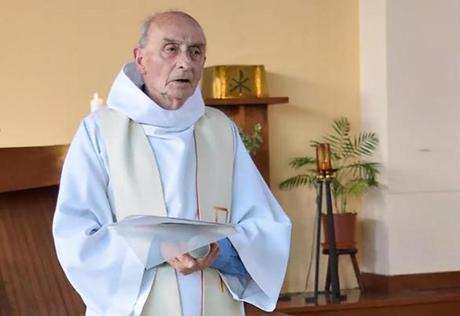
Fr. Jacques Hamel, Martyred By Islamist Thugs Acting In The Name Of ISIS

ISIS hostage - catholic church

The cold blooded murder of a Catholic priest, executed at the altar of his own church by young Islamist thugs, demands a greater response from us than the usual standard, sorrowful Twitter hashtag

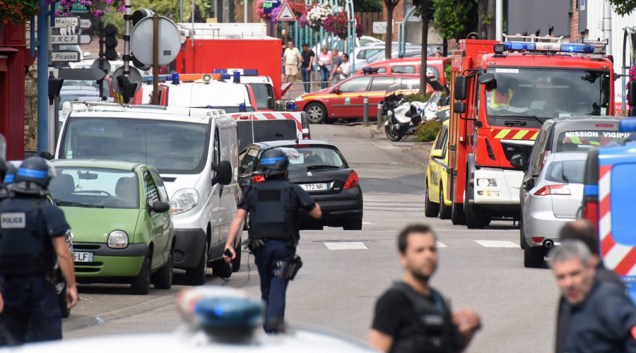
Another day, another abhorrent, despicable and unacceptable Islamo-fascist terror attack in France, this time targeting a Catholic church in which an 86 year old priest had his throat slit – while celebrating Mass – by Islamist thugs acting in the name of ISIS.

What happens when the sheer number of small and medium size Islamo-fascist terror attacks (or the aura of politically correct unease at confronting them) becomes so great that the media simply stop reporting them fully?

Melanie McDonagh wonders in The Spectator:

In Michel Houellebecq’s novel, Submission, about a Muslim Brotherhood takeover of the French government (liberals and conservatives agreed this would be preferable to a National Front government), the interestingly prescient element was the non-reporting by television and papers of outbreaks of violence prior to the change of government (Twitter didn’t really feature in this novel). And that rings true. We’ve already got self-censorship when it comes to reporting attacks by Muslim refugees (the gun attack by a German-Iranian patently fell into a different category) in Germany and Scandinavia, and an almost comical reluctance anywhere in Europe to identify Islamist attacks as such – until IS takes credit for them, even the work of freelances. Plainly we have to guard against language that would demonise an entire community, but within that reasonable limit, we must require both politicians and public service broadcasters to talk plainly. And when Muslim extremists slit the throat of a priest in his own church, we’re looking at religiously motivated murder, entirely of a piece with the same religiously motivated murder of Christians and others being carried out in the Middle East. Shall we say so?

This is my concern too. While reading Houllebecq’s Soumission last year I was struck by the plausibility of the author’s scenario – a craven political/media class desperate to avoid facing up to the nature of the threat ultimately ceasing to report on the fundamentalist religious violence even as it grew. One scene features a wealthy society event attended by the academic elite of Paris, interrupted by the sounds of distant gunfire in Paris – an Islamist attack or far-right counter-attack which was barely acknowledged by the partygoers let alone mentioned on the later television news bulletins.

Already we have seen the first signs of “terror fatigue” in the mainstream media. When a suicide bomber detonated his explosives at the gates of a music festival in Ansbach, Germany late on Sunday night, Britain’s rolling TV news channels briefly mentioned that an incident was underway, but otherwise continued with their normal programming. By the early hours of Monday morning they had bothered to get a couple of eyewitnesses on air via telephone, but it was not until the breakfast news that they gave it the full terror attack treatment which we have come to expect from the news. Evidently these incidents are now coming so thick and fast that the BBC did not consider it worthwhile waking up their A-team presenters or reporters in the middle of the night for “just another” suicide attack on the streets of Europe.

This is the new normal. And as this blog argued yesterday, Europe’s political class and virtue-signalling members of the public must shoulder their share of the responsibility for our increased vulnerability to attack. Whether it is by cheering on the opening of Europe’s gates to millions of improperly-vetted migrants, a small number of whom have deadly intent, or furiously refusing to confront the fundamentalist religious nature behind that evil intent, we have denied ourselves the ideological, spiritual, procedural and technological means to properly defend ourselves and our civilisation.

Father Jacques Hamel died doing what he had done for 58 years of faithful service – proclaiming the Word of the Lord and celebrating the Eucharist. Though his death was unimaginably barbaric and violent, at least the name of Fr. Jacques will live on as somebody who proclaimed his truth and defended his values to his last day. Can the same be said for many of us, especially those of us who seek to reach some kind of appalling and unachievable truce with the Islamo-fascists? How will those of us be remembered in history who seek to excuse Islamist terror, laughably excusing it or explaining it away on the grounds of foreign policy or housing policy or welfare cuts?

On this one grim occasion we can at least be grateful for France’s historically strong secular traditions. The cold-blooded murder of a priest celebrating Mass in a more devout country could well have lit the touchpaper for religious war and serious civil strife. France, being more secular, will likely not see as great an anti-Islamic backlash as if this had happened in more Catholic country like Poland.

But there the good news ends. If they were not already high on the list of potential targets, churches, synagogues and the priests and rabbis who lead worship in them will now be in the crosshairs of every budding wannabe jihadist already in Europe, as well as those who have yet to arrive. Every parishioner going to Mass will now have pause to stop and consider their safety as they fill the pews this Sunday, and every subsequent Sunday. It is physically impossible to protect every church in the country, particularly against assailants armed only with knives and fake explosives.

On the plus side, President Francois Hollande has finally been shamed by events (the weekly accumulation of terrorist atrocities and the growing death toll) into declaring that France is at war with the Islamic State and therefore, by extension, with the extremist fundamentalist ideology behind it. But it is too little, too late.

As Harry de Quetteville puts it in the Telegraph:

So we should remember this: the truly great leaders now, those who can genuinely bring security and are worth voting for, will not be those such as Marine Le Pen who seek to exploit division for power. But neither, crucially, will they come from the ranks of those who fail to address what voters see as blindingly obvious: that terror and immigration are connected. If Angela Merkel persists in doing so, even she will be brought low by it. If the Democrats continue not to talk about terror, it could cost Hillary Clinton the White House.

In Britain we have grown used to talking throughout the Brexit campaign about a disconnect between politicians and the public. “They just don’t get it,” said the ranks of the disaffected, as they deserted Labour for Ukip and voted Leave. Even now, our main parties are struggling to offer even an initial response to the economic impacts of globalisation.

But the consequences of a similar disconnection between public and politicians over terror would be unthinkable – menacing to the liberty and liberal values that define our societies.

The politicians to prize, then, are those who can pull their heads out of the sand without stirring up the mob.

Such prize politicians seem few and far between in France, Germany and Britain. In fact it is hard to remember a time when the quality of leadership was held in such low esteem by a political class who now prize the ability to pander to chosen voting constituencies above all else. With the partial exception of Jeremy Corbyn on the Left, Britain’s major political parties have zero interest in telling hard truths to the British people or proposing anything other than glib, painless (and ultimately unworkable) fixes.

One faction of the country in particular – the Guardianista metro left – is not even yet willing to describe these attacks as religiously motivated, ascribing them simply to “troubled individuals”. When half the country is unable (or stubbornly, desperately refuses) to identify the ideology which murdered an octogenarian priest at the altar of his own church, how do we ever confront it?

May God grant eternal rest to His faithful servant Fr. Jacques Hamel.

May he rest in peace and rise in glory.

And may we finally come up with a response to this sustained Islamist assault on democracy and freedom of speech and religion which amounts to more than a Twitter hashtag and a few bunches of flowers.


Fr Jacques Hamel - Catholic Priest

Support Semi-Partisan Politics with a one-time or recurring donation:

Agree with this article? Violently disagree? Scroll down to leave a comment.

Follow Semi-Partisan Politics on TwitterFacebook and Medium.

The Church Of England’s Tantrum Over The EU Referendum Result Is Insulting To Brexit-Supporting Christians

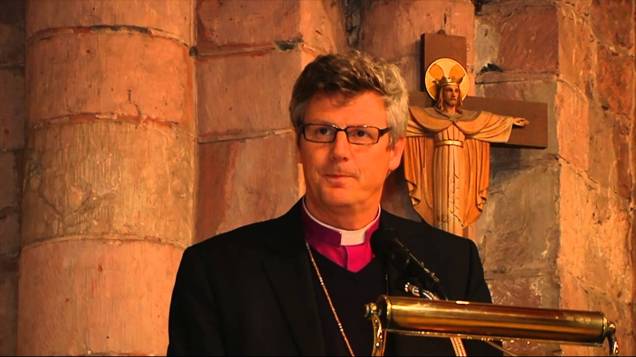
Bishop Robert Innes - EU Referendum - Remain - Brexit - European Union - Christianity

Nearly a month after Britain’s historic vote to leave the European Union, swathes of the Church’s leadership are stuck in furious denial

This blog had very little time for the Revd. Dr. Robert Innes, the Church of England’s Bishop of Europe, before the EU referendum and Britain’s shocking, wonderful decision to leave the EU. But it has even less time for his incessant, self-pitying (and democracy-loathing) moaning in the weeks since that historic vote.

The Archbishop Cranmer blog reports:

“Let me be clear,” said the Rt Rev’d Dr Robert Innes, Bishop of Europe, as he addressed the General Synod of the Church of England. “From my European perspective, this Referendum and its result represent a sad loss of national vocation; an abject failure of political leadership; and a squandering of the birthright of our young people.” And Synod applauded their Euro-prophet for a full 10 seconds, seemingly oblivious to the fact that lay Anglicans voted for Brexit in their droves (and by a majority). “Britain seems to be a country anxious to build fences,” he added, before reminding the people of God that his task as a bishop is to build bridges. Not to the wider world, it seems. Or even to the 22 nations of Europe which aren’t in the European Union, which includes the supremest bridge Pontifex himself, all neatly fenced off in Vatican City State. But Dr Innes’ task as a bishop is to build bridges to the other nations of the European Union, and without political union he is seemingly bereft and hindered from doing so.

Cranmer goes on to highlight Bishop Innes’ complete and utter disregard and disdain for the pro-Brexit opinions of many lay Christians:

The Bishop of Europe acknowledges that some in his Diocese were pleased with the Referendum result, but he doesn’t tell their stories. They are sidelined, disdained and ignored: they don’t quite fit the Bishop’s narrative of shame, anger and deep sadness. “One older man in Paris said to me: ‘I have never been so ashamed of my country.’ A lady in Geneva said to me: ‘I have found it hard to stop being angry.’” There’s no apprehension of joy, liberty, hope or optimism: no awareness of the abundance of bridges we can now build into the whole world. For the Bishop of Europe, British identity and national vocation were wrapped up in ever closer political union: there is no refuge or strength to be found in Brexit.

Christians who voted to leave the EU did so for a variety of reasons, and none of them is worthy of less consideration than the shame of the old man in Paris or the anger of the lady in Geneva. Do we not also seek to cooperate and fellowship with other churches in Europe? Do we not pray to avoid harm and relieve suffering? Are we any less concerned with human rights, the common good or injustice? Are we incapable of loyalty to brotherhood and respect for authority? Is our ethic simply one of nationalistic purity, individualism and xenophobia?

[..] Is there not an echo in our historic national vocation of looking out to the seas and saving Europe from herself? Rather than being an abject failure of political leadership, might Brexit not represent a noble and commendable success? Instead of squandering the birthright of our young people, might we not just have preserved their ancient rights and liberties as freeborn Britons?

One wonders exactly how long the British political and cultural establishment – of which the Church of England is a firm member – can go on being openly, seethingly contemptuous and angry at the British people without finding themselves on the receiving end of an eventual backlash which will make Donald Trump seem the epitome of polite restraint.

The way which those people of privilege and wealth (such as bishops, newspaper columnists and politicians) have conducted themselves since the EU referendum, staggering around the political landscape rending their garments and gnashing their teeth in despair at the prospect of being separated even an inch from their beloved European Union, is enough to induce nausea. It is particularly offensive when such arrogant and self-pitying emotions burst forth from people who fatuously claim to care about the whole of society while reserving a particular duty of care to exactly the type of disenfranchised, economically suffering people who voted for Brexit in their droves.

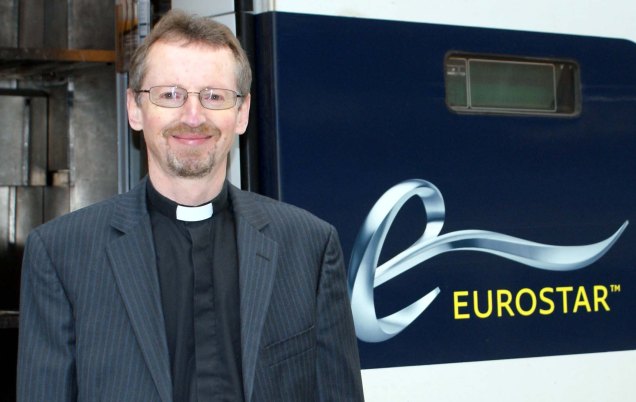
It is almost enough to make one pine for the days when the establishment merely ignored the concerns, priorities, hopes and dreams of ordinary people as the elite ravenously pursued their own interests. To a poor Christian, it was likely enough of an insult and stretching of Christ’s teaching to be ministered to by a disinterested bishop who lives in a mansion and sits in the House of Lords while they have to trudge five miles to the food bank. Now, as punishment for daring to vote for Brexit, now they must endure the same gulf in circumstances while also being harangued and accused of small-minded racism by some pampered upper middle class oik who uses the collection plate offerings of thousands of other economically struggling Christians to ride the Eurostar first class to “build bridges” with Europe while the social fabric of his own country continues to crumble.

How, one wonders, does the Church of England expect to survive when too few of its bishops follow the example set by Mark Rylands, Bishop of Shrewsbury, who approached the EU question fairly and with the interests of the world’s poorest at heart rather than the interests of Britain’s ruling elites, and determined that Brexit was best for British democracy and for the world’s poor?

How does the Church of England expect to survive when the face it presents to the nation (and its own congregations) too often resembles the contemptuous face of Bishop Robert Innes, horrified by the great unwashed in all their uneducated xenophobia, and the democratic decision they made to leave the European Union?

Quo usque tandem abutere, episcopus, fides nostra?


Christianity - Europe - EU - Brexit

Support Semi-Partisan Politics with a one-time or recurring donation:

Agree with this article? Violently disagree? Scroll down to leave a comment.

Follow Semi-Partisan Politics on TwitterFacebook and Medium.

Bastille Day Terrorist Attack In Nice – The Enemy Which We Refuse To Name Strikes Again

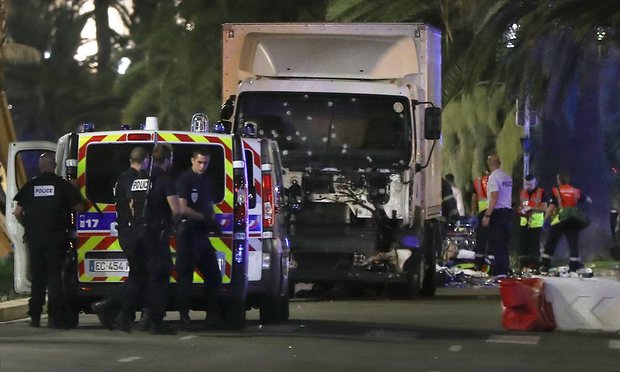
Nice Attack - Truck - Terrorism - France

As #PrayForNice trends on Twitter and another European city is plunged into terror and tragedy, what action have we taken to name, confront and defeat the evil which threatens us?

The news and images coming from the French city of Nice on what should be the most celebratory of days for the French people – Bastille Day – are awful, and heartbreaking, and wearily familiar.

As of this time, 77 people are confirmed dead, mown down on the Promenade des Anglais by a truck driven at high speed and containing an arsenal of weapons and explosives. This is clearly an act of terror – the numerous bullet holes in the windshield of the blood stained truck a testament to the amount of force it took the security services to stop the vehicle. And of course this is the third time in nineteen months that the French have suffered a grievous, high profile terrorist attack on their soil – first Charlie Hebdo, then the Bataclan, both in Paris, and now the Bastille Day celebrations in Nice.

To this we can add the Brussels terrorist attacks in March this year and, looking beyond Europe, numerous deadly attacks in Turkey as well as the terrorist shootings in San Bernadino and Orlando.

This is the future. This is the kind of terrorism which we are now going to face – not truly grand attacks on the level of 9/11, where casualties run into the thousands, but a long, slow grind of relentless medium-sized attacks, often on lower-value targets or in second tier, provincial cities. Often their planning and execution may turn out to be quite crude – this is not the age of the cunning master plan coordinated from a supervillain’s lair, but of “quick and dirty” plots hatched by autonomous cells and all the more unsettling precisely because they do not strike where we expect.

Now, murder comes to the airport entrance before the security checkpoints, or to an unremarkable concert venue, or a nondescript office or the main strip of a seaside town. Places which with the best will in the world are impossible to defend 24/7.

Radical Islamist terror has moved firmly into the age of the lone wolf, or the quasi-autonomous sleeper cell.

Why? Think of it like WiFi. Terrorist networks can no longer safely rely on coordinating large scale attacks in the West from a remote location with a reasonable degree of confidence that they will go undetected. Therefore, if ISIS and other fundamentalist Islamist organisations cannot physically cooordinate logistics and dispatch operatives to conduct attacks in Western cities, they must resort to other, remote means.

When the traditional methods of internet, telephone and even face-to-face communication are at risk of being intercepted by the security services, proponents of fundamentalist Islamist ideology must instead rely on transmitting their ideology and broad objectives through more general means, including YouTube and social media, targeted at the right susceptible population – usually disaffected and alienated young Muslim men who do not feel connected to or fully invested in society. The leaders of this death cult then rely on some of their indoctrinated targets possessing sufficient initiative to become their own mini terrorist masterminds.

We saw this approach in San Bernadino last winter, and again in Orlando last month. As more facts emerge, it may become clear that the Nice attack followed this pattern. Alternatively, it may be that Europe’s porous border and chaotic influx of migrants allowed foreign terrorists to slip through the net and aid in the planning or execution of the attack (press reports currently indicate that ID found on the truck driver suggest that he is a 31-year-old with dual French-Tunisian nationality, but this ID could well be fake or stolen).

But what is already crystal clear is the stark, uncomfortable fact that since Paris and Brussels (or Madrid and London, if you want to cast back a decade) our leaders have done nothing – nothing at all – to meaningfully grapple with this scourge of Islamist terrorism. So terrified are they of being accused of intolerance or racism that all we hear is the furious insistence that these atrocities have “nothing to do with Islam“.

And it’s just false. Of course the barbarity in Nice has absolutely nothing to do with the peaceful, moderate Islam practise by millions of adherents in the West and elsewhere. But it cannot be denied that those who do commit mass murdering acts of terrorism often explicitly reference Islam as their inspiration and justification – and do so from a very literal reading of certain Islamic texts. Moderate Islam does not inspire terrorist attacks, clearly. But fundamentalist, radical Islam often does, and we need to admit as much, for if we cannot even name the threat which we face what chance do we have of overcoming it?

As Douglas Murray rightly pointed out in the wake of the Charlie Hebdo massacre:

Contra the political leaders, the Charlie Hebdo murderers were not lunatics without motive, but highly motivated extremists intent on enforcing Islamic blasphemy laws in 21st-century Europe. If you do not know the ideology — perverted or plausible though it may be — you can neither understand nor prevent such attacks. Nor, without knowing some Islamic history, could you understand why — whether in Mumbai or Paris — the Islamists always target the Jews.

[..] We have spent 15 years pretending things about Islam, a complex religion with competing interpretations. It is true that most Muslims live their lives peacefully. But a sizeable portion (around 15 per cent and more in most surveys) follow a far more radical version. The remainder are sitting on a religion which is, in many of its current forms, a deeply unstable component. That has always been a problem for reformist Muslims. But the results of ongoing mass immigration to the West at the same time as a worldwide return to Islamic literalism means that this is now a problem for all of us. To stand even a chance of dealing with it, we are going to have to wake up to it and acknowledge it for what it is.

The cost of this furious pretence that Islam is totally unconnected to the “so called” Islamic State and the terror attacks committed in its name can now be measured in a growing toll of human lives. And the slickness with which we now mourn these events, with standardised tributes and modes of behaviour, only serves to emphasise our utter lack of coordination in preventing their recurrence.

As this blog commented after the recent Brussels attacks in March, charting the inevitability of the public grieving followed by zero meaningful action:

Impromptu shrines appear in a major square of the afflicted city, with candles, chalk drawings and sometimes a bit of impromptu John Lennon.

And the day closes with Europe and America’s major landmarks illuminated to resemble the national flag of the afflicted nation. They’re getting really good at that part now.

Fast forward a day, and plans are well afoot to grant even more powers to the well-meaning but overstretched security services – who were unable to make use of their current extensive powers to thwart the attack – and generally at the expense of our civil liberties. Particularly our rights to privacy and free speech.

Fast forward a month, and we have all moved on. Domestic political concerns, celebrity scandals and daily life have reasserted themselves.

I think we can all agree that we’ve got the public grief, cathartic expressions of solidarity and stern faced authoritarianism down to a fine art at this point.

When are we going to start acknowledging – and maybe even tackling – the root causes?

Unless our leaders can openly and unequivocally acknowledge that the terrorist scourge which sees murder brought to the streets of Europe on a near-monthly basis has its roots in a fundamentalist, literalist and militant strain of Islam, how are we ever to really get to grips with the issues of radicalisation and non-assimilation?

If the deaths of eighty slain people in Nice have nothing whatsoever to do with Islam then how do we hope to save young and impressionable Muslim schoolgirls in London from stealing away to Syria to join ISIS, or young and impressionable Muslim boys from falling under the seductive spell of jihadist recruiters?

If we cannot openly and comfortably name the enemy which we face – not an entire religion, but certainly a very real and present strain of Islam – then how do we even begin to formulate policies which will meaningfully reduce this threat over time?

The answer is that we cannot. We can clamp down further on our precious civil liberties, bartering away even more of our freedoms in the hope of purchasing additional security (and letting the terrorists win, since they count as a victory anything which diminishes our liberal democratic way of life). We can ramp up the surveillance state and clamp down on freedom of speech to make it look like we are doing something purposeful, even though the costs of such draconian measures far exceed the benefits. But none of these measures will stop two radicalised guys and a truck from repeating the horrors of Nice in Camden Town or Edinburgh.

It is impossible to create the perfectly secure country, and the closer one tries to get to this ideal, greater and greater are the liberties which must be traded away in exchange. Therefore, the only way to stop more Nice attacks from happening is to approach the problem from the other end and seek to tackle the radical, fundamentalist Islamist extremism.

And this is the one thing which our leaders, in their tragic fear of giving offence, shamefully refuse to do.
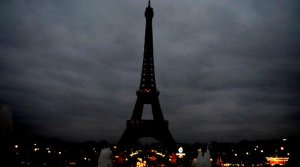
 

Paris Terror Attacks - Eiffel Tower Dark - 2

Top Image: Guardian

Support Semi-Partisan Politics with a one-time or recurring donation:

Agree with this article? Violently disagree? Scroll down to leave a comment.

Follow Semi-Partisan Politics on TwitterFacebook and Medium.

Brexit: One Good Bishop Admits Voting To Leave The European Union

Bishop of Shrewsbury - Mark Rylands - EU Referendum - Brexit - Christianity - Church of England

A bishop the Church of England should be proud of (but won’t be)

Mark Rylands, Bishop of Shrewsbury, is one of the very few Christian leaders to come down on the right side of the EU referendum debate, having admitted in a letter to the Church Times that he voted Leave on 23 June.

From Bishop Rylands’ letter:

At my bishops’ cell group in May, I came out as a Brexit bishop. My episcopal friends, at first, did not believe me. The following 24 hours brought some lively conversation, mixed with a certain amount of gentle mocking.

Yes, I voted to leave the European Union. I did so for all the usual reasons that were cited over the past months: democratic deficit, huge central staff salaries, waste of resources in Brussels and Strasbourg, loss of both sovereignty and oversight of UK laws.

I have long hoped for the reformation of the EU. In February, I felt pity for David Cameron as he hailed a renegotiation barely worthy of the name. It showed that the EU leaders did not see the need for any reformation. It smacked of arrogance.

While in agreement with the EU’s outlook on tackling climate change, and its policies on GM seeds, I had other reasons for voting Leave:

  • The EU’s commitment to its member states means it can be a bad neighbour to outsiders. Its actions have an adverse impact on poorer countries through various trade policies, most notably the Common Agricultural Policy. The EU’s export subsidies for EU agricultural products have disastrous consequences for food security, and undercut agricultural sectors in the poorest nations. Jesus teaches us that our neighbour is not just our next-door neighbour, but everyone. Leaving the EU does not mean shunning Europe. We are Europeans, and we will still have strong relationships with EU nations. Being able to make our own trade agreements, however, gives us an opportunity to be more globally linked.
  • The EU does not seem to be good news for the poorest nations in the eurozone. Countries in the single currency, struggling economically, appear stuck with low growth. Unable to devalue their currency, they are trapped in a rut of depression. Youth unemployment in Spain, Greece, and Italy has soared, and extremist political groups are gaining a strong foothold.

The letter goes on to list other compelling reasons, and ends with this exhortation:

Listening to the marginalised: our hope is in Christ who unites all of us. The referendum has highlighted faultlines and divisions in our society. Churches are called, like Christ, to stand with the voiceless and the marginalised. Some of those voices have been racist and xenophobic. We are not aligning with these, of course. We must, however, align ourselves with those who feel unheard, not allowing them to be dismissed as “uneducated” and “stupid”. Why are so many people so angry? The new work around mission on urban estates may have something to teach us here. But let’s not forget that the rural poor have also spoken loud and clear in this referendum.

[..]

Being in Europe does not mean you have to be in the EU. All across the UK, there are towns and villages twinned with towns and villages in France and Germany. And there are many dioceses that have formal links with other dioceses across Europe. Sharing meals and hospitality; exploring faith and ideas, enjoying laughter and conversation with our neighbours across the Channel: Let’s do more of it! Such hospitality can strengthen our bonds of friendship more than any policy or agreement. After all, loving football does not mean you have to love FIFA.

The FIFA/EU comparison is brilliant. The endemically corrupt world governing body of football represents the love that millions of people have for the game of soccer no more than the creaking, anachronistic and profoundly antidemocratic European Union represents Europe, or the sole vision of European cooperation and solidarity. This is a point always worth emphasising, and a welcome antidote to the usual “puppies and rainbows” bilge spewed by apologists about the EU’s supposedly benign intentions.

Archbishop Cranmer is impressed:

If you pray, please do so for the witness and courage of Mark Rylands, Bishop of Shrewsbury. He understands the unification of ethics and politics; of moral duties and the exercise of virtue. He views Brexit in the context of God’s comprehensive governance and divine jurisprudence. He reshapes the geo-political ethic to comply with the doctrine of Christian compassion and salvation. He is prepared to speculate on a different truth from that set forth by the Established Episcopacy. In short, Mark Rylands interprets distinctively the nature of European goodness, and preaches a higher practical judgment; a greater pleasure and happiness. The Church needs a few more like him.

While noting:

It is worth noting that his coming out as a Brexit Bishop was initially a cause of disbelief among his fellow clergy, followed by “lively conversation” and then some “gentle mocking”. Please don’t read over those apparently affable reactions without considering that incredulity may be infused with contempt; “lively conversation” may be interspersed with derision and disparagement; and “gentle mocking” may tease and taunt, but beneath the chaff is the condescending sneer of those who know better, which easily becomes an expression of ‘hate’.

Does the Dean of Exeter think the Bishop of Shrewsbury is “stupid”? Does the Dean of Manchester believe the Brexit Bishop is “racist”? Does the Dean Emeritus of Durham berate him for acquiring a few new fascist and anti-Semitic “friends”? Is this the new division: Remain sheep and Brexit goats? Is this what Mark Rylands meant by “lively conversation” and “gentle mocking”?

(The Catholic Archbishop of Southwark, Peter Smith, likewise expressed eurosceptic opinions and outrage at the campaign of fear and intimidation waged by the Remain side, but did not openly declare his support for Brexit.)

I shall certainly say a prayer of thanksgiving for the leadership, witness and remarkable moral courage of Mark Rylands in openly defying the leaders of his own church when he realised that they had strayed into temporal matters on entirely the wrong side of the EU referendum debate.

When so many Christian leaders let their flocks down by thoughtlessly and uncritically singing hymns of praise to the European Union throughout the referendum campaign, either ignoring EU’s manifest failings or insisting contrary to all evidence that the beast could somehow be reformed, Bishop Rylands made the right call.

If only there were more bishops like him. Standing up against an antidemocratic, relentlessly tightening and public opinion-resistant political union in favour of democracy and self-determination should not be a niche interest within the Church.


christianity-europe-eu-brexit-3

Agree with this article? Violently disagree? Scroll down to leave a comment.

Follow Semi-Partisan Politics on TwitterFacebook and Medium.