Fighting Censorious, Safe Space Authoritarianism With Comedy

If the Cult of Social Justice and Identity Politics is the disease, comedy and the human instinct to ridicule the absurd are penicillin

Stand-up comedian Steve Hughes has an excellent rejoinder to the current illiberal mantra, held by all devotees of the Cult of Social Justice and Identity Politics, that “sticks and stones may break my bones, but words can kill me stone dead“.

In this excellent excerpt from an old routine, Steve Hughes skewers this baseless assertion and rejects the constant attempts to equate hearing disagreeable words with incurring physical harm.

As Hughes rightly says, when one is offended, absolutely nothing happens. The sky does not fall, pestilence and famine do not rain down on the Earth, one is not physically injured. On being offended, one can either respond and make a stand, or choose to let it go – both are valid options and people are free to choose between them, depending on the individual circumstances.

What is not valid are the attempts to circumscribe free speech – particularly the current fad of calling for “free speech, not hate speech” without realising the inherent contradiction – because the fear of giving or receiving offence is now so great that it overrides our commitment to the principles of a free, democratic society.

But though we must be vigilant in pushing back against these attacks on free speech, with university leaders and professors in particular needing to finally step up and take a stand for academic freedom, it is also worth recalling something which blog pointed out last year:

We must never forget that our best weapon in the fight against these petty, censorious students, these Orwellian tyrants in gestation, is the simple act of ridicule.

The more we take seriously and earnestly debate with these student babies, coming up with detailed arguments as to why it is in everyone’s interests that they tolerate the presence of someone with different ideas on their campus – or why they are wrong to terrify their professors with accusations of supposed microaggressions to the extent that they become unable to properly teach – the more their hysteria can begin to seem like a valid world view.

But of course it is not. Just as nobody takes seriously that diminished rump of eccentrics who maintain that the world is flat, so we should be careful not to take the bait every time some wobbly-lipped student demands the purging of a challenging book from the academic syllabus or the revocation of an honorary doctorate from a partisan figure.

That doesn’t mean that we sit back and do nothing, allowing these baby-faced tyrants to have their way. But it does mean all of us choosing more carefully how and when we pick our battles, and being willing to sit out a few rounds to let Trey Parker, Matt Stone and the good people at The Onion pick up the slack once in awhile.

Sometimes, earnestly engaging with those who seek to curtail freedom of speech and behaviour in the name of protecting the perpetually vulnerable from taking offence can be counterproductive, because deploying the well-trodden earnest arguments in favour of free speech only provides the Identity Politics cultists with another opportunity to state their toxic credo all over again.

Far better, in these circumstances, to keep one’s powder dry and let the comedians do the leg work instead.


Safe Space Notice - 2

Agree with this article? Violently disagree? Scroll down to leave a comment.

Follow Semi-Partisan Politics on TwitterFacebook and Medium.

Why Alan Sugar’s Intervention In The EU Referendum Debate Matters

Alan Sugar - Amstrad Emailer

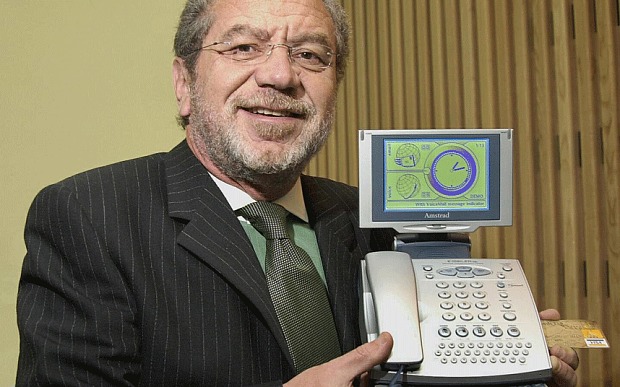
In the year 2000, when the internet was taking off and PCs and laptops were becoming more widely affordable, celebrity businessman Alan Sugar bet the house on his Amstrad Emailer device – an embarrassing, uneconomical and altogether pointless hybrid between a landline telephone and 1990s-era AOL. It didn’t go well. And now, in 2016, Britain’s facetious answer to Steve Jobs has something important to tell us about Brexit

People who host The Apprentice seem determine to shoehorn their way into our political discourse this year. First Donald Trump defeated fifteen human watercolour paintings to become the presumptive Republican Party nominee for US president, and now Trump’s British not-quite-equal, Alan Sugar, has parachuted into the middle of the raging EU referendum debate.

And Sugar certainly has Donald Trump’s ability to execute a 180 degree U-turn while vehemently denying that he has ever changed his position. Only six months ago, Lord Sugar could be found excoriating Brussels and ranting about how much the EU constrained his business. Fast-forward to today, however, and Lord Sugar 2.0 – newly appointed government enterprise tsar – is telling anyone who will listen that Britain leaving the EU is crazy and unimaginable.

From the Daily Mail:

Lord Sugar has urged voters not to be ‘daft’ by backing Brexit as he joined a host of high profile business figures who came out in favour of staying in the EU.

The businessman and Apprentice boss has produced a video making his pitch for Britain to stay in the EU.

He tells viewers they ‘could not be listening to a bigger gambler than me’ but says leaving the EU is a ‘gamble we can’t afford to take’.

Describing himself as an ‘East End chap’ who had built a business empire from scratch, he blasts the ‘daft ideas and duff proposals’ put forward by Brexit campaigners and said it would be a ‘massive mistake’ to quit the EU.

Lord Sugar, who was appointed as the Government’s enterprise tsar last week, says in the video: ‘Having lived in this country for 69 years, a country which I love, I just don’t want to see a massive mistake being made by the younger generation or, indeed, any of the generations who just simply do not understand the ramifications of leaving the European Union.’

Donald Trump would famously take any position, campaign for any cause, support any politician, donate to any political party so long as it won him access to people in power – that’s how a big Hillary Clinton supporter who was once on the liberal side of all the culture wars is now the presumptive GOP nominee. And it seems that Alan Sugar is an opportunistic sell-sword in the same vein.

But in many ways, there could be no more appropriate intervention on behalf of the Remain campaign than that now bestowed by Alan Sugar, the brains behind the Amstrad Emailer, that revolutionary and futuristic communications device. In fact, the comparisons between Sugar’s perennially unpopular “super telephone” and the European Union are quite striking.

Both the European Union and the Amstrad Emailer are anachronistic inventions, hopelessly outdated even before they saw the light of day (the EU as it is currently known came into force with the Maastricht Treaty of 1992, when globalisation was really beginning to take off and the idea of large, homogeneous regional trading blocs was already showing its age).

Like the Amstrad Emailer, the European Union takes something generally agreeable (tariff and barrier-free trade) and packages it in a fearsomely complicated design with a dozen unwanted embellishments such as all the additional trappings of a European state.

Like the Amstrad Emailer, persisting with a fundamentally flawed product in the form of the European Union reveals much about the stubbornness and contempt for democracy (the market, in Sugar’s case) held by the “founding fathers” and today’s leaders of the EU.

Like the Amstrad Emailer, nobody today would ever create the European Union as it currently exists. We only persist with it because forty years of steadily deepening political integration makes leaving a complex process and a daunting one for many – not to mention huge resistance from the establishment who like the status quo, which gives European leaders power with no accountability, and British politicians the trappings and rituals of office without the pesky responsibility.

So yes, we should welcome Lord Sugar’s intervention in the debate because the brains behind the Amstrad Emailer has inadvertently revealed an uncomfortable truth: engaging with today’s globalised, interconnected, multilateral world through the filtered lens of the EU is like trying to broadcast and receive in High Definition using one of Alan Sugar’s duff products.

For example: Norway, outside the European Union but maintaining access to the single market through EEA membership, does not delegate its voice in trade negotiations to a single EU position (itself an awkward compromise between the priorities of 28 squabbling countries).

Pete North gives a telling example of why this matters:

Not only is Norway an independent member of Codex, it even hosts the all-important Fish and Fisheries Products Committee. Thus, it is the lead nation globally in an area of significant economic importance to itself. When it comes to trade in fish and fishery product, Norway is able to guide, if not control, the agenda on standards and other matters. The EU then reacts, turning the Codex standards into Community law, which then applies to EEA countries, including Norway. But it is Norway, not the EU, which calls the shots.

Britain, meanwhile, sometimes even has to endure the indignity of seeing our own vote (on international bodies where we retain a seat) used against us by the European Commission, which controls that vote because the EU claims exclusive competency in matters relating to trade.

This is what remaining in the EU means – forsaking all of the benefits which could come from taking an active, fully-engaged position in all of the global bodies which pass down rules and standards to the European Union, and instead choosing to hide behind the EU’s skirts and accept an endless succession of fudged compromises because we lacked the confidence and skill to play the fuller role in world trade which is available to us.

Like the Amstrad Emailer, the European Union is the basic and highly predictable option, the kind of gift you might buy your grandparents (except nobody ever did) because you think that they would be overwhelmed trying to learn how to use a full PC. And now, while they could be buying things on Amazon, talking to the grandkids on Skype, blogging, editing holiday pictures in Photoshop or even setting up an online business, instead they are doomed to forever make low-quality, grainy video calls to one or other of the remaining six people in the country to own one of Alan Sugar’s devices.

That’s us. That is Britain, for so long as we remain in the European Union. A little old granny whose relatives didn’t think that she would be able to handle the complexity of a decent laptop, pecking out typo-strewn missives to the world on a rickety plastic keyboard and a monochrome screen while the richness and variety of the internet completely passes her by.

Why on earth would we vote Remain when we could vote to Leave the European Union and properly re-engage with the world as the influential, powerful and capable nation that we are? Why, when the brand new MacBook of Brexit sits wrapped with a bow on the table next to us, are we still fearfully clinging to our trusty, familiar Amstrad Emailer?


Postscript: This article in The Register provides a hilarious summary of the Emailer’s fortunes as the Next Big Thing in technology:

Since March 2000, he has tried tirelessly, and unsuccessfully, to sell the concept to everyone from journalists to politicians to the City – all have turned the device down.

Termed “the most important mass market electronic product since he kick-started Britain’s personal computer market 15 years ago” by some idiot on the Mail on Sunday, the emailer emerged in a blaze of glory at the same venue as the cheap PCs that made Amstrad a household name 20 years ago.

It cost £79.99 and still does and within a week we concluded it was far too expensive. With even low usage, it would put £150 per month on your quarterly phone bill. The public agreed with our analysis and no one bought the thing.

But the more it has failed to take off, the more fanatical Sir Sugar has got about it. He vehemently denied technical problems in August that year, then when the subsidiary set up to deal with the emailer, Amserve, put up a £2.3 million loss, he took up most of the company’s financial report explaining why the device was so wonderful.

The next set of results in February were even worse. Profit down 82 per cent from £8.2 million to £1.51 million. Again Sir Sugar waxed lyrical about how wonderful the emailer was – sales continued to be “encouraging”. This time Amserve took a £3.9 million loss.

He managed to persuade the then home secretary Jack Straw to back it up. Mr Straw said it was the perfect example of how technology could be used to “improve the flow of information and intelligence in a bid to decrease crime” at a Neighbourhood Watch photo opportunity. It made no difference to sales.

The IT correspondent for The Independent then incurred Sir Sugar’s wrath when he wrote, one year on from the launch, that the emailer had been a failure. Sir Sugar sent an email to all emailer owners, ranting about the piece and providing the journalist’s email address. Unfortunately it backfired because many of the received emails concerned the terrible problems they were having with the device.

As does this classic spoof article in The Daily Mash.

 

Amstrad Emailer

European Union - United Kingdom - Britain - Flags

Agree with this article? Violently disagree? Scroll down to leave a comment.

Follow Semi-Partisan Politics on TwitterFacebook and Medium.

Janan Ganesh Is Wrong: Britain Can Still Make History – If We Leave The EU

Janan Ganesh - Financial Times - European Union - EU - Referendum - Brexit

A careless turn of phrase reveals a poisonous, negative attitude towards Britain held by prominent Remainers and EU apologists

What do passionate British europhiles and EU defenders really think about their own country?

This question is an eternal puzzle to Brexiteers, who have watched Remainers from the prime minister on down eagerly seize on every statement or piece of “proof” that Britain is too small and feeble to flourish without dissolving ourselves into the EU’s embryonic common European state.

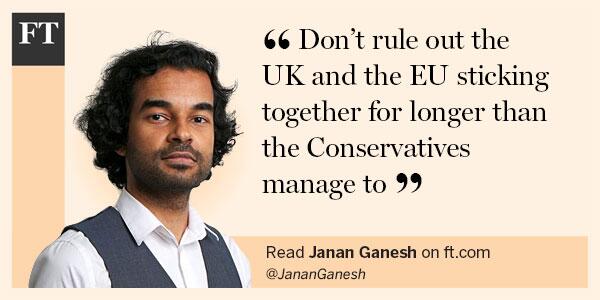
And now, finally, we have something of an answer. In his latest FT column bemoaning the intra-party warfare currently consuming the Conservative Party, George Osborne biographer Janan Ganesh has the following to say about the United Kingdom:

Britain is not where history happens any more but our two flirtations with secession — Scotland’s from the UK, the UK’s from the EU — pique the curiosity of outsiders. They must look at the intra-Tory venom and assume its seepage into wider society. If Scots were lastingly politicised, and riven, by their referendum, Britons as a whole might be too. The stakes are as large, the facts as contested, the principals on each side as seethingly at odds as they were in Scotland in 2014.

And still we demur. The notable feature of this referendum is its lack of notoriety. With three weeks to go, pubs are not blazing with anticipation or rancour. Friends and relatives are not falling out. Campaign events are unmarred by anything darker than cheeky heckles. On the morning of May 30, only one referendum-related story made the 10 most-read on the BBC news website, and that was trumped by a crocodile attack in Queensland, Australia.

And there it is. Doesn’t that perfectly sum up the tone which pervades nearly all of the Remain campaign’s messaging during the referendum – the idea of Britain as a has-been nation, a place which was once consequential but no longer a place “where history happens”?

And of course this is exactly what Janan Ganesh, his colleagues at the Financial Times and many others in the Remain camp actually do believe. They (wrongly) think that we are a small island not only in geographical terms but also in geopolitical terms. They think that we don’t matter any more, that we will never again shape the world because we are not powerful enough and because we are not exceptional enough to do so.

To the mind of a Remainer, it is utterly perplexing why anybody would want a country as weak, fragile and inconsequential as Britain to leave the safe harbour of the European Union and head out into the storm. Sure, they grudgingly acknowledge, we made our mark on history in the past – and at this point they will often pause to apologise profusely for that very history – but we should never expect to do so again.

The future, they insist, belongs to those shining civilisations such as China and Russia, apparently – despite the fact that Britain remains the fifth largest economy, (by some measures) the second military power, and is home to some of the best universities, companies, popular and high culture in the world. And Britain should be grateful for any scraps we are fortunate enough to steal from a “top table” dominated by other, better countries.

But if the world really is now such a scary place that the only recourse for “fading glory” Britain is to shelter inside a remorselessly tightening political union, how come other countries, many of them much smaller than us, are not also busy dissolving themselves into regional political blocs?

The threat of terrorism affects Australia too, as we saw with the 2014 Sydney hostage crisis. Australia would also be threatened by any global conflagration involving Vladimir Putin’s Russia. And Australia is just as vulnerable to a world economic downturn as Britain – if not more so, given her remote geographic location.

So why isn’t Australia hastening to form a political union with New Zealand and other APAC countries? Why is there no Pacific Union headquarters being constructed in Malaysia, or elections being held to elect MPPs to the new Pacific Parliament? Why is there no Pacific Court of Justice being set up to adjudicate and enforce adherence to region-wide regulations and human rights laws?

Why, for that matter, is Canada not racing to form a political Union with the United States and Mexico, following the EU’s lead and turning NAFTA from a free trade group into an explicitly political union?

The answer, of course, is that political union does nothing – nothing whatsoever – to meet or tackle the most serious challenges facing our world. Australia and New Zealand are perfectly capable of intergovernmental co-operation without the need to create a new and unaccountable supranational body sitting above them and assuming their sovereignty. Canada and the United States are not only able to trade freely with each other, they also co-operate closely on military and intelligence affairs – again, without a Parliament of the Americas to pass laws binding on their respective citizens.

So the question goes back to EU apologists and British pessimists like Janan Ganesh: exactly what is it about Britain which means that we cannot follow the example of Canada and the United States, Australia and New Zealand? What deficiency afflicts Britain which means that we cannot co-operate closely with European allies on important issues without also dissolving ourselves into a political union with them?

The EU apologists won’t tell you, because they can’t. Because there is simply no good reason why Britain could not maintain exceptionally close links with the countries of Europe – remaining in the European Economic Area, retaining free movement of people, working together on common security challenges and those areas where our foreign policy interests align – while being a sovereign, self-governing country outside the European Union.

And those who persist in saying otherwise are either fearful and ignorant themselves, or they are cynically lying to promote a supranational or federalist agenda which they cannot openly embrace in public.

Why should Britain no longer be a place where history continues to be made? Why can Britain not be the first country to realise that a century-old dream of European political union being brought about by a 1950s model of centralised, supranational governance is hopelessly ill suited to the Europe of 2016? Why should Britain not be the first country to grasp this reality and strike out away from euro-parochialism, charting a better path toward global engagement which other countries may then follow?

Why, in short, do those who insist that we must remain in the European Union have such desperately stunted vision and ambition for the global future which Britain could build?


European Union - United Kingdom - Britain - Flags

Agree with this article? Violently disagree? Scroll down to leave a comment.

Follow Semi-Partisan Politics on TwitterFacebook and Medium.

If Supranational Government Is Necessary For Peace And Cooperation, When Will The Vatican State Join The EU?

Vatican Flag - EU European Parliament - Strasbourg - Pope Francis

If you love the EU so much…

Yesterday, this blog took to task the motley crew of Christian bishops and other assorted British faith leaders who signed their names to an insufferably glib and ignorant letter imploring the British people to vote to remain in the European Union in the 23 June referendum.

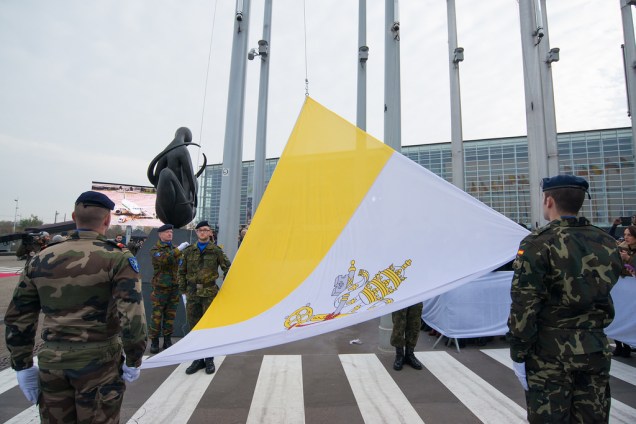
But the Archbishop Cranmer blog has now gone one better, and published a satirical spoof article reporting that the bishops had actually called for Pope Francis to commit the Vatican State to joining the EU – the joke being that the bishops would never dream of insisting that the Vatican surrender sovereignty to Brussels but are perfectly happy to demand that Britain does the same.

From Archbishop Cranmer:

Religious leaders from the UK’s main faith communities – including former Archbishop of Canterbury Rowan Williams – have joined forces to urge Pope Francis to commit the Vatican State to joining the EU, saying membership is vital to preserving peace, fighting poverty and tackling the migration crisis.

In a letter in the Observer, 37 leading figures from across the faiths say that they hope the Pope will reflect on whether joining the international institutions charged with delivering these goals might contribute to a fairer, cleaner and safer world.

[..]

The letter is obviously not endorsed by any Roman Catholic leaders, but is signed by Anglican archbishops and bishops, Church of Scotland academics, reverend professors, deans, distinguished rabbis and imams, ecumenical coordinators, baronesses and peers, leaders of Sikh and Hindu faith communities, and Global Leader Steve Chalke MBE.

The ‘Stronger In’ campaign have today dispatched comedian Eddie Izzard to tour the Vatican State in an attempt to get the Curia to pray for Pope Francis, that he might incline his ear toward justice, peace and righteousness, and commit the Vatican to immediate EU accession negotiations. “It makes sense,” said Mr Izzard, “to have the Pope of Rome subscribe to the Treaty of Rome.” He added: “We know the overwhelming majority of Roman Catholic leaders and laity support membership of the EU because of the opportunities it presents to work, to study and to travel to Lourdes. I share their positive view of Europe, and I think Pope Francis ought to, too.”

And who can argue with this faultless logic? If we accept the Remainers’ fatuous assertion that Britain must remain in the European Union because only by being subordinate to a supranational government based in Brussels can we work pragmatically with out neighbours to solve problems which transcend national borders, then why should this not apply equally to the Vatican?

In fact, why should it not apply especially to the Vatican, being both an extraordinarily rich state and a hugely influential one, often bypassing other national governments to lay a claim on the hearts, minds and souls of people in countries all over the world? Given the Vatican State’s unique advantages in this regard, surely (according to Remainer logic) it is practically criminal for the Pope to stubbornly hold out, clinging to anachronistic national pride and refusing to be subsumed into the greater European whole.

And yet nobody makes this argument. The Vatican is left to go about its business as a sovereign state unmolested – quite rightly. But the fact that the European Union’s Christian cheerleaders would rather not afford Britain similar freedom is yet more proof of the inconsistency and subjective nature of their case.

As this blog recently remarked:

Britain is and will always remain part of a “bigger whole” whether we remain in the European Union or not. The European Union is a political construct, and a very recent and unproven one at that. It is not interchangeable with the continent of Europe, and it has no democratic legitimacy when it arrogantly claims to speak and act on behalf of the many diverse European peoples. There is a positive case for Brexit based on leaving euro-parochialism behind and engaging more fully in the world, and pro-EU Christians participating in the debate should at least acknowledge this fact rather than arguing against the two-dimensional cartoon Ukipper they hold in their minds.

But this is the very low standard of debate we have sadly come to see from those who claim to represent the Christian perspective. At its core, their argument amounts to little more than “the EU is about friendship and peace and cooperation, and Jesus was in favour of all those things, so what’s not to like?”

[..] Seriously – boil down most of the [Christian pro-EU arguments] and they amount to little more than that. You’ll hear endless variations on the theme that because we are all brothers and sisters in Christ, somehow it naturally follows that we should be united under the same supranational political umbrella – though curiously the Church of England never wastes its time clamouring for Asian countries to merge together, or for Canada, Mexico and the United States to institute a shared parliament.

So, about that rigorous, intellectual, Christian case for the European Union – where is it?

We are still waiting.


European Union - United Kingdom - Britain - Flags

Agree with this article? Violently disagree? Scroll down to leave a comment.

Follow Semi-Partisan Politics on TwitterFacebook and Medium.

Tales From The Safe Space, Part 38 – DePaul University Administrators Complicit In Disrupting Free Speech

It is not enough to issue mealy-mouthed apologies to speakers and societies after their events have already been ruined by militant student protesters. Free speech must be robustly defended by university administrators at the very moment it is being threatened – something which few liberal university leaders have the courage or character to do

Read this shocking account of how Vichy administrators at DePaul university, entirely cowed and captured by the militant Cult of Social Justice and Identity Politics, allowed violent and threatening protesters to shut down a private speaking event organised by DePaul College Republicans.

Michael Sitver writes:

I never realized that forcibly shutting down a private speaking event was considered free speech. I was also surprised to learn that assaulting a police officer is now a form of protest. It certainly never occurred to me that making violent threats towards a speaker was a constitutionally protected right. In fact, I was pretty confident all three of these acts were illegal…highly illegal.

Yet, yesterday I saw radical protesters do all three of these things, without consequence. DePaul University administrators looked on dispassionately, as if this was an every-day occurrence. Watching this all unfold, I had to wonder for a moment whether DePaul administrators were defending some bizarre form of free speech I had never heard of.

They weren’t. They knew they were tolerating a dangerous suppression of speech, but in the face of adversity they chose to do the easy thing, rather than the just thing. As usual.

Years of inaction by university administrators has left radical student activists feeling they are immune from the law. Free from consequences, or dissenting opinions, endowed with a feeling of moral high-ground, students have taken increasingly drastic steps to suppress other opinions, and conservative opinions in particular.

I watched from the front row yesterday as a whistle-blowing “protester” stormed the stage of an event featuring conservative commentator Milo Yiannopoulos, with about a dozen more radicals following behind him. The event was privately organized by students, requiring months of planning and painstaking fundraising, but that never even factored into their heads. Administrators have handed them a bubble, a “safe space” where they don’t need to consider the impact of their actions on other students.

After the foul-mouthed and intimidating protest continued (one of the protesters simulated punching Milo Yiannopoulos in the face), the event was ultimately cancelled. The screeching, hysterical mob had their victory, aided and abetted by the silent university administrators who reportedly skulked in the corner and refused to take any action – save forbidding on-site security and the Chicago Police from removing the protesters and allowing the event to proceed.

Stories like this are now a dime-a-dozen. Almost every day brings some new egregious case of free speech suppression by supposedly “oppressed” protesters, grown increasingly emboldened with the knowledge that their universities would never dare to bring disciplinary proceedings against them for fear of unleashing the full force of mob justice.

But though these outrages are now common, we should not lose sight of what is lost when the forces of censorship and thought control succeed in one of their grotesque actions. In this case, the DePaul Republican society had fundraised extensively and gone to a significant effort to organise a high-profile event and attract a well-known if controversial speaker (Milo Yiannopoulos including the stop as part of his “Dangerous Faggot” tour of the United States). Many hours and many thousands of dollars doubtless went into organising the event. And hundreds of students made efforts to attend, in some cases travelling from far afield.

The very least that these students should have been able to expect from their university is that the leadership foster an environment of free speech in which the event could take place, and that administrators come down decisively on their side when their lawful event was disrupted. And yet DePaul University signally failed to fulfil this most elementary of duties, ostensibly because the victims were conservative and the perpetrators shielded by the blame-proof cloak of the Black Lives Matter movement.

Sitver continues:

While an invited speaker was harassed and harangued by protesters, DePaul administrators cowered indecisively in a corner. Faced with a serious challenge to first-amendment rights on their campus, they were visibly frightened of confronting the protesters, who tied themselves to the “Black Lives Matter” movement.

Administrators had fought against hosting the conservative event for over three months. As they watched the event unravel, they seemed almost relieved to see the radical protesters fulfil their wishes. The rights implications were utterly lost on them. All they wanted was a nice, quiet, homogeneously-thinking campus.

Only days before the event, administrators had demanded that DePaul College Republicans, the club that hosted the event, pay hundreds of extra dollars in security costs. This was a clear breach of contract, but the organizers paid the fee under threat of cancellation. Yet, after ordering a dozen security officers, the administrators prevented them from restoring order, forcing them to stand down.

I talked to a few of the dozen Chicago police officers eventually called into the building, and they were irate. They were well-trained, and well-equipped to handle scenarios such as this. They wanted to do their job, and remove the protesters, but administrators demanded they stand passively and watch. Once again, violence prevailed over free speech on a liberal college campus, and the administration was 100% complicit.

And the great sickness at the heart of the academic establishment which allowed these protesters to act with such impunity is revealed in the official response of DePaul University president Dennis Holtschneider, who made absolutely clear that his sympathies lay with the belligerent protesters and not the innocent student society which had its long-planned event ruined in a brazen attack on free speech.

Immediately after the event, Holtschneider wrote:

Mr. Yiannopoulos and I share very few opinions.  He argues that there is no wage gap for women, a difficult position to maintain in light of government data.  As a gay man, he has claimed that sexual preference is entirely a choice, something few if any LGTBQ individuals would claim as their own experience.  He claims that white men have fewer privileges than women or people of color, whom he believes are unfairly privileged in modern society — a statement that is immediately suspect when white men continue to occupy the vast majority of top positions in nearly every major industry.

Generally, I do not respond to speakers of Mr. Yiannopoulos’ ilk, as I believe they are more entertainers and self-serving provocateurs than the public intellectuals they purport to be.  Their shtick is to shock and incite a strong emotional response they can then use to discredit the moral high ground claimed by their opponents. This is unworthy of university discourse, but not unfamiliar across American higher education.  There will always be speakers who exploit the differences within our human community to their own benefit, blissfully unconcerned with the damage they leave behind.

In other words, Holtschneider cannot even bring himself to unequivocally condemn the acts of the protesters – rather, he begins with this lengthy and cowardly disclaimer, making it crystal clear to any would-be student tormentors that he disagrees with pretty much everything that Yiannopoulos says and believes. Such a statement, it hardly needs pointing out, should be utterly redundant in a university setting. Whether the university president agrees or disagrees with the views expressed by a lawfully invited speaker is utterly irrelevant when it comes to condemning the subsequent disruption of the event. Yet Holtschneider is so terrified of his restive student population that he has to get his disclaimer in quick and early.

The statement continues:

Now that our speaker has moved on to UC Santa Barbara and UCLA, we at DePaul have some reflecting and sorting out to do.  Student Affairs will be inviting the organizers of both the event and the protest — as well as any others who wish — to meet with them for this purpose.  I’ve asked them to reflect on how future events should be staffed so that they proceed without interruption; how protests are to be more effectively assisted and enabled; and how the underlying differences around race, gender and orientation that were made evident in yesterday’s events can be explored in depth in the coming academic year.

This is about the tamest statement of disciplinary intent one could imagine. University administrators will not be summoning and ordering those who participated in this suppression of free speech to attend and account for their actions – rather, they will merely be “invited” to share their thoughts, and come armed with reflections on how things might be done differently next time.

At this point it is worth reminding ourselves that it is the university administrators who are supposed to be the authority figures, not the anti free speech student protesters. And when students have egregiously violated the university’s own code of conduct – as Sargon of Akkad shows conclusively that they did – campus authorities have considerable scope in imposing sanctions on the guilty parties. Yet the DePaul hierarchy seems so terrified of incurring the wrath of their own students that the most they are willing to do is meekly request a sit-down with the young woman who jabbed her fist mere inches from the face of an invited guest speaker.

At the end of his statement, Holtschneider does manage to scrape together the basic decency to apologise to the DePaul College Republicans for the disruption and abandonment of their event. But free speech is not something which can be protected in retrospect, or the harm inflicted by its suppression made good by a subsequent apology. Either a speaker is able to air his thoughts in the public square, free from intimidation and undue disruption, or he is not.

Issuing an apology once an event has already been disrupted and abandoned does nothing to redress the injury to free speech which has taken place. If anything, failing to tackle disruptive protests as they occur and relying on subsequent mealy-mouthed apologies exacerbates the problem, emboldening militant students to repeat the same childishly aggressive behaviours again and elsewhere, knowing that they will be free to achieve their aims while any mild repercussions will lag long behind.

Thus far, in the battle for academic freedom and free speech rights on campus, university authorities have been found dangerously wanting. At best they are paralysed by an overwhelming fear of their most militant students and the potential disruption (and potentially career-ending bad PR) they can bring, and at worst they are outright collaborators in the activists’ efforts to suppress freedom of speech and establish a culture of intellectual and ideological homogeneity on campus.

This is untenable. Academic institutions cannot properly function when the most immature and authoritarian students are flattered and pandered to by terrified university leaders. And neither can conservative students alone be expected to keep the flame of academic freedom and free speech alive while fully grown academics cower in the corner and shamefully shirk their own duties.

University administrations should be championing the cause of academic freedom and providing vital air cover to students on the front line of the debate. But sadly, at present many university leaders would rather stab such students in the back rather than openly support their right to freedom of speech and expression.

And for this cowardice they should feel heartily ashamed.


DePaul University - Milo Yiannopoulos - Protest - Free Speech

Safe Space Notice - 2

Agree with this article? Violently disagree? Scroll down to leave a comment.

Follow Semi-Partisan Politics on TwitterFacebook and Medium.