As #PrayForNice trends on Twitter and another European city is plunged into terror and tragedy, what action have we taken to name, confront and defeat the evil which threatens us?
The news and images coming from the French city of Nice on what should be the most celebratory of days for the French people – Bastille Day – are awful, and heartbreaking, and wearily familiar.
As of this time, 77 people are confirmed dead, mown down on the Promenade des Anglais by a truck driven at high speed and containing an arsenal of weapons and explosives. This is clearly an act of terror – the numerous bullet holes in the windshield of the blood stained truck a testament to the amount of force it took the security services to stop the vehicle. And of course this is the third time in nineteen months that the French have suffered a grievous, high profile terrorist attack on their soil – first Charlie Hebdo, then the Bataclan, both in Paris, and now the Bastille Day celebrations in Nice.
To this we can add the Brussels terrorist attacks in March this year and, looking beyond Europe, numerous deadly attacks in Turkey as well as the terrorist shootings in San Bernadino and Orlando.
This is the future. This is the kind of terrorism which we are now going to face – not truly grand attacks on the level of 9/11, where casualties run into the thousands, but a long, slow grind of relentless medium-sized attacks, often on lower-value targets or in second tier, provincial cities. Often their planning and execution may turn out to be quite crude – this is not the age of the cunning master plan coordinated from a supervillain’s lair, but of “quick and dirty” plots hatched by autonomous cells and all the more unsettling precisely because they do not strike where we expect.
Now, murder comes to the airport entrance before the security checkpoints, or to an unremarkable concert venue, or a nondescript office or the main strip of a seaside town. Places which with the best will in the world are impossible to defend 24/7.
Radical Islamist terror has moved firmly into the age of the lone wolf, or the quasi-autonomous sleeper cell.
Why? Think of it like WiFi. Terrorist networks can no longer safely rely on coordinating large scale attacks in the West from a remote location with a reasonable degree of confidence that they will go undetected. Therefore, if ISIS and other fundamentalist Islamist organisations cannot physically cooordinate logistics and dispatch operatives to conduct attacks in Western cities, they must resort to other, remote means.
When the traditional methods of internet, telephone and even face-to-face communication are at risk of being intercepted by the security services, proponents of fundamentalist Islamist ideology must instead rely on transmitting their ideology and broad objectives through more general means, including YouTube and social media, targeted at the right susceptible population – usually disaffected and alienated young Muslim men who do not feel connected to or fully invested in society. The leaders of this death cult then rely on some of their indoctrinated targets possessing sufficient initiative to become their own mini terrorist masterminds.
We saw this approach in San Bernadino last winter, and again in Orlando last month. As more facts emerge, it may become clear that the Nice attack followed this pattern. Alternatively, it may be that Europe’s porous border and chaotic influx of migrants allowed foreign terrorists to slip through the net and aid in the planning or execution of the attack (press reports currently indicate that ID found on the truck driver suggest that he is a 31-year-old with dual French-Tunisian nationality, but this ID could well be fake or stolen).
But what is already crystal clear is the stark, uncomfortable fact that since Paris and Brussels (or Madrid and London, if you want to cast back a decade) our leaders have done nothing – nothing at all – to meaningfully grapple with this scourge of Islamist terrorism. So terrified are they of being accused of intolerance or racism that all we hear is the furious insistence that these atrocities have “nothing to do with Islam“.
And it’s just false. Of course the barbarity in Nice has absolutely nothing to do with the peaceful, moderate Islam practise by millions of adherents in the West and elsewhere. But it cannot be denied that those who do commit mass murdering acts of terrorism often explicitly reference Islam as their inspiration and justification – and do so from a very literal reading of certain Islamic texts. Moderate Islam does not inspire terrorist attacks, clearly. But fundamentalist, radical Islam often does, and we need to admit as much, for if we cannot even name the threat which we face what chance do we have of overcoming it?
Contra the political leaders, the Charlie Hebdo murderers were not lunatics without motive, but highly motivated extremists intent on enforcing Islamic blasphemy laws in 21st-century Europe. If you do not know the ideology — perverted or plausible though it may be — you can neither understand nor prevent such attacks. Nor, without knowing some Islamic history, could you understand why — whether in Mumbai or Paris — the Islamists always target the Jews.
[..] We have spent 15 years pretending things about Islam, a complex religion with competing interpretations. It is true that most Muslims live their lives peacefully. But a sizeable portion (around 15 per cent and more in most surveys) follow a far more radical version. The remainder are sitting on a religion which is, in many of its current forms, a deeply unstable component. That has always been a problem for reformist Muslims. But the results of ongoing mass immigration to the West at the same time as a worldwide return to Islamic literalism means that this is now a problem for all of us. To stand even a chance of dealing with it, we are going to have to wake up to it and acknowledge it for what it is.
The cost of this furious pretence that Islam is totally unconnected to the “so called” Islamic State and the terror attacks committed in its name can now be measured in a growing toll of human lives. And the slickness with which we now mourn these events, with standardised tributes and modes of behaviour, only serves to emphasise our utter lack of coordination in preventing their recurrence.
Impromptu shrines appear in a major square of the afflicted city, with candles, chalk drawings and sometimes a bit of impromptu John Lennon.
And the day closes with Europe and America’s major landmarks illuminated to resemble the national flag of the afflicted nation. They’re getting really good at that part now.
Fast forward a day, and plans are well afoot to grant even more powers to the well-meaning but overstretched security services – who were unable to make use of their current extensive powers to thwart the attack – and generally at the expense of our civil liberties. Particularly our rights to privacy and free speech.
Fast forward a month, and we have all moved on. Domestic political concerns, celebrity scandals and daily life have reasserted themselves.
I think we can all agree that we’ve got the public grief, cathartic expressions of solidarity and stern faced authoritarianism down to a fine art at this point.
When are we going to start acknowledging – and maybe even tackling – the root causes?
Unless our leaders can openly and unequivocally acknowledge that the terrorist scourge which sees murder brought to the streets of Europe on a near-monthly basis has its roots in a fundamentalist, literalist and militant strain of Islam, how are we ever to really get to grips with the issues of radicalisation and non-assimilation?
If the deaths of eighty slain people in Nice have nothing whatsoever to do with Islam then how do we hope to save young and impressionable Muslim schoolgirls in London from stealing away to Syria to join ISIS, or young and impressionable Muslim boys from falling under the seductive spell of jihadist recruiters?
If we cannot openly and comfortably name the enemy which we face – not an entire religion, but certainly a very real and present strain of Islam – then how do we even begin to formulate policies which will meaningfully reduce this threat over time?
The answer is that we cannot. We can clamp down further on our precious civil liberties, bartering away even more of our freedoms in the hope of purchasing additional security (and letting the terrorists win, since they count as a victory anything which diminishes our liberal democratic way of life). We can ramp up the surveillance state and clamp down on freedom of speech to make it look like we are doing something purposeful, even though the costs of such draconian measures far exceed the benefits. But none of these measures will stop two radicalised guys and a truck from repeating the horrors of Nice in Camden Town or Edinburgh.
It is impossible to create the perfectly secure country, and the closer one tries to get to this ideal, greater and greater are the liberties which must be traded away in exchange. Therefore, the only way to stop more Nice attacks from happening is to approach the problem from the other end and seek to tackle the radical, fundamentalist Islamist extremism.
And this is the one thing which our leaders, in their tragic fear of giving offence, shamefully refuse to do.
In choosing a new Tory leader and prime minister, promise and potential are not enough – experience and temperament matter too
A new candidate profile in the Telegraph paints a sensitive – and very human – portrait of Conservative Party leadership candidate Andrea Leadsom.
In the wake of the rather ludicrous ‘mothergate’ drama, Allison Pearson interviewed Leadsom and reports:
When Andrea Leadsom came on the phone yesterday afternoon I could tell from her voice that she’d been crying. After what had happened, the last thing she wanted was to talk to another journalist, but she agreed, with great trepidation, to speak to me as we’d planned.
Following what she thought was a friendly, professional meeting with a Times reporter on Friday, she found herself accused in a banner headline of saying that, as a mother she had the “edge” over the childless Theresa May in the race to be prime minister.
[..] When I ask if she would like to apologise to Mrs May, she says: “I’ve already said to Theresa how very sorry I am for any hurt I have caused and how that article said completely the opposite of what I said and believe.”
She refuses to say how the message was conveyed to the Home Secretary, but she admits she has felt “under attack, under enormous pressure. It has been shattering.”
[..] It’s been a brutally hard week which makes you wonder why anyone would go into politics. On the phone, I asked Andrea Leadsom when she last cried. There is a pause. “Twenty minutes ago,” she admits with a wobble. But, don’t worry, it’s not a sob story. She doesn’t believe in those. Meanwhile, she’s off to make a roast chicken stretch for the children’s friends who just turned up unexpectedly. “Lots of roast potatoes.”
Putting on a brave face, making the best of things, and soldiering on, she is much like swathes of Tory voters up and down the land. Will they really ignore her, as all the pundits predict, when it comes to the ballot in September? Not everything has to end in tears.
One feels for Andrea Leadsom, who not only seems like a fundamentally decent human being and with her long previous career outside politics much closer to the ideal of the citizen politician than many of the grey, indistinguishable drones (including Labour leadership challenger Angela Eagle) who have been marinating in the Westminster cesspool for their entire careers.
But it is very concerning that Leadsom has allowed what is essentially a media storm, entirely unconnected with policy or the fate of the country, to affect her so gravely. What we are witnessing is the emotional response of someone who is not used to being vilified in the press and the court of public opinion, and who seems to be shaken to her core at having been misrepresented and criticised.
Such treatment is part of the job description for any British prime minister, particularly in our current polarised age when it is all but guaranteed that any conservative prime minister will immediately be treated like evil incarnate by the socialist half of the country regardless of what they say or do. Such mundane events as being misrepresented by a newspaper or trashed in the press because of a careless choice of phrase ought to be like water off a duck’s back to a seasoned politician. Clearly this is not so for Andrea Leadsom, who has not yet developed the emotional armour to withstand the heat of battle.
Of course, one can argue that this should not be the case; that we cannot simultaneously call for more “normal” people to enter politics and then hold them to the standards of nonchalance in the face of political treachery set by the hardened political class. But sometimes idealism must fall before realpolitik. Even if it is the case that the Westminster media and political class are unnecessarily fratricidal, a British prime minister must still be able to deal with immeasurably complex and fraught issues of domestic security and foreign policy.
This isn’t the Sunday League – with her audacious leadership bid, Andrea Leadsom is asking us to believe that she is capable of playing in the Premier League, an instant promotion spanning several important intermediate steps. A junior minister who has never attended cabinet has a very different sense of what constitutes high stakes than someone who has held one or more of the great offices of state. The latter is almost certain to have wrestled with fiendishly difficult political decisions, the repercussions of which may even be life or death. The ability to do so while maintaining composure and clear thinking is of the utmost importance in a prime minister.
Of course personal temperament is not the only thing that matters. A candidate’s policy beliefs (with attitude toward the coming Brexit negotiations being top of the list right now) also matter enormously, as does their track record. But I get the strong sense that in our justifiable desperation to avoid acknowledging that someone so illiberal and authoritarian as Theresa May is the best of a bad option for leading the country in this difficult time we are sweeping Andrea Leadsom’s naivety, inexperience and rookie temperament under the carpet.
This would not be a mature way to behave. The choice between Theresa May and Andrea Leadsom must be made on the basis of who they are today, the policies they advocate and what they have accomplished, and not based on who they may become or whatever else we try to project on to their respective candidacies.
Andrea Leadsom may show future promise – promise which this blog very much hopes to see nurtured and realised in the coming years – but promise alone is not enough.
The ultimate decision over which Conservative leadership candidate would make the best Tory leader and prime minister must be made based on the best evidence available as to a candidate’s ideology, policy platform, track record, personality and temperament.
And much as it pains this blog to admit it, that choice should be Theresa May.
–
Agree with this article? Violently disagree? Scroll down to leave a comment.
Be tolerant and respect the sincerely held political views of other people. Unless those people happen to be Tory Scum…
Apparently, as we seek to move on from the EU referendum in the post Jo Cox era, we are all supposed to be more civil to one another and focus on what unites us rather than what divides us.
We know this, because the New Statesman high-mindedly told us so:
I believe the horrific killing of Jo Cox is a moment for this New Generation of us to speak more openly about what has gone wrong and how we must, collectively, tackle it. Fundamentally, I believe we must see this as a moment in our history to re-covenant our respect as a society for politics done well. Democracy can ultimately only be as good as the society it represents. We must all learn once again to value free speech and civilised debate, led by open, accessible and accountable Parliamentarians. We must pledge ourselves to continuing the fight for freedom, for tolerance and for understanding between individuals, nations and peoples. We must ensure that love, hope and understanding will always triumph over hate, fear and despair.
We must reject the politics of alarmist language, personal attacks and fear.
A noble sentiment which surely we can all take to heart – it should certainly be possible for all of us to watch our rhetoric in the heat of debate, as none of us benefit from the current toxic political climate.
So why, then, is the New Statesman now actively trying to whip its readership into a quivering fear at the prospect of Andrea Leadsom winning the Conservative Party leadership contest and becoming prime minister?
Having apparently forgotten their own edict to respect people with different political views, the New Statesman instead lists nine reasons why its readers should be terrified – yes, terrified, that emotion which would be more appropriate if masked intruders had just smashed down their front doors – by this relatively unknown politician.
With polls suggesting Andrea Leadsom will be one of the two Tory leadership candidates put to a vote of the members, it’s only natural to be curious about what this potential prime minister believes.
Luckily, she’s been busily keeping a blog for the last decade.
It turns out she has strong views on babies’ brains, and thinks she may have discovered the secret to preventing a repeat of the riots which plagued London in 2011.
So far they seem to be trying harder to make Leadsom seem ridiculous than terrifying.
There then follows a list of generally banal and uninteresting statements which Leadsom has made, or policy positions which she has taken, including:
1. Gay couples to the back of the adoption queue
Back in 2009, Leadsom used an adoption case – in which the two children of a heroin addict were given to a GAY couple (!?!?) – to question just when enough is enough when it comes to gay rights. “And if that weren’t enough, the two strangers are a gay couple, who have been selected ahead of several heterosexual couples.”
and
2. Watch out for those single parents
In 2006, she wrote that “the child of a single parent family is 70 per cent more likely (than the child of a two-parent family) to have problems at school, and even to become a drug addict or a criminal.”
and
3. And that anti-marriage media
“The self indulgence and carelessness of non-committed adult relationships is proving fatal to the next generation,” she wrote in 2008.
and
5. Those baby-brained rioters
“I explained how secure attachment or parental love literally hard wires the baby’s brain,” Leadsom wrote in 2012.
and
6. No money for wind farms
“I completely welcome the announcement from the European Commission made recently regarding the possibility of ending all subsidies for winds farms,” she wrote in 2014.
and, particularly ludicrously
8. Those US presidents getting invites before us
“How can France be hosting the 65th anniversary of the Normandy landings with Sarkozy and Obama (neither of them a twinkle in their father’s eye in 1945) in attendance, and yet the Queen of Britain, Canada, and Australia (who was not only alive, but who also served in the war) was not invited until two weeks ago?”
Now, one can disagree vehemently with one or many of these points. This blog certainly does not share Andrea Leadsom’s reflexive opposition to gay couples adopting children, for example. But sincere political disagreements on social, cultural and economic issues – the full range cited throughout the New Statesman’s tawdry hit piece – should be possible without us becoming physically afraid of one another.
Yet the New Statesman presents these rather pedestrian conservative positions and then exhorts its readers to be “truly terrified” by what they see. The magazine does not encourage them to challenge the validity of Leadsom’s views, much less offer its own point-by-point rebuttal. The fact that Leadsom is wrong is taken for granted, which is bad enough, but worse still is the fact that the New Statesman seeks to provoke an emotional rather than an intellectual reaction.
This is exactly what so many commentators (including that magazine) were telling us we should not be doing in the wake of the murder of Jo Cox MP. Less than a month ago we were being told to respect one another’s opinions and engage in calm, rational dialogue. Yet when it comes to confronting conservatives, many opinion leaders on the Left are more than happy to provoke angry, confrontational responses – whether they take the form of hateful mobs outside the home of Boris Johnson on the morning after the EU referendum or articles instructing people to actively fear conservatives.
This is an exclusively left-wing phenomenon. While there are plenty of nasty, stupid reactionaries on the conservative side, rarely do they treat left-wingers as a physical or emotional threat. The murderer of Jo Cox, to the extent that he was motivated by politics rather than madness, is the great exception to this rule. The Left, by contrast – particularly that part of the Left which has been captured by the Cult of Social Justice and Identity Politics – are starting to treat anybody who does not agree with and actively validate their ideas as enemies, literal enemies who mean them harm. If this atmosphere persists, how long will it be until some mentally unstable left-winger, taught by the commentariat to believe that political disagreement is akin to an act of harm, lashes out at an opponent with potentially tragic consequences?
One way or another, we are all going to have to coexist on this island – at least, those of us who are not bizarrely reacting to the Brexit vote by flouncing off to independent countries without an NHS will still have to deal with each other. Treating half of the country as actively dangerous people of whom we should be terrified is about the least conducive thing to bringing about that spirit of tolerance, and the New Statesman should be ashamed for its part in feeding this atmosphere of hysteria.
And look at some of the things which the New Statesman wants its readers to be terrified about. Andrea Leadsom celebrated the potential end of subsidies for wind farms – how scary! Leadsom wants to invest in “psychotherapeutic support for families struggling with the earliest relationship with their baby” – why, she’s just like Genghis Khan! She didn’t take kindly to President Barack Obama interfering in our internal EU referendum debate, and dared to say so – what an awful, America-hating isolationist!
The disbelieving hysteria which greeted Ed Miliband’s 2015 general election loss and now the 2016 EU referendum result shows that much of the modern Left is already utterly incapable of empathising with those holding other viewpoints – and in some cases simply cannot conceive of their existence. Time and time again we hear tearful sob stories from disappointed lefties that they don’t understand how they lost, because everyone they know voted the “right” way.
But with tawdry articles such as this, the New Statesman seeks to turn that gulf of incomprehension into a gnawing, corrosive and dangerous fear of conservatives, and of any ideas outside of the insular leftist orthodoxy. And this could potentially be disastrous for our country, not to mention for individual conservatives currently being demonised as terrifying, two-dimensional cartoon bogeymen rather than thinking, decent people who just happen to have a different outlook on life.
So how should we respond to opposing political views in the post Jo Cox era? Here’s a tip for the New Statesman and everyone else in the media:
If your article encourages people to learn more about those opposing views, or presents an intellectually grounded rebuttal of them, then you’re doing it right.
If your article is a smug, self-satisfied and fundamentally uncurious exercise in confirmation bias, designed to delegitimise and vilify the sincerely held political views of others, then you haven’t learned a damn thing.
A bishop the Church of England should be proud of (but won’t be)
Mark Rylands, Bishop of Shrewsbury, is one of the very few Christian leaders to come down on the right side of the EU referendum debate, having admitted in a letter to the Church Times that he voted Leave on 23 June.
At my bishops’ cell group in May, I came out as a Brexit bishop. My episcopal friends, at first, did not believe me. The following 24 hours brought some lively conversation, mixed with a certain amount of gentle mocking.
Yes, I voted to leave the European Union. I did so for all the usual reasons that were cited over the past months: democratic deficit, huge central staff salaries, waste of resources in Brussels and Strasbourg, loss of both sovereignty and oversight of UK laws.
I have long hoped for the reformation of the EU. In February, I felt pity for David Cameron as he hailed a renegotiation barely worthy of the name. It showed that the EU leaders did not see the need for any reformation. It smacked of arrogance.
While in agreement with the EU’s outlook on tackling climate change, and its policies on GM seeds, I had other reasons for voting Leave:
The EU’s commitment to its member states means it can be a bad neighbour to outsiders. Its actions have an adverse impact on poorer countries through various trade policies, most notably the Common Agricultural Policy. The EU’s export subsidies for EU agricultural products have disastrous consequences for food security, and undercut agricultural sectors in the poorest nations. Jesus teaches us that our neighbour is not just our next-door neighbour, but everyone. Leaving the EU does not mean shunning Europe. We are Europeans, and we will still have strong relationships with EU nations. Being able to make our own trade agreements, however, gives us an opportunity to be more globally linked.
The EU does not seem to be good news for the poorest nations in the eurozone. Countries in the single currency, struggling economically, appear stuck with low growth. Unable to devalue their currency, they are trapped in a rut of depression. Youth unemployment in Spain, Greece, and Italy has soared, and extremist political groups are gaining a strong foothold.
The letter goes on to list other compelling reasons, and ends with this exhortation:
Listening to the marginalised: our hope is in Christ who unites all of us. The referendum has highlighted faultlines and divisions in our society. Churches are called, like Christ, to stand with the voiceless and the marginalised. Some of those voices have been racist and xenophobic. We are not aligning with these, of course. We must, however, align ourselves with those who feel unheard, not allowing them to be dismissed as “uneducated” and “stupid”. Why are so many people so angry? The new work around mission on urban estates may have something to teach us here. But let’s not forget that the rural poor have also spoken loud and clear in this referendum.
[..]
Being in Europe does not mean you have to be in the EU. All across the UK, there are towns and villages twinned with towns and villages in France and Germany. And there are many dioceses that have formal links with other dioceses across Europe. Sharing meals and hospitality; exploring faith and ideas, enjoying laughter and conversation with our neighbours across the Channel: Let’s do more of it! Such hospitality can strengthen our bonds of friendship more than any policy or agreement. After all, loving football does not mean you have to love FIFA.
The FIFA/EU comparison is brilliant. The endemically corrupt world governing body of football represents the love that millions of people have for the game of soccer no more than the creaking, anachronistic and profoundly antidemocratic European Union represents Europe, or the sole vision of European cooperation and solidarity. This is a point always worth emphasising, and a welcome antidote to the usual “puppies and rainbows” bilge spewed by apologists about the EU’s supposedly benign intentions.
If you pray, please do so for the witness and courage of Mark Rylands, Bishop of Shrewsbury. He understands the unification of ethics and politics; of moral duties and the exercise of virtue. He views Brexit in the context of God’s comprehensive governance and divine jurisprudence. He reshapes the geo-political ethic to comply with the doctrine of Christian compassion and salvation. He is prepared to speculate on a different truth from that set forth by the Established Episcopacy. In short, Mark Rylands interprets distinctively the nature of European goodness, and preaches a higher practical judgment; a greater pleasure and happiness. The Church needs a few more like him.
While noting:
It is worth noting that his coming out as a Brexit Bishop was initially a cause of disbelief among his fellow clergy, followed by “lively conversation” and then some “gentle mocking”. Please don’t read over those apparently affable reactions without considering that incredulity may be infused with contempt; “lively conversation” may be interspersed with derision and disparagement; and “gentle mocking” may tease and taunt, but beneath the chaff is the condescending sneer of those who know better, which easily becomes an expression of ‘hate’.
Does the Dean of Exeter think the Bishop of Shrewsbury is “stupid”? Does the Dean of Manchester believe the Brexit Bishop is “racist”? Does the Dean Emeritus of Durham berate him for acquiring a few new fascist and anti-Semitic “friends”? Is this the new division: Remain sheep and Brexit goats? Is this what Mark Rylands meant by “lively conversation” and “gentle mocking”?
I shall certainly say a prayer of thanksgiving for the leadership, witness and remarkable moral courage of Mark Rylands in openly defying the leaders of his own church when he realised that they had strayed into temporal matters on entirely the wrong side of the EU referendum debate.
When so many Christian leaders let their flocks down by thoughtlessly and uncritically singing hymns of praise to the European Union throughout the referendum campaign, either ignoring EU’s manifest failings or insisting contrary to all evidence that the beast could somehow be reformed, Bishop Rylands made the right call.
If only there were more bishops like him. Standing up against an antidemocratic, relentlessly tightening and public opinion-resistant political union in favour of democracy and self-determination should not be a niche interest within the Church.
–
Agree with this article? Violently disagree? Scroll down to leave a comment.
That feeling in the pit of your stomach right now? That’s nerves, now that the training wheels are soon going to come off British government, and the decisions which we make as a people will (for the first time since 1973) be the first and last word. Soon there will be no paternalistic, supranational European government to hold our hand and steer us right. If we want to live in a safe, stable and prosperous society then it will depend entirely on us being conscientious, informed and engaged citizens. If we make wise decisions, we will stand to reap great benefits. If we make poor decisions, we will face the undiluted consequences.
My sincere commiserations to those on the Remain side who fought this EU referendum from a place of deep principle and honour. I extend to you the magnanimity and friendship that (I hope) you would be extending to me right now had the result gone the way we all expected. It is incumbent on all of us now to work together to achieve the best possible form of Brexit. In this blog’s view, and that of The Leave Alliance, that means moving toward an interim EFTA/EEA position (the Norway Option) in order to maintain our current preferential access to the single market. This will mean many Brexiteers compromising on their absolutist stance on immigration – an olive branch which Remainers should accept.
This need not be Farage’s Britain. The whole point of Brexit is that we can build whatever kind of country we want, without external adjudication over our democracy. We should remain an open, tolerant society, as befits the greatest country in the world. Be not afraid.
This semi-partisan live blog is going to pause for a couple of hours while its author gets some rest, before resuming later. Many thanks for following along – please do stay tuned.
If you have enjoyed and found value in this blog’s general coverage of the EU referendum and last night’s live blog, please do consider supporting Semi-Partisan Politics with a one-time or recurring donation:
More soon.
–
08:25
David Cameron announces his resignation
David Cameron is saying a lot of the right things in his resignation speech. It should indeed be up to the next prime minister to decide when to trigger Article 50.
–
08:18
I’m with Brendan O’Neill:
This is democracy in action, in all its messy, beautiful, order-upsetting glory. Behold the steadfastness of ordinary people, their willingness to act on their conviction even in the face of the threats and barbs of people with power. We hear a lot these days about how gullible the public is, how malleable are our putty-like minds, play-doh in the hands of demagogues. And yet yesterday, the people thought for themselves; they weighed things up and they decided to reject received wisdom and the Westminster / Washington / Brussels consensus. Such independence of spirit, such freedom of thought, is stirring.
–
07:34
Britain stuns the world – let freedom ring!
–
07:28
Will somebody other than Nigel Farage please come out and make the open, liberal case for Brexit now? Cameron’s silence is becoming spiteful at this point. The more moderate faces of Brexit are patiently waiting to speak until Cameron concedes, allowing Nigel Farage a free run to become the sole face of Brexit and to claim all of the credit.
–
06:55
The leftist campaign group Momentum is engaged in some hasty repositioning in order to realign itself with a core Labour vote which proved to be a lot more “Brexity” than the middle class clerisy who now run the Labour Party.
This is the text of their response to the EU referendum result, sent to everyone on their mailing list:
Yesterday, the British people voted to leave the European Union. Momentum, which campaigned to remain in the EU to transform the EU, respects the decision taken by the electorate.
We recognise that people voted ‘Leave’ for many reasons. Much of this vote reflected anger in communities which have experienced many years of industrial decline with the subsequent loss of secure employment. Many such working class communities have been utterly neglected for years by those in power. Millions appear to have chosen ‘Leave’ to vote against the unfettered globalisation that has seen living standards stagnate or fall, as the cost of living rises. We share this scepticism of big business dominance, austerity and distant elites, be they British, European or Global, and share that demand for a country where working people have control.
Many ‘Leave’ voters usually vote for Labour or are working people Labour should represent. Now the Party and the whole labour movement needs to show the country that it alone can offer working people genuine control over their lives, workplaces and communities.
Labour must clearly demonstrate how it will improve lives through policies that will increase wages, tackle the housing crisis, and give people a greater say at work and in their communities.
If we do not, we will not only be failing to advance the policies that will benefit working people but also could enable the populist right, who blame immigrants, not the powerful for the problems in our country. Part of the Leave campaign empowered these racist, reactionary forces, who peddle hatred and offer false hope. We must redouble our efforts to stop migrant scapegoating, focus our attention on the needs and desires of the overwhelming majority, and offer a real programme of hope for our people.
Although we will leave the EU, our movement remains an internationalist one. We must continue to work with our friends, partners and allies across Europe in the shared struggle against austerity, to tackle climate change and to build a sustainable economy with full employment for all the peoples of Europe.
–
06:26
Waiting for David Cameron’s statement, and then this live blog might take a short break while I recharge my batteries!
–
06:23
This BBC correspondent reporting from Warsaw is awful. Catastrophising Brexit beyond all restraint, talking about Polish people being “unwelcome” in Britain for no reason, based on absolutely nothing but her own virtue-signalling hysteria – showing the bias of the BBC at its most awful and blatant
–
05:26
Caroline Lucas on the BBC now, doing what all other prominent lefties seem to be doing – suggesting that Britain’s vote to leave the European Union is about anything and everything other than a judgement on the European Union.
I appreciate the crushing disappointment, I really do. But this utter condescension toward the British people, assuming that they were essentially tricked and that Remainers were inherently intellectually superior, is appalling. And to the extent that Remainers refuse to accept the validity of the peoples’ judgement on the EU, they richly deserve their defeat.
We’re on 15.2m to 14.2m for the remains … we’re more than a million ahead, going up. Congratulations everybody … the team. You did us all proud. We did it.
–
05:16
This is the kind of magnanimity in unexpected victory which the Leave side must now show in abundance:
There are many remainers I have interacted with in the last few months. We agreed on much except the fundamental issue. Let us unite.
Both Sky News and the BBC project that the Leave campaign has won – that Britain has voted to leave the European Union, reasserting our status as an independent nation rather than the vassal of the EU’s supranational government.
This is astonishing, overwhelming. The deep wisdom of the British people has spoken, looking past the petty and increasingly desperate scaremongering (even bullying) of the Remain campaign
We may not have won this referendum for all of the reasons that the Leave Alliance would have wanted. But as responsible citizens we have a duty to make Brexit work well.
–
04:43
Sky News speculating about when the government should serve notice to the EU under Article 50 of the Lisbon Treaty and set the 2-year clock running on Britain’s secession from the EU, with speculation that it could happen at the next EU summit next month. Absolutely not – doing so rashly, before any preliminary talks have taken place, would be an act of diplomatic and constitutional vandalism, plain and simple.
But will a chastened, defeated David Cameron do so anyway, out of spite? This must not be allowed to happen.
–
04:38
Britain Stronger in Europe’s director Will Straw is having a bad time…
–
04:23
Apparently a lot of lefty Remainers are getting upset about Nigel Farage’s declaration that:
“If the predictions now are right this will be a victory for real people, a victory for ordinary people, a victory for decent people. We have fought against the multinationals, against the big merchant banks, against big politics, against lies, against lies, corruption and deceit and today honesty and decency and belief in nation I think now is going to win.”
I can see dawn from my office window – a new dawn on an independent Britain? Yay! Suck it up guys. The lights are on in the Berlaymont. Hillary Benn says “if you walk away from the world’s largest market, you crate (sic) a great deal of uncertainty”. Note to Benn … if we leave, the EU is no longer the world’s largest market!
–
04:03
Nigel Farage is speaking: “The dawn is breaking on an independent United Kingdom”
“This will be a victory for real people, a victory for ordinary people, a victory for decent people. We have fought against the multinationals, we have fought against the merchant banks…”
And on the beaches, and in the streets…
–
03:56
One can only think that David Cameron’s decision to play a prominent role as leader of the Remain campaign has backfired massively. Cameron is only popular among Conservative Party supporters, the majority of whom want Britain to leave the EU. He is almost universally disliked by everybody else. And so he essentially contrived a situation where he is strongly disliked by the only people who would otherwise support him, and hated by everybody else who would normally hate him. And now, with his premiership in peril, he will find that he has almost zero support in the country and in the Conservative Party, save a dedicated rump of careerist sycophants.
Watch how quickly the commentariat switch gears to start talking about a Conservative Party leadership election. While many of the potential options are bad, they can hardly be worse than David Cameron’s weak Ted Heath tribute act.
We have 260 of 382 areas still to declare, so we’re not even halfway. But remain is still trailing with 49.8 percent on 4,149,554 votes and leave is still ahead (marginally) on 50.2 percent, with 4,184,849 votes. The country is split down the middle. Dimbleby is trying to pull in extraneous domestic issues and play down the EU element. He doesn’t get it.
Dimbleby is not alone. Nearly every Labour MP within reach of a television camera is engaged in the same act of pretending that this strong showing for Leave is anything but a repudiation of the European Union itself.
–
03:34
Couldn’t have happened to a more deserving bunch of people…
This is what happens when a political party treats its own core working class voters with dripping contempt bordering on outright hatred.
Labour MPs think they're ‘f***ed’ in their seats in North even if Remain win. Furious quote here from @jreedmp https://t.co/AjM574DGjI
The Labour party is now working on the assumption that leave will win, according to a party source. The view in Labour HQ is that, if Britain does vote to leave, Jeremy Corbyn should call on David Cameron to resign, but senior figures believe that that may prove unnecessary because Cameron may announce his departure of his own accord.
The fact that the Labour Party are now operating on the assumption of a Leave victory is remarkable – almost unimaginable just a few hours ago.
If he had a shred of decency, Cameron would indeed jump quickly before he is pushed. But based on his conduct during this EU referendum campaign, sadly we know that the prime minister does not have a shred of decency. He may yet have to be prised out of 10 Downing Street. But one way or another, he is gone.
Unsurprisingly, Labour MPs are pretty darn miserable right now. There is great anger in the party about the leadership, and I detect a stronger appetite to move against Corbyn than previously. But there is also utter fury towards Ed Miliband that goes far beyond Chris Bryant’s ‘tosspot’ comments. One former minister, after watching the former Labour leader explaining what has happened on the television, said ‘how do I set up a JustGiving page for him to go back to Harvard? Or even to visit his constituency and listen to the people who live there?’
So the Labour Party, having been punished by their core voters for their slavishly pro-EU stance, are going to spitefully remove their leader because he did not campaign hard enough for Remain?
This is hilarious. These preening Labour MPs are not really angry at Jeremy Corbyn. They are angry at their own voters. They are angry at the British working classes for failing to sit down meekly and do as they are told by self-entitled metro-left Labour politicians.
–
03:15
The Spectator’s EU referendum results live-blog reports that Ed Miliband’s sanctimonious television appearances have gone down like a bucket of cold sick within the Labour Party, and without…
Haven’t heard a peep from David Cameron yet. He’s probably updating his LinkedIn profile.
Do you want to endorse Dave for “Strong Leadership” and “Conservatism”?
Er, no.
–
03:06
Sssh! Can you hear it? That’s the book closing on David Cameron’s weak, ideologically rootless and fundamentally un-conservative premiership.
Even if Remain manage to pull off a narrow victory, the fact remains that the prime minister has effectively lost control of the country, not to mention his own party. And no number of signatures on a sycophantic “Save Dave” letter can rescue him now.
To their blinkered mindset, Leave’s strong showing is about everything – and I do mean everything – except for the fact that people just don’t like the EU. Oh no, it couldn’t be that. The EU is wonderful! It means friendship and cooperation and rainbows and unicorns!
John McDonnell really is a one-trick pony, isn’t he? Faced with a stunning repudiation of middle-class metro-left stewardship of the Labour Party by its restive working class base, all Jeremy Corbyn’s shadow chancellor can do is witter on about “Tory austerity”.
Newsflash, McDonnell: this strong pro-Brexit sentiment is much less to do with the economy and much more to do with the working classes’ realisation that the wealthy, upper middle class people in charge of the Labour Party have been sneering at them, have not had their best interests at heart and have no intention of changing their ways. Oh, and the fact that they analysed the EU question like rational people, and decided that a failing, antidemocratic, supranational political union was not for them.
Unfortunately for them, it doesn’t seem to be working…
As this blog warned, if we do now see a Leave vote then the Labour Party leadership (supposedly so moral and principled) will have sided with the establishment against the people. They will be no better than the “Evil Tories”.
I can’t wait to see Jeremy Corbyn and John McDonnell talk themselves out of that one.
–
02:15
Vince Cable on the BBC now, dialling back some of the Remain campaign’s most apocalyptic rhetoric about how Britain might be treated in the event of a Leave vote. Cable admits that there would be “no great anti-British feeling”, before stating the obvious – that we will not get free access to the single market. I don’t know a single credible person who suggested that we would… But paying for access to the single market while being free of the EU’s suffocating political union sounds good to me (and to many others, apparently).
If the unthinkable does happen and Britain votes to leave, a lot of senior British politicians on the Remain side are going to look pretty stupid as they desperately walk back some of their strongest, most cataclysmic predictions…
–
02:10
I guess I could wrap up my live blog now that Lindsay Lohan is on the case…
The BBC’s Laura Kuennsberg now asking about the implications of a Scottish Remain vote potentially keeping the UK in the European Union. This blog posed the same question about an hour ago. Semi-Partisan Politics, ahead of the pundits…
–
01:52
Some of the results now coming in are incredibly heartening for Brexiteers. Even Scotland so far doesn’t seem to be acting as a bulkwark for Remain to the extent that it should. Of course the fear, lurking in the background, is London. These huge margins for Leave in some north-eastern areas could be instantly erased once the capital’s votes are counted. Although anecdotally, turnout in London is apparently slightly lower than anticipated…
YouGov’s Peter Kellner’s Twitter timeline sums up the changing sentiment:
Well said by the Polish ambassador to the UK on the BBC just now:
“Britain will always remain our friend and ally” regardless of the referendum result.
A timely reminder that close friendship, cooperation and partnership are not dependent on the EU’s antidemocratic form of supranational government. Our closest and most important alliance, the special relationship with the United States, is maintained because of shared interests, values and culture, with no need for a common parliament, supreme court or executive.
–
01:26
Odd to see David Davis sticking up so gamely for David Cameron on the BBC, insisting that the prime minister could somehow limp on in the event of a massive blow to his authority in the event of a Leave victory. It is falling to Alex Salmond to remind viewers of the prime minister’s campaign of lies, trickery, intimidation and downright cheating.
–
01:24
Fair characterisation from The Leave Alliance’s Mr. Brexit:
Bristol’s mayor, quoted on Andrew Sparrow’s excellent Guardian live-blog, joins Angela Eagle and Ed Miliband in declaring that Brexit voters are vulnerable people essentially deceived into voting against their own interests by the “pied pipers” of the Leave campaign.
In Bristol Marvin Rees, the newly elected mayor of the city, told the Guardian that the “Brexit campaign has exposed the fragility at the heart of the system”.
He added: “We have people vulnerable to people coming along singing a simple tune. We have to change the way we do public services. We are not sharing the prosperity. We need to deliver the change that people need. We need a city that people can afford to live in.” Rees said that this was not just a message to the Labour leadership but “for everyone”.
Do these people not realise how unbearably condescending they sound? Is there to be no introspection of any kind from the pro-EU British Left?
–
00:54
Swindon result
Remain: 51,220
Leave: 61,745
The people in the know say that this is more in line with expectations, or possibly even slightly under expectations for Leave. We might be seeing some interesting variations by region. My increasing concern is that a surprisingly good result for Leave around the country will be overturned by the inevitable stonking Remain vote in London.
–
00:51
Now Ed Miliband is on the BBC, being condescending about Leave voters.
It is simply beyond his mental capacity to imagine that Brexit supporters might have voted Leave as the result of reasoned deliberation. It must always be because of trickery by evil UKIP types or an inchoate expression of frustration at the general state of the country (read: Evil Tory austerity).
These people will rationalise Brexit support in any way other than conceding that maybe the Leave voters are right – that maybe the European Union is indeed a poisonous, dysfunctional, anti-democratic and anachronistic relic best left in the past. From Ed Miliband’s perspective, the role of us “normal people” is to take as gospel the pro-EU rhetoric bandied about by our betters in the establishment, not to question their sacred judgement.
–
00:38
Angela Eagle on the BBC just now repeating that nauseatingly smug Remainer line that anybody who votes Leave – particularly if they happen to be working class – must have been conned by the nefarious forces of Nigel Farage & co into voting against their own interest.
One can see why this line is superficially appealing – particularly for Remainers desperate not to confront the weakness of their own case. But ultimately this “What’s The Matter With Kansas”-ism is a form of dangerous denial. Pathologising those people who voted Leave, treating them as though they are intrinsically disordered or gullible dupes, shows the chasm opening up between the political establishment and the people, particularly on the Left.
–
00:16
Sunderland result
Remain: 51,930
Leave: 82,394
Wow.
–
00:15
There has been a marked change in sentiment over the past fifteen minutes, since the Newcastle result (and with whispers of a strong showing for Leave in the upcoming Sunderland result).
One can still hardly dare to hope for victory – but those early concessions may have been rather premature. My gut instinct says that a narrow Remain victory will destabilise David Cameron and see his fairly early departure – as well as proving the country to be bitterly divided, of course.
–
00:01
Newcastle result
Remain: 65,404
Leave: 63,598
Much closer-run by Leave than predicted by many. This is a strong showing for Brexiteers. Surprising. Heartening.
–
23:56
Donations welcome!
If you have found value in this blog’s coverage of the EU referendum and tonight’s live blog, please do consider supporting Semi-Partisan Politics with a one-time or recurring donation:
–
23:50
We do not “show respect for democracy”, as Douglas Carswell currently implores us to do on the BBC, by ignoring the brazen way in which the prime minister and the Remain campaign have cheated during this campaign.
This isn’t about disrespecting the will of the British people if they have indeed voted to remain in the EU. It is about standing up and saying that taxpayer funded propaganda, ignoring the recommendations of the Electoral Commission, bullying the voters with a mocked up “punishment budget”, violating purdah rules with a last minute impromptu Downing Street speech and extending the voter registration deadline to scoop up as many disorganised potential Remain supporters as possible amounts to an assault on democracy, not an expression of it.
–
23:47
Come on, Sunderland…
–
23:45
Nigel Farage was right about one thing in his television “un-concession” speech just now – the Brexit genie will not go back in the bottle. The desire for freedom and democracy will not be mollified or contained by whatever weasel words the prime minister comes up with in the event that the Remain campaign do win this referendum. The writing is on the wall for Britain’s continued membership of the European Union.
–
23:39
Come together right now, over me
Apparently it is time for Conservatives to come together after the sound and fury of the EU referendum campaign. This seems to be an official line, soon to be as nauseatingly familiar as “stronger, safer, better off”. But from this blog’s perspective there will be no “coming together”, no rapprochement with the Conservative Party for as long as David Cameron and George Osborne remain in office. I will not be represented by liars, bullies and cheats.
If we have lost, the fight goes on. This hasn’t been a free and fair fight, but one characterised by a Prime Minister who has elevated political lying to an art form, starting with his faux renegotiation and his non-treaty. I feel no obligation to take this result as final, and will continue to work for an independent Britain.
The immediate task will be to identify the reasons why we lost. The official Vote Leave campaign will already be polishing its excuses, ready to come up with the conclusion that its was everybody else’s fault except theirs. Pete North, however, has already published two posts, here and here, looking at some of the problem areas. It will come as not surprise for you to learn that he (rather like his father) is looking to the execrable conduct of the campaign for his answers.
The official Vote Leave campaign is singled out for much-deserved criticism:
There is good evidence to support a thesis that a substantial number of people do not actually make up their minds until they have a pencil in their hand and are looking at the ballot paper. It is then that the “fear” motivation is at its strongest. And it is my view that Vote Leave and the other main “leave” campaigns simply failed sufficiently to address the economic impact of leaving.
In fact, by specifically rejecting continued participation in the Single Market, Vote Leave seems to have gone out of its way to ensure that we would lose what I believe was a winnable contest. This crass intervention, in my view, will prove to be the single most important factor in driving voters into the “remain” camp.
–
22:51
Our glorious prime minister is already making his gruesome victory lap on social media, with no results yet declared:
And us evil, hateful people who voted to keep Britain weaker, more vulnerable and dirt poor can go hang ourselves, I guess?
–
22:33
Some Tories are already circling their wagons around David Cameron:
129 Tory MPs backed Leave. Some 56 have signed Cameron-must-stay letter. Won’t take long to work out the 73 names missing.
But many are not. The prime minister has enraged many Conservative MPs (and many small-c conservatives) not just with his stance on the EU referendum, but with the despicable way in which he has conducted himself during the campaign. And with a majority as small as that enjoyed by David Cameron, sycophantic letters of praise will do him no good if a small but determined number of real conservatives are determined to undermine him.
And now, the long wait until the first results are declared. We should be neither heartened nor discouraged by the YouGov poll at this stage – it is but a re-contact poll, not an exit poll, and unprecedentedly high turnouts could do strange things to any polling models.
–
22:20
Roland Smith shares a potential yardstick for gauging the scale of a defeat for the Leave campaign:
Throughout the referendum campaign, between one-fifth and one-third of Labour supporters said they wanted to leave the EU; and the electorate in 59% of all Labour seats were predicted to have voted for Brexit yesterday. The strongest levels of support were in the places Labour and Corbyn are beginning to struggle the most – northern, left-behind and traditional Labour seats, such as Blackpool South, Dudley North, Walsall North, Rotherham, Doncaster North, and West Bromwich West. Indeed we already have evidence of how Labour’s hold over voters in these more traditional areas has been weakening.
By contrast, other Labour seats were predicted to deliver some of the strongest support for the EU – such as the leafy London seats of Hornsey and Wood Green or Hampstead and Kilburn, the young and socially mobile Bristol West, Cambridge and Manchester Withington.
[..] Euroscepticism is a complex problem for Labour, but immigration scepticism is more widespread among Labour’s traditional voters than anti-EU sentiment. Nearly two-thirds of Labour supporters say they are unhappy about how immigration is being managed.
Not all of these voters view Brexit as the answer, but 38% feel the government should have total control over who comes into Britain, and 30% feel Britain should stop EU citizens coming into the country to live and work, even if that restricts our access to the single market.
Corbyn has so far shown little understanding of what is driving this identity angst. He has said little that would resonate among those Labour-to-Ukip defectors. And there is no doubt that these tensions hold the potential to pull Labour in different directions and make a return to power virtually impossible, certainly in 2020 and perhaps beyond. It is not yet clear how Labour can reconcile this deep divide, but there is little doubt that this will be its biggest challenge for decades.
I don’t think that this divide can be bridged.
Labour increasingly appears like an intellectually and morally bankrupt party, a hollowed out shell of its former self, shrouded in the robes of virtue.
–
22:12
More unintentional side-effects of the EU referendum:
Nicky Morgan on the BBC, trying to appear magnanimous. Promising “lots more reform” of the European Union. Like the fundamental reform achieved by her boss? How can anybody now believe a single word that any minister in this rotten Conservative government says?
If this is accurate, it is (while bitterly disappointing) a very very solid result for the Leave campaign, all things considered. If these figures bear out, it will be undeniable that but for the flagrant cheating of the prime minister (with his taxpayer funded propaganda and blatant violation of purdah with that last-minute Downing Street press conference), Britain would have voted to leave the EU. In other words, the prime minister and his tawdry remain campaign will have bullied and deceived Britain into remaining in the EU.
A result like this will settle nothing. It will embolden us Brexiteers beyond measure, not to mention blowing British politics wide open. Expect a massive UKIP resurgence (assuming they manage not to torpedo themselves) and punishment at the ballot box for all legacy parties in forthcoming elections.
Britain will be more divided than ever, and it will be squarely the fault of the prime minister, who has debased his office in his desperation to secure a vote for Remain.
–
22:01
Nigel Farage gives a statement suggesting that “Remain will edge it”. Unsurprising if true. But no votes have been counted yet…
–
22:00
Polls closed! The future of Britain has been in our hands today. Now, all that remains is to wait and see whether the accumulated wisdom of the British people is sufficient to withstand the Remain campaign’s onslaught of Project Fear…
–
21:58
One of the most sickening things about this referendum campaign has been the way that many on the Left have tried to present a vote to Remain as the bold and visionary option rather than the fearful, defeatist cop-out that it is.
One of the most guilty in this regard has been the Green Party, who have basically been insisting that everything wrong with Britain is the fault of the Evil Tories (despite the Conservatives having been in power only for six years, and just 1 year as a majority government) while the European Union is an unfairly maligned friend to Britain.
A Remain vote would direct the anger to the right place – not just at David Cameron, but the whole Tory party and the policies that have dominated in Britain for decades.
A Remain vote is not an end of this process of political change, but the start of a new kind of politics.
A shift to the rightful direction of anger towards the toppling of this Tory government, towards a fundamental transformation of the failed electoral system that allowed it to take power with the support of just 24 per cent of eligible voters, to the establishment of a new political common sense that ensure nobody has to worry about putting food on the table or keeping a roof over their head while we all collectively live within the environmental limits of our one fragile planet.
Vote Remain, then let’s turn with our fellow campaigners across the continent, our neighbours and friends, to build the real changes needed to produce a society that works for the common good, not for the one per cent.
Together we’re stronger.
Vote Remain, in other words, as a cathartic exercise in public Tory-hatred.
It’s astonishing that at this late stage, even the Green Party is utterly unable to make a positive case for the European Union – not even the usual “friendship and cooperation” boilerplate. And so, in an attempt to motivate their core vote, they instead dangle the image of the prime minister in front of their supporters and urge them to give David Cameron a kicking.
The obvious flaw being that nothing would strengthen David Cameron in his potentially precarious position more than a resounding Remain vote…
–
21:46
Another side benefits of a Leave vote, if it happens: dashing the wishes of the sneering, virtue-signalling celebrity class who have piled in to demonstrate their right-on credentials by singing the EU’s praises (or at least dumping on Britain).
One of the biggest recent culprits has been British comedian John Oliver, host of HBO’s Last Week Tonight, who last week managed to spend fifteen minutes sneering at Brexiteers and the thought of Britain leaving the EU to his American audience, while failing to mention the D-word (that’s democracy…) even once.
–
21:29
While I have been generally pessimistic about the Leave campaign’s chances of victory in this EU referendum – largely driven by the utterly dismal campaign waged by the official Vote Leave organisation – nobody should be in the business of making firm political prognostications in an age when Jeremy Corbyn is leader of the Labour Party and Donald Trump is the presumptive Republican Party nominee for the presidency of the United States.
And so one cannot help consider the immediate aftermath of a vote for Brexit. The biggest upside – besides the obvious one, knowing that Britain will have voted for independence from the EU’s stultifying political union – will be that David Cameron’s premiership will be holed beneath the waterline. A fitting political end for a snivelling, dishonest, fundamentally un-conservative prime minister who did not consider it beneath his office to deceive, bully and threaten the British public in order to coerce a Remain vote.
The media is floating word of a Save Dave campaign underway in the Conservative Party to prevent an immediate move against the prime minister if he manages to lose:
Senior ministers and MPs will attempt to calm the markets tonight by backing David Cameron to stay in office even if he loses the referendum.
A Save Dave operation to shore up the Prime Minister’s position and avert a currency collapse is also backed by senior MPs in the Leave campaign.
A procession of loyalists are primed to appear on TV and radio as soon as the polls close at 10pm to say there is no need for a messy leadership contest, regardless of the result.
A senior minister said: “The markets are jittery already — nobody wants the added uncertainty of a resignation.”
If Mr Cameron loses the referendum, ministers expect him to make an early statement outside No 10 tomorrow, promising Leave leader Michael Gove will have a key position overseeing the timing and terms of an EU withdrawal. If Mr Cameron wins, he will emphasise that the Government has four more years in power and must knuckle down to deliver on its promises.
There should be no such campaign. David Cameron will go down in history as one of the most pointless prime ministers in recent memory, having utterly squandered two Conservative terms in office with his New Labour Continued approach to government. Somehow, Cameron has managed to make the Tory brand as toxic as it ever was, while also utterly failing to manage even the appearance of fiscal conservatism. The deficit persists, the national debt soars ever upward, and all the while we small-c conservatives are derided as heartless persecutors of the vulnerable. And if things continue as they are, when Labour eventually get their act together and retake power (under a new leader) conservatives will have almost nothing to show from the years 2010 onwards, despite being nominally in power.
So no. Let’s not “Save Dave” if he manages to guide the Remain campaign to defeat after cheating, lying and threatening his way through the referendum. As he teeters on the precipice, principled conservatives should give him a firm shove.
–
21:11
Flexcit, the comprehensive and risk-minimising Brexit plan authored by Dr. Richard North with readers of the eureferendum.com blog, and championed by The Leave Alliance (including this blog), gets a surprising, belated mention in The Metro today:
One can only wonder how much of a stronger position the Leave campaign might be in if only more journalists had used Google to search for “Brexit plan” and then written about what they found…
In the event of that Remain majority, it isn’t hard to guess the most likely course that David Cameron will take. One can almost hear the speech to the 1922 Committee. “Divisive referendum campaign team…mistakes made all round…time for coming together…Labour, our common enemy…plenty to be getting on with…Trident vote…childhood obesity strategy…Heathrow.” All this would signal more than the sum of its good parts. It would be a sign that the Prime Minister intends business as usual, with Osborne in place at the Treasury – and the top Tory team going on more or less as before.
This site has long argued that the Government and Party need a more collegiate style of leadership, recommending that Michael Gove be made Deputy Prime Minister. You may agree or disagree, but matters have reached such a pass that this political tug-of-war is almost beside the point – which is that if the Chancellor is still in place by the end of the summer, the Government is unlikely to get much of its legislation through when the Commons returns. Many of its legislative plans will meet the fate of the academisation-by-2020 plan. If Ministers found it hard to get their business before, they will find it harder still amidst the grudge-laden atmosphere that will follow a Remain win.
There is frenzy about the risks to the Tories of a Leave vote. Less thought has been given to the risks of a Remain one. The biggest is not that the Party would split, but that Britain would be left with a Zombie Government, unable to get its leglisation through Parliament at a time of domestic challenge and international crisis.
Moving the Chancellor from the Treasury to another senior post would not solve this problem, but it would ease it. Who should replace him? In our view, someone who takes a different view from ConservativeHome on this referendum. The only senior politician who has not been compromised by the corners cut by both sides; the only one not to have accused colleagues of lying (directly or indirectly), the only one to have struck a balance between leadership ambition and political principle – in short, Theresa May.
Theresa May as the next Chancellor of the Exchequer? Thoroughly distasteful, but at least it would get the authoritarian Queen of the Surveillance State away from the Home Office…
–
19:35
A quick shout-out to my friends and fellow bloggers-in-arms of The Leave Alliance. These people have taught me much about the European Union, the developing international trade and regulatory environment, and the optimal way in which Britain should leave the EU if we vote Leave.
If you are not already following the blogs listed below, add them to your daily reading now – because which ever way this referendum goes, the campaign for an independent, democratic Britain will go on.
“I don’t think you’ve got it in you any more. I don’t think Britain is a strong enough country” – a phrase which was literally just uttered in the Hooper household. This is what we are fighting against. This is the corrosive, pessimistic view of Britain which pervades society from 10 Downing Street on downward. This is why we are likely to vote to remain in the European Union and continue our slow slide into global obsolescence.
–
19:15
Roland Smith, Adam Smith Institute fellow and author of the essay “The Liberal Case for Leave” – an eloquent exposition of the Flexcit approach for leaving the European Union – is waxing poetic:
"Sneer at us, scare us, patronise us; but do not quite forget; For we are the people of England, that never have spoken yet." Maybe.#EUref
Well, we Brexiteers have certainly been sneered at and patronised – when we have not been downright insulted. Some unverified reports are suggesting that turnout is so high that it is swinging back to favour Leave (normally, it is assumed that high turnout helps the Remain campaign), in which case the pro-EU establishment may yet hear us.
I believe voters will reject Brexit. I believe this is a rejection of the leave side and their campaign along with their thin gruel manifesto. It is a rejection of the dishonesty of Vote Leave and the weakness of their arguments. It is a rejection of the hyperventilation over immigration. It is a rejection of the Brexit vibe. A movement of people who want change but present no clear idea of what they want or how they envisage getting it.
It is a defeat that collectively we deserve. We had every asset at our disposal. A sour and conniving establishment, a patronising and weak remain campaign and of course, the deeply unpopular European Union. And this time, if the BBC is to be cursed it is not for their bias but their profound ignorance.
But at every stage we have failed to answer the question with clarity as to what Brexit looks like. Only when the fantasy notions put forth by Dominic Cummings were comprehensively demolished did the mainstream leave campaign look elsewhere for ideas, by which time it was already far too late.
I fear that he is right. Though we have seen a number of positive steps in the past few weeks, with the likes of Allister Heath and Ambrose Evans-Pritchard embracing the interim EFTA/EEA (Norway) option as the obvious safe way to extricate ourselves from European political union with minimum economic risk, the breakthrough likely has come too late.
The official Leave campaign – indeed, the entire Westminster bubble, who seem to actively scorn any thought or initiative which does not originate or carry the imprimatur of one of their own – will be to blame if Britain votes Remain when polling closes in three hours.
Leftists always give the same two knackered reasons for their campaigning for this rotten outfit. First they say that the people opposing the EU — Boris, Farage, fat blokes who watch football — are so vile that our most pressing task is to keep them in check by voting with the other side, with the EU. What cowardice. They’re elevating their reputations over their consciences; their desire not to rub shoulders with Ukip people over the small matter of principle and what is the right and good left-wing thing to do. What’s more, the only reason the eccentric right has been able to become the No1 critic of the EU’s anti-democratic, economy-strangling behaviour is because the left vacated the field, bottled it, and in the process handed the moral authority of being anti-EU over to the right. They wonder why the right is leading the anti-EU charge, not realising that it’s their sorry, sheepish fault. Goodness, they’re dumb.
And the second reason they give for their bowing before the EU is that Brussels acts as an above-politics guarantor of certain rights: workers’ rights, maternity-leave rights, etc. Let’s leave to one side the (massive) fact that the EU is no friend of working people. What’s ultimately being said here is that we need a distant authority to guard our rights and our wellbeing because we can’t always trust our own governments to do so. Wow. This shatters everything — everything — the left once fought for. It lays to waste the ideals of the Chartists, and the Levellers, and other radicals, whose cry can be summed up as: ‘We can look after ourselves, thanks. Give us the right to do that.’
Benn summed up the folly of leftists looking to Brussels for justice and rights. ‘They believe that a good king is better than a bad Parliament. I have never taken that view’, he said. In a nutshell, the left’s worldview used to be that people power is always preferable to external forms of authority. And now that worldview is dead, done in by a left more concerned with its feelings and standing than with the hard business of fighting for what’s right, and which is now so estranged from ordinary people that it views the good king of Brussels as preferable to the bad parliament us plebs might one day elect. The EU might survive today’s events, but the left won’t. It’s dead, and not only dead but buried. It has thrown its lot in with the very people it was founded a few hundred years ago to challenge: kings and tyrants and other benign guardians of the stupid people.
This blog’s article on Tony Benn and the left-wing case for Brexit has been getting very high traffic for the past few weeks – clearly many British left-wingers instinctively realise that the clinical, europhile party line being parroted by the Labour Party and Jeremy Corbyn (for shame) is incompatible with democratic values.
–
18:05
Over the past few months Semi-Partisan Politics has attempted to outline the Christian case for Brexit – or at least push back against the lazy, trendy-lefty Christian view that remaining in the EU is automatically a good thing.
This Referendum is not only about Christian values, but about national identity. Are we really so feeble that our aspiration to wholeness may be apprehended only in the anti-democratic space? Are we really so fooled that our language of community may only be expressed in terms of political union? Are we really so blind that our morality may only be conceived in the secular Enlightenment conception of man, with his inviolable rights and perfect moral standards? Today is a watershed: Remain, and we perpetuate the self-congratulatory illusion of the abolition of nationalism and the death of God; Leave, and we move beyond myopic Euro-nationalism, spreading our vision upward, downward and outward into the world. There will be upheaval, but nothing that a new mode of thought and sensibility to new nations cannot withstand. Some say this is retrospective illusion: it is, rather, the true globalism of the catholic Christian.
If the Christian ends of peace and reconciliation are to be realised in and by the United Kingdom, our moral outlook must change. The Enlightenment European Union is not the Promised Land, for EUtopia erodes the cosmic order, denies self-determination, keeps the poor in famine and inflicts suffering on its own people. If we seek universal benevolence and justice, they are not found in haughty declarations of subjective rights of immunities and benefits, but in an apprehension of divine dignity; of man created in the image of God for a life of grace, love and service. This is not monkish ignorance or superstition: it is, whether we believe it or not, the truth. You may demand tyrannical impositions of trans-national equality, but God’s blessings flow only from humility; security comes only from self-government; and peace comes only from Christ, with whom believers are exhorted to walk in spirit and truth.
This isn’t a game of point scoring: it is about the moral culture of our civilisation. There is a prideful illusion of a Godless European Empire with its unaccountable omnipotence and infallible dreams of universal justice, equality and rights; or there is the subtler language of the nation under God, within which the unrighteous may be removed and the immoral corrected, rebuked, reformed and restored. You may not agree with this ‘parochial’ view of human nature in the created order, believing instead that political man is moving toward the zenith of moral perfection and that justice is about to flow like a river. But when empires impose their laws and enforce their creeds by natural authority and the people do not obey except out of cynicism, the only solution is the restoration of the true political authority which chimes with the mores and traditions of the people.
So, forget the finger-jabbing niggles of elite establishment politicians sanctified by ecclesial negativity: there is nothing to fear in leaving the European Union. On the contrary, there is hope in liberty; morality in democracy; and prosperity in the restoration of a global outlook. Today is about national self-belief and self-determination. It is about taking back control of our national destiny. Today we vote for freedom. Let today be and hereafter forever be known as UK Independence Day.
–
17:55
Well, I have cast my ballot and (obviously) voted for Britain to leave the European Union. And that means it is now time for a semi-partisan live blog of the EU Referendum.
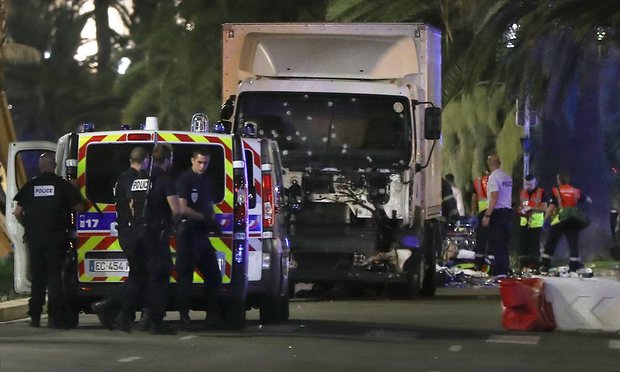
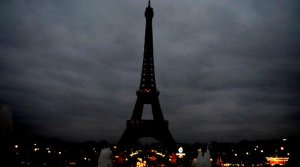


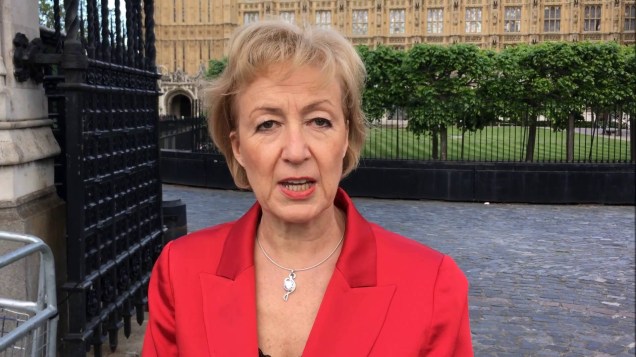
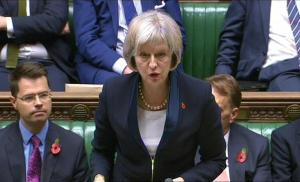

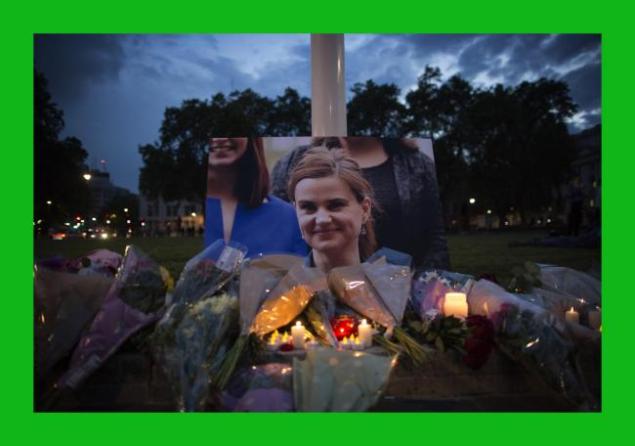


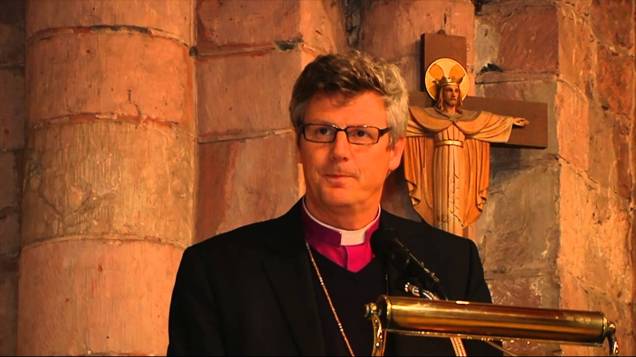

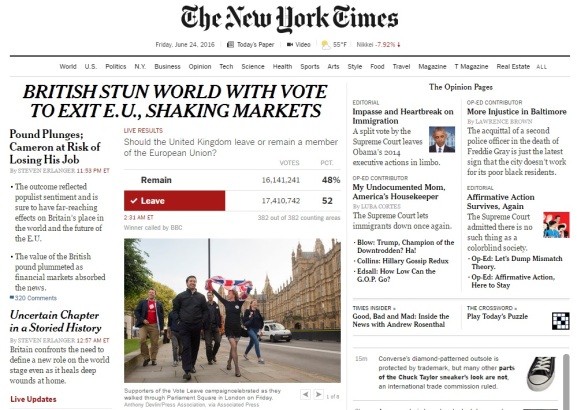
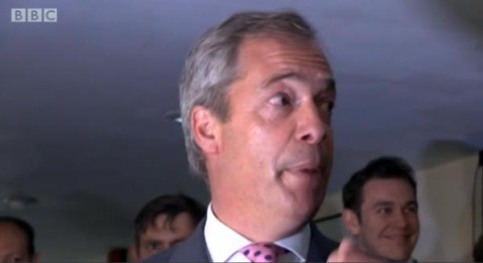
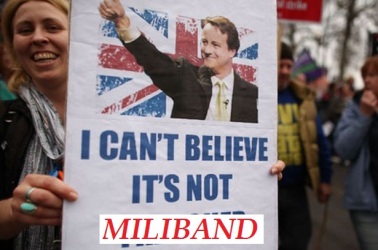
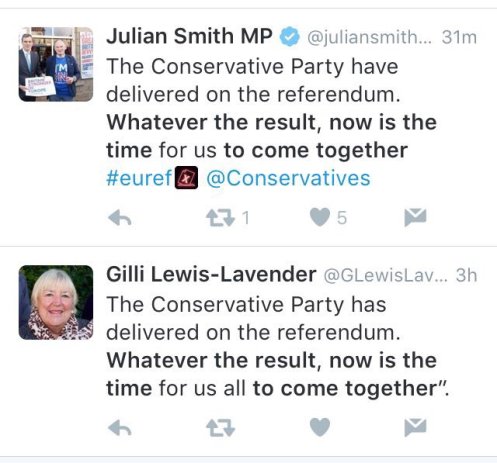
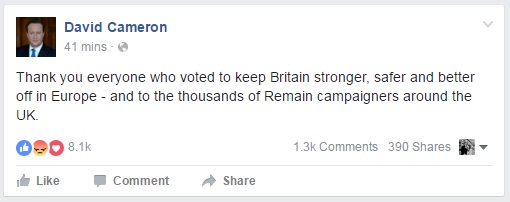
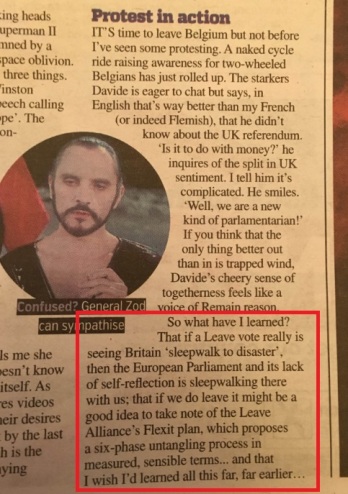
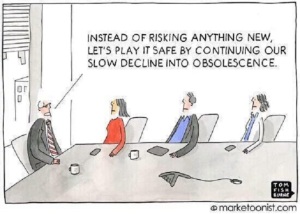

 Semi-Partisan Politics