–
Want to change religion? Then you’d better get permission from a judge first, if you happen to be under the age of eighteen and your parents can’t don’t give you their blessing.
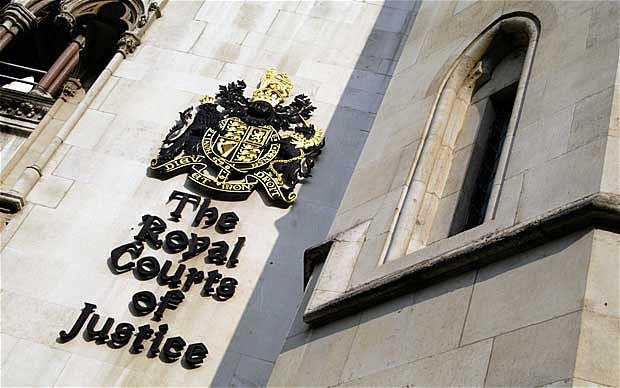
That is apparently the law of the land in Britain today, or at least the precedent set by a recent ruling in which a a County Court judge ruled that a ten-year-old girl would be allowed to follow her wish to convert from Judaism to Christianity and be baptised, denying a request from the girl’s mother to grant an injunction forbidding the father from allowing her to proceed.
The Telegraph reports:
The court heard that the girl, who cannot be named for legal reasons, was born in late 2001 to Jewish parents and grandparents. But her mother and father divorced in 2010 and she, and her younger brother, now live for a week at a time with each under a shared parenting agreement.
Her father converted to Christianity after the breakdown of his marriage.
In November the girl’s mother, without telling anyone, applied for a court order forbidding the father from baptising or confirming her into the Christian faith. The judge heard evidence before deciding how to respond to the application.
I happen to think that the judge in this case ruled very wisely and sensitively on the case – you can read the full decision here. He also wrote and made public a letter to the girl in question, explaining his decision. I believe that he did a good job in a difficult situation.
But to my mind, this isn’t the type of matter that should ever come up for judicial review at all, or be subject to the whims of a random judge. Family law is a complicated area in which I have absolutely no expertise, but the crucial principle at hand in this case is liberty. There mere fact that the mother and father of this girl were arguing in court about the worthiness of an injunction preventing a person from changing their religion is highly inappropriate.
Religion and faith are matters of personal conviction and are private to that individual. No conceivable harm could befall this girl as a result of converting from one religion to another, and therefore this matter should be well beyond the remit of what a court injunction can be used for. The girl, and she alone, should be free to believe whatever she wants to believe, and to be received into the faith of her choosing in a manner consistent with their customary rites and practices. There is no welfare issue at stake for the child – indeed, the only conceivable harm that could occur would be to the hurt feelings of one or other parent.
In this case, the girl’s freedom of thought and speech were ultimately protected by an empathetic and restrained judge. However, a future court might rule differently, and issue an edict forbidding the person concerned from following their own will and their beliefs. In order to preserve freedom for the individual, and religious liberty, it must be made clear to the courts that they have no business arbitrating parental disputes such as this, or making religious choices for any British citizen.
Whether this is done through bespoke legislation, or my preferred route of a full-scale UK constitutional convention to once and for all settle the limits of crown, government and judicial power, rests – depressingly – in the hands of those who hold power today.
I would hope that they will see this case as a warning sign, and take meaningful action in defence of liberty.


 Semi-Partisan Politics