Is there a more beautiful 20th century chorale than “Almighty Father”, the hushed invocation from Leonard Bernstein’s Mass? If so, I struggle to bring one to mind.
Almighty Father, incline thine ear
Bless us, and all those who have gathered here
Thine angel send us,
who shall defend us all.
And fill with grace,
All who dwell in this place.
Amen.
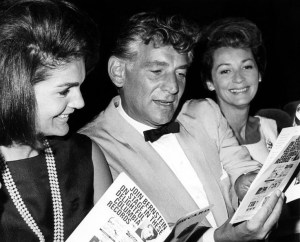
Leonard Bernstein is my favourite composer. Several of his compositions make my Top 50 list – Serenade for Violin and Strings in particular, but also Chichester Psalms and Symphony no. 2, The Age of Anxiety – and while other pieces of music by other composers often get more of a hearing on my iPhone, it is my contention that these Bernstein compositions contain some of the most beautiful (and profoundly human) music ever written.
This is certainly the case with Mass. As to whether Bernstein’s dramatic staged reworking of the Latin Mass works as a cohesive whole, my answer probably varies day by day and according to my mood. Mass is certainly transcendent, flawed, beautiful, stark, cheesy, smug, original in places, derivative in others and often achingly rooted in 1970s style.
The orchestral meditations, interspersed throughout the piece, have a uniquely haunting beauty of their own – particularly the first meditation, whose desolate questioning in the ethereal violin phrase followed by the slowly-building crisis and final, soothing, repeated falling notes on the organ are about as close to a religious experience as music has yet taken me.
A rather mediocre recording of the first meditation is here:
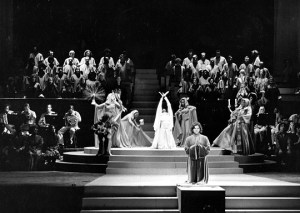
The complete recording of a recent (2012) performance of Mass at the BBC Proms is below:
The late, great Glenn Gould dissects one of my favourite fugues from the Well-Tempered Clavier, Fugue no. 9 from Book II.
As Glenn Gould says, at the conclusion of his discussion with biographer Bruno Monsaingeon:
It’s rudimentary material, but it makes for one of the most gloriously fulfilled codas he [Bach] ever wrote, I think.
True. Unlike the brisk and rather superficial version of this fugue in Gould’s complete recording of the WTC, here he takes it at a funereal pace, allowing each voice to truly sing on its own. The slow, steady accumulative effect of Bach’s ingeniously weaved, achingly unresolved theme makes the incredible catharsis of the final coda all the greater.
A very happy and blessed Easter to all of my Christian readers
Hallelujah, for the Lord God Omnipotent reigneth, Hallelujah!
The Kingdom of this world is become the Kingdom of our Lord and of his Christ, and he shall reign for ever and ever, Hallelujah!
King of Kings, and Lord of Lords, and he shall reign for ever and ever, Hallelujah! REVELATION 19.6, 11.5, 19.6
Hallelujah Chorus, Messiah by Georg Friedrich Händel, performed by the London Symphony Orchestra and Tenebrae Choir under the baton of Sir Colin Davis.
A brief and entertaining history of Handel’s Messiah is here.
We don’t need to change our national anthem, or create a separate one for England. We just need to make much better use of the one we already have
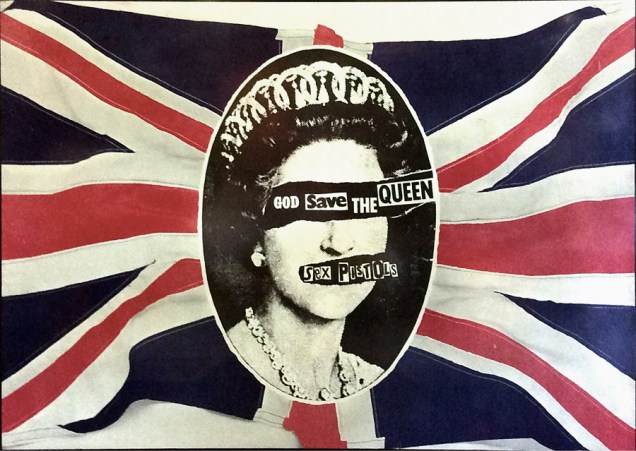
Is it time that England asserted herself by choosing a new national anthem of her own, separate and distinct from “God Save The Queen”, which supposedly represents our whole United Kingdom?
MPs seem to think so – the House of Commons has just voted in favour of an English national anthem, with a strong movement emerging to make Jerusalem England’s new anthem. But was Chesterfield MP Toby Perkins right to table the motion in the first place, and would we be right to ultimately adopt his idea?
In short, no. Much as this blog is generally in favour of full parity between the four home nations – best expressed through a federal structure brought about as the result of a full constitutional convention – calls for a separate English national anthem are particularly unhelpful at this time.
Our United Kingdom is already fraying at the seams. Having narrowly avoided dissolution as a result of the Scottish independence referendum last year, now is hardly the time for further measures which emphasise the relatively slight differences between England, Wales, Scotland and Northern Ireland. And no matter the temptation to poke swivel-eyed Scottish nationalists by meeting their quasi-religious fervour with a matching level of English nationalism, any step in this direction is likely to do more harm than good.
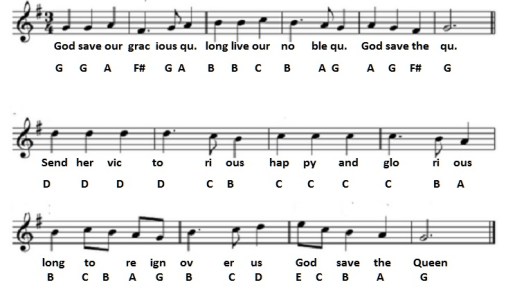
Is “God Save The Queen” a great anthem? Sadly not. Though as one commenter said on the BBC Daily Politics last night, it would have sounded less turgid sung lustily and at twice the speed, as apparently it once was. But there is no escaping the fact that Britain’s national anthem is a dusty and somewhat dull affair, especially set against the rousing, martial Marseillaise, the strutting, operatic Italian anthem or the ever-inspirational Star-Spangled Banner.
But much that is “wrong” or unsatisfactory with “God Save The Queen” can be remedied by performing it better. That means much less Lesley Garrettwarbling away in a high soprano, and more beautiful arrangements like the heart-stopping Benjamin Britten version which has been given a new lease of life in recent years at the Last Night of the Proms:
The hushed opening, stately and noble tempo and beautiful harmonies, slowly building to an impassioned climax in the (too rarely heard) second verse, “Thy choicest gifts in store…”, actually make those who have only ever heard bad recordings of our national anthem stop and reconsider its merit.
And this sense of a fresh look is possible with contemporary performances too. We all know how the Americans pinched the tune to our national anthem and rebranded it as a patriotic song entitled “My Country, ‘Tis Of Thee“. Well, in the right hands it can sound incredibly moving – again showing that we British fail to make the best use of the source material at our disposal.
It is quite possible to listen to this beautiful arrangement – with Clarkson accompanied by the US Marine Corps band – and get quite emotional, before thinking “wait – I recognise that tune!”
Yes, that amazing performance which had you on your feet was none other than “God Save The Queen”, re-branded and given a glitzy makeover by a people who are a bit less hesitant to wear their emotions on their sleeves. Once again, we could learn a thing or two from our American cousins.
But of course, there is no escaping the fact that the words of Britain’s national anthem are written to glorify one person – the monarch – rather than our country itself, or her people. For some with republican leanings, it is impossible to get past this obstacle, whatever their other feelings on the subject. I can sympathise with this position. But as someone who greatly admires the Queen, has enormous respect for our country’s history and heritage but who increasingly thinks that the monarchy should be gently separated from our constitution once the second Elizabethan age is over, I still sing our national anthem with pride, thinking of my country rather than just my Queen.
The temptation to meddle – to change things, supplant or supplement them – is always going to be present, because nothing we do or create will ever be perfect. But “God Save the Queen” has been with us since 1745. It is very much a part of our history. In the past year alone it has seen us through two world wars, a cold war, as well as technological and social revolutions which have utterly transformed Britain – nearly always for the better.
Could we adopt Parry’s “Jerusalem” instead? Yes, of course. Nobody doubts that it is a fine composition, with a century of its own history and lyrics – it is a setting of a poem by William Blake – in its favour. It also has the advantage of glorifying a country, or at least an idea of a country, which is what national anthems are if anything supposed to do.
But is the satisfaction we might feel by doing so worth adding to the factors which are undermining our United Kingdom from within and without? Is taking what would be a very bold step toward the reassertion of separate English identity worth potentially destroying our union. I do not think so.
Should we change our national anthem, or create a new anthem specifically for England? Absolutely not. Not now. We should just make much better – and more musical – use of the anthem we already have.
–
Agree with this article? Violently disagree? Scroll down to leave a comment.






 Semi-Partisan Politics