Stop Worshipping ‘Centrist’ Voters – They Are Responsible For Britain’s Woes

Swing Voters - Couch Potato - 2

First published at the Conservatives for Liberty blog

What exactly constitutes the political centre, anyway? Is it even a real thing? And why are we so in thrall to something so vague and ill-defined?

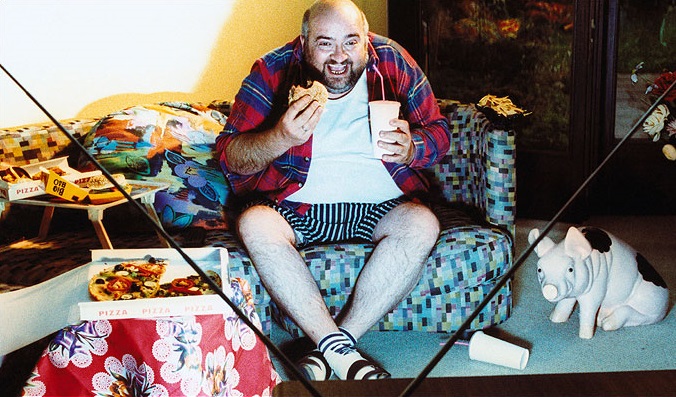
The political centre ground: people talk about it all the time. It is meant to represent the silent majority, that great conclave of wise and sage-like citizens who – unlike us hotheated partisan folk with our strong beliefs and awkward ideals – remain serenely above the political fray, calmly and methodically weighing competing policies against each another before arriving at their pragmatic, irreproachable voting decision on polling day.

Every British political party leader since Thatcher left office has been in hot pursuit of the political centre ground, happily throwing established party orthodoxy and revolutionary thinking alike out the window, preferring to court the good opinion of people who took a good look at Labour’s managed decline of the 1970s and the Tory individualism of the 1980s, and, Goldilocks-like, decided that they prefer something half way between the two, thank you very much.

But who are these political centrists? Do they actually exist, or are they an artificially created demographic, an amorphous and shifting blob of people whom the pollsters have not yet found a better way to categorise?

It’s a relevant question, because you can be assured that British politics for the next five years – or at least, the narrative around politics constructed by the media – will be all about the political centre, and which party is doing the better job of wooing it approaching the 2020 general election.

Continue reading

Why Did The BBC Silence John Darvall?


John Darvall BBC bias General Election 2015 WordPress Blog 2


The personal WordPress blog of John Darvall, the BBC Radio Bristol presenter removed from his regularly scheduled programme because of his relationship with a Conservative MP, offers further clues as to why the DJ was silenced ahead of the 2015 general election.

In an article dated 9 November 2014, Darvall struck a decidedly cynical tone in response to the posturing of all the main political parties:

There is an election coming. You may have noticed. All the parties are squaring up to each other while trying to convince you that they ‘have a plan’. They all want to ‘help’ you and yours have a better life, they all say other parties offer you nothing and scare you about why you should be afraid of them if they get in.

We are, of course, being ravaged by ‘crisis’ in all our public services, there is failure on every front and it is all everyone elses fault, but not yours. You are the victim. This was the same in 1979, 1983, 1987, 1992, 1997 and so on. You didn’t ask to [borrow] the money, you didn’t use the services and you said yes when you should have said no. So now, as we hope for actual leaders to actually lead and real ideas to inspire us, it’s time to test and debate what they are offering. Exciting isn’t it? Well maybe it just might be in a world of four or even five party politics.

Does this sound like the ranting of an ethically compromised journalist eager to spin the news in favour of his fiancée’s political party?

On the contrary, it is the type of indiscriminate “plague on all your houses” lament that could be uttered by any but the most stridently partisan British voter. Rather than indicating a desire to talk up Conservative Party policies and accomplishments, this blog post suggests a weariness with all of the political parties, and impatience with the voters who keep falling for the same promises time after time.

Later in the piece, Darvall goes on to outline his semi-serious “manifesto” for Britain:

We all pay a flat income tax at 20% of our income, after that income exceeds £15,000 per annum. National Insurance is abolished, along with VAT. Once you earn over £100,000 you then pay 30% income tax and 40% over £200,000.*

You pay a further 2% of you income to you [sic] local council.*

Fuel Duty and Vehicle Tax is abolished and you pay 2p for every 1 mile you drive.

Both national and local councils must send you an annual receipt of what you paid and what they spent it on.

A visit to the Doctor will cost you £18.50, like a basic visit to the dentist, which is currently £18.50. The same exceptions will apply as in dental treatment and if you are undergoing treatment for a chronic illness you do not pay.

Flat taxes, a pay-per-use approach to Britain’s sacred public services and full transparency of how local and national government spend taxpayer money? Quelle horreur!

Not to mention Darvall’s heretical idea that the British people may themselves be partly to blame for the stale political consensus that currently entraps the main political parties.

It is starting to look as though the BBC torpedoed John Darvall’s career not because of any potential pro-Conservative bias he may have shown, but simply because he was no longer willing to pretend that this election (and the major parties competing in it) offers the British people anything like real democratic choice.

And shattering that particular illusion would be just terrible for ratings.
John Darvall And The BBC’s Warped Approach To Editorial Impartiality

John Darvall BBC bias General Election 2015


It can’t be easy for the BBC’s news division, required by law to produce strictly non-partisan coverage while being assailed by both left and right for failing to sing their respective praises loudly enough. And while much of this criticism may be deserved, the fact remains that most BBC journalists perform a difficult and valuable job to a good standard, much of the time.

But the BBC would make life much easier for itself by taking a more consistent approach to its handling of editorial, investigative and disciplinary matters. At present there is no consistency at all, leading to the strong (and correct) perception that there is one rule for some people (and political parties), and another rule for others less favoured.

Take the case of John Darvall, a local radio presenter for BBC Bristol who was removed from his regular presenting slot because he happens to be engaged to a Conservative MP:

John Darvall, of BBC Radio Bristol’s Mid-morning programme, is being moved before the general election but says that he has had no guarantee he will be able to return.

Darvall, 48, and Charlotte Leslie, the MP for Bristol North West, met four years ago on his programme. They began dating in October and the twice-married father of four proposed on Christmas Day.

He is being moved to an afternoon show with less emphasis on news due to “heightened sensitivities” and to avoid accusations of a conflict of interest. BBC bosses said that he will be back after May. During a phone-in on the sacking of Jeremy Clarkson, Darvall suggested that he might not be back even after the election. A caller suggested that he should apply for a job on Top Gear, to which the host replied: “Trust me, I have a lot of reasons myself to be angry with the BBC at the moment. I am coming off this programme tomorrow, so I might consider something of a career departure.”

Questioned by another caller, he added: “It’s to do with the election and protecting BBC impartiality. It’s not my decision. I’m honouring what the BBC have asked me to do and I sincerely hope to be back after the general election, and the BBC have sort of said that I might possibly be, barring any unforeseen circumstances.”

In short, John Darvall was removed from his position not for something he did, something he said or even something that he thought, but rather because of who his future spouse happens to be. This harsh and career-damaging reaction by the BBC –  as taking a journalist off the political beat at election time surely is – was meted out not even for thought-crime, but in Darvall’s case for existence-crime.

Continue reading

Why George Osborne’s 2015 Budget Was Such A Big Disappointment

BRITAIN-BBC-MEDIA-STRIKE


Budget 2015 was yet another let-down for fiscal conservatives and opponents of big government, not that this beleaguered group have come to expect any better after five years of Conservative-LibDem coalition rule.

The fact that the Tories are actually happy that the media is reporting that government will “only” shrink back to 2000-era levels (when New Labour ruled the roost) is definitive proof that Britain is not still in thrall to Thatcherism and pro-market conservatism, as some left wing commentators suggest, but rather is clinging petulantly and fearfully to Gordon Brown-style Big Government largesse.

This blog has little sympathy with a modern Conservative Party too afraid to forcefully make the case for small government and lower public spending, and will continue to criticise David Cameron and George Osborne for their timidity in this regard for as long as they remain in office. But the Conservative Party does not operate in a vacuum, and should not bear all of the blame.

When in government, Conservatives have to deal with a public that is used to big government, collectivism and intrusive state involvement in almost every aspects of their lives. Britain never had the pioneering, fiercely independent spirit that characterises America, and the modern institutions that emerged from the post-war consensus (the welfare state and National Health Service) only shifted our political centre of gravity further to the left.

Thus, the BBC’s Robert Peston can ask with a straight face, when analysing George Osborne’s 2015 Budget (emphasis added):

Continue reading

Conservative Media Demeans Itself By Calling Cameron’s Debate Critics ‘Totalitarian’

General Election 2015 Leaders Debate Cameron Miliband Totalitarian


The new political week picks up exactly where last week left off, with much of the right-wing press waging a furious rearguard effort to distract attention from David Cameron’s cowardly attempt to scupper the televised leaders’ debates.

The Telegraph in particular is hitting back at the near-universal condemnation of the Prime Minister with nearly the same intensity with which they defended themselves against ex-columnist Peter Oborne’s devastating accusations of compromised editorial standards relating to the newspaper’s coverage of HSBC, an important advertiser.

But now some in the Tory-friendly media have outdone themselves, accusing those who criticise David Cameron’s weaselling out of the television debates and who want to see such debates permanently enshrined in the British political calendar of harbouring “totalitarian” instincts.

Graeme Archer writes in his latest Telegraph column:

Continue reading