Tales From The Safe Space, Part 3 – Pittsburgh Succumbs To Milo Fever

Milo Yiannopoulos - University of Pittsburgh - Free Speech - Safe Space - Identity Politics

Don’t blame conservatives or free speech advocates for endangering student mental health; blame the modern cult of Identity Politics

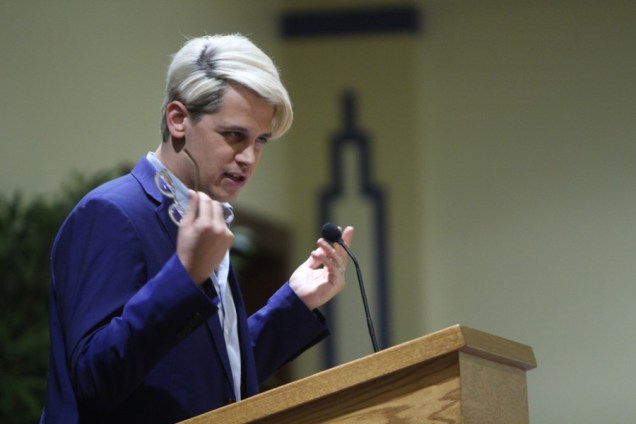
Latest to fall victim to the scourge of Milo Fever is the University of Pittsburgh, where a scheduled talk by the touring Milo Yiannopoulos brought some adult student protesters to the point of tears.

The university’s own Pitt News reports:

Pitt police officer Scott DuBrosky said he and the other officers working at the event escorted about 17 people — most of them students — from the event for protesting, but that no protesters gave the Pitt police any problems.

He said Pitt police anticipated the highly tense atmosphere at the event and agreed with Pitt administrators before the event to remove those who disrupted Yiannopoulos’ speech.

Pitt police did not remove about 15 students who silently held signs saying, “My friend who was raped needs a safe space,” and, “My friend who is depressed needs a safe space,” throughout the entire event.

Some students left on their own accord — a few of them sobbing.

While the Daily Caller reports on the aftermath of Yiannopoulos’s speech:

But in the aftermath of Yiannopoulos’ visit, many liberal students found themselves struggling to come to terms with an event they deemed “unsafe” and even “violent.” Hundreds of students attended a meeting of Pitt’s student government to express their distress that the event was allowed to go forward in the first place.

“I felt I was in danger, and I felt so many people in that room were in danger,” student Marcus Robinson said of the non-violent event. “This event erased the great things we’ve done … For the first time, I’m disappointed to be at Pitt.”

Robinson faulted school officials for not providing a room next door staffed with counselors that could provide emotional support for students “traumatized” or “invalidated” by Yiannopoulos’ speech.

Many students argued Yiannopoulos had engaged in “hate speech” and therefore should never have been allowed a public platform in the first place. One even said that despite the lack of any physical attacks, the event was still “real violence” against liberal students.

“This is more than hurt feelings, this is about real violence,” said student Claire Matway. “We know that the violence against marginalized groups happens every day in this country. That so many people walked out of that [event] feeling in literal physical danger is not all right.”

There is so much ridiculous in here to unpack, not least:

1. The fact that any student – and recall, these are grown adults with the right to vote and take up arms in defence of their country – should feel in “literal physical danger” as a result of opinions expressed by a guest speaker who at no point advocated or incited discrimination, let alone violence.

2. The fact that a speaker who expresses ideas which go against the prevailing Social Justice orthodoxy can, with only their words, “erase” any of the tangible things which the students may have done in pursuit of their agenda.

3. The persistent, wheedling call for academic institutions to treat their students like an overbearing parent might treat a child, with the demand for a designated safe space room and trained counsellors on standby to treat the walking wounded – mown down in their seats by a hail of wordfire which contradicted or mocked their own values – much as one might have a field hospital behind the front lines in combat, or a Red Cross tent at a music festival.

4. The notion that anybody can be “invalidated” – essentially made to disappear in a puff of smoke, as though they never existed – by the words of another human being.

5. The hysterical and frankly insulting conflation of “violence against marginalized groups [which] happens every day in this country” with the fact that a group of privileged students chose to attend an event at which they heard ideas and opinions contrary to their own. And the supremely self-regarding notion that having one’s views challenged places one on the same spectrum of suffering and injustice as (say) Trayvon Martin or Michael Brown.

There is a real problem – manifesting mostly on American college campuses but creeping inexorably across the Atlantic to infect British universities, too – of young and impressionable students drinking so deeply from the well of Identity Politics and Social Justice that they are in genuine danger of doing themselves real, self-inflicted mental and emotional damage.

I’ve been reading and researching these phenomena for many months now, and I no longer doubt that in their minds, many of these students genuinely believe that by hearing a contrary opinion or a less-than-affirming remark about their life choices, they are incurring real, physical and mental harm.

(Though it is also plainly apparent that many of the more wily students know this Identity Politics scam and “mental safety” trope to be complete hogwash, but nonetheless embrace it as a means of exercising power over their peers and supposed academic supervisors).

But I’ll now readily concede that for many of these infantilised students who are reduced to tears by a voluntarily-attended, non-violent talk by Milo Yiannopolous, they have indeed incurred a trauma of some kind. Though it may seen completely absurd and hysterical to a normal person, to them it is profoundly real. I will accept that much. We only differ as to the cause of this sudden mass vulnerability, and the proper remedy.

They say ban speakers like Milo Yiannopolous and prohibit the things that they say from being spoken aloud on campus, essentially elevating certain people and ideas above debate and criticism. I say that they need to stop doing the thing which is making them – grown adults! – so vulnerable to speech and writing which contradicts their dogma in the first place.

And what makes them so vulnerable is the incessant and obligatory dividing up of student bodies by race and gender and sexuality, and forcibly separating this group of equal students into an artificial hierarchy of privilege and oppression which exists more in their minds than their lived experience on campus. What makes them vulnerable is the false notion that the social justice causes for which they campaign in wider society are anywhere near as prevalent or serious within their cloistered college campuses, when this is manifestly not true.

Take the example of the students of Silliman College at Yale University who were apparently seriously considering transferring away from one of the best universities in the world because they felt that their college Master was not treating them sufficiently like an overbearing parent by dictating which Halloween costumes were permissible for them to wear and which should be banned for being offensive.

As Conor Friedersdorf noted at The Atlantic, these students were blessed to be studying not only at one of the world’s premier academic institutions, but within surroundings of almost unparalleled luxury – including two Steinway grand pianos, a film editing lab and an art gallery for student use – which are utterly unimaginable for millions of people for whom the chance to study at even the lowest-rated and most ramshackle of higher education institutions is nothing but a distant dream.

That’s not to say that instances of racism, sexism, rape and assault do not take place on college campuses, and that it is terrible when they do. But today’s student activists have lost all sense of perspective. For many of them, hearing any narrative which differs in any way from the progressive Identity Politics interpretation of the world in which they marinate is now just as bad as being the victim of a physical or mental assault.

And we should no longer doubt them at their word. Anybody who is able to work themselves into a tearful tizzy at the sight and sound of Milo Yiannopoulos, perceiving themselves to be in “literal physical danger” at his presence on their university campus, clearly is acutely mentally vulnerable in some way.

But this vulnerability is utterly self-inflicted, and is entirely a consequence of the victim having delved so deep into the cult of Identity Politics now peddled on campus, and Tumblr-style Social Justice culture beyond, that any sense of perspective or capacity for rational thought is completely destroyed.

And for their own sake and ours, these fragile people need to leave their places of academic instruction and return home to their parents, because frankly, they are starting to create a very unproductive – if not yet unsafe – space indeed for those students who went to university naively expecting that they would be attending a place of learning and intellectual debate.


Safe Space Notice - 2

Top Image: The Pitt News – “Conservatism and controversy: Milo Yiannopoulos speaks at Pitt

Agree with this article? Violently disagree? Scroll down to leave a comment.

Follow Semi-Partisan Politics on TwitterFacebook and Medium.

Tales From The Safe Space, Part 2 – Segregation Returns At UC Berkeley

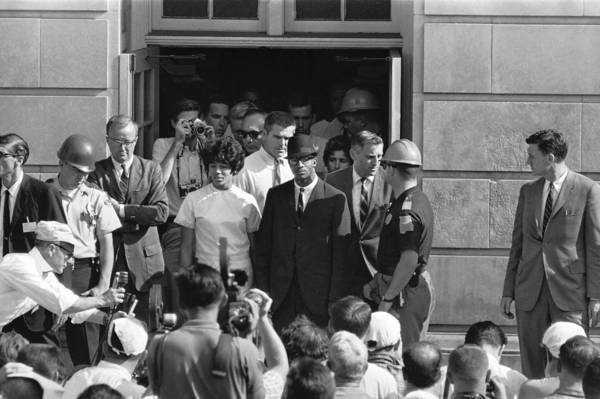
Vivian Malone - James Hood - University of Alabama - George Wallace - Racial Segregation - Integration - Racism

Minority students in America are less discriminated against and victimised today than at any time in history. And yet, in 2016, some are clamouring for the reintroduction of racial segregation, for their own “protection”

The fight for social justice claims another Pyrrhic victory in California this year, as racial segregation comes roaring back to university student accommodation.

The Berkeley Student Cooperative, a student housing organisation primarily serving students at the University of California Berkeley, is proudly rolling out racially segregated accommodation for “people of colour” who, unlike their predecessors fifty years ago, experience untold oppression, violence and discrimination in their daily lives, and thus desperately need a “safe space” to huddle together in respite.

The Daily Californian reports, in a fawningly approving article entitled “Reclaiming a safe space: Person of Color co-op to open this fall”:

In May 2014, the BSC Board of Directors established the Demographic Inclusion Task Force in order to propose ways that the BSC could better meet the needs of low-income students and students of color. The DITF conducted another membership census in the 2014-2015 school year that revealed socio-demographic issues like those found in the 2012 census. The DITF also led a series of focus groups last October, with the goal of identifying the root causes of the socio-demographic barriers.

[..] According to Skye Ontiveros, DITF chair, some of the focus groups revealed that certain students of color did not feel welcome in the undergraduate houses. In the focus group, some students of color reported that they felt like they could not cook traditional dishes in the kitchen because it did not stock the food that they needed or felt that their cultures’ music was not accepted in the common room. She explained that these situations create a hostile environment for students of color by stifling their right to cultural expression.

The DITF hopes that the Person of Color theme house will foster a safe space where students of color feel comfortable expressing themselves and their cultures, according to Ontiveros. White students and higher-income students can legally live in the Person of Color theme house, but Ontiveros hopes that they will choose to live in a different house and reserve this space for people of color.

“It’s meant for people of color,” Ontiveros said. “It’s not meant for folks who … want to be an ally or … want to learn about different cultures.”

And naturally, in order to live in this Racially Segregated For Everyone’s Mental Safety accommodation, residents must partake in mandatory “inclusivity” training, so as to receive top-up indoctrination in the same kind of reactionary social justice extremism which led to the segregation in the first place:

The Person of Color theme house will be founded on three pillars: cross-cultural exchange, academic and professional support, and anti-oppression and allyship. In order to achieve these goals, members will need to dedicate five hours to the community per semester by holding or attending workshops dedicated to these pillars. Possible workshops include traditional cooking or music lessons and inclusivity training.

It is astonishing to read the flimsy grounds on which racial segregation is now being reintroduced in Berkeley. The Daily Californian cites no evidence of racially motivated attacks or even verbal altercations – not that this would make racial re-segregation any more acceptable. No, the entire justification for the dramatic step of reintroducing segregation seems to be based on the “feeling” of a small number of students in a focus group that their food or music was somehow unwelcome in racially integrated student accommodation.

This is ludicrous. The entire point of the Berkeley Student Cooperative is to provide low-cost accommodation for students who would struggle to afford market-rate campus accommodation. If each building was to stock ingredients catering to every culture in the world, what do the safe space dwellers think would happen to their rent costs? And since when did not having your favourite ethnic food provided by default constitute such an intolerably “hostile” environment that self-segregation is the only answer?

If this perplexing story tells us anything, in fact it shows us how far the civil rights and tolerance movements have come, that today’s pampered student activists are reduced to throwing their toys out of the pram because their communal kitchens do not come replete with every conceivable cooking ingredient from around the world (as though going to the store and buying things independently was not an option).

Or to invert Chris Rock’s excellent joke at the recent Oscars ceremony, now that minority students (thankfully) no longer live in daily fear of finding their grandmother swinging from a tree, they are free to worry not only about who is nominated for Best Documentary Foreign Short, but also about whether they can ever possibly rebuild their lives after having once received a quizzical look for playing their favourite Balinese Gamelan music CD in the common room.

One would think that a country with such a visceral recent history of racial segregation and deeply engrained hostility – which often took the form of lynchings and systematic disenfranchisement rather than the mere failure of a student housing cooperative to stock certain ethnic foods – would do everything possible to avoid repeating the mistakes of the past and bringing back customs which were properly buried with Jim Crow. But then one would also think that a country whose civil rights movement succeeded only thanks to the exercise of free speech would be rather less cavalier about restricting speech today.

Sadly, these mistakes now seem doomed to be repeated as UC Berkeley leads the way in playing host to a racially segregated student population.

More tales from the Safe Space here.


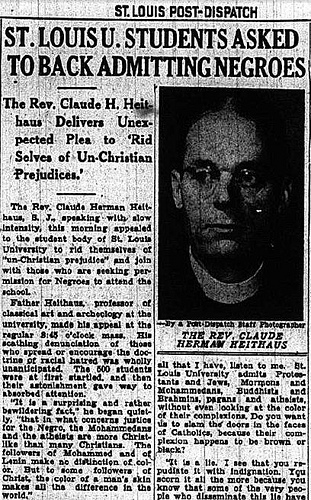
Racial Integration - St Louis Post Dispatch.jpg

Safe Space Notice - 2

Agree with this article? Violently disagree? Scroll down to leave a comment.

Follow Semi-Partisan Politics on TwitterFacebook and Medium.

Tales From The Safe Space, Part 1 – California State University, Los Angeles

It’s not physical intimidation if you shout “no violence!” while you are doing it

If it strikes you as strange that an intimidating mob of student activists should be attempting to disrupt and shut down a speaking event by shouting “No Violence!” over and over, while physically preventing people who wanted to peaceably attend the talk from entering the theatre, then congratulations – you must be innocent and unschooled in the ways of the New Intolerance on campus.

Those of us who have the misfortune of observing and cataloguing such incidents, however, know that this is now an entirely routine tactic on the part of student activists who claim that their right to live in an ideologically pure, self-reinforcing bubble trumps the rights of others to speak or hear dissenting opinions.

Jennifer Kabbany of The College Fix gives a first-hand account of what it was like to be present at this mob, and the hostility which she witnessed – not even as the Reviled Speaker du jour (in this case Ben Shapiro), but merely as a bystander and journalist:

The demonstrators were upset conservative Ben Shapiro was slated to speak in the theater and they’d blocked the door leading into the venue.

As a journalist there not only to cover the protest, but also the speech, I made my way as far as I could toward the door. The entire lobby was choked with student protesters, but the closer I got to the door, the more intense things got.

People held signs touting various “diversity” slogans, and one or two rainbow flags waved above the crowd. Chants and shouts of “no hate speech” and “this is our school” peppered the moment.

Finally, I managed to squirm my way about 15 to 20 feet from the door. Then I could go no farther. Student protesters had filled the narrow entryway, and anytime someone would try to enter, they would throw up their hands, form a human wall-shield, and chant “no violence.”

I watched the intensity, the anger on the faces of students as they screamed and scowled at the Young Americans for Freedom representatives there trying to host the event. I watched as campus visitors tried to gain access and were physically blocked by protesters who looked all too willing to fight if it came down to it. The anger and vitriol was palpable.

Shouting and chanting “no violence!” while physically restricting the movement of people simply trying to go about their private business is now a commonplace tactic among student anti free speech zealots.

We saw much the same tactic being deployed against student journalists covering the University of Missouri protests, as Conor Friedersdorf noted in The Atlantic:

This behavior is a kind of safe-baiting: using intimidation or initiating physical aggression to violate someone’s rights, then acting like your target is making you unsafe.

“You are an unethical reporter,” a student says [..] “You do not respect our space.” Not 30 seconds later, the crowd starts to yell, “Push them all out,” and begins walking into the photographer. “You’re pushing me!” he yells. And even moments after vocally organizing themselves to push him, they won’t fess up to the nature of their behavior. “We’re walking forward,” they say, feigning innocence. Says one snarky student as the crowd forces him back, “I believe it’s my right to walk forward, isn’t it?” Then the photographer is gone, and only the person holding the video camera that recorded the whole ordeal remains. Ironically, he is a member of the press, too, which he mentions to one of the few protestors who is left behind.

By then, the mask has fallen.“Who wants to help me get this reporter out of here?” an unusually frank protestor yells. “I need some muscle over here!”

The woman calling for muscle? An assistant professor of mass media at the University of Missouri … who had previously asked the campus for help attracting media attention.

As always, the “safe space” is a one way street, and those enforcing the safe space are free to use any verbal or physical means necessary to arbitrarily enforce it.

But those involved genuinely do not see the irony. Rather than seeking to foster an atmosphere where everybody is welcome on campus, these student activists are only too happy to vilify and seek to banish those people with conservative, traditional, wacky, offensive or just plain weird ideas – anything which doesn’t fit the new progressive mold.

Where once student activists eagerly sought to assert and defend their right to free speech in furtherance of their social and civil rights objectives, today’s students are more likely to go running to the authorities asking for “heretical” speech – basically anything which goes against orthodox thinking – to be banned.

This is insulting to those who find themselves censored, and frightening to those who find themselves on the receiving end of summary mob justice from the Safe Space Enforcement Squads. But it does most damage to those who the activists ostensibly claim to be protecting.

It infantilises grown adults (nearly all students are at least eighteen years of age, old enough to pick up a rifle and fight and die for their country) and makes the condescending assumption that they are too fragile and helpless to withstand having their ideas challenged, their lifestyle choices questioned or (to use the currently fashionable terminology) their experiences, even their existences “invalidated”.

As it happened, the event was cancelled before Ben Shapiro even turned up – CSULA’s president taking the counter-intuitive decision to silence free speech so as to better allow the “free exchange of ideas”. When Shapiro proceeded to turn up to speak anyway, with the president’s permission, a protester pulled a fire alarm in a bid to disrupt the speech, and ultimately Shapiro had to be escorted from campus surrounded by a police motorcade, out of “safety concerns”.

Another female student journalist was also aggressively and physically confronted, if not actually assaulted, at a protest about Ben Shapiro’s lecture.

Oscar-winning movie “Spotlight” showed us how the journalists investigating sexual abuse by priests in the Boston Archdiocese learned that when priests were mysteriously marked as being on “sick leave” in church directories, this actually meant that they had been withdrawn from parish duties by the bishop, and quietly hidden away so as not to raise attention to paedophilia in the Church.

Similarly, if you run a Google or LexisNexis search for public events cancelled due to “safety concerns”, you can be reasonably certain that the events returned in the search results were effectively censored by detractors wielding the threat of violence. “Safety concerns” has become nothing more than a convenient code phrase used whenever free speech falls victim to the New Intolerance.

And yet we are supposed to believe that it is people like Ben Shapiro who threaten the safety of our university campuses.


Postscript: There’s a reason why this piece does not mention the subject of Ben Shapiro’s speech – because it doesn’t matter. So long as he was not engaging in criminal behaviour or actively inciting violence, having been invited he had every right to turn up and say whatever he damn well pleased. The fact that such an idea should be so shocking and alien to us now shows how deeply authoritarian and intolerant we have become as a society – and not only on university campuses.


Safe Space Notice - 2

Agree with this article? Violently disagree? Scroll down to leave a comment.

Follow Semi-Partisan Politics on TwitterFacebook and Medium.

Now Even Peter Tatchell Is A “Racist”

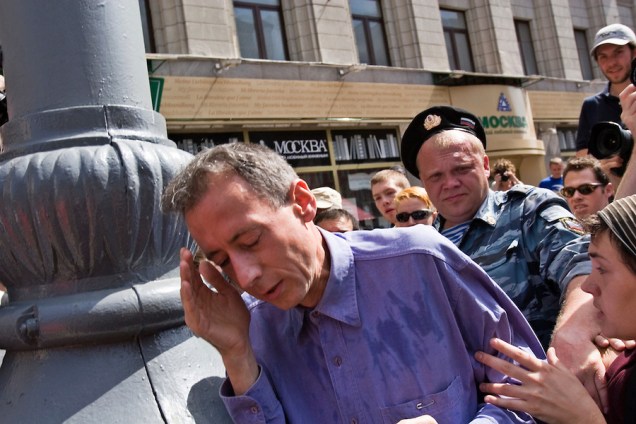
Moscow Gay Pride Parade Attacked

In the accusatory minds of the new PC Left, a lifetime spent fighting for LGBT and racial equality counts for nothing if one also supports the free speech rights of those who disagree

Ask anyone to write down their top twenty racists in Britain, and very few people would put Peter Tatchell anywhere on their list. After all, the man’s life has been dedicated to overcoming prejudice and fighting for racial, sexual and LGBT equality.

While others now wear their progressivism as a virtue-signalling badge of honour, something to be ostentatiously flaunted on social media, Tatchell has put his body in harms way to protest what he sees as real injustices taking place against persecuted minorities. And whether you agree with Tatchell on every single one of his causes or not, one can certainly admire the way that he has lived his public life by the credo “actions and words”.

Unless, that is, you happen to be a member of the activist student PC Left, part of that spoiled and coddled generation of today’s young people whose freedoms were won by the likes of Tatchell, and whose own meagre campaigns perch precariously on the far greater and more noble endeavours of those who came before them. They have now turned on Tatchell, accusing him – hilariously – of being both racist and “transphobic” in a blatant and supremely ungrateful move to destroy his reputation and credibility.

Tatchell himself responds in the Telegraph:

Free speech and enlightenment values are under attack in our universities. In the worthy name of defending the weak and marginalised, many student activists are now adopting the unworthy tactic of seeking to close down open debate. They want to censor people they disagree with. I am their latest victim.

This is not quite the Star Chamber, but it is the same intolerant mentality. Student leader Fran Cowling has denounced me as racist and transphobic, even though I’ve supported every anti-racist and pro-transgender campaign during my 49 years of human rights work.

Fran is the LGBT+ (lesbian, gay, bisexual, transgender) Officer of the National Union of Students (NUS). She refused to speak at an LGBT event at Canterbury Christ Church University tonight unless I was dropped from the line-up. This is a variation of the NUS “no-platform” policy; instead of blocking me from speaking, Fran is refusing to share a platform with me.

While the Guardian explains the context:

In the emails, sent to the organisers of a talk at Canterbury Christ Church University on Monday on the topic of “re-radicalising queers”, Cowling refuses an invitation to speak unless Tatchell, who has also been invited, does not attend. In the emails she cites Tatchell’s signing of an open letter in the Observer last year in support of free speech and against the growing trend of universities to “no-platform” people, such as Germaine Greer, for holding views with which they disagree.

Cowling claims the letter supports the incitement of violence against transgender people. She also made an allegation against him of racism or of using racist language. Tatchell told the Observer that the incident was yet another example of “a witch-hunting, accusatory atmosphere” symptomatic of a decline in “open debate on some university campuses”.

Because campaigning is no longer about securing freedoms and liberties for marginalised people. It is about not just holding the “correct” opinion on any given issue, but crucially also being seen to hold the correct opinion, and orchestrating various situations whereby one’s own bien pensant opinions can be shown off to greatest effect.

It is about making oneself look good by jumping on the slightest deviation from prevailing PC orthodoxy by someone else – often a friend and erstwhile ally – and seeking to destroy them with it, hysterically declaring it to be evidence of moral turpitude, even when the target is someone as respected in the field as Peter Tatchell.

Some on the PC Left, recognising that this particular smear by the NUS may stretch credibility too far, are trying to spin Tatchell’s naturally outraged reaction as yet more evidence of racism. In an eye-rollingly titled piece called “Problematic Proximities, Or why Critiques of Gay Imperialism Matter”, Sara Ahmed tries to argue:

I do want to question here how Mr Tatchell is responding to the critique.

[..] Critiques of racism are reduced and misheard as personal attacks, which is what blocks a hearing of the critique. In the end, the situation becomes re-coded as a question of individual reputation and good will: we lose the chance to attend to the politics of the original critique.

We need to reflect on what we are talking about when we are talking about racism. Racism in speech does not simply depend on the explicit articulation of ideas of racial superiority but often works given that such associations do not need to be made explicit. So for example politicians might use a qualifier ‘this is not a war against Islam’ and then use repeatedly terms like ‘Islamic terrorists’ which work to associate Islam with terror through the mere proximity of the words: the repetition of that proximity makes the association ‘essential’.

[..] It is my view that Mr Tatchell’s writings on Islam and multiculturalism repeat and reproduce many ‘problematic proximities’ between Islam and violence, and thus participate in the culture of Islamaphobia.

Ahmed is trying to advance a semi-cogent (though still wrong) argument here. She is effectively saying “Wait a minute! We may have called Peter Tatchell a racist, but it wasn’t a personal attack. Heavens, no. It was simply pointing out that some of the things that he says are problematic for us because we believe they help to reinforce negative stereotypes about religious minorities”.

This would at least have the makings of a cogent argument – that we all have good and bad within us, that we all have our own prejudices which we should seek to recognise and overcome, and that any of us might say something which might be construed as “racist”, but with no malice whatsoever.

But if this is what the NUS and Fran Cowling actually believe, why refuse to take the stage with Tatchell? If indeed their intention was not to launch a “personal attack”, why on earth refuse to admit all the good which Peter Tatchell has done for their causes, and why refuse to share a stage with him now?

The answer, of course, is that this was fully meant to be a personal attack. Vicious personal attacks conducted through social media and the press are the chief modus operandi for today’s youthful practitioners of Identity Politics, and if their self-advancement involves a.few instances of friendly fire – even the destruction of someone like Peter Tatchell – so be it.

Some people tell me that I am being too hard on the students involved; that they are well-intentioned young people simply trying to navigate difficult issues as best they can. Well I’m sorry, but I’m just not buying it. Obviously we are only talking about a minority of students here – the ones drawn to take an active role in student governance, social affairs and campus life. But these students are behaving in an utterly reprehensible way, completely without justification and to be opposed by lovers of liberty at all costs.

This is an attempted power grab, plain and simple. Just like it was at Mizzou, and Yale, and Oxford, and countless more universities every year. This is an attempted coup by an utterly coddled and spoiled generation of students who know almost nothing of hardship, deprivation or prejudice compared to their predecessors even just a few decades ago.

These tinpot student dictators arrive on campus at the age of eighteen to find most of the really hard battles already won for them – ironically, by genuinely brave radicals like Germaine Greer and Peter Tatchell. But these students must find some outlet for their youthful “idealism”, and so they latch on to the growing Politics of Identity, assimilating its intricacies and genuinely persuading themselves of its core message – that what matters is not the content of one’s character, but rather one’s arbitrary lived experience as a member of a defined and segregated subgroup.

And so rather than simply accepting that they have it rather good, even compared to their parents and grandparents, these student snowflakes go on the march. They find ever-smaller slights or “microaggressions” and protest them ever-more loudly and hysterically in an attempt to assert power over university administrations – many of which meekly submit without so much as putting up a fight.

Throw in the fact that their social hierarchy is based on a purist adherence to the Politics of Identity – with members gaining social currency for flaunting their own tolerant nature or identifying and persecuting anyone whose behaviour happens to violate one of the many invisible lines restricting our speech and behaviour – and you have a potent and deadly combination.

Viewed in this context, it is obvious that NUS LGBT officer Fran Cowling is attempting to gain a vast amount of social currency and standing from her peers by trying to take down Peter Tatchell, an A-lister in activist circles. By refusing to share a stage with him, Cowling is effectively declaring to the world that she is morally superior to Tatchell, he having failed the latest racism and transphobia tests. Thus, she can bank all of Tatchell’s personal accomplishments for herself, add the fact that unlike him she is not a “transphobe”, and Win the Game.

And that’s the rotten core of today’s student identity politics movement. A constant, bitchy, backbiting game of snakes and ladders, with one insufferable petty tyrant rising to the top of the Moral Virtue Pyramid only to be brought down by their jealous rivals, either for no reason at all, or for having unknowingly violated one of the many red lines that they themselves helped to draw across our political discourse.

I can’t say any better than Brendan O’Neill on this occasion, so I will give him the last word:

This Veruca Salt-style revolt against late 20th-century liberators, this sullen, thankless turn by radical young women, gay people and black people against those who devoted their lives to fighting for women, gay people and black people, reveals how poisonous the politics of identity has become.

Where late 20th-century warriors for civil rights basically argued for the right of people to be free and equal regardless of their gender, sexuality or race — that is, they wanted identity demoted — today’s identitarians prefer to obsess over people’s natural characteristics and sexual habits. They instinctively loathe King’s claim that character is more important than colour. They hate Greer’s insistence that women are as capable as men (and that a man can’t become a woman at the click of his fingers). They have disappeared so far up the fundament of identity politics that they bristle at any argument that smacks of universalism, which emphasises the sameness and the shared capacity for autonomy of all human beings.

They seem hellbent on reversing the social gains of the late 20th century, preferring to shove people back into the biological, racial boxes from which mankind spent so long trying to escape. It is they, not Tatchell, who are racialist (if not racist), and a threat to what most of us consider to be the decent civilisational value of treating people as people rather than as colours or genders.

Amen to that. And shame – yet more ignominious shame – on the NUS.

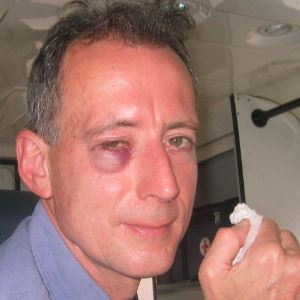
Peter Tatchell attacked

Agree with this article? Violently disagree? Scroll down to leave a comment.

Follow Semi-Partisan Politics on TwitterFacebook and Medium.

Kissing Workshops For Students

Kiss Fail

Kissing? You’re doing it wrong

Just when you think the infantilisation of students and policing of normal human behaviour could not possibly get any more ridiculous, it does.

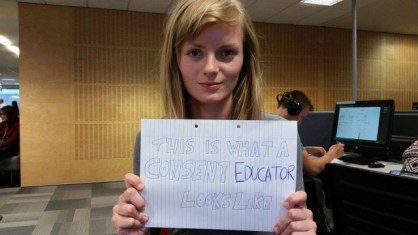
This time, the University of Southern California takes the spotlight for organising a “Consent Carnival” to dispense the usual patronising lessons to the already-converted.

But part of this particular carnival was a “kissing booth” – not the fun kind, but an authoritarian re-education booth which drilled the following checklist into the minds of all those who enter:

Affirmative: We’re really excited to share this kiss with you and we’re letting you know!

Coherent: We’re present and able to recognize exactly what’s happening when we give this kiss to you.

Willing: We made the decision to give you this kiss ourselves, without pressure or manipulation from you or anybody else.

Ongoing: Should you come back for another kiss, check in to see if we’d still like to give you one.

Mutual: Sure, we offered you a kiss, but that doesn’t mean you have to accept it. Coming over to our table doesn’t forfeit your right to say no.

Note the particular absurdity of step four, “ongoing”. What, precisely, is the statute of limitations on an initial act of consent? If two kisses are one second apart, does the second kiss require a new act of consent? How about five seconds? Thirty seconds? One minute? Five minutes? Thirty minutes?

(Apparently the correct answer is ten minutes).

And for this ludicrous act of infantilising nonsense to mean anything, evidence of consent-checking needs to be written down or recorded in some way, should it become necessary to prove consent in the event of future dispute. So freshmen should probably all be given checklists to carry around with them in the event that they hook up with someone while at university.

Signatures should be mandatory – preferably witnessed and countersigned by a trusted third party. Sure, turning natural, healthy human relationships into risk-minimising contractual agreements may strip away any intimacy or spontaneity from our lives, but that’s the price we have to pay. To cleanse ourselves of our “rape culture”.

Better yet, since police forces across America are already considering equipping even more of their officers with body cameras, perhaps the US government should just order one for every citizen and make it a criminal offence to not wear it at all times. I’m sure they would get a great discount for ordering in bulk.

Surely that is the best way to deal with the endemic “rape culture” in our society and university campuses. After all, if we all receive mandatory training in how to deal with every possible scenario which may emerge in the course human relationships and surrender our privacy to constant on-body video surveillance (since good people have nothing to hide), then all of our problems will be solved.

Because without the consent classes and the checklists and the body cameras and the safe spaces, we will all revert to our primal, animalistic roots, and be a constant danger to anybody who strays too close to us.

Thank the Lord for the University of Southern California and their kissing booth, saving humanity one sanctimonious lecture at a time.

sexual-consent-class-consent-educator

Agree with this article? Violently disagree? Scroll down to leave a comment.

Follow Semi-Partisan Politics on TwitterFacebook and Medium.