Tales From The Safe Space, Part 16 – The Prequel Begins Long Before University

School - Marking - Grading - Red Ink - Infantilised - 2

The banning of red ink for marking schoolwork – just one small part of our Prizes for Everyone educational culture – directly feeds the student authoritarianism on our university campuses

Over the course of this “Tales from the Safe Space” series we have seen glimpses of a coddled, fragile yet snarlingly authoritarian generation of young activists who perceive any disagreement with their ideology as tantamount to a physical and mental “assault” on their person.

These students demand not only complete submission from fellow students and university administrators to the arbitrary laws of Identity Politics, they also have the audacity to portray themselves as being so uniquely victimised and oppressed that unlike the generations which came before them, they alone need special protection and validation from an external authority. This, of course, is achieved through the establishment of safe spaces and draconian restrictions on freedom of thought and speech for everyone else on campus.

But students do not suddenly become baby-faced tyrants the moment they cross the threshold of college or university at the age of eighteen. Young people today are acted upon by three key environmental factors: the rise of Identity Politics as a movement, the West’s growing disregard for freedom of speech and the therapeutic culture in which we now live.

Every day brings new examples of each of these areas of civilisational decay. And one key factor in our modern day therapeutic culture is the way in which state schools increasingly pander to the feelings of their pupils rather than seeking first and foremost to impart a rigorous education and a strong character. Of course there are many noble exceptions. But if we ever believed that there would be no negative consequences to our present Everyone Wins A Prize culture, then we were sorely mistaken.

The Daily Mail reports on the latest depressing example:

Teachers have complained about a ‘ridiculous’ marking system which forces them to use pink ink for negative comments because it is ‘less aggressive’ than red.

The bizarre system is being implemented by some headteachers who believe pink is a softer colour which will make children feel less like failures.

Many are also making staff use up to six different coloured pens to give different types of feedback to pupils as part of a ‘triple’ or ‘deep’ marking strategy.

In one example, a school has asked pupils to respond to teachers’ comments in purple or blue, and if teachers want to give encouragement they have been told to use a ‘positive’ green pen.

[..] Lee Williscroft-Ferris, a modern languages teacher from Durham, said that in one school he worked at he had to draw a pink box at the end of each piece and insert positive comments in green ink and suggestions for improvement in pink.

This is not a new phenomenon. The Mail reported a similar story back in 2013:

Tory MP Bob Blackman revealed his anger after being told a secondary school in his Harrow East constituency had banned teachers from using red ink.

He told MailOnline: ‘A teacher contacted me and said I cannot believe I have been instructed by my head to mark children’s homework in particular colours and not to use certain colours.

‘It is all about not wanting to discourage youngsters if their work is marked wrong.

‘It sounds to me like some petty edict which is nonsense. It is absolutely political correctness gone wild.

The University of Colorado study often cited as being behind these ridiculous changes to school grading procedures warns that the colour red evokes “warning, prohibition, caution, anger, embarrassment and being wrong”. But surely that’s the whole point? Where there is error, the teacher’s red pen should be there to bring truth, and do so in an unambiguously clear way.

According to the same researchers, “in the context of communication, writing in red seems to shout in the same way as writing in all caps or writing which is underscored”. In other words, the current drive to eliminate red ink from schools stems from the same self-absorbed social media culture which frets that someone doesn’t like us because they failed to put a smiley face or a kiss at the end of their text message. But do we really want to be applying the neuroses experienced by the first generation to grow up with the internet to the current crop of students going through school?

While some of us might like friends, colleagues and bosses to validate us at every turn and sugar coat their feedback to us in warm and constructive ways, real life will not always be so kind. And children should be made ready for the world as it is, not as some naive idealists wish it should be.

School is the place where it is possible to fail in a safe and relatively consequence-free environment. Many people that students meet and collaborate with in the real world will not take the time to encouragingly point out the good parts of a report, presentation, product or other piece of work that generally failed to meet expectations. In some cases, the feedback may be quite harsh, often deservedly so.

This criticism is not usually an attack on the person, or an attempt to “invalidate their experience” or whatever other therapeutic phrase du jour is being used to pathologise everyday life. It is simply a statement that the work produced is incorrect, or in some way not up to specification. And children need to learn how to handle such feedback at a relatively early age. Young minds must be prepared for the challenges of life, not coddled and protected before being released unprepared into the wild.

Safe Space Notice - 1

We in the West increasingly live in an environment described by Rod Dreher as “a culture of autonomous individualists who don’t order their lives toward a common religion, or anything higher than what they desire”. And to that I would add that there is also an ascendant culture in which no longer values truth, where changes in how a person chooses to “identify” are taken to instantly overwrite reality.

In this brave new world, where even deluding oneself into thinking that one is an animal trapped in a human body is increasingly common among certain people, the awkward fact of a human birth certificate is just an inconvenient bureaucratic error to be erased as a new identity is created.

No wonder then that the teacher’s red pen is so hated – it stands as testimony to the despised idea that there is an objective reality, and often a right and wrong answer. For children who are raised to believe that everything they do is special and praiseworthy, and that their feelings are somehow sacrosanct and never to be trodden upon.

As my Conservatives for Liberty colleague Sara Scarlett puts it:

For years, children have been artificially insulated from any form of loss or emotional upset. The common practice of everyone getting a prize for taking part in sports regardless of how good they are, or how much effort they have put in. The reasoning being that no one’s feelings should get hurt. Whilst I appreciate that adults want their children to have happy childhoods, this has been taken way too far. It is not just the job of parents and educators to make children’s lives as happy as possible. It is the job of parents and educators to make their children into adults who can thrive in the adult world.

The rise of students who cannot exist outside of a ‘safe space’ shows that parents and educators have failed in many respects. Children should be exposed to competition and tests, offered incentives for doing well in them and working hard because that builds resilient adults who are ready for a world where not everyone gets a part in a blockbuster movie or a book deal. In trying to create a world where children are never subjected to rejection or losing, they are unprepared for an adult world where so much of life is about how you deal with rejection, loss, grief and disappointment and avoiding it is impossible. This is, after all, precisely what school is for; a place to fail when the stakes are low.

So as we can see, today’s young adults are uniquely susceptible to the toxic brand of Identity Politics coursing through universities, starting from the moment that they arrive on campus.

From birth, parents and teachers have instilled in these young adults the belief that they are special, unique and beyond reproach. And from there, it is only a small step toward internalising the language of Identity Politics to paint oneself as an oppressed or privileged individual who must be constantly mindful of – and responsible for – the slightest impact that their words or actions have on others.

That’s how you go from grading essays using friendly purple ink to a coddled, incredibly privileged black Yale student aggressively screaming at her college master because he refused to establish dictatorial, school-like rules governing what other adult students were allowed to wear at Halloween.

And that’s how abandoning red ink in schools today helps to create the baby-faced student tyrants of tomorrow.


Safe Space Notice - 2

Agree with this article? Violently disagree? Scroll down to leave a comment.

Follow Semi-Partisan Politics on TwitterFacebook and Medium.

Tales From The Safe Space, Part 15 – Barack Obama On Campus Censorship

President Obama’s timely criticism of the Safe Space Generation of students

It may come as a surprise to his conservative critics, but President Obama’s stance on the creeping authoritarianism and Identity Politics culture infecting American college campuses is very much on the side of free speech and robust debate.

Pressed to discuss his views on “politically biased colleges” at a high school town hall event held late last year, Barack Obama said:

Sometimes, y’know, there are folks on college campuses who are liberal and maybe even agree with me on a bunch of issues, who sometimes aren’t listening to the other side. And that’s a problem too. I was just talking to a friend of mine about this, you know, I’ve heard some college campuses where they don’t wanna have a guest speaker who, you know, is too conservative. Or they don’t want to read a book if it has language that is offensive to African Americans, or somehow sends a demeaning signal towards women. And you know, I gotta tell you, I don’t agree with that either.

I don’t agree that you, when you become students at colleges, have to be coddled and protected from different points of view, y’know? I think that you should be able to – anybody who comes to speak to you and you disagree with, you should have an argument with ’em. But you shouldn’t silence them by saying “you can’t come because, y’know my – I’m too sensitive to hear what you have to say”. That’s not the way we learn either.

It is interesting to watch the reaction of the students standing behind Obama while he makes these remarks. Some are clearly bored and not paying close attention, but most clap politely when Obama reaches a natural break in his speech.

However, there is also a significant minority of students in the audience who are giving what can best be described as death stares. Clearly they do not like what they are hearing one bit, because Obama’s pragmatic suggestion that college is place where autonomous adults go to debate sometimes difficult ideas in the pursuit of personal and intellectual growth is contrary to everything that they have been taught is progressive and socially just.

Note in particular the two women on the top right of the screen when Obama says that campus speech restrictions are more suited to the former Soviet Union, approximately 3 minutes and 50 seconds into the video. While the other students seem to have fairly neutral expressions at this point, these two students look angry, sullen and passive-aggressive. The president of the United States has dared to come to their school and blaspheme against the Cult of Identity Politics to which they fully subscribe, and so they sit there, arms crossed and doubtless feeling quite triggered, plotting their revenge.

The point is this: it only takes a few such angry zealots to cow and intimidate an entire student population – and university administrations which should know better – into embracing every corrosive aspect of the Identity Politics culture. Of an entire student body, only a minority will drink deep enough from the well of competitive grievance culture that they turn and become the angry, authoritarian stars of many a YouTube video. But those who do are incapable of leaving everybody else alone. They cannot practice their new secular religion privately; all must share in their beliefs and abide by their behavioural codes, on pain of punishment.

Just seven years ago, the image of an African-American man addressing a group of high school students as President of the United States would have been seen as a powerful display of the social change that is possible when free speech is celebrated, guaranteed and used. Barack Obama, whatever one thinks of his record in office, did not become president by sheltering inside an academic safe space, after all. But Identity Politics does not encourage reflection on progress made; it primarily fosters resentment about the sins and injustices of the past.

Today’s generation of Identity Politics-practising students can talk endlessly about their “pain” and write interminable, barely literate screeds demanding that they be sheltered, acknowledged and validated in everything that they do.

But I doubt that a single one of them could write “Dreams from my Father“.


Safe Space Notice - 2

Agree with this article? Violently disagree? Scroll down to leave a comment.

Follow Semi-Partisan Politics on TwitterFacebook and Medium.

Why The Real Elites Consistently Support Britain’s EU Membership

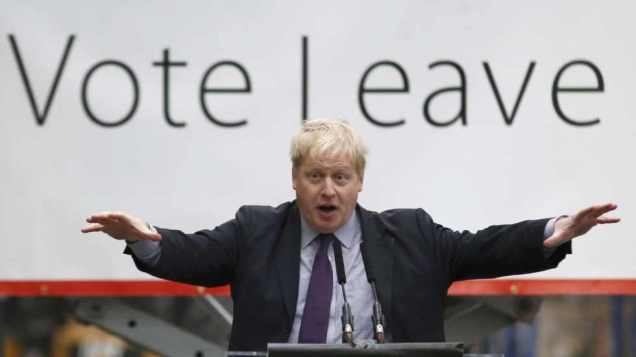
Boris Johnson - Vote Leave - European Union - EU Referendum

Professional and social elites are more likely to oppose Brexit for narrow personal reasons – which makes them bad citizens

James Delingpole writes in the Spectator that the real dividing line when predicting someone’s position on Brexit is where they fall on the posh / oik spectrum:

If you need to know how properly posh you are there’s a very simple test: are you pro- or anti-Brexit?

[..] So there I was at dinner the other evening with a delightful, erudite Old Etonian friend of mine. Let us call him ‘Kevin’ (not his real name). Kevin has an accent so deliciously plummy that if you could somehow tin it and sell it to the Chinese you’d become a billionaire. He is immensely cultured, civilised, wise and sensitive. I agree with him on everything, so naturally, when I asked him his views on Brexit and he launched into his eloquent diatribe on why he believed — and long had done — that the EU was the Abomination of Desolation, I listened in a state of near-ecstasy.

Kevin’s beautifully modulated speech went on for at least ten minutes. (There was hardly a shortage of material.) Then, suddenly, something weird happened. About 30 seconds before the end, Kevin shifted tack, and explained (or actually, hardly explained at all) that for all these reasons the only logical position was for Britain to remain in EU. Something to do with Europe being a lovely place and our having a moral duty to help it set the tone, I think.

And goes on to draw a interesting parallel with the Thatcher era:

What does all this tell us about snobbery and Tory politics? Quite a depressing bit, I’ve begun to realise. You can see much the same sort of thing going on in the Thatcher era. Who were her greatest loyalists, the ones most in tune with her radical programme? Why, they were grammar-school types with slightly suspect accents, such as Robin Harris and Norman Tebbit — not the plummy-voiced grandees such as Heseltine et al, who were the ones who eventually did for her.

This is also true, I think, of the upper social echelons’ attitude towards Nigel Farage. It’s not that they disagree with much of what he says: how could they, when he’s so refreshingly candid and reactionary and un-PC? But they’ve persuaded themselves that, like Ukip, he’s just a bit too spivvy and downmarket to deserve their open affiliation. This enables them to have their cake and eat it: privately enjoying his every home truth but never being tainted by that awkward, embarrassed feeling which tends to accompany frankly expressed views on matters like immigration.

Delingpole sees this as an elitism thing: the closer you are to the establishment or to the top of your field or profession, the more likely to are to have vested in the current  order of things and the more likely you are to sense Brexit (sometimes justifiably) as a threat to your current position.

I think that this probably holds true in all manner of fields, from education (How many university Vice Chancellors are brave enough to bite the hand that feeds them recycled British taxpayer money?) to the arts (for the same reason) to the world of business, which understandably cares a lot about economic stability and not so much about democracy.

But this blog maintains that one’s stance on the EU referendum is also determined by whether you consider yourself a citizen or a consumer first and foremost. As Delingpole’s anecdote makes clear, many of the European Union’s biggest advocates within the British establishment freely concede and attack its antidemocratic nature, but still refuse to countenance leaving the club. They are unable take this logical step because they are thinking with their wallets and their social reputation in mind, rather than the good of the country.

By contrast, someone at the sharp end of globalisation – who has experienced the negative aspects of free trade and free movement of people on their employment, living standards and public services far more than the person living in Mayfair – is more likely to vote on the kind of issues that a thinking citizen should vote on, because they are much more likely to be directly touched by those issues.

As this blog recently noted:

If you have grown up and prospered under the status quo, with Britain as a vassal state of a larger and ever-more tightly integrating political union, then it takes an extraordinary amount of curiosity, empathy or insight to come to any conclusion other than that the EU has been a resounding success on all counts. By contrast, if you are self-employed or work in a semi-skilled or unskilled job at the sharp end of globalisation, you are more likely to be negatively impacted not just by immigration, but by the inability of your vote to effect any kind of meaningful political change in Britain thanks to the cross-party pro-EU consensus.

[..] It is those who think primarily with their wallets, as consumers first and foremost, who are most likely to be susceptible to the Remain campaign’s Project Fear and scaremongering tactics about the hysterically hyped “costs” of leaving the European Union, while those who think as engaged citizens and global stakeholders who are most likely to question the European project.

That doesn’t mean that the Oik (in Delingpole’s parlance) is not also often voting for his or her self interest. They may well want to see Brexit as part of a broader package of counterproductice protectionist measures, which would inevitably do Britain more harm than good. But regardless of their personal motivation, they are more likely to discuss the issue of Brexit in terms of policy and of democracy. The oiks thus often act like a better, more engaged citizens than the elitists who lazily support the Remain camp to virtue-signal their distaste at UKIP while overlooking the democratic question.

As for myself, I enjoyed the delights of a state education, worked to get myself into Oxbridge, but then left Cambridge University and went to Warwick. I suppose all of that places me firmly in the “Oik” category, a position I shall hold with even more pride now that it is also a marker for principled euroscepticism.


European Union - United Kingdom - Britain - Flags

Agree with this article? Violently disagree? Scroll down to leave a comment.

Follow Semi-Partisan Politics on TwitterFacebook and Medium.

Tales From The Safe Space, Part 11 – From A Dissenter Behind Enemy Lines

Conservatives Libertarians Campus

From deep behind enemy lines…

The following lonely cry for solidarity and advice comes from a British student posting on a libertarian Facebook group, and gives a snapshot of the current climate of hostility facing conservative and libertarian students who refuse to buy in to the Identity Politics orthodoxy reigning on university campuses.

The student asks:

Any libertarians or even Tories here struggle with being shut down at uni? I’ve just handed in the most left wing essay I’ve ever written in order to get a good mark, I lost marks in a presentation for stating that the EU arrest warrant is unjust (because we signed up to it, so it’s voluntary according to the lecturer), a girl was literally shaking with rage when I said I will be voting to leave the EU and she had a lot of back up…but it gets to a point where it’s having a negative effect on my education and not sure how to tackle it. Should I just keep my views to myself and write left wing essays? Advice needed. I am treated like a fascist.

Such students increasingly face genuine hostility when they insist on being true to themselves and refuse to hide or disown their sincerely held political opinions, both from peers and even their own professors.

And particularly where students’ academic results are at stake, this real-world hostility stands in stark contrast to the largely imaginary hostility (microaggressions) dreamed up by the Identity Politics brigade as a pretext for demanding ever more restrictions on liberty, and ever more transfers of power to themselves from fawning, deferential university authorities.


Safe Space Notice - 2

Agree with this article? Violently disagree? Scroll down to leave a comment.

Follow Semi-Partisan Politics on TwitterFacebook and Medium.

Tales From The Safe Space, Part 10 – Competitive Grievance Culture

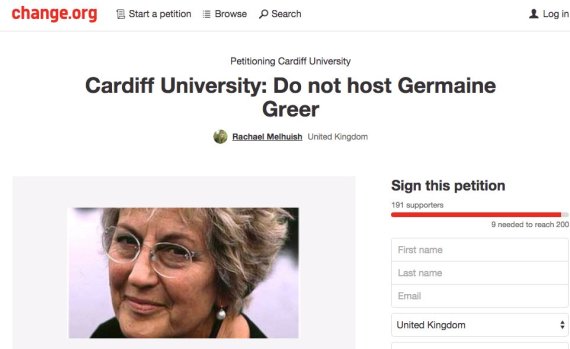
Germaine Greer - Cardiff University

In Britain, the Identity Politics revolution is starting to devour its children. But the same climate of open “competitive grievance” warfare is less pronounced in the United States

One aspect of the Identity Politics / Safe Space culture which genuinely seems to differ between the United States and Britain (following close behind) is the different dynamic which exists between all of the various arrayed grievance groups.

In America, Identity Politics practitioners tend to practice solidarity and stick together – you will often read stories of the various campus cultural centres, women’s centre and LGBT centre (for all must have their own safe space) collaborating together when producing their tedious lists of demands for campus reform.

But in Britain, Identity Politics seems to be a bit more competitive, and you are more likely to see the various victim groups (or generations) acrimoniously competing with one another for the limelight and striving to portray themselves as the most oppressed and victimised (thereby, conversely, granting themselves the most power and authority in the New Order).

In his latest review of Stepford Student activity for the Spectator, Mick Hume outlines the self-cannibalising nature of the Identity Politics movement in Britain:

Barely a week goes by without similar student-eat-student lunacy. Campuses are becoming ‘intersectional’ war zones, where identity zealots compete to see who can appear the most offended and victimised and so silence the rest.

In British universities, a rising ride of intolerance sweeps away anything that might make students feel uncomfortable. A leading anti-fascist campaigner has been ‘no-platformed’ by the NUS black students’ group, who branded him ‘Islamophobic’. The NUS lesbian, gay, bi- and transsexual officer refused to share a platform with Peter Tatchell, doyen of LGBT lobbyists, because he had opposed bans on Terfs (‘trans-exclusionary radical feminists’). After standing up for free speech, it seems, the likes of Tatchell must be denied the right to speak on -campus.

[..] The campus censorship crusade is not craziness so much as a logical extension of the ‘no platform’ policy so beloved of the left. This dates back to the ‘no platform for racists and fascists’ policy adopted by the National Union of Students in 1974. Today it seems more like ‘no platform for racists, fascists, Islamists, Islamophobes, homophobes, Nietzsche, rugger-buggers, pin-ups, rude pop songs, sombreros, sexist comedians, transphobic feminists, Cecil Rhodes or anything at all that might make anybody feel uncomfortable’.

[..] The irony is that many throwing up hands in horror at today’s promiscuous ‘no platform’ antics have themselves tried to ban speech of which they disapproved. It will come as little surprise to those with a sense of history that among the latest ‘victims’ of ‘no platform’ are those who demanded campus censorship in the past, up to and including St Peter of Tatchell. Those who live by the ban can perish by it, too.

As this blog wearily pointed out when Peter Tatchell (of all people) found himself ostracised by a group of virtue-signalling young activists who had the temerity to accuse him of prejudice while themselves standing on the shoulders of Tatchell’s own achievements for their cause:

That’s the rotten core of today’s student identity politics movement. A constant, bitchy, backbiting game of snakes and ladders, with one insufferable petty tyrant rising to the top of the Moral Virtue Pyramid only to be brought down by their jealous rivals, either for no reason at all, or for having unknowingly violated one of the many red lines that they themselves helped to draw across our political discourse.

This phenomenon of competitive grievance within the Identity Politics movement does not currently seem to be as common in the United States, at least to the same degree. The same Hierarchy of Privilege exists in the minds of American devotees of Identity Politics – that much is the inevitable consequence of intersectionality. But at present it does not seem to be leading to the same degree of internal warfare as we now see in Britain, which is odd when one considers that America is traditionally more individualistic and Britain slightly more collectivist. Surely, by this logic, America should be leading the way with a ruthless rat-race between the different groups for the coveted title of “most oppressed”.

One of the things which gives me the most encouragement – besides the sight of feisty, no-nonsense university leaders like Dr. Everett Piper and Chris Patten showing some backbone and standing up to increasingly ludicrous student demands – is the way in which our competitive grievance culture, so pronounced in the Identity Politics debate here in Britain, is now threatening to bring the whole edifice crashing down in an enormous word cloud of overwrought self-pity.

It is curious that the United States – typically in the vanguard of this movement – does not yet seem to be witnessing the same furious self-cannibalisation of Identity Politics preachers as we are currently witnessing on this side of the Atlantic. Perhaps this can be Britain’s contribution to the cure.


Safe Space Notice - 2

Agree with this article? Violently disagree? Scroll down to leave a comment.

Follow Semi-Partisan Politics on TwitterFacebook and Medium.