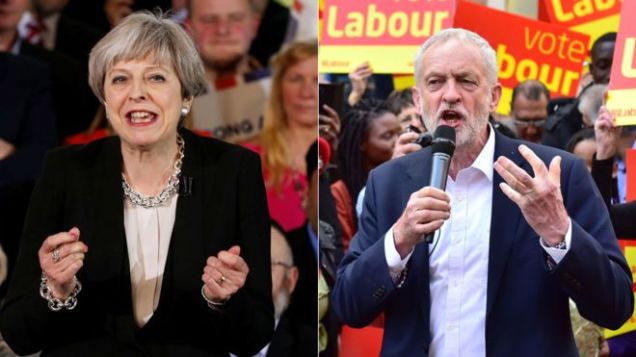
General Election 2017: Decision Time

General Election 2017 - Theresa May - Jeremy Corbyn - Conservatives Tories - Labour

The most depressing choice since I became eligible to vote

I feel a little bit sorry for the poor, eager young Conservative Party canvasser who buzzed our door just as we were sitting down to dinner on the eve of polling day for the snap general election of 2017.

Would I be voting for Theresa May and her team, he enquired after I scampered downstairs to speak with him.

Would I?

Must I?

Can I really?

Yes, I will be voting Conservative in my northwest London constituency of Hampstead and Kilburn, a tight two-way marginal. It will bring me absolutely zero pleasure to do so, and I expect nothing good whatsoever to come from my vote, or a Tory victory here. This is purely an exercise in damage limitation, and even then you could almost still flip a coin.

I told the canvasser as much, and sent him away with a flea in his ear about the fact that I will grudgingly, despairingly vote for Ed Miliband in drag Theresa May over Jeremy Corbyn given the lack of any better option, but that I will be gunning for May’s Coke Zero Conservative administration and watching our somewhat nondescript local candidate like a hawk (should she prevail) as soon as this wretched business is over with.

I analysed the dynamics of the local race in Hampstead & Kilburn soon after the snap general election was called, and I think that the analysis still holds up – though as with most pundits I am probably guilty of giving too much credence to signs of a LibDem revival. What should be an easy gain for the Conservatives with any national swing in their direction is complicated here by the Brexit factor, and the fact that Labour incumbent Tulip Siddiq was staunchly pro-Remain and has pitched herself as saviour of the many “citizens of the world” who live within the constituency. Hampstead & Kilburn voted 75% to 25% against Brexit, and unlike some areas of the country I sense no diminution of that zeal. EU flags still flutter from the windows of several flats along the high street.

The dynamics of the national race are much harder to discern, with polls all over the place and many pundits hedging their bets. We will know soon enough, so I see little point in exposing myself to ridicule by venturing a prediction of my own, but if I had to make one I would expect to see a solid but uninspiring Tory majority, well short of the fabled 100 seat level. Labour’s electoral floor was always higher than some of the more excitable commentators were willing to acknowledge, and after a terrible campaign the Tory majority will likely be dull, workmanlike, unimpressive and find its efficacy increasingly questionable, much like our prime minister.

I have already surveyed the utterly depressing vacuity of this general election campaign several times on the blog – most recently here and here – and have little to add to this gloomy assessment. Obviously the heinous terror attacks in Manchester and London finally succeeded in changing the tone of the race and pushing national security up the agenda. But as with every other subject, discussing which party was best placed to protect Britain from further Islamist terror attacks only served to highlight the ineptitude of both main parties – the Conservatives for having presided over a drop in armed police numbers at a time when events in mainland Europe cried out for large increases, and Labour for their leadership being utterly compromised when it comes to terror apologetics and support for odious, murderous foreign regimes.

Ultimately, we get the political leadership that we deserve, now as much as ever. If you watched any of the televised election debates, watched any of the party political broadcasts, read any of the party manifestos or read any of the campaign literature it cannot have escaped your notice that the vast majority of this campaign has been devoted – particularly among the Left – to bribing the people with the eternal promise of More Free Stuff, always paid for by someone else.

Until terrorism shook us out of our complacency, public services were king in this miserable election campaign. Who could be trusted to spend more on them. Who would better defend Our Blessed NHS. Which party leader would most debase themselves by promising not to be a world leader but a mere comptroller of public services, a glorified parish councillor whose job is to make our every petty complaint their overriding personal concern.

The closest that anybody has come to painting an optimistic vision of Britain’s future is Jeremy Corbyn, and his policies would take us careening straight back to the Winter of Discontent. Theresa May sounded like a malfunctioning android for much of the campaign (strong and stable, strong and stable, strong and…) which actually turned out to be better than what came next, because when the Manchester and London terror attacks finally jolted the prime minister’s operating system out of it’s infinite loop she started evoking a stark, dystopian portrait of a country where civil rights are burned in sacrifice for the chimerical illusion of perfect safety, while the state perches over the shoulder of every citizen as a perpetually watchful, auxiliary parent.

No party has properly got to grips with the challenge of Brexit, specifically the need to ensure that we do not crash out of the EEA with no deal and find ourselves paralysed by a million non tariff barriers that even now many ministers and journalists are cheerfully pretending do not exist.

No party has yet arrived at a sensible, proportional response to the attacks on our country by Islamist terrorists – Labour scored some opportunistic points at the expense of the Tories for presiding over a fall in total police numbers but cannot be taken seriously thanks to the views of their senior leadership, while the Tories under Theresa May have made a few encouraging sounds about finally confronting the Islamist ideology and its roots in Britain’s Muslim communities but then pivoted dramatically to draconian talk about squashing civil liberties in the name of safety.

But most importantly, not a single political party – not even the minor ones or the nationalists – have asked anything of us, the British people. Apparently our job as citizens is just to sit back and petulantly demand More Things while politicians scurry around making false promises to deliver them to us. Nobody has called us to anything resembling a higher purpose or a common endeavour – something which matters more than ever as we confront an Islamist terror threat which emanates from non-assimilated communities who presently feel little connection to the country which gives them life and liberty.

It has become fashionable among political commentators to drone on about how the new division in politics is not between left-wing and right-wing, small government or big government, but rather between globalist and nationalist, those who want to keep vesting power in the current international or supranational institutions and those who believe that the status quo is not working, either for them or for the country as a whole. And while I would quibble with the idea that the left/right dichotomy is no longer important or relevant, of course there is a superficial truth to the globalist/nationalist idea which makes it easy to analyse the likes of Brexit and the rise of Donald Trump.

(Perhaps one of the reasons I resist this new way of framing the debate is because it cuts people like me totally out of the picture – people who are open to the world, comfortable with globalisation and immigration but who recoil from the antidemocratic EU and efforts to foist supranational government on an ignorant or unwilling population by stealth. Voting for Brexit was perhaps the most profoundly liberal thing I have done in my life, and to see that most unexpected victory portrayed to the world by self-assured New York Times reporters as some kind of reactionary hankering for lost empire is immensely frustrating, as being slandered and misrepresented with little ability to correct the record nearly always is).

But British politics is currently so debased, so superficial, that we are not even really having this newfangled globalist/nationalist conversation in a serious way. Brexit, ostensibly the reason for having a snap general election in the first place, has been largely drowned out of the debate, first by the aforementioned tedious obsession with public services and what each one of us can get out of government, and then by the twin terror attacks and the pivot toward national security. And in place of this discussion we are wallowing almost exclusively in the politics of Me Me Me.

What will government do for me? What can this candidate offer me that the other candidate won’t? How will this manifesto affect my mortgage rate, my benefits, my private school fees, my inheritance, my commute, my GP waiting times, my ability to access WiFi on the slow train from Crewe to Stoke. It has all just been so desperately small and parochial.

Or as I put it the other day:

Vote for me, I’ll keep you safe from terror. Just gonna need your Facebook password, please. No, vote for me, I’ll keep the economy strong because we all know the only point of a strong economy is to raise more tax to spend on the NHS. Liar! You want to destroy Our Precious NHS! You want people to die in the streets when they get sick, just like they do in America. No, we are now the true party of the NHS! Anything for Our NHS, oh god, anything and everything, my very life for Our Blessed NHS.

Oi! Look over here, free university tuition! Yeah, it’s subsidised by the taxes of other people who never went to university and whose earning power has not been boosted through having a degree, but still. Fairness! Young people are the future! No, no, no, it’s all about the environment. That evil party wants to build an experimental nuclear fusion plant in your grandmother’s basement, and frack for oil in the middle of Lake Windermere. But we will bulldoze nasty, Brexit-supporting Stoke-on-Trent and replace it with a massive solar panel field. Much better.

No, look over here! We will bring back British Rail; remember how great British Rail was? Who needs Pret when you’ve got a trusty British Rail egg and cress sandwich? Nice and warm, of course, just like the good old days. Let’s have car-commuting taxpayers in Gainsborough subsidise the travel of London-based city commuters, because fairness. British Rail? Scoff. I’ll see your British Rail and raise you British Leyland! Woohoo – nationalisation, baby! For the Common Good.

All immigrants are a godsend, to the last man. If it weren’t for immigrants, your inflamed appendix would have been dug out by a native-born, chain-smoking school dropout with a can of special brew in his spare hand, and don’t you forget it. No, of course we should have a sensible, measured conversation about immigration. It’s just that I’ll stand here and shriek into the TV cameras that you’re an evil, divisive racist if you disagree with me. But please, go ahead. No no, we should listen patiently to people’s concerns and then carefully explain to them why they are wrong. People love that.

Oh, you? No dear, you don’t have to do anything. We, the politicians, are here to promise you stuff, to pander to your every passing whim. If I’m prime minister, I will make it my overriding personal concern to fix the broken chairs at your GP surgery waiting room – I’ll come round and do it myself, I’ve got some tools in the shed – and make sure that New British Rail adds free wifi to your single-carriage metro train between Stoke and Crewe. Seriously, no worries. I’ll call the boss at 6AM every day until it happens. NATO summit? Geopolitics? Statecraft? Boring! Why be a statesman when I can be a glorified town councillor for 65 million insatiable people? I’m on the case for you, and your every last petty concern. I’ll read foreign policy briefings when I’m on the can, that stuff doesn’t matter.

Heavens no, of course we don’t need to properly empower local politicians to make decisions in the local interest, raising and spending taxes independently of Westminster. For I am running to be Comptroller of British Public Services, and my sole job, my only care in the world is to make your passage through life as easy and painless as possible. You and 65 million of your fellow citizens. The buck stops with me, because public services are everything. After all, Britain didn’t do anything of value or renown on the world stage until we starting implementing the Beveridge Report. Not a damn thing. And now we’ve jacked up the size of the state so much and you have to deal with it so bloody frequently that we’d darn well better make sure you come skipping away happy from every last interaction – too many bad experiences for you are political suicide for us.

I just can’t get inspired by any of this transactional nonsense. Thanks partly to Brexit, but also to the general populist rejection of the former centrist status quo, we are living in momentous times. But our politics refuses to catch up with the moment, to acknowledge this break from the past and the need for bold new thinking, not tinkering around the edges and having the same tired old debate about Saving Our NHS.

I’m sometimes accused of being too down on politicians in general, of setting my bar of approval so high that everybody is doomed to disappoint. I think my critics are a little harsh. Who can seriously survey the British political scene and rejoice at the options before us as we go to the polls on June 8?

Who can take comfort from the fact that a Conservative leader facing a terminally dysfunctional opposition decided, inexplicably, to move panderingly to the Left rather than boldly to the transformative Right?

Who can take comfort from the fact that one of the few Labour politicians with anything approaching conviction is simultaneously rendered unelectable by those very same convictions and principles, disturbing as many of them are? Or the fact that the Labour Party has drifted so far away from its one-time roots that many activists now despise their patriotic, pro-Brexit former working class base?

Who can take comfort from the fact that the Liberal Democrats have decided to demonstrate their liberal credentials by standing in proud, unrepentant and implacable opposition to the greatest electoral mandate in British history?

Who can take comfort from the fact that Scottish Nationalists, despite having lost an independence referendum less than three years ago and pledged not to hold another in a generation, have decided to keep on trying ad infinitum to break up our United Kingdom, or that the people of Scotland look set to return a massive contingent of their dubious MPs to Westminster despite that party’s utterly appalling record in Holyrood government?

The only people who can possibly be mustering any enthusiasm for this election are the naive young lefties who truly believe that Theresa May is orchestrating a holocaust of the sick and disabled and that Saint Jeremy Corbyn is coming to cleanse us of our sins, or equally idealistic young Toryboys who hope that sharing enough “strong and stable” infographics on social media might one day lead to a job as an MP’s bag carrier.

I have nothing original to close with as I get ready to head to the polls, so I will recycle the conclusion of another piece I recently wrote:

Yes, I’ll vote Tory this time. But Lord knows I’ll feel unclean and deeply depressed while doing so, with zero expectation that it will result in anything positive for the country and with considerably more admiration for the man I hope to see defeated than the woman I barely want to win.

Britain, we can do better than this. Probably not much better realistically, at least right now – because as a society we have fallen and been infantilised to such a worrying degree – but still we can do better than these paltry political party leaders. They’re all just so very…small.

Somebody, anybody else, please step up soon. Deep down, as a nation we want more than is being offered to us by Jeremy Corbyn, his provincial Mini Me’s and a confused Tory leader who thinks the path to victory involves dismantling – rather than building upon – the legacy of our greatest post-war prime minister.

Step forward, find the spirit of public service and call us to action, too. Ask us to set our sights beyond our own narrow interests, beyond our bank balances, our bin collections, our next step on the property ladder, the feelings of our intersectional identity groups, the fate of our free mobile roaming calls in Tuscany. Help give us a new purpose, a common purpose, a higher purpose.

Set us a challenge.


I will be live blogging the election results and aftermath here on Semi-Partisan Politics from Thursday evening through to the next day. It promises to be a very depressing and underwhelming event. Do please join me.
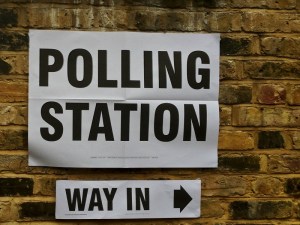
 

General Election 2017 - polling station sign

Support Semi-Partisan Politics with a one-time or recurring donation:

Agree with this article? Violently disagree? Scroll down to leave a comment.

Follow Semi-Partisan Politics on TwitterFacebook and Medium.

A Few Words On The London Bridge And Borough Market Terror Attack

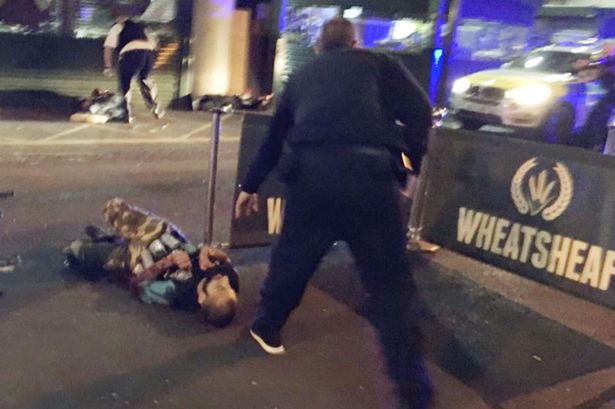
London Bridge terror attack - fake suicide vest

Finally, a step change in our response to Islamist terrorism. But this new authoritarianism is not the answer

This one struck a little close to home. For several years it was my habit to walk across London Bridge from the tube station to the north side, and then on to my office on Fenchurch Street.

Sometimes I would drink after work at the Barrowboy and Banker pub at the foot of the bridge, or go to choral evensong at neighbouring Southwark Cathedral – still regretfully closed some four days after the terrorist attack on London Bridge and Borough Market. My wife now works in the shadow of the Shard tower, and only today was her firm finally allowed to re-enter their office building.

It is quite surreal to see places which are so familiar splashed onto television screens in such a grisly context. One of the smartphone-recorded videos played most often on cable news – showing police ordering stunned bar patrons to the ground – was particularly jarring, as we had celebrated a friend’s birthday at that vaulted beer hall just a few months ago. It is no longer just the bus or the tube – places where we have been conditioned to be wary since the days of the IRA. Now we are to expect violent death anywhere, a car swerving onto the pavement with too little time to react, or being confronted by a knifeman while eating at a downtown restaurant.

But enough of that – it is tempting to make these terror attacks all about us, when really we should focus on those people whose lives were deliberately, callously snuffed out by the onrushing vehicle or the blade wielded by the Islamist fanatic. We rightly praise the heroism of our first responders, the rookie policeman who took on the terrorists alone armed with nothing but his truncheon, and the paramedics and civilians who rushed to help as soon as they were alerted to the carnage.

And yet after the proper acknowledgements and the less-welcome platitudes, the same questions beg to be answered.

Firstly, why did the Metropolitan Police and numerous politicians make such a big show of advertising that it took eight minutes from the first 999 call being received to armed police arriving at the scene to terminate the terrorists? No doubt this was supposed to reassure. But does it not also advertise to every other terror cell currently lurking undetected (or shockingly unmonitored) that in one of the most central and well-protected parts of the country they will have at least an eight-minute window to inflict as much bloodshed as they are able?

Eight minutes sounds remotely laudable because the terrorists were armed only with a vehicle, blades and some preposterously, evidently fake suicide vests. But what if the next terror cell has access to firearms? We rightly applaud the quick-thinking revellers who repelled the attack by throwing chairs and pint glasses, but these projectiles are much less effective against even a single low-calibre gun. What if the next marauding terror attack takes place not in well-protected London, but in a leafy Midlands market town or a provincial city without armed police on 24/7 patrol?

This attack could have been much, much worse. It could have been a Bataclan-level massacre, had the terrorists stormed a pub or restaurant with few exits or escape routes, armed with a semi-automatic weapon. Worse even, because so few British police are armed. Having elite units on constant standby is all well and good, but it is unreasonable to expect a standard unarmed police constable to be the frontline of our response to a mass casualty terror attack.

And no, the medium and long-term solution is not to deploy more armed forces on the streets – though this may be necessary, given the shocking decline in the number of armed police officers. Though the net drop since 2010 (approximately 700) is not that great as a raw number, the idea that the numbers were falling at all given events in mainland Europe is simply staggering. Operation Temperer (or tempura, as I first heard it – like we were going to deep fry the terrorists) may be a necessary stop gap, but we need to look again at whether it is practical to maintain a largely unarmed police force.

We should look too at whether it is reasonable to deny the people the opportunity to defend themselves with legally purchased firearms when the state proves itself time and again to be so unwilling and unable to protect them from lethal harm, either by facing up to the toxic Islamist ideology that fuels the present terror threat or by ensuring that the security services make best use of the vast amounts of data they already collect about all of us. Of course, this discussion will never happen. But it should.

If nothing else, we seem finally to have pivoted from “terror attacks have nothing to do with Islam!” to “something must be done”. And about time, too. Only days before the London Bridge attack, I wrote a piece (piggybacking on Brendan O’Neill) decrying the fact that all of the left-wing party leaders practically wet themselves in shock and outrage when UKIP’s Paul Nuttall dared to talk about the Islamist (not Islamic, Islamist) threat. If nothing else, perhaps we have finally pierced that particular veil of idiocy. The idiots remain, but the general public is no longer in thrall to their denialism.

And yet the undiscovered country of Taking Firm Action may be almost as bad as the state of denial and complacency which is finally being dispelled.

The danger was always that when the government finally roused itself to righteous anger in the face of Islamist terror, the response would be one of jackboot authoritarianism rather than incisive, strategic action. As Home Secretary under David Cameron, Theresa May was quick to take advantage of the various terror attacks in Paris to push for sweeping new powers for the security services, and now elevated (above her competence, it seems) to prime minister she is gunning for civil liberties and pesky human rights laws all over again. But this time, Theresa May is swinging an even bigger emotional cudgel thanks to the immediacy and proximity of the attacks in Manchester and London.

The security services are able to gather vast amounts of metadata on all of our communications with barely a whisper of public dissent, and can begin spying on an individual with no judicial approval required, just a ministerial signature – essentially, the executive overseeing itself. They could not have a more favourable political and operating environment. And yet despite having some of the most draconian surveillance laws in Western Europe, somehow three individuals were able to mount an attack – one known to security services but not considered an active threat, and another flagged as an extremist by the Italians but apparently ignored by British security services.

This is what happens when you expand the haystack too much, when you collect so much data and intelligence on everything that moves that it becomes impossible to sort through the information, make sense of it and hone in on the most serious threats. Yes, there is also an issue of resourcing – as with the armed police, the government has been complacent and refused to spend money where it should be spent – but much of the problem surely comes from trying to cast too wide a net at the expense of watching those already caught in it.

And yet Theresa May now wants to force internet companies to undermine the encryption of their own services so that the security services can gather even more data and make the intelligence haystack even more unwieldy and difficult to search for needles. And the prime minister as a thousand and one other draconian ideas up her sleeve, like the extension of detention without trial from 14 to 28 days – not because such a revised law would have prevented the Manchester and London attacks, but just because she doesn’t want to let this crisis go to waste without extending the power of the state even further.

The only grace is that the prime minister’s desire to control the internet will likely come a cropper as soon as she tries and fails to secure international cooperation. To a bizarre and frightening extent, our civil liberties may now partly depend on the stubbornness of Angela Merkel, Emmanuel Macron and (yes) Donald Trump in resisting Theresa May’s maniacal efforts to regulate the online world.

Concerning too is the fact that we are suddenly talking about the internment of suspected terrorists for whom there is too little evidence to seek prosecution. Even as the news of the London Bridge attacks was coming in, strident calls were made on Twitter for the police to “bring in” everybody currently on the terror watchlist and presumably detain them without trial in perpetuity. Perhaps at a new British Guantanamo Bay on the Isle of Man. Then the omnipresent Katie Hopkins went on Fox News to repeat the call for internment, while Nigel Farage followed, warning that “people” would soon start to call for this step if the government failed to get a grip. Well, they certainly will now that the idea has been so helpfully injected into the political discourse. Thanks, Nigel.

Astonishingly, there seems to be support for such a move from some sober conservative voices in America, which rather makes me question how strong their much-vaunted love for the Constitution can possibly be, when they encourage Britons to enact draconian laws which would rightly never pass muster in the United States.

I had a thoughtful exchange with the National Review’s Jim Geraghty on the related subject of whether merely expressing support for Islamist ideals should be criminalised – Geraghty initially expressed support but walked his stance back somewhat following my interjection, and we more or less came to a meeting of minds.

Sadly, the conversation elsewhere has not been nearly as civil, on either side. Of course anger is entirely appropriate when our fellow citizens are killed in cold blood by a religiously-inspired terrorist – young girls enjoy a pop concert in Manchester or Londoners of all backgrounds enjoying a Saturday night in town. But this anger has to be meaningfully directed, otherwise it will either achieve nothing or give known authoritarians like Theresa May the pretext they need to expand the state’s power.

But is this really who we are, as a people? Is this really who we want to be? A nation comprised of either self-abnegating terror apologists whose first reaction on hearing of an Islamist attack is to jump on social media to declare “nothing to do with Islam!” and patrol for “Islamophobic” comments, or jumpy authoritarians who want to do away with even the most basic civil rights in pursuit of the chimera of perfect safety?

We have certainly been called to action and shocked out of our complacency by the hideous events in Manchester and London, at long last. But at present there is precious little to suggest that we will start to move in the right direction now that we are finally awake.


London Bridge terror attack

Support Semi-Partisan Politics with a one-time or recurring donation:

Agree with this article? Violently disagree? Scroll down to leave a comment.

Follow Semi-Partisan Politics on TwitterFacebook and Medium.

George Orwell’s “1984” Will Receive A Public Reading In London – But Have We Forgotten The Message?

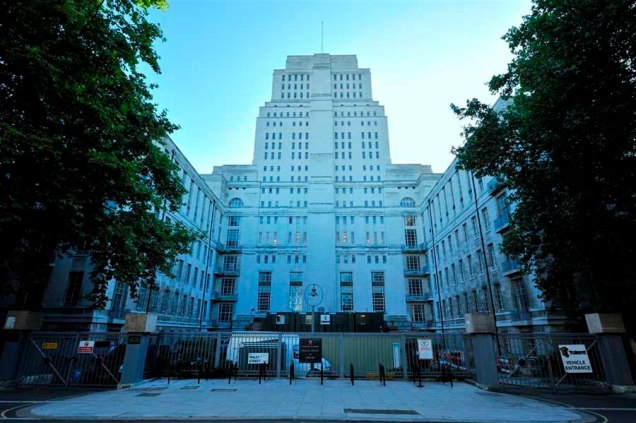
Senate House London - 3

On June 6, hundreds of people will gather at London’s Senate House as a parade of actors, politicians and other notables read George Orwell’s dystopian novel “Nineteen Eighty-Four” in its entirety. But how many of us actually understand Orwell’s message?

Besides a few posts on Twitter, I haven’t written anything about the heinous Manchester terrorist attack. What more is there to say? The locations change, as do the names and backgrounds of the victims, but the rote mourning processes, the denialism and the furious virtue-signalling always remains the same. Why jump into that toxic mêlée all over again?

But I did watch the BBC general election leaders’ debate on television earlier this week, when naturally the subject of terrorism and Britain’s proper response came up, and I was depressed as ever by the paucity of the “discussion” that took place.

Brendan O’Neill picked up on the section of the debate which also caught my attention, writing in Spiked:

Consider BBC TV’s General Election debate this week, which brought together leading figures from the main parties to talk about the problems facing Britain. There was an extraordinary moment during the debate. A member of the audience asked a question about security post-Manchester and the leaders talked about the need for better policing and intelligence and also for rethinking British foreign policy. It is possible, said Labour leader Jeremy Corbyn and SNP deputy leader Angus Robertson, that our meddling overseas has exacerbated the terror problem.

Then UKIP leader Paul Nuttall chimed in, and he said this: ‘Politicians need to have the courage to name [the problem]: it’s Islamist extremism.’ The reaction was swift and pretty scary. Nuttall was jeered at by the other panellists. ‘NO!’, one said. ‘Paul, Paul, Paul, Paul’, interjected Lib Dem leader Tim Farron. Nuttall has gone ‘straight for Muslims’, said a furious Robertson. Green leader Caroline Lucas said Nuttall was being ‘completely outrageous’ with this suggestion that ‘the violence in Manchester was somehow representative of Islam’.

Nuttall tried to explain himself. ‘Islamism, Islamism, Islamism’, he said over the din that his comments provoked. His point was that he had not said the word ‘Islam’. He hadn’t even used the phrase Islamic terrorism; he had said Islamist extremism. But his protests went unheard. The other leaders and some in the audience continued to shout over him and drown him out; to accuse him of being outrageous and prejudiced for using the phrase ‘Islamist extremism’.

This is an almost Orwellian level of linguistic denialism. For ‘Islamist’ is a perfectly legitimate and apt word for the terrorism that is impacting on cities in Western Europe. The Oxford dictionary’s definition of ‘Islamist’ is an ‘advocate or supporter of Islamic militancy or fundamentalism’. Is this not the right name for those in Paris, Brussels, Nice, Manchester and elsewhere who have carried out extreme acts of violence in the name of the Islamic State or radical Islamist ideology? To boo and demonise Nuttall for using the word ‘Islamist’ to describe those who blow themselves up in the name of ISIS is as nuts as it would be to boo and demonise someone for saying Oswald Moseley was a fascist: these are simply the correct words.

The response proved Nuttall’s point, which was that few politicians have the nerve even to say the word ‘Islamist’, even though it’s a political term in the actual dictionary. This live-TV pummelling of Nuttall for saying ‘Islamist’ really confirmed what the accusation of Islamophobia is all about today: it isn’t about protecting Muslims from genuine prejudice or abuse but rather has become a means for suppressing difficult political and moral questions about our society, its values and the divisions that exist either between communities or within them. That someone can be called ‘outrageous’ and anti-Muslim for using the phrase ‘Islamist extremism’ shows how deep and worrying our instinct to silence discussion about terrorism has become.

There isn’t much I would add to Brendan O’Neill’s warning, except for this: on 6 June, there will be a live public  reading of the entirety of George Orwell’s “Nineteen Eighty-Four”, given at London’s Senate House. There has of course been a significant spike in interest in reading 1984, driven predominantly by people who believe that Brexit and the rise of Donald Trump herald the end to what was apparently a Utopian liberal era, and the start of an unprecedentedly authoritarian dystopian future.

The new converts to George Orwell seem to believe either that the architects of these particular geopolitical events used 1984 as some kind of How To guide, or that they themselves might find some clues within the novel to aid their survival during the coming apocalypse.

But here’s the thing. I’ll wager all the money in my pocket that many of the people who show up to this public reading of 1984, or who watch the live stream, will be the same people who never really had much to say about civil liberties violations in the War on Terror (at least when Democratic presidents and Labour prime ministers were in charge), or about the extra-judicial killing of American citizens by drone strike under Barack Obama.

I’ll wager that many of them will have said nothing when their fellow citizens have been tried and imprisoned for singing songs, writing offensive signs, asking impertinent or stupid questions, posting “offensive” tweets or expressing conservative religious views in the town square.

But I’ll also wager that a fair number of them will have reported posts that they found “offensive” on social media in an attempt to get the offending statements removed and the posters banned. I’ll wager that many of the younger student types will have called for The Sun and The Daily Mail to be banned from their university campuses, and for their Students Unions to stop playing certain songs with “problematic” lyrics. I’ll wager that they were the first to demand that boxer Tyson Fury be banned from boxing for holding the wrong views on family values, and to call for attention-seeking ex-LBC radio host/troll Katie Hopkins to lose her job last week.

And I’ll wager that a good number of these 1984 listeners, fearless young defenders of society against creeping authoritarianism that they are, will have cheered along when Tim Farron, Angus Robertson, Caroline Lucas and the rest of the lefty nodding head brigade ripped into Paul Nuttall for the high crime of correctly identifying the deadly ideology which killed 22 young people at an Ariana Grande concert, maiming 116 more.

I’m sure their hearts just swelled with pride and warm affirmation as their left-wing political heroes put that nasty, evil brute Paul Nuttall in his place and shouted down his vile, dangerous hate speech. I bet they sincerely believed that doing so was a great victory for Hope over Hate, that this was how society should best respond to terror attacks. By furiously avoiding looking at the source, assigning the blame to unidentifiable random “evil”, singing some John Lennon and angrily vilifying anybody who dared to react in a different way (such as by looking to identify and name the real problem so that it might be tackled and reduced).

And hearts aglow with courage and moral righteousness, many of these same people will assemble at the foot of London’s Senate House on June 6 and fortify themselves by listening to George Orwell’s stern literary warning about the dangers of groupthink, thoughtcrime, Newspeak and censorship, utterly oblivious to the fact that they are actively serving as advance guard to the Ministry of Truth.


George Orwell - 1984 - Thought Criminal - Almeida Theatre

Support Semi-Partisan Politics with a one-time or recurring donation:

Agree with this article? Violently disagree? Scroll down to leave a comment.

Follow Semi-Partisan Politics on TwitterFacebook and Medium.

General Election Leaders’ Debate 2017: We Get The Politicians We Deserve

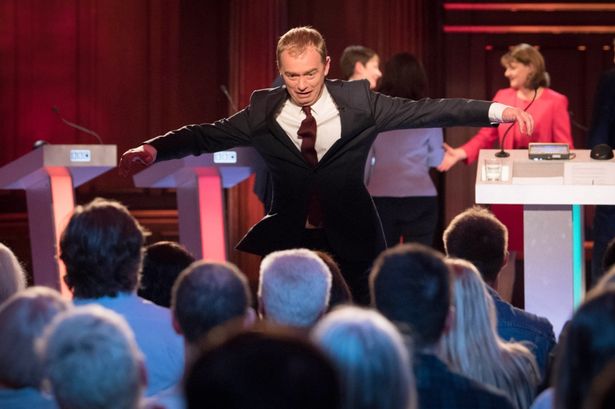
BBC Election leaders debate 2017 - Tim Farron jumping from stage

Think that all of these TV political debates are starting to look and sound the same? You’re not wrong. But that’s because we keep demanding (and rewarding) the same destructive behaviour by politicians

Does this sound familiar? It is a distilled version of what we all heard at the televised BBC general election debate in Cambridge this past Wednesday, and at nearly every TV election debate that has ever taken place in this country since we imported a dumbed-down version of American presidential debates back in 2010:

Vote for me, I’ll keep you safe from terror. Just gonna need your Facebook password, please. No, vote for me, I’ll keep the economy strong because we all know the only point of a strong economy is to raise more tax to spend on the NHS. Liar! You want to destroy Our Precious NHS! You want people to die in the streets when they get sick, just like they do in America. No, we are now the true party of the NHS! Anything for Our NHS, oh god, anything and everything, my very life for Our Blessed NHS.

Oi! Look over here, free university tuition! Yeah, it’s subsidised by the taxes of other people who never went to university and whose earning power has not been boosted through having a degree, but still. Fairness! Young people are the future! No, no, no, it’s all about the environment. That evil party wants to build an experimental nuclear fusion plant in your grandmother’s basement, and frack for oil in the middle of Lake Windermere. But we will bulldoze nasty, Brexit-supporting Stoke-on-Trent and replace it with a massive solar panel field. Much better.

No, look over here! We will bring back British Rail; remember how great British Rail was? Who needs Pret when you’ve got a trusty British Rail egg and cress sandwich? Nice and warm, of course, just like the good old days. Let’s have car-commuting taxpayers in Gainsborough subsidise the travel of London-based city commuters, because fairness. British Rail? Scoff. I’ll see your British Rail and raise you British Leyland! Woohoo – nationalisation, baby! For the Common Good.

All immigrants are a godsend, to the last man. If it weren’t for immigrants, your inflamed appendix would have been dug out by a native-born, chain-smoking school dropout with a can of special brew in his spare hand, and don’t you forget it. No, of course we should have a sensible, measured conversation about immigration. It’s just that I’ll stand here and shriek into the TV cameras that you’re an evil, divisive racist if you disagree with me. But please, go ahead. No no, we should listen patiently to people’s concerns and then carefully explain to them why they are wrong. People love that.

Oh, you? No dear, you don’t have to do anything. We, the politicians, are here to promise you stuff, to pander to your every passing whim. If I’m prime minister, I will make it my overriding personal concern to fix the broken chairs at your GP surgery waiting room – I’ll come round and do it myself, I’ve got some tools in the shed – and make sure that New British Rail adds free wifi to your single-carriage metro train between Stoke and Crewe. Seriously, no worries. I’ll call the boss at 6AM every day until it happens. NATO summit? Geopolitics? Statecraft? Boring! Why be a statesman when I can be a glorified town councillor for 65 million insatiable people? I’m on the case for you, and your every last petty concern. I’ll read foreign policy briefings when I’m on the can, that stuff doesn’t matter.

Heavens no, of course we don’t need to properly empower local politicians to make decisions in the local interest, raising and spending taxes independently of Westminster. For I am running to be Comptroller of British Public Services, and my sole job, my only care in the world is to make your passage through life as easy and painless as possible. You and 65 million of your fellow citizens. The buck stops with me, because public services are everything. After all, Britain didn’t do anything of value or renown on the world stage until we starting implementing the Beveridge Report. Not a damn thing. And now we’ve jacked up the size of the state so much and you have to deal with it so bloody frequently that we’d darn well better make sure you come skipping away happy from every last interaction – too many bad experiences for you are political suicide for us.

All hail the NHS!

All hail the NHS!

All hail the NHS!

The problem is not that television debates cannot be substantive – they can. While US presidential elections in recent years have devolved into tense shouting matches with cringeworthy one-liners and a partisan audience clapping and whooping along like trained seals, this was not always the case. Go back even a few election cycles and you’ll find issues discussed in depth and sometimes even thoughtfully, even if they still adhered to the ludicrous “one minute response and 30 second counter-response” format.

No, the problem is with us. As I wrote in more depth immediately after the BBC’s general election party leaders’ debate in Cambridge, we have been trained and willingly led to a place where we expect our politicians to do nothing but flatter and bribe us all day long. We sit in the television studio audiences at Question Time or other venues, sullenly waiting to hear how politicians will come up with new ways to ease our passage through life, divesting ourselves of more and more responsibility with every passing day.

(It also doesn’t help when you have four irrelevant party leaders clogging up the stage who command no more than a handful of MPs between them and whose tiresome leftist bloviating and virtue-signalling hugely detracts from what should be a no-holds-barred slugfest between the two people with a plausible chance of running the country.)

A friend reminded me on Facebook that immediately after the BBC election debate, they aired an ad featuring a montage of British voters staring into the camera and barking out phrases such as “But what will the parties do for me?”, “What’s in it for me?” and “How will these policies affect me?” – the clear inference being that by watching the BBC’s election coverage we can learn all about how policy will personally benefit us, Number One, me me me. Because that’s all that matters. No need for voters to think in a broader, more strategic way about what’s good for the country or society. No, just keep demanding more and more goodies for ourselves.

But then a wise commenter made the following observation on Twitter:

Interesting but the ‘public’ is not infantilised, people talk about political, social & ideology at length & intelligently…

… arguably it’s the media that does the infantilising. People are patronised by the broadcasters.

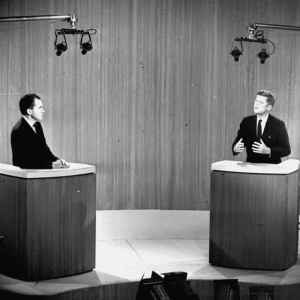
True, to an extent – possibly even a large extent. Go back to the Kennedy – Nixon debates, for example, and you’ll find a serious, measured discussion of issues. Seriously, watch them. Even as recently as two election cycles ago you might expect a proper in-depth discussion of foreign policy, war and peace, national security, America’s place in the world, economic policy, domestic and social policy. The standard has of course greatly declined of late – as anybody who watched Donald Trump and Hillary Clinton fling faeces at each other for 2 hours on three separate evenings last year can attest.

And it is hard to point to anything other than the fracturing of the media landscape – something which should have been a promising development but which has led instead to shrill partisan outlets of all stripes catering to their niche audience’s basest fears and prejudices. And that goes for “prestige” outlets like the Washington Post and New York Times, with their soft and persistent bias, as much as it does with those outlets that peddle in outrageous, obviously fake news.

Interestingly, the media market in Britain is not yet as fractured. The BBC (particularly the news website) and the major newspapers (whose websites have worked tirelessly to suppress the independent blogosphere) still have considerable reach. There are no strongly partisan news channels, and political sites have much smaller reach. But like America, Britain’s politics has been upended by the internet and social media. And just as we now expect our Facebook, Twitter or Instragram feeds to serve up a constant diet of things that we like and with which we already agree, so we now seem to demand the same of our politicians. Nothing challenging, nothing which shocks us out of our preconceived ideas and prejudices, nothing which threatens to change or undermine our worldview.

The soundbite-ification of the television news also certainly doesn’t help, and is the principle reason why there has not been a good or memorable political speech by a major British politician (at least outside the House of Commons) in the living memory of anybody my age. When speeches are written so that the campaign’s key message is included in every other line, to ensure it gets picked up in a 30-second TV news piece, they essentially become meaningless word clouds of platitudes and focus-grouped phrases. Strong and stable, anyone? It is very difficult to inspire, to lift people’s thoughts above their own petty daily concerns to higher and more noble subjects when you have to keep saying “coalition of chaos” twice in each paragraph.

But again, who is to blame? Yes, it’s the fault of the media and the politicians who accept the terms of engagement and play along with the whole artificial construct. But it is also our fault. We watch the news bulletins. We buy the newspapers and take out the web subscriptions. We reward the godawful work that so many establishment Westminster journalists do, day in and day out.

Expecting the herd to change on their own is a recipe for disappointment. We need one brave politician, or perhaps a few, to just stop playing along with the rules. To stand up and give speeches where audiences and journalists actually have to listen to the whole thing before they understand the purpose or can write their Op-Eds. Labour leader Jeremy Corbyn probably comes closest at present. As anathema as his politics are to this blog, Corbyn is capable of giving a speech – such as the one to the Durham Miners’ Gala earlier this year – which is actually formed in complete sentences and paragraphs, not one-liners and soundbites. The fact that Jeremy Corbyn is a conviction politician with a coherent worldview goes a long way to making this possible, and also explains why Theresa May so often sounds like a malfunctioning android.

Of course, another politician to break the mold is Donald Trump – but not in a good way. His long, rambling and unpredictable speeches were also free of canned lines and soundbites (or at least pre-planned ones) but he kept the television news networks transfixed, giving him hours of unearned airtime simply because you never knew what he might say next or what incendiary thing he might do. But Trump also won the presidency by promising things which he could likely never deliver, and many of which are actually deeply un-American, such as security over opportunity, protection from every conceivable harm and turning back to an easier past time rather than boldly facing the future.

So clearly what we need to do is genetically engineer a hybrid of Jeremy Corbyn and Donald Trump, and indoctrinate them with some good solid small-government impulses before letting them loose on Westminster. We need somebody with Jeremy Corbyn’s consistent worldview and fixed principles, though each of those principles should be reversed almost 180 degrees. And we need somebody with Donald Trump’s watchability and pseudo-charisma, but only after extracting the egotism, ignorance and vengefulness. And when these two forces collide, like matter and anti-matter, it will create more power and political energy than we can possibly imagine.

Okay, maybe not. But something needs to give – or somebody needs to step up; somebody who is not a cautious careerist who intends only to get to the top of the Westminster pole by being as blandly inoffensive as possible and by playing along with the media’s prescribed game. Someone needs to take a chance and dare to hope that the British people might actually respond well to somebody who talks up to them rather than down to them, who levels with them about difficult issues and necessary sacrifices, and who can present an attractive and believable vision of a future Britain worth striving to attain.

The alternative is that we will continue being bribed, flattered and lied to by a cohort of vacuous and craven politicians who never even think of calling us to any form of real citizenship or higher common purpose because their own political and moral horizons have been so limited by the infantilising system under which we labour. A system which encourages the people to shout petulantly for treats like angry toddlers with a gun, and exhorts our would-be leaders to frantically dance for us in response.

There may just be a small window of opportunity before the dust settles from the election results on 9 June. Future Thatcher, if you are out there, it’s time to emerge…


john-f-kennedy-richard-nixon-first-televised-american-presidential-debate

Support Semi-Partisan Politics with a one-time or recurring donation:

Agree with this article? Violently disagree? Scroll down to leave a comment.

Follow Semi-Partisan Politics on TwitterFacebook and Medium.

General Election 2017: The Unbearable Light-weightedness Of British Politics

rainbow unicorn

We can’t go on like this

I’m just going to come out and say it: given the appallingly weak options available, Jeremy Corbyn probably deserves to be the next prime minister of the United Kingdom.

Don’t get me wrong: if his hard-left socialist policies and aspirations were fully enacted, Corbyn would also likely be the last prime minister of the United Kingdom, but that’s another matter.

After all, is not the point of democracy, of elections, to give the people their right to choose political leadership and representation which they want to see take their communities and their country forward? And if so, who during this miserable general election campaign has done more to convince the British public that they are a person of principle and conviction, willing to tell uncomfortable truths as they see them while standing up to entrenched special interests – Theresa May or Jeremy Corbyn?

Let’s compare.

Who produced an election manifesto which represented some of the best traditions (and sincerely held political views) of their party? That would be Jeremy Corbyn. Who huddled together with two unelected aides to produce in secret a manifesto which declared war on her own voters, repudiated Thatcherism, threw the libertarian wing under the bus and pandered to the worst instincts of everybody who thinks that the state should be like a third parent to them? That would be the “conservative” prime minister, Theresa May.

Jeremy Corbyn’s Labour manifesto, in all its leftist, spendthrift glory: costed. Theresa May’s Coke Zero Conservative manifesto – “coke zero” because like the drink, it has the same branding as the real thing but none of the ideological, calorific ooomph which makes it taste good and perk you up – not so much.

Who has made gaffe after gaffe and exacted numerous self-inflicted political wounds, missteps and humiliating U-turns on her party and campaign? That would be Theresa May, whose claim to unruffled, grown-up leadership looks more and more tarnished by the day. Who seems to have finally stopped his penchant for weekly PR disasters and learned not to intervene when his enemy is making a mistake? That would be the old rube, Jeremy Corbyn, despite the fact that he faces a highly antagonistic press.

Who has behaved like an adult and at least accepted the necessity of a Brexit deal with the European Union (however weak a negotiator he would otherwise likely be) as a precursor for economic stability? That would be Corbyn. Meanwhile, who still publicly entertains the confidence-sapping notion of no deal and a disastrous crash out of the EU? That would be strong ‘n stable Theresa.

And who found the courage to go on national television and articulate their party’s values and vision for Britain in tonight’s BBC election debate? Jeremy Corbyn. Who was frightened and cowered away in Downing Street, risibly sending a surrogate minister to fight her battles? That would be the ever-formidable Theresa May.

Whatever one thinks of Jeremy Corbyn, there is mounting evidence that Theresa May simply does not have what it takes to be a successful British prime minister in the 21st century. Perhaps being a diligent, hardworking, non-telegenic, secretive authoritarian with a tiny circle of close-knit advisers helped Theresa May when she was Home Secretary. Lord knows it allowed her to become prime minister despite the party and the country barely having any idea of her core values or guiding philosophy. But as prime minister in the television and internet age, May’s natural reticence doesn’t play well.

You can say that this is a small and petty criticism, and in some ways it is. And perhaps personality should matter less, but we must deal with the world as it is rather than as we would like it to be. When Theresa May skulks in the back row of G7 summit family photos while Donald Trump gladhands with the boy wonder French president Emmanuel Macron and “leader of the free world” Angela Merkel, one gets the strong impression that she similarly fails to win hearts and minds in the all-important closed door sessions.

For all their arrogance and vapidity, the American political elite positively purr over Emmanuel Macron, bulwark against Evil Brexit and saviour of the “liberal world order”. I would wager that far fewer could even name Theresa May. And this advances British interests with our closest and most important ally how, precisely? Donald Trump is one man, quite possibly soon to be an ex-president if the slow-motion coup against him ultimately succeeds. Meanwhile the vast apparatus of American government remains a juggernaut fully committed to the internationalist status quo, and Theresa May is doing nothing to persuade them that any of their preconceptions about the evilness of Brexit and the EU’s self-evident splendour are wrong. A better, more natural communicator would have a fighting chance.

Two provisos: First, Jeremy Corbyn would do no better in this regard, and quite possibly far worse, given that his worldview is based in no small part on anti-Americanism. But Theresa May only looks vaguely acceptable in this regard because Jeremy Corbyn would be so appalling. That’s not a ringing endorsement or a solid qualification for remaining prime minister.

And second, it is hardly as though the Conservative front benches are brimming over with talent one thinks of as solid alternative prime ministers – Boris Johnson is rightly known in America and around the world as a fool who uses a bumbling persona and a smattering of Latin phrases to mask an insatiable vanity and hunger for the spotlight. Who else to choose? Philip Hammond? Well, at least Theresa May makes him look fiscally responsible by comparison, but he’s no media performer. Amber Rudd? She’s a loyal soldier and did a highly commendable job stepping into Theresa May’s shoes for tonight’s debate, particularly so soon after the death of her elderly father earlier this week, but a potential leader? Who else, then? Seriously, I’m asking? Who?

If you had to design the perfect Tory party leader and prime ministerial candidate for this moment in time specifically, what would they look like? Well, everybody probably has their own preferences, but here would be my take on what would work best both politically in Britain and as a person capable of commanding interest and admiration on the world stage:

Ex armed forces (of either gender), mid to senior rank, with an illustrious overseas deployment history. Someone who exudes unapologetic patriotism yet never lapses into cheap jingoism, and whose commitment to defence, national security and veterans affairs is beyond question.

Followed up by a successful later career, possibly in the third sector or the arts but better still in the private sector, having founded a stonking great big corporation that also gives back to the community by employing ex-offenders or partnering with charities to do meaningful work in society.

A solid and consistent record (at least dating to the start of the EU referendum campaign) on Brexit, able to tell a compelling story about how Brexit – properly done – can be good for our democracy and at least neutral on the economic front.

A person who believes that until somebody comes up with a viable alternative to (or augmentation of) the democratic nation state, this institution remains the best method yet devised of ordering human affairs, and that consequently we should not needlessly undermine and vandalise it by vesting power in antidemocratic supranational organisations or pretending that we can sidle our way into a post-patriotic world by stealth rather than with the consent of the people.

Somebody who will not bargain away our civil liberties chasing the chimera of absolute security from terrorists and madmen – particularly while refusing to face down radical Islamism as an ideology to be confronted and defeated – but who will also stand up to expansionist, nonsensical definitions of human rights and an identity politics / political correctness agenda that values hurt feelings more than freedom of expression.

Somebody with the articulateness, gravitas, sincerity and quickness of thought capable of doing the near impossible in 2017: single-handedly turning the tide away from the vapid, broken politics of me, me, me. Somebody willing to ask – as John F. Kennedy once did – not what our country can do for us, but what we can do for our country. Somebody who dares to call us to a higher purpose than merely living in a country with “good public services”, deifying “Our NHS” and having the goddamn trains run on time.

Somebody who chooses for us to go to the moon (or rather its current day equivalent in terms of spectacular human achievement) “and do the other things, not because they are easy, but because they are hard, because that goal will serve to organize and measure the best of our energies and skills”. Kennedy again.

Somebody who realise that unless we as a society nurture and maintain some kind of higher common purpose with one another – and we’ve largely done away with organised religion in Britain, while the Left’s commitment to unlimited multiculturalism has made even the suggestion of unifying around non-negotiable core values prima facie evidence of seething intolerance or racism – we are doomed to fracture into separate warring special interest groups and victimhood lobbies jockeying for position. A country so lacking in confidence in its own values that it refuses to proclaim them, let alone insist upon them. A country in name only, led by a conservative in name only.

So where is such a potential transformative, neo-Thatcherite Tory leader? Where is such a potential leader of any political party in Britain? Good luck finding them. Look at the typical calibre of people who now become MPs. Sure, you get some who are diligent constituency MPs or single issue campaigners, but this only highlights the flaw of a system of government which draws the executive from the legislature. Look at the new or new-ish MPs of any party with serious ministerial ambitions and you’ll generally find nothing but focus group-approved platitudes and a yawning chasm where ideology or principle ought to reside. Look at the seven characters who lined up behind podiums to debate the issues on primetime TV.

No such party leader (or surrogate) standing on stage at tonight’s BBC televised election debate in Cambridge lived up to even one of these tests. The seven parties of the Left – Labour, Liberal Democrat, Green, Scottish National, Plaid Cymru, UKIP and now Theresa May’s rootless Tories – only know how to campaign by promising people stuff. Lots of stuff, any stuff. More more more. Better, bigger, shinier public services. A welfare state blindly doling out the same universal benefits in disbursements which are laughably small for the wealthy (who don’t need them but are hooked on them because that’s how universal benefits do their dirty work) yet which too often allow the genuinely sick and disabled to barely subsist. Promise after promise. No call to citizenship, to personal responsibility. Just endless promises of safety, security and more stuff, all for free.

Vote for me, I’ll keep you safe from terror. Just gonna need your Facebook password, please. No, vote for me, I’ll keep the economy strong because we all know the only point of a strong economy is to raise more tax to spend on the NHS. Liar! You want to destroy Our Precious NHS! You want people to die in the streets when they get sick, just like they do in America. No, we are now the true party of the NHS! Anything for Our NHS, oh god, anything and everything, my very life for Our Blessed NHS.

Oi! Look over here, free university tuition! Yeah, it’s subsidised by the taxes of other people who never went to university and whose earning power has not been boosted through having a degree, but still. Fairness! Young people are the future! No, no, no, it’s all about the environment. That evil party wants to build an experimental nuclear fusion plant in your grandmother’s basement. But we will bulldoze nasty, Brexit-supporting Stoke-on-Trent and replace it with a massive solar panel field. Much better.

No, look over here! We will bring back British Rail; remember how great British Rail was? Who needs Pret when you’ve got a trusty British Rail egg and cress sandwich? Nice and warm, of course, just like the good old days. Let’s have car-commuting taxpayers in Gainsborough subsidise the travel of London-based city commuters, because fairness. British Rail? Scoff. I’ll see your British Rail and raise you British Leyland! Woohoo – nationalisation, baby! For the Common Good.

All immigrants are a godsend, to the last man. If it weren’t for immigrants, your inflamed appendix would have been dug out by a native-born, chain-smoking school dropout with a can of special brew in his spare hand, and don’t you forget it. No, of course we should have a sensible, measured conversation about immigration. It’s just that I’ll stand here and shriek into the TV cameras that you’re an evil, divisive racist if you disagree with me. But please, go ahead. No no, we should listen patiently to people’s concerns and then carefully explain to them why they are wrong. People love that.

Oh, you? No dear, you don’t have to do anything. We, the politicians, are here to promise you stuff, to pander to your every passing whim. If I’m prime minister, I will make it my overriding personal concern to fix the broken chairs at your GP surgery waiting room – I’ll come round and do it myself, I’ve got some tools in the shed – and make sure that New British Rail adds free wifi to your single-carriage metro train between Stoke and Crewe. Seriously, no worries. I’ll call the boss at 6AM every day until it happens. NATO summit? Geopolitics? Statecraft? Boring! Why be a statesman when I can be a glorified town councillor for 65 million insatiable people? I’m on the case for you, and your every last petty concern. I’ll read foreign policy briefings when I’m on the can, that stuff doesn’t matter.

Heavens no, of course we don’t need to properly empower local politicians to make decisions in the local interest, raising and spending taxes independently of Westminster. For I am running to be Comptroller of British Public Services, and my sole job, my only care in the world is to make your passage through life as easy and painless as possible. You and 65 million of your fellow citizens. The buck stops with me, because public services are everything. After all, Britain didn’t do anything of value or renown on the world stage until we starting implementing the Beveridge Report. Not a damn thing. And now we’ve jacked up the size of the state so much and you have to deal with it so bloody frequently that we’d darn well better make sure you come skipping away happy from every last interaction – too many bad experiences for you are political suicide for us.

All seven of them, yapping away on stage like this as the minutes ticked by and the left-wing Cambridge audience dutifully clapped along to each pledge of More Free Stuff like so many trained seals. But at least Jeremy Corbyn sounded like he meant it, like he was advocating all of these things because they flowed from a sincere and coherent – if utterly misguided – worldview. The rest were just preening, moralising virtue-signalling charlatans. With the exception of Amber Rudd, who did sterling work in the face of her leader’s cowardice, and whom I will not criticise given the circumstances of her appearance.

Now, all of that being said, the prospect (raised by new YouGov polling showing a tightening race) of Jeremy Corbyn overperforming expectations, gaining seats in parliament and entering 10 Downing Street as prime minister backed by a “pwogwessive alliance” of Britain’s childlike left-wing parties, is simply untenable. And so I will vote Conservative on June 8, because my constituency of Hampstead & Kilburn is a tight two-way marginal and the Labour incumbent MP, Tulip Siddiq, was a staunch Corbyn supporter and an unrepentant enemy of Brexit.

So yes, I’ll vote Tory this time. But Lord knows I’ll feel unclean and deeply depressed while doing so, with zero expectation that it will result in anything positive for the country and with considerably more admiration for the man I hope to see defeated than the woman I barely want to win.

Britain, we can do better than this. Probably not much better realistically, at least right now – because as a society we have fallen and been infantilised to such a worrying degree – but still we can do better than these paltry political party leaders. They’re all just so very…small.

Somebody, anybody else, please step up soon. Deep down, as a nation we want more than is being offered to us by Jeremy Corbyn, his provincial Mini Me’s and a confused Tory leader who thinks the path to victory involves dismantling – rather than building upon – the legacy of our greatest post-war prime minister.

Step forward, find the spirit of public service and call us to action, too. Ask us to set our sights beyond our own narrow interests, beyond our bank balances, our bin collections, our next step on the property ladder, the feelings of our intersectional identity groups, the fate of our free mobile roaming calls in Tuscany. Help give us a new purpose, a common purpose, a higher purpose.

Set us a challenge.


People skipping beneath a rainbow

Support Semi-Partisan Politics with a one-time or recurring donation:

Agree with this article? Violently disagree? Scroll down to leave a comment.

Follow Semi-Partisan Politics on TwitterFacebook and Medium.