UKIP’s Suspicion Of The Establishment Lapses Into Dangerous Paranoia

Nigel Farage Mark Reckless Douglas Carswell UKIP Defectors Phone Hacking


After a few quiet months, prompting endless speculation about  party rifts and even the health of its leader, UKIP are dominating the news agenda once again. Most notably in the Telegraph, which has had us capitvated all weekend with the serialisation of Nigel Farage’s latest book.

Over the course of eight compelling extracts there has been something for everyone – from the human interest angle of Nigel Farage’s multiple brushes with death, through unapologetic socialist-baiting with his candid thoughts about the NHS, to the political intrigue surrounding his all-important fight to win in the constituency of Thanet South.

There were breathless passages shedding light on the secret talks which lead up to defection of former Tory MPs Douglas Carswell and Mark Reckless. Indeed, parts of the serialisation read almost like like Ayn Rand’s novel Atlas Shrugged, with Nigel Farage assuming the role of John Galt, the outlaw who furtively persuades America’s leading industrialists to abandon their failing nation and defect to his Objectivist promised land.

But while it makes for a jolly good read, Nigel Farage’s book also goes too far. Specifically, at this point in the seventh extract from the Telegraph’s serialisation where Farage writes (emphasis added):

Mark Reckless came twice to see me at my home in Downe, Kent. No lunch, no wine, just pots of tea, and we talked. The first time he came was before Douglas joined, but the second was after. By then, the campaign to put the frighteners on any Tory looking to join us was intense, Mark turned up in dark glasses and a baseball cap so that the neighbours wouldn’t recognise him. He was convinced that he was being followed, most likely by someone at Conservative central office. It was certainly our suspicion that everyone at Ukip HQ – from me to the press office to the strategists – had their mobiles tapped. Life had become quite surreal.


Continue reading

Beware The Short-Termism Of Those Who Fail To Prioritise Defence Spending

HMS Queen Elizabeth


As Britain heads toward an incredibly hard-to-predict general election, nearly everything about our country seems up for discussion – everything except Britain’s declining level of military spending, our long-term national defence strategy and our commitment to the armed forces we are quick to call heroes but grudgingly slow to fund.

James Forsyth, writing in The Spectator, talks about the bear in the room:

You wouldn’t know from this election campaign, but Europe is in crisis. On its eastern border, the threat from Russia is as great as at any point since the end of the Cold War. Crimea has been annexed and large parts of eastern Ukraine are under control of Russian-backed forces. Russian aircraft have even been taunting the RAF in the English Channel. The Baltic states are increasingly fearful that they will be next to suffer from Vladimir Putin’s attempt to reassert Russian dominance on its doorstep.

On Europe’s southern border, Islamic State continues to cause death and destruction — the recent decapitations in Libya were filmed along the shore to make the point that the jihadis have reached the Mediterranean. More worrying, perhaps, is the number of Europeans fighting for it. Last weekend, Manuel Valls, the French Prime Minister, warned that the number of Europeans who will have taken up arms with Isis may treble to 10,000 by the end of this year. As these radicalised youths return home, the terrorist threat in Europe will rise exponentially.

But neither of these subjects features with any prominence in the election campaign. Isis and the Russian threat are deeply inconvenient truths that don’t fit into the party leaders’ scripts. The Tories’ six-point long-term economic plan doesn’t have room for foreign entanglements. Labour wants to talk about the National Health Service, not international security.

These are sobering words. There has been a worrying tendency of late in the Tory-friendly press to excuse David Cameron’s various failings and oversights – be it refusing to champion the conservative case in the televised leaders’ debates, or failing to ringfence defence spending during a period of global turmoil – in order to help push the Conservatives across the finish line on 7 May. It is good to see The Spectator taking a firmer stance on the issue of defence, at least.

Continue reading

The EU Still Wants To Control Foreign Policy And Create Its Own Army

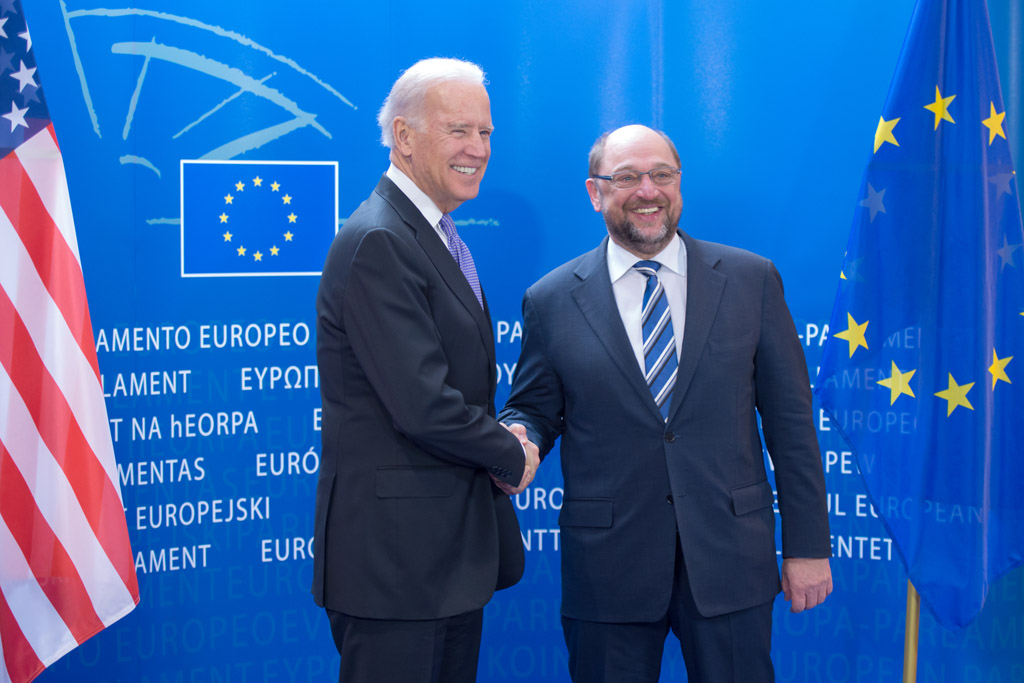
Martin Schulz Joe Biden European Union Common Foreign Policy EU Army


“I appreciate that it is not easy to explain to people back home why we need to cooperate more closely at European level in such a sensitive field as defence and security policy. Protecting its citizens has traditionally been a key task of the nation State and therefore also one of the foundations of its legitimacy. But we cannot close our eyes to reality: the world has changed and we are existentially connected to that world. Nowadays we can only defend our citizens jointly” – Martin Schulz, 2013


Here’s a good rule of thumb: the more powerful and undemocratic the institution, the better it becomes at using weaponised public relations tools in order to present a softer, friendlier, less threatening – and entirely false – picture of themselves.

Thus the President of the European Parliament, Martin Schulz, spent Monday morning hosting a laid back online live-chat on Facebook, in which he fielded carefully-screened softball questions from members of the public. And sneaking back onto the radar during that live-chat today was the prospect of a common European foreign policy, and a European army to enforce it.

From the EU’s own press release today:

To questions concerning the recent proposal on a common European army, Schulz replied “we need a common foreign and security policy”, explaining that combined military capacities would be a way of reducing military spending in a time when “money is certainly needed elsewhere”.

Meanwhile, others in the European Parliament are making rumblings about moving toward “permanent structural co-operation” – meaning there will be no way back once the EU starts taking major steps as an independent actor on the world stage:

Continue reading

Westminster Needs More MPs To Act Like Margaret Hodge

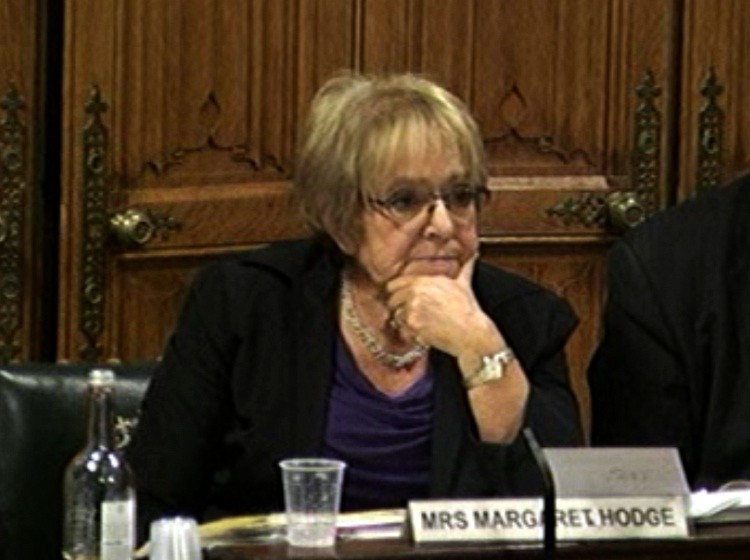
Margaret Hodge Parliament Public Accounts Committee 1


After Margaret Hodge MP humiliated HSBC’s top brass in a Public Accounts Committee hearing, some politicians and commentators would rather close ranks in defence of the establishment than support those who hold the powerful to account.

By at least one count, Margaret Hodge‘s tenure as chair of Parliament’s Public Accounts Committee has been a complete failure.

Back in 2011, in a speech to the Institute for Government, the MP for Barking outlined her vision of how the committee should conduct its business as Britain entered the age of austerity under the Conservative-LibDem coalition government. Among her priorities at that time – a less confrontational approach to witnesses:

In her speech (approximately 10 minutes into the above video), Margaret Hodge said:

Continue reading

Constitutional Reform Is The Elephant In The Room This Election Season

Constitutional Reform British General Election 2015


Conservative Home is currently running an important series on the three urgent political issues which are being pointedly and shamefully ignored by the main political parties in the run-up to the 2015 general election. These are identified as the constitution, national defence and the truth about spending reductions.

On constitutional reform in particular, ConHome is quite right to call attention to the lurking threat:

Yes, there’s plenty of speculation about what might happen in a hung Parliament, and who might form coalitions or pacts with whom.  But there has been no big debate to date about how we should be governed – what an English-votes-for-English-laws Commons would look like; what the knock-on effects on Scotland might be; what would happen to the Lords in consequence; how much devolution there should be in England (and elsewhere); what would replace the ECHR (if anything) were Britain to leave it; where an EU referendum fits into this picture; whether the UK will survive at all.

Will the UK survive at all? A sobering question to ponder, and yet when faced with these unresolved questions of national character, purpose and even survival, too often our politicians focus on the minutiae of daily life as they seek to either prey on our fears or appeal to our wallets.

This blog makes no apology for having singled out the Labour Party and Ed Miliband as the worst culprits as they seek to reduce the 2015 general election to a petty contest about public services, when Britain’s greatness is so much more than the sum of local government services and “our NHS”, here on the occasion of the Labour Party leader’s most recent relaunch:

Continue reading