If Wanting To Leave The EU Makes Me A Quitter, I’ll Wear The Label With Pride

Sometimes it is good to quit things. Like heroin, or the European Union…

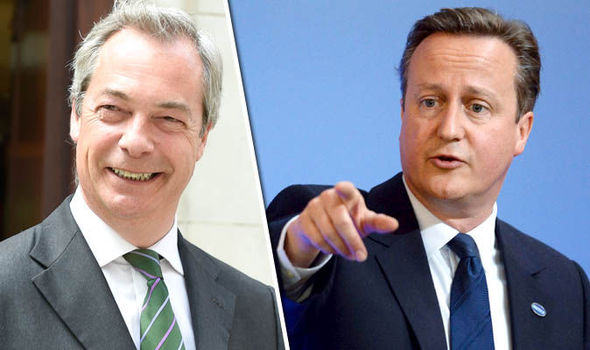
The latest drivel to ooze from the Britain Stronger in Europe campaign is a recent clip of the prime minister, filmed at last week’s Sky News Q&A, doing his creepy “I’m so passionate” thing and suggesting that those of us who want Britain to leave the European Union to retake our rightful global role are “quitters”.

(Of course, back on planet reality there is no greater demonstration of being a quitter than for people to cling to their membership of that ragged self-help group for countries who have lost their self confidence known as the EU.)

But David Cameron insists that “Britain is a leader, not a leaver” – the logical extension of which is that we must doggedly persist with every single decision we ever make as a country, never acknowledging our errors and never stepping back from the precipice of decline, because to admit that past choices are no longer working for us (or never worked for us at all) would be to appear weak and indecisive.

What we should be doing instead, of course, is taking that “leading role in Europe” that David Cameron and his new best buddies on the political Left continually tell us is our rather dubious birthright.

And we shall show our leadership by cowering inside an anachronistic, decaying, dysfunctional and parochial regional political union dreamed up in the early 20th century and hopelessly inadequate to the challenges and opportunities of globalisation in the 21st.

It makes perfect sense, if you start from a position of rabidly and unthinkingly wanting Britain to stay in the European Union at all costs, and then carefully cherry-pick your facts and news sources in order to receive a constant stream of confirmation bias-inducing Utopian propaganda.

Stronger In, everyone!!!!!111!!!one1!


European Union - United Kingdom - Britain - Flags

Agree with this article? Violently disagree? Scroll down to leave a comment.

Follow Semi-Partisan Politics on TwitterFacebook and Medium.

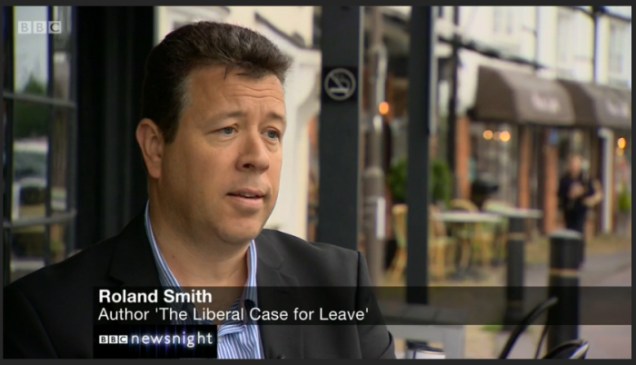
Flexcit And The Interim EFTA/EEA Brexit Approach Reported On Newsnight

Roland Smith - Adam Smith Institute - ASI - Newsnight - Brexit - EEA - EFTA - Norway Option - EU Referendum

Having finally analysed every possible facile, gossipy and shallow angle on the EU referendum in breathtaking detail, finally the media get round to examining the ideas laid out long ago in the only existing comprehensive Brexit plan

Well, it had to happen eventually. Tired of adjudicating shrill and pointless contests in unsupported assertions and lying by omission from Vote Leave and Britain Stronger in Europe, some in the media have finally started paying attention to the safe, stable Brexit option which was there all along.

Tony Edwards of The Brexit Door blog marks the occasion:

The Liberal Case for Leave, written by Roland Smith for the Adam Smith Institute, is based on the Flexcit plan. Roland is one of a number of us who have coalesced around this idea, proposed by Flexcit author Dr Richard North of the EU Referendum Blog, that Brexit should be a multi stage project. To avoid shocks, and to escape diplomatic impasse, we must take each stage in a safe and ordered manner. This not only avoids economic pitfalls, but reassures the people that will not vote to leave the EU, or would like to but are risk averse, that they are not being forced into some great leap of faith, that there is a sensible route to full democratic freedom.

And now, in the last week, Flexcit as a plan has finally broken cover and its first stage is being discussed openly by members of Parliament, Talk radio, the BBC, the Telegraph and today the rest of the print media  (although sometimes not by name).

Tony goes on to point out an important point which is overlooked by many detractors on the Brexit side – that the EEA/EFTA arrangement is transitional, the departure lounge from the EU rather than the ultimate destination:

What is not always being heard in the public domain, and what Roland Smith explained last night, is that the EEA stage of Flexcit is transitory. It will last for a number of years for several reasons, but will not be the end point for a post EU membership UK.

Firstly, while we will want to build trade links with the rest of the world, we will also want to preserve our current markets while we do this. EFTA has been very good at negotiating FTAs, and while in EFTA there is no impediment for the UK in seeking deals within and without the group. We lose no competence in this area to EFTA as we do to the EU – that’s a massive difference in the level of freedom of action the UK will gain immediately.

While Pete North celebrates:

Thanks to Roland “White Wednesday” Smith, our comprehensive Brexit plan made a bit of a splash these evening having been announced on Newsnight as the plan under consideration by the civil service. As ever Newsnight managed to make a pigs ear of it without expanding on the critical details but it’s free publicity.

Lost Leonardo of the excellent Independent Britain blog is pleased, but unimpressed by cynical efforts underway by assorted Remainers to slander the interim EEA/EFTA (Norway) Option as some kind of betrayal of a vote to leave the EU, when it is no such thing:

With the legacy media finally turning its attention to the realities of Brexit—even Newsnight is now name-checking Flexcit—now seems like a good time to look again at the great vistas of opportunity that await a post-exit Britain.

First of all though, one has to address the “criticism”—if one can really call shouting, stamping of feet and pulling of hair critique—that adopting a phased approach to EU exit has elicited from a portion of the legacy media and the oh-so-tedious legacy campaigns.

It scarcely needs saying, but the Remainers’ feigned concern for the most belligerent voices in the “leave” camp is beyond cynical. The same people who have spent weeks, months, even years, verbally abusing anybody who has expressed the view that immigration is a bit high are now saying that it would be a “betrayal” for the UK government, supported by the House of Commons, to insist upon using the European Economic Area (EEA) agreement as a staging post for disengaging from the EU’s political and judicial union without any of the economic after effects that David Cameron and George Osborne have so irresponsibly exaggerated. Give me a break.

The hysterical reaction of Vote Leave and its associated sycophants is particularly loathsome. That organisation has done everything in its power to prevent the idea of a pragmatic, practical and non-hostile Brexit plan, which addresses the political realities as we find them not as we might like them to be, from taking hold in the public imagination.

This is a point which this blog also hammered home:

There is nothing on the paper whatsoever about the European Economic Area or “single market”. A vote to leave the EU is a vote for Britain to do exactly that – to leave an explicitly political, ever-tightening union of European countries all embarked on a journey to one day become a common state (as the EU’s founders and current leaders happily admit).

Many people are rightly now coming to the conclusion that the best way to achieve Brexit with the minimum of political and economic disruption is to exit to an “off the shelf” interim solution which already exists in the form of the EFTA/EEA membership enjoyed by Norway. This is why David Cameron has suddenly started talking about “a vote to leave the single market” over the past few days – it is a tacit admission that if we vote to leave the EU but remain in the EEA, every single one of the Remain campaign’s arguments are instantly negated.

Hence the [eagerness of Remainers] to do everything possible to slander the interim EFTA/EEA option, painting it as some kind of unconscionable scam when in fact it is an utterly pragmatic and realistic way of leaving the European Union while completely avoiding all of the apocalyptic economic scenarios which the Remain camp love to throw around.

The official Leave Alliance blog takes a deserved mini victory lap, while warning of the newfound hostility to the plan among Remain supporters and some unreconstructed Leavers. Proclaiming that reality is finally sinking in, Ben Kelly writes:

One of the most crucial elements of The Market Solution [..] is its aim of de-risking Brexit and neutralising the economic uncertainty associated with a vote to leave. We offer several scenarios that would minimise disruption and protect the economy and the most optimal of those is the EFTA/EEA route a.k.a the “EEA option” a.k.a the “Norway option”.

Leaving the EU will be a staged process; the EFTA/EEA route facilitates our transition from an EU Member State to an independent nation by protecting the economy, simplifying secession negotiations and providing us with a soft landing and a decent perspective of what “out” looks like for the near future. One of the key aims of The Leave Alliance was to disseminate this Brexit scenario amongst influential opinion formers; we were rebuffed by Vote Leave and Leave.eu, but we are now having great success late in the day as the EEA option is becoming potentially pivotal.

Due to the fact that it means leaving the EU in an economically secure way it has been the source of much fear for remainers, hence why they do everything they can to smear it. Many on the Leave side can’t get past the fact it means retaining freedom of movement, but their folly is to assume that controlling our borders is simple and abolishing free movement is a silver bullet. They are unreasonably uncompromising in refusing to accept the necessity of a transitional arrangement; we cannot leave the EU in one fell swoop.

Overall, a positive development, though we may wish to recall the words of Winston Churchill: “We may allow ourselves a brief period of rejoicing; but let us not forget for a moment the toil and efforts that lie ahead”.

Suddenly, at long last the interim EFTA/EEA option is being discussed seriously at the highest levels in politics and the media. It took an extraordinary effort to make it happen – involving the tireless work of many of my Leave Alliance colleagues, and more than a little subterfuge here and there to ensure that the Great And The Good of British political life actually took it seriously rather than summarily rejecting it as the work of mere citizens, but here we are.

But with little more than two weeks to go until we cast our votes, is there enough time to establish the right narratives about the Norway Option and rebut the desperate smears of the Remain campaign? Or will it be too little, too late?


European Union - United Kingdom - Britain - Flags

Agree with this article? Violently disagree? Scroll down to leave a comment.

Follow Semi-Partisan Politics on TwitterFacebook and Medium.

American Conservatives For Brexit, Part 2

Kumbaya - South Park - Brexit - European Union - EU Referendum

While we are on the subject of Americans arguing eloquently in favour of Brexit, here is Doug Bandow, Senior Fellow at the Cato Institute and former special assistant to President Reagan, writing in Forbes:

Some folks, generally more leftish in orientation, like being able to appeal to Europe to override the stodgy British parliament at home. But the majority of Britons are not so happy.

After all, there’s an inchoate sense of sovereignty and self-government. It doesn’t matter who people are. Most everyone prefers to control their own lives. The British don’t care if someone else, whether in Brussels or elsewhere, is theoretically more qualified to govern Britain. (Not likely, but that was the theory of British colonialism for others.) Most Britons want to do the job themselves. Yet the UK government figures about half of economically significant laws originate in EU legislation.

That’s a major transfer of authority and sovereignty to a body which suffers from a “democratic deficit.” The EU has a top-heavy but fragmented—and unelected—executive, with three different “presidents.” The European Parliament is elected, but only rarely do voters choose representatives based on European issues. People usually use their EP votes to punish or reward national parties based on national issues. Moreover, the Brussels elite, a gaggle of bureaucrats, politicians, journalists, academics, businessmen, and more, is determined to impose its views irrespective of the opinions of normal folks. Indeed, the Eurocrats routinely avoid public input and block votes on EU issues. So it’s not surprising that many Britons, as well as citizens of most other European countries, feel alienated from Brussels.

All fair criticism of the EU – my only correction would be that Bandow actually underestimates the number of Presidents of the European Union. Bandow says three, but the real count puts it at five.

In his piece, Bandow asks semi-rhetorically whether Americans should follow Britain’s lead and throw off the yoke of federal government from Washington D.C.:

The British will soon vote on leaving the European Union. There are many reasons people want to quit. Perhaps the most important is self-government. Britons are tired of being bossed around by nameless and faceless bureaucrats in Brussels. Americans should follow the British in reconsidering the wisdom of living under a centralized Leviathan in a distant capital, that is, Washington.

Indeed, the Brexit cause is one which should find sympathy among any people who currently chafe at their present aloof, unrepresentative governments. Obviously America is a single demos – having lived in the United States, I know just how strongly people “feel” American – and so it is right that government sits at that level. One assumes that Bandow is suggesting a renewed emphasis on federalism and states’ rights rather than mass secession from the United States.

Europe, of course, has no such demos – no matter how strongly the EU’s most ardent cheerleaders and apologists try to wish it into existence. In fact, any effort to impose a new identity where none exists before – especially when done at the expense of national identity – is likely to breed far more resistance and resentment than it will create unity. And those who deny the EU’s aspirations to statehood are frankly burying their heads in the sand – the evidence is abundant, and out in the open.

But what’s really good about this piece is that it touches on the fact that the EU is deliberately designed to remove awkward public opinion from the decision making process – that “the Brussels elite [..] is determined to impose its views irrespective of the opinions of normal folks”. And that, of course, is the entire point of supranational government. Aside from being the favoured mechanism for ratcheting the countries of Europe toward their “destiny” of common statehood, it also ensures that decisions are made so remotely, and by people so lacking in democratic legitimacy, that EU leaders are largely free to go about their business unscrutinised.

This is no way to run any kind of organisation, let alone a nascent country. Yet many, particularly those Stockholm Syndrome sufferers on the Left, persist in believing that the EU can be changed and transformed into a European socialist Utopia, if only leftists from across the continent join hands and sing Kumbaya loudly enough.

This is sheer folly. And it is good to see conservatives in America as well as Britain recognise it as such, and see the European Union for what it really is.


European Union - United Kingdom - Britain - Flags

Agree with this article? Violently disagree? Scroll down to leave a comment.

Follow Semi-Partisan Politics on TwitterFacebook and Medium.

American Conservatives For Brexit

Union Jack - Stars and Stripes - Britain and America - Special Relationship

Daniel Larison joins the ranks:

Personally, I am hoping that the Remain campaign loses. The EU is famously lacking in democratic accountability. If the only way to hold its institutions and leaders in check is by the threat of leaving, at some point one or more of its members has to make good on the threat to leave. Whatever the short-term economic disruption of withdrawing from the EU may be (and I assume there will be some), the case for leaving has always been a political one concerned with the ability of the governed to hold their government to account for what it does. British voters can’t fully do that right now as part of the EU. The Remain campaign has had to resort to constant fear-mongering because it cannot make a positive case for staying a part of a dysfunctional transnational organization for which almost no one feels any real loyalty or affection, and so it has to conjure up nightmare scenarios to frighten voters to their side.

Whatever the result is on June 23, the U.S. should aim to maintain good relations with the U.K. If Britain votes to leave, the U.S. should do what it can within reason to help make the transition easier, and we should do so in recognition that our relationship with the U.K. is a long, well-established, and close one that long predates the EU.

As fair and eloquent a case as you will hear. Though Larison’s expectation of some short-term economic disruption needn’t come true – particularly if we follow the Flexcit model and leave to an interim EFTA/EEA position, maintaining our access to the single market – he is right that the real argument is a democratic one. The crux of the matter is that British voters have no practical way of holding EU leaders to account that is not at least twenty steps removed, relying on other people doing other things. That is no democracy – despite the desperate attempts of some EU apologists to claim that the various elections to EU institutions make the EU a beacon of good governance.

Larison is right too that the United States should and will maintain good relations with Britain after Brexit. For while regained British independence from the EU may thwart the State Department’s dream of having just one telephone number to dial when they want to call Europe, in every important respect – military power, willingness to commit military forces, foreign direct investment, defence cooperation, security cooperation, academic and trade cooperation, cultural affinity – Britain is America’s closest and strongest ally, and in ways which have absolutely nothing to do with our membership of the European Union.

Remainers and EU apologists love to paint Britain as a puny and insignificant nation whose clout only comes about through our membership of international bodies (most of which have existed for little more than half a century, rather undermining the claim), but the special relationship between Britain and the United States is a partnership between two consequential countries which have and will continue to shape world events well into the future – at least if both countries can finally rediscover their national confidence.

And in this fight to make Britain a consequential player in the world again rather than a timid vassal of euro-parochialism, it is good to have the support of Daniel Larison and The American Conservative.


European Union - United Kingdom - Britain - Flags

Top Image: City AM

Agree with this article? Violently disagree? Scroll down to leave a comment.

Follow Semi-Partisan Politics on TwitterFacebook and Medium.

EU Referendum Live-Blog: Cameron v Farage, But Not Really

David Cameron - Nigel Farage - Debate - ITV - EU Referendum - Brexit - Remain

Semi-Partisan Politics: EU Referendum Live Blog – Cameron vs Farage (but not really)

#ITVEUref

21:57

And that’s it. Cameron off the hook, with no major hits landed on him.

Combative and effective as usual from Nigel Farage, but nothing new to suggest a recalibration to reach the essential 50%+1 on Referendum Day. Once again Farage will have pleased his supporters and disgusted his detractors.

What an utterly pointless “debate”, and what a useless format. I sincerely doubt that anybody in the country learned a single new thing from watching that “showdown”. Generally weak audience questions served little purpose other than to tee up the usual soundbites we are tired of hearing from Vote Leave and Stronger In.

Weak moderation too – Julie Etchingham seemed to be imposing rules and time limits which existed solely in her head, and which often ended up cutting through some of the more eloquent and discursive points on each side.

All in all, this was yet another example of the media’s shameful, shallow coverage of the EU referendum – and the glibness and alarming lack of depth of those who lead us.

21:56

Polished, passionate and utterly vacuous.

21:54

David Cameron, directly asked by an audience member whether he is “finished” regardless of the result of the EU referendum, waffles and talks about anything and everything else.

But it is very hard to see Cameron continuing. This is a supposedly conservative prime minister who gladly, joyfully shares a platform with Labour and Green Party politicians campaigning for an outcome which most party members detest. There is no love for Cameron, who will go down in history as a second-rate version of Ted Heath.

21:53

More scepticism about David Cameron’s assertion that Brexit means “quitting”:

21:49

Good point by audience member. Hardly anyone can name their MEP. Because the European Parliament is a chamber representing a demos which does not exist. There is no European demos. Hardly anybody feels European first and foremost, above their national or regional identity. And yet the EU seeks to acquire all of the trappings and powers of statehood. Shouldn’t that be setting off alarm bells?

21:48

Contra Cameron, “quitting” is staying in the EU and giving up on the ability of the fifth largest economy and second (by some rankings) military power to influence world events.

21:47

True democracy is about whether you can fire the people in charge if they start to do a bad job or if the people want a change.

The British people can’t fire the people who run the EU. There is no democracy.

21:44

No, Cameron. We will not be like a country with our faced pressed against the glass while the EU makes key decisions on trade. On the contrary, by leaving the EU we will regain our voice, our seat and our vote at the true global top tables which set key regulations and standards – organisations like UNECE, the IMO, ILO, Codex Alimentarius and many others.

These are the true originators of much regulation today, and for as long as we are in the EU with the Commission acting as middleman, we have a limited voice and a diluted influence in shaping these regulations – even ones which could obliterate entire British industries at the stroke of a pen.

Here’s why the EU is no longer the “top table” for trade – and why David Cameron was just deceiving the audience.

21:41

Ooh, it’s NHS time. Everybody genuflect to our National Religion.

If you are basing your decision on whether Britain should leave or remain in the European union solely or primarily on the NHS, then you are doing it wrong.

21:40

I’m glad someone brought up Little England. Because it is the Remainers – with their declinist, pessimistic view of Britain – who have low horizons. Those who want Britain to be an independent country, fully participating in the true global top tables for trade (hint: not the EU) are the ones with bold, global aspirations.

21:38

Yes, David Cameron is doing his creepy “passion” thing again, in place of actually standing for things and leading:

https://twitter.com/elashton/status/740280699270365184

21:35

Audience member takes David Cameron to task for his fraudulent renegotiation. Everything Cameron is saying now is false – the “agreement” he reached was negotiated with EU leaders acting in their capacity as heads of state and government. Many of them will soon no longer be in power. The EU is in no way obligated to honour the pitiful commitments in that agreement.

21:32

Immediately David Cameron pivots to talking about the single market, not the EU.

But leaving the single market is not on the ballot paper – we can (and almost certainly would, in the event of a Leave vote) leave the political institution of the EU while maintaining access to the single market – the so called interim EFTA/EEA or Norway Option. Adopting this plan immediately negates every single pessimistic, fearmongering argument put forward by the Remain campaign, which is why they are so desperate to slander or dismiss it.

21:31

David Cameron’s turn.

Good first question from the audience. 6 months ago Cameron was saying that Britain could thrive outside the EU, yet now he says it would mean economic Armageddon.

Was the prime minister lying then, or is he lying now?

21:27

Well, that was Farage. A typically assured performance. Ukippers will be happy. Liberal leavers like this blog and members of The Leave Alliance less so, for obvious reasons – Farage doubled down on all of the illiberal and protectionist arguments while doing nothing to reach those not already convinced that Brexit is the way to go.

In terms of moving the needle of public opinion, Nigel Farage certainly hasn’t done himself any harm. But it has made it harder for those of us arguing for a more progressive case for Brexit to do our work.

21:25

Moderator of this referendum is worse than useless so far. Staying silent when she should guide the debate, cutting across when actual interesting points are being made.

21:24

Audience member rightly notes that there are many separate means of cooperation between EU countries independent of the EU. Brexit doesn’t mean severing ourselves from the continent of Europe or from schemes like Europol. By freeing ourselves from the EU’s political union we restore our democracy and are able to choose the areas and nature of our cooperation.

21:23

Waving a passport around is not going to get us from 40-45% of the vote to the 50%+1 the Leave side needs to win the referendum. People who get misty eyed about blue passports are already going to turn out and vote to leave. We need to reach undecideds with a comprehensive, safe offering, showing them that it is possible to leave the EU while minimising economic risks.

21:21

I’m not the only one to note the markedly poor quality of questions coming from the audience so far. Roland Smith (author of the Liberal Case for Leave) sees it too:

21:19

Farage is a natural performer. One can only wonder what an asset he could have been to the Leave campaign had he only updated his 1990s-era euroscepticism and embraced a more progressive (or small-L liberal) case for Brexit.

21:16

Audience member with an utterly fatuous question about the Leave campaign supposedly whipping up anti-black fervour. As a mixed race person (not that it should matter), this is complete hogwash. Disagree with UKIP all you want (and I disagree with them on plenty), but disagree with their stance on immigration all you want, but fatuous, blanket assertions that their immigration stance is racist or “legitimises racism” is flat out false. And in fact it is this effort to slander euroscepticism and worries about immigration with the charge of racism that creates further resentment.

21:15

Oh, Justin Welby accuses Nigel Farage of legitimising racism, eh? The Archbishop of Canterbury might do better to look at the gaping hole in the public discourse where a rational, intellectual and moral Christian case for the European Union should be.

Shockingly, it doesn’t exist.

21:13

The good thing about Nigel Farage is that he doesn’t feel the need to flatter audience members, agree with them and accept their assumptions and premises. I think that some people do admire that, even if they disagree with him. Contrast it with David Cameron’s doubtless oleaginous performance once he takes the stage.

21:10

Every moment Nigel Farage spends talking about tariffs is time he could be spending reassuring wavering Brits that we can leave the EU’s political union while maintaining our access to the single market.

21:09

Tremulous audience member worried about Britain being “punished” if we vote to leave the EU. This takes us back nicely to the Remain side’s cognitive dissonance about whether the EU is a friendly club of countries who get together to knit and braid each other’s hair, or an abusive relationship where we will be beaten up if we try to leave. The Remain camp really do need to make up their minds…

21:08

Oh dear – the first appearance of “they need us more than we need them”. Farage is rightly being taken to task by an audience member for this point.

Far too much talking over one another going on already – Farage, audience members, the moderator.

21:06

Fair point from Farage – there is a marked difference between people in current positions of power in government and NGOs who tend to side with Remain, and those now out of power, who are more likely to back Leave. Something about the freedom of being able to speak one’s true mind seems to make people more likely to support Britain’s independence from the EU. Funny, that…

21:03

Okay, here’s Nigel Farage. The man who arguably did more than anyone else to secure this referendum, but failed to produce a plan for actually leaving the EU.

21:00

Well, here it is. The debate that is not a debate, because David Cameron doesn’t dare actually engage anyone in debate these days.

I’m far from certain that this event will be worth live-blogging, but it will be practice for the Semi-Partisan Politics live-blog of the referendum count and results on 23/24 June.


More about The Leave Alliance here.

More about Flexcit here.

The EU Referendum blog here.
 

European Union - United Kingdom - Britain - Flags

Top Image: ITV

Agree with this article? Violently disagree? Scroll down to leave a comment.

Follow Semi-Partisan Politics on TwitterFacebook and Medium.