The Arrogant Labour Party Pathologises Pro-Brexit Working Class Sentiment

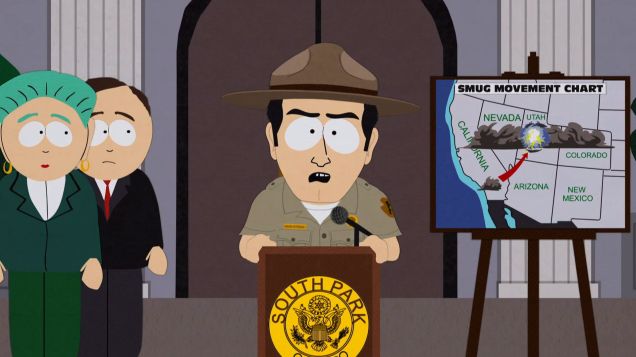
South Park - Smug Cloud - EU Referendum - Labour Party - Working Class - Brexit - Brexity - Owen Jones

The modern Labour Party, totally unable to relate to its alienated working class base, now seeks to pathologise overwhelming working class support for Brexit rather than question their own blind devotion to the European Union

To truly understand the gulf between the modern, metropolitan Labour Party and its increasingly alienated core working class vote, one need only read the latest column by Owen Jones, in which the “Chavs” author frets that “working class Britons feel Brexity and betrayed”.

Brexity.

Jones’ column in the Guardian doesn’t say that working class people have conducted a rational assessment of their social, material and economic interests and decided that Britain would be better off outside the European Union, in the way that a middle class professional might deliberate and weigh their options. No, when it comes to working class people, they just “feel Brexity”, like babies might feel gassy after feeding, or tetchy while teething – a simplistic emotion or reflex, not a considered thought.

In other words, when a “good” middle-class left-winger (the only kind of person that the Labour Party now much cares about) decides that the EU is simply wonderful, that Brussels is only about “trade and cooperation” and that we should stick around to reform the EU because “Another Europe is Possible!“, they are acting rationally and sensibly. But when working class Britons decide overwhelmingly that the European Union is a bad thing for their interests and kryptonite to our democracy, they must have been wildly misled by nefarious forces (read: Nigel Farage) into voting against their obvious true interests.

Let’s dive in to Owen’s piece:

If Britain crashes out of the European Union in two weeks, it will be off the back of votes cast by discontented working-class people. When Andy Burnham warns that the remain campaign has “been far too much Hampstead and not enough Hull”, he has a point. Even Labour MPs who nervously predict remain will scrape it nationally report their own constituencies will vote for exit. Polling consistently illustrates that the lower down the social ladder you are, the more likely you are to opt for leave. Of those voters YouGov deems middle-class, 52% are voting for remain, and just 32% for leave. Among those classified as working-class, the figures are almost the reverse: 36% for remain, 50% for leave. The people Labour were founded to represent are the most likely to want Britain to abandon the European Union.

A political movement with the smallest shred of humility might look at these numbers and wonder whether maybe the working class voters know, or are attuned, to something which the middle classes are not, rather than automatically assuming that the middle classes are right and the working classes wrong. And a political party capable of introspection might be alarmed to find itself diametrically opposed to “the people Labour were founded to represent” on so fundamental an issue as Britain’s independence and place in the world.

Needless to say, the Labour Party of Jeremy Corbyn and Owen Jones (and Gordon Brown and Peter Mandelson too) has no such humility and no such capacity for introspection. When confronted with evidence that the metropolitan intelligentsia have gone marching off in a completely different direction to the base, the only instinct is to furiously question how the plebs could possibly  have gotten it wrong, and who led them astray.

Owen Jones continues, becoming even more offensive with every paragraph:

A Conservative prime minister lines up with pillars of Britain’s establishment with a message of doom – and it makes millions of people even more determined to stick their fingers up at it.

The leave campaign knows all this. It is Trumpism in full pomp: powerful vested interests whose policies would only concentrate wealth and power even further in the hands of the few, masquerading as the praetorian guard of an anti-establishment insurgency dripping in anti-immigration sentiment. It is political trickery long honed by Ukip, a party led by a privately educated ex-City broker that claims to be the voice of the little guy against a self-interested powerful clique. If Donald Trump succeeds across the Atlantic, the terrible cost of leaving millions of working-class people feeling both abandoned and slighted will be nightmarishly clear. The same goes for this referendum.

So believing that Britain should leave the dysfunctional and deliberately antidemocratic EU is now apparently a symptom of “Trumpism” – a zesty blend of brashness, proud ignorance and overt prejudice. This is Owen Jones trying to be understanding and win people over, remember. And he does so by comparing them and their sincerely held political beliefs to the egotistical ranting of Donald Trump. Not a great start to the outreach effort there, Owen.

In Owen Jones, here we have a walking, talking mascot for the Labour Party’s refusal to understand why they are not more popular and why the working classes continue to vote for conservative parties and conservative policies. A generation ago, faced with Margaret Thatcher’s three general election victories, the British Left was unable to admit to itself that the Tories won fair and square because people preferred their sales pitch of individualism and opportunity. And this denial continued until late-stage Neil Kinnock and a still youthful Tony Blair finally delivered the harsh dose of reality required to make Labour electorally viable again.

Fast forward to 2016, and a Labour Party beaten back to its fortresses in the city and university campus simply cannot fathom why working class Britons might not like the idea of an increasingly powerful supranational government of Europe seeking to take over more and more competencies from its member states, and ultimately supplant them on the world stage, or why the working classes are stubbornly unwilling to participate in their carefully laid-out left-wing delusion that it is really just about trade and cooperation, honest.

Jones concludes:

It is certainly true that Labour’s coalition is fracturing. The Labour left – which has now assumed the party’s leadership – is in large part a product of London and its political battles from the 1970s onwards. London, of course, has increasingly decoupled from the rest of the country, economically and culturally. As the commentator Stephen Bush puts it, Labour does well “in areas that look like [the] UK of 30 years hence”: in particular, communities that are more diverse and more educated. In many major urban centres Labour thrives: witness the victory of Labour’s Marvin Rees in Bristol’s recent mayoral election. It is in working-class small-town Britain that Labour faces its greatest challenge. And it is these communities that may decide the referendum – as well as Labour’s future.

That’s why Labour’s remain effort needs to bring voices that resonate in northern working-class communities to the fore, such as Jon Trickett, who represents Hemsworth in West Yorkshire. These voices need to spell out the danger of workers’ rights being tossed on to a bonfire; to emphasise the real agenda of the leave leadership; and to argue that we can build a different sort of Europe. It would be foolish for either side to call this referendum. But unless a working-class Britain that feels betrayed by the political elite can be persuaded, then Britain will vote to leave the European Union in less than two weeks.

Well, at least Jones is able to concede that the London-centric leadership of the Labour Party might not be conducive to winning support from outside the middle-class clerisy. This is a start, but the problem will not be truly addressed until the likes of Owen Jones dare to concede that the working classes might have something to teach people like him about values and policy.

At present, even Owen Jones – the media’s standard bearer for defending the working classes – is still at pains to set himself apart from them on the issues. Sure, he will happily empathise with their frustrations, but he will never concede that they might be right on points of policy. He has an elite education, after all, while they work at places like Sports Direct (ew).

Take immigration. In a million years, you will never get Owen Jones to admit that the scale of immigration into Britain over the past decade has been problematic. He will do a better job than almost anyone of saying in that ever so ‘umble tone of his that he sympathises with those who do have concerns about immigration. But then watch him pivot to explain that the real problem is the Evil Tories and their failure to enforce a £10 minimum wage, or build sufficient new schools and hospitals and doctors surgeries to cope with 300,000 net arrivals a year, or to create magically appearing jobs.

In other words, while middle class leftists are allowed to speak for themselves, working class Britons must be “interpreted” by trained interlocutors like Owen Jones. And even when they directly say “I think that there is too much immigration, and it is causing problems”, we should not take it at face value, because really they mean all of these other things, but are not articulate enough to properly express themselves.

And so it is with the EU referendum. Working class people are saying in record numbers that they dislike the EU and want to leave. But the Labour Party, whose true masters and beneficiaries love the EU and are determined for entirely selfish reasons that Britain should remain, is unable to accept that the working classes might be right. And so they wheel out people like Owen Jones, who then tell them exactly what they want to hear – that the party’s working class voters don’t really mean it when they say they want Brexit, that what they really mean is that Britain should stay in the EU to reform it with the help of the Magical Brussels Reform Unicorn.

Don’t mind Kayleigh from Stoke-on-Trent, she’s just feeling a bit Brexity today.

Oh, how a noble political party has fallen. A party that once boasted deep roots in the industrial towns of Britain, and in the trades union movement, has now become a shallow and debased party designed to make London-based creative professionals feel good about themselves while their privileged lifestyles diverge ever more widely from those at the bottom. A party led by the affable-looking Jeremy Corbyn is still very much the party of professional politicos like Chuka Umunna and Luciana Berger.

And so it will remain, until Labour – and the British Left in general – learn to stop pathologising those with different political views, particularly those who are supposedly on their own side. Because quite frankly, it is becoming rather grating to hear the self-proclaimed party of equality and opportunity bleat on about how progressive and democratic they are, while percolating in a closed information loop of self-reinforcing metro-left platitudes and furiously ignoring the fact that they increasingly have absolutely nothing in common with those whom their party was founded to represent.

Owen Jones was supposed to be better than this. But none of them are. Labour deputy leader Tom Watson has started making noises about pushing back on the free movement of people issue a bit more, but you can bet that he wouldn’t be doing so if he (and the people he is really fighting for) didn’t have a referendum to win. The fears and concerns, hopes and dreams of working class people are only ever something to be mollified, contained or exploited for electoral gain, certainly not to be used as direct input to the policymaking process.

Right now, with the Parliamentary Labour Party slavishly cheerleading for a European Union loathed by many of its own supporters, the only thing standing in the way of Labour’s complete destruction south of the Scottish border is UKIP’s capacity for self-immolation. If the Remain campaign prevail and win the EU referendum, working class fury at the result (and the way in which the campaign was waged, in which Labour are fully complicit) could see many more defections to UKIP. The only thing likely to prevent this is the chaos which may engulf UKIP when Nigel Farage steps down or is deposed.

With the Labour Party living on borrowed time, one might expect a little humility from its leaders and chief supporters in the media. But these people don’t do humility. They have expensive educations and patiently-acquired groundings in all the right-on progressive values. They earned their right to sit at the top table of the Labour Party and call the shots. And the working classes? They exist to be referred to in speeches and soundbites, or sometimes to be used as a backdrop for media events so long as the event is tightly controlled and they don’t try to speak.

Funny. While the Conservative Party is consumed by a profound crisis of confidence and character within its own leadership, right now it is the Labour Party and British Left – even including poster boy Owen Jones – who most exude the stench of born-to-rule arrogance.

Never let it be said that this EU referendum campaign has not been instructional.


Postscript: It’s fair to say that Owen Jones isn’t best pleased with being called out for his condescending attitude towards working class Brexit supporters. He engaged with me on Twitter, taking great umbrage that I had briefly quoted from the headline – though he did not disavow the term “Brexity”

Jones is throwing his toys out of his pram, and has baselessly slandered me in the process – though frankly, being insulted by Owen Jones is a badge of honour which I shall wear with pride. There was no attempt to misrepresent or sensationalise what he wrote. The sub who produced the headline (if indeed it wasn’t Jones) did an excellent job of channelling the overall tone and content of his message – that working class people only support Brexit because they are the dumb victims of “political trickery” – and all of the quotes in this blog post reveal the same rotten attitude towards working class Brexiteers.

It is quite telling that Owen Jones popped up to smear me on Twitter before disappearing without actually defending his tawdry, condescending little piece in the Guardian. He knows that comparing Brexiteers to Donald Trump (as he did) is an unconscionable insult to working class voters, and more evidence of the Labour Party’s growing disconnect from its roots. But more than that, he knows deep down that he is wrong to support the Remain side in the EU referendum. Last year he showed promising signs that he might lead a left-wing awakening and uprising against the undemocratic European Union, but since then Jones – like Labour leader Jeremy Corbyn – has fallen dutifully into line praising the EU and furiously pretending to himself that “another Europe is possible”.

This is why Owen Jones is so sensitive and reacted so furiously to being called out on Semi-Partisan Politics. Whether Jones coined the term “Brexity” or not is immaterial – his attitude toward left-wing Brexit supporters, as evidenced by every single word in his Guardian column, is conclusive evidence that he views working class euroscepticism as a pathology, something to be treated, rather than a legitimate political viewpoint to be engaged with (and perhaps adopted as policy).
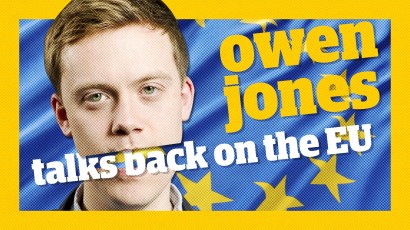

 

Owen Jones talks back on the EU referendum - European Union - Brexit

European Union - United Kingdom - Britain - Flags 

Support Semi-Partisan Politics with a one-time or recurring donation:

Agree with this article? Violently disagree? Scroll down to leave a comment.

Follow Semi-Partisan Politics on TwitterFacebook and Medium.

The T–Word

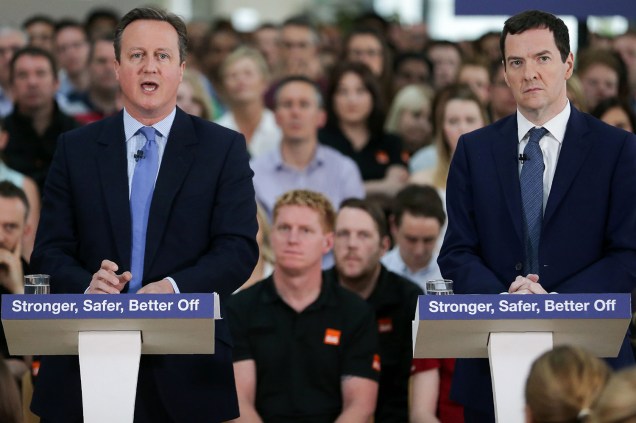
David Cameron - George Osborne - EU Referendum - Brexit - European Union - Democracy

We are fast running out of measured words to describe the character and behaviour of the prime minister and his chancellor during this EU referendum campaign

There is one word which thinking Brexiteers will do almost anything to avoid using to describe an opponent, however much they may want to: the T-word. While sanctimonious, virtue-signalling EU apologists are often quite happy to sneer at eurosceptics and make baseless charges of xenophobia and racism (accusations which can do grave real-world reputational damage in the modern world), Brexiteers are generally much more reticent to to deploy their own nuclear word.

Why? Because it sounds hysterical. To use the word in seriousness or in anger suggests that we have lost our minds, that we are deliberately exaggerating, that we and our arguments should not be taken seriously. And so we suppress it. We sit on the T-word, lips clamped shut even as Remainers paint an offensively false picture of Britain as a weak an ineffectual nation, and even go as far as suggesting that other European nations would be right to “punish” us for daring to reject their vision of a common European state.

But it is becoming increasingly difficult to avoid levelling the T-word at some – though by no means all – people on the Remain side. In fact, some people, through their abhorrent and irresponsible behaviour, seem to be going out of their way to live up to the word, to goad us into saying it. And sadly, senior members of the current government – including David Cameron and George Osborne – can now be included in that number.

As the Remain camp continues to slide in the polls, we have already seen David Cameron pledge – for no good reason at all – to take Britain out of the single market as well as the European Union in the event of a Leave vote, promising to implement the most irresponsible form of Brexit as a pure act of spite rather than through any democratic imperative (the referendum asks whether we want to leave or remain in the EU, not the EEA). And he followed that up with a shameful attempt to scare Britain’s pensioners.

But that is nothing compared to George Osborne’s indefensible decision to attempt to scare the British people into voting Remain by releasing a mocked-up “emergency budget”, detailing a catalogue of arbitrary and vindictive actions a future Conservative government would implausibly take to punish the British people for defying his will and voting to Leave the EU.

The BBC reports:

In the latest of a series of government warnings about the consequences of a vote to leave, Mr Osborne shared a stage with his Labour predecessor, Lord Darling, setting out £30bn of “illustrative” tax rises and spending cuts, including a 2p rise in the basic rate of income tax and a 3p rise in the higher rate.

They also said spending on the police, transport and local government could take a 5% cut and ring-fenced NHS budget could be “slashed”, along with education, defence and policing.

[..] Mr Cameron said “nobody wants to have an emergency Budget, nobody wants to have cuts in public services, nobody wants to have tax increases,” but he said the economic “crisis” that would follow a vote to leave could not be ignored.

“We can avoid all of this by voting Remain next week,” he told MPs.

This is blackmail, pure and simple. This is the prime minister of the United Kingdom threatening to inflict arbitrary and deliberate damage on the country in retaliation if we vote against him in the EU referendum.

Ambrose Evans-Pritchard is apoplectic:

George Osborne is disqualified from serving as Chancellor of the Exchequer for a single week longer.

Whatever his past contributions, his threat to push through draconian fiscal tightening in an emergency Brexit budget is economic madness, if not criminal incompetence.

Such action would leverage and compound the financial shock of Brexit, and would risk pushing the country into a depression. It violates the known tenets of macro-economics, whether you are Keynesian or not.

Alistair Darling, the former Labour Chancellor, has connived in this Gothic drama. He professes to be “much more worried now” than he was even during the white heat of the Lehman crisis and the collapse of the Western banking system in 2008.

So he should be. The emergency Budget that he endorses might well bring about disaster.  The policy response is the mirror image of what he himself did – wisely – during his own brief tenure through the Great Recession.

We all understand why George Osborne is toying with such pro-cyclical vandalism – or pretending to – for he is acting purely as as partisan for the Remain campaign. He has fatally mixed his roles. No head of the Treasury can behave in this fashion.

Absolutely. And the figures on which George Osborne has cooked up his Armageddon Budget are of course based on the most extreme and unlikely  Brexit scenarios, the Treasury having dropped the practical and popular interim EFTA/EEA option from its analysis because this Brexit method fails to bring about the kind of telegenic economic disaster the Remain campaign need for their propaganda.

But even if it were not in response to an incredibly unlikely and pessimistic set of economic assumptions, Osborne’s emergency budget would still be hugely irresponsible, as Evans-Pritchard points out:

This is a fiscal contraction of 1.7pc of GDP. It would hammer the economy just as it was reeling from the immediate trauma of a Brexit vote and the probable contagion effects across eurozone periphery, already visible in widening bond spreads.

It would come amid political chaos, before it was clear what the UK negotiating strategy is, or what the EU might do. It would be the worst possible moment to tighten.

The Treasury has already warned that the short-term shock of Brexit would slash output by 3.6pc, or 6pc with 820,000 job losses in its ‘severe’ scenario. The Chancellor now states he will reinforce this with austerity a l’outrance.

It is a formula for a self-feeding downward spiral, all too like the scorched-earth policies imposed on southern Europe during the debt crisis.

A funny time for George Osborne to finally discover fiscal conservatism, one might observe.

While many conservatives have rightly chafed at Osborne’s inability to get to grips with public spending, none but the flintiest ideologue would celebrate a significant, deliberate fiscal contraction at a time of political uncertainty and sensitivity. Osborne’s critics are right to castigate him for his profligacy with the International Development budget and unwillingness to tackle the real drivers of government spending (yes, including pensions), but fulfilling every single demand on the fiscal conservatives’ wish list in one spiteful go – and at the wrong moment – would be deliberate vandalism, pure and simple. And it shows that George Osborne is thinking politically at a time when Britain’s chancellor of the exchequer most needs to act like a statesman.

It is also astonishing that a chancellor who has been perfectly happy to falsely claim to be “paying down Britain’s debts” while actually still running a persistent budget deficit and adding greatly to the national debt should now propose to deal with any economic shock resulting from Brexit exclusively through fiscal tightening and not with increased short term borrowing. Again, this is only more evidence that Osborne has absolutely no core convictions or political philosophy of his own, save furthering his own power and thwarting his political enemies. Certainly the idea that the chancellor has somehow discovered strict fiscal conservatism now out of genuine principle is absolutely laughable.

But of course, this “emergency budget” is a political ruse, not a work of policy. For starters, in the event of a Leave vote, both the prime minister and his sorry chancellor of the exchequer will be sent packing from Downing Street back to their home constituencies almost immediately, to the sorrow of absolutely nobody. The Conservative Party will not tolerate their presence a moment longer. But more to the point, even George Osborne doesn’t believe his own apocalyptic predictions.

As Ambrose Evans-Pritchard points out:

There are quite enough dangers in Brexit already without adding more. What the Chancellor should do is the exact opposite: prepare an emergency stimulus of 1.7pc of GDP if need be,  targeted at critical infrastructure and strategic investment that pays for itself over time.

The money should be borrowed. As of today the Treasury can raise funds for five years at 0.66pc, for ten years at 1.12pc, and for thirty years at 1.94pc. These are lowest yields in our history, and they have been falling steeply over the last three weeks.  There is no sign yet that Brexit will trigger a ‘Gilts strike’ or a run on the British debt markets.

Mr Osborne could have taken advantage of these give-away rates to build up a war chest for any post-Brexit turmoil. He has not done so. Over the last three months the Government has raised just £36bn of its estimated needs of £131bn for this financial year. Either he is negligent, or he does not believe his own doom scenario.

[..] It takes a nuclear bomb or the Bubonic Plague to bankrupt a developed country that borrows in its own currency, has its own central bank, and has deep layers of wealth. Mr Osborne has not yet conjured either.

(Where I depart from Ambrose’s excellent response to George Osborne is his call for a national unity government drawn from all the parties in the event of a Leave vote, to guide us through the “turmoil”. To my mind, this could only make things worse, diluting the strategic direction of government by weighing it down with the statist, centralising baggage of the Green Party and SNP – though I concede that a unity government would help to dispel John McDonnell’s “Tory Brexit” line.)

So here we have a chancellor of the exchequer citing economic scenarios he does not believe (as evidenced by his lack of preparation for them) to produce a vengeful and counterproductive fictional budget in an attempt to frighten and bully the British people into abandoning their desire for democracy and self-government outside of the EU.

Brendan O’Neill’s response is best, condemning the Left’s complicity in this Cameron and Osborne-led campaign of intimidation:

Today in Kent, the establishment united, across party lines, to tell us that they will have no choice but to financially punish us if we vote to leave the EU. There will be severe budget cuts if you people vote for a Brexit, says Osborne. In short: we’ll hurt you, we’ll make your lives harder, we’ll inflict economic pain on you if you make the wrong political decision. How the left can line up behind this elite crusade that has now descended into blackmailing the poor and the plebs to support the EU “or else” is beyond me. The left has been dead for a long time, but its backing of the EU is the stake in its heart — after this it won’t even be able to pull off its zombie act.

So, back to that awkward T-word.

The Oxford English Dictionary defines it as “the crime of betraying one’s country”, or “the action of betraying someone or something”. If you were, say, the prime minister of the United Kingdom, that “someone or something” might reasonably include the British national interest and the wishes of the people to be represented and served honestly and honourably by their government.

David Cameron and George Osborne wish Britain to remain part of an ever-more tightly integrating, expressly political union whose ultimate intention is to merge the countries of Europe into a common state.

David Cameron promised to extensively renegotiate the terms of our membership of the European Union but came back with less than nothing – a reaffirmation of the status quo, contracted not with the EU but with current heads of government, whose successors are in no way beholden to honour what little was promised to Britain.

David Cameron, George Osborne and their allies in the Remain campaign have used every trick in the book to threaten, deceive and coerce the British people into voting to stay in the EU. They have abused the bully pulpit of government, ignored Electoral Commission recommendations, produced and distributed taxpayer-funded propaganda, peddled in subliminal messaging techniques to influence people to vote Remain, misrepresented what the European Union really is and misrepresented their opponents.

And they did all this while supposedly serving their country – Cameron and Osborne as prime minister and chancellor respectively, and many of their Remain allies as fellow MPs, all of whom also swore the parliamentary oath.

I have put off using the T-word on this blog, thus far – mostly because while I am but a mere blogger, I do still want to be taken seriously and have my ideas and opinions listened to rather than rejected as the rantings of a blind partisan.

I will again put off using the T-word today, even though there is no longer any doubt in my mind that the word is justified when used to describe specific people and elements of their conduct during this EU referendum campaign.

But the reckless behaviour of the prime minister and his chancellor of the exchequer now contravenes their fundamental duty to the people, not to mention the basic standards of human decency; even the most ardent Remain supporter will surely look back with shame on what is being done to tilt this referendum in their favour.

On this present trajectory, it may not be long before whole swathes of the British public (justifiably) begin openly using the T-word as an accusation levelled at the two most powerful political figures in Britain, as well as many of those who might plausibly replace them.

And if we reach that acute point, we will face an unprecedented crisis in this country.


European Union - United Kingdom - Britain - Flags

Top Image: The Sun

Support Semi-Partisan Politics with a one-time or recurring donation:

Agree with this article? Violently disagree? Scroll down to leave a comment.

Follow Semi-Partisan Politics on TwitterFacebook and Medium.

The European Union Does Not Promote The Neighbourliness Preached By Jesus

Bishop Robert Innes - EU Referendum - Remain - Brexit - European Union - Christianity

As yet another bishop declares his support for keeping Britain in the EU, the last gasp strategy of the intellectually and morally defeated Remain campaign starts to become clear

More hand-wringing, wheedling declarations that Britain should sacrifice our own democracy and national interests in order to “save Europe from itself”, over at the Reimagining Europe blog.

Robert Innes, bishop of the Diocese in Europe writes:

At the heart of Jesus’ teaching is an ethic of neighbourliness. ‘Love your neighbour as yourself’, he says. And in the parable of the Good Samaritan he stretches the idea of the neighbour to include even those in close by regions with whom we have traditional rivalries.

Ah, so we are going to be treated to another rendition of that glib assertion that because “friendship” and “co-operation” sound like nice Christian things, it automatically follows that Britain should sacrifice our democracy and dissolve ourselves into the embryonic common European state.

This is based on the blinkered view that co-operation between friendly democracies is only possible when coordinated by a powerful supranational regional government, something which would come as a great surprise to Christians in Africa, Asia and the Americas, whose countries seem to be able to co-operate with one another on environmental, energy, economic, defence and intelligence matters without becoming vassals of a large regional organisation with slobbering aspirations of statehood.

Bishop Innes continues:

Being a good neighbour has costs. We may be expected to come to our neighbour’s aid. Frankly, at the moment Europe needs British help. The whole continent is struggling with migration. Debt and unemployment afflict the southern states. And these are generating populist sentiments which threaten us all. The European Institutions in Brussels have benefited from a good deal of British administrative and political expertise in the past. In order for them to work well and to promote the good of the whole continent, they need that expertise now. We have contributed democratic principles, a sense of humanity, tolerance and practical common sense over many decades. These are loved and valued by our European neighbours.

From where I sit, there is an awful lot riding on the Referendum Vote. It feels, from Brussels, like a vote that could determine not just the future of Britain but the future of the European continent, for decades to come. I have already posted my vote. There’s no secret that it was for ‘Remain’. Not everyone in my diocese will agree with me, and I respect that. But I hope that the remaining days of the campaign will be marked by high quality information and truly informed debate. I hope there will be a massive voting turnout. And, yes, I hope that Britain will stay in the European Union and help our whole continent find its way through difficult times and into a new future.

Having been comprehensively routed in the argument about democracy (though to be fair, the EU apologists, knowing their weak position, barely put up a fight) and seen the polls gradually turn towards Brexit as people tire of the scaremongering and pessimism of the Remain campaign, we seem to be moving into a new phase of the referendum.

It now seems to be the contention of some Remainers that the EU may well do us little or no good whatsoever, but that it is our duty to remain lashed to the mast nonetheless out of blind solidarity with our European allies. We saw Jonathan Freedland advancing just such a case in the Guardian this week, essentially arguing that British democracy is a small and trivial thing, a worthless trinket and a small price to pay to stop the squabbling countries of Europe from going at each others’ throats.

Of course, this is insidious nonsense. The European Union undermines democracy in all of its member states, not just Britain. That’s what it was designed to do – become an increasingly powerful supranational government of Europe by slowly and steadily accumulating more powers and hollowing out the democracy and decision-making competencies of the member states. And we see a growing antipathy toward the EU project across Europe, not just in Britain and not just in the traditionally eurosceptic countries, with France now holding a more unfavourable view of the EU than we do.

In this modern context, stubbornly voting to remain in the European Union in defiance of the damage it is doing to our democracies as well as the social and economic harm being wrought by the EU’s single currency and migration policy is the height of irresponsibility. If you see four friends stumbling drunk out of a bar and walking toward their parked car, you don’t hop in the back seat and go along for the ride, you beg them not to drive and call them a taxi instead. And so it is with the EU – there is no good reason why we should march in lockstep with the rest of the EU in a direction which can only lead to more voter apathy, civil unrest and socio-economic misery – least of all because a very superficial interpretation of Christian teaching suggests that it is the right-on, progressive thing to do.

Interestingly, Robert Innes’ article is currently unavailable at Reimagining Europe – perhaps he encountered hostility to his blinkered europhilia from members of his diocese, or perhaps even he realised the fatuous over-simplicity of his article.

But this is an argument which is coming up again and again, the Hail Mary pass of the Remain campaign – that the EU may well be terrible, but that somehow we owe it to the other member states to stick around until the bitter end. It is a weak argument from a campaign based entirely on weak arguments, and if the Remain camp continue to push this defeatist narrative it suggests that they really are in trouble.


Postscript: More on the Christian case for Brexit herehereherehere and here.


European Union - United Kingdom - Britain - Flags

Top Image: Archbishop of Canterbury

Agree with this article? Violently disagree? Scroll down to leave a comment.

Follow Semi-Partisan Politics on TwitterFacebook and Medium.


Britain Should Not Have To Sacrifice Our Democracy In The Name Of Franco-German Reconciliation

Francois Hollande - Angela Merkel - France - Germany - Reconciliation - EU Referendum

No, the EU did not “keep the peace” in Europe. And Britain should not be expected to sacrifice our own democracy in the name of Franco-German reconciliation

Continuing the apocalyptic hysteria now emanating from the intellectually bankrupt pro-EU Remainers, Jonathan Freedland has a particularly offensive piece in the Guardian, comparing Brexit to the election of Donald Trump as potential calamities on a similar scale before declaring that he would sooner see a President Trump than a newly independent Britain.

Freedland phrases his question:

What if the devil came to visit you in the dead of night? What if, dressed in a fine suit, his tail and pitchfork artfully concealed, Lucifer himself offered you a deal? Knowing the anxiety that was keeping you – a good, progressive type – up at night, he promised that he would grant you one, but only one, of your two deepest current wishes: you could either be sure that Donald Trump would lose the US presidential election or you could be guaranteed that Britain would vote to stay in the European Union. You could have one or the other, but not both. Which would you choose?

Because, of course, Guardian readers are saintly and virtuous while anybody with conservative instincts is intrinsically disordered in some way.

Freedland goes on to explain why he chooses President Trump over Brexit:

But the future viability of the UK is not the reason I’d be tempted to use up my one devilish wish to prevent Brexit. Nor is it the near-certain economic gloom that will befall this country, an outcome so obvious when you take a step back and consider any country voluntarily giving up its right to trade on advantageous terms with a market of 500 million customers.

No, the spectre that would haunt me as Satan drummed his fingers, waiting for my decision, would be much more elemental. It is the fear that the European Union, already battered by the eurozone crisis, simply could not withstand the departure of one of its “big three” members. We would not be tugging at a mere thread but yanking out a guy rope: the EU would collapse – maybe not straightaway, but eventually.

[..] Why should that bother us? We’d be well out of it by then. But remember the history of this continent. The story of Europe is the story of near-constant war and bloodshed. The 100 years war, the 30 years war, the Spanish wars, the Franco-Prussian wars, the two world wars of the last century: this is what the nations of Europe do to one another – unless they are held together in an arrangement that obliges them to settle their differences around a Brussels conference table, where the most mortal danger is tedium and late-night halitosis.

This is what the European project is about. Not just goods and services and trade and jobs, important as all those things are, and crazy as we would be to jeopardise them. But about life and limb. And make no mistake: if the EU’s 27 member states become Europe’s 27 warring nations, we will not be safely detached, serenely distant across the Channel. We will be drawn in, as we always have been.

In other words, Jonathan Freedland seriously believes – or at least is willingly to publicly say – that peace in Europe has nothing to do with economic growth, nothing to do with the atomic age and Mutual Assured Destruction, nothing to do with NATO or the Marshall Plan and nothing to do with the fact that economically advanced, liberal democracies just don’t tend to declare war on one another. No, in Freedland World, the only thing preventing Europe from instantly reverting back to 1914 is the grand projet by which our troublesome nation states are slowly being dissolved once and for all.

Freedland concludes:

It takes an extraordinary confidence to look at the last millennium of European history and gamble that the 70 years of peace that have held since 1945 – an exceptional, aberrational interlude – have had nothing to do with the existence of the European project. Do we really think it’s a coincidence that no two EU member states have ever fought each other? Do we want to roll the dice to find out? Do we feel that lucky?

What piffle. Don’t seek the restoration of nation state democracy and the repatriation of powers gradually frittered away to a largely unaccountable supranational government of Europe, because to do so might unleash a time warp taking us all back to 1914. Is this really what the pro-EU die-hards are now reduced to?

Pete North is having none of it:

Oh really? You don’t think that the peace came from the desire of the peoples to create the peace? Instead it had to be enforced by a sovereignty-confiscating artificial entity? Or could it be that the second world war era was not really concluded until the fall of the Berlin Wall?

Up to that point the peace was held in place by fear of mutually assured destruction. Nobody wanted to break the uneasy stalemate because of the lethal consequences it would unleash. I think it safe to say the EEC had precisely zero influence in maintaining or building the peace.

He says “let Britain remain, to prevent the 21st century being as drenched in blood and sorrow” but this really rather ignores the reality that peaceful democracies as a rule do not go to war with each other, and it is unlikely we will be fighting over those resources which the EU pooled. I don’t see a war over coal and steel, do you?

Moreover, if the peoples of Europe are prevented from influencing the laws they must live by without the possibility of reform or repeal, what do you suppose is going to happen? Are you saying that a strong supranational authority will maintain the peace by enforcing it? How is it going to do that exactly? And what sort of peace is that when it is an authority stifling a democratic correction? Tyranny that’s what it is. Peace at the barrel of a gun.

Everywhere we look in Europe we see stresses and strains with ever more resentment as the EU is caught up in its own institutional paralysis, failing to adequately respond to the many emergencies it has a hand in creating. This leads to increasingly unilateral action and the rise of the far right everywhere. That doesn’t end well in Europe does it? And there are of course two other supranational projects in Europe in the last century. Yugoslavia and the USSR. Remind me how well that worked out.

I agree wholeheartedly.

Jonathan Freedland seems to be suggesting that regardless of the economic question, Britain should willingly sacrifice her own democracy and right to self-determination in order to help preserve an apparently fractious peace in Europe. He is arguing that the inability of the British people to exercise meaningful control over those who lead us is a small price worth paying in this effort. He is, effectively, saying that democracy has little value.

In Freedland World, Britain should sacrifice her democracy happily and willingly to reduce even by a minuscule fraction the future possibility of France and Germany going at each other again. It’s self evident, apparently.

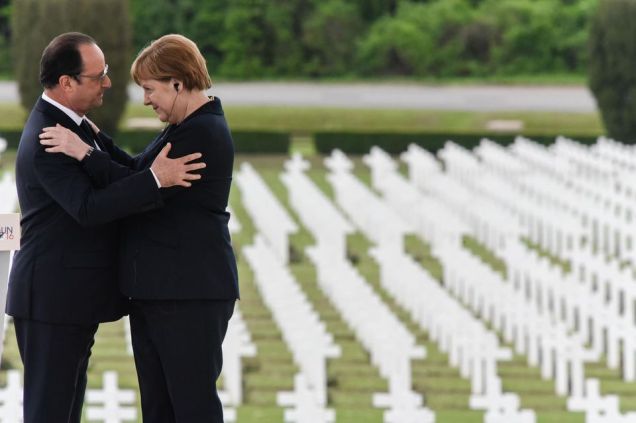
I’m sorry, but no. Any petty grudges or historic rivalries remaining in Europe are not a sufficiently good reason for me to throw away my right to live in a democracy. I’m glad that Francois Hollande and Angela Merkel shared that special moment together at the Verdun centenary memorial where they held hands, gazed into each other’s eyes and “forgave” each other for past national sins. Good for them. Still doesn’t trump our right to help elect the people who make the key domestic, trade and foreign policy decisions impacting our lives, and to kick them out of office if we disapprove of the job they are doing.

Every day that passes reveals in a new light the sheer disdain in which the pro-EU British Left hold the very idea of democracy. If they are not warning us portentously that returning power to Westminster might result in an elected British government doing things that it was elected to do (pass the smelling salts!) they are now suggesting that democracy is a mere trifle, something with which we should be happy to part in order to prevent other third parties from behaving in a self-destructive way.

I’m not having it. And the turning opinion polls suggest that the British people as a whole aren’t having it either – that in actual fact we like the idea of democracy, value it rather more highly than our “moral superiors” in the Guardian and resent the establishment’s coordinated attempt at scaring us into dropping our demands for self-determination.

And at some point after the EU referendum, whichever way it goes, the Jonathan Freedlands of this world (and the pro-EU British Left in general) will need to explain, account and hopefully atone for coming down so unapologetically on the wrong side of democracy.


European Union - United Kingdom - Britain - Flags

Top Image: Liberation

Agree with this article? Violently disagree? Scroll down to leave a comment.

Follow Semi-Partisan Politics on TwitterFacebook and Medium.

David Cameron: Portrait Of A Deceitful Charlatan With No Redeeming Qualities

Apparently there is panic in Number 10 Downing Street and among the slavishly pro-EU establishment. Good. They have waged a contemptible, negative and deceitful campaign, and whether or not it prevails on June 23 the hearts, minds and consciences of all those involved richly deserve to be troubled

Having done everything but fill in all of the ballot papers himself to ensure a “Remain” vote on 23 June, at this point in the unevenly fought EU referendum campaign we might expect to see a bit of magnanimity or statesmanship from the prime minister as he coasts toward the closing stages.

But the polls have tightened unexpectedly as the British public rightly begin to suspect that the near-unanimous hysterical screeching from the establishment in favour of Remain sounds more like naked self-interest and wretched pessimism about Britain than a realistic warning about what might happen in the event of Brexit. And this has caused David Cameron – a notably weak strategist only capable of thinking one step ahead, unlike his gifted general election campaign manager – to panic, and start behaving in a most un-prime ministerial manner.

Three interventions in particular mark out the descent of David Cameron from oleaginous, confident salesman to the nation’s Bully in Chief – the impromptu rooftop press conference at which Cameron openly accused ministers in his own government of knowingly peddling falsehoods, the statement that Cameron would take Britain out of the single market in the event of a “Leave” vote despite leaving the EEA not being on the ballot paper, and his shameful attempts to bully and coerce Britain’s pensioners, effectively holding a gun to their heads and commanding them to vote Remain or see their pensions fall.

The Spectator’s Isabel Hardman says of Cameron’s panicked rooftop press conference:

David Cameron doesn’t do that many press conferences at all, despite promising in Opposition that he would hold a monthly one, and so when he summons hacks to the roof of a hotel at short notice, you know that there is a Crisis that the Prime Minister is taking Very Seriously indeed.

Cameron then proceeded to list six ‘complete untruths to the British people’ that the Leave campaign was guilty of producing. These were that the UK is liable to bail out eurozone countries, that our rebate is at risk, that we have given up our ability to veto EU treaties, that we have no ability to stop EU spending from going up, that we are powerless to stop Britain being forced into an EU army and that we would save £8bn if we left the EU.

Were these untruths really so heinous that he was forced to hold a press conference at short notice? Or was it, as one of the journalists sitting on the roof with the Prime Minister suggested, that the Leave campaign currently had the momentum and the debate was all about immigration, which damages Remain? Cameron replied:

‘Look, I was watching the news last night and it just came over to me so clearly that there is such a contrast between the weight of independent expert opinion that wishes our country well but is giving us an unvarnished view of the decision we could be taking, there’s a massive contrast between that – respected, independent experts warning us about lost jobs, about instability, about a smaller economy, about the effect on our country. The contrast between that and a series of assertions from the Leave campaign that just simply aren’t right…’

So the Crisis was that the Prime Minister had been watching the news last night.

Some archly dry humour there from Isabel Hardman. When The Spectator openly mocks a Conservative prime minister in this way, you know things are bad.

Cameron’s specific counterpoints are immaterial here – they were aimed at the ravings of the official Vote Leave campaign, which does not speak for all Brexiteers. But what is telling is the fact that David Cameron – a man who promised that he “ruled nothing out” in his renegotiation with the EU while actively colluding with business leaders to plan the eventual Remain campaign, and who then presented the empty gift bag given to him by Brussels as a deal which had fundamentally “reformed Europe” – is willing to go on live television and accuse his Brexit-supporting ministers of being liars.

More insidious than this, though, was the way that David Cameron pledged on the Andrew Marr show last weekend that in the event of a Leave vote he would seek to take Britain out of the single market, despite this being just one (incredibly sub-optimal) mode of Brexit, and the referendum question saying nothing at all about the single market or EEA.

Dr. Richard North of the eureferendum.com blog remarks on:

[..] an extraordinary interview on the Marr Show yesterday which had David Cameron pledging to take the UK out of the Single Market in the event of a Brexit vote. This was despite Andrew Marr suggested that we could stay in, with Cameron refusing to entertain the idea, “because the ‘leave’ campaign had specifically rejected that option”.

The segment of the interview started with Andrew Marr reminding the Prime Minister that he had promised to “carry out the wishes of the British people” if we vote to leave. The trouble is, Marr then said, is that “the wishes of the British people” is a rather indistinct thing – it’s a blunt “yes” or “no”.

Cameron responded by saying that if we vote to leave the Government would carry out the instructions of the British people. That, Marr averred, would put the Prime Minister in “a very strange position”. He’d be doing things like introducing an Australian-style points system that he didn’t believe in. As for, the Single Market, though, Marr said, “there is room for a Prime Minister to negotiate that”.

It was here that the role of Vote Leave came to the fore. “I think one of the most important moments in this campaign”, Cameron said, “was when the ‘out’ campaign said they wanted to leave the Single Market”. He continued: “They didn’t have to make that choice. They’ve made that choice. And what the British public will be voting for … would be to leave the EU and leave the Single Market”.

What the Prime Minister is doing, therefore, is using Vote Leave as a proxy for the entire British public. However, this is a small group of individuals with singular views, put in place by an unelected Electoral Commission to carry out the role of lead campaigner. This can’t in any way be taken to represent the will of even those who favour Brexit – much less the entire British population.

Dr. North is absolutely right to emphasise firmly that Vote Leave do not represent the ideas and wishes of all Brexiteers. They were not elected to represent us, and their most prominent figurehead (Boris Johnson) had not even decided which side he was going to support until a couple of months ago.

Just because the same idiots who stubbornly persist in peddling their “£350 million a week for the NHS” falsehood in the face of endless rebuttals and fact checks have airily decided that Britain should not Brexit to an interim state preserving single market access in no way precludes that option. As Richard North reminds us, the ballot paper asks whether we want to leave or remain in the European Union – nothing more and nothing less. We should know, we spent long enough haggling over the wording at the time.

All the evidence suggests that if Britain leaves the EU without securing an “off the shelf” deal to ensure continuity of access to the single market (while fully extricating us from political union, which is what the referendum is all about) there will be at least some negative short term economic consequences, as no new trade deals can possibly be negotiated in the two-year window provisioned in Article 50 of the Lisbon Treaty. By contrast, Brexiting to an interim EFTA/EEA arrangement (the so-called Norway Option) would maintain our full access to the single market in the short to medium term while we work on a better bespoke solution for Britain.

The attractiveness of the interim EFTA/EEA route is self-evident: Britain would immediately be free of ever-closer political union and democracy would be restored, while maintaining single market access (for which we would pay) would return our relationship with the EU to the state that people believed they were voting for in the 1975 referendum. Therefore, it is unsurprising that Remainers are desperate to slander and dismiss the option as unworkable – it represents dynamite which would obliterate their entire case for continuing to suffer the EU.

But while David Cameron’s eagerness to problematise the Norway Option is understandable politically, for the prime minister to flat-out state that he would not pursue this option and instead take Britain out of the single market (despite no mandate to do so from the electorate) is bordering on threatening self-harm. Any Brexit model not involving keeping interim access to the single market would inevitably come with higher risks and potential economic costs than adopting the Norway Option. By ruling it out, David Cameron is essentially threatening the electorate, saying that if we vote Leave he will pursue the most disruptive and costly form of Brexit within his power, purely as an act of spiteful vengeance.

Just stop and think about that for a moment. David Cameron has effectively told voters that if we vote to leave the European Union, he will sneer “your wish is my command” and then set about doing so in the most reckless and ill-considered manner possible, just to teach us a lesson. The prime minister of this country has just threatened  our own national interests on live television. Is that something which we should just blink and accept, writing it off as “fair play” in a hard fought referendum? I profoundly disagree. I think that it is contemptible behaviour, the kind of action which immediately disqualifies the perpetrator from holding further public office.

And if this still wasn’t enough, David Cameron then went from threatening the British people in general to attempting to scare Britain’s older voters in particular, with despicable threats that Brexit would automatically and inevitably lead to pension cuts.

Tim Stanley, rightly outraged, calls this what it is – blackmail:

Project Fear has turned into Project Frightened. Remain are losing ground in opinion polls and running scared. So what do they do? Go positive? Make a better, brighter case for the EU? No. They double-down and turn to blackmail.

That’s the only word that suits David Cameron’s threat that Brexit might lead to pensions being cut, made today in this newspaper. His logic is that Brexit will create a gap in the finances that will have to be filled somehow. The triple lock on pensions, guaranteeing rising incomes, would probably have to picked. Even if it were a moral necessity to help the aged, it would suddenly become unaffordable.

This is rubbish for two reasons. First, it’s based on the Government’s assumption that Brexit will lead to a collapse in trade that will wipe billions off GDP. The Treasury forecasts that this is based on are alarmist and absurd – they suggest a retraction worse than the Great Depression. Businessmen who actually deal with Europe every day, such as Sir James Dyson, report that they don’t see such a risk and are confident that Britain will continue to grow.

Second, Cameron suggests that the Government would have no choice but to cut pensions – as though the invisible hand of the free market would be clasped around its throat. Nonsense. It would face spending choices and, Cameron is telling us, it would choose to cut pensions. Much as the Government has chosen in the last few years to cut the highest rate of income tax on the rich or chosen to cut benefits for the poor. If Brexit did trigger a recession, the Government would once again have to do what it’s supposed to do and make budget decisions based upon its political preferences. I humbly suggest it chases the tax evaders and closes some loopholes before it bleeds pensioners dry.

And Stanley’s devastating conclusion:

The bottom line is this: the Prime Minister has moved from warning the British people to threatening them. And picking on the elderly – some of whom are legitimately worried about the future – is one of the lowest things you can do in politics.

At this point in the EU referendum campaign we are used to seeing the European Union portrayed by its cheerleaders and apologists as a controlling, abusive spouse that would rough us up without hesitation if we try to leave its cloying embrace. But now, the prime minister himself is behaving like an abusive spouse, essentially pushing Britain’s pensioners up against the wall with his hand on their throat, pointing to the kitchen knife on the counter and saying “I don’t want to do this, but you’ll leave me no choice if you cross me”.

What utterly despicable and unmanly behaviour from our prime minister. What debased, fearmongering garbage this man is capable of spewing in order to get his way in the EU referendum. David Cameron’s legacy as prime minister has long been in question, having governed for five years as part of an unmemorable centrist coalition and latterly as a party which blind observers might guess to be the work of Blue Labour, if not Blair’s New Labour. But now that legacy has crystallised – Cameron is the prime minister who betrayed conservatism and bullied his own people, preferring to serve the interests of the EU than those of his country.

David Cameron doesn’t have a conservative bone in his body. He doesn’t have an ideological bone of any kind, and from his craven behaviour in this referendum campaign it is quite clear that he lacks a backbone, too. And like a common school bully, he is willing to throw the full weight of his office and government around, breaking conventions and standards of common decency left, right and centre as he seeks to gain every inch of advantage.

Whether it is conducting a blatantly fraudulent “renegotiation” and presenting the status quo as shiny new baubles he secured from Brussels, calling the referendum implausibly early against the advice of the Electoral Commission, spending taxpayer money on a one-sided propaganda leaflet, sending out voting advice guides which subliminally encouraged people to vote Remain, winning over prominent Remain supporters with government jobs and official honours, cravenly failing to take part in a single proper televised debate, misrepresenting his opponents, attacking conscientious objectors to his slavish europhilia within the Conservative Party and isolating and targeting every possible voter group with customised attempts at scaremongering – now including this unsubtle warning to pensioners that he will spitefully lash out at them if they vote to Leave – in every way imaginable, David Cameron has debased himself and his office.

That’s why the prime minister’s days are numbered. At present he takes false courage from the fact that his normally sworn enemies in the Labour Party and on the generic Left are holding their fire in their shared desperation to keep Britain in the EU. But on June 24, Cameron will quickly realise that a good half of his own Conservative Party, together with everyone else in the country, will be straining at the leash to eject him from office, strip him of the bully pulpit he has so abused, and send him marching barefoot back to Witney in sackcloth and ashes.

And such is the amount of political capital and personal goodwill Cameron has squandered, barely a single person will come to his defence when the inevitable party leadership coup takes place. In the minds of many people – now including this blog – whether his successor is just as bad (i.e. Boris Johnson) is almost immaterial. The pleasure of seeing such an arrogant and dishonest man as David Cameron driven from power in disgrace, his reputation rightly in ruins, will be its own reward.

There is a legitimate and intellectually coherent case for Britain remaining in the European Union, but David Cameron has not made it. In fact, when it comes to the rarely heard (in this country) principled euro federalist case, its proponents all seem to have been abducted and held far away from any television studio so that they don’t open their mouths and drive thousands more people into the Brexit column.

Whether the prime minister is among their number is not known. It is possible that the man is catastrophically misguided and actually believes some of the nonsense he has spewed about securing a “better deal” for Britain, and that Britain could somehow prosper as a country inevitably on the margins of an ever more tightly integrating eurozone. Perhaps.

But either way he has not been honest with the British people. Worse than that, though, he treats the people with open contempt. Some politicians lie because they fear the people, but not so with Cameron. David Cameron lies because he despises the people, holds their intelligence in low regard, and is more than willing to alternately deceive, belittle and threaten the people in the service of his establishment masters and instincts.

This is a prime minister who, when given the choice between vociferously defending the national interest of his country against the EU elite or siding  with that same elite and bullying his own people into submission to their will, gladly chooses the latter course of action every single time.

There are few words strong enough to adequately describe the prime minister’s odious character and behaviour as revealed over the course of this EU referendum campaign – certainly none which I am willing to publish on this blog.

Which is why I am ending this piece here, in utter disgust at the conniving, arrogant, untrustworthy and weak approximation of a man presently in charge of our country – before I say something that I might later come to regret.


David Cameron Patriotism

European Union - United Kingdom - Britain - Flags

Agree with this article? Violently disagree? Scroll down to leave a comment.

Follow Semi-Partisan Politics on TwitterFacebook and Medium.