Meet Baroness Henig, Stoking Fear Of Terrorism To Benefit Her Private Security Business

baroness-ruth-henig

Baroness Henig’s exploitation of the Paris Attacks anniversary to advocate new laws demanding that concert venues invest more in security – while herself employed as chair of a private security firm which just so happens to provide these services – showcases British politics at its most tawdry and corrupt

There are innumerable reasons why the House of Lords in its current state is an utterly intolerable affront to democracy and ethical decision-making, but an example from today really takes the biscuit.

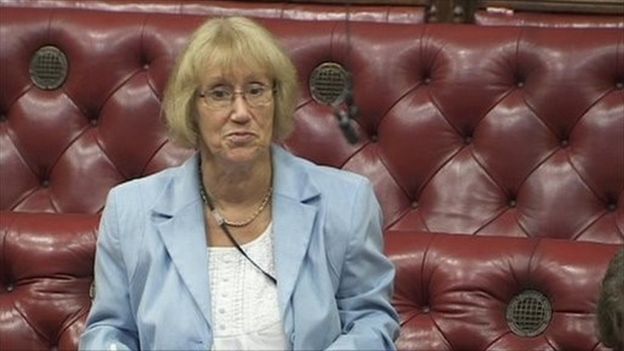
We are coming up on the one year anniversary of the heinous coordinated terrorist attack at the Bataclan concert hall and across Paris, and Baroness Ruth Henig – a Labour peer appointed in 2004 – decided that today would be the perfect day to pop up on the BBC News Channel to declare that private concert venues should do more in terms of anti-terrorism security and training, enforced by law through a potential change to the Licencing Act 2003.

From BBC News:

Licensing laws should be changed to force entertainment venues around the UK to undergo counter-terror training, a private security expert has said.

Baroness Ruth Henig told the Victoria Derbyshire programme that some venues did not take such training “seriously”. The former chair of the Security Industry Authority now plans to table an amendment to the 2003 licensing act, to include counter-terror training. Her comments come nearly a year after 130 people died in attacks in Paris.

[..] Baroness Henig said: “There are clearly a number of venues, often the larger venues, I think, but not always, who have airport-style security, who, for example, do have metal detectors, who do have very well-trained security personnel and they top up this training regularly.

“But I think at the other end there is a tail of venues who aren’t taking it seriously, we know this from the police, who don’t co-operate, who don’t take up the offers that are made to them and where I think there are some concerns.

“And the issue is how do you get to that tail of venues who are perhaps not doing as much as they should be about security.”

So far, so noble, you might think. After all, Baroness Henig only recently completed two terms as chair of the Security Industry Authority (SIA), the government regulator for private security firms run under the auspices of the Home Office. Who better to make a reasoned, fact-based case for more necessary security regulation than somebody who was in charge of holding the industry to account?

Only that is no longer Baroness Henig’s role. Rather than regulating the industry and ensuring that professional standards are upheld, Ruth Henig can now be found on the board of SecuriGroup, a private security consultancy and provider itself regulated by the SIA – and not just as any board member, but as the Chair of that organisation.

Here’s her official company bio:

Baroness Henig joined SecuriGroup after completing two successful terms as Chair of the Home Office Regulator, the Security Industry Authority (SIA). Baroness Henig’s commitment to security and policing is well documented having held the post of Chair of Lancashire Police Authority and the Chair of the Association of Police Authorities in England and Wales which led to the award of a CBE in 2000 for services to policing. The Baroness also served on the National Criminal Justice Board and Street Crime Action Group, chaired by the then Prime Minister, Tony Blair.

She was appointed as Deputy Lieutenant for Lancashire in 2002 and made a life peer in 2004 as Baroness Henig of Lancaster. As a Deputy Speaker of the House of Lords, Baroness Henig takes her place on the European Security Committee on Foreign Affairs and is a member of the Independent Policing Commission.

And most conveniently, some of the services offered by SecuriGroup include counter-terrorism strategy training, security guarding, door supervision and event security. One might say that SecuriGroup are perfectly poised to provide the very services that their CEO is currently insisting are made mandatory from her unelected seat within the UK Parliament.

To move instantly from a position regulating an industry to the chairmanship of one of those companies being regulated is concerning in and of itself. In fact, the free flow of individuals back and forth between regulator and regulated organisations is one of the primary symptoms of “regulatory capture,” a phenomenon whereby a government body established to regulate an industry “instead advances the commercial or political concerns of special interest groups that dominate the industry or sector it is charged with regulating”.

In this context, Ruth Henig’s sudden concern that smaller music venues are not stumping up for expensive anti-terrorism security countermeasures starts to look a lot less like high-minded public interest and a lot more like grubby concern for the bottom line. Is Henig worried about “that tail of venues who are perhaps not doing as much as they should be about security” because the safety of concertgoers has been keeping her up at night, or because a valuable revenue stream for SecuriGroup has been going unexploited? Given that she now derives her pay cheque from a private security firm, one has to assume that it is at least partly the latter.

Henig tries to cast herself in a virtuous light by pointing out the fact that the initial police consultations with event venues offered as part of Project Griffin are free. And so they are. But when the risk-averse police advise small venues operating on shoestring budgets that they need to pay for additional private security (by hiring the services of SecuriGroup or its competitors), that certainly will not be free. The sums of money involved would likely shut down or severely restrict the operations of many of Britain’s smaller music venues.

Of course there is nothing surprising about a Labour politician downplaying the cost of regulatory compliance – this is their bread and butter. But to do so because one has a direct financial interest in more stringent regulation is morally grey at best.

And this is one of the main problems with the House of Lords. Henig’s case is far from unique. It is just particularly disgusting, because it involves taking advantage of the anniversary of the terrorist murder of more than a hundred people to help drum up more business for SecuriGroup. But regulatory capture is an inherent feature of an appointed House of Lords, not an awkward and unintended quirk.

When governments appoint people to the upper legislative chamber based often on their industry experience (and that’s a best case scenario, assuming they aren’t simply cronies being rewarded for political services rendered), those people will naturally retain extensive links to the industries in which they built their careers and reputations. Sometimes this can be a good thing and lead to better, more considered lawmaking. But if the legislator in question is still working (or intends to return to work) in that field, then their judgment is inherently compromised.

Unfortunately, rather than realising the glaring conflict of interest and recusing herself from debate on the subject, Baroness Ruth Henig decided instead to roll up her sleeves and abuse her position as an unelected peer to further the interests of the company she runs – and all in the run-up to the anniversary of a terrorist attack which killed 130 innocent people.

Britain is crying out for proper constitutional reform to build up the public’s diminished faith in our democratic process. Part of that means proper reform of the House of Lords – making it a fully elected chamber (with term limits, length of terms and the candidate pool open for discussion, so long as we produce a more deliberative body), ending the “elected dictatorship” of the primacy of the Commons, kicking out the theocratic Lords Spiritual and drastically shrinking the membership.

But it also means cracking down on the kind of morally dubious behaviour exhibited by people like Baroness Ruth Henig. We must end the revolving doors which currently exist between Parliament and industry, Parliament and lobbying and between regulator and regulatee. Somebody who just completed two terms regulating the private security industry should not then immediately be allowed to go and work in that same sector. Just because it is commonplace and seen by the establishment as a “deserved reward” for having previously slummed it on the public purse does not make it right.

Using the anniversary of the November 2015 Paris Attacks to promote a bill making it mandatory for even the smallest of music venues to invest heavily in additional security is politics at its most cynical – particularly when you consider that heavily armed and well trained gunmen such as those who committed the Paris Attacks (and the previous attack on Charlie Hebdo) would hardly be deterred by the presence of additional unarmed security guards.

But promoting an ineffective course of action which also happens to result in significant monetary gain for one’s outside business interests is about as low as it is possible to get. By all account, Baroness Henig’s career thus far has been distinguished and honourable. She should reverse course and either give up her chairmanship of SecuriGroup or otherwise immediately recuse herself from any further part in legislating security issues – or risk tarnishing that good reputation forever.


 

baroness-ruth-henig-securigroup

concert-venue-security

Top Image: BBC

Bottom Images: Pixabay, Twitter / SecuriGroup

Support Semi-Partisan Politics with a one-time or recurring donation:

Agree with this article? Violently disagree? Scroll down to leave a comment.

Follow Semi-Partisan Politics on TwitterFacebook and Medium.

This Generation Of Politicians Will Not Secure The Benefits Of Brexit

brexit-pixabay

Four months after the EU referendum, our leaders continue to shrink from the challenges (and opportunities) which lie ahead

As is nearly always the case, Pete North has the best analysis and summary of exactly where we are with our Brexit deliberations – and right now, the answer is rather depressing:

For several months we had the great and the good telling us how important the single market was and how valuable the EU was to the UK. Now that they are tasked with leaving the EU we see that they can barely define the EU and the single market let alone offer an adequate critique as to whether it is right for the UK.

Through successive treaties our parliament has idly signed away substantial areas of policy to be decided overseas with hardly any public scrutiny. It is therefore ironic that MPs now demand parliamentary sovereignty in scrutinising the terms of the exit arrangements when they showed so little interest in what they were signing away.

By voting to leave the EU we have caught the entire system of government off guard to show that is is totally ill-equipped to govern – and those claiming to represent us have failed in their duty to safeguard our democracy. Through forty years of negligence the UK’s trading relationship with Canada is decided not by Number Ten or Westminster. Instead it depends entirely on the Walloon assembly in Belgium.

And therein lies the inherent flaw in the EU design. The DNA is faulty. Introduce democracy and the whole thing grinds to a halt. Take it away and power ends up in the hands of the few. It cannot work and it cannot be reformed yet we have endured decades of politicians telling us otherwise.

One of the most depressing aspects of life post-EU referendum has been watching our national leaders shrink from the challenge of implementing Brexit. I don’t mean that they are all necessarily in denial, or that they wish to subvert the referendum result – but rather that their every public pronouncement suggests that many of them are simply not up to the task which lies ahead. Typically, this isn’t a question of intelligence, but rather a lack of imagination and ambition. And in truth, perhaps it is too much to expect the same politicians used to implementing EU decisions or operating within their constraints to suddenly step up and become adept drivers of a country suddenly without training wheels.

The debate has thus devolved into two rather tiresome strands – the one held by most Remainers, who have become intent on catastrophising Brexit at every turn and seizing upon every scrap of potentially troubling news as further evidence that the end is nigh, and the opposing, buccaneering view which loudly insists that everything can be wrapped up to Britain’s complete satisfaction by March 2019, and sees any questioning of this certainty as evidence of anti-Brexit treachery.

This blog falls down the gap between these two comically exaggerated positions, which is perhaps why I haven’t been writing about Brexit as much as I should have been lately. One can only slap down so much ridiculous establishment catastrophising of Brexit (now the nation’s fluffy kittens are in peril, apparently), while pointing out the need for a transitional arrangement and securing continuity of access to the single market still falls on deaf ears among those in charge, and only feeds the smug (but not entirely false) Remainer assertion that Brexiteers don’t know what they are doing.

And yet a transitional arrangement is exactly what we need, as Pete North explains:

What will become clear in due course is that Britain will need a continuity arrangement that sees little or no change to the labyrinth of customs procedures and regulations that make up the single market. Neither Britain nor the EU can afford to start tinkering under the hood of long established trade rules. The sudden collapse of CETA at the hands of a Belgian provincial assembly shows just how dysfunctional the system is.

If anything is inflicting damage on the UK it is not Brexit but the overall uncertainty over what Brexit looks like. This in part down to those media vessels determined to make Brexit look like a catastrophe and in part down to those politicians who have not bothered to plan for the eventuality. We are four months on from the referendum and key ministers are still struggling with basic terminology.

Brexit is by far the biggest and most ambitious thing that this country has attempted in decades – frankly, since the Second World War. It demands painstakingly extricating Britain from a web of agreements and schemes of a complexity befitting an organisation which still seeks to become the supranational government of a federal Europe. But to make it even more complicated, we will wish to maintain many avenues of cooperation after leaving the EU’s political union, meaning that a slash and burn of laws will not do – hence Theresa May’s much over-hyped Great Repeal Act.

As Pete points out, it is highly ironic that sulky Remainers are suddenly so interested in having Parliament examine every aspect of the secession deal (with the more juvenile characters, who clearly know nothing about negotiations, expecting to be briefed in advance) when over several decades they blithely signed away powers to the EU with barely a second thought, and certainly no real public debate.

It makes the Remain camp’s current favourite attack line – Brexiteers wanted to return decision-making power to Parliament, so why won’t they let Parliament have a say?! – especially cynical. But the argument is wrong anyway. “Returning powers to Parliament” is a handy catchphrase, but it is a glib one, always favoured more by eurosceptic MPs than the general public.

The current anti-establishment rage currently roiling Europe and America shows that political leaders have become too distant from (and unresponsive to) the people, no matter the level of power. Therefore, returning powers to the Westminster parliament is not enough – we need an end to British over-centralisation and the devolution of power back to the counties, cities, towns and individuals.

Sadly, the chance of meaningful constitutional reform taking place in Britain any time soon continues to hover around zero. And rather than Brexit being the catalyst for such change, as this blog once hoped, it now seems that an intellectually and imaginatively challenged political elite will hide behind the complexity of Brexit as an excuse to avoid doing anything else of substance. One can easily foresee a situation in a decade’s time where Britain is technically outside the EU but stuck in an increasingly permanent-looking halfway house, with acceptable access to the EEA but with none of the later work to move towards a global single market even started.

Would this be good enough? Well, Britain would be outside of the political structure known as the EU, which was always the base requirement – so if one is happy to shoot for the middle and accept the bare minimum then yes, it might have to do. But it would be an appalling failure of ambition, when there are real opportunities to improve the way that international trade and regulation works and to revitalise British democracy through wider constitutional reform.

But to realise great ambitions requires there to be half-decent leaders pointing the way. And looking at the Tory “Three Brexiteers” and the dumpster fire that is the Labour Party, one cannot help but conclude that great leaders – even just competent heavyweight politicians – are in short supply at present. Do you really see Boris Johnson’s name featuring in a future Wikipedia article about the great British constitutional convention of 2020? Or Theresa May’s? Jeremy Corbyn or Hillary Benn’s?

Do I regret my decision to campaign for Brexit? No, never. The European Union is offensive to any proper sense of democracy, or to the notion that the people of a sovereign nation state should decide and consent to the manner in which they are governed. Being rid of the EU (and hopefully helping to precipitate that hateful organisation’s eventual demise) is a solidly good thing on its own. But Brexit could be so much more than it is currently shaping up to become.

And perhaps this is the most damning thing of all about the European Union: the fact that 40 years of British EU membership has slowly turned the nation of Winston Churchill, Clement Attlee, Margaret Thatcher, Hugh Gaitskell, Tony Benn, Barbara Castle and Peter Shore – men and women of principle and substance – into the nation of Tony Blair, David Cameron, Nick Clegg, Chuka Umunna, Diane Abbott and Owen Smith.

A nation simply does not bounce back from that kind of decline in the space of a few years, and the more that our contemporary politicians carry on about Brexit the clearer this becomes.

Assuming that Brexit goes to plan, it may not be until the next generation of political leaders come of age (at the earliest) before we can finally take full advantage of our newfound freedom.


European Union - United Kingdom - Britain - Flags

Top Image: Stux, Pixabay

Support Semi-Partisan Politics with a one-time or recurring donation:

Agree with this article? Violently disagree? Scroll down to leave a comment.

Follow Semi-Partisan Politics on TwitterFacebook and Medium.

It’s Local Election Day. Who Cares?

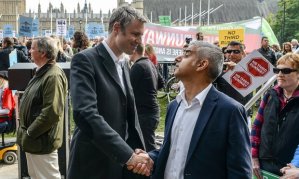
Zac Goldsmith or Sadiq Khan for London? Who cares?

“I think voting is great, but if I have to choose between a douche and a turd, I just don’t see the point” – Stan Marsh, South Park

Apparently Thursday 5th May – local election day across the UK – is being dubbed “Super Thursday“.

Except that unlike the Super Tuesdays of the American presidential primary calendar, there is nothing remotely exciting about these local elections, with the partial exception of the Scottish and Welsh assembly polls.

In London, we are bestowed with the awesome privilege of choosing between two leading candidates for mayor – Zac Goldsmith and Sadiq Khan – neither of whom have any meaningful executive experience and both of whom fail the first test of competence and political courage by failing to support the immediate expansion of Heathrow Airport. For this dismal failure alone I cannot bring myself to vote for either man.

Depressingly, the only remotely praiseworthy recent act of English localism – the introduction of Police and Crime Commissioners – has been badly administered and (with a few honourable exceptions) increasingly captured by the same mindless party line approach to voting seen elsewhere. And the scheme does not even apply to London – here, the mayor holds the powers of police commissioner, meaning there is no possibility of a New York style Giuliani-Bratton double-act to crack down on crime. Nobody in London specifically responsible for crime can be removed at the ballot box.

Granted, “Super” Thursday carries a little more weight if one is hugely invested in how aggregate tallies of local council seats reflect on the leadership of the main political parties. But with all the parties committed to campaigning for Britain to remain in the European Union (save UKIP, who often may as well be fighting for the Remain camp) again there is little incentive to specially reward or unduly punish one of the parties currently engaged in the process of selling out our democracy more than any other.

Besides, if you are choosing the person to represent your local ward or district because of something that David Cameron or Jeremy Corbyn said on TV or because everyone in your family/workplace/pub votes a certain way out of tribal loyalty, then you probably don’t understand how local politics is supposed to work. But then I cannot really fault those who do so, for in nearly all cases local authorities have so little real power in over-centralised Britain that it doesn’t much matter who controls the council anyway.

So, if you are a hardcore Sadiq Khan or Zac Goldsmith supporter (assuming that a human watercolour painting like Zac Goldsmith actually has any hardcore fans) – good luck today. May your man win, and may you dance in the street in celebration.

To those pundits waiting to pounce on the results as they come in, and speculate feverishly about whether significant council seat losses for Labour will bring forward the much-anticipated coup against Jeremy Corbyn – knock yourselves out.

To my bloggers-in-arms, fighting the good fight to make the thinking person’s case for Brexit and the restoration of our democracy – keep doing what you are doing. Working alongside you is an honour and a privilege.

…and may all your Super Thursdays be bright.


Zac Goldsmith - Sadiq Khan - London Mayoral Election

Bottom Image: The Guardian

Agree with this article? Violently disagree? Scroll down to leave a comment.

Follow Semi-Partisan Politics on TwitterFacebook and Medium.

The SNP Government Is Unilaterally Creating Its Own Foreign Policy

Humza Yousaf - Scottish National Party - SNP - Foreign Policy

Grandstanding SNP politicians do not have the right to unilaterally set British foreign policy

In a concerning report by the Herald Scotland, it transpires that the SNP government north of the border is attempting to create its own mini foreign policy, not aligned with nor cleared through the Foreign and Commonwealth Office in Westminster.

More concerning still, the fact that the Foreign Office quite rightly asked the Scottish government to cease and desist from this irresponsible behaviour is being portrayed as the real scandal, rather than Nicola Sturgeon’s back-of-an-envelope attempt at statecraft.

From the report:

The Foreign Office in Westminster is demanding to vet Scottish Government dealings with other countries on human rights, according to correspondence seen by the Sunday Herald.

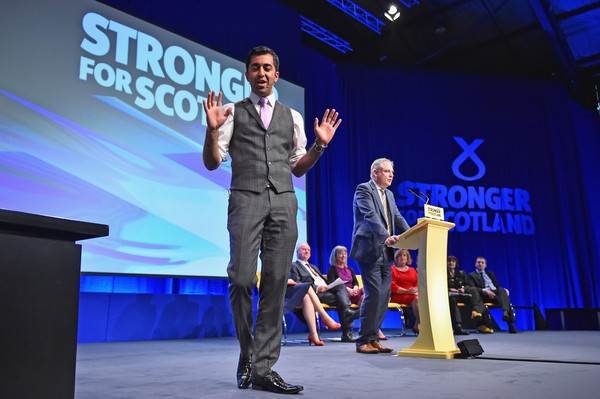
The UK foreign minister, James Duddridge, has asked the Scottish international development minister, Humza Yousaf, to clear all his letters to foreign governments with the UK government before raising concerns about human rights infringements and other matters.

The move has infuriated Yousaf. “It beggars belief that the Tories – who are in the midst of scrapping the Human Rights Act – want to vet the Scottish Government’s letters raising human rights concerns abroad,” he said.

“I am proud of the SNP raising concerns about human rights without fear or favour – and certainly will take no lessons from the Tories on this,” he added.

“Whilst we are happy to share correspondence with Westminster, as we have done to date as a matter of courtesy, we certainly will not be asking or seeking permission before raising legitimate concerns about human rights.”

And for context:

Yousaf wrote to Duddridge and the Malawian High Commission, Kena Mphonda, on December 16 2015 raising concerns about the arrest of two Malawian nationals, Cuthbert Kulemela and Kelvin Gonani, for alleged homosexual offences.

Duddridge replied on January 7 2016, saying that following representations from the UK government, charges against the two men had been dropped. “You mention that you have written to the Malawian High Commissioner on this matter,” he wrote.

“While it may be useful that the Malawi High Commission is aware of your concern about this issue, I would be grateful if correspondence with governments on human rights and other reserved matters be cleared through this department.”

There is no grey area or room for interpretation here – this was a completely irresponsible act on the part of the devolved Scottish government. Foreign and defence matters are reserved to the UK government and Westminster parliament as you would expect in any country even remotely based on the principle of subsidiarity. It is not the job of any of the devolved assemblies – in Wales, Scotland, Northern Ireland or indeed England, if there was one – to enter into sensitive diplomatic correspondence with other sovereign nations.

Imagine for a moment that one day California or Texas decided to start acting as an independent agent on the world stage, raising all manner of issues with foreign governments, and maybe even negotiating their own trade deals or bilateral arrangements. The federal government in Washington, D.C. would rightly never tolerate such an arrangement, as it would undermine the very sovereignty and credibility of the United States. The same goes for Scotland.

Whether the SNP government had a point is immaterial. In this case, the SNP and their buccaneering international development minister Humza Yousaf (again, a role which should not exist in a Scotland which remains part of the UK) are probably on the right side of the issue. Malawi has a very concerning record on LGBT rights and the persecution of individuals, and the concerns raised were valid. But being right on this one occasion does not validate the wholly offensive principle of Scotland creating its own mini foreign policy behind the UK’s back.

In typical virtue-signalling SNP fashion, Yousaf tries to fold this issue into their pitched battle against the Heartless Evil Tories in Westminster, saying he will “take no lessons from the Tories” on human rights. But this isn’t about human rights. It is about the structure and proper running of our country. If we now establish the principle that self-regarding Scottish politicians can make interventions like this with foreign countries, what is to say that they cannot one day scupper a sensitive trade, security or intelligence negotiation by blundering onto the scene and undermining the UK’s position?

Even if the Scottish government happens to be right, any differences of opinion on foreign policy matters should be discussed and settled behind the scenes, so that the UK government can speak with one voice. Anything else will see the UK mercilessly divided and conquered by our foreign negotiating partners.

The Scottish people voted in 2014 to remain part of the United Kingdom on the understanding that certain additional domestic powers would be devolved from Westminster. Whether or not you believe that the UK government has delivered on those pledges, at no time was the idea of an alternative Scottish foreign policy raised for debate. There was no expectation that the Scottish government should be an independent actor on the world stage any more than the governor of Iowa or Texas can sign treaties with North Korea.

But as with so many other matters, a repeat of instances like this can only be prevented if we decide once and for all what kind of country we want to live in, and how the various parts of it should work together. And that means holding a constitutional convention as soon as possible. Given the approaching EU referendum, some time shortly after 23 June would seem to be a good time.

If we are to truly resolve the roiling questions about the future of the United Kingdom and our democracy and settle these issues for a generation or more, we need to collectively agree a fair and equitable devolution of powers to the four home nations on an equal basis. The question of whether England is treated as a home nation or a group of regions is of secondary importance, though this blog strongly believes that for true parity, England must be treated as a single entity just like Scotland. But this discussion must take place soon, within the wider context of a full constitutional convention.

Such a convention would give us the opportunity to debate and agree which powers should properly reside at each level – the federal UK government in Westminster, the devolved assemblies in the home nations, and county and town councils. We can simultaneously reform our legislature, ideally making the House of Lords democratically elected and ejecting the Lords Spiritual so that Britain no longer ranks alongside Iran as the most prominent technical theocracy in the world.

If this all seems ambitious and unlikely, then this is only a failure of our imagination. There is no good reason why we should not have such a debate (well, there is one reason – the future of the monarchy – which will be discussed in a future blog post). And as Pete North argues, why should we not be ambitious in terms of the future governance of our country?

Do nothing, and we can be sure that more of these instances will occur in the future, with ambitious Scottish politicians looking to make a name for themselves and burnish their human rights, national security or trade credentials by taking advantage of our lack of a written constitution and designing their own far-reaching roles on the world stage, with no oversight and no accountability.

Enough. No more SNP diplomacy by numbers. Whether they happen to be right or wrong on a given issue, for so long as Scotland is part of the United Kingdom, diplomacy and foreign policy should be a reserved matter for our shared government in Westminster and not hijacked by the Scottish nationalists.

That is the settlement which the people of Scotland signed up for in the 2014 referendum, and that is what they should now get.

UK Scotland Flags

Agree with this article? Violently disagree? Scroll down to leave a comment.

Follow Semi-Partisan Politics on TwitterFacebook and Medium.