More Christian Brexit Hysteria From The Anglican Church

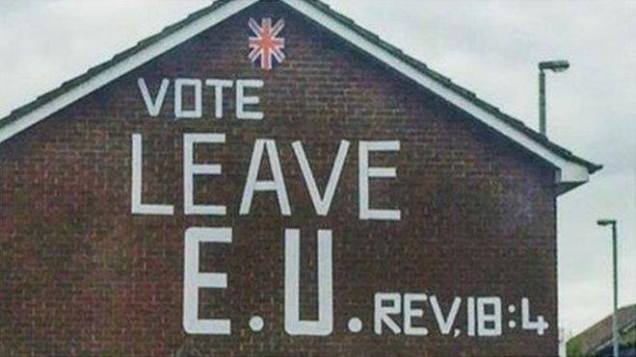
Brexit - Christianity - House mural - Revelation Chapter 18 verse 4 - EU Referendum

To believe that Brexit is the greatest threat to Britain’s Christian heritage and values is profoundly misguided

The people over at Reimagining Europe are at it again.

The Rt. Revd. Dr. Gregory Cameron, Bishop of St Asaph, is concerned that Britain may be about to throw it’s European-given Christian heritage out with the EU bathwater. One might consider it strange that he considers Brexit to be the existential threat to British Christianity rather than, say, increasing secularisation or the aggressive attacks by the Cult of Social Justice and Identity Politics on what were once traditional Christian family values, but such is the way of things these days within the Churches of England and Wales.

Bishop Cameron writes:

In spite of the fact that the Bible has more to say about the distribution of wealth, social justice and the welfare of nations than ever it does about eternal life, Christianity and religion have gently been tidied away by many to the sidelines of political life. To ask therefore about a “Christian Brexit” might provoke the response “Why should there even be talk of such a thing?” While fear of religious extremism may have fuelled the leave vote, Brexit is trumpeted as a clinical economic exercise, perhaps with a little national pride thrown in but free from ideological fancy. So many might wonder why would religion get mixed up in it?

In fact, Christian philosophy is something woven into the very fabric of British society.  It undergirds many of our attitudes and values, even if the rationales have become obscure, and the foundations repudiated by many.  Christianity came to us from the continent, and bound us to the continent, whether it was the mission of Pope Gregory to the Angles on the cusp of the seventh century, or the repudiation of one sort of Europe (the Catholic) in order to embrace another (the Protestant) in the sixteenth.  Even if we’ve chosen to renounce the politics of European integration, this doesn’t imply a rejection of a shared European culture – which is just as well given that most of British culture derives from a classical and Christian European past.  Could there even be a Britain without Christendom, the Angevin Empire, and the struggles for the European soul played out in the Napoleonic and World War conflicts?

It’s great that somebody is now asking these questions. I’m just astonished that the good bishop has identified Brexit as the greatest threat to this cultural heritage, rather than any of the other far more pressing issues. Of course Britain would not exist in anything like it’s current form without Christendom. Why does that mean that Britain should have voted to remain in a supranational political union beset with so many problems and unloved by so many?

And of course renouncing the EU’s explicitly political union and integrationist purpose does not mean that we reject our “shared European culture”. Given that Bishop Cameron understands that these are two different things, one wonders why he is concerned that rejecting one would even endanger the other.

More:

So which Christian values do I wish to see thrive in a Britain set apart?  One of the worst aspects of the Brexit vote, much commented upon, was the permission unintentionally given for xenophobia.  Too many immigrants (even to the third or fourth generation) are now made to feel unwelcome; too many folk have been given licence to be rude or violent.  I want to see a Britain which affirms our human connectness and the fundamental attitudes of respect and hospitality.  We need a people centred Brexit, which respects the individual choices and irrevocable commitments that immigrants and ex pats have made about their futures in the expectation of a border free Europe which is now slipping away from us.

I’ll have to take the bishop’s word for this. I have many friends and acquaintances in parts of the country condescendingly referred to by elites as “Brexitland“, but I myself live in cosmopolitan London, where Brexiteers and not “immigrants” are the scorned and endangered species. And while I do not question the veracity of media reports of xenophobic and racist incidents in the wake of the EU referendum campaign, from my own experience of strongly pro-Brexit places such as Stoke-on-Trent or my hometown of Harlow, neither have I witnessed anything like the wave of supposed anti-immigrant sentiment which the left-wing, pro-EU media insist is taking place.

Furthermore, if third and fourth generation immigrants are being made to feel unwelcome, clearly this is an issue which extends far beyond Brexit and Britain’s place in the European Union. As with the disastrous start to Donald Trump’s presidency in America, there is a tendency to blame every bad thing that happens in Britain on Brexit rather than seek to intelligently separate those factors which existed prior to the referendum and need addressing separately, and those which are legitimately connected with Britain leaving the EU.

The bishop then waxes lyrical about the “irrevocable commitments that immigrants and ex pats have made about their futures”. I’m sorry, but I have to take issue with this. The ultimate expression of making an irrevocable commitment to a new country that you want to call home is to become a citizen of that country. When my wife and I eventually move back to the United States, I eagerly look forward to the day when I receive my US citizenship as it will be an acknowledgement of the commitment I am making to that great country. Why should it be any different for somebody who intends to permanently settle and build their new life in Britain?

While EU citizens have been bribed for several decades with promises of a “borderless world” – while politicians have simultaneously kept silent about the damage done by undermining the nation state through the EU project – there is in fact nothing abnormal about expecting people to take that final oath of loyalty and allegiance before fully accepting them as a fellow countryman. You don’t prove your commitment to small-L liberal, British values simply by turning up, getting a job and starting a life here. An immigrant’s commitment to their new country should be more than the sum of the taxes that they pay and the personal enjoyment that they and their families receive as a result of making the move. To paraphrase John F. Kennedy, citizenship is about asking what you can do for your (new) country, not just what your (new) country can do for you.

More:

I want to see a Britain which reasserts its care for the weakest in its own society and in the citizenry of the world; which is committed to international development and international exchange.  We need a culture which is open to and accepting of heterogeneity.  In such a future, “British” should not stand in contradiction to “European”, but incorporate an international spirit: a continuing commitment to lowering barriers and not raising them.

Now this is just generic leftist pablum. Do we not already have an extensive welfare state? Do we not already lead the world by (wrongly, in my opinion) devoting an extraordinary fixed percentage of our GDP to inefficient, government-administered international aid? “British” does not stand in contradiction to “European”. But rather than becoming interchangeable, as EU integration ultimately demands, in future

Of course we should remain an open and tolerant society, but a culture which is “open to and accepting of heterogeneity” to an unlimited degree is a culture which refuses to assert its own values, fails to properly assimilate new immigrants and which fosters breeding grounds for unimaginable, unforgivable horrors like the sexual abuse epidemic in Rotherham, or the infant mortality rate as a result of consanguineous relationships in the London Borough of Redbridge. One might expect a Church of Wales bishop to be at least as equally concerned with these social problems as with the feelings of immigrants who felt perfectly happy in Britain until the Brexit vote but who now apparently feel besieged and despised, but apparently this is too much to ask.

More:

Brexit may not be a spiritual or religious enterprise, but we do have to defend the best aspects of our national life to build a future of which to be proud.  All the churches, including the Church in Wales, have to engage vigorously in the public debate about Brexit and our society as advocates of a Christian vision of social inclusion and people centred politics.

No. The trouble is that the Church has been lustily involved in the Brexit debate all through the referendum campaign and now it’s aftermath, but in an incredibly one-sided manner. Almost to the last person (with a few honourable exceptions) the bishops and clergy have come down hard on the side of remaining in the EU, often argued by clerics with a tissue paper-thin understanding of the issues at hand but a burning desire to signal their progressive virtue.

Has Bishop Cameron ever stopped to consider how an ordinary, decent, Brexit-supporting person might feel when confronted with the Anglican church’s institutional metro-leftism and scornful opinion of Brexiteers? Has he stopped to think what effect the Archbishops of Canterbury and York might have on the Brexit-supporting faithful when they so transparently agitate in favour of remaining in the European Union, and cast aspersions on the morals of those who dared to take a different position?

The bishop’s article concludes:

In challenging times of change it falls to us to demonstrate what loving our neighbours really means.

Yes, it does. Bishop Cameron might like to reflect on how he lives out those values in his own ministry, with particular regard to how he engages with the sincere beliefs of those within his own Welsh diocese who voted in good conscience for Brexit, are now looking forward in a spirit of optimism to its enactment, and are perhaps hoping for some pastoral encouragement (rather than despairing forgiveness) as they do so.

Because if this article is any guide, he has a long journey ahead of him.


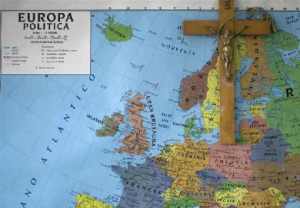
christianity-europe-eu-brexit-3

Support Semi-Partisan Politics with a one-time or recurring donation:

Agree with this article? Violently disagree? Scroll down to leave a comment.

Follow Semi-Partisan Politics on TwitterFacebook and Medium.

No, Brexit Is Not The Fault Of The Evil British Tabloids

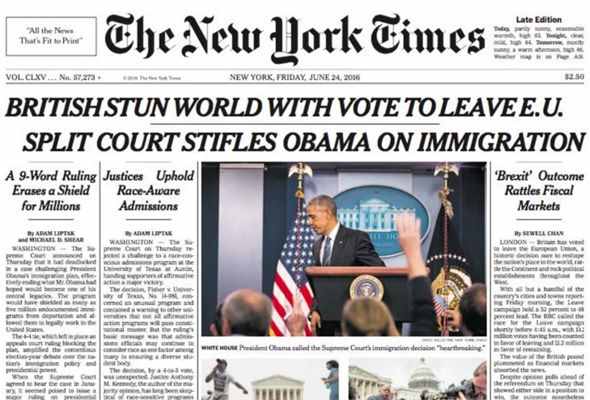
New York Times - Brexit Headline - EU Referendum - British stun world with vote to leave EU

The fearless and forensic New York Times continue their penetrating post-mortem investigation into the causes of Brexit. This week’s scapegoat – the Evil British Tabloid Press

Fresh from speculating about how the impact of Brexit on London will equal the fall of Babylon in terms of destruction and woe, the New York Times is back with another self-exonerating tonic for the global metro-left, reassuring them that Britain’s imminent departure from the European Union in no way reflects a serious failing on their part, but instead is entirely the result of sinister machinations by evil outside forces.

In the crosshairs this week: Britain’s tabloid press, led by The Sun newspaper, everybody’s favourite bogeyman. The strong implication of the New York Times article is that Britain’s tabloids are powerful and nefarious, exerting great sway over the political leanings of their simple-minded, provincial readers. The natural inference is that it is a worrying phenomenon when Evil Tabloids “influence” their gullible readers in a populist direction, but entirely laudable and unremarkable when the prestige media – outlets like the New York Times and the Guardian – serve their wise readers up with a consistent globalist, elitist worldview.

One can imagine the tone and content of the piece – sanctimonious, condescending and displaying a stunning lack of self-awareness – without even reading a word, but below are a few choice quotes:

In Britain after the so-called Brexit vote, the power of the tabloids is evident. Their circulations may be falling and their reputations tarnished by a series of phone-hacking scandals. But as the country prepares to cut ties with the European Union after a noisy and sometimes nasty campaign, top politicians court the tabloids and fear their wrath. Broadcasters follow where they lead, if not in tone then in topic.

Of course, when the Times talks about a “sometimes nasty campaign”, they are alluding exclusively to supposedly nativist and anti-immigration rhetoric, and not the hatred and contempt frequently pored on people who campaigned and voted in good conscience for Brexit. This becomes clear through all of the campaign incidents cited in the article, culminating in an attempt to link the murder of Jo Cox MP directly to pro-Brexit rhetoric.

More:

Their readers, many of them over 50, working class and outside London, look strikingly like the voters who were crucial to the outcome of last year’s referendum on membership in the European Union. It is these citizens of Brexitland the tabloids purport to represent from the heart of enemy territory: Housed in palatial dwellings in some of London’s most expensive neighborhoods, they see themselves as Middle England’s embassies in London.

In the campaign leading up to a snap election on June 8, most tabloids can be counted on to act as the zealous guardians of Brexit and as a cheering section for the Conservative government of Prime Minister Theresa May — even though the city that houses them voted the other way.

This is actually true. And the reason that many of the tabloids are bastions of working class populism surrounded by a sea of metro-leftism is that these are national newspapers, not city-specific or regional publications.

One has to take issue with the Times’ reference to “Brexitland” though, as if despite representing a majority of voters, Brexit supporters are somehow strange and exotic creatures whose behaviour requires analysis and interpretation by the prestige media – which, of course, is exactly how the New York Times sees them.

A more worthy article would turn the gaze back toward “Remainland” or “Europeland” and seek to understand how 48 percent of the country managed to drift away and treat the concerns, fears and aspirations of the 52 percent with such complete indifference. But this is the New York Times, and they have no interest in turning a forensic gaze on people like their own reporters, editors and readers – the “good people” whose behaviour needs no explanation or introspective analysis.

The article then takes a divergence to discuss Boris Johnson, even though the Foreign Secretary’s execrable journalistic career was spent at supposedly prestige broadsheets, not tabloids:

In the marble-and-glass lobby of the 17-story News Building, home to Mr. Murdoch’s British media empire, there is a small plaque that commemorates the building’s 2014 opening by Boris Johnson, then the mayor of London and now the British foreign secretary.

Mr. Johnson, wild-haired and witty, became a chief architect of Brexit when, four months before the referendum, he threw his weight behind a cause until then most closely associated with the populist U.K. Independence Party. But his main contribution to Brexit may go back more than two decades.

A correspondent in Brussels for The Daily Telegraph in the early 1990s, Mr. Johnson was credited by fellow reporters with pioneering the euroskeptic coverage of the European Union that has since become the default setting for much of the British press. With little regard for the truth — he was previously fired by The Times of London for making up a quote — Mr. Johnson wrote about a Europe scheming to impose standard condom sizes and ban his country’s beloved prawn-cocktail-flavored chips (both untrue).

“Boris invented fake news,” said Martin Fletcher, a former foreign editor of The Times, who was in Brussels shortly after Mr. Johnson. “He turned euroskepticism into an art form that every news editor in London came to expect.”

Ah, so the reason for bringing up Boris Johnson in an article supposedly about tabloid journalism was in order to shoehorn “fake news” into the discussion. Well, while nobody would seriously defend the quality of Johnson’s Europe reporting for either the Times of London or the Telegraph, these stories were primarily consumed by broadsheet-reading elites, not the oafish, Sun-reading working classes held in such contempt by the New York Times. And it should be noted that whatever the failings of the British newspaper media with regard to Brexit – and they are many – serious journalists like the Telegraph’s Christopher Booker have contributed consistently powerful analysis and criticism of the EU, shedding far more light than heat (unlike Johnson).

Besides, as this blog has previously discussed, focusing exclusively on “fake news”, much of which is so obviously hysterical and false as to be unbelievable to all but the most swivel-eyed of social media sharers, ignores the far more pernicious impact of ideologically skewed mainstream news, which is read by elites and decision-makers, often actually driving the political debate.

The example I always return to is the fact that nearly all prestige American news outlets have stopped referring to illegal immigrants as such, referring to them euphemistically as “undocumented” or “unauthorised” immigrants instead. Similarly, when an American politician seeks to crack down on illegal immigration they are nearly always described as being antagonistic toward the “immigrant community”, suggesting a deep-seated conservative antipathy toward all immigrants, making them seem far more extreme than they really are.

This linguistic trickery, common throughout the American mainstream media, seriously impacts the way that people view the subject of immigration. Read about Donald Trump’s hostility to “immigrants” often enough and you could be forgiven for thinking that the American president is actively plotting the deportation of law-abiding, visa or green card-holding immigrants, when this is simply not the case. American news outlets know that they are misleading their readers and viewers by stoking these alarming fears but do so anyway, purely in order to push a certain political outcome (acceptance and normalisation of illegal immigration).

All of this should be borne in mind when the New York Times article goes on to discuss tabloid treatment of immigration in the Brexit debate:

Britain makes many of its own laws, of course. But it is an interesting choice of example. A more obvious one might have been immigration.

Research by a former Times journalist, Liz Gerard, showed that tabloids pounded the immigration issue, with at least 30 hostile front-page splashes in The Daily Mail in the six months leading up to the referendum, and 15 in The Sun. The headlines — “Britain’s Wide Open Borders” The Daily Mail shouted — often tended toward histrionic. The Sun insinuated that child refugees arriving in Britain were lying about their ages and should have dental X-rays.

“Tell Us the Tooth,” the headline read.

A week earlier, I had met Kelvin MacKenzie, a former Sun editor and a columnist who was subsequently suspended for referring to a mixed-race soccer star as a “gorilla.” He said that the paper still reflected the “beating heart of Britain,” and that Brexit was won on immigration “by a thousand miles.”

Has the British tabloid media focused heavily on immigration, and often covered the subject in a crass and obnoxious way? Yes, of course – both news reporting, editorial lines and political commentary in the tabloids have been troubling at times. But one must remember that left to their own devices, the prestige media would hardly cover the issue at all. Newspapers like the high-minded Guardian have zero sympathy for those who object to uncontrolled mass immigration, and even more supposedly conservative outlets like the Times or Financial Times would happily ignore the subject altogether were it not for the tabloids keeping the issue on the national agenda. One cannot examine the sins of the tabloid press while pretending that the prestige press is somehow faultless.

Or can we?

Well, the New York Times certainly seems capable of obsessing about the mote in their British cousin’s eye while ignoring the beam in their own. As far as the New York Times is concerned, Brexit is purely the result of rabble-rousing tabloids (with an assist from glib superficial coverage in the prestige conservative press) whipping up xenophobic feelings among their working class readership. According to this self-exonerating narrative, Brexit has absolutely nothing to do with the prestige media failing to hold politicians to account for progressively signing away sovereignty and governing competencies to a barely accountable supranational government, or helping to make a nuanced conversation about immigration impossible.

No, instead we are expected to believe that the earnest saints of the prestige media and their establishment readers and cheerleaders are totally blameless. We are expected to close our minds to the possibility that more people might have heeded some of (say) the Guardian or the New Statesman’s more accurate concerns and reporting during the EU referendum if those publications had not conducted themselves for years in such a screechingly, stridently blinkered pro-EU manner.

And even now, after the New York Times managed to cocoon its own readership in such a self-reinforcing ideological bubble that almost none of them saw Donald Trump as a potential threat to their world order, in examining Brexit America’s newspaper of record is unable to question whether producing news and commentary almost entirely of the elites, by the elites and for the elites might not be the smartest way to approach journalism.

For God’s sake, New York Times, wake up. Turn your concerned gaze around 180 degrees and question the assumptions, biases and blind spots in your own reporting. Stop worrying about the evil tabloid press and its hold over the impressionable British working class mind for two seconds, and spend at least a moment considering how your own prestige journalism has unhelpfully perpetuated and reinforced failing globalist shibboleths for years, leading to these harsh instances of political correction in domestic and world affairs.

Because if the unexpected election of Donald Trump and the vote for Brexit (different though the two phenomena are) have taught us anything, it’s that blue-collar, working-class folks are far from being the only people who can be plausibly accused of being brainwashed by the news media that they consume.


Brexit - Daily Express Headlines - immigration

Support Semi-Partisan Politics with a one-time or recurring donation:

Agree with this article? Violently disagree? Scroll down to leave a comment.

Follow Semi-Partisan Politics on TwitterFacebook and Medium.

General Election 2017: An Unpredictable Race In Hampstead & Kilburn

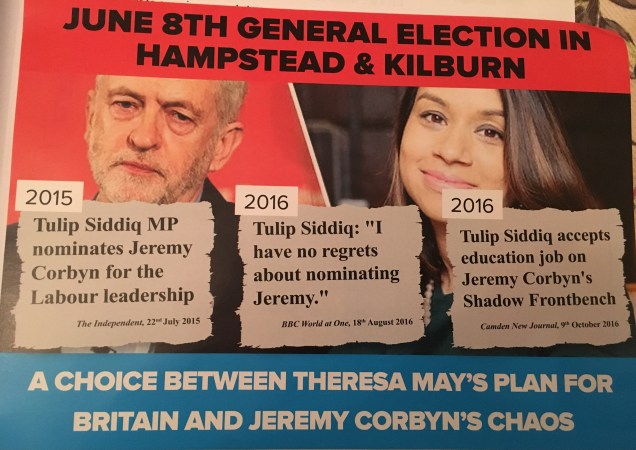
General Election 2017 - Hampstead and Kilburn Conservatives attack leaflet - Tulip Siddiq Labour Party Jeremy Corbyn - 1

Game On in Hampstead & Kilburn

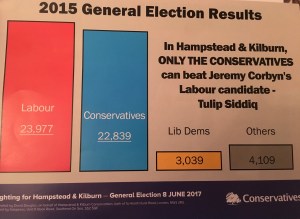
Today I received the above piece of campaign literature from the Hampstead and Kilburn Conservatives. It isn’t exactly subtle, and it perfectly encapsulates the problem facing incumbent Labour MP Tulip Siddiq, defending her slim majority of 1,138.

When Glenda Jackson was defending the seat in 2010, Labour squeaked home with a majority of just 42, making the seat the most marginal in England. And crucially, back then the seat was a tight three-way marginal, with the Liberal Democrats less than a thousand votes off the pace. In 2015, the LibDems suffered in Hampstead & Kilburn as they did nationwide, despite fielding an excellent candidate in Maajid Nawaz, and slumped to just 3,039 votes.

By way of further context, Hampstead & Kilburn voted strongly in favour of remaining in the European Union during the referendum, 75% Remain to 25% Leave,  with nearly 23,000 constituents signing an angry petition demanding a second referendum when things didn’t go their way with the first one.

So what will happen in the snap general election on 8 June 2017?

Given Labour’s current polling, and the personal polling of leader Jeremy Corbyn, by all rights Tulip Siddiq should be packing her office in Portcullis House and looking for something new to occupy her time. A majority of 1,138 puts Hampstead & Kilburn high on the Tories’ target list, and a few ministerial campaign visits and perhaps a drive-by from the PM herself ought to flip the seat, all other things being equal.

However, all other things are not equal.


The Brexit Factor

Brexit is a real factor here. Following the EU referendum I sat on the 139 bus from West Hampstead alongside numerous “March for Europe” protesters bearing placards weepily declaring themselves to be not British but European. Anger at Brexit runs deep here, as I discovered when I inadvertently carried a Brexit-themed shopping bag into the local Waitrose supermarket on Finchley Road during the campaign. The strength of pro-Remain feeling and the depths of the anger (and let’s face it – the arrogant refusal to even attempt to empathise with the opposing side) on display in this constituency throws everything up in the air when it comes to predicting general election results.


The LibDem Factor

To my mind, the key question is what happens to the Liberal Democrat vote. Nationally, the LibDems have come back from the dead, more in spite of Tim Farron’s leadership than because of it, and driven almost entirely by that party’s near-unambiguous anti-Brexit position. One knows that a successful vote for a LibDem candidate would result in an MP determined to delay or even scupper Brexit altogether were it remotely possible to do so, and this will be very attractive to a lot of voters here – the kind of people who abandoned the party in a hissy fit back in 2015 because of their coalition with the Evil Tor-ees, but who suddenly realise that they have common cause with Farron & Co. once again.


The Tory Factor

This is likely to see a number of voters – the “wetter”, less ideological and pro-EU Tories – switching their support from the Conservatives back to the Liberal Democrats. If your imagined “European identity” is the most important factor in your vote, then going LibDem is the only smart decision here.

In 2015, the Tories pandered to the constituency by running an extremely wet, centrist candidate – Simon Marcus was against the “bedroom tax” and welfare reform, and even against Trident renewal – and still came up short. I have yet to get a good sense of where 2017 candidate Claire-Louise Leyland stands on core ideological identifiers like tax policy, welfare reform, education, defence spending and civil liberties, but it seems likely that as an embryonic career politico (she stood for the Northern Irish constituency of West Tyrone back in 2015) she would generally toe the party line, perhaps diverging to the left on occasions.

Voters basing their decision on economic competence and basic credibility will probably therefore feel safe in voting Tory with Leyland on the ballot. Even though the Hampstead & Kilburn Conservatives probably don’t have any wiggle room to move further to the left, what else can centrist voters do – plump for Jeremy Corbyn? Hardly likely. That leaves the threat posed by the LibDems to the Tory europhile wing as the only real danger to be addressed.

However, just as Brexit is pushing some soft conservatives out of the Tory Party toward the LibDems, Jeremy Corbyn’s leadership of the Labour Party is likely to push a number of Hampstead & Kilburn voters away from Labour, also to the LibDems. Quite how much this will occur is hard to predict.


The Labour Factor

The more Hampstead side of the constituency has its share of trustafarian Corbynista types who think that reheated 1970s socialism is the best thing since sliced bread, but I suspect that there are far more young lefty creative professionals here who recoil from Corbyn’s haphazard management of the party and the very real chance that he will significantly hike their taxes given half a chance. There are a lot of people here for whom being seen as a “lefty” is important for social and professional acceptance and/or advancement, but who also quite like having disposable income and a functioning economy in which to spend it. Thus Jeremy Corbyn isn’t really their guy.

Meanwhile, the more Kilburn side of the constituency contains an awful lot of Corbyn true believers – as I saw when I attended a Corbyn rally at the Kilburn State Cinema during the post-Brexit leadership coup. However, there are also a number of working and lower-middle class constituents who might recoil from the kind of metropolitan identity politics that the Labour Party currently peddles, as Channel 4 news discovered when they trawled Kilburn High Road for vox pops.

In short, the Labour vote here is even more unpredictable than the Tory vote. The Guardian suggests that Hampstead & Kilburn may be part of a “metropolitan firewall” for Labour. Hmm, now where have I heard vastly over-optimistic talk of an electoral firewall before?


Too Many Moving Parts

While it is safe to say that the Liberal Democrats will exceed their 2015 vote total (despite fielding a candidate without Maajid Nawaz’s household name factor), it is hard to predict just how strongly the party will rebound, or at whose expense. Theresa May’s Brexit position (and revulsion at Brexit in general) will drive some Tory voters over to the LibDems, while lack of confidence in Jeremy Corbyn will drive some Labour voters the same way.

Will the combined effect be sufficient that the LibDems manage a miraculous come-from-behind victory, sneaking past the two big parties to snatch the seat? Unlikely. It would take an awful lot of defectors to bump up the LibDem total by such a large amount. But it is not impossible. The LibDem vote here fell by 13,452 between 2010 and 2015 just because their voters were in a strop with Nick Clegg for his decision to pragmatically enter a coalition with the Evil Tor-ees in the national interest rather than propping up the rotting carcass of Gordon Brown’s Labour government. Stung by Brexit, how much more reason have they now to return to the fold, more motivated than ever before?

However, I think it is more likely that the Hampstead & Kilburn constituency will be won by the party which manages to do the best job preventing their peripheral supporters from defecting to the LibDems. And it seems to me that the Conservatives have an advantage here.

While 2017 candidate Claire-Louise Leyland remains something of an unknown quantity (former Stronger In campaigner turned Theresa May supporter, passionate about mental health and otherwise fill in the blanks), she at least represents a party viewed rightly or wrongly as basically competent. This article is not the place to relitigate the many ways that Theresa May’s government is endangering our national interests through their glib and superficial approach to Brexit negotiations, but in a head-to-head between Tory ideologues and fratricidal Labourites you pick the swivel-eyed Tory every time.

Labour, on the other hand, risk losing their most pro-European supporters – the kind of tedious people who paint the EU flag on their face at public demonstrations and call themselves “citizens of the world” – to the LibDems, together with portions of their young professional vote and working class anti-Corbyn vote.

In other words, while even an ardently pro-European Conservative voter has many reasons to think long and hard before abandoning the party, pro-European Labour voters with little real expectation of a general election victory have every incentive to shrug and vote for LibDem candidate Kirsty Allan (while furiously humming “Ode to Joy”, naturally).

And that is why the piece of campaign literature which came through my door today should be extremely worrying for Labour’s Tulip Siddiq. The helpful chart on one side makes it look as though this is a straight-up fight between Jeremy Corbyn’s loopy, crackpot Labour Party and the Tories (thus underplaying the possibility of a LibDem fightback), while the reverse side trumpets three “damaging” headlines in which Siddiq proudly takes credit for nominating Jeremy Corbyn to the Labour leadership, refuses to concede that it was an error and then actually joins his Shadow Cabinet (while conveniently omitting the fact that Siddiq later resigned from the shadow frontbench in order to clutch the EU flag and vote against Article 50).


Where Things Stand

If this is indeed a scenario in which the two leading parties – Labour and the Conservatives – are attempting to win by losing the least number of votes to the Liberal Democrats, then the Tories presently have the advantage, and if they are smart they will do everything they can to tie Tulip Siddiq to Jeremy Corbyn in the public imagination. This will certainly be the advice/orders filtering down from Lynton Crosby and CCHQ in any case.

The more that Hampstead & Kilburn constituents are seeing and talking about how Tulip Siddiq helped inflict Jeremy Corbyn on the country and repeatedly enabled his chaotic leadership of the party (fair characterisation or not) rather than how the Tories have a childlike understanding of Brexit and an increasingly tarnished reputation for economic competence, the more likely it is that the Conservatives will prevail on 8 June and Claire-Louise Leyland will be returned as our new MP.

To survive and retain the seat for Labour, Tulip Siddiq must find a way of beating the Labour Party’s unbeatable Brexit conundrum while also distancing herself from Jeremy Corbyn – but not to the extent that it keeps the Corbynista vote at home or threatens any support she might need from the party leadership. In other words, Siddiq really has to thread the needle to prevail here.

Meanwhile, the Liberal Democrats need to make the local race all about Brexit, and nothing else. Kirsty Allan needs to paint herself as the only candidate with the courage to stand up for all of Hampstead & Kilburn’s heartbroken “citizens of the world” by acting with other LibDems as a drogue parachute on Britain’s departure from the European Union. Then she must hope that she can tempt enough such people away from their 2015-era partisan loyalties in order to pull the LibDems back to their 2010 levels of support, plus a little bit extra. It is a tall order, but not quite an impossible one.

So, all to play for at the moment. Bring on the hustings!


Update – 30 April

This interesting analysis from the Guardian and Electoral Calculus uses ICM polling to suggest that the Liberal Democrat resurgence may be a paper tiger – an attractive theme (and one eagerly picked up by the Remain-sympathising Westminster press) but with little basis in actual reality.

In particular, it shows that while a number of previously Labour-voting Remainers are indeed likely to jump ship to the LibDems, the Conservative vote looks far stickier, with 2015 conservative voters far less likely to jump ship even if they disagree with Brexit. This would seem to pour cold water on any hopes of a LibDem resurgence here.

The upshot of their analysis:

Our model sees the Tories on 422 seats, with Labour reduced to just 150, and the Lib Dems declining from 9 to 6. The Conservative majority would be north of 190. Labour would be wiped out beyond what most people are currently predicting. Leadership candidates like Clive Lewis would no longer be leadership candidates, because they would no longer be MPs.

The Lib Dems could lose a third of their MPs even after gains in places like Cambridge, with seats like Carshalton & Wallington, Richmond Park and Southport especially vulnerable. The danger in these seats is pretty clear. In Carshalton, Tom Brake won a majority of 1,510 in 2015. If a fraction of the town’s 7,000 UKIP voters return to the Tories, that majority will be wiped out. Southport is almost identically poised. Unless a major influx of Remain voters arrives from somewhere – and there’s no indication in any of this data that it will – then these seats will be lost. The Lib Dems don’t face the same problem in Richmond Park, which only turned back to the Lib Dems in December; but with a majority of less than 2,000 and a recent history of flipping, you wouldn’t bet the mortgage on a hold.

Devastating if correct.

On the plus side for Labour, there is hardly any UKIP vote in Hampstead & Kilburn to drift back to the Tories, unlike some other constituencies where the potential backwash of ex-UKIP voters to the Conservative Party threatens to sink LibDem and Labour candidates alike. This means that Tulip Siddiq’s fate as the constituency MP is firmly in Labour’s own hands, and their ability to hold on to their vote in the face of Jeremy Corbyn’s broad unpopularity.


General Election 2017 - Hampstead and Kilburn Conservatives attack leaflet - Tulip Siddiq Labour Party Jeremy Corbyn - 2

Support Semi-Partisan Politics with a one-time or recurring donation:

Agree with this article? Violently disagree? Scroll down to leave a comment.

Follow Semi-Partisan Politics on TwitterFacebook and Medium.

Theresa May Calls A General Election: First Reaction

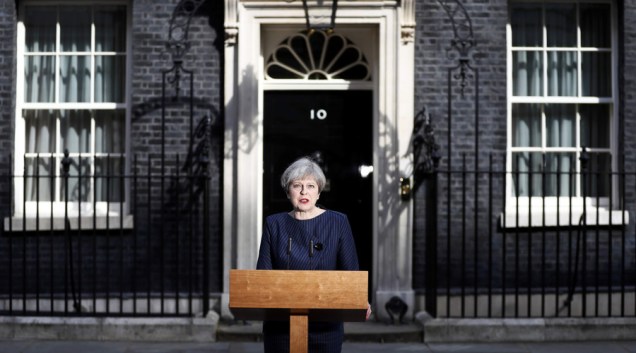
Theresa May - Conservative Party - General Election 8 June - Parliament - Downing Street

Here we go again

Okay, here is my hot warm lukewarm tepid pretty cold take on Theresa May’s shock announcement that the government will seek to trigger a general election on 8 June.

After a Scottish independence referendum in 2014, a general election in 2015 and an EU secession referendum in 2016, can we really muster the energy and enthusiasm for another vote in 2017?

Well, now we don’t have a choice (not that thinking a bit about the issues and then strolling to your local polling booth is very difficult). Theresa May made a bold decision to reverse her earlier protestations to the contrary and call an early general election, and from a purely party political perspective it was the smart move. Besides the jubilant Liberal Democrats, many of the whiners and naysayers on the opposition benches are unimpressed, bordering on terrified.

Many on the Left have been trying to have it both ways, first by criticising our “unelected” prime minister for daring to lead without an electoral mandate of her own, and now by carping at her decision to go the the public to seek that very mandate. It appears that “put up or shut up” time has snuck up on them.

But how does each party stand to fare in a June general election?


Labour

First and foremost, this is a richly deserved disaster for the Labour Party. Dan Hodges has already taken to Twitter trying to pin the blame for the party’s coming annihilation on Jeremy Corbyn and his supporters, but this is to mistake the symptom for the disease.

Jeremy Corbyn won the Labour leadership and retained it following the coup attempt – both times cheered on by this blog – because unlike the third rate nonentities who currently make up the centrist wing of the party, the Corbynites clearly stand for something. You may not like what they stand for – indeed, opinion polls show that most of the country strongly dislikes the hard left agenda – but at least they have clearly demonstrable values and principles which extend beyond the acquisition and retention of power.

What have the Labour centrists offered since around 2005? Nothing but bland, focus-grouped banalities, preaching enlightened compassion while shoring up a failing consensus (pro-EU, pro-mass immigration, eager to reap the benefits of globalisation but even more eager to throw its victims on the welfare scrapheap rather than help them adapt to the new world) that betrays the interests of its core working class (and principled eurosceptic) vote.

The Corbynite revolution gave the indolent centrists a richly deserved kicking, but Corbynism – with is aversion to patriotism, obsession with nationalisation and statism, obsessively anti-American foreign policy and seething hostility toward wealth generation – is not the solution, but rather a fringe obsession. Throw in the fact that even many Corbyn true believers disagree with Corbyn’s principled euroscepticism (one of the few issues where he happens to be right), and there are more faults running through the Labour Party than they can possibly resolve in the weeks leading up to 8 May.

The key test will be the writing and release of the Labour Party manifesto. Under Jeremy Corbyn’s leadership, the Labour Party must quickly produce a compelling vision for the country that appeals to Corbynite true believers while not scaring off the rest of the country. Sounds impossible? That’s probably because it is.

And after the election? If (as seems likely) Labour end up treading water or going backwards, will that be the end of Jeremy Corbyn and Corbynism? Maybe, maybe not. You can pretty much find a pundit to tell you exactly what you want to hear on that question, depending on your own proclivities. But the centrists’ only hope is to hang the party’s impending defeat firmly around Jeremy Corbyn’s neck so as to discredit his worldview and leadership.

I half wondered whether some panicked shadow cabinet members might try to engineer another last-minute coup to depose Corbyn and replace him with a caretaker leader to see the party through 8 June, but it seems unlikely. The centrists have proven time and again that they lack all courage and conviction, and since victory seems impossible under any circumstances it is better from their perspective to let a general election defeat do what they themselves could not – rid the party of Jeremy Corbyn.

But if Labour does go on to lose the election and Corbyn then resigns, will what follows be any better? The last Labour leadership contest should tell you all you need to know about the calibre of individuals waiting in the wings to succeed Jeremy Corbyn.


Conservatives

One may not agree with Theresa May on all things – this blog certainly has sharp differences, particularly on the manner of Brexit and the role of the state – but one would be hard pressed to argue that she is an incompetent leader, particularly in comparison with the other party leaders. The public sense this too, which is why the Tories currently have a 20+ point lead over Labour in the opinion polls, why even many Labour supporters prefer Theresa May to Jeremy Corbyn as prime minister, and why the Conservatives will increase their majority following the election.

However, the Tories may not gain as many seats as their current commanding poll lead suggests. Some Tory MPs in staunchly Remain-supporting constituencies are vulnerable, particularly those who unseated Liberal Democrat MPs in 2015. Meanwhile, the Tories are potentially poised to pick up some seats from unapologetic Remainer Labour MPs representing constituencies which voted Leave, particularly in Northern England. Therefore we are likely to see a degree of musical chairs, where some formerly Tory seats go LibDem while the Tories pick up a number of seats from Labour. In my opinion, the net effect will favour the Tories (and the Liberal Democrats) at the expense of Labour, but the extent to which this is the case remains open for debate.

More interesting, though, is the likely impact on the composition and mindset of the Conservative Party following the election, assuming that they are returned to government. This will likely be a Tory party where some of its more pro-EU MPs are gone (excellent), but which also suffers from the loss of those MPs who otherwise exerted a more liberal influence on the government. The authoritarians and the head-in-the-sand hard Brexiteers will likely be strengthened and consolidate their grip over the party, which is a problem for anybody who wanted Brexit to act as a catalyst for further liberal reform and democratic or constitutional renewal in Britain.


Liberal Democrats

The LibDems did not deserve their electoral drubbing in 2015, in which they were essentially punished for finally behaving like a responsible party of government and abandoning an unworkable campaign pledge (on university tuition fee caps) in the face of fiscal reality. For this act – for graduating from a party of preening opposition to one of government – they were subject to endless hysterical screeds about “betrayal”, and lost the bulk of their parliamentary party in the process.

Just as the LibDems did not deserve the full extent of their defeat in 2015, so they will not have deserved their likely gains in 2017, which will be fuelled by marshalling hysterical establishment opposition to the outcome of the EU referendum. The party will likely pick up a brace of seats – many retaken from the Conservatives – based solely on their pledge to campaign against a “hard Brexit” they will be powerless to stop. At one time, the Liberal Democrats might have presented a potential fallback option for disenchanted Conservative voters unhappy at the more authoritarian direction of their party. No more. Under Tim Farron, the party has descended into screechy europhilia and blind hatred of that half of the country which voted for Brexit. Civil liberties and other one-time LibDem interests will take a back seat to their efforts to subvert Brexit.

As a further complication, the kind of Brexit that the LibDems now technically argue for is actually not inherently bad in the short term – retaining single market access, openness to immigration etc. But the LibDems are not to be trusted, because:

  1. Their true agenda is to reverse Brexit entirely, not merely to seek the best form of Brexit, and
  2. Rather than pushing for better models of European cooperation and trade regulation, the LibDems seek only to keep Britain as closely shackled as possible to the existing, failed systems. For a party which likes to present itself as the home of enlightened, grown-up pragmatism, the LibDems take their europhilia like a religion, worshipping the EU as something inherently good and never to be seriously questioned.

Finally, Tim Farron is already picking up a lot of flack in left-wing papers and on social media for his fundamentalist Christian beliefs, particularly as they pertain to homosexuality.

This is a shameful, ridiculous witch hunt. So what if Farron refused three times to say whether he considers gay sex to be a sin, as his moralistic tormentors are currently crowing in a bid to damage him? Does anybody seriously think that the Liberal Democrat manifesto is going to call for the recriminalisation of homosexuality, for putting sodomy laws back on the statute books? Be serious. There is a world of difference between private belief and public policy.

There has to be space for private religious belief in this country. Secularists have a fair point when they worry about the influence of religion on public policy, particularly given that we have a legislature where 26 unelected bishops of the Church of England sit in the upper house and meddle in our lawmaking. But religious faith should not and must not become an acid test of eligibility for public office, where anybody professing faith or traditional beliefs is portrayed as extreme and beyond the pale.

More than anything, this is a witch-hunt against Christianity, one which will be cynically used by the other parties of the left as they manoeuvre for political advantage. Interestingly, Islam also has a word or two to say about homosexuality, and one can argue that Islam has a lot further to go than Christianity in accommodating LGBT people and issues, certainly in this country. But one wonders how many of the perpetually outraged critics of Tim Farron would be as fervent in their criticism if Farron were a Muslim rather than an Evil, Backward Christian?


UKIP

I voted for UKIP back in the 2015 general election, not as an endorsement of that party’s more nativist, reactionary tendencies but as a means of expressing disgust in a Conservative Party which had drifted far from conservative principles under the leadership of David Cameron, and whose slide toward bland centrism did not deserve rewarding with my vote. I stand by that decision.

Needless to say, the landscape has changed in two years. Nigel Farage – a man with considerable political courage, if also numerous faults and demagogic tendencies – has retreated to the sidelines, if not quite sailed off into the sunset. And after a period of instability the party has settled on Paul Nuttall, who has shrunk into his leadership position, more of an inept clown than an existential threat to Labour’s Northern base.

Furthermore, the party’s raison d’être was essentially accomplished with last year’s referendum vote to leave the European Union. The party limps on, near bankruptcy and desperately insisting that its existence remains necessary as the guard dog of a hard Brexit, but most people either feel that the job is done following the triggering of Article 50 or realise that a party in such turmoil will be in no position to influence events any further, regardless.

The writing has been on the wall for some time. I attended the UKIP Party Conference in Doncaster in 2015, and spent my time interviewing various party figures and supporters about what role they saw for the party in a post-referendum Britain. Most senior UKIP figures, including Nigel Farage, spoke only in bland banalities.

Only Douglas Carswell had a plausible answer – a return to small-government, free trade, small-L libertarian platform – but this side was never likely to win out over the leftward turn to appeal to disaffected Labour voters. And indeed, Carswell has now left the party to stand as an independent candidate, firmly closing the door on any move in this direction.

At present, UKIP seem doomed to lurch incompetently to the Left, willingly shedding any remaining libertarian voters as they court the disaffected Labour vote by promising the same kind of consequence-free safety and security that Donald Trump promised to his supporters in America. A sad decline of a briefly promising political party.

Nobody can deny the influence that UKIP has had on our national politics. Nobody can say for sure that UKIP will not bounce back from their current political near death experience. But we can say with relative certainty that the party will fail to impress in 2017.

My take from the UKIP conference two years ago seems increasingly prescient:

I can’t help wondering if UKIP might not pay a price in 2017 or beyond for failing to pay enough heed to the type of party they want to be – and the type of supporters they want – by the time of the next general election.

I think it is fair to say that UKIP will now pay in a lump for their lack of foresight.


Scottish National Party

Nicola Sturgeon was quick to declare that Theresa May’s decision to call for a general election is a “political miscalculation”.

Sturgeon said:

“She [Theresa May] is clearly betting that the Tories can win a bigger majority in England given the utter disarray in the Labour Party.”

“That makes it all the important that Scotland is protected from a Tory Party which now sees the chance of grabbing control of government for many years to come and moving the UK further to the right – forcing through a hard Brexit and imposing deeper cuts in the process.”

Because in Nicola Sturgeon and the SNP’s mind, Scotland is a nation of adult-sized, diaper-clad babies requiring constant protection from the Evil Tor-ees, who are constantly threatening to do Bad Things like lower the tax burden and unleash free enterprise.

Will the SNP manage to sweep the three Scottish constituencies they failed to capture in 2015, or will they lose seats? One can only imagine that they will do very well again, and use their strong showing as an excuse to prance around acting as though the couple of million votes they received from a tightly concentrated part of the United Kingdom represent some God-given, stonking mandate to thwart Brexit for the rest of us or else attempt to sever Scotland’s historic union with the UK through another pointless referendum (they would lose, since the choice would be between remaining in the UK or being outside both the UK and EU).

At some point, one might hope that Scottish voters might look around them and realise what godawful, incompetent government they are receiving by lending such overwhelming support to the SNP. One might hope that those Scots who love liberty might balk at a party which introduces an authoritarian “named person scheme” giving the government oversight of every Scottish child, and whose decision to centralise the fire and police services into single unitary authorities is already costing lives. One might hope that Scots who are against independence or ambivalent about it might decide to stop rewarding a party which has abdicated any responsibility for government in favour of a single-minded obsession with independence, even after the 2014 referendum, to the extent that no legislation has passed the Scottish Parliament for over a year.

But all such hopes will be in vain. The SNP will perform well once again, racking up credulous low-information votes in defiance of their abysmal governing in Scotland and the scandal-plagued, ineffectiveTartan Tea Party in Westminster. By their actions and apparent preference for living in a one-party SNP statelet within the United Kingdom, Scottish voters are choosing to deliberately sever themselves from our shared national political discussion.

If the SNP is all but guaranteed to clean up regardless of their abysmal record in government and the ineffectiveness of their Westminster caucus, what incentive do the other parties have to make compelling pitches for Scottish votes, since these pitches will always be ignored? By choosing to half sever themselves from our United Kingdom with blind support for the SNP, Scottish voters are in danger of completely severing themselves from our national political discourse.

This is a tragedy, but it is a tragedy very much of Scotland’s own making.


Britain’s Rainbow, Unicorn-Spangled Progressive Alliance

Ah yes, the super-secret, silent progressive majority which is going to come together in the spirit of unity to lock the Evil Tor-ees out of Downing Street forever and save Britain from the evils of conservatism. Didn’t exist then, doesn’t exist now.

Disregard any breathless commentary about a Labour-LibDem-Green-SNP alliance.


Conclusion

One wonders what was the point in instituting a Fixed Term Parliaments Act if we were only to discard the idea of fixed terms for political expediency at the first opportunity.

Generally speaking, fixed terms of government are a good idea, but it must be acknowledged that they usually do not work well in a parliamentary system. Excuses can always be found to justify circumventing the normal timelines and going to the polls early, particularly when the government’s majority is small or when the country faces a particularly contentious issue which bisects normal party lines. The present situation meets both of these criteria.

Theresa May’s decision to call an early general election was clearly motivated by the opportunity to extend the Tory advantage in Parliament, with her stated rationale about “Westminster being divided while the country is not” being a convenient smokescreen. But that’s politics. If people didn’t like the idea of snap elections held for partisan reasons they had every opportunity to become more involved in campaigns for electoral and constitutional reform. Those who spend their time watching Britain’s Celebrity Horses Dancing On Ice and ignoring the nuts and bold of how their country is run have limited standing when it comes to complaining about outcomes they dislike.

Furthermore, those on the Left who spent the last nine months complaining that Theresa May has no mandate to govern can’t very well also complain when the prime minister responds to their wailing by seeking to claim an electoral mandate of her own. This applies particularly to snivelling Labour MPs (Liz McInnes) who seek to use the death of their own family members as political capital.

Brendan O’Neill perfectly critiques this attitude:

The speed with which Remainers went from saying “May doesn’t have a mandate for Brexit” to “How dare May seek a mandate for Brexit” is breathtaking. All that “no mandate” talk was such hogwash. They know there’s a mandate out there for Brexit — a historic, populous, swirling mandate — and they are horrified that it is being tapped into once again via a General Election.

It’s clear now that by “no mandate” they meant “ignore that mandate”. They thought they had wrestled the issue of the EU, and the whole question of Britain’s political and economic future, back from the people and into the hands of their expert friends and legal minds and level-headed lords and MPs. Wrong. Here come the people again!

When it comes to a summary of where we stand and predictions as to the likely outcome, Pete North makes the most sense as it relates to the election’s impact on Brexit:

If it is to be a shadow referendum then remain has already lost it given that their options are split and they’ve spent the last year telling most people they’re thick and xenophobic. I think it’s fair to say that the Lib Dems will achieve a restoration of a sort but there’s not much to get excited about. It is possible that they could form the next official opposition but by then Mrs May will have all the mandate she needs to do whatever she wants. There will have been a referendum, a parliamentary vote, article 50 and a general election. We are leaving the EU and that’s the end of it.

If I had to make a bet, I would predict that the next two months will see a lot of noise and intrigue followed by an electoral outcome not dissimilar to the one we have today, only with a slightly larger Conservative Party caucus gained at Labour’s expense and a moderately revitalised Liberal Democrat party who then go on to strut around as though their 30-odd seats represent some kind of stunning repudiation of the referendum result. UKIP and the Green Party will go nowhere, and by reaffirming Scotland as a de facto one-party statelet by rewarding the SNP for a job disastrously done, Scottish voters will continue to make themselves increasingly irrelevant to the UK-wide political debate.

Maybe I’ll be proven wrong. Maybe the Independent will come out with a hidden video recording of Theresa May murdering puppies a week before polling day, or maybe some of our EU “friends” will make some kind of infantile play to destabilise the British political situation for their own sadistic gratification. Perhaps Theresa May will astonish me and turn out to be pursuing an expanded Tory majority because she does in fact have an ideological backbone, and needs the wiggle room in Parliament to ram through a proper reforming Conservative agenda. Perhaps.

But if I had to guess right now, I would say that on 9 June we will be looking at “the same, but more of it”.
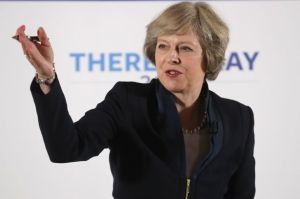
 

Theresa May - Conservative Party

Support Semi-Partisan Politics with a one-time or recurring donation:

Agree with this article? Violently disagree? Scroll down to leave a comment.

Follow Semi-Partisan Politics on TwitterFacebook and Medium.

MPs Allege Foreign Hacking Of The EU Referendum, Provide No Evidence

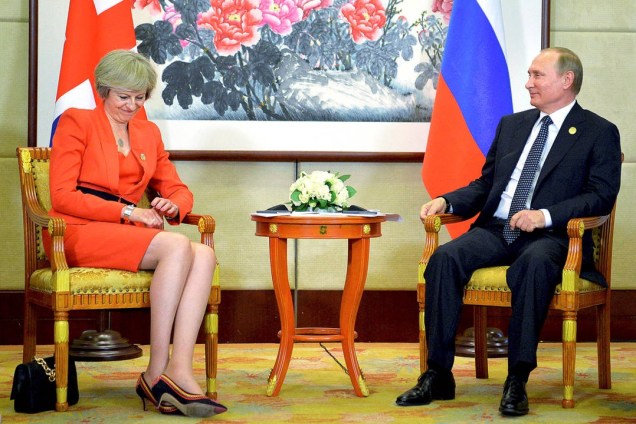
Russia - Vladimir Putin - Brexit - EU Referendum - Hacking - Theresa May

Cynical, calculating and alarmist MPs are undermining faith in democracy with their conspiratorial anti-Brexit shenanigans

“A voter registration site that crashed in the run-up to last year’s EU referendum could have been targeted by a foreign cyber attack, MPs say”, screeches the BBC.

The Guardian, spurred by its anti-Brexit bias to step even further over the line of journalistic responsibility, declares “MPs are concerned about allegations governments including Russia and China may have interfered with EU referendum website”.

Wow. One might think that there would be some solid evidence, a “smoking gun” or at least an accumulation of circumstantial evidence for MPs to use their public prominence and access to media platforms to make such an accusation.

But we live in an age when the political establishment, spurned by the electorate and destabilised by defeats such as Brexit and the election of Donald Trump, have found solace in the kind of comforting conspiracy theories which they once decried. And so today we woke up to the insinuation that Russia (or some other foreign power, but really Russia) had covertly intervened in last year’s EU referendum and swung the result in favour of Brexit.

From the Guardian’s alarmist article:

Foreign governments such as Russia and China may have been involved in the collapse of a voter registration website in the run-up to the EU referendum, a committee of MPs has claimed.

A report by the Commons public administration and constitutional affairs committee (PACAC) said MPs were deeply concerned about the allegations of foreign interference in last year’s Brexit vote.

The committee does not identify who may have been responsible, but has noted that both Russia and China use an approach to cyber-attacks based on an understanding of mass psychology and of how to exploit individuals.

The findings follow repeated claims that Russia has been involved in trying to influence the US and French presidential elections.

My emphasis in bold. In other words, MPs of the Public Administration and Constitutional Affairs Committee went on the record to insinuate that a foreign power attempted to manipulate the EU referendum result while supplying zero evidence in support of their claim. Apparently their “concerns” were deemed worthy of inclusion in a lessons learned report on the EU referendum, even though none of the MPs on the committee could provide a single justification other than base paranoia.

The relevant section of the report states the following:

The Register to Vote website crashed on the evening of 7 June 2016. The Government has stated that this was due to an exceptional surge in demand, partly due to confusion as to whether individuals needed to register to vote. The Government should develop an online service to enable people to check whether they are already correctly registered. However, the Government clearly failed to undertake the necessary level of testing and precautions required to mitigate against any such surge in applications. The Association of Electoral Administrators criticised the government and the Electoral Commission for a clear lack of contingency planning.

We do not rule out the possibility that there was foreign interference in the EU referendum caused by a DDOS (distributed denial of service attack) using botnets, though we do not believe that any such interference had any material effect on the outcome of the EU referendum. Lessons in respect of the protection and resilience against possible foreign interference in IT systems that are critical for the functioning of the democratic process must extend beyond the technical. The US and UK understanding of ‘cyber’ is predominantly technical and computer-network based, while Russia and China use a cognitive approach based on understanding of mass psychology and of how to exploit individuals. We commend the Government for promoting cyber security as a major issue for the UK. We recommend permanent machinery for monitoring cyber activity in respect of elections and referendums be established, for promoting cyber security and resilience from potential attacks, and to put plans and machinery in place to respond to and to contain such attacks if they occur.

But rather than providing corroborative detail in the body of the report, the committee merely restate the unfounded allegations:

102. Although the Committee has no direct evidence, it considers that it is important to be aware of the potential for foreign interference in elections or referendums. The report on lessons learned from the website crash described it as “technical in nature, gaps in technical ownership and risk management contributed to the problem, and prevented it from being mitigated in advance”.138 However the crash had indications of being a DDOS (distributed denial of service) ‘attack’. We understand that this is very common and easy to do with botnets. There can be many reasons why people initiate a DDOS: commercial (e.g. one company bringing down a competitor’s website to disrupt sales); legal (e.g. a law enforcement agency wanting to disturb criminal activity on Darknet); political; etc. The key indicants are timing and relative volume rate.

103. PACAC does not rule out the possibility that the crash may have been caused by a DDOS (distributed denial of service attack) using botnets. Lessons in respect of the protection and resilience against possible foreign interference in IT systems that are critical for the functioning of the democratic process must extend beyond the technical. The US and UK understanding of ‘cyber’ is predominantly technical and computer-network based. For example, Russia and China use a cognitive approach based on understanding of mass psychology and of how to exploit individuals. The implications of this different understanding of cyber-attack, as purely technical or as reaching beyond the digital to influence public opinion, for the interference in elections and referendums are clear. PACAC is deeply concerned about these allegations about foreign interference.

Now this is just plain self-contradictory. The committee state correctly that rival powers such as Russia and China use a “cognitive approach” to their cyber warfare efforts, seeking to influence the minds of electors through dissemination of fake news and targeted releases of stolen information to undermine public confidence in one or other side of a political debate. This formed much of the controversy over the allegations of Russian hacking of the US presidential election, with some people arguing that Russia deliberately hacked and then leaked damaging information about the Clinton campaign to Wikileaks while withholding any damaging information about the Trump campaign.

However, the type of hacking described (or imagined) by the MPs in their report is a distributed denial of service (DDOS) attack, which is a technical, web-based attack designed to target computer systems and websites, not human minds. The MPs already conceded that the temporary unavailability of the voter registration website had no material impact on the outcome of the referendum; therefore, for Russian or Chinese cyber activity to have had any effect on the Brexit vote would have required them to have engaged in cognitive hacking – and the committee provides zero evidence, not even a suggestion, that this took place.

And besides, Russia had no need to wage the kind of “cognitive” cyber warfare that they are accused of deploying against the United States. Vladimir Putin didn’t need to hack David Cameron’s emails and leak the contents to Wikileaks for us to find out that he, and the rest of Britain’s political elite, considered eurosceptics to be “fruitcakes, loonies and closet racists” – the kind of damaging private remark that rightfully helped to erode trust in Hillary Clinton and the Democratic Party. No, David Cameron was bold enough to let the country know exactly what he thought of the 52% who ended up voting for Brexit, back in 2006 on a live radio show.

And interestingly, in 87 pages of findings, the Public Administration and Constitutional Affairs Committee – so concerned about the influence of foreign powers on our sacred democratic process – could not spare a sentence, let alone a paragraph, to censure David Cameron for inviting President Barack Obama to a Downing Street press conference for the sole purpose of browbeating the British public and threatening us with being sent to the “back of the queue” in terms of a future trade agreement with the United States. In a supposedly comprehensive review of how the EU referendum was planned and executed, was this not worth a mention?

And what about David Cameron’s flagrant breach of purdah rules by making a speech from the steps of Downing Street during the prohibited period? Again, this egregious violation of the letter and spirit of the referendum rules is apparently not worth analysis or mention by the committee, who seem only too happy to ignore elected officials and civil servants deceiving and influencing voters in real life while getting worked up about unfounded allegations of foreign interference.

PACAC has every right – indeed a responsibility – to be concerned about foreign interference in British democracy, and to apply pressure to the government to do more to guard against such interference where appropriate. But in their “Lessons Learned from the EU Referendum” report, all the committee have done is foment unfounded suspicions of foreign interference – an attempt to hack the Brexit vote which does not even match the profile of the type of cyber warfare favoured by Russia and China – knowing that it will be picked up and repeated by a credulous media who care more about a dramatic headline than the mundane reality.

Everyone will read the headlines declaring “MPs suspect Russian and Chinese intervention in the EU referendum”. Far fewer people will read down a few paragraphs into the various articles and realise that the paranoid, grandstanding MPs offered zero evidence to support their incendiary claims, and in fact destroyed their credibility through contradictory allegations. Fewer still will make it to the bottom of the 87-page report and realise that the alarmist claim is supported by just two meagre footnotes, neither of which provide a link to additional sources.

MPs are savvy people, and they know how the media works. By including this unfounded allegation on page 5 of their report, in the executive summary, they knew that it would be picked up by the media, especially those credulous and anti-Brexit parts of the media who might seek to spin this “news” in as defamatory way as possible to undermine public confidence in the referendum and in Brexit as a desirable outcome. That the PACAC chairman, Bernard Jenkin, was a founding director of Vote Leave only makes the appearance of such unsubstantiated, manipulative remarks in the published report even more perplexing.

As a tactic employed by losers fighting a desperate rearguard battle against Brexit, throwing mud at the legitimacy of the EU referendum in the hope that some of it might stick is an understandable, if still reprehensible ploy. But persisting with this behaviour will have grave and wide-reaching consequences.

Brendan O’Neill gets it right:

MPs say foreign states may have tampered with the EU referendum registration website and helped to bring about Brexit. The big ridiculous babies. It’s David Icke meets Veruca Salt, half conspiracy theory, half tinny tantrum over the fact that for the first time in their pampered political lives they didn’t get what they wanted. Grow up. It wasn’t sinister foreign agents who crushed your political dreams — it was us!

Absolutely.

Faith in the British political and media class is already at a nadir. Any further transparent attempts to manipulate public opinion with unfounded accusations and cynical attempts to delegitimise the referendum outcome – a continuance of Project Fear from beyond the grave – will only create an even greater crisis of legitimacy.


Russia - Vladimir Putin - I Heart Brexit Tattoo - EU Referendum - Hacking

Support Semi-Partisan Politics with a one-time or recurring donation:

Agree with this article? Violently disagree? Scroll down to leave a comment.

Follow Semi-Partisan Politics on TwitterFacebook and Medium.