In Furious Denial Over The Failure Of Leftist Economic Policy, Owen Jones Misrepresents Conservatism

Owen Jones continues to use his Guardian column to peddle lies and misrepresentations about conservative economic policy, in a Herculean effort to save British leftists from having to come to terms with their failed economic policy dogma.

In praise of John McDonnell’s unabashedly left-wing conference speech, Jones whines:

It was a speech not lacking in concrete proposals: a tax transparency and enforcement programme; a £250bn investment programme in infrastructure and clean energy; a national investment bank, backed up by regional investment banks, to support small businesses; legislation to stop the emergence of Philip Greens by reforming companies – preventing them from “taking on excessive debt to pay out dividends” and ensuring company takeovers protect workers and pensions; the promotion of cooperative and worker ownership; protection for self-employed people; plans for a universal basic income and the reintroduction of collective bargaining to stop the levelling down of wages.

The critique writes itself: Labour lost the last election because it was not trusted with the nation’s finances. How on earth do these speeches address those concerns? There are two points to make. Firstly, Labour’s failure to defend Blair and Brown’s spending record – with the Tories revising history to claim that the investment they backed was at the root of Britain’s economic woes – is critical to understanding the party’s election loss. That’s why the Tories’ line – “why hand the keys back to the driver who crashed the car?” – was so devastatingly effectively.

My emphasis in bold.

Sorry, but this is complete balderdash from Owen Jones. The conservative / small government criticism of New Labour economic policy is not that runaway government spending *caused* the economic crisis – that is clearly false, when we know that the crisis was precipitated by a bad credit-fuelled housing bubble which undermined a grasping and improperly regulated banking sector. The conservative position is that by spending money like it was going out of fashion and running budget deficits even in the good years, there was absolutely no “rainy day” fund or financial buffer available when the bottom fell out of the economy and tax revenues dried up.

That is the real reason for today’s so-called “austerity” (meaning slightly reduced increases in government spending compared to earlier baselines). Jones later goes on to charge the Tories with “the failure to eliminate the deficit as promised, a rising national debt” – well, what would his preferred spendthrift policies have done? If Owen Jones is seriously suggesting that the forsaken economic recovery resulting from continued or increased government spending from 2010-15 was so great that it would have paid for itself, eliminated the deficit and taken a chunk out of the national debt then he is treating his readers like they are stupid. And he is holding the Tories to a standard of economic miracle-working which he would never expect of his own beloved Labour Party.

The reason that nobody trust the Labour Party on the economy – the reason that Labour MPs are laughed out of town whenever they even make a claim to economic competence – is that New Labour’s remorseless cranking up of the size of the state, together with their endless expansion of government spending and determination to hook more and more people on government welfare, meant that Britain was uniquely badly positioned among advanced nations to weather the global financial crisis.

The charge is not that idiotic PPI contract-delivered hospitals and shiny new school buildings in Britain actively caused a global credit crunch and recession. The charge is that this ignorant spendthriftery weakened Britain’s financial position, meant that the slightest cuts in government spending would immediately impact public sector workers or those encouraged to be dependent on various benefits, and made our subsequent economic pain that much more brutal – the cost of which can be counted today in lost and stunted lives. This is what Labour “compassion” hath wrought.

So no, the Tories do not suggest that electing a Labour government would be akin to “handing the keys back to the driver who crashed the car.” For all their faults, Labour did not deliberately crash the vehicle. But they did set out on treacherously icy roads having previously cut the brake cables, and that is just as bad, however desperately Owen Jones tries to spin it.

 

owen-jones-labour-party

Support Semi-Partisan Politics with a one-time or recurring donation:

Agree with this article? Violently disagree? Scroll down to leave a comment.

Follow Semi-Partisan Politics on TwitterFacebook and Medium.

Tales From The Safe Space, Part 41 – UCL Archaeology Students Triggered By ‘Scary Bones’

In tracking the spread of social justice/identity politics poison through the academic world, every day now seems to bring some new ridiculous example of petty intolerance or exaggerated student fragility. And each new story prompts the incredulous reaction that things can’t possibly get any more surreal, that we must surely have now reached Peak SJW. And then something even more ridiculous transpires on a Western university campus.

From the Daily Mail:

Students at UCL taking the archaeologies of modern conflict course have been told that they will encounter ‘historical events that may be disturbing, even traumatising’.

If they feel stressed, they can ‘step outside’ for the rest of the class ‘without penalty’, though they should catch up by copying the notes of another student.

Lecturer Gabriel Moshenska, who co-ordinates the UCL course on how archaeology can help unearth the truth about 20th and 21st century conflicts, said some students had been in the Armed Forces and may have suffered psychological trauma.

He admitted no one had ever complained that they found one of his talks upsetting and said the alert was ‘precautionary’.

What’s particularly concerning here is that the professor involved, Gabriel Moshenska, took the decision to add the precautionary trigger warning to his class entirely voluntarily, through his own initiative. There was no coercion to do so by angry students staging a sit-in outside his office, or through a coordinated social media campaign. Moschenska simply decided that people who had signed up to study the archaeology of modern conflict might need to be warned that they would encounter the remnants of conflict during the course of their studies.

What this shows us is that the Cult of Social Justice and Identity Politics, and its associated infantilising of students, has reached a critical mass whereby the culture of enforcing safe spaces, trigger warnings and treating grown adults like they are children takes place automatically without any further need for threats or campaigns. Professors and lecturers are capitulating to the student babies before anything is even demanded of them, either because they simply want an easy life and to avoid conflict, or because they actively support these efforts to infantilise young adults.

This is not a good development. If we thought it was bad when universities like Yale and Mizzou limply rolled over and capitulated when threatened by snarling, baby-faced SJWs with their protests and boycotts, that’s nothing compared to the further setbacks we may witness when faculty are active co-conspirators.

And this can lead nowhere good, as Brendan O’Neill laments The Spectator:

But of course there’s a major problem here: the relentless infantilisation of students, the treatment of them as overgrown children liable to be plunged by mere words or images into actual trauma (‘a disturbing experience which affects the mind or nerves of a person so as to induce hysteria or psychic conditions’: OED). The very idea of the university becomes impossible if students are presumed to be so mentally fragile that even class chatter could unhinge them psychically.

[..] This presumption of mental frailty among students, now seen as so psychically vulnerable that even F Scott Fitzgerald might traumatise them, is antithetical to the whole idea of university life, whose starting point must surely be that young adults are not only mentally competent but morally autonomous and intellectually curious. The overuse of the word ‘trauma’ to describe everything from an archaeology class to an old play shows how entrenched this view of students has become. As an American professor of psychology says, ‘When we describe misfortune, sadness or even pain as trauma… [we] turn every event into a catastrophe, leaving us helpless, broken and unable to move on’. In short, the more we tell young adults that everything is potentially traumatic, the more likely they are to experience everything as traumatic, or at least terrifying. We’re seriously teaching young people to see Shakespeare as potentially harmful to their mental health.

Strikingly, the UCL archaeology lecturer says that so far none of his students has accepted his offer to leave a ‘traumatic’ class discussion. That’s encouraging. It’s also revealing. It suggests the new campus craziness, the wild allergy to difficult debate and fear of offensive texts, doesn’t always come from students themselves. It’s been institutionalised, among actual academics, to such an extent that universities no longer instil in their students the Kantian idea that one should ‘Dare to know’ but rather tell them: ‘Sometimes it’s risky to know. What you find out might hurt you. So maybe you shouldn’t know that thing, or read that book, or listen to this lecture.’ The safety of ignorance.

Brendan O’Neill is more optimistic than I – he sees it as a positive thing that none of Nanny Moshenska’s students have yet chosen to avail themselves of their Right to Flee. And I suppose it is a good thing. But when professors provide even the option of leaving the classroom when confronted with learning material that arouses anything but positive emotions, they effectively legitimise the idea that words and ideas can cause actual physical harm, that being exposed to contrary viewpoints or shocking information is somehow dangerous, and that avoidance coping (staying away from things that upset you) actually works. In reality, there is no proof for any of these assertions, and many reasons to suspect that they are complete psychobabble hokum.

This year’s intake of Archaeologies of Modern Conflict students may be a hardy bunch (by the low standards we now set for young adults, meaning they won’t burst into tears and soil themselves at the sight of a human skull). But now that it is widely known that professors and Serious Adults consider it perfectly acceptable if students do have extreme reactions to academic material and need to flee the lecture hall, such behaviour is normalised and given the tacit approval of university authorities, making it much more likely that future students – believing it to be normal – will opt out of lectures which cause them emotional or intellectual discomfort.

In other words, academic freedom (and the reasonable expectation that students be treated like responsible adults) is now trapped in a pincer movement, with angry SJWs demanding to be infantilised on one side, and spineless collaborationist professors happy to oblige them on the other.

If there is an upside to all this, it can only be that with student populations and turncoat faculties now racing to outdo each other in their contempt for academic freedom and personal resilience, we will now reach our eventual rock bottom – wherever that may be – sooner than was previously the case.

Rejoice and be glad.


Safe Space Notice - 2

Support Semi-Partisan Politics with a one-time or recurring donation:

Agree with this article? Violently disagree? Scroll down to leave a comment.

Follow Semi-Partisan Politics on TwitterFacebook and Medium.

Still No Sign Of Introspection From Labour’s Defeated Centrists

Day +1 of Jeremy Corbyn’s reconfirmed reign as leader of the Labour Party, and while there is much self-indulgent and self-involved wailing and gnashing of teeth among those who opposed Corbyn about what horrors may now befall them, there is still precious little introspection as to why the forces of centrist Labour were so thoroughly routed in the first place, twice now in the space of twelve months.

There are, however, a few green shoots of realisation in the left-wing media that it is no longer sufficient to blame the rise of Corbyn on far-left “bullies”, social media “abusers”, Marxist infiltrators or the “party within a party” Momentum. Finally, we are starting to see greater acknowledgement of something that this blog has been saying for months – that people are abandoning the bi-partisan centrist consensus because it was a failure; because it failed to speak to their hopes, aspirations and problems, while it was simultaneously undermined by more ideologically compelling offerings on the Left and the Right.

Here’s Owen Jones, continuing his epiphany from last month and belatedly coming to the same conclusion that this blog reached over a year ago, during the last Labour leadership contest:

Corbyn’s most ideological opponents should also take time to reflect on their own failures. Lacking a coherent and inspiring vision, they left a vacuum and are furious it was filled. When New Labour triumphed in 1997, social democrats were on the march across western Europe. Today, the German social democrats – whose leader promotes Blair-type third way politics – hover between 18% and 22% in the opinion polls. Spain’s social democrats have a telegenic leader, but haemorrhage support to the radical left. If Labour’s right had an obvious route map to power, they would not been in such a parlous state.

Also taking the Labour centrists to task is Dr. Eliza Filby, King’s College historian and author of “God and Mrs Thatcher”, who writes in the Guardian:

So, what now for Labour centrists? They may choose to sit and wait for Corbyn to fail. But by then it might be too late and a split inevitable. Collaboration with Corbynistas might be too hard to stomach and impossible to maintain. One thing that centrists could do is stop blaming Corbyn for everything and take a long look in the mirror. The foundations of leftwing centrism have completely crumbled and fresh thinking is required.

What should be at the forefront of their minds for both MPs and members is the future of the Labour voter. Ukip will redouble its efforts in Labour heartlands and, with the possible resurgence of the Lib Dems and the strength of the SNP, Labour MPs of all shades might find there is no longer a loyal electorate on which they can draw.

Quite. For too long, Labour’s centrist MPs have acted as though the path back to political power for a broadly centre-left social democratic party is quite simple – that all they need to do is tack slightly to the left of the already-centrist Tories while making sure to drone on endlessly about “fairness” and “equality” so that voters know that they are the more compassionate of the two options. But this is a dangerous nonsense.

The Tories under David Cameron (and likely continuing under Theresa May) have pursued a relentlessly centrist course, essentially “Blairism with an empty Treasury”. The so-called austerity which the Left screeches about is largely a figment of the imagination, being largely comprised of reduced increases in year-on-year spending rather than flat-out budget freezes or cuts. George Osborne set a relatively unambitious deficit reduction target, failed to meet it and then lied about the government’s progress during the 2015 general election campaign. It’s hard to see what less the Labour centrists would have done had they been in charge over this period – the NHS and international aid were already ludicrously ringfenced from cuts at the expense of core functions like national defence.

So given this context, what is the Super Secret, Super Awesome centrist Labour plan to get back into power? We don’t know, because they never told us, even as they raged against the leadership of Jeremy Corbyn. And they never told us because they don’t actually have a plan. The Labour centrists have singularly failed to articulate an alternative agenda for government, or to explain what they would do with their beloved big, activist state at a time of limited public funds. If “austerity” is so bad, how much of it would the Labour centrists cancel? They never told us.

All we really know is that the Labour centrists desperately want to overturn the result of the EU referendum, thumbing their noses at democracy and asserting the Westminster establishment’s right to do as it pleases and act in its own interests. And this isn’t a tremendous vote-winning stance, with more than half of Labour-supporting Brexit voters now so enraged with the antidemocratic murmurings of the centrist MPs that they now no longer plan to vote for the party, as LabourList reported:

More than half of Labour voters who backed Brexit in June’s referendum no longer support the party, according to a new poll.

The news will reiterate the scale of the challenge for whoever is announced as the winner of the Labour leadership contest tomorrow – widely expected to be a comfortable re-election for Jeremy Corbyn. The leader will be faced with the prospect of a divided party and an increasingly insecure support base.

Times/YouGov polling released this morning shows that 52 per cent of people who backed Labour in 2015 and a Leave vote in the EU referendum have doubts about their continued support for the party.

Around a third of Labour voters supported an Out vote in June, meaning that over 1.6 million Brexit backers have abandoned their support for Labour.

Many of the biggest margins of victory for Leave came in some of Labour’s traditional heartlands, with areas across the North East, North West, Wales and Midlands seeing large votes to leave the EU.

So in other words, what little we know of the alternative centrist agenda for the Labour Party is that they would immediately take action to drive 1.6 million of their core working class, Brexit-supporting base into the arms of either the Tories or UKIP. That doesn’t sound very politically astute to me, particularly from a group of machine politicians who take every opportunity they can to accuse Jeremy Corbyn of political amateurism.

But that’s all they have right now. The centrists of the PLP know that they hate Jeremy Corbyn because he is “unelectable” (as though the Overton window of British politics has never been moved before, when the right circumstances align with the right person to exploit them), but they don’t have a clear alternative of their own.

The arrogance of the centrists is shocking beyond measure. They exploited a period of political turmoil in Britain to knife their own leader in the back for being too left-wing, and yet not one of them could be bothered to do the homework to come up with an alternative vision for Britain or programme for opposition. They simply expected their chastened party members to submit to their authority as high-and-mighty MPs, asking them to overturn their recent endorsement of Jeremy Corbyn while failing to offer them a meaningful alternative (Owen Smith spent the leadership campaign pretending to be every bit as left-wing as Corbyn, while Angela Eagle whined about being “my own woman” but failed to enunciate a single policy of her own). No wonder the party membership told the PLP to go take a hike, in the clearest possible terms.

Thankfully, there are a few signs that left-wing thinkers are becoming sick of the centrists’ arrogance and their “born to rule the Labour Party” mentality. But it needs to be far more widespread. Instead of chummy, collegiate sympathy with Labour’s centrists-in-exile, the Westminster media need to start asking what Jeremy Corbyn’s opponents would actually do differently, and what their vision for Britain really is. They need to be put under pressure and shamed until they either articulate such an alternative vision or skulk away into the corner of British political life where they currently belong.

At present, Theresa May’s Conservatives hold the centre ground (albeit with a paternalistic, authoritarian leaning) while Jeremy Corbyn holds the Left. If the Labour centrists are as politically astute and as great a potential election-winning force as they want everybody to believe, they shouldn’t have any trouble outlining for us their compelling, alternative centre-left policy prescription for Britain, a manifesto so challenging and inspiring that it will deliver a 1997-style landslide if only they are given the chance to take back control of the Labour Party.

So come on, then. Where is it?


Jeremy Corbyn - PMQs

Support Semi-Partisan Politics with a one-time or recurring donation:

Agree with this article? Violently disagree? Scroll down to leave a comment.

Follow Semi-Partisan Politics on TwitterFacebook and Medium.

Conservatism, Behind Enemy Lines

Rod Dreher reports on a fascinating (and depressing) exchange posted on the wall of Princeton professor Robert P. George, between Professor George and a closeted conservative colleague.

The recounted exchange is worth posting in full:

Closeted conservative colleague: “I don’t feel I can say what I think, at least not at this stage. I have a family to care for and other responsibilities, you know.”

Me: “Sure. I’m not criticizing you.”

CCC: “I’ve seen people’s careers ruined for saying what they think.”

Me: “I have, too. I’m really not criticizing you. I assume you’re following your conscience.”

CCC: “You say what you think and you’ve survived. But your the exception.”

Me: “I’ve been very fortunate. That’s true. But there are plenty of others. I’m not unique. There’s Harvey Mansfield, Hadley Arkes, Mary Ann Glendon, Jim Ceaser, and others. Even some people they’ve tried hard to destroy have survived. Mark Regnerus at the University of Texas, Austin,” for example. They threw everything they could find at him, every calumny imaginable. They tried to get him formally investigated and fired. But he has beaten them. I predict he’ll be promoted to full professor this year.”

CCC: “Yes, but there have been lots of victims, too.”

Me: “Yes. Alas. Lots of victims.”

CCC: “You think I should say what I think.”

Me: “I think you should follow your conscience.”

CCC: “That’s just your way of saying I should say what I think.”

Me:; “Look, as I said, I’m not criticizing you. Only you can discern the demands of your own conscience. I didn’t even bring this whole subject up, you did.”

CCC: “I know what you tell your graduate students to do. You tell them not to hide their politically incorrect views.”

Me: “Well, yes, I hardly hide my advice to them. They initially find it counterintuitive. Their natural instinct is to hide their dissenting beliefs or downplay them. I think that’s risky from a character point of view and also not the best strategy for success.”

CCC: “You ARE judging those of us who keep our opinions to ourselves, then.”

Me: “For heaven’s sake, I’m just saying that there is a certain moral hazard in not speaking your mind. As scholars, we’ve got a special obligation to truth and a vocation to truth-telling. Of course, everybody has a basic obligation to honor the truth, as best they grasp it, but our obligation is even more central to who we are. So, speaking for myself, I don’t see what the point of being a scholar is if we’re not willing to speak the truth as best we understand it. I mean, there are lots of other fields we could go into. We could be lawyers, or doctors, operate hedge funds. There’s the insurance business. Wendy’s franchises. Anyway, again speaking for myself, if I felt I couldn’t speak the truth out loud, I would abandon academic life and go do something else.”

CCC: “You’re not afraid to say what you think because you’ve been able to get away with it without your academic career being ruined.”

Me: “That’s exactly backwards. I’ve been able to get away with it because I’m not afraid to say what I think. Fear empowers the bullies. They’re far less bold and aggressive when they know you’re not afraid of them.”

CCC: “Well, I am afraid of them.”

What emotion do you suppose is primarily motivating CCC? I think that the answer is quite clear: terror. Sheer, unbridled terror at the thought of being purged not only from one’s current job but from one’s profession field altogether if one so much as questions the progressive, social justice/identity politics dogma which has descended on academia like a suffocating blanket.

Where else in history have we seen such terror, such fear of having one’s heretical personal beliefs exposed and punished by the state or the mob? It’s hard not to give way to hyperbole, but this is literally the stuff of Orwell’s 1984, or (back in the real world) Soviet Russia during the purges.

And for what? To bring about forced adherence to the new orthodoxy on gender identity, racial politics, climate change, immigration and any other left wing cause du jour. Left-wing academics and students have abandoned any glancing interest in persuasion as a tool, and have jumped straight to brutal enforcement. Some academic fields will take longer than others to fall under the jackboots of this new authoritarianism – the STEM subjects are still relatively free, the humanities dangle over the precipice while the social sciences have long since fallen – but all are heading in the same direction.

And this is why Robert P. George’s own stance matters, and is correct. Just as there can be no equitable accommodation with people who want to establish a fundamentalist Islamist caliphate across the West, neither can conservative academics and other defenders of free speech split the difference with the authoritarian, petty tyrants who are busy consolidating their control over the university campus. One either has academic freedom and the right to free speech, or one does not. There is either censorship and an ideological test for working in certain professions, or there is not.

The time for keeping one’s head down and trying to avoid trouble is over. Those of us who believe in free speech and unrestricted academic enquiry have an obligation to speak out in defence of those being persecuted or intimidated for their beliefs, today and in the future, whether we agree with the particular speech in question or not.

They can’t arrest us all and they can’t fire everyone simultaneously. Conservatism needs to make a stand, to boldly assert that it will not be intimidated and purged from academia without a fight, or without exposing the progressive, social justice cultists as the modern day tyrants that they are.


academia-learning-conservatism

Support Semi-Partisan Politics with a one-time or recurring donation:

Agree with this article? Violently disagree? Scroll down to leave a comment.

Follow Semi-Partisan Politics on TwitterFacebook and Medium.

Isabel Hardman Is Right To Criticise The Labour Party’s Toxic Brand Of Feminism

Isabel Hardman has a great piece in The Spectator in which she rightly castigates Harriet Harman and the Labour Party for their narrow, possessive and parochial attitude towards feminism and gender equality.

Hardman writes:

Harriet Harman also described the Prime Minister as ‘no sister’, arguing ‘we’ve got a new Tory prime minister – and she’s a woman. But like Margaret Thatcher before her, Theresa May is no supporter of women’.

Now, it’s probably quite irritating for Labour to have to hold a women’s conference while the Tories are still crowing that they’ve got another female Prime Minister. But is this sort of ‘you’re not a real feminist’ moaning very, well, feminist? Naturally, Theresa May has a different interpretation of what a feminist politician should do to some Labour MPs: though perhaps not as different as they might think. After all, she did set up Women2Win, which has increased the number of female Tory MPs in parliament by lobbying the Conservative party and mentoring candidates. And after all, she did do quite a lot of work on domestic violence when in the Home Office, including working with the now Labour MP Jess Phillips when she was working as a national adviser on domestic abuse, and introducing the offence of coercive and controlling behaviour. And she also introduced a number of measures on female genital mutilation and forced marriage. But still, she’s not a Labour MP, so that means that obviously she’s not really a feminist.

Sorry, ladies, but feminism is even more important than partisanship. If you start claiming that only women who meet with your politics are real feminists, then you break into the People’s Front of Judea when feminists haven’t run out of problems to solve. You also alienate those on the right who are feminists but who you tell aren’t welcome in your special exclusive left-wing ladies’ club. Feminism has to span the political spectrum, otherwise it gets stuck in one party. And given the Labour party isn’t going anywhere right now, that’s not much use to the women who still need a politician who’ll show them what a feminist in government looks like.

Amen to that. Feminism (or egalitarianism) is much bigger than the Labour Party – thank God. And Lord knows that it needs to be.

Labour’s brand of feminism views women as weak supplicants and perpetual victims, helpless waifs entirely dependent on government largesse, social protection and financial support from the state.

It is a toxic creed of inferiority which imagines that women cannot make it on their own without help from enlightened white knights in the Labour Party to vanquish their foes and smooth their path in life. And that’s why Harriet Harman and other left-wing feminists hate Theresa May, and hated Margaret Thatcher before her. For here are two unapologetically conservative women who strove and succeeded on their own merits, and and overcame an (at times) extremely sexist culture and workplace by quietly getting on with the job rather than exulting in their own supposed fragility and victimhood.

Harriet Harman views Theresa May as a traitor to Proper Socialist Feminism because Theresa May (and other independent conservative women like her) never asked for Labour’s help on her path to success, and because Britain’s new prime minister is a living, breathing example to girls and young women (and men, for that matter) that success and full equality are not contingent on swallowing Labour’s nasty, backbiting politics of identity and victimhood.

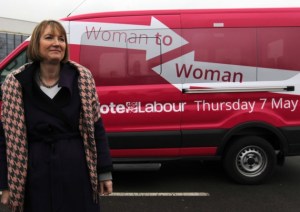
For in reality, it has been the Conservative Party who have put egalitarian and meritocratic principles into practice when it really counted, electing not one but two female party leaders. Labour is the party of the all-woman shortlist, affirmative action, gaudy pink minibuses and thinly-veiled misandry. The Tories are the party of Britain’s two first female prime ministers.

So three cheers for Isabel Hardman reminding us that believing in gender equality should not and does not also require swallowing whole Labour’s politics of grievance, weaponised victimhood and government dependency.

Feminism and egalitarianism are bigger than the Labour Party, which is probably just as well – because Labour’s leading feminists are looking mighty churlish and downright small right now.


harriet-harman-labour-party-pink-bus-feminism-identity-politics

Support Semi-Partisan Politics with a one-time or recurring donation:

Agree with this article? Violently disagree? Scroll down to leave a comment.

Follow Semi-Partisan Politics on TwitterFacebook and Medium.