Only In Britain

Isabel Hardman, writing in The Spectator’s Coffee House blog, is concerned that government ministers do not have any real power to effect changes to the London Olympic Games seating policy that would correct the scandal of so many seats remaining empty during popular and supposedly over-subscribed events:

The problem for ministers is that they do not have any official influence over this matter. Jeremy Hunt made this clear when he appeared on the World at One a few minutes ago. He said:

‘We want to be completely upfront with the public, this is a negotiation, we don’t have a right to demand these back, in fact contractually these seats do belong to the International Sports Federations and to the IOC. But, we got 3,000 back last night, including 600 for the gymnastics.’

Meanwhile, the Number 10 spokeswoman repeatedly said today that ‘this is a matter for Locog’, although when asked whether the government was powerless to change the seating situation, added: ‘We have influence: it’s the government.’ Whatever that influence is, it’s in the government’s interest to exert it as powerfully as possible: the public is unlikely to discriminate between ministers and Locog officials when apportioning blame for those empty chairs.

Come on, Spectator. Your Coffee House blog is one of the things that keeps me sane when I’m following British politics. You espouse sensible, Conservative, common sense solutions, and you echo my own beliefs that government doesn’t need to run everything.

The British government has already done enough for the Olympic Games organisers, even going so far as suspending the right to free speech and freedom of expression in some cases with provisions banning small businesses from using certain words or phrases which, if uttered by a non Olympic sponsor, would now constitute a criminal offence.

Of the various possible culprits responsible for the fact that far too many seats at Olympic events remain empty despite massive demand from the British public, David Cameron or Jeremy Hunt’s respective doorsteps are probably the last place I would think of pinning the blame. I would dare to believe and hope that a majority of Brits, despite Gordon Brown’s attempts to turn us into a state dependent society, also would not look to government to be the solution to this or every other problem, even ones that may impact on our national prestige.

Maybe in the case of the “empty seat fiasco”, the British people are not looking to the government for a solution, but to the people organising the Olympic Games. A quick solution, brought about by the people responsible for the problem.

Get Out Of Jail Free (If You Are A Girl)

Claire Perry, Conservative MP for Devizes, thinks that boys who commit crimes should go to prison, but not girls.

You would think that such a striking and illiberal proposal would be backed up by some powerful facts or hitherto-unseen observations, right? But no. Instead, she gives us this:

Generally speaking, girls are much better behaved than boys. That isn’t some ludicrous Victorian stereotype, but a fact drawn out by crime statistics. Of 1,744 young people in custody, just 95 are girls. Just 22 per cent of offences committed by children are committed by girls. Moreover, of the few girls that do end up in court, the majority have committed low level, non-violent offences such as shop theft or criminal damage.

Okay, Claire Perry. I’m waiting to see how you twist this observation into the idea that those girls who do commit violent or high-level offences should receive different punishments their male counterparts. Oh wait, that part never comes.

Using inappropriate and unnecessary criminal justice interventions for girls’ low level behaviour is like using a sledgehammer to crack a nut.

It’s fine for boys though. Go to town with that sledgehammer.

The Howard League for Penal Reform has conducted research on children in the penal system and legally represented children in custody.  The charity has been supporting the APPG inquiry and found that many of the girls who do end up in court had led chaotic lives, experienced poor parenting, neglect or abuse.  They have grown up in communities blighted by poverty and deprivation.  However, magistrates in the youth court lack the powers to invoke care proceedings, even when it is obvious that the young girl before them is vulnerable and in need.

True. But again, how is this terrible and depressing fact any different in the case of boys?

Failing to address a girl’s underlying welfare issues makes it more likely she will end up in court again.  A criminal conviction can exacerbate problems instead of solving them.  It can make it harder to find employment or a college place in the future.  Rather than criminalising girls for minor misdemeanours we should be ensuring that they and their families have the support they need in order to turn their lives around and make a positive contribution to their communities. We need to intervene early and give girls appropriate support in order to reduce further the small number of girls who end up in the penal system.

Change the word “girl” to “person” in this paragraph and you would have my agreement, Claire.

And she goes out on a strong note:

Prison for girls is not the answer and we should shut down all three prison units for girls immediately.

Wow, you really convinced me with the power and fact-based nature of your argument.

I’m actually not going to discuss the merits and drawbacks of Britain’s existing penal system in this blog post, though it certainly deserves discussion in future. For now I’m just going to marvel at the ridiculous notion of proposing different punishment methods for individuals, based not on the nature of their crime, or their treatment needs, or the danger that they pose to society, but based exclusively on their sex.

How disappointing to hear such discriminatory tosh emanating from the mouth of a Conservative MP.

How Not To Do Tax Policy

Priti Patel, writing in The Spectator’s Coffee House blog, warns that:

… we should all fear Ed Miliband’s praise for a new socialist French President who plans to raise the top rate of tax to 75 per cent. It is a chilling reminder of Miliband’s own commitment to a permanent 50 per cent income tax rate in this country.

But as he visited the Elysée Palace this week, one of France’s leading newspapers warned that the 75 per cent tax rate threat is already leading to French businesses evacuating senior executives to London. Since François Hollande’s victory on 6 May, this exodus of enterprise has caused the waiting list of the prestigious Charles de Gaulle school in our capital to rocket by over 700 places. We haven’t even rolled out the red carpet yet.

Very true. Let this be a warning to all those who think either that there is a binary choice between “austerity” and “growth”, or that Britain’s (or France’s) finances can be rectified, and the current excessive levels of government spending maintained, simply by turning the screws on the rich a little more.

Unfortunately, Patel’s article also misses out the most crucial actions required to get the British economy moving again – introducing much needed supply side reforms. Note:

Yesterday’s economic news reminds us of the need for the Government to continue to focus relentlessly on getting our economy moving – dealing with the debt crisis, boosting bank lending to the real economy, and ensuring sustainable long-term prosperity through radical economic reform.

Nothing about reducing regulation, either independently or through the European Union. Nothing about tackling the restive trades union that are always a day or so away from striking for spurious reasons.

By all means warn about Labour’s policies on tax, but given the fact that Osborne messed up the Budget and left us with a 45% top rate of tax for the foreseeable future, let’s focus on where the coalition government has the political strength to do the most good to restore economic growth.

On Class Warfare And Social Engineering

Veteran Labour MP Denis MacShane had a good think, and decided that the way to fix all that ails Britain is to introduce a draconian new method of social engineering. The BBC reports:

Only people on the minimum wage should be allowed to stand for Parliament in 10% of seats to make politics more representative, a Labour MP has said.

Denis MacShane said the backgrounds of MPs from all the main parties at Westminster had become far too narrow.

The backgrounds of MPs had become far too narrow? Seriously? I agree that there is a long way to go until the membership of the House of Commons comes remotely close to mirroring the population at large (if indeed this is even a desirable goal, which is questionable), but to suggest that we are moving backwards is surely pure lunacy? Has there ever been a time (the Blair Boom of 1997 aside) when the Commons has been more representative? And yet MacShane tries to convince us that a decades-long trend is underway, filling the Commons with wealthy landowners at the expense of everyone else.

Now, the BBC’s poor journalism makes it hard to divine exactly what Denis MacShane means. The BBC headline refers to “working class shortlists”, but the article only quotes MacShane advocating the idea that 10% of Parliamentary seats be reserved for those on the minimum wage. Both ideas are dumb, but it would be helpful if the BBC quoted MacShane properly, or at least came clean about what he is actually in favour of.

If a person earns 1p/hour above the minimum wage, would this render them ineligible to run for Parliament in those constituencies with “poverty shortlists”?

How would the Electoral Authority decide which parliamentary constituencies should have the shortlist? Would you select the wealthiest areas of the country, to stick it to all the rich suburbanites in Surrey and Kent, or let the “working man” represent his “own kind” by having the shortlists in traditionally lower-income constituencies such as my hometown of Harlow, Essex?

And if Denis MacShane literally means that 10% of Commons seats should be reserved for people who fall under the nebulous definition of “working class”, how are we going to define that? People on the minimum wage? People who did not go to university? People whose parents did not attend university? People who live in council housing? Does it depend on your accent, perhaps? Would I, as someone who grew up in a single parent household reliant on government benefits, be eligible to run as a “working class” candidate, even though I now earn a good salary?

What a useless contribution to the public debate.

How often do we hear politicians bemoaning the fact that their profession is “unrepresentative”, and expressing the hope that at some point (always indeterminately in the future) less people “like them” will hold the reins of power? Well, MacShane gives it to us again today:

Mr MacShane, an Oxford university graduate who worked as a journalist before becoming MP for Rotherham in 1994, said there needed to be fewer candidates with his kind of background in the future.

Feel free to do your part by resigning now to make way for the pilot scheme.

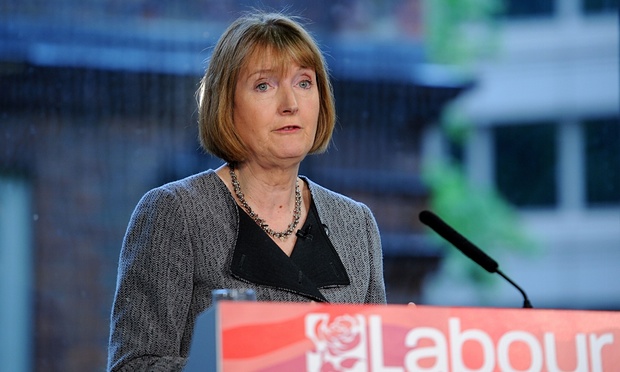
Harriet Harman Is Wrong

Harriet Harman - Margaret Thatcher - Witch - Feminism - Sexism


According to Harriet Harman, deputy leader of the Labour Party, it is not possible to  be a Conservative and a feminist at the same time.

Who knew?

Of course, it goes without saying that this is complete and utter tripe. It would, for example, come as something of a surprise to Angela Merkel, chancellor of Germany and the most powerful elected politician in Europe, that her conservatism automatically cancels out her feminist credentials.

Amber Rudd and Andrea Leadsom, writing in The Telegraph, do a good job of  dismantling Harman’s ridiculous assertion.

Money Quote:

At the core of Harman’s comment is her view that only socialism can empower women. What she fails to acknowledge are the different political philosophies of socialism and conservatism that inform how to improve women’s lives. Give a woman a Labour prime minister and she can live on welfare – just. Give a woman a Conservative prime minister and we will increase opportunities for her to get jobs, for children to get a good education, for hardworking families to improve their lives, for young women to get apprenticeships and for entrepreneurial women to start businesses. Conservative feminism is about boosting women to their full potential. We are optimistic and ambitious for women. Labour’s policy towards women is still about the state protecting them. They don’t believe women can achieve for themselves. What patronising rubbish.

Also relevant is this observation:

The Labour party no longer seems interested in how to improve women’s lives. Instead it uses the “women’s issue” as a political weapon against the government, making crude calculations about effects of deficit reduction and ignoring the improvements on the other side.

How true. The Labour Party do use “womens issues” as a cynical, blunt tool to score political points. As soon as George Osborne (and Lord knows I’m no fan of his) released his Emergency Budget when the coalition government took office, the Labour Party were quick to come out with a list of the ways that the spending cuts would harm women specifically. They went as far as to threaten legal action, relying on one of Gordon Brown’s “screw you” departing legislative gifts to sue the government for not considering the “equal impact on men and women” of their plans.

To the Labour Party:  Elect a female leader, and then come back and talk about feminist issues with a little bit of earned credibility.