Missing The Point On Immigration

They're a' comin...


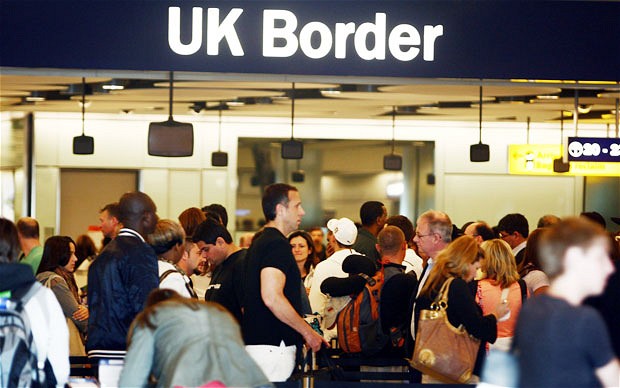
James Kirkup, writing in The Telegraph, asks “How much would you pay to reduce immigration?”, in an article praising UKIP’s Nigel Farage for making the supposedly bold proclamation that he would rather be slightly less well-off in return for lower levels of immigration into the United Kingdom – in other words, that he is willing to pay out of his own pocket to reduce immigration.

[Farage] added: “If you said to me, would I like to see over the next ten years a further five million people come in to Britain and if that happened we’d all be slightly richer, I’d say, I’d rather we weren’t slightly richer, and I’d rather we had communities that were united and where young unemployed British people had a realistic chance of getting a job.

“I think the social side of this matters more than pure market economics.”

Kirkup, who considers this to be a “genuinely interesting” way for Farage to reframe the debate, phrases the quandry this way:

How much economic growth should we give up? How much of your fellow citizens’ prosperity, are you willing to sacrifice in order to cut the number of people entering Britain from abroad?

To be precise, how much — to the nearest £1, please — would you pay to reduce immigration?

Unfortunately, by accepting Farage’s premise that immigration is harmful in all spheres other than the economic – and the idea that immigration must automatically be a negative thing, a cause for concern or something to be ameliorated.

This is yet another argument where the two opposing sides seem to argue back and forth over an irrelevant distraction rather than the main issue. Why is it that immigration has, at times, led to divided communities and fractured society? Why must it be that immigration puts the young British unemployed at even more of a disadvantage? If only we could begin to address and turn around these key issues, surely the matter of net immigration into the UK would cease to be of almost any importance at all.

For example, we should re-examine how Britain can better to integrate and assimilate new immigrants into our society, avoiding the mistakes of countries such as France and learning from those such as the United States. How can we ensure the right balance between providing support and assistance to help new arrivals find their feet and integrate into society, and using “tough love” where necessary to ensure that the state is not enabling immigrant communities to isolate and refuse to become part of British society?

We should take a long, hard look at our education system and parenting culture and ask why it is that a young adult born and raised behind the iron curtain in an economic, political and social environment far less prosperous and nurturing than that of the UK is so often preferable, in the eyes of so many reputable and rational employers, to a British-born young jobseeker who has enjoyed all of these advantages.

And yes, we should look at the topics of welfare and the terms of our relationship with the European Union, and decide whether allowing brand new economic migrants to our shores to benefit from the welfare system that the rest of us have paid into over a longer period is really a cost that we are willing to continue to pay in order to maintain our EU membership in its current form.

None of this debate will happen as long as we accept the premise that economics aside, immigration is an inherently bad thing – to shrug our shoulders and go along with Nigel Farage’s line of reasoning, as James Kirkup and others do so willingly.

How much would people pay to have an informed debate about the real social, educational and economic issues around immigration? More than our politicians and media seem to realise.

In Defence Of Prince William

Yes, it's slow news season
Yes, it’s slow news season


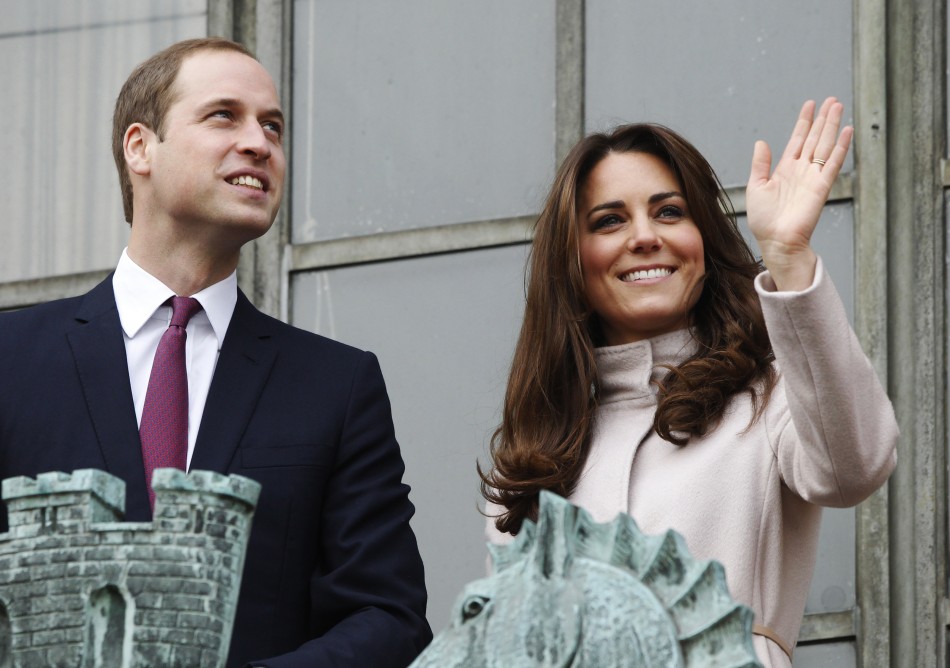
Having devoted considerable time to bemoaning his father’s various foibles and misdeeds on the pages of this blog, it feels somewhat unusual to be charging to the defence of Prince William today, but I do so because a lot of the faux outrage about the Duke of Cambridge’s admission to Cambridge University for what is essentially a privately-funded executive education course is entirely misinformed, off-the-mark and deserves rebuttal.

Perhaps I should not jump on someone who is still in university herself, but Melissa Berrill, writing in The Guardian (and therefore already doing much better than me), seems to have best epitomised the non-story nature of the whole affair in her polemical piece entitled “William’s on his way – and Cambridge should be ashamed”.

The basic thrust of her argument is that all of the work she has done convincing people that Cambridge University is socially inclusive and not the walled-off preserve of the posh, entitled blue-bloods has been undone in a heartbeat, and all because William is coming to study. The horror!

I’d tell them that I’d been to the local state school, and explain that it isn’t like the old days at Cambridge any more. You can’t get in just because you’re rich, or because your dad knows the right people. The admissions system isn’t perfect, but nowadays they work extremely hard to make sure they admit students based on merit, not class or family connections.

It was a spiel that came easily to me, because I’d done it many times before; on countless open days and access visits around the country throughout my degree. It didn’t always convince people – some had an impression burned too deeply to change. But sometimes it did; sometimes it made a difference.

She then proceeds to throw her toys out of the pram:

I could, for example, have spent it [her time] smashing up restaurants in full evening dress. Or snorting champagne up my nostril through a straw. Or posting Facebook pictures of me lying on a bed of gold coins wearing a top hat. For all the difference it will now make, I may as well have spent it doing all these things – because my argument is now worthless.

This would be a great point, a devastatingly effective rebuke to Cambridge University and a nice little dig at the Bullingdon Club too – if only there were any element of truth and reason to it. But there is not, and Berrill torpedoes her own argument in the very next paragraph:

It doesn’t matter that he’s actually been admitted to a 10-week “professional” course whose admissions process doesn’t directly compare to the mainstream Cambridge one – not a single news outlet has bothered to make that distinction and, to the world at large, “William’s going to Cambridge” is the only message that will be taken away.

Now, I flunked out of Cambridge University half way through my Economics degree so maybe I’m not best placed to talk, but as someone who has successfully completed her undergraduate studies at that fine institution, should Berrill (and the many journalists and columnists who have uttered similar words of disapprobation) not be concerned precisely with the truth of the matter rather than the way that it may be erroneously perceived by others? Isn’t the pursuit of truth and knowledge kind of what the whole university and higher education thing is all about? Is Melissa Berrill really saying that because something quite innocent might look bad, we should avoid doing it? And has she herself not aided and abetted  the “news outlets” and the “world at large” in their misunderstanding by joining in this outrage at a totally false straw man argument (that Prince William has somehow snuck in and snatched the coveted university place of some plucky, honest-to-God, working class, AAA-achieving eighteen year old for his own, lazy ends)?

Berrill rages:

Admitting Prince William is an insult to every student, whatever their background, who got into Cambridge by getting the required A-level or degree results. It’s an insult to every student whose A-levels and degree are the same or better than his, and who didn’t get a free pass to Cambridge in spite of them.

Admitting Prince William to this custom-made executive education course is not a particular insult to anyone, and to argue that it is insulting to students in the main academic programme is akin to saying that me watching an Olympic football game at London 2012 was a slap in the face to the Olympic athletes who worked so hard to earn the right to represent their respective countries in the Games. Not so. Just like me at the Olympics, William will be going there to spectate, to soak in the atmosphere, and – crucially – will pay his own way. Just as I did not walk out of Wembley Stadium with a gold medal around my neck, so William will not be walking out with a coveted Cambridge University degree.

This not-so-subtle nuance seems to have evaded the highly educated Oxbridge mind of Melissa Berrill.

If there is to be any outrage, why not get worked up about the fact that it appears that the University’s Cambridge Programme for Sustainable Leadership has custom-made the course for the benefit of one person? Why not check whether or not there is any precedent for offering this type of course to a small group of private individuals, and ensure that the fee payable to the University by William will be the market rate that anybody else would be expected to pay? Why not – if you really want to push the boat out – have a debate about whether executive education is a good thing at all, about the merits of allowing rich and fat executives from FTSE 100 companies to pay lots of money to spend a few weeks on campus getting drunk and hooking up, and walking away with a certificate bearing the name of a famous academic institution?

Why have we not seen these lines of enquiry and debate play out in the newspapers instead of the William-gate or Cambridge-gate style narrative that we have been fed instead? Perhaps because to do so would require some real, actual research and journalism, as opposed to a simple good vs. bad, black/white debate designed to polarise and sell papers.

If we are going to object to something, let’s keep the arguments tight and to the point, not vague and fatuous. Those protesting Prince William’s enrollment at Cambridge have failed this test.

On Christian Persecution

Christians actively NOT being persecuted.
Christians actively NOT being persecuted in Britain.


The Telegraph’s resident Moraliser-in-Chief, Cristina Odone, has done it again.

In a short column, clearly phoned in and devoted more to promoting her “new ebook” than advancing an intellectual idea of any kind, Odone decides to directly compare the persecution of Christians in other lands – persecution often marked by violent killing – to what she sees as persecution of Christians at home here in Britain. No really, she does:

Being a Christian, in some parts of the world, carries a death sentence. It carries little weight — and attracts a lot of opprobrium — in this part of the world. Having done their best to erase God from public life, secular authorities have stealthily loosened our identity as Christians. As I have written in my ebook, “No God Zone”, traditional ceremonies, rituals and even pledges have been suppressed because of their “religiosity”. Thus, when we witness the sufferings of our “brothers and sisters in Christ”, we feel only a twinge, where once we would have felt a shock.

One poorly written ebook about how Cristina Odone is prohibited from practising her religion in that terrible place, the United Kingdom, available now on your Kindle or iPad. Check for yourself.

And let me paraphrase. Cristina Odone feels so persecuted and reviled for her faith here in Britain that when she sees fellow Christians hacked to death in the middle east it is now all she can do to give them a wry, knowing nod of the head, empathising with their pain? And she thinks that other similarly “afflicted” British Christians feel the same way?

There follow a couple more uninspired paragraph where Odone waffles and fails to express an idea, and then we end with this:

Tragedies like the ones in Nairobi and Peshawar do not make me think all Muslims want to kill Christians; the al-Shabaab guerrillas are no more representative of Islam than the suicide bombers in Pakistan are. But these atrocities do bring home, as a Spectator blog quotes the former Chief Rabbi saying, the dangerous “silence of our friends”. Sadly that silence is rooted in hostility to our faith.

Where to begin? Let’s start with the notion that nefarious “secular authorities” have “stealthily loosened our identity as Christians”.

Odone would do well to find out how many readers of her column attended a church service last Sunday. Or this year. Or in their recent memory. I suspect that when she talks of “our [shared] identity”, she is actually speaking to a minority, even if they call themselves Christian (let’s call them CINOs, people who erroneously use the word Christian interchangeably with “British” or “white”).

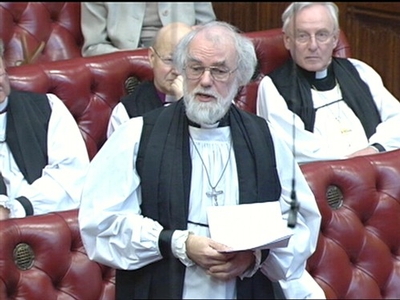
While we’re at it, we should also send Odone back to Citizenship 101 class, so that she can learn about our hereditary monarchy pledged to “defend the faith”, the Lords Spiritual who meddle in our laws and seek to impose their particular brand of Christianity on the nation, the fact that public holidays in Britain coincide with Christian festivals and that Christian hymns are sung in state school assemblies up and down the land. How dreadfully secular.

A walking, talking advertisement for the benefits of separation between church and state


How huge must Odone’s white persecution complex really be, to behold these manifold examples of the Christian faith woven into the fabric of our society, and still come away feeling slighted, aggrieved and persecuted? Newsflash, Odone – denying civil rights to gay people and imposing your morality on others is not part of expressing your faith. Expressing your faith is all about what you yourself choose to say, read, write, eat or wear – not what you want other people to do.

Odone also chooses to bemoan what she perceives as a weak-willed response by western nations to [real] persecution of Christians abroad:

Why should the Foreign Office move heaven and earth to protect Christian minorities in the Middle East when this Coalition allows Christians  to lose their livelihood on account of their religious beliefs? Why should the EU get heavy with governments in the Middle East when its member states have signed up to 41 laws that discriminate against Christians?

Here we actually have the semblance of a lucid thought, but of course Odone stops at the feeling aggrieved part rather than proposing any potential solutions to this problem. The EU does not seek to use any of its economic leverage to stop persecution of Christians in the middle east – okay, so what form should this leverage take? Cristina Odone is silent on the matter.

Actual persecution of Christians.
Actual persecution of Christians might look like this.


As for the recent suicide bombings and mass shootings at churches in Pakistan and Kenya, Odone is similarly silent when it comes to a plan of action. Does she favour a military intervention, economic sanctions, or just harsher diplomatic words? We don’t know, because she doesn’t say. And she doesn’t say because she hasn’t given it a moment’s thought.

Because of course, to Cristina Odone, this isn’t really about those long-suffering Christians tucked away in the far corners of the world. It is all about her, the Cristina Odone show, railing against the fact that centuries of engrained bias in favour of her own religion (my religion too, incidentally) are starting to be rolled back in favour of something more slightly resembling equality before the law.

Labour Party Conference 2013 – Reflections

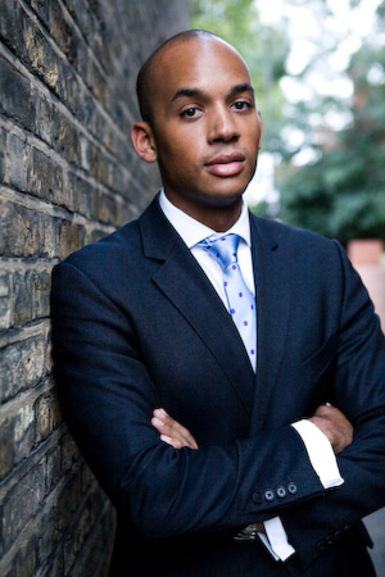
The economy was fine and everything was splendid until 2010 when the Tories came into power, according to Chuka Umunna, Labour's point person on Business


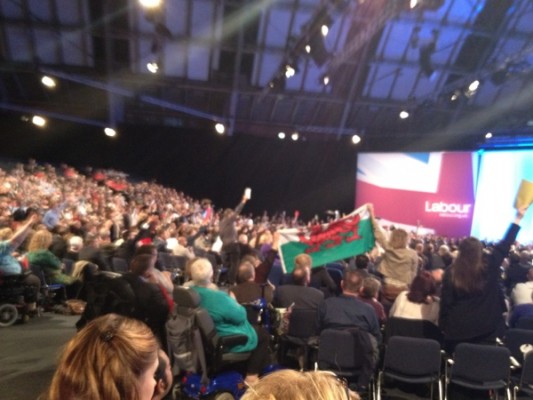
After listening to the various speeches at the 2013 Labour Party Conference this morning, I believe I have detected a theme running through almost all of them.

I don’t mean the usual Labour tunnel-vision and denial of their role in wrecking the British economy and increasing the size of the British state to freedom-crushing, unsustainable levels – that has already been well documented, on this blog and elsewhere.

Nor do I mean the incessant moralising, the endless strictures about how anyone who holds conservative views must be rich, heartless and hold the “common man” in contempt, or the assertions that skepticism about pooling national sovereignty and submitting to an ever-increasing burden of regulations emanating from the European Union somehow equates to a longing for isolationism and a desire to cut off trade and ties with with the world.

I refer instead to the mindset that for every problem, there is a government solution waiting to be proposed, seconded and carried at a Labour conference.

The smug cloud has already enveloped Brighton and is rapidly encroaching on the rest of the country.


There has been an increase on the number of workers on zero-hour contracts in these tough economic times. Gasp! Outrage! Zero hour contracts must be inherently terrible, a product of evil British businesspeople who want to make money on the backs of the poor, and must be outlawed immediately.

A British soldier was violently beheaded in a terrorist attack on the streets of London. Outrage! We need new laws making it a specific offense to attack military personnel, because if only the general laws against beheading people had been supplemented by additional laws prohibiting the beheading of service members, this heinous crime would not have been committed.

Watching the Labour party assemble for their yearly conference is like observing a group of weary, jaded old codgers assemble in a meeting hall to bemoan the state of humanity, how far it has fallen, and what they must do to forcibly drag the rest of us back up to their lofty levels of enlightened tolerance and progressivism.

How thoroughly depressing it must be to perpetually think so little of the human capacity to do good that the only solutions you can ever imagine are found in new regulations preventing people from being themselves, and transferring agency from the free individual to the faceless, bureaucratic state.

And of course, the answer to the societal problems that Labour bemoan can never be found in reducing the power and scope of the state, or empowering individuals to take more responsibility for themselves. It is as though the Labour party is incapable of taking the laissez-faire, hands-off approach to the people that they rightly champion in the social realm and applying it to the economic realm.

And that’s a great shame, because I feel sure that increasingly, the real divide in British politics will not be between the traditional left vs right paradigm, but between people who see government as the answer to everything, and people who are heartily sick of not being able to live their lives freely without continual badgering and preachy interference. Right now, neither party is ideally positioned to capitalise on this shift, but if today’s conference speeches are anything to go by, Labour has much more ground to make up.

Best Thing Of The Day

Some very welcome news today for doughnut and coffee lovers living in the UK – Dunkin’ Donuts is preparing to launch itself onto our shores, with ambitious plans to open 150 restaurants over the next five years.

Yes please.
Yes please.

The Telegraph reports:

The chain, which pulled out of Britain in the mid-nineties as its sugary offerings and coffee failed to whet appetites in the UK, plans to develop 150 restaurants around in country.

Dunkin’ Donuts said on Thursday it had signed agreements with two franchise groups – The Court Group and DDMG – to open restaurants in North and East London. It is also in advanced talks with other franchise partners.

North London, as well! Bloody marvelous. I have always favoured Dunkin’ Donuts over Krispy Kreme (who established themselves in Britain back in 2003), not just for the doughnuts themselves but also the delicious breakfast food.

I had no idea that Dunkin’ had a UK presence back in the 1990s – apparently, as was the case with Taco Bell, the insular British palate was not yet ready for tasty, exciting things in those dark ages. We have come a long way in the intervening decades.

Of course, The Guardian cannot resist chiding us for allowing our mouths to water at the prospect of more choice in the doughnut market, publishing a less-than complimentary list of Dunkin’ Donuts facts, including:

1. There are 49g of sugar in a single one of its donuts. That’s more than half the guideline daily amount. The first casualty of the doughnut war is health.

Thanks, Mr. Buzzkill. But no matter; let us celebrate by enjoying this amusing Dunkin’ Donuts commercial from the United States:


I will, of course, be posting a review as soon as the first outlet opens. Stay tuned.