2014: The Year Of UKIP

Year of UKIP defections mayor Gloucester


“…the core question of our time is how we meet the challenge of globalisation, and how we retool or retire the idea of the nation state in response. You can agree with UKIP’s stance or despise it with every fibre of your being, but right now they are the only British political party to have identified the core problem and gone before the electorate with a proposed solution.”

‘Tis the season for Year In Review blog posts and breathless predictions about what more to expect in 2015. And while these can be good fun to write, and even read, it is safe to say that none of the political predictions, at least, are worth the paper they are printed on, or the real estate they occupy on your smartphone screen.

The truth is, nobody knows what will happen as Britain enters the seismic election year of 2015. The outcome of this general election is almost impossible to predict, and certainly cannot be divined by examining national-level polling that fails to take into account the furious dynamics that will come into play in individual constituencies. Those who confidently predict the total electoral obliteration of the Liberal Democrats forget the huge effort expended by many LibDem MPs to effectively ingratiate themselves with their local electorates, for example, while those predicting that Nigel Farage’s People’s Army will occupy multiple benches in the House of Commons after May 7 overlook just how punishing Britain’s electoral system always is to new and insurgent parties.

But if it is not possible to look forward with much certainty – though a hung parliament and some form of ‘confidence and supply’ minority administration led by either the Tories or Labour seems increasingly likely – we can at least look back at the year that was 2014, in order to see who has been right and who has been calamitously wide of the mark.

Continue reading

Our Deadly Obsession With The NHS

NHS Lapel Pin National Religion Healthcare Hagiography SPS


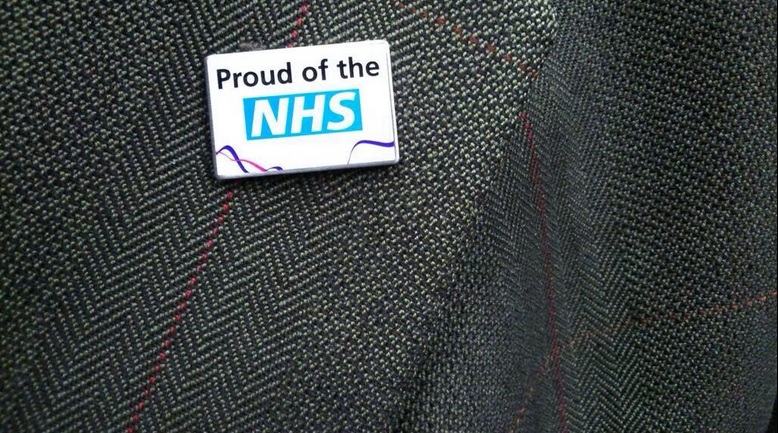
What did you do this Christmas? Gorge on turkey with family, friends and loved ones? Engage in passive-aggressive political debates about Nigel Farage and UKIP with distant relatives? Test to the limit the human body’s ability to break down alcohol? Well, in between doing some or all of those things, a huge number of Britons also found the time to take to social media and publicly declare their love for one particular public service. The object of their affections is, of course, the National Health Service, about which only positive things can be said and to whom we must all be seen to pay sufficient homage.

For the past month, your blogger’s Twitter feed has been inundated with schmaltzy love letters to the NHS, shared and retweeted countless times by people in the grip of a dangerous herd mentality and the gnawing fear that failure to participate in the semi-compulsory Christmas love-in will lead others to believe that they are secretly in favour of cancer, or that they really Hate the Nurses.

Fortunately for these people, but less so for the rest of us, there are countless ways in which they can publicly display their unthinking fidelity to one very specific model of universal healthcare provision dreamed up in 1948.

They can post pseudo-inspirational images on our Twitter and Facebook timelines, like this one:

Continue reading

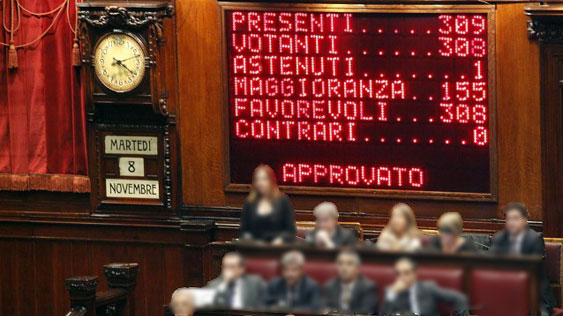
Britain Needs A Parliament Fit For the Twenty-First Century

Parliament Electronic Voting 1


Economists and government officials rejoiced this holiday week as new figures revealed that the productivity of British workers, long a cause for concern, finally registered an improvement in the third quarter of the year. In fact, the 0.6 per cent increase in output per hour worked caused a welcome ripple of positive headlines and general satisfaction just as everything prepared to shut down for Christmas. But while the Bank of England takes succour from the fact that British workers are delivering more output per unit of time, can the British people say the same of their elected politicians? And how would we even go about measuring such a thing?

We know that the overall approval rating for Members of Parliament as a group hovers around the low twenties, but the general disdain in which politicians are held does not necessarily have any relation to how productive they are. We could attempt to determine productivity by measuring the number of debates attended and speeches made by MPs over the course of a year or a parliament, but this would fail to take into account the different jobs and roles performed by different MPs – though it would quite rightly expose former prime minister Gordon Brown as the political equivalent of the New York City union boss who spends most of the working day asleep at his desk.

Alternatively, we could try judging MP’s productivity according to the number of bills that they pass – but with fixed term parliaments a very new phenomena, backward comparisons would be almost impossible, not to mention the fact that stopping harmful legislation from reaching the statute books is often a far more valuable service to the country than busily legislating nonsense in pursuit of favourable headlines.

Continue reading

The Christmas View From Your Window

SPS Christmas 2015 View From Your Window Harlow Essex v2


In his Christmas Day column, Dan Hodges invites us to look out of our nearest window and tell him what we see. He isn’t doing this out of voyeuristic curiosity, of course, but rather to make a point:

We see what we choose to see when we look outside. And at the moment, when we look out the window, we are choosing to see a world that scares us. Collectively. As a country. As a people.

This was the year that we become an agoraphobic nation. The year that the trembling upper lip officially replaced the stiff upper lip. The year that fear became our constant companion; paranoia our trusted friend.

Hodges goes on to argue that on a whole range of fronts – terrorism, immigration, Ebola, Evil Corporations, Westminster Elites, paedophile grooming gangs and crazy, swivel-eyed Ukippers – the British people are retreating in the face of difficulty, burying our heads in the sand and failing to confront pressing problems or take positive steps to secure our future. And he is right, up to a certain point – numerous difficult issues have swirled around us during the hectic political year of 2014, and yet we have made precious little progress in dealing with any of them.

Continue reading

The Obscenity Of Middle-Class Giveaways During Austerity

Middle Class Benefits


Are we all in this together, as George Osborne insists, or are we not?

The Labour Party and their sympathisers in the media have been asking this question non-stop since the coalition government came to power in 2010, shrieking with outrage every time a new policy was announced which failed to forcibly grab enough from the rich and scatter the proceeds over the heads of the deserving poor. And throughout this time we have been treated to some wildly over-the-top rhetoric and mischaracterisations, such as Polly Toynbee’s insistence that “people feel in their pockets … that the middle and lower half are deliberately made to pay the price, while Osborne gifts the richest the most.”

(How could it be otherwise, one might well ask. Labour spent thirteen years in government making even middle-class families reliant on benefits, tax credits and public services, so there was no way that government spending could then be cut in times of austerity without causing more pain and human suffering than should otherwise have been the case. And yet still we look wistfully at Gordon Brown as he saunters off into the sunset, and glare sullenly at David Cameron and George Osborne as they deal with Brown’s toxic legacy).

We may still be stumbling out of the crater left by the Great Recession and the dubious economic recovery, but that doesn’t mean that every tax rise or spending decision has to be, or even can be, progressive. To behave in such a way would be foolish – we would end up in a situation where we forcibly “spread the wealth around” in good times because there is more cash to be expropriated from the successful in an economic boom, and then spread the wealth around some more in lean times because that’s the “compassionate” thing to do. Meanwhile, we would have created such a universal disincentive to work hard, invest and succeed that anyone with wealth to expropriate will have dialled back their efforts or fled the country altogether.

Continue reading