Donald Trump Victory Reaction: Matthew Parris Doesn’t Get It

matthew-parris-democracy-donald-trump-brexit-elitism-overton-window

Self-described elitists like Matthew Parris tolerate democracy only so long as they get to narrowly define the range of possible outcomes before the public are invited to have their say

The outcome of a democratic election in the greatest democracy on earth has caused Matthew Parris to lose faith in democracy itself. Go figure.

Self-confessed elitist Parris has a piece in The Spectator today in which he makes it clear just how very disappointed he is in We the People (now apparently downgraded in his estimation from being a “crowd” to a “mob”) following the EU referendum result in Britain and now the election of Donald Trump in America:

The election of Donald Trump as president of the United States may have signalled the death of the closest thing we have to a religion in politics. On both sides of the Atlantic, democracy risks being knocked from the high altar as an unmitigated and unquestioned good.

The man’s obviously a fool and a nasty fool too. The contest should have been a walkover for Hillary Clinton. But it wasn’t. What happened? Can we be sure any longer that democracy works? Is it really the reliable bulwark against political madness that we always supposed?

Without hesitation I plead guilty to the obvious charge: Trump supporters could level it at me, enthusiasts for Brexit do. Spanish enthusiasts for the left-wing populist party of protest, Podemos, and French supporters of Marine Le Pen would tell me the same and they’d be right. The reason I am beginning to question democracy is that it is producing results I profoundly dislike.

Already it should be clear that this is leading nowhere good. More:

But why now? When Richard Nixon was re-elected, did we who had preferred George McGovern despair of democracy? When British Conservative governments fell and socialist governments were elected, did Liberal or Tory democrats develop doubts about democracy itself? Why did we trust the people then, even though they had given the ‘wrong’ answer — but not now? What was it that people like me did believe, when we said we believed in democracy?

Someone urgently needs to introduce Matthew Parris to the concept of the Overton Window.

The reason nobody much cared when “conservative” British governments were voted out and replaced by “socialist” ones in the 50s, 60s and 70s is that they were actually all largely socialist anyway. Party labels at that time were more or less a nostalgic and almost entirely cosmetic sticker slapped on to differentiate two political parties which had both equally swallowed the dogmas of the post-war consensus and the supposed need for a planned, “mixed” economy (in reality an economy in which the government owned and ran vast swathes of industry, from mining, utilities, transport, telecoms and even restaurants and betting shops).

The reason that nobody in Britain “lost faith in democracy” when either shade of socialist Red got itself elected is because it hardly made a difference to their lives. The all-important (and foolish) decision to embrace rather than oppose socialism had been made in smoky back rooms by dusty, frightened old men (and some callow but zealous younger ones). Giving socialism the heave-ho was never on the ballot paper. The only question was whether one preferred Labour or the Conservatives to preside over our national decline.

overton-window-rachel-maddow-quote

When the Overton Window of a country’s politics – the range of political viewpoints considered mainstream, acceptable or permissible – is as desperately narrow as it was in Britain until Thatcher came and rescued us from self-inflicted socialist suicide, people like Matthew Parris would have no cause to lose faith in democracy because it continually serves up the kind of muddled, un-ambitious centre-leftism that they like (whether they admit it or not), and because elections therefore essentially do not matter.

The reason that Matthew Parris is now so upset, first with the Brexit vote in the EU referendum and now with Trump’s victory over Hillary Clinton in the US presidential election, is that both of these plebiscites actually mattered – because two markedly different potential outcomes were riding on the result. Or to put it even more bluntly: because the Overton Window has been expanded, and people like Matthew Parris are losing the ability to fix the policy outcome regardless of who wins an election.

The kind of “democracy” that Matthew Parris likes is one in which he and other people like him get together beforehand and decide the future direction of the country in advance, hashing out a deal between themselves before allowing the political parties to tinker around the edges and squabble over branding. Parris doesn’t trust the people to weigh up the important decisions themselves because he can barely tolerate most of the country, as he has himself previously admitted.

So spare a thought for poor Matthew Parris today. Soon Britain will be leaving the European Union, and the range of possible choices – on taxation, social matters, foreign policy, trade and more – over which the British government has greater or total autonomy will increase beyond the ideological guard rails currently imposed by our EU membership.

Worse, with the rise of Jeremy Corbyn, the British public have a real choice between Corbynite post-war consensus socialism and vaguely enthusiastic capitalism for the first time since 1983. And now, with the election of Donald Trump in America, the Overton Window of American politics has expanded so that the old (and often failed) consensus position on a whole range of issues is no longer the only choice available.

And Matthew Parris hates hates hates all of this. Because not-so-secretly, Matthew Parris hates most of us.


 

overton-window

pop-art-donald-trump-2

Support Semi-Partisan Politics with a one-time or recurring donation:

Agree with this article? Violently disagree? Scroll down to leave a comment.

Follow Semi-Partisan Politics on TwitterFacebook and Medium.

Donald Trump Victory Reaction: Owen Jones Doesn’t Get It

owen-jones-donald-trump-left-wing-populism

There can be no left-wing populist movement so long as the modern Left continues to openly despise such a large segment of the country

The leftist boy wonder Owen Jones has had a good long think about the implications of Donald Trump’s election victory, and has come to the airy conclusion that the Left needs a “new populism” of its own.

From his latest Guardian opinion piece:

Trump’s victory is one of the biggest calamities to befall the west and the effect is that every racist, woman-hater, homophobe and rightwing authoritarian feels vindicated. This rightwing populism can no longer be dismissed as a blip. Indeed, without an urgent change in strategy, the left – perhaps all progressive opinion – will be marginalised to the point of irrelevance. Our crisis is existential.

Multiple factors explain this calamity. First: racism. The legacy of slavery means racism is written into the DNA of US society. The determined efforts by African Americans to claim their civil rights has been met with a vicious backlash. The exit polls suggest that Trump won a landslide among both male and female white non-graduates: only white women with degrees produced a majority for Hillary Clinton.

Second: misogyny. Trump – who brags of sexually assaulting his victims – ran a campaign defined by hatred of women. Clinton was self-evidently an establishment candidate, but a male candidate of the establishment would have been treated differently. Some American men feel emasculated by two factors: the demise of skilled secure jobs that gave them a sense of pride and status, and the rise of women’s and LGBT movements, which some men feel undermine their rightful dominance.

But there is a factor that cannot be ignored. Centrism, the ideology of self-styled moderates, is in a state of collapse. In the 1990s, the third way project championed by Bill Clinton and Tony Blair could claim political dominance in much of the US and Europe. It has shrivelled in the face of challenges from the resurgent populist right and new movements of the left.

Yes, political centrism is dying, or at least under grave threat. And this is a good thing. It brought us nothing but dull, remote managerialism and technocracy, and enabled the elitist gravy train which so greatly enriched those with access to power while punishing those without. We should all be looking forward to dancing on centrism’s grave.

But sadly, Jones couldn’t leave it there. He continues:

Whenever the economic insecurities that fuelled Trumpism are mentioned, several objections are raised. It’s an explanation, some say, that fails to account for the large majority of working-class Americans from minority backgrounds who vote Democrat. Then there is the issue of culpability. Many insist that working-class Republican voters must take responsibility for electing a racist, misogynist candidate. True, some will be racists and misogynists beyond redemption but others have the potential to be peeled away if the lure is attractive enough.

Owen just doesn’t get it. Keep peddling in identity politics, keep making identity politics the battleground on which issues are debated and elections fought, and the white working class will organise and begin acting like a cohesive minority group themselves – because it is rapidly becoming clear to everybody that so long as the Left persists with its “divide, stoke resentment and conquer” approach, emulating their tactics is the only way for opponents to prosper and defend their own interests.

Note the sheer condescension of Jones’s arrogant claim that some Trump voters may, just may have the “potential” to be redeemed, as though voting for Trump was an endorsement of the worst allegations levelled against him rather than a self-interested choice between two candidates. The equivalent would be to claim that Democratic Party voters were endorsing secretive email practices, closeness to Wall Street, dubious charitable practices and shady financial dealings with their vote for Hillary Clinton. This is ludicrous on its face – and so it is to accuse most Trump voters of making their selection based on the worst utterances and behaviours of Donald Trump.

Owen Jones has clearly learned nothing. He has marinated and festered in toxic identity politics for so long that he knows no other way of thinking. And the new “left wing populism” he seeks to create will never come to pass because by definition it will always exclude and be violently antagonistic towards the white working class, the very people the Left needs to pull it out of terminal decline.


owen-jones-labour-party

Top Image: Miquel Garcia, Wikimedia Commons

Support Semi-Partisan Politics with a one-time or recurring donation:

Agree with this article? Violently disagree? Scroll down to leave a comment.

Follow Semi-Partisan Politics on TwitterFacebook and Medium.

Brexit, Public Protest And The Judiciary

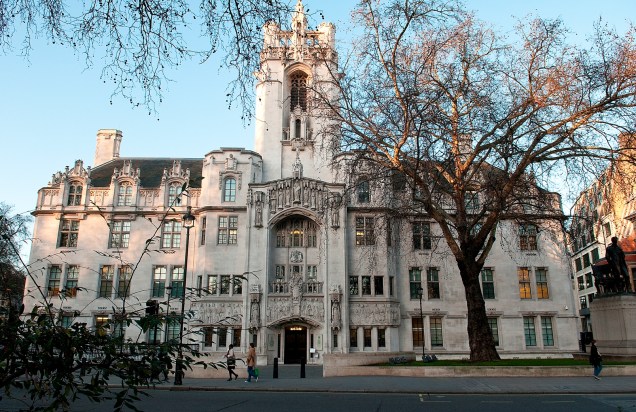
uk-supreme-court

No, criticising legal rulings is not fascism

Right now the internet is bubbling with a lot of nonsense about the role of the British judiciary as relates to Brexit, and though I have my head full of US election news ahead of tomorrow night’s Semi-Partisan live blog, there are a couple of pieces of egregious stupidity which need slapping down.

Today, of course, Nigel Farage made headlines by announcing his intention to lead a march of 100,000 people on the Supreme Court in an effort to demonstrate the public’s supposed strength of feeling about ramming Brexit through without any Parliamentary scrutiny.

From the Telegraph:

Nigel Farage is planning to lead a 100,000-strong march to the Supreme Court to coincide with the start of the Government’s attempt to stop peers and MPs delaying Brexit.

The march, organised by the anti-European Union campaign Leave.EU, will end with a rally in Parliament Square within sight of the court building where judges will be hearing the appeal.

The campaign group is planning to “crowd fund” £100,000 from its supporters to pay for barristers to represent Leave supporters in the court action.

This will mean that the anti-EU supporters will have their own barristers in the legal action, who can challenge claims made by Remain supporters and even the Government.

[..] A spokesman for the organisers said that Mr Farage and Leave.EU millionaire backers Arron Banks and Richard Tice had “secured support from thousands of Leave voters” for the march and legal action.

The march will most likely take place on December 5, which is expected to be the first day of the hearing. The Supreme Court has cleared four days for the hearing which will be streamed live on the internet.

As this blog recently laid out, I am fairly relaxed about the High Court case and the coming appeal to the Supreme Court. If David Cameron’s utterly useless government had a) planned the referendum properly, and b) considered the possibility of Leave winning then all of this might have been spelled out clearly at the time of the referendum, as it should have been.

That being said, MPs are aware of the hellfire which would rightly rain down on them if they seriously attempted to subvert the referendum result; if they now want to give their cosmetic blessing to a high-level instruction to the government to invoke Article 50 then they are welcome to go ahead.

Of course, some people inevitably then take it too far. UKIP leadership candidate Suzanne Evans quickly took to the airwaves making incoherent comments about the need to exercise “democratic controls” (whatever that means) over the judiciary.

From the BBC:

Ms Evans told BBC Radio 4’s Today programme there were likely to be “protests and demonstrations”, but added that these would be peaceful.

She added: “I have a concern that Article 50 is not intended to facilitate nation states leaving the European Union. I think it’s there to frustrate them.”

Ms Evans said she thought the legal process could “water down Brexit”.

She added: “I think it’s amusing that the very same people who say it’s all about parliamentary sovereignty have, for the last 48 years, been trying to undermine parliamentary sovereignty”.

Ms Evans said: “I think there’s a debate to be had about whether or not judges are subject to some kind of democratic control.”

She did not want to undermine “their judicial independence”, but added: “I suppose that in this case, we have had a situation where we have judges committed to stay in the European Union…

“I’m questioning the legitimacy of this particular case. We know that the legal profession threw a collective hissy fit when we voted to leave.”

This is just incoherent garbage. “Democratic controls” could mean anything from moving towards a system where many judges are elected (as in many American states) toward some kind of constitutional fix to prevent judges from ruling to delay or impede the government from carrying out the instructions from this or any future referenda.

At no point does Suzanne Evans articulate what kind of controls she has in mind, which naturally plays into the hands of tremulous Remainers who are lightning-quick to portray any intemperate or ill-considered language from Brexiteers as a sign of the oncoming fascist apocalypse wrought by Brexit.

From the Huffington Post:

Her comments were branded “irresponsible”. by Labour’s shadow Brexit secretary Keir Starmer. “Some of us have worked in countries where judges do as governments tell them and we know that is highly corrosive of the rule of law and democracy,” he told Today.

Starmer said the High Court had simply “upheld the rule of law” by deciding the prime minister did not have the power to trigger Article 50 without a parliamentary vote. “It’s a slippery slope,” he said of Evans’ comments. “Principle is really important here. The rule of law really matters. It underpins this country.”

However Evans said she had not been talking about judges being subject to elections, but instead “pre-appointment and confirmation hearings” and “scrutiny by select committees”.

Typically, hysterical and bitter Remoaners like Coke Zero Conservative Anna Soubry led the way with her cries of “fascism!”:

However, many pro-EU commentators, in their sudden high-minded support for the independence of the judiciary, seem to be suggesting that any form of protest directed at judges or the courts is absolutely unacceptable and fascistic, whatever the reason.

LBC’s notoriously and stridently europhile presenter James O’Brien ripped into the protest, essentially declaring that it is wrong to protest legal decisions and rulings:

Today James gave his reaction to the march and it’s safe to say he wasn’t impressed: “We’re post-truth now…what’s Mr Farage doing? Having a little march to the Supreme Court to complain about British judges enacting British laws in British courts.

“Truly we are down the rabbit hole!”

James continued: “He says to remind people what they voted for. I appreciate your core support is a little bit flaky pal, but I don’t think anyone’s forgotten what they voted for.

“It’s quite incredible. Yet we’re all still standing alongside, going: ‘Oh, I wonder why this is happening.’

“I’m not wondering why this is happening. I know why this is happening. Same reason it’s happened throughout history. You take angry people who feel like they’re not getting a fair deal, give them a false target for their fury and just sit back and watch the whole place burn down.”

Presumably O’Brien feels similarly sickened when crowds of people assemble in front of the United States Supreme Court to protest in favour of socially progressive outcomes, like striking down the Defence of Marriage Act (DOMA). Except we all know that O’Brien would have no problem with such protests. Demonstrating about legal cases is abhorrent and intimidating when Nasty Brexiteers do it, with their thuggish and populist ways, but absolutely fine when the people march under a rainbow flag or advocate for a progressive cause.

But some of the most thin-skinned people of all are those within the legal profession, who apparently feel under assault by Brexiteers and parts of the media in the wake of the High Court decision.

From the Guardian:

The justice secretary, Liz Truss, is embroiled in an extraordinary row with the country’s barristers, after she was accused by the Bar Council of not fulfilling her role as “the conscience of the government”.

Truss has failed to condemn vitriolic attacks on the three judges who last week ruled that parliament must be given a vote before Britain triggers article 50, launching the Brexit process.

Chantal-Aimée Doerries QC, the chairman of the Bar, the representative body for barristers in England and Wales, told the Observer that the cabinet minister had a duty to uphold the rule of law. “[Her job] is sometimes called the conscience of the government and one would expect her to speak out on something like this,” she said.

The high court ruling on Thursday, which the government has said it will appeal, unleashed a torrent of personal abuse directed at the judiciary, with one prominent cabinet member claiming the judges’ decision was “unacceptable”.

Under huge pressure to defend the independence of Britain’s judges, Truss – who is also lord chancellor – issued a terse statement on Saturday, observing: “The independence of the judiciary is the foundation upon which our rule of law is built and our judiciary is rightly respected the world over for its independence and impartiality.”

What more do these wobbly-lipped victims want? The High Court made a decision, and various citizens together with certain press outlets exercised their free speech rights to criticise that decision in loud and forceful terms. Did anybody attempt to physically or mentally coerce the judges who made the ruling? No. Has anybody hatched a plan to neuter the judiciary’s ability to rule in future such cases? No. So what, exactly, does the Bar Council want? Apparently they want to be exempt from criticism. And to elevate the judiciary into such an exalted position would be truly frightening and totalitarian.

If the Bar Council, assorted other members of the judiciary and a coterie of Remainers expect Liz Truss to stop the Big Bad Scary Media from uttering opinions about the validity of legal decisions or the motivations of the people who make them then they really have taken leave of their senses, as well as any conception of the role of a free press in a democracy.

All in all, many Remainers seem to be taking leave of their senses. Those people who never gave the judiciary a second thought but who are now lionising it simply because they delivered a verdict which seems to frustrate some Brexiteers need to realise that the judiciary is not always high-minded and impartial.

The BBC reports that Lord Judge, the former Lord Chief Justice, opined that the Supreme Court should not overturn the High Court’s ruling because to do so might be *perceived* as a victory for the demonstrators:

The justice system could be undermined if a ruling that only Parliament can trigger Brexit is overturned, a former lord chief justice has said.

Lord Judge said it would be seen as a victory for pro-Brexit demonstrators should the Supreme Court reverse last week’s controversial High Court ruling.

[..] Lord Judge, who was the most senior judge in England and Wales between 2008 and 2013 and who is now a crossbench peer, told BBC Newsnight that people were entitled to protest but he was concerned about the impact the case might have on the legal system.

“People can march as much as they like,” he said.

“I don’t think it makes any difference to the judicial decision but it does make a difference to public order.

“Let’s say for the sake of argument the Supreme Court decides the High Court was wrong, it will undoubtedly be conveyed as a victory for the demonstrators.

“It won’t be but that’s what will be conveyed. And if that is conveyed, you’ve undermined the administration of justice.”

In other words, the head of the judiciary from 2008 to 2013 thinks that the Supreme Court should make a decision not based on the law, but rather on a desire to signal to unruly Brexiteers that judges cannot be pushed around. Even if there are found to be legal grounds for overturning the lower court’s decision, Lord Judge believes that the Supreme Court should allow error to go uncorrected in order to put the people in their proper place.

And yet criticising these people or displaying the slightest scepticism about their motivations and objectivity is apparently tantamount to fascism.

Give me a break.


European Union - United Kingdom - Britain - Flags

Support Semi-Partisan Politics with a one-time or recurring donation:

Agree with this article? Violently disagree? Scroll down to leave a comment.

Follow Semi-Partisan Politics on Twitter, Facebook and Medium.

Gone To Paris

paris-eiffel-tower

Time for a croissant break

My wife and I are taking our traditional autumn trip to Paris this weekend, so updates on the blog and Twitter will be sparse (I’ve been instructed to brag that we refined Hoopers like to holiday in Santorini in the summer and visit Paris in the autumn, but “wintering in south Texas” doesn’t have quite the same cosmopolitan ring to it… Besides, I’m not quite sure that a two-year repetition of Santorini and Paris counts as a family tradition).

Many thanks to everyone for reading, commenting and sharing my articles. Your stories, anecdotes, theories, correctives, diatribes and occasional insults are all very much appreciated, and hopefully simultaneously make this a more interesting blog and me a better writer.

Good news this week for this blog’s more big-J journalism activities – a story I broke here on Semi-Partisan Politics about Labour peer Baroness Ruth Henig exploiting the memory of the Paris Bataclan attacks to drum up more business for her private security firm was picked up yesterday by the mighty Guido Fawkes blog.

Read Guido’s story here. My original reporting and editorial here.

While the behaviour I uncovered is sadly more common than it should be within Parliament, hopefully the media spotlight will shame Baroness Henig into resolving her unpardonable personal conflict of interest, one way or another. Another reason I’m happy to be visiting Paris will be to show friendship and solidarity with the people of France, for whom I have always had great affection.

As always, the subscriptions and personal donations you make to the blog are very much appreciated indeed, and really do help to keep me writing. If you get value from reading this blog, please do consider making a small contribution here:


Many thanks to all those of you who have kindly and generously donated in the past, or who currently make a regular contribution. I couldn’t do it without you.

Normal business will resume on Sunday evening.

Thanks as always for your readership and support.

À bientôt.


Postscript: As well as some much anticipated ballet (George Balanchine) and opera (Samson et Dalila, Saint-Saens) we have a dinner reservation at Yam’Tcha, a well regarded and trendy Franco-Chinois fusion restaurant. But the question is, who will be most harmed by my flagrant act of cultural appropriation – the French or the Chinese?


Political Blogging 2

Top Image: Pixabay

Support Semi-Partisan Politics with a one-time or recurring donation:

Agree with this article? Violently disagree? Scroll down to leave a comment.

Follow Semi-Partisan Politics on Twitter, Facebook and Medium.

On The Article 50 Ruling

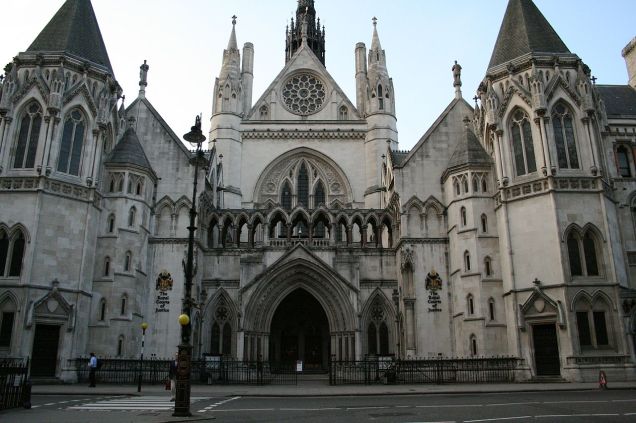
royal-courts-of-justice

Everybody calm down

So as was always a possibility, the High Court has ruled that the government does not have the authority to initiate Britain’s secession from the EU by invoking Article 50 of the Lisbon Treaty without first winning a vote in Parliament.

From the Guardian:

Parliament alone has the power to trigger Brexit by notifying Brussels of the UK’s intention to leave the European Union, the high court has ruled.

The judgment (pdf), delivered by the lord chief justice, Lord Thomas of Cwmgiedd, is likely to slow the pace of Britain’s departure from the EU and is a huge setback for Theresa May, who had insisted the government alone would decide when to trigger the process.

The lord chief justice said that “the most fundamental rule of the UK constitution is that parliament is sovereign”.

A government spokesman said ministers would appeal to the supreme court against the decision. The hearing will take place on 7-8 December.

The lord chief justice said: “The court does not accept the argument put forward by the government. There is nothing in the 1972 European Communities Act to support it. In the judgment of the court, the argument is contrary both to the language used by parliament in the 1972 act, and to the fundamental principles of the sovereignty of parliament and the absence of any entitlement on the part of the crown to change domestic law by the exercise of its prerogative powers.”

Unless overturned on appeal at the supreme court, the ruling threatens to plunge the government’s plans for Brexit into disarray as the process will have to be subject to full parliamentary control.

Starry-eyed, anti-democratic campaign group New Europeans are naturally delighted by this development, which they see as the first step toward overturning/ignoring the EU referendum result and ploughing on as though their hateful and spurned vision of a federal continental union had not just been summarily rejected at the ballot box.

Moments ago this cautiously triumphant missive from New Europeans pinged into my inbox:

This only adds to the political challenges for those of us who are determined to stop Brexit come what may.

If Theresa May decides to call an early election as a result of the legal challenges, we will find ourselves with a new parliament elected with a huge Conservative majority and a parliamentary mandate to deliver Brexit.

In this scenario, there will be no chance of a second referendum on the deal. Britain will be out of the EU in no time and there will be no way back. The best we could do would be to secure safeguards for EU citizens already here and Brits in Europe through our campaigning in Brussels.

On the other hand, if Theresa May is able to start the negotiations and bring the deal back to the current parliament, it is plausible that she will not be able to carry a majority for her Brexit deal, particularly if it is a hard Brexit deal (as seems likely), the cost of which will be truly “titanic”.

Failure to secure a parliamentary majority on a Brexit deal will mean a new election and provides the opportunity for a second referendum on whatever deal she negotiates. That would not be a referendum like the last one on the question “Do you like migrants?”. It will be a referendum on the cost of Brexit and I predict that the public will vote over-whelmingly to stay.

There is a huge job to do if we are serious about stopping Brexit. One of the key arguments in the legal challenge must continue to be the focus of our campaigning. It is not acceptable for the government to remove the individual rights of citizens by way of a referendum.

The rights that EU citizens – and all British citizens are currently EU citizens- will lose on Brexit mean that from a legal, moral and political point of view Brexit should not be allowed to go ahead.

From a moral point of view? When will these preening, sanctimonious euro-moralists get over themselves?

Meanwhile, Pete North takes the news in his stride:

The government will appeal. I’m pretty relaxed about it to be honest. The vast majority of Tories will fall in behind May and Article 50 will pass even if it scrapes a majority. There is no question of it not being invoked. The main sticking point will be a parliamentary demand that Mrs May pursue membership of the single market which she is in all likelihood planning on doing anyway. Why they are bothering I don’t know since Mrs May can make no guarantees. If they do manage to block it by some obscure means then they are basically signing their own death warrants and I think they know this. No MP would ever be safe in public again. From an anti-establishment perspective either suits me fine. If they want to spit on Brexit then they are basically declaring open war on the public. That’s a battle they lose every time.

I’m inclined to agree. Any Remainer celebrations are premature in the extreme. Even assuming the government loses its appeal to the Supreme Court (and unlike some angry Brexiteers I do not claim to be enough of a British legal scholar to know whether or not the case deserved to win on its merits), Parliament would almost certainly not stand in the way of the referendum result, no matter the posturing of some pro-EU MPs.

I don’t really remember the Poll Tax riots toward the tail end of Thatcher’s government. I mean, I remember seeing stories about it on the news, but since I was only eight years old the political ramifications of what I was seeing rather eluded me. But despite my hazy memory, I think it is safe to say were MPs (and it would have to include many Labour MPs representing constituencies which voted to leave the EU) to vote against giving the government authority to invoke Article 50, the resulting conflagration would make the Poll Tax riots look like a summer picnic on Hampstead Heath.

Never mind the constitutional ramifications, and the bizarre state of limbo into which Britain would fall, caught between an instruction from the people to secede from the EU and the petulant demand of MPs to remain. That is nothing compared to the wave of fire and fury and civil disorder that would (rightly) be unleashed upon Parliament, the political class and those MPs responsible.

Now, in our benighted age it is true that we suffer a number of MPs of less than exceptional intelligence and ability. But even the slowest of the crop are capable of grasping that when push comes to shove, they do not want their final act on Earth to be telling the British people, including many of their own constituents, to go to hell – that we should pipe down, forget about independence from the EU and meekly listen to the instruction of our superiors.

Let the legal process unfold as it may. If putting the ball back in Parliament’s court  gives Remainers who now suddenly fetishise British parliamentary sovereignty (after having been happy to watch it relentlessly undermined through our years of EU membership) a furtive thrill, or helps to shore up their denial, then so be it.

They will find the survival instinct of the British political system is much stronger than their ongoing child’s tantrum about being parted from their beloved European Union.


European Union - United Kingdom - Britain - Flags

Top Image: Steve F E Cameron / Wikimedia Commons

Support Semi-Partisan Politics with a one-time or recurring donation:

Agree with this article? Violently disagree? Scroll down to leave a comment.

Follow Semi-Partisan Politics on Twitter, Facebook and Medium.