Treading Water On NSA Surveillance, Ctd.

Evidently given prior notice of the dissatisfaction that was certain to fall on his head should he fail to announce any substantive changes to the bulk telephony data collection programme that flourished under his administration, President Obama triangulated and managed  to set out a plan that included the illusion of substantive changes. It may prove enough to fool the trusting and the credulous, but there are precious few of those sorts of people left to be fobbed off.
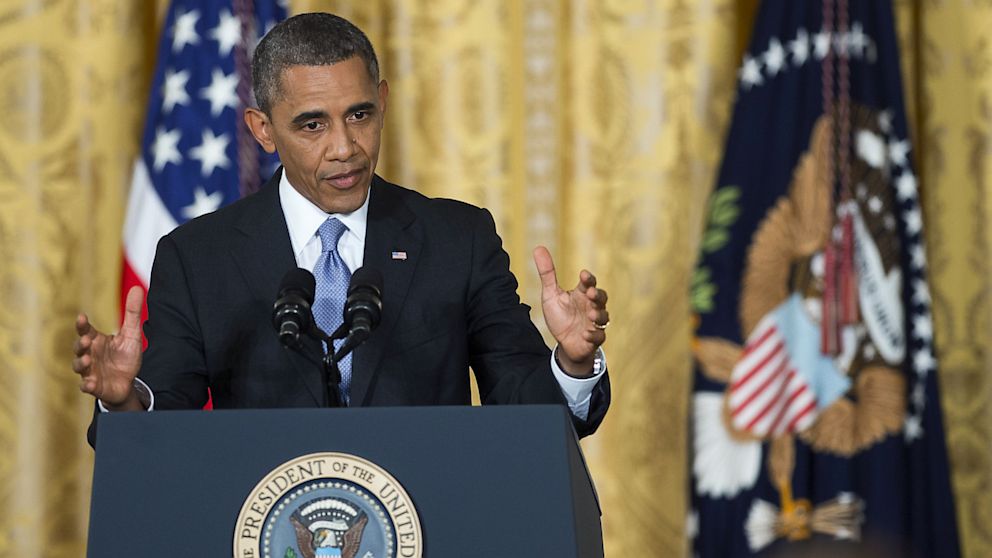
He listens. He gets it.

The New York Times gives a good overview:

President Obama, declaring that advances in technology had made it harder “to both defend our nation and uphold our civil liberties,” announced carefully calculated changes to surveillance policies on Friday, saying he would restrict the ability of intelligence agencies to gain access to telephone data, and would ultimately move that data out of the hands of the government.

But Mr. Obama left in place significant elements of the broad surveillance net assembled by the National Security Agency, and left the implementation of many of his changes up to Congress and the intelligence agencies themselves.

The one announcement not earlier anticipated by the New York Times was the fact that the president may be slightly more amenable to the idea of telecommunications companies or as-yet unspecified third parties holding the unconstitutionally-gotten telephony metadata, rather than the NSA itself. The Times reports:

On the question of which entity will hold the storehouse of phone metadata, the president said Mr. Holder would make recommendations in 60 days. Privacy advocates have called for telecommunications providers to keep the data, though many of the companies are resisting it.

And resist they should. Due to the sensitive and highly politically charged nature of the data being held, why would a private firm wish to open itself to potential liability from lawsuits by hosting the data? Furthermore, unsavoury and unconstitutional though it may be for the government to be collating this data, it is probably more secure in the hands of the paranoid and capable people at the NSA than it would be in some corporate data centre.

But all of this is beside the point – it is not the question of where the data is hosted that upsets civil libertarians. If someone robbed banks for a living, the main concern of the public would not be where the robber is hiding the stolen cash before laundering it, it would be the fact that he is robbing banks in the first place. Similarly, the point of contention here is not whether the US government or private telecommunications companies holds vast troves of data about the telephone calls made by US and foreign citizens – it is the fact that the government seeks to monitor and check this information without a warrant to do so in the first place.

It is hard to listen to anything that Obama says on the issue of national security and privacy without remembering that he wouldn’t be saying anything at all had his clandestine spying apparatus not been revealed to the world by Edward Snowden, and that the debate that he now seeks to claim credit for starting would, if he had his way, be held only between competing interests in government, well out of the view or input of the public.

Glenn Greenwald is of the same viewpoint, seeing right through the sham:

The crux of this tactic is that US political leaders pretend to validate and even channel public anger by acknowledging that there are “serious questions that have been raised”. They vow changes to fix the system and ensure these problems never happen again. And they then set out, with their actions, to do exactly the opposite: to make the system prettier and more politically palatable with empty, cosmetic “reforms” so as to placate public anger while leaving the system fundamentally unchanged, even more immune than before to serious challenge.

And how cosmetic these proposed “reforms” really are. Caught in the act of carrying out unconstitutional searches and intrusions into the private communications of US citizens, the president’s response is not to admit any fault, but to utter meaningless platitudes about the importance of “America’s values” while changing nothing of any substance at all:

And now we have the spectacle of President Obama reciting paeans to the values of individual privacy and the pressing need for NSA safeguards. “Individual freedom is the wellspring of human progress,” he gushed with an impressively straight face. “One thing I’m certain of, this debate will make us stronger,” he pronounced, while still seeking to imprison for decades the whistleblower who enabled that debate. The bottom line, he said, is this: “I believe we need a new approach.”

I have just finished reading the excellent essay by George Orwell, “Politics and the English Language”. As well as helping me to realise just how pretentious and cumbersome my own writing can sometimes be on this blog (for which I can only apologise and pledge to try harder), it furnished me with this gem, this eternal truth:

If you simplify your English, you are freed from the worst follies of orthodoxy. You cannot speak any of the necessary dialects, and when you make a stupid remark its stupidity will be obvious, even to yourself. Political language – and with variations this is true of all political parties, from Conservatives to Anarchists – is designed to make lies sound truthful and murder respectable, and to give an appearance of solidity to pure wind.

And this one:

In our time, political speech and writing are largely the defence of the indefensible … Thus political language has to consist largely of euphamism, question-begging and sheer cloudy vagueness. Defenceless villages are bombarded from the air, the inhabitants driven out into the countryside, the cattle machine-gunned, the huts set on fire with incendiary bullets: this is called pacification. Millions of peasants are robbed of their farms and sent trudging along the roads with no more than they can carry: this is called transfer of population or rectification of frontiers … Such phraseology is needed if one wants to name things without calling up mental pictures of them.

President Obama, justifying the intrustive actions of the NSA and seeking to cast his proposed cosmetic reforms in a favourable light, and himself as a champion of individual liberty, said this:

“In an extraordinarily difficult job — one in which actions are second-guessed, success is unreported, and failure can be catastrophic — the men and women of the intelligence community, including the NSA, consistently follow protocols designed to protect the privacy of ordinary people,” he declared. “What sustains those who work at NSA and our other intelligence agencies through all these pressures is the knowledge that their professionalism and dedication play a central role in the defense of our nation.”

And this:

And yet, in our rush to respond to very real and novel threats, the risks of government overreach – the possibility that we lose some of our core liberties in pursuit of security – became more pronounced. We saw, in the immediate aftermath of 9/11, our government engaged in enhanced interrogation techniques that contradicted our values. As a Senator, I was critical of several practices, such as warrantless wiretaps. And all too often new authorities were instituted without adequate public debate.

Through a combination of action by the courts, increased congressional oversight, and adjustments by the previous Administration, some of the worst excesses that emerged after 9/11 were curbed by the time I took office. But a variety of factors have continued to complicate America’s efforts to both defend our nation and uphold our civil liberties.

The “worst excesses” to which Obama refers? Torture. Extraordinary rendition. Illegal search and invasion of privacy. But “techniques that contradicted our values” sounds so much better, so much more clinical and so much less descriptive of what happened.

This isn’t good, is it?

The Green Party Goes All In

A city to watch in 2014.


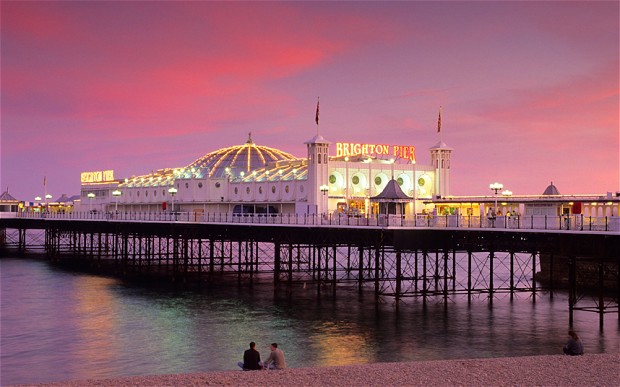
Interesting news from the city of Brighton, where the UK’s only Green Party-controlled local council is planning to put the question of a significant council tax increase directly to the people who would have to pay it. At an estimated cost of £100,000, the council plans to hold a referendum to ask citizens to approve a 4.5% council tax increase which is expected to raise £2.5 million per year more than the assumed 2% increase.

Consulting the people directly is entirely the right thing to do, and is actually very much in line with Conservative party policy under the influence of Eric Pickles, the Communities Secretary. There is currently a threshold in place requiring local councils to hold a referendum to gain approval from constituents for any council tax increase of above 2%, but this has led to a rash of councils repeatedly skimming just beneath the 2% level year after year, continually cranking up the tax without having to gain the consent of the people. In fact, this has prompted some within the Conservative party to agitate for reducing the referendum threshold to increases in excess of 1.5%, a figure well below the current inflation rate.

Credit must be given to the Green Party for actually having the guts to stand behind their favoured spending plans and asking the local citizenry to sign off on them. I may vehemently degree with some of their specific goals or policies, but I will always respect a party that is willing to go directly to the electorate on an important issue over one that claims to speak for the people without having consulted them.

Of course, the referendum plan was announced with a predictable degree of sanctimony and victimhood from the Greens, as The Guardian reports:

Justifying the move, [Green Party council leader] Kitcat said: “The coalition’s cuts mean we cannot deliver the services we were elected to provide and which our consciences say we should provide. We have no choice but to seek the views of local people on funding these services through a tax increase.

“Westminster’s ideologically driven cuts to local councils are huge and relentless while demand for our services continues to grow. Vulnerable people who depend on our services are being threatened from Westminster like never before.

The Green Party leader, Natalie Bennett, ladles it on even thicker:

Bennett said: “As Greens we believe that decisions should be made closest to the people who are affected. Instead of letting Whitehall impose cuts on vulnerable people in Brighton and Hove, this announcement takes the decision to the people.

I do find it slightly ironic that the Green Party should take this opportunity to boast about their supposedly-favoured tactics of localism and direct democracy when it is quite plainly apparent that they only turned to the referendum idea out of desperation once all other avenues to fund their big-spending plans had failed to deliver.

Nonetheless, this is a broadly positive development, and it will be very interesting to see how the people of Brighton vote if the referendum does take place. A referendum would require the support or abstention of the Conservative or Labour parties, as the Greens have only minority control of the council chamber, and I would hope that both parties would gladly consent to letting the people have their say – though this is by no means certain.

Not for much longer, perhaps.


The denizens of Brighton are an interesting bunch in terms of their political leanings, having returned Caroline Lucas to Westminster as the only Green MP in Parliament, and so they can hardly be described as a bellwether city or constituency for gauging the national mood. But one thing is readily apparent: if the referendum takes place and it turns out that even left-wing Brighton isn’t willing to put up the money to fund high levels of public spending, then there will be precious little appetite to do so anywhere else.

Which would rather undermine all of the anti-austerity arguments so loudly proclaimed by the left since 2010, wouldn’t it?

We Need A Federal United Kingdom, Not Just More Powers To Scotland


I have felt like something of a voice in the wilderness at times on this blog, advocating for equal devolution of powers from Westminster to the four home nations of the United Kingdom, to the extent that have almost questioned my sanity that something so self-evidently sensible and obvious to me should be so opaque and avant-garde an idea to almost everyone writing a newspaper column or appearing as a TV news talking head.

And so I am seizing on the words of Allister Heath with all the enthusiasm at my disposal. Apparently I am not alone after all. Addressing the question of Scottish independence and the upcoming referendum, Heath writes:

But that doesn’t mean that the status quo is right either. The UK’s constitution has been an irrational and unsustainable shambles since the Scotland Act of 1998; this can only be resolved satisfactorily if the process that started with Scottish devolution is now taken to its logical conclusion.

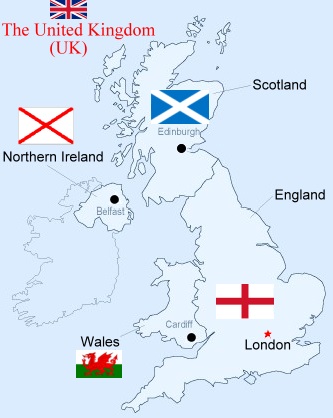
Following what we must hope will be a resounding “no” vote, we need to adopt a new, fully federal model for the UK inspired by the US, Canadian, Swiss and other similar systems that share power properly between the centre and autonomous provinces or states. England needs to have its own parliament, Scotland, Wales and Northern Ireland must be given greater rights and responsibilities, and all component nations of the UK need to start living within their means, raising as much tax as they spend.

This is heartening for two reasons – firstly because it validates my own thinking, but with the persuasive articulacy of someone who writes weekly columns in a national newspaper. It is absolutely right to assert that the devolution process begun in 1998 put our country into a state of limbo, but I would go further and argue that the UK’s constitution has been a shambles for many decades and indeed centuries prior to that. This tends to be the case in older countries that have eschewed revolution or invasion in recent times, but while conservatism would tend to urge an “if it ain’t broke, don’t fix it” attitude, our constitutional underpinning and the way that our country functions is of such fundamental importance that I cast the “traditionally conservative” attitude aside in favour of the reforms advocated by Heath.

Secondly, Heath’s joining the argument for a federal solution is heartening because he addresses the financial aspect in a mature and sensible way. Making the four home nations responsible for their own taxation would allow for that all-too-rare thing, variety, to take root in the UK. The four countries could experiment with setting tax rates in line with local preferences to achieve local ends, and the redistributionist pipe dreams of some of the nationalist parties (SNP, I’m looking at you) once and for all. Heath expands on this thinking, conferring upon the home nations the financial autonomy enjoyed by the states of the US plus a little bit more:

Crucially, the UK’s four component-nations should not merely have the right to spend money but also the responsibility to raise it; they would have their own tax systems, running in parallel with a much reduced UK-wide HMRC. The four nations ought to be able to cut and hike taxes, and would be under great pressure to balance their budgets. They should have the right to issue their own debt, which would not have sovereign status and would not be guaranteed by the UK.

Absolutely right. Of course there will always be a place for HMRC, because certain tax policy (such as import/export duty) must remain common to all. But giving the home nations the right to set their own tax rates on the “big ones” like income tax and corporation tax is absolutely the right thing to do. This could even present the ideal opportunity to do away once and for all with the laughable notion that National Insurance is somehow separate from income tax – let the people see what their real effective tax rate is when NI is factored in to a single tax rate and see what they think of their overall tax burden then.

The UK has suffered from a dearth of political competition for too long. At times I have really struggled to differentiate between the views of the coalition government and the Labour opposition in terms of attitude to the proper size and scope of the state. Sure, the Conservatives may talk the small government talk, but in no way have they boldly walked the walk. Four powerful national assemblies under the auspices of the Westminster parliament would allow for some real diversity in our islands, diversity of ideas and yes, diversity of outcomes.

The end result of all of this would be political settlements more closely attuned to the moods of the local electorates, and therefore more democratic in the true sense of the word. Heath fast-forwards the clock and imagines the likely power dynamics in a newly-federal UK:

In a federal UK, England would probably be run by a pro-market Tory government (or, intriguingly, a Tory-Ukip coalition) with the UK as a whole controlled by Labour, at least in the short term. We could see radical tax cuts in England and elsewhere as leaders vie to grab business. Northern Ireland, in particular, is ripe for drastic supply-side reforms to rejuvenate its economy. This new dynamic would better reflect electoral preferences and would allow rival political ideologies to be tested simultaneously in different parts of the country.

In short, this call for a federal United Kingdom is the complete antithesis to Gordon Brown’s cack-handed intervention in the Scottish independence debate (which I dissected here), in which he proposed a raft of discriminatory (to the rest of the UK) special perks and privileges to be carved out for Scotland as a bribe to their electorate in advance of the referendum. That foolish proposal has all the hallmarks of Brown – short term political manoeuvering to achieve a tactical outcome at the great expense of a broader strategic goal (the strategic goal being the more efficient and democratic governance of the UK as a whole).

The side of democracy, transparency and common-sense needs more articulate advocates, and today we can add Allister Heath to the ranks. Where he picks up, may many more soon follow.

Labour’s Credibility on Education

Mea culpa, mea culpa, mea maxima culpa.


When someone in a position of power or influence makes a series of errors so calamitous, profound and grievous that they do real and lasting damage, and fails to ever acknowledge those mistakes or to make any kind of apology, one tends to disregard what they have to say on that particular topic in future. Think neo-conservatives on starting wars in the Middle East, the Labour Party on the economy and Dick Cheney on absolutely anything.

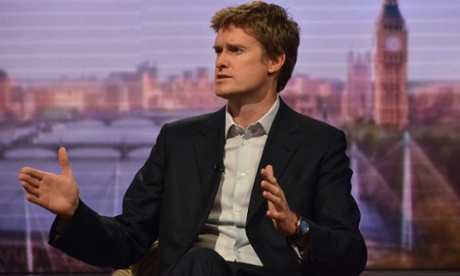
But when someone owns their past mistakes and appears to have learned from them and grown as a result, it is quite different. And so it is with the Labour Party and their approach to education policy while in opposition. Sure, they haven’t undergone a Road to Damascus conversion and mended their ways entirely – the suspicion that their preoccupation with equality of outcome lurks behind everything remains quite strong – but nonetheless I want to give credit where credit is due. And today, credit belongs to Tristram Hunt, Labour’s shadow Education Secretary.

This kudos comes on two fronts. Firstly, the Daily Mail reports that Hunt is repudiating some of Labour’s past educational priorities and actions whilst in government, in terms of pushing as many children as possible to just cross the “no longer an idiot” threshold for the benefit of statistics and league tables, but then failing to challenge them any further:

Labour created a culture of low expectations for state school pupils, Tristram Hunt, the shadow education secretary has admitted.

He said it was a ‘great crime’ that the last government had failed to pushed children more than simply aim for them to achieve a C grade at GCSE level.

He also admitted that exams had been dumbed down in recent years, saying ‘yes, there are elements of grade inflation’.

This is actually quite a significant admission from someone in the shadow cabinet, and the refreshing bravery deserves recognition. The enshrining of the “good” GCSE result as being a grade falling within the A* to C range has certainly created a perverse incentive to push as many laggardly students up into the bottom threshold whilst neglecting the needs of those who had the potential to achieve much more.

This willingness to look as past initiatives and admit mistakes in the field of education policy now makes Labour much more credible on this topic, and they have immediately stolen a march with their new proposal to license teachers in a bid to drive up professional standards. The Guardian reports:

In a sign of how Labour hopes to outflank education secretary Michael Gove on teaching standards, Hunt is to revive a plan the last government abandoned on the eve of the 2010 general election.

Teachers would have to show they are meeting the high standards and would be required to undergo training to update their skills.

Under Hunt’s plans, teachers would have their lessons assessed by other teachers in a system overseen by a new Royal College of Teaching.

As a society we often pay lip service to the importance of education and good teachers, but when it comes to standing behind that commitment, too often we have been found lacking. We claim to admire good teachers and value them, but do not compensate the best of them anywhere near adequately, and do not expect them to adhere to the professional codes of behaviour (as encapsulated by ongoing training and recertification) that are common in many other prestigious lines of work.

Indeed, Tristram Hunt goes on to make this very point:

Hunt insisted that his plans would raise the standing of the teaching profession. He said: “This is about growing the profession. This is about believing that teachers have this enormous importance. Just like lawyers and doctors, they should have the same professional standing which means relicensing themselves, which means continual professional development, which means being the best possible they can be.”

The fact that these proposals are coming from Labour and not the Tories also confers a immediate advantage in terms of winning backing from the teachers unions, which would be essential to their smooth rollout if ever the proposals became law.

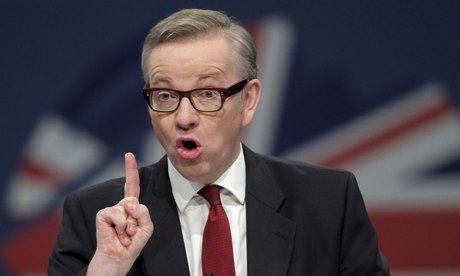
And crucially, from a purely political perspective its puts the Conservatives in the awkward position of having to either reject a potentially very sensible proposal to improve educational standards, or to adopt it and face cries of plagiarism. Rather despairingly, one has to wonder why Michael Gove’s Department of Education didn’t manage to think up a policy proposal such as this on their own.

Outmanoeuvered.
Outmanoeuvred.


If Labour ever showed the wherewithal to perform a similar trick on the subject of economic stewardship – admitting their past fault for growing the state to unsustainable levels and proportions of national output, thus making the pain of the recession so much worse for those people more reliant on the government, and acknowledging that some rebalancing is not only necessary but desirable – then the Tories might really be in trouble.

But I imagine there is a greater chance of it snowing in hell than there is of Ed Balls following Tristram Hunt’s lead any time soon.

On Paternalism and Porn Filters

Liberal Democrat president Tim Farron has not been my favourite person since the Conservative/Liberal Democrat coalition government was formed in 2010. The grumpy noises emanating from the Liberal Democrat party hierarchy have all too often been agitations for more specifically left-wing policies rather than the promotion of liberal ones, and I have no truck with that. But yesterday, Mr. Farron won my agreement and earned my support.

The Daily Mail reports:

Liberal Democrats have triggered fury by vowing to overturn David Cameron’s plans for internet porn filters.

Child safety experts and MPs called the move ‘irresponsible’ and warned it would undermine attempts to protect children from hardcore pornography.

Lib Dem party president Tim Farron said the Government should enshrine the ‘digital rights of the citizen’ and halt requirement for ‘filters, lists or controls on legal material’.

Tim Farron correctly labels the government policy as “misconceived, ineffective and illiberal”. It is certainly misconceived – a majority Conservative government with a mandate to roll back the onerous size of the state has no place enacting laws that further chip away at the notion of personal responsibility. It has also been proved to be ineffective – a simple browser extension has already been released which simply bypasses the filter. And the illiberality of the policy speaks for itself.

Insidious yet inept.

The Independent quotes Farron in further detail, perfectly summing up the argument for the correct way to protect children from adult material in a liberal country:

“If the Prime Minister really wanted to protect children from inappropriate material, he’d ensure they had access to good sexual health and relationship education and give parents the help and support they need to talk to their children about this issue,” he said.

Absolutely. But the daddy-knows-best wing of the Tory party sadly sees things somewhat differently:

Party sources described the new Lib Dem approach as “disappointing”.

“Tim Farron clearly does not want to prioritise the safety of our children online or support our efforts to prevent anyone accidentally accessing illegal material,” they said.

Anyone could have seen this weak, manipulative counter-punch coming from a mile away. Anyone who believes in personal responsibility and empowering and trusting parents to act in the best interests of their children must, according to this worldview, be maniacally obsessed with pornography whilst simultaneously holding the safety of children in complete and utter contempt.

What complete and utter nonsense.

Quite.
Quite.

I invested my precious time and effort pounding the streets of my hometown campaigning for the Conservative Party in the last general election campaign in 2010, but it is policies such as this which make me roll my eyes and question whether it is worth my time and effort to do so again in 2015. The MP I campaigned with, Robert Halfon, has proven himself to be an excellent constituency MP for Harlow since that time, but the coalition government in which his party is the senior member has delivered letdown after letdown on issues of civil liberties and returning responsibility to the individual.

After thirteen years of Labour government I was desperately looking forward to a rollback of the paternalistic, controlling, pseudo-benevolent state that had grown inexorably during that time. Of course I anticipated some inevitable compromises resulting from the fact that the Conservatives had to take on the Liberal Democrats as junior partners in coalition, but I never expected to find myself cheerleading the Liberal Democrat stance over the Tory one on fundamental issues of privacy and civil liberties. And yet that is exactly where I find myself.

Of course children should be protected from harmful content on the television, the internet and other media. But that responsibility rightly rests with the parents, not the broadcasters, ISPs or the state. Every time the government steps in to protect us from any potential harms out there in the world, we are simply stifled by yet another layer of cotton wool, and given the implicit message that it’s okay to glide through life with no regard for the potential consequences of our actions. Many of us may do this at times anyway, and I certainly include myself in that criticism – but my point is that government should not be actively making the shirking of personal responsibility easier by taking on duties of care that used to sit with educated, compassionate and autonomous private citizens.

I would suggest that parents should not be leaving their children unattended to be raised by television and the internet. If parents choose to ignore all common sense and do so, and their child stumbles upon any inappropriate or distressing material as a result, rather than bleating in outrage to the government a personal reexamination of parenting abilities is required.

David Cameron might think that his government’s time is best spent peeping over our shoulders and tutting at the things we choose to watch online under the justification of “keeping our children safe”, but I can assure him that nearly four years of mystifying underperformance in No. 10 Downing Street quite clearly say otherwise.