Why Can’t We Raise The Quality Of The Debate On Europe?

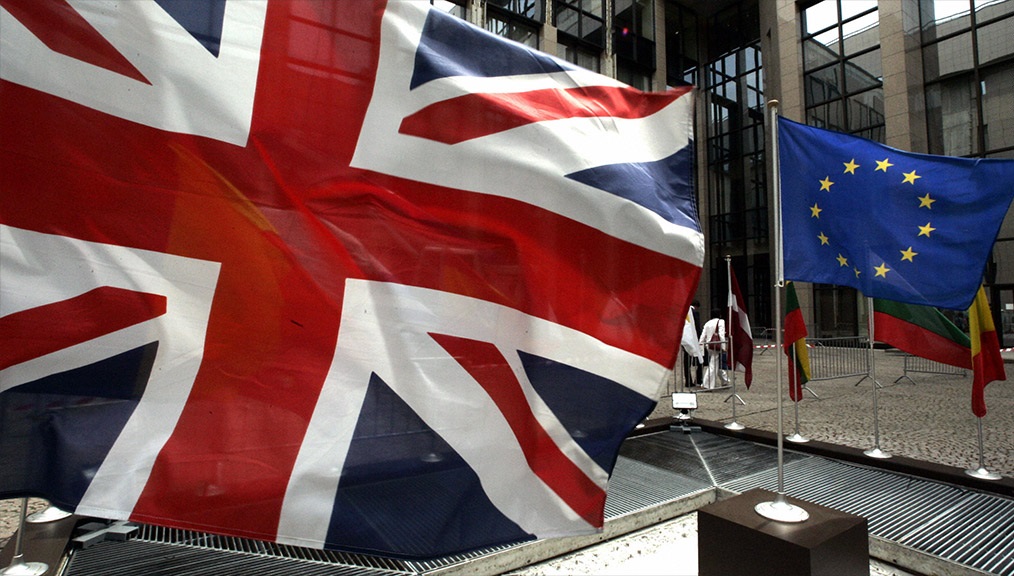
EU UK Britain Flags

The stakes could not be higher for our country, and yet the debate about Britain’s place in Europe takes place in a febrile atmosphere where blinkered partisanship and confected outrage on social media draws a larger audience than reasoned argument. No wonder we are incapable of disagreeing with honour when it comes to our place in the EU

Why can’t we disagree well on Europe?

That is the question posed by Justin Welby, Archbishop of Canterbury, in a thought-provoking intervention posted at Reimagining Europe, a new Church of England blog examining Britain’s place in Europe and the world from a Christian perspective.

In his piece ‘Learning to disagree well on Europe’, Welby writes:

People will say that we should not take the risk of leaving, others that it is less of a risk than staying. There will be talk of national sovereignty, of national confidence, of repatriation of laws, or being bound by European laws over which we have no control. The only certainty is that there will be much heat, probably slightly less light, but that it is a hugely important decision, with thoughtful and committed people, including Christians, on both sides.

But what about those in the UK for whom our membership, or withdrawal, from the Union, is not a major question, those for whom the needs and responsibilities of each day take precedence, and mention of political debates such as this leave them cold?

[..] How can we revitalise ideas such as sovereignty and subsidiarity – ideals formed out of Christian faith whose political dimensions capture their meaning only in part – and help encourage a clearly values-based approach to Britain’s future relationship with the EU; one that includes, but does not end with, economic and political perspectives?

All worthy questions. And in the spirit of making a constructive response, I would offer two main reasons that the quality of the debate has been – and is likely to remain – so desperately low.

First, the stakes of the debate are so high: we are not talking about tweaks to the tax code or welfare system which can be easily undone by a future administration, this decision will shape the future of our country, and the way in which the whole world responds to the challenges of globalisation. And secondly, the quality of our political discourse in general is driven by the internet and social media, democratising in their way but also a megaphone for those with the loudest and most outrageous opinions to seize control of the narrative.

Continue reading

The Left Are Weaponising Human Rights In Their Hatred Of The Tories

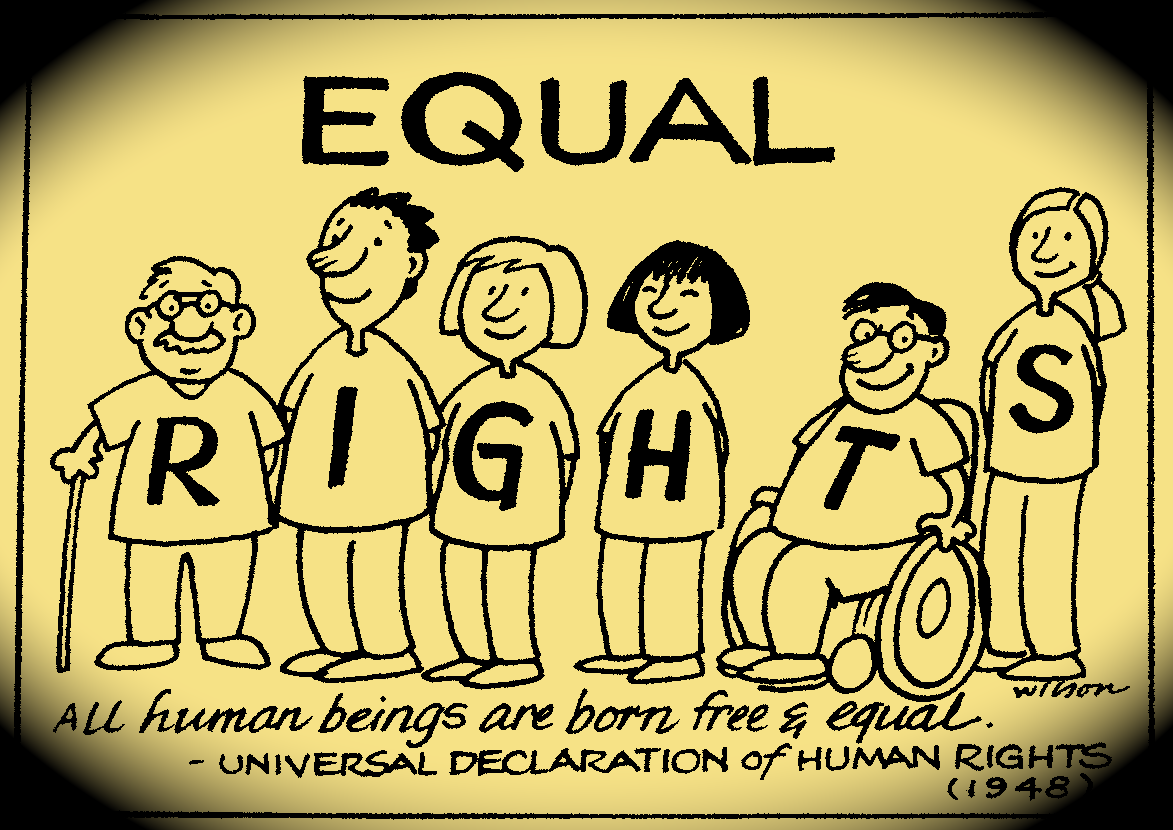
UN Declaration of Human Rights - United Nations

The United Nations – that bright and unstained beacon of morality in our dark world – is to investigate claims that Britain’s welfare reforms are an infringement on the ‘human rights’ of benefit claimants

By now, we are used to the continual cheapening and debasement of the term ‘human rights’, transformed from the noble assertion that every individual is entitled to live in freedom and security to its new meaning as code word for the petulant, open-ended demand for benefits and services funded by other people.

This much is not new – almost every swivel-eyed anti-austerity protester seems to have a tale about how the Evil Tories are callously and deliberately violating their ‘human right’ to something or other. And as small government conservatives or libertarians we must continue to contest these fatuous claims as best we can. But now, those people who believe that their life circumstances endow them with a government-enforced claim on the wallets of their neighbours without so much as a thank-you have won themselves a new ally: the United Nations.

From the Herald Scotland:

United Nations officials will visit the UK in the next few months to investigate whether Iain Duncan Smith’s welfare reforms have led to “grave or systematic violations” of disabled people’s human rights, the Sunday Herald can reveal.

A formal investigation has already been launched by the UN’s Committee on the Rights of Persons with Disabilities. UN investigations are conducted confidentially, but a leading Scottish disability charity has told the Sunday Herald it has been advised a visit by the Special Rapporteur and members of the committee on the rights of persons with disabilities is expected in the “near future”.

The only surprise is that this has not happened sooner, some time in the last parliament. After all, when your existence in a left-wing echo chamber destroys your ability to construct an intellectual argument or engage with those who think differently, the only remaining option is to appeal to outside bodies to bully, shame and intimidate your opponents into reversing course.

Continue reading

The Latest Victim Of The Labour Purge: The Party’s Soul

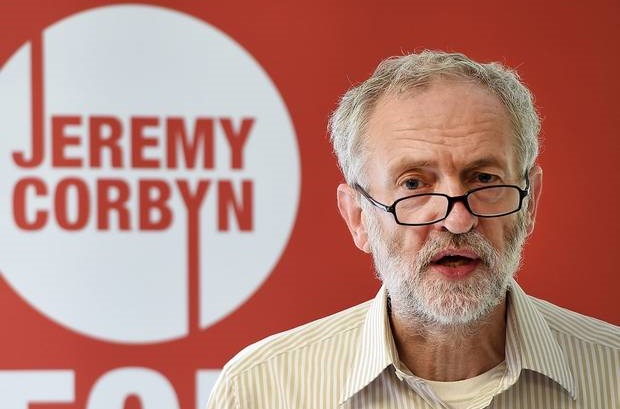
Jeremy Corbyn - Labour Purge - 2

In their fevered desperation to purge potential troublemakers and ‘entryists’ from the voting rolls, the Labour Party are eliminating people who have every right to take part in the leadership election

It was only a matter of time before the Labour Party’s scattershot and reactionary vetting process ended up turfing out someone who is so clearly and quintessentially Labour that the whole process was instantly rendered ridiculous.

And now, with the expulsion of Public and Commercial Services Union general secretary Mark Serwotka, it has finally happened: the political party created to carry the voice of trade unionism into Parliament has expelled one of those very same voices for failing to share the “aims and values” of the Labour Party.

From the BBC’s report:

Mark Serwotka, general secretary of the Public and Commercial Services (PCS) union, voted for Jeremy Corbyn, but was told his vote would not be counted.

Mr Serwotka has previously publicly criticised Labour’s “move rightwards”.

Labour said it would not comment on individual cases but said people “who don’t share aims of values of the Labour party don’t get a vote”.

The PCS, which represents civil servants, is not affiliated to the Labour Party and is part of the Trade Union and Socialist Coalition, which stood against Labour candidates at the general election.

Just so we are clear: the general secretary of the main union representing public sector workers (you know, the kind of workers that Labour actually likes and supposedly exists to represent – contrast with ‘the bankers’) is being denied the opportunity to join the party and vote for its leader. Because to be a trade union leader and represent the interests of your members according to your conscience is now anathema to the values of the Labour Party.

Continue reading

Time For A Woman To Lead The Labour Party? Yes, But Not Like This

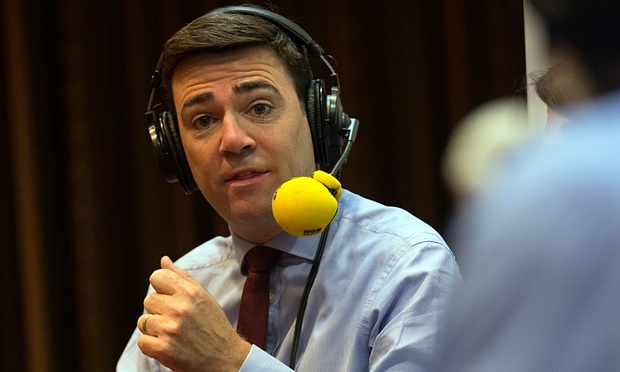
Andy Burnham - Labour Leadership - Sexism - Feminism - 2

Andy Burnham’s Labour leadership campaign has its flaws, but these grasping allegations of sexism are cynical, shameful and unfounded

I dearly hope that one Andy Burnham rally was not all it took for me to become “part of the change” or whatever desperately lame slogan his supporters are now using, but today I actually find myself defending the man.

I have to take exception to the storm of manufactured outrage swirling around social media simply because Andy Burnham failed to agree – when asked on the radio – that he should effectively step aside from the leadership contest so that a woman can win.

During BBC Radio 5 Live’s Labour leadership hustings today, Andy Burnham was asked whether it would be “great” if Labour chose a female leader. And Burnham, realising that to say yes would be to effectively denigrate his own campaign, replied “When the time is right, when the right leader comes along”, clearly meaning when the future woman leader did not have to win at his own expense.

But in today’s charged and cynical atmosphere – fed at all times by the virtue signalling Twitterverse – you would think that Burnham had ordered his two female leadership opponents out of the leadership contest and back to the kitchen.

Continue reading

Labour Leadership Focus: Interview With Andy Burnham

Andy Burnham is not without good ideas, some of them even quite radical. But they risk being drowned out by an over-willingness to indulge in the Labour Party’s favourite hobby: raging against the Evil Tories

It’s fair to say that this blog has not been Andy Burnham‘s biggest fan throughout the Labour leadership campaign – “bland non-entity” being my most charitable description thus far of the Shadow Health Secretary and MP for Leigh.

Having attended Burnham’s latest rally in London yesterday, however, I must give credit where credit is due and walk back some (but by no means all) of my criticism. Clearly Andy Burnham does have convictions, though in many cases his policy prescriptions are inevitably contrary to my own. And Burnham spoke well, albeit in that polished and structured way that you only really notice in contrast to the frank, off-the-cuff style of Nigel Farage or Jeremy Corbyn.

Former Deputy Prime Minister John Prescott gave Burnham a barnstormer of an introduction, reeling off the New Labour: 1997-2010 greatest hits to a warm reception which was most notable because (one heckler aside) the capacity crowd of several hundred seemed willing to give Tony Blair’s Number Two a completely free pass on the Iraq question. And when Burnham came to speak, he did so with the wry humility of someone who was once the frontrunner but now seems doomed to scrap with Yvette Cooper for second place.

Burnham was at his best when trying to look beyond sulking opposition to austerity and focus instead on the bigger, more transformational changes he wants to bring about, like bringing social care under the umbrella of the NHS. When asked what new Labour policies could ever appeal both to Scotland and the south-east of England, Burnham cited the 1945 Labour government which “had policies of scale, of ambition, of hope”.

Continue reading