For In The Final Analysis

John F. Kennedy, May 29, 1917 – November 22, 1963

“So, let us not be blind to our differences, but let us also direct attention to our common interests and to means by which those differences can be resolved. And if we cannot end now our differences, at least we can help make the world safe for diversity. For, in the final analysis, our most basic common link is that we all inhabit this planet. We all breathe the same air. We all cherish our children’s future. And we are all mortal.”

For those of us who have grown up never having heard a great contemporary political speech, here is the remarkable speech given by President John F Kennedy at American University on June 10, 1963.

Kennedy was assassinated on this day in 1963, fifty-two years ago.

Powerful words, but does Kennedy’s analysis still hold true in the Age of Jihad – when we are preoccupied with ISIS and Al Qaeda rather than the Soviet Union, and when our enemies eagerly embrace death and have no thought at all for their children, let alone their own earthly future?

Imagine David Cameron giving a speech like this about the threat posed by Islamist terrorism, or Britain’s future relationship with the European Union. Imagine David Cameron, George Osborne, Theresa May, Boris Johnson, Jeremy Corbyn, Chuka Umunna, Yvette Cooper, Tristram Hunt, Andy Burnham, Tim Farron or Nicola Sturgeon giving this speech. Try picturing it without laughing out loud.

The challenges today are different to those faced by Kennedy and our political leaders half a century ago. But rarely have our political leaders seemed so helpless, so inadequate to the tasks at hand. At best, our current prime minister might be described as a reasonably competent Comptroller of Public Services. And it is far from certain that he even aspires to be anything more.

They say that we get the politicians and leaders we deserve. If so, the time has come for us all to engage in some serious introspection.

JFK - John F Kennedy - American University Commencement Address

Scroll down to leave a comment.

Follow Semi-Partisan Politics on TwitterFacebook and Medium.

Time To Raise The Voting Age?

Safe Space Crybabies

Young people who cannot hear dissenting ideas without running to the authorities have no business voting at the ballot box

Since the generation of coddled students now going through university expect and demand to feel “comfortable” at all times, insisting that trigger warnings be slapped on anything which may challenge them – and retreating into strictly enforced “safe spaces” if that doesn’t work – perhaps the time has come to stop treating people in their late teens and early twenties like real adults.

After all, if today’s wobbly-lipped generation of Stepford Students need the authorities to ban controversial speakers, punish dissenting opinions and treat everybody as though they are either current or recovering victims of severe trauma, they are essentially already asking to be treated like children.

At least that’s the point made by Glenn Reynolds, a University of Tennessee law professor, in USA Today:

In 1971, the United States ratified the 26th Amendment, lowering the voting age from 21 to 18. In retrospect, that may have been a mistake.

The idea, in those Vietnam War years, was that 18-year-olds, being old enough to be drafted, to marry and to serve on juries, deserved a vote. It seemed plausible at the time, and I myself have argued that we should set the drinking age at 18 for the same reasons.

But now I’m starting to reconsider. To be a voter, one must be able to participate in adult political discussions. It’s necessary to be able to listen to opposing arguments and even — as I’m doing right here in this column — to change your mind in response to new evidence.

This evidence suggests that, whatever one might say about the 18-year-olds of 1971, the 18-year-olds of today aren’t up to that task. And even the 21-year-olds aren’t looking so good.

Reynolds goes on to cite the various examples of student and young adult infantilisation with which we have become depressingly familiar over the past year – calls to outlaw clapping and booing, tearful temper tantrums about dress codes, stifling ideas by labelling them ‘problematic’, the insistence on safe spaces and mandatory sexual consent workshops.

If people still look to external authorities to help them navigate daily life, mediate normal encounters and resolve commonplace disputes, we should probably keep them as far away from the ballot box as possible, argues Reynolds:

This isn’t the behavior of people who are capable of weighing opposing ideas, or of changing their minds when they are confronted with evidence that suggests that they are wrong. It’s the behavior of spoiled children.

[..] But children don’t vote. Those too fragile to handle different opinions are too fragile to participate in politics. So maybe we should raise the voting age to 25, an age at which, one fervently hopes, some degree of maturity will have set in. It’s bad enough to have to treat college students like children. But it’s intolerable to begoverned by spoiled children. People who can’t discuss Halloween costumes rationally don’t deserve to play a role in running a great nation.

It is ironic that at the same time there is a push to lower the voting age in the UK – the Lords recently voted to allow sixteen and seventeen-year-olds to vote in the coming Brexit referendum – people only slightly older and now at university, who already have the vote, are busy regressing back into emotional childhood.

This blog believes firmly in universal suffrage and a single, defined threshold of legal adulthood at the age of eighteen. But given the increasing number of campus incidents of precious snowflake students demanding that the authorities curtail their liberties for their own “safety” – and the fact that increasing age is the last, best hope of gaining wisdom – the idea of raising the voting age does start to feel awfully tempting.

Top Image: grrrgraphics.com

h/t Patrick West in Spiked

Agree with this article? Violently disagree? Scroll down to leave a comment.

Follow Semi-Partisan Politics on TwitterFacebook and Medium.

Imagine Britain Without The NHS

NHS Worship - London Olympic Games 1

It’s easy if you try

Imagine a Britain without the NHS.

A Britain where the state did not directly employ or contract nearly every doctor and nurse in the entire country.

A Britain where the government did not decide which cutting edge treatments would be offered to the public, and which ones were simply too expensive.

A Britain where citizens were not reliant on the state for the physical delivery of nearly all their healthcare needs.

A Britain where healthcare was unconstrained by politically influenced national targets.

A Britain where angry, jealous talk of “postcode lotteries” did not act as a brake on excellence or a requirement for dull, uniform mediocrity.

A Britain where every hospital superbug or missed A&E waiting target did not automatically become the prime minister’s overriding personal concern, freeing them up to actually be a world leader.

A Britain where we are able to have a rational, level-headed discussion about healthcare, and what kind of system would achieve the best outcomes for the most people at an acceptable cost.

A Britain where we understood that healthcare need not be a choice between the NHS and the infamous US system.

A Britain where we were able to take inspiration from the best aspects of different healthcare systems around the world in reforming our own.

A Britain where criticism of the NHS was not treated like blasphemy, with the offenders shamed on social media and their political careers curtailed.

A Britain where we gave nearly as much respect, honour and resources to our armed forces and veterans as we do to the NHS.

A Britain where we did not reflexively worship a giant, mid-century bureaucracy as our secular national religion.

A Britain which thought enough of itself to realise that there is far more that marks us out as a powerful, great and indispensable nation than our anachronistic 1940s healthcare system.

A Britain where lean, efficient public services existed to serve the people, rather than we the people existing only to serve our insatiable, rapacious public services.

A Britain where saying “the NHS served us ably for many decades after the war, but now it is time to look again at how we provide healthcare to our fellow citizens” was not a shocking, unacceptable statement.

Imagine a Britain where the link between politics and healthcare was broken and the NHS monopoly split up, meaning that things like the coming national strike of junior doctors could never happen.

Just imagine what could happen – all that we could accomplish – if only we were able to have a calm, rational conversation about healthcare in modern Britain.


National Health Service - NHS Leaflet - 1948

Further reading:

Our deadly obsession with the NHS

A Haidtian take on ‘NHS worship’

Worshipping the NHS costs lives

Britain’s cult-like worshop of the NHS must end

To save the NHS, let’s stop worshipping it like a god

Support Semi-Partisan Politics with a one-time or recurring donation:

Agree with this article? Violently disagree? Scroll down to leave a comment.

Follow Semi-Partisan Politics on TwitterFacebook and Medium.

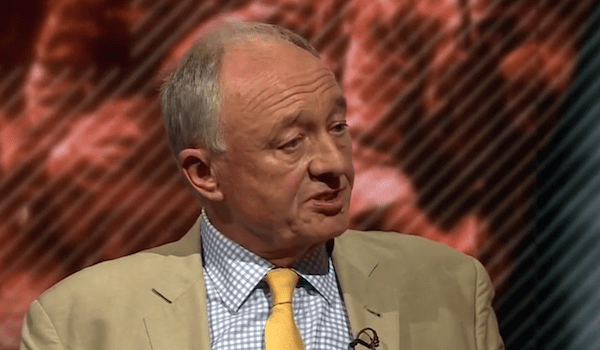
The Daily Toast: Ken Livingstone, Mental Health And The New Politics

Ken Livingstone.png

Ken Livingstone’s attack on Kevan Jones’ depression is typical of the hard activist Left. They are happy to use the poor, the sick and other minorities as cynical campaign props, but hate it when they dare to speak for themselves

Today’s Daily Toast goes to James Kirkup for his furious, relentless evisceration of Ken Livingstone in the Telegraph.

Some context: When Red Ken was unexpectedly appointed to co-lead the Labour Party’s upcoming defence policy review (bringing his open minded attitude toward vital questions like Trident renewal), the Labour MP Kevan Jones – who had previously spoken out in a parliamentary debate, attempting to reduce the stigma of mental illness by revealing his own struggles – raised political concerns about whether Livingstone was the right person for the job.

And in response to Kevan Jones airing his political concerns, Livingstone responded with an extraordinarily personal attack:

Mr Livingstone told the Mirror: “I think he might need some psychiatric help. He’s obviously very depressed and disturbed.

“He should pop off and see his GP before he makes these offensive comments.”

So this is the New Politics that we were promised with the Jeremy Corbyn era – more of the same coarse, unbecoming personal insults that we have always had.

It’s no surprise. Because many on the Left see themselves as the only virtuous people in town – the sole custodians of the nation’s morals – they think that somehow it “doesn’t count” when they say rude, aggressive, condescending, racist or sexist things. They believe are allowed to get away with it because they spend their careers policing the debate and controlling the language, casting out anyone else who says or thinks the wrong thing. Just like a corrupt cop might consider themselves above the law, so the egotistical leftist believes that they have carte blanche to cross any of the lines that they draw to constrain the rest of us.

All of which makes Kirkup’s takedown of Livingstone so satisfying – and worthy of the Daily Toast:

I believe in civilised debate and generally try to avoid throwing around personal abuse when writing about politics. But there’s no way of being polite or restrained about this. Ken Livingstone’s words are vile, a poisonous act that would leave him consumed by shame if he had a shred of decency.

Yet he’s standing by those comments. He told the London Evening Standard: “It doesn’t matter what disorders he’s got, he doesn’t have the right to be rude … to be constantly undermining Jeremy Corbyn.”

This is utterly hateful. Mr Livingstone he hasn’t just grotesquely insulted Mr Jones, denigrating his suffering and his bravery, he has sent a brutal message to anyone else who suffers mental illness: stay quiet or you’re fair game.

Even if he wasn’t part of a leadership team that had so piously promised a nicer, kinder politics and to embrace open political debate, Mr Livingstone’s behaviour would be disgusting. The staggering hypocrisy involved just compounds his disgrace.

And if Mr Corbyn does not act quickly and firmly, by dropping Ken Livingstone into the deep dark hole of political obscurity where cockroaches like him belong, he deserves to share every bit of that disgrace.

Ken Livingstone was eventually forced to apologise for his behaviour, but was unable to stay contrite and was soon walking back his apology with justifications and angry asides to journalists.

The Labour Party – and the British Left in general – can’t have it both ways. They can’t spend half the time prancing around pretending to be high-minded emissaries of the New Politics, holding hands and singing Kumbaya, and then spend the other half acting like vicious thugs, smearing people because of their mental health conditions or whipping their activists up into a Tory-hating, phlegm-lobbing rage. It’s time to pick a side.

And yet Ken Livingstone is perfectly entitled to say mean or ignorant things about his fellow MPs in public if he chooses. That much is a fundamental free speech issue, so let’s see no talk about Parliament needing to be a “safe space” where coddled MPs need to be praised and affirmed at all times.

However, the question here is not one of free speech, but one of hypocrisy. Ken Livingstone and much of the virtue-signalling Left love to use the mentally ill, the poor and other groups as cynical campaign props, showering them with ostentatious sympathy in order to make themselves look good and pick up votes. But as soon as one of those same people becomes a threat – whether it’s a former welfare recipient questioning the welfare state or a fellow MP simply raising a political objection – suddenly the tribal thuggishness comes out and the Left’s feigned concern for the disadvantaged is revealed as the sham that it is.

That’s the real story here. Yes, Ken Livingstone’s behaviour was boorish and inexcusable, but he’s a left wing bruiser and unlikely to change his ways any time soon. But this incident was just the most high profile recent example of behaviour that is not uncommon on the Left: behind the friendly faces, the talk of inclusivity and a new, kinder politics, too often there lurks a hardened, egotistical ideologue who always responds to criticism by lashing out.

So by all means let’s haul Red Ken over the coals – certainly Corbyn should publicly condemn Livingstone if the Labour Party’s newfound passion for mental health is to be taken seriously – but let’s not pretend that this incident is anything other than standard behaviour from a certain segment of the activist Left.

Agree with this article? Violently disagree? Scroll down to leave a comment.

Follow Semi-Partisan Politics on TwitterFacebook and Medium.

The Daily Smackdown: Jeremy Corbyn’s Non-Clarification On ‘Shoot To Kill’

Jeremy Corbyn - Paris Attacks - Terrorism - Appeasement

Why is it so hard for Jeremy Corbyn to say that the police should kill terrorists in the process of committing a massacre?

Sensing the storm that was about to break over the Labour Party following his catastrophically weak  response to a simple question on the merits of shooting terrorists in the act of attacking innocent civilians, Jeremy Corbyn reluctantly scrambled to contain the damage.

Yesterday, on Corbyn’s Facebook page, the Labour leader took the opportunity to scold everyone for supposedly misinterpreting his remarks:

I am therefore disappointed that comments I made yesterday in regard to a “shoot to kill” policy have been taken out of context [..]

Nonetheless, I would like to clarify my position. As we have seen in the recent past, there are clear dangers to us all in any kind of shoot to kill policy. And we must ensure that terrorist attacks are not used to undermine the very freedoms and legal protections we are determined to defend.

But of course I support the use of whatever proportionate and strictly necessary force is required to save life in response to attacks of the kind we saw in Paris.

Here, Corbyn is trying to pull off a classic bait-and-switch. Yes, of course we must ensure that terrorist attacks are not exploited as an excuse to clamp down further on already-threatened civil liberties – this blog has consistently said the same thing, and did so again following the Paris attacks.

But that’s a side issue. People were not angry with Corbyn because he was taking a plucky stance in defence of civil liberties, they were simply incredulous that the Leader of the Opposition – when presented with a golden plated opportunity to come out on the side of human decency and rebut some of the criticism that he is soft on terror – point blank refused to countenance the shooting of armed terrorist gunmen actively engaged in committing a massacre.

Even in his so-called clarification, Jeremy Corbyn remains unable to force the words “kill” and “terrorist” from his lips in the same sentence, giving only the bland statement that he supports “proportionate and strictly necessary force”. This might be sufficient coming from another politician, but the trouble is that in Corbyn’s case, the public strongly suspects that his idea of a “proportionate and necessary” response to a terrorist massacre might mean sitting down with a cup of tea and talking about our feelings rather than eliminating a clear and present threat to the British public.

Look: nobody expects Jeremy Corbyn to be the man in the SWAT flak jacket kicking down doors, throwing flash-bang grenades and pulling the trigger in these situations. If Corbyn wants to follow his absolutist pacifism in his own private life, that’s fine. But it is not okay for the Leader of the Opposition, the holder of an important official constitutional position in our national life, to take such a fundamentalist stance when the security of our country and our citizens is at stake.

When the man seeking to become Britain’s next prime minister can’t even bring himself to utter the words “kill” and “terrorist” in the same sentence, it naturally raises questions as to what possible group of people – which vitally important constituent base – he is desperate to avoid offending by giving a more full-throated response. And as this blog noted yesterday, sadly there is only one plausible answer: the people Corbyn is unwilling to offend, is even willing to take a political hit in order to avoid offending, are those people who think that maybe Paris and the West had it coming on Friday the thirteenth.

But even putting this distasteful fact aside, Corbyn needs to learn that not every crisis or event needs to be a teaching moment for the British people in the ways of pacifism and non-violence. When Laura Kuenssberg asked Jeremy Corbyn yesterday if he would be happy for the police to take down an active terrorist, the answer should have been a simple “yes, of course”. Case closed.

But instead, the Labour leader – and the army of online Corbyn fanboys and fangirls blindly backing him up – decided instead to quibble sanctimoniously about whether “happy” was the right choice of word, bring up misleading comparisons like the mistaken shooting of Jean Charles de Menezes when no terrorist attack was underway, and generally refute the premise of the question.

That’s the kind of behaviour that would just about be tolerable from a smarmy sixth-former. It’s the kind of behaviour that has become eye-rollingly predictable from a far-left backbencher. But it is most definitely not the kind of behaviour acceptable from somebody who plans to stand before the British people and ask them to make him prime minister.

Jeremy Corbyn - Paris Attacks - Terrorism - BBC Interview

Agree with this article? Violently disagree? Scroll down to leave a comment.

Follow Semi-Partisan Politics on TwitterFacebook and Medium.
